MOVED TO LIVINLAVIDALOWCARB.COM/BLOG

PLEASE UPDATE YOUR BOOKMARKS TO LIVINLAVIDALOWCARB.COM/BLOG

Friday, December 07, 2007

'Mindless Eating' Author Appointed USDA's New Director Of Nutrition Policy And Promotion
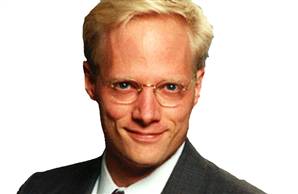

Dr. Brian Wansink will set the new U.S. dietary guidelines for 2010

It's not too often I am able to share with you some GOOD NEWS as it relates to something happening behind-the-scenes in the world of diet and health. Most of the time, we must lament that yet again all those so-called "experts" continue to bamboozle the public with their same old low-fat mantra over and over again. But this bit of encouraging news should be welcomed and cheered today because it could very well be an awesome thing for those of us who are in favor of livin' la vida low-carb.

The United States Department of Agriculture (USDA), the government arm in charge of setting nationalized dietary recommendations through MyPyramid.gov among other things, has decided to name Cornell University psychology professor and Mindless Eating author Brian Wansink, PhD the new executive director of the Center For Nutrition Policy and Promotion (CNPP) through January 20, 2009 when the Bush administration is set to leave office. This is quite a prestigious nomination for Wansink with potentially long-term ramifications as it relates to the future of diet and health in America.

This is one of the most important public policy positions related to health in Washington, DC because it is responsible for creating, planning, developing and reviewing the upcoming new dietary guidelines to be promoted by the government in 2010. MyPyramid.gov was introduced in 2005 to replace the old Food Pyramid and it wasn't much better than its low-fat loving predecessor (and neither was the kid's version of MyPyramid either). So Wansink wields a lot of power over the next couple of years to speak with various voices within the realm of nutrition about what is best for sharing with the general public about a healthy diet.

Agriculture Undersecretary for Food, Nutrition and Consumer Services Nancy Johner said the chance to bring Wansink on board at the USDA is a golden opportunity.

"We feel quite fortunate in having Dr. Wansink join our team here at the USDA, and look forward to working with him," she said. "Dr. Wansink is nationally recognized in his field of nutrition research which focuses on how to encourage consumers to eat more nutritiously and better control how much they eat."

So what should people who support a controlled-carbohydrate dietary approach think about Dr. Brian Wansink? Well, although I was initially critical of his research into the psychology of eating he studied during his tenure at Cornell University, I was impressed overall by his book and what all that research has led him to believe about why people overeat.

In my interview with Dr. Wansink last year, he seemed quite open to the low-carb lifestyle for people who need to "lose a lot of weight a serious diet" which he says can be "very useful for a disciplined person." It should be thrilling to know that there will now be someone within the USDA who isn't antagonistic against livin' la vida low-carb. Hopefully this open line of communication between Dr. Wansink and the low-carb message will remain that way while discussing the 2010 dietary guidelines.

As major government health-related news goes, this is BIG NEWS! Their purpose is to take the existing scientific research and apply it to the nutritional needs of the American people. Now that we have amazing studies like this one showing a genetic connection between diet and obesity where low-carb works for some and low-fat works for others, it's time to see that reflected in dietary recommendations by offering a variety of options for people to choose from. Or, as I have been pushing for, why not recommend them BOTH?

Can Dr. Wansink make that happen at the USDA? I don't know, but I'm optimistic. I'm very hopeful that he will do everything he can to stay updated on the latest information that will help him make the best decisions about what those 2010 dietary recommendations will look like. It would be incredible if he continued to communicate with people like me and others within the low-carb community to get our input about how to word those guidelines for people who would do well on a low-carb approach. Cross your fingers on that one!

Other areas that Dr. Wansink will have a watchful eye over include the Healthy Eating Index (on which the 2005 MyPyramid updates were based), the USDA Food Plans, the Nutrient Content of the U.S. Food Supply and the cost of raising a child. And he is excited to get started making a difference in this new and extremely important role at the USDA.

"The Center is involved in many crucial projects that have an immense potential to help the American public particularly in combating overweight and obesity," Dr. Wansink stated. "I look forward to leading these endeavors to the best of my abilities."

The thing I like best about Dr. Wansink is he's such a real person. I was privileged enough to speak with him by telephone about a year ago prior to my blog interview and he's as down to Earth as anyone you'd ever meet. His accessibility even after the enormous success of his bestselling Mindless Eating book (now available in paperback, by the way) has remained the same and I respect that in anyone who purports to be an expert at anything. I have every confidence this same trend will remain.

Dr. Wansink will continue to conduct his own research in the Food Psychology department at Cornell University while serving in this government capacity. You can e-mail Dr. Brian Wansink to congratulate and encourage him in this new position by writing to foodandbrandlab@cornell.edu.

Labels: , , , , , , , , , ,

Thursday, June 28, 2007

Bush: Obesity Problem Comes From 'Bad Diet'


President George W. Bush STILL leading by example on fitness

Regardless of what you think about his performance as the leader of the free world on an assortment of other issues, two-term President George W. Bush is a man who has led by example in regards to living a healthy lifestyle.

He hovers around 190 pounds on his 5'11" frame, has a total cholesterol in the 170s, boasts a body fat percentage around 15 percent, and enjoys a resting heart rate of an astonishing 47 beats per minute. By all accounts, he's as healthy as he could possibly be as he approaches his 61st birthday next week.


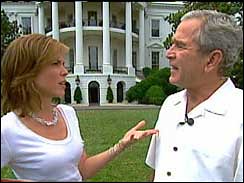
CBS morning anchor Hannah Storm asks President Bush about health

CBS News' The Early Show featured President Bush on their program Thursday morning to discuss the current state of affairs regarding weight and health in America. With such hot political issues as the war in Iraq, immigration reform, and the ever-present 2008 presidential race taking precedence, the obesity epidemic is being all but ignored as the serious health issue it has become.

CLICK HERE to watch co-anchor Hannah Storm interview President Bush about his views on diet, exercise, and health.

Obesity has become much worse than we ever thought possible with tens of millions of Americans dealing with a weight and/or health issue as we speak--and the problem is only expected to keep getting worse while burdening our health care system beyond repair. Medicare has been destroyed by skyrocketing obesity and so many people rely on that to help preserve their health.

That's why President Bush has not just talked about getting healthy, but he also tries to actively live it himself along with members of his Cabinet--most notably Secretary of State Condoleeza Rice.

One area of health that President Bush is a strong proponent of is exercise.

"I exercise a lot because it's good for my mind and good for my soul," he told CBS. But I hope I set a good example to others that exercise is good for you."

As a devoted mountain bicyclist, the president has influenced the people who surround him in the White House to begin taking their health more seriously by joining him.

"I have wisely convinced a bunch of youngsters in the White House and around Washington to ride with me," Bush revealed. "I've always found that if you play up that you get better."

And he doesn't have much sympathy for people who claim there's no time in their busy schedule to exercise either.

"I don't buy that," Bush exclaimed in response to making excuses for not engaging in physical activity. "I think that you set priorities in life. And if exercise is one of your priorities, you'll figure out time to do it."

When can you fit it in, you may ask? The president has a suggestion.

"You know, sitting down at a big lunch may be someone's priority, but it's not all that hard to shift that priority to exercising at lunch," Bush stated.

He's right about that, you know. When I was losing my 180 pounds on the Atkins diet in 2004, guess when I got my exercise in most often. Yep, it was on my lunch hour at work. I was too sleepy in the morning to go before work and too exhausted in the evening after work. So the middle of the day was perfect and energized me as well as melted away the stress of my job (while helping me shed the pounds, too!).

To his credit, President Bush doesn't think obesity can be solved by exercise alone. He is adamant that American families need to begin choosing a healthier diet as well.

"I also think that since we spend a lot of money on food in the education system, then we should insist upon better food," he said. "A lot of the dietary problems are just obviously what people eat. And so it's not just a lack of exercise...but a bad diet."

Hallelujah that SOMEBODY who has a say in our government is articulating this message. Unfortunately, that same enthusiasm for doing something about our nation's weight problem has not trickled down to such agencies as the Food & Drug Administration (FDA), the United States Department of Agriculture (USDA), or the National Institutes of Health (NIH), among others. They choose to convolute and distort dietary recommendations in order to keep people from finding the truth about obesity solutions like livin' la vida low-carb.

Want proof? Well, you've got a representative from the scandalous and corrupt FDA telling a business that sells low-carb products that the low-carb diet is "sheer nonsense" while approving and heralding the new OTC weight loss drug Alli which has some rather icky side effects! Are they trying to tell me this poopy-producing pill is supposed to be better than the all-natural and healthy low-carb lifestyle?

But this is year seven of President Bush's term in office and what has he done from the Oval Office to give people the opportunity to hear the positive and uplifting message of livin' la vida low-carb, hmmm? He talks a good game about the importance of health, but what has he actually done to turn the tide of obesity?

While all the onus isn't just on him (the members of Congress as just as culpable in my eyes for ignoring this issue), President Bush does put himself out there as a leader regarding proper diet and health. So where has he been and what has he done to cultivate an atmosphere of acceptance towards all proven methods for improving weight and health?

President Bush believes good health and fitness "starts with families" and I cannot agree more. But families first need to stop getting mixed messages from our government and health leaders about what a "healthy diet" looks like. If low-carb has been found to be just as effective for weight loss and improved health as low-fat diets (and it has!), then why not recommend both? It seems so simple a suggestion, but it has yet to happen.

Anytime the president or any member of Congress would like to hear the testimony of someone who used to be morbidly obese, was able to lose nearly half of his body weight, and then keep that weight off for several years and counting, then I'd be very happy to share my story of hope, inspiration, and encouragement to show them that there is more to living healthy than their much-heralded high-carb, low-fat diet. They can e-mail me anytime at livinlowcarbman@charter.net and I'll be off to Washington, DC.

When are we gonna finally have a candidate for president who not only talks about promoting a healthy lifestyle, but actually becomes pro-active about it when he or she is sworn into office? I'm anxious to see if that will ever happen before obesity takes what seems to be an inevitable toll on our country if we don't make some major health public policy changes soon.

It's something else to consider when you look at all the choices for president from both of the major political parties. Be sure to ask yourself this question: if obesity is not seriously addressed within the next 10 years, then when will it be? It makes your choice about who the future leaders of this country should be all the more consequential. Choose wisely.

Labels: , , , , , , , , , , ,