|
PLEASE UPDATE YOUR BOOKMARKS TO LIVINLAVIDALOWCARB.COM/BLOG
Attention Low-Carbers: USDA Now Taking Nominations For 2010 Dietary Guidelines Advisory Committee
There are some very exciting things happening behind-the-scenes in Washington, DC right now as it relates to the next USDA-recommended Food Pyramid and Dietary Guidelines set to be released in 2010. As I blogged about in December 2007, President George W. Bush named Cornell University psychologist Dr. Brian Wansink (author of the bestselling 2007 book Mindless Eating) to head up the U.S. Department of Agriculture's Center for Nutrition Policy & Promotion. I was greatly encouraged by this appointment of Dr. Wansink because he has been very open to the low-carb message being heard for people like me out there who need to "lose a lot of weight on a serious diet." In that blog post I wrote about his new leadership position over the 2010 nutritional recommendations, I was very hopeful and expectant that Dr. Wansink would continue to have those open lines of communication with the experts in the low-carb community to give their input about what should be included in the next updated Food Pyramid. "It should be thrilling to know that there will now be someone within the USDA who isn't antagonistic against livin' la vida low-carb," I wrote in that December 2007 post. "Hopefully this open line of communication between Dr. Wansink and the low-carb message will remain that way while discussing the 2010 dietary guidelines."So, imagine my delight when I saw this notice from the USDA (Note: this links to a PDF file download) requesting nominations for the new Dietary Guidelines Advisory Committee. Yes, that's right! They're taking nominations for who we think should be on that committee. This is open to any citizen of the United States to submit their choice(s) for who would be best qualified to serve in this capacity. Dr. Wansink's appointment is through January 20, 2009, so there is little time to waste. That's why the nominations will only be considered through May 24, 2008. In other words, time is of the essence here. If you care about seeing the low-carb nutritional approach represented on this dietary recommendations panel (and you undoubtedly do if you read my blog!), then the time for action on this is RIGHT NOW! And we need to spread the word to everyone we know to do the same. These new dietary guidelines are reviewed every five years and are supposed to reflect the latest research studies regarding diet and health to better inform the public about how to eat for managing their weight and health. The previous Food Pyramid in 2005 was an improvement upon the past ones, but was still sorely lacking any concept about the negative role of carbohydrate and the increasingly passive role of dietary fat, including saturated fat, in the American diet. We NEED people who understand this connection to be seated on this committee for the sake of the future health of the American people. The low-fat lie has dominated the official government dietary guidelines since its inception in 1980 and we need to make some crucial changes in this policy if we're gonna get serious about this issue before it is too late. Haven't we suffered with the high-carb, low-fat message long enough? Will we continue to put up with such blatant disregard for the overwhelming evidence and real-life changes that are happening thanks to the healthy low-carb lifestyle? I'M NOT! What is this committee actually gonna be doing? They will first look at the 2005 dietary guidelines and determine if any changes are necessary based on "a thorough evaluation of the most current scientific literature." If sufficient evidence is found to make changes, then new guidelines will begin being discussed by the Dietary Guidelines Advisory Committee in the Fall of 2008 through a series of two- or three-day meetings over a period of time. These meetings are open to the public as required by federal law. The Secretaries of Agriculture ( Ed Shafer) and Health and Human Services ( Mike Leavitt) will oversee the reports from this advisory committee which will be led by Dr. Wansink. So, naturally, he will want to surround himself with the best possible candidates for this vital public health policy position. But who qualifies? They are looking for people who are "knowledgeable of current scientific research in human nutrition and be respected and published experts in their fields." Additionally, according to the notice from the USDA, candidates for the advisory committee also need to be "familiar with the purpose, communication, and application of the Dietary Guidelines and have demonstrated interest in the public's health and well-being through their research and/or educational endeavors." Here are the specific areas of expertise they want to be represented on the panel: - Chronic Diseases such as obesity, Type 2 diabetes, and cancer - Energy Balance issues involving exercise - Epidemiology - Food Safety and Technology - General Medicine - Gerontology - Nutrient Bioavailability - Nutrition Biochemistry and Physiology - Nutrition Education - Pediatrics - Public Health - Evidence Review Methodology I can think of quite a few qualified people who meet and surpass this criteria required by the USDA to appear on the Dietary Guidelines Advisory Committee. I'm officially offering the following five names up for consideration to be nominated for this all-important position at the U.S. Department of Agriculture's Center for Nutrition Policy & Promotion: 1. Eric C. Westman, M.D., M.H.S from Duke University 2. Mary C. Vernon, M.D. from The University of Kansas 3. Richard D. Feinman, Ph.D. from SUNY Downstate 4. Stephen Phinney, M.D. from The University of California-Davis 5. Jeff S. Volek, Ph.D. from The University of Connecticut There are many more who fit the description of what the USDA is wanting for this distinguished panel, but any or all of these five individuals are more than qualified to offer all the evidence the committee wants about the low-carbohydrate nutritional approach and its impact on health. At the very least, we need a minimum of one of these low-carb experts to be placed on the Dietary Guidelines Advisory Committee. Here's what you need to do to nominate someone: - Write a letter of nomination stating the name and affiliation of the nominee, why that person deserves to be nominated for this position, and a statement that the nominee would indeed be willing to serve (I have spoken with each of these five individuals I am nominating and they are all willing to serve if selected) - Provide your name, address, and daytime telephone number along with the name, address, telephone number and e-mail address of the nominee (much of this information can be found at the links provided above--if you provide their name and the school they are located at, then that should be enough information for them to contact the nominee) - Share a copy of the nominee's curriculum vitae or resume (again, this information can be found at the links I provided above for each nominee) When you gather all of this information, simply e-mail it to DG2010Nominations@cnpp.usda.gov no later than Saturday, May 24, 2008. You can also submit nominations via snail mail to Carole Davis, Nutrition Promotion Staff Director, Co-Executive Secretary Guidelines Advisory Committee, Center for Nutrition Policy and Promotion, U.S. Department of Agriculture, 3101 Park Center Drive, Room 1034, Alexandria, VA 22302. Or you can also fax your nomination to (703) 305-3300. If you have any questions about this process, simply call (703) 305-7600. If you need any additional information about these candidates after you nominate them, then please don't hesitate to e-mail me and I'll be happy to get what you need. We all need to do this for the sake of our nation's future health policy. Don't put it off thinking there will be others nominating--MAKE YOUR VOICE HEARD LOUD AND CLEAR! We NEED to get a low-carb expert on this panel, so our unified voice behind these nominees will go a long way! By the way, I am attempting to arrange a podcast interview with Dr. Brian Wansink and he has been in contact with me about this. Hopefully I will be able to conduct this interview soon and put a bug in his ear about having a low-carb researcher/practitioner serve on the Dietary Guidelines Advisory Committee. You just don't know how HUGE it would be to have a Westman, Vernon, Feinman, Phinney, or Volek on this committee--these are the people in the low-carb research world who are making the rest of the scientific community stand up and pay attention to the high-fat, low-carb diet again. Won't you do your part to nominate them TODAY? THANK YOU!!! Labels: Brian Wansink, Center For Nutrition Policy and Promotion, dietary guidelines, Eric Westman, Food Pyramid, Jeff Volek, low-carb, Mary Vernon, research, Richard Feinman, Stephen Phinney, USDA
'Mindless Eating' Author Appointed USDA's New Director Of Nutrition Policy And Promotion
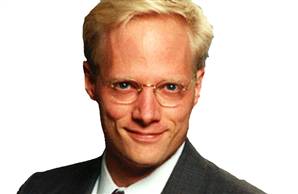 Dr. Brian Wansink will set the new U.S. dietary guidelines for 2010 Dr. Brian Wansink will set the new U.S. dietary guidelines for 2010It's not too often I am able to share with you some GOOD NEWS as it relates to something happening behind-the-scenes in the world of diet and health. Most of the time, we must lament that yet again all those so-called "experts" continue to bamboozle the public with their same old low-fat mantra over and over again. But this bit of encouraging news should be welcomed and cheered today because it could very well be an awesome thing for those of us who are in favor of livin' la vida low-carb. The United States Department of Agriculture (USDA), the government arm in charge of setting nationalized dietary recommendations through MyPyramid.gov among other things, has decided to name Cornell University psychology professor and Mindless Eating author Brian Wansink, PhD the new executive director of the Center For Nutrition Policy and Promotion (CNPP) through January 20, 2009 when the Bush administration is set to leave office. This is quite a prestigious nomination for Wansink with potentially long-term ramifications as it relates to the future of diet and health in America. This is one of the most important public policy positions related to health in Washington, DC because it is responsible for creating, planning, developing and reviewing the upcoming new dietary guidelines to be promoted by the government in 2010. MyPyramid.gov was introduced in 2005 to replace the old Food Pyramid and it wasn't much better than its low-fat loving predecessor (and neither was the kid's version of MyPyramid either). So Wansink wields a lot of power over the next couple of years to speak with various voices within the realm of nutrition about what is best for sharing with the general public about a healthy diet. Agriculture Undersecretary for Food, Nutrition and Consumer Services Nancy Johner said the chance to bring Wansink on board at the USDA is a golden opportunity. "We feel quite fortunate in having Dr. Wansink join our team here at the USDA, and look forward to working with him," she said. "Dr. Wansink is nationally recognized in his field of nutrition research which focuses on how to encourage consumers to eat more nutritiously and better control how much they eat."So what should people who support a controlled-carbohydrate dietary approach think about Dr. Brian Wansink? Well, although I was initially critical of his research into the psychology of eating he studied during his tenure at Cornell University, I was impressed overall by his book and what all that research has led him to believe about why people overeat. In my interview with Dr. Wansink last year, he seemed quite open to the low-carb lifestyle for people who need to "lose a lot of weight a serious diet" which he says can be "very useful for a disciplined person." It should be thrilling to know that there will now be someone within the USDA who isn't antagonistic against livin' la vida low-carb. Hopefully this open line of communication between Dr. Wansink and the low-carb message will remain that way while discussing the 2010 dietary guidelines. As major government health-related news goes, this is BIG NEWS! Their purpose is to take the existing scientific research and apply it to the nutritional needs of the American people. Now that we have amazing studies like this one showing a genetic connection between diet and obesity where low-carb works for some and low-fat works for others, it's time to see that reflected in dietary recommendations by offering a variety of options for people to choose from. Or, as I have been pushing for, why not recommend them BOTH? Can Dr. Wansink make that happen at the USDA? I don't know, but I'm optimistic. I'm very hopeful that he will do everything he can to stay updated on the latest information that will help him make the best decisions about what those 2010 dietary recommendations will look like. It would be incredible if he continued to communicate with people like me and others within the low-carb community to get our input about how to word those guidelines for people who would do well on a low-carb approach. Cross your fingers on that one! Other areas that Dr. Wansink will have a watchful eye over include the Healthy Eating Index (on which the 2005 MyPyramid updates were based), the USDA Food Plans, the Nutrient Content of the U.S. Food Supply and the cost of raising a child. And he is excited to get started making a difference in this new and extremely important role at the USDA. "The Center is involved in many crucial projects that have an immense potential to help the American public particularly in combating overweight and obesity," Dr. Wansink stated. "I look forward to leading these endeavors to the best of my abilities."The thing I like best about Dr. Wansink is he's such a real person. I was privileged enough to speak with him by telephone about a year ago prior to my blog interview and he's as down to Earth as anyone you'd ever meet. His accessibility even after the enormous success of his bestselling Mindless Eating book (now available in paperback, by the way) has remained the same and I respect that in anyone who purports to be an expert at anything. I have every confidence this same trend will remain. Dr. Wansink will continue to conduct his own research in the Food Psychology department at Cornell University while serving in this government capacity. You can e-mail Dr. Brian Wansink to congratulate and encourage him in this new position by writing to foodandbrandlab@cornell.edu. Labels: Brian Wansink, Center For Nutrition Policy and Promotion, Cornell University, diet, dietary guidelines, Food Pyramid, George W. Bush, health, Mindless Eating, MyPyramid, USDA
'Mindless Eating' Tip For Low-Carbers: Double The Carb Counts Of Low-Carb Foods
 Relax and have a drink with author Dr. Brian Wansink today Relax and have a drink with author Dr. Brian Wansink todayFrom the first time I was introduced to Dr. Brian Wansink back in July following his famous ice cream study, I knew this was a man I wanted to interview at my blog. So when he released his book from Random House Publishers entitled Mindless Eating, a door of opportunity was opened and I had the privilege of meeting this man who believes our eating and drinking habits are much more than meets the eye--LITERALLY! Although many researchers like Dr. Wansink can seem to be a bit stuffy and dry, what I found with him is just the opposite. This is a man who not only enjoys the work he is doing, but he LOVES life and the people who live in it. He told me that he sincerely hopes people who have struggled with losing weight will be encouraged and enlightened by his book to hopefully shed some light on why they have been stuck being overweight or obese all their lives. He thinks he's found the answer. Let's explore what those answers are in my interview with Dr. Wansink.   Have you read the hottest new diet book of 2006 yet?1. I am pleased to welcome to the "Livin' La Vida Low-Carb" blog today Dr. Brian Wansink, behavioral researcher from Cornell University and author of the bestselling new book release entitled Mindless Eating: Why We Eat More Than We Think. This man's 20-year scientific career has been built around the concept of subconscious eating and how it makes even educated people tend to eat more than they really should. How did you first get interested in this subject and are you ever surprised by the results of your experiments even after all these years?I grew up in the middle of the food-farm belt--Iowa-–and I love to eat. Yet as time has gone by, I’ve found food to be both a source of pleasure for people as much as it is a huge source of concern. Even very insightful, very articulate people seem vexed and almost speechless when it comes to why they ate what they ate or ate too much. I realized that if I could start shedding light on some of these choices, I might be able to make people eat less, eat better, and enjoy it more. Have you read the hottest new diet book of 2006 yet?1. I am pleased to welcome to the "Livin' La Vida Low-Carb" blog today Dr. Brian Wansink, behavioral researcher from Cornell University and author of the bestselling new book release entitled Mindless Eating: Why We Eat More Than We Think. This man's 20-year scientific career has been built around the concept of subconscious eating and how it makes even educated people tend to eat more than they really should. How did you first get interested in this subject and are you ever surprised by the results of your experiments even after all these years?I grew up in the middle of the food-farm belt--Iowa-–and I love to eat. Yet as time has gone by, I’ve found food to be both a source of pleasure for people as much as it is a huge source of concern. Even very insightful, very articulate people seem vexed and almost speechless when it comes to why they ate what they ate or ate too much. I realized that if I could start shedding light on some of these choices, I might be able to make people eat less, eat better, and enjoy it more.
What I find most surprising is that across the hundreds of studies we’ve done across thousands of people, almost nobody is willing to believe that they are influenced by their environment. We all want to believe we are too smart to be influenced by the lighting in a room, or what the person across the table is doing. That’s why these cues are so dangerous to our diet. 2. The crux of your research is primarily about portion sizes and the extra calories that are consumed on a whim by people depending on the specific circumstances. How much can you extrapolate about actual human behavior regarding portions within the confines of a laboratory? In other words, what is the real-life application of your work and does it always match up with the results of your studies?A good part of my research is about the quantity of food we eat in excess of what we intend or what we would be satisfied with. For almost all of our studies are tested both in the Lab and then in a “real life” settting. If a study shows something “works” in the lab, we next test it in “real” world settings like grocery stores, movie theatres, summer camps, PTA meetings, sorority houses, or church potlucks. We have gone to Chicago movie theatres, New Hampshire restaurants, Massachusetts summer camps, Iowa grocery stores, Philadelphia bars, Michigan diners, San Francisco homes, U.S. Army bases, and to restaurants around the country. We are looking to see if the same factors that work in the lab also influence everyday people in everyday situations. 3. In your famous ice cream bowl experiment, you provided study participants with 34-ounce bowls or 17-ounce ones and found that the people with the larger bowls ate nearly one-third more ice cream than the people with the smaller bowls. While this is indeed fascinating information, Dr. Wansink, I think it misses the point regarding human behavior towards food because it did not allow for the very likely variable that the people using the smaller bowls would go back for seconds. Have you conducted any experiments that allowed for such normal behavior such as this to take place or would you consider doing such experiments that would much more closely mimic the actual real-life actions that people make for a more accurate experiment?In the case of the ice cream social study, the people were given either 17-ounce or 32-ounce bowls. Those with the smaller 17-ounce bowls never came close to filling them up to begin with. If we had given people really small bowls, the refill issue would have been particularly relevant, but we pretested this to make sure the 17-ounce bowl wouldn’t give such an artificial constraint.
We have done a lot of studies where people are allowed the opportunity to refill their smaller bowls and plates. Across all of these studies, there’s a little bit of compensation, but the difference drops very little--usually from a difference of around 30% down to around 25%.4. Along these same lines, you speak very highly of the 100-calorie snacks in your book as a way to help people limit their caloric intake to predetermined levels. But, again, let's talk reality here. I used to weigh 410 pounds and there's no way I would have limited my portion size to just one bag of 100-calorie Cheese-Its, Oreos, or any other of these so-called convenience foods. While this is certainly a brilliant consumer marketing strategy for these companies bolstered by the very research you have done, the reality is people will eat a lot more than one bag of these products. Are we sending the weight loss consumer the wrong message by encouraging these supposedly healthy junk food products?That’s very true with some people in some occasions. We’ve found, on average, people end up eating about 70% as much as they do when they “free feed.” That is, some people eat 2 packages, but this is still a bit less than they otherwise might. The danger is with people who want, let’s say, a little more than 2 bags, but less than 3. Once they open that third bag, it’s gone.5. The main theme of your research is centered around the proper portion proportion--are the portion sizes we are accustomed to the appropriate amount of food we should be eating for long-term weight maintenance? Doesn't this actually vary widely from person to person and depend heavily on the kind of food that is consumed (i.e. fat, protein, carbohydrates)?The first 3 chapters of Mindless Eating is about portions, but Chapters 4 and 5 deal with the frequency of eating, 6 and 7 the enjoyment of food, and 8 and 9 how we can be smarter parents and consumers.
With regard to portions, this does vary widely from person to person and by the type of food. When I work with some people, they find it useful when I give them the rule of thumb “Think 20% more or less.” That is, think or eating 20% more of the healthy foods and 20% less of the less healthy foods. Another way to look at this is to think one scoop less or one scoop more.6. If calories are just calories, then why should people be eating fruits and vegetables instead of the same equivalent calories for chocolate cake? Are they truly equal or is there something better about eating healthier foods like berries and leafy greens instead of sugary cakes?I’ve always found the psychology of food more engaging than the biochemistry of food. In trying to recall the biochemistry, I think I won’t be shedding any new light on this other than the healthier foods depending on what they are such as having more nutrients, including extra fiber, and being less processed.7. You said in an e-mail to me recently that "if a person wants to lose a lot of weight a serious diet, a low-carb approach like the one you recommend can be very useful for a disciplined person." However, you mention several criticisms of the low-carb nutritional approach in the back of your book when highlighting several popular low-carb programs. Why do you believe the low-carb lifestyle takes "a disciplined person" to lose weight and what are your main concerns about the diet that cause you to have some reservations about it for the majority of overweight and obese people? Isn't the "Mindless Eating" diet just another in a long line of low-calorie/portion control diets that have failed to produce any measurable results in people?For a disciplined, serious person, a low-carb program appears to be the fastest way to lose a lot of weight. I’ve been able to publish some articles with Governor Mike Huckabee from Arkansas who lost 100 pounds plus in a year on the program.
From some of our work, we’ve found that the majority of fair-weather dieters don’t want or need to lose 100 pounds, but 80% say they would be pleased to simply lose an average of around 15. For these people a drastic diet may not be worth the pain and discipline it would take. Making a small adjustment, such as correcting a mindless 200-calorie per day overconsumption, would lead them to lose 20 pounds in a year--without dieting. The theme of Mindless Eating is “The best diet is the one you don’t know you’re on.”8. One of your experiments found that people eat 14 percent more of foods that are labeled with "low-fat" than their full-fat counterparts. This is a problem that very likely exists with those foods marked "low-carb" as well. What are some pro-active tips for people to stop being duped by such manipulative psychological marketing strategies like these that companies use to sell their products?Absolutely. This is the health halo. One rule of thumb we recommend consumers do is to “Eat a ‘low carb’ food as if it had DOUBLE the carbs you think it does.” This helps keep some people in check.9. Why is eating something like a large order of high-carb French fries from McDonald's acceptable to you as long as someone commits to exercising that same day? Is this really an equitable trade-off that is helpful to people, especially those wanting to lose weight, in the long run in your opinion? Aren't you just rewarding good behavior (exercising) with an extremely bad food choice (French fries) that will send the person's blood sugar levels into a rollercoaster ride? What's wrong with encouraging healthy rewards in response to good choices regarding health?One risk of exercise is that some people subsequently overeat, thinking they are compensating for the calories they burned. They almost always overeat. The key to Mindless Eating isn’t in necessarily giving up all the foods a person loves. It’s being more naturally mindful (not obsessively mindful) as to some of the tradeoffs required.
In one study we’ve done, we found that listing the number of miles a person would have to walk if they consumed a 300 calorie bag of granola lead them to eat less than if we just had the calorie count in it. For many people, it’s not necessary that they eliminate all "bad” food, just that they trim it down.
The key to Mindless Eating, is that you can set up some of your own rules and trade-offs so nothing is off-limits as long as you see the bigger picture. 10. THANKS for sharing your comments with us today in this interview, Dr. Wansink. The work you are doing is extremely important in the context of understanding the always complex issues of diet and health. One last question for you: Do any of your experiments deal with the ever-growing problem of "emotional eating?" Have you or would you consider purposely put study participants through an upsetting situation and then offering them food to see how they will respond? This would be trickier to conduct, but would be quite interesting I am sure. Are there other ways to account for this missing piece of the overeating puzzle?First of all, thank you for the work you have done with your website and in sharing your story to others. I’ve followed it for some time and it does a great service in offering important encouragement to others.
Emotional eating is something I address in Chapter 8 entitled “In the Mood for Comfort Foods.” One curious finding is that we are at risk of overeating whenever we experience strong emotions--both negative ones and positive ones. We use foods to improve (short-term) negative moods and maintain the positive ones. We’ve also found that a person can eat a smaller amount of food in both cases, and still feel satisfied.
We haven’t been able to come up with an exact percentage of how much you have to eat to be equally satisfied because this varies across people, foods, and moods. For some, eating only 15% of what they otherwise would is enough to satisfy them.This is not the last we have heard from Dr. Brian Wansink and I appreciate his willingness to share his experiences with us today. I have a special surprise coming up for readers of my blog very soon with the "Mindless Eating" book, so stay tuned for that in the coming weeks. Labels: book, Brian Wansink, interview, low-carb, Mindless Eating, obesity, portion control, Random House
When 'Mindless Eating' Stops, Weight Loss Begins
Can people really be fooled into eating more food than they want?Are you ready to go on a diet that you don't even know you are on? Do you wanna know the secret to cutting down on the amount of calories you consume without even thinking about it? Have the diets you've tried felt too difficult to stay on with all their rules and counting? If so, then I've got some good news to share with you. What if I told you the reason why you are fat had nothing to do with calories, carbs, or fat grams, but rather on the power of the human brain to persuade or dissuade you from eating even when you may not be hungry. Would you be interested in hearing more? Sure you would and that's exactly why Dr. Brian Wansink wrote the book Mindless Eating: Why We Eat More Than We Think. As the Director of the Cornell Food and Brand Lab, Dr. Wansink regularly conducts studies looking at human beings when they eat. While that sounds like a job about as exciting as watching paint dry on the wall, in actuality it is really quite fascinating work. You may think your understanding of how much you eat and why you do it are cut and dry, but Dr. Wansink causes you to give your dining habits a second look. Through his variety of experiments, including several I recently highlighted at my blog, Dr. Wansink has uncovered some amazing behavioral traits regarding food that are absolutely astonishing: - Did you know that removing the evidence of the actual amount of food you have eaten, such as the shells from nuts, chicken bones, or candy wrappers, subliminally tells your brain that you have eaten about one-third less than you have? - Did you know that fancy-schmancy sounding menu item at your local upscale restaurant served on really nice dishes fools you into overindulging on it when you would likely eat less of that same piece of food at home? - Did you know that nearly three-fourths of the food decisions made in most households is in the hands of the person why buys groceries and prepares meals? - Did you know having an open candy dish in your home or office makes it more likely that you will snack on whatever you put in there even when you are not hungry? - Did you know you tend to eat more food when there are guests at the table with you than if you ate by yourself or with your spouse? - Did you know munching while watching an hour of television causes you to eat nearly one-third more food than if the program was only a half hour? - Did you know there are five different kinds of eaters with varying solutions for breaking their mindless eating habits (check out Appendix B in the back of the book to see if you fit any or all of the categories and how to combat it)? Perhaps you are only now beginning to understand how easy it is to slip into a lull when you are eating, especially at times when you are distracted in some way. We always hear about the dangers of distracted driving, but what about distracted eating? Could that be the culprit behind the obesity crisis we are going through? It certainly makes for a theory worth looking into further. Mindless Eating: Why We Eat More Than We Think takes you through some truly remarkable statistics about what compels us to eat more and more and not even know it. Check this out: - How many food decisions do you think you make daily? 10? 15? Would you believe the answer is over 200?! - Eating out of bigger bowls causes even nutritional scientists to eat more than they otherwise would. - Overweight and obese people aren't the only ones to underestimate the calories in the foods they eat--SKINNY PEOPLE DO, TOO! The only difference is heavy people eat more meals than skinny ones do. - You know all those flashy "Low-Fat" marketing logos you see posted prominently on food packaging? Three different studies have all shown this leads people to eat 14 percent more calories than the regular fat version of that same food. - Placing a brownie on a plate of fine china versus putting that same brownie on a napkin tricks the mind into thinking the brownie tastes better and is worth twice as much as the one on the napkin. - Almost nine out of ten men on a date ate more food than they normally would to "impress their dates." - Men crave comfort foods that give them a sense of being taken care of and special like steak, pasta, pizza and burgers. But women, on the other hand, are not attracted to those foods. Instead, they want convenience snacks such as cookies, chocolate, and ice cream (especially from the container since there is no cleanup required!). Maybe this concept that Dr. Wansink has discovered really does have merit to it, huh? Examples like this run all through Mindless Eating: Why We Eat More Than We Think in an extremely easy and fun book. Dr. Wansink's humor is as prevalent as his research and you can tell he enjoys what he does for a living. You will want to thoroughly absorb the important message his book has to offer anyone struggling with their weight or fascinated by the psychology behind the subject of eating. Dr. Wansink brings two decades of science to the table and we are the benefactors of his amazing experiments. As much as I admire the work Dr. Wansink has done on this subject of mindless eating, I have a few concerns about some of the conclusions he draws based on his work. I have personally overcome my obesity problem as a former 410-pound man who lost nearly 200 pounds by becoming more conscious of what I ate. Here are a few examples of conclusions Dr. Wansink reveals in his book that may not necessarily be the right solutions: 1. EXAMPLE: Since people tend to eat less when presented 100-calorie food options, it's a good idea to have these single-serving food sizes available in your home. WHY THIS IS THE WRONG SOLUTION: As I have previously noted in this blog post, this is nothing more than a marketing gimmick by the food manufacturers because what is to stop someone from eating 2, 3 or more of these 100-calorie snacks, hmmm? If you are counting calories, then perhaps these food items would help, but they are not the be all, end all solution. 2. EXAMPLE: Eat a piece of fruit before having a snack. WHY THIS IS THE WRONG SOLUTION: While this sounds noble, it may not be a good idea for people watching their carb intake. Instead, do what Dr. Jonny Bowden suggests in his audiobook Change Your Body, Change Your Life: Eat a small, leafy green 100-calorie salad 30 minutes before your meal or snack to start satisfying your body with something healthy and nutritious. You'll avoid the unnecessary sugar rush that comes from the fruit (unless it's low-glycemic like berries!). 3. EXAMPLE: Go ahead and eat French fries as long as you exercised that day. WHY THIS IS THE WRONG SOLUTION: Say what?! I'm sure Dr. Wansink means well with this tradeoff of fries for exercising, but why would you negate the positive benefits of a great cardiovascular workout by subjecting your body to such high-carb garbage junk food as French fries? Try this: Get in a 30-45 minute walk (which you should be doing daily) and then reward yourself with a delicious homemade low-carb/high-protein meal like grilled chicken, green beans, and mashed cauliflower. And if you're feeling especially proud of yourself, go ahead and have some low-carb ice cream or chocolate. Mmmmm! Even still, I agree with Dr. Wansink that we are not the masters of our domain when it comes to eating and making small changes in our habits can keep our weight in check. Just a tweak here and there really could make a difference in the amount of food we eat. That's a lesson that all of us could stand to learn. Interestingly, in Appendix A located in the back of the book, Dr. Wansink does a comparison of the various popular weight loss plans highlighting what they are along with the advantages and disadvantages of each, including The South Beach Diet, The Sugar Busters Diet, The Weight Watchers Points Diet, The Zone Diet, and The Atkins Diet. Considering four out of five of these diets are low-carb, it shouldn't be surprising that Dr. Wansink believes these options are "too restrictive," "not suitable for vegetarians," "too expensive," and "cuts out many valuable nutrients." Sigh. While he certainly has the right to believe these things about livin' la vida low-carb, my personal experience has shown otherwise. Nevertheless, Mindless Eating: Why We Eat More Than We Think is one of the most thought-provoking books on the subject of diet that I have seen in a very long time. While calorie and portion size reduction isn't necessarily the answer to rising obesity rates, I certainly agree that we all could probably stand to cut back on the subliminal eating we are doing. In fact, as I was thinking about the lessons from this book for this review, my wife and I went to the local theater to watch a movie. My wife wanted to get the large popcorn at the concession stand, but I encouraged her to get the medium instead even though they offered a free refill on the large popcorn. Predictably, she ate the whole bag. Can you guess what would have happened if she got the large? Thanks to Dr. Wansink, I think you know the answer to that question. With this book still fresh on my mind, I have one final thought: I wonder if Dr. Wansink has tested his theories out on any blind people. I'd be fascinated to see how his principles apply to a group of people without any concept of portion size, plate appearance, or the other factors that seem to run throughout his experiments. Maybe we'll see those in his sequel! THANKS for sharing your wealth of wisdom with us, Dr. Wansink! I am currently trying to set up an interview with Dr. Brian Wansink, so feel free to send me any questions you may have for him about his experiments or his book. Labels: book, Brian Wansink, diet, Mindless Eating, obesity, review
|


