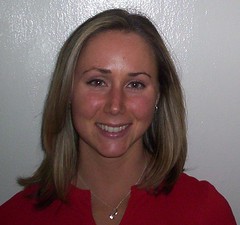
Christin Sherburne leading a lawsuit against the Kimkins diet
Most people who have been following my blog for any length of time over the past year already knows about the Kimkins diet scam and the ongoing class action lawsuit that has been brought up against the diet's founder Heidi Diaz, aka "Kimmer." One of the leading voices against Kimkins now is a woman who was featured on the front cover of Woman's World magazine in June 2007 touting her 100-pound weight loss in just five months. But a series of strange events involving Diaz and some potentially life-threatening health complications opened up her eyes to the dangers of the Kimkins diet scheme.
Click on the "LISTEN NOW" link below or download it to your iPod to hear Episode 163:
"The Livin' La Vida Low-Carb Show with Jimmy Moore" Episode 163 [29:56m]: LISTEN NOW | Download
Christin Sherburne takes us through this up-and-down journey over the past year when she was in support of Kimkins because of her incredible weight loss on it and then to her fervent opposition to this diet plan that threatened her health and is harming the lives of real people even to this day. I've been privileged to get to know Christin over this past year and met her in February this year on our first annual low-carb cruise (she'll be coming on the cruise in January 2009 as well!). She really is one of the nicest people you will ever meet.
In the podcast, Christin opens up about those confusing days following her experience as the Kimkins cover-girl when she became the public relations spokesperson for the diet, how she ran into a brick wall when she asked Heidi Diaz/Kimmer to answer some of the questions that had been swirling around the Internet from concerned onlookers, the role Laura Dolson played in helping her see the fraud this diet and its founder is, her unending determination to expose this scam wherever she can to help protect others from falling victim to it, what's happening with the class action civil lawsuit and potential criminal lawsuit against Heidi Diaz, and the positive things that have come out of this entire ordeal that are impacting her life today.
Never miss a low-carb beat and tune in anytime by:
So what did you think about Christin Sherburne? Regardless of your stance on the Kimkins diet, did Christin convince you one way or the other? Share your thoughts about today's interview in the show notes section of Episode 163. Check out more from Christin Sherburne by visiting her at her LivinLowCarbDiscussion.com page as well as her inspirational "The Journey" blog.
Come back next week for a highly-requested two-part follow-up interview with Dr. Keith Berkowitz who will answer a slew of questions that came in following my first podcast interview with him a few months back about the subject of "reactive hypoglycemia" while on a low-carb diet. If you sent me a question about this, then tune in on Monday and Thursday to hear it answered by Dr. Berkowitz. THANKS for listening to "The Livin' La Vida Low-Carb Show with Jimmy Moore."
The Zone Diet will soon be featured in FIRST magazine
I got word from the people at the Zone Diet today that they are teaming up with the popular First magazine to do a story on people who have implemented the Zone strategies for weight loss. What they REALLY want to see are people who have been using fish oil supplements with GREAT success in improving both their weight and health. Here's your chance to have YOUR story heard in a well-known national publication!
Those of us who are livin' la vida low-carb recognize the importance of getting the proper balance of essential omega fatty acids to reduce inflammation and this is a subject that is near and dear to the heart of Zone creator Dr. Barry Sears (who by the way is coming out with a new book in September 2008 entitled Toxic Fat: When Good Fat Turns Bad). They want first-hand testimonials of women (sorry guys!) who have experienced an amazing turnaround in how they look because of the Zone diet and fish oil supplementation (like Zone spokesperson Sue Knorr who I recently featured at my podcast show).
Time is of the essence and this story is on a deadline, so get on this ASAP if you are genuinely interested in sharing what happened to you. Here are the requirements:
- You MUST be female - You MUST be willing to reveal before and after photos - Your story MUST include your testimony about the Zone diet/fish oil
If you fit all of this criteria and can send me your story quickly, then please e-mail this information to me at livinlowcarbman@charter.net. I'll forward them to the people at the Zone diet and cross my fingers for you that yours will be chosen. GOOD LUCK TO YOU and remember--DON'T DELAY! Send your story in today.
There are two ends of the spectrum when people start talking about being on the "Atkins diet"--either they are simply cutting back on their carbohydrates and consuming whatever amounts of meat, cheese, eggs, and bacon they choose to eat or they are following the plan that was written and promoted by the late great Dr. Robert C. Atkins in his various books, most notably Dr. Atkins' New Diet Revolution.
It's amazing how people can get away with describing both of these as the "Atkins diet" when only those people who have educated themselves about this way of eating in the latter group can honestly say that. Even worse, we've got people who try to debate the Atkins diet without ever seeing what Dr. Atkins wrote. Come on, that's just plain ignorant if you ask me. So I'm ready to help do something about this lack of understanding about the Atkins diet starting right here and right now.
In Episode 48 of "Livin' La Vida Low-Carb On YouTube," my lovely wife Christine and I share about an Atkins Diet Startup Kit that we are making exclusively available to anyone who wishes to learn more about this healthy and delicious low-carb nutritional approach. With all the mounds of misinformation and confusion that has been generated by those so-called health "experts" and the media about this wonderful dietary plan that helped me shed 180 pounds in 2004, why wouldn't you just want to learn more about what it's all about? That's precisely what this 6-item kit will do--EDUCATE!
Learn more about what's in the Atkins Diet Startup Kit in today's video:
Here's a recap of the materials included in this package:
- Why & How It Works video - Staying Slim & Health video - Atkins diet workbook - Atkins meal planner (recipes) - Atkins easy carb gram counter - Basic diet manual
These materials certainly do not replace what you get in Dr. Atkins' New Diet Revolution or any of his other books. But they do complement those books by putting the Atkins diet in clear and understandable language using a 3-part video explanation of the nutritional plan from Dr. Atkins himself, workbooks and information sheets to help you personalize your low-carb Atkins plan, and then practical information on carb counts, recipes, and other essential information to go on the REAL Atkins diet the right way. This is about a $100 value worth of materials that you can't purchase anywhere else and it's all yours for only $25 (plus FREE PRIORITY MAIL SHIPPING!).
Yes, you get the two videos, the big workbook, the recipe book, the carb gram counter book, and the basics guide to take when traveling all for the flat cost of $25. This includes your PRIORITY MAIL shipping, so you'll get it quickly when you place your order. Please contact me at livinlowcarbman@charter.net and we'll work out arrangements to ship your materials. I want to get these materials about the Atkins diet into the hands of people who genuinely want to learn what this specific diet plan is all about. There are no more excuses for thinking the Atkins diet is just bacon-wrapped-butter-and-brie (maybe Dr. Dean Ornish should buy this kit--HE MIGHT LEARN SOMETHING!).
Give us your feedback on our videos by e-mailing livinlowcarbman@charter.net anytime. We appreciate hearing from you and will possibly use your show ideas in a future video. Watch our previous YouTube videos and join the ever-growing list of people who now subscribe to our YouTube videos. THANK YOU for your support of our video series on YouTube and we'll keep 'em coming!
The New England Journal Of Medicine is highly prestigious
While I was away on vacation in Florida seeing my brother recently, a well-publicized weight loss study comparing a low-carbohydrate, Mediterranean, and low-fat diet was released and published in the July 17, 2008 issue of The New England Journal Of Medicine. All the headlines were screaming how the Atkins diet is best and livin' la vida low-carb is champion of them all. It was in virtually every newspaper (including this Wall Street Journal story I was quoted in), local and national television news outlet, and all the health and weight loss blogs--A BIG STORY!
And because it put low-carb living in such a positive light as compared with the low-fat diet or the much-beloved Mediterranean diet, you would think I'd be a happy camper touting this study as the best thing to happen for low-carb in a long while. But as I stated after this other highly-publicized study out of Stanford published in Journal of the American Medical Association last March, I can't get too thrilled about yet another study that shows such insignificant weight loss on a low-carb diet after two years and doesn't really require the participants to adhere closely to anything resembling the Atkins weight loss diet. This puts me in the minority I'm sure, but I have to say this is one big reason why I was disappointed with the New England Journal study.
For those of you who missed this study, lead researcher Iris Shai, R.D., Ph.D. from the S. Daniel Abraham International Center for Health and Nutrition in Israel, put 322 "moderately obese subjects" on one of three specific diets for a two-year observation:
- LOW-CARB--Two months of 20g daily and slowly increase to 120g maximum for the duration of the study. Calorie-restriction was not required for this group. - MEDITERRANEAN--Calorie restriction of 1500 daily for females, 1800 daily for males consuming a diet with 35 percent fat from olive oil and nuts while consuming fish and poultry in place of higher-fat cuts of meat like pork and beef. - LOW-FAT--Calorie restriction of 1500 daily for females, 1800 daily for males consuming a diet with 30 percent of calories from fat as recommended by the American Heart Association (AHA)
Before I share the results, I have some comments. While 20g carbs is indeed the Induction phase of the Atkins diet, 120g is nowhere close to ANY phase of the Atkins diet. EVER! Why do they put people on a low-carb diet and then let 'em go to town eating carbs later? What's so freakin' hard about requiring them to stay at or under 50g a day? I just don't get that with these studies. I do like the fact there were no constraints on calories with the low-carb group and they just naturally kept their calories in check eating this way.
The Mediterranean diet group looked fine, but I was surprised to see the low-fat diet group to include so much fat. While the AHA may consider a 30 percent fat diet to be low (and it is relatively speaking), it doesn't come anywhere near the kind of low-fat diet that the infamous Dr. Dean Ornish said in my first interview with him suggesting obese and unhealthy people go on to lower their weight and improve their health. His plan is a 10 percent fat diet with upwards of 70-80 percent carbohydrates. That's not what they did with this study which is too bad since it supposedly shows the difference between low-fat and low-carb. We'll have more from Ornish is a moment.
First, let's take a look at the results of this less-than-spectacular study:
The LOW-CARB group lost the most amount of weight with 12.1 pounds followed by the MEDITERRANEAN group who lost 10.1 pounds and bringing up the tail was the LOW-FAT group who only shed 7.3 pounds (confirming the results of this long-term large study that found weight loss was insignificant on a reduced-fat diet). The researchers also observed what happened to HDL and triglycerides on these various nutritional approaches and the results were not at all shocking to those of us paying attention to our health--LOW-CARB saw a greater INCREASE in their HDL "good" cholesterol and a more significant DECREASE in their dangerous triglyceride levels making their ratio of HDL/total cholesterol much better than the other groups. Additionally, the A1C levels, an important marker in blood sugar health, as well as their C-reactive protein levels, a marker look at dangerous inflammation, both improved more with the LOW-CARB group.
Pretty good news, right? Well, it depends on who you ask. Let's see what Dr. Ornish thought about this study in this op-ed piece published in Newsweek magazine. It appears he had an issue with several things that may or may not have validity:
1. The study was funded by The Atkins Foundation, a non-profit organization led by Veronica Atkins that has donated millions of dollars to various researchers looking into low-carb diets and their effect on weight and health carrying on the legacy of the late great Dr. Robert C. Atkins.
This shouldn't disqualify the study altogether, but Ornish seems to think it does. So, are we to negate all the research conducted by you and your group on low-fat diets using the same logic, Dr. Ornish? You're better than this.
2. The LOW-FAT participants didn't eat a "low-fat" diet.
I agree, Dr. Ornish. But neither did the LOW-CARB group eat a genuinely "low-carb" diet beyond the first couple of months of the study. If we are ever gonna see a real comparison of low-fat and low-carb diets going head-to-head, then mandatory compliance is gonna have to be implemented. That's the only way to keep advocates on both sides from whining about the diet not being the actual diet every time one of these comparison studies is released.
3. The study is questionable because of calories difference.
Dr. Ornish claims the study lacks "quality" because the LOW-FAT group ate less calories but lost less weight. He says this calls into question the veracity of the data because it is "physiologically impossible" to eat less calories and lose less weight than the other groups. Ornish believes in the mistaken notion of calories in, calories out, so this is not surprising. How about that metabolic advantage at work? :D
4. The Atkins diet group ate "vegetarian sources of fat and protein" which isn't the Atkins diet with all the bacon and beef you can eat.
I'll agree that vegetarian fats and proteins are not preferred over animal fats on the Atkins diet, it's ludicrous to continue stating that the Atkins diet by the book doesn't include veggies. Anyone who has read the book and doesn't have an agenda like Dr. Ornish knows that you get two cups of green leafy veggies as well as one cup of non-starchy vegetables per day on the most restrictive Induction phase of the Atkins diet. Hello?! You make yourself look idiotic when you keep repeating the same lie over and over again, Dr. Ornish.
As for the actual sources of fat and protein in the LOW-CARB group, low-carb researcher Dr. Eric Westman from Duke University asked Dr. Shai to clarify what kind of foods were eaten by members of the low carb group. The notion that the researchers pushed a "vegetarian low-carb diet" on the participants is NOT what was done.
Here was Dr. Shai's response to Dr. Westman's inquiry:
This is kind of funny that some could think of a "vegetarian low-carb" diet. Is it a new suggested strategy? Could be interesting idea but this wasn't the case here. Our low-carb diet was based on Atkins, the participants read the book and the recipes were more or less comparable to what you know in the states.
Beef is the main red meat. What could be different? People here (in Israel) would not mix in the same meal meat and butter, a salad is considered a very rich one and not a lettuce based, and the main dressing is olive oil. As for beverages, same industry that makes money everywhere.
For example, a plate could include: fish or fried/not bread coated chicken/or red meet, broccoli and mushrooms coated with eggs, roasted eggplants, vegetable salad (peppers, cucumber, green leaves, not lettuce) with olive oil dressing. I understand that some of the low-fat people find it hard to believe that such a low-carb diet was tremendously favorable within 2 years in a well designed study, but these are the facts and the science of tomorrow, with the next long-term studies in the pipeline, may confirm or not these findings.
So, as you can see, the LOW-CARB did indeed follow more of an Atkins diet approach in terms of the specific foods they ate, not the mocking of a "vegetarian low-carb diet" as Dr. Ornish made fun of in his op-ed column.
5. HDL is only a risk factor among many to be looked at.
Oh, how convenient for you, Dr. Ornish. Yes, we know all about your "garbage trucks" analogy for HDL stating that you need more of them when you have more "junk" (LDL) to be removed. But the fact is eating a high-carb diet as Ornish suggests leads to LOWER HDL and HIGHER triglycerides, neither of which is healthy by any stretch of the imagination. And the very latest researcher is showing us that LDL and total cholesterol are not nearly as important as the HDL/triglycerides ratio that is becoming the new standard bearer for heart health. Dr. Ornish may dismiss these improvements with HDL and triglycerides by the LOW-CARB group as insignificant, but we know better.
At the end of his op-ed trying to dismiss this study as irrelevant in the grand scheme of things, Dr. Ornish states that it's time to "call a truce in the diet wars." That's something I've tried to do before noting all the areas of agreement between low-fat and low-carb, but the fact does remain we don't all agree on what is healthy, Dr. Ornish. To state so bluntly that "an optimal diet is one that is low in fat" shows just how entrenched you remain in your ideology without looking at the latest data (and I'm sure you STILL haven't read Gary Taubes' Good Calories, Bad Calories because you're afraid to have your lifelong beliefs about health challenged with evidential facts!).
Okay, enough about what Ornish thinks of this study. Let's see what some other prominent and REAL health experts think about the New England Journal study:
"Call me crazy, but I can't help wondering if the low-carb group would had lost even more weight if they had eaten less than the 120 grams of carbs these folks ate, all the while keeping calories at a moderate, reduced amount and incorporating other lifestyle changes like exercise and stress reduction. Can you imagine? A more reasonable level of under 100 grams a day (or even less) might have made a lot of difference--that's a level that seems to work the best for people who have problems with sugar, insulin and carbohydrates in general."
"This study adds to the body of evidence that suggests that lower carb and carb-controlled eating has distinct merit and generally has the capacity to out-perform low-fat diets in the weight-loss stakes (and without any conscious restriction of food intake, either). The results of this study suggest that such a diet may be superior in terms of cardiovascular disease risk too."
DR. RICHARD FEINMAN
"The major significance of the NEJM paper is that it is confirmatory of much work that has gone before. It is really not, as portrayed in the media, revolutionary. Much prior work from the laboratories of Jeff Volek, Eric Westman, Steve Phinney, Jay Wortman, Mary Gannon and Frank Nuttal and others has shown that carbohydrates, beyond simple calories, have a role in controlling how fats are used or stored. Directly or indirectly through insulin, carbohydrates encourage the storage rather than burning of fat and lead to the organization of fat into the cholesterol-containing particles that have been associated with cardiovascular disease. At the same time, the NEJM paper also confirms the evolving picture of fat as playing a passive role and emphasizes that what was once thought to be an intuitive benefit for lowering fat has consistently not panned out. The new article is a key block in a scientific structure that has been put together by many previous investigators. If the NEJM paper finally catalyzes some recognition of the scientific principles of carbohydrate restriction it will be a very important contribution."
"For years, carbohydrate restriction and the low-carb folks, those of us who really spent our lives telling patients they could regain metabolic control and kind of being ostracized for it, we’re finally validated."
DR. JEFF VOLEK
"The findings from the recent NEJM study that showed a diet lower in carbohydrate outperformed a low fat diet confirms our previous work and that of many others. It is unique in that the intervention was 2 years and yet there was a very low subject attrition rate over such a long period of time. The low carbohydrate diet was only moderately restricted in carbohydrates (about 40% of calories). Based on our research, had the level of carbohydrate restriction been in the 10-15% range, the results would have been even more impressive. The results add to a growing body of work supporting the value of restricting carbohydrate as opposed to fat for superior weight management and metabolic health."
"These latest trials just happen to be the best data we have on the long-term effects of saturated fat in the diet, and the best data we have says that more saturated fat is better than less. It may be true that if we lowered saturated fat further — say to 7 % of all calories as the American Heart Association is now recommending — or total fat down to 10 percent, as Dean Ornish argues, or raised saturated fat to 20 percent of calories, as Keys did, that we’d see a different result, but that’s just another hypothesis. The trials haven’t been done to test it. It’s also hard to imagine why a small decrease in saturated fat would be deleterious, but a larger decrease would be beneficial.
It’s also true that I don’t think that LDL is a particularly meaningful predictor of heart disease risk, and I think total cholesterol is meaningless (based on the evidence that I recount in the book). But the point is that the AHA and the National Cholesterol Education Program and the authorities at the National Heart, Lung and Blood Institute do think LDL is meaningful, and that’s the basis by which they have always recommended low-saturated-fat diets. They also think that total cholesterol/HDL is the single best predictor of heart disease risk, so by their assessment, more saturated fat is better than less. I think the best predictors of risk regarding cholesterol profiles are HDL and the size and density of the LDL particles themselves, and maybe measurements of a protein known as ApoB (the protein component of the LDL particle itself) — and the existing diet trials in those cases also suggest that saturated fats are at worst harmless and perhaps even beneficial.
Last point, the funding. It’s true that the study was financed by the Atkins Foundation, but to assume that the researchers went out and falsified their findings or twisted their observations to satisfy the source of funding is naive. Regrettably, the only institutions that will finance clinical trials, for the most part, are those that stand to gain from the results. That’s why the pharmaceutical industry finances drug trials. It would be nice if the government financed all these trials, but they don’t. So it’s up to the Atkins Foundation and any other organizations that might hold similar beliefs. In this case, the Atkins-funded diet trial observed the exact same results as similar NIH-funded diet trials."
Incidentally, Taubes says the National Institutes of Health (NIH) has spent $5 million for a large (300+ subjects, two-year-long) Atkins vs. AHA low-fat diet trial--the REAL THING! This is a larger and longer version of a pilot trial that observed results similar to the Israeli trial. This is the largest diet/weight loss trial the NIH has ever funded. The principal investigator is Gary Foster of Temple University, currently the president of the Obesity Society. In February 2007, Dr. Foster told Taubes the researchers had "completed the final 2 year assessments on most but not all" of their subjects. Currently the paper is "in the peer review process" and that's all we know at this point. Cross your fingers that this is the great elusive study that actually looks at low-carb vs. low-fat once and for all.
Coming as a shock to nobody, the AHA weighed in on this study expressing their concerns over the long-term weight and health impact of low-carb diets and saturated fat consumption and the lack of application to women since the majority of the study participants were men. Yadda yadda yadda...what do you expect from a group pushing two cartoon characters known as "The Bad Fat Brothers" named "Sat" and "Trans?" These people lost all dignity a long time ago.
I have long held the position that if low-carb is at least as effective as low-fat for weight loss and health, then both should be recommended alongside one another as healthy options for people to choose from. The American Diabetes Association recognized low-carb diets to diabetics for the first time beginning in January 2008 and the AHA, AMA, and other health groups should follow suit. The evidence is there if you'll simply open your eyes to it. We don't need another study, flawed or otherwise, to tell us that one way of eating that is working for so many people is livin' la vida low-carb. GIVE PEOPLE THE TRUTH and then let them choose. It's that easy.
Although I'm not particularly overjoyed by this latest study out of Israel, that doesn't mean I don't appreciate the way it helped carry on the conversation about low-carb living across mainstream America. My stepdad Frank, who only recently started on the Atkins diet to lose about 50 pounds along with my mother, was all excited when he saw the television news coverage about this study a couple of weeks back. If this excites people and gets them interested in learning more about the healthy low-carb lifestyle, then that's awesome! I can't wait to see that new NIH study Taubes was talking about, though. That one looks like the REAL DEAL.
You can e-mail Dr. Iris Shai about this study at irish@bgu.ac.il.
Atkins Nutritionals Wants YOUR Atkins Low-Carb Success Story
Atkins Nutritionals looking for low-carb testimonials
The Atkins Nutritionals web site is in the process of being updated right now and they are looking to add some Atkins weight loss success stories and testimonials to the new and improved site. If you've experienced weight loss, successful weight maintenance or improved health and energy from following the Atkins Nutritional Approach, then they'd love to hear from you. And there's a payoff for those of you who do--you'll win a special Atkins prize if your story is chosen.
What they are looking for is first-person stories about how the Atkins Nutritional Approach, Atkins products and the Atkins community have changed your life. Here are a few questions to consider as you write your story:
- When did you start following the Atkins approach, and over what period of time? - What inspired you to try the Atkins Diet™? - Are you still following the Atkins principles? Which phases, principles and aspects of the Atkins Nutritional Approach have proved to be the most practical, helpful and easiest to follow? - What Atkins products have helped you with your weight loss goals? We want to know if you used Atkins products, which ones you used, and your opinions about our products. - Did you succeed? What were your keys to success? Did you modify the Atkins plan to suit your own lifestyle and preferences? - What has changed in your life–for example, if you lost weight, have you maintained your weight loss and how have you benefited from following Atkins? - What obstacles did you have to deal with while following the Atkins Nutritional Approach, and how do you overcome them?
If you send pictures, these should also depict your personal experience–from before you started on the Atkins Nutritional Approach to your "after" picture, showing where you are now or when you finished your last Atkins phase.
You can e-mail your first-person success story to testimonials@atkins.com. Be sure to include your name, address, and the best way to contact you (phone and e-mail address). If you have an Atkins weight loss success story, then send clear digital .jpg before and after photos (be sure the pictures do not include other people). When you send in your story, keep in mind you will be contacted by Atkins Nutritionals if they are interested. It may take some time for them to go through the submissions, so be patient.
If your story is chosen, then they will send you a release form to sign. They will not use your story unless you send the signed release form back to them. They will not use anything you send them without your explicit permission and they will not use anything without a signed release form from you.
GOOD LUCK to everyone who shares their Atkins success story! :)
'Doc' Describes Me As A 'Dead Man Walking' Because Of My Elevated LDL Cholesterol
One of the risks that I willingly take blogging about health as someone who has not been trained in either medicine or nutrition is the fact that there are a whole lot of people who are much more intelligent than I am about the subjects I write about. It's just a fact of life that I've lived with since day one of my blog more than three years ago. And it doesn't bother me a bit that I don't have all the answers.
The purpose of my blog is for me to share about my experiences livin' la vida low-carb and to hopefully provide some interesting topics for discussion that will enable my readers as well as myself the chance to learn something about their own health that they probably didn't know before. One thing I've found since I started blogging in the health arena is that even the doctors and medical researchers don't always know as much as we think they do. There's a reason they call it "practicing" medicine.
In a very condescending tone in his e-mail, "Doc" proceeded to berate my gross ignorance of some rather "basic" health concepts that I apparently haven't fully grasped yet (get a load of this guy!):
I nearly fell off my chair reading your well-meaning but very erroneous blog on Tim Russert.
If larger fluffy, buffy LDLs are protective, why is it that people with the highest risk of atherosclerosis and premature death (i.e. familial hypercholesterolemia) have 100% fluffy, buffy, LDLs?? Sure does not protect them! You with an LDL-C greater than 200 likely have large LDLs and are a dead man walking.
If low HDL-C is always bad, why are their several genetic conditions associated with very low HDL-C and longevity? Check out JAMA. 2008;299(21):2524-2532
Why have there been numerous published articles in the last few years describing many patients with myocardial infarctions who have HDL-C > 90 mg/dL?
If low LDL-C is so dangerous, why do people with hypobetalipoproteinemia who go through life with LDL-C between 5 and 40 all have longevity with no ill effects of such low cholesterol levels?
Russert's Lipids: TC = 105 LDL-C = 68 HDL-C = 37
Of course that is impossible: TC = LDL-C + HDL-C + VLDL-C VLDL-C is derived by dividing TG by 5 thus VLDFL-C = TG/5
Thus using your numbers TG would be zero which is impossible. Of course if you knew anything about lipids, your blog would not contain so many basic errors.
Last bit of advice--Look up apolipoprotein B or LDL-P. Read the newest guidelines: A consensus statement from the ADA and ACC on Lipoprotein Management in Patients with Cardiometabolic Risk (like Russert). They were published in April in Diabetes Care and the Journal of the American College of Cardiology.
Had anyone measured LDL-P on Russert and then treated it aggressively, Russert would still be here. Of course since statins rarely normalize LDL-P, Russert needed additional medication beyond his statin to achieve apoB goal.
Hate to further blow away your statements, but if you read the new ADA/ACC statement you will see that data from three major trials (Framingham, MESA and EPIC Norfolk) have shown that LDL size is no longer considered an independent risk factor for CHD. Only thing that matters is apoB or LDL-P.
Happy reading and please correct your statements on the web site.
Well, I guess he told me, didn't he? It really depends on what research studies you are looking at and he pointed to a few that certainly made sense to him. As I stated before, I'm no expert when it comes to knowing anything and everything about the subjects I write about. I simply share what I do know and have seen applied in real life situations and let those results speak for themselves.
It's a bit presumptuous of this guy to call me a "dead man walking" because of my high "fluffy, buffy LDL" cholesterol. Further belittling my intelligence by attempting to point out my "errors" was also quite unbecoming of someone who alleges to be a professional physician whose goal is to help educate patients and make them healthy. I wouldn't want this fella being my doctor!
Although I didn't have the answers to his remarks, I knew someone who could provide an educated and reasoned response to "Doc." He's a real doctor and avid researcher on low-carb diets--Dr. Eric Westman. The following is Dr. Westman's comments back to "Doc" asking for clarification and presenting some counter-evidence rebutting the original claims made in his e-mail to me:
Thank you for forwarding this email.
1. The definition of "cardiometabolic risk" is changing, and its relationship to cardiovascular disease is imperfect. In spite of this, many medical authorities want you to do what they recommend. There are many exceptions to the recommendations, and I believe the authorities will acknowledge this readily.
2. Please teach me, "Doc." You wrote that people with "familial hypercholesterolemia have 100% fluffy, buffy, LDLs." Can you provide a reference for this statement (even case studies are fine)? Here is a recent article and it suggests otherwise...but the abstract doesn't really give enough information until I can read the full study. J Pediatr. 2008 Jun;152(6):873-8. Epub 2008 Feb 8
3. You wrote: "If low HDL-C is always bad, why are their several genetic conditions associated with very low HDL-C and longevity?"
I think that this just points out again how imperfect these markers are.
4. You wrote: "LDL size is no longer considered an independent risk factor for CHD. Only thing that matters is apoB or LDL-P."
"Doc" let me just take a moment to explain what "independent risk factor" means statistically--it is a common source of confusion. "Independent risk factor" means that, after accounting for some information, the addition of a new factor (variable) adds no more information (the association is no longer statistically significant).
My understanding is that LDL size and LDL-P are highly intercorrelated ("track together"), so that after accounting for one, the other is no longer statistically significant in its association with cardiovascular disease. It does NOT mean that LDL size is not important--it just means that you get no more additional information about the presence of cardiovascular disease from knowing LDL size when you already know LDL-P.
I look forward to learning more from you. Thanks.
Eric C. Westman, MD MHS Associate Professor of Medicine Director, Lifestyle Medicine Clinic
Excellent job, Dr. Westman! You took each of the points made by "Doc" and offered him the opportunity to see other data that he may not have considered otherwise. I appreciated you taking time out of your busy schedule to write back to "Doc" and give him a chance to learn something new himself. Unfortunately, that's the last we've heard of good ole "Doc." There's been nary a word out of him since Dr. Westman's reply.
Am I fallible? Yes, more than I'd like to admit. Do I know everything there is about diet, health, and nutrition? Anyone who tells you they do should be avoided because they are lying. Do I enjoy inciting an open discussion and debate of ideas? You bet your sweet bippy I do which is why I don't mind hearing from people who necessarily disagree with my viewpoints and wish to correct me. If I'm wrong and evidence is presented to me proving it, then I'm the first to make the corrections and admit the error of my ways.
But in this case, "Doc," I won't be changing a thing! By the way, where'd ya go? I'd love to hear what you have to say about what Dr. Westman said.
Dude, You Should 'Ditch The Unhealthy Fad Diet' And 'Hit The Weight Room' Harder
I have always contended that people are much more assertive, aggressive, and in-your-face on the Internet than they would EVER be in the real world. Sure, there are a few exceptions to this, but for the most part it's true. And when you can post something anonymously without any way to trace where it came from, you can multiply that willingness to say ANYTHING by at least one-hundredfold!
People have their opinions and certainly don't mind sharing them regardless of the consequences. I learned a long time ago that you had better put on a thick layer of skin if you decide to start blogging for the whole world to see, especially when it comes to sharing your own personal diet and weight loss story. Everyone has their own theories about what works and I think it's great that the World Wide Web affords us the chance to hear all of these voices and decide for ourselves what is true or not.
But there is some sense of responsibility for decency and class when it comes to leaving a comment, especially when it is critical. There's nothing more cowardly in my opinion than to do what I like to call a "drive-by comment"--you come into a blog, post a flaming comment anonymously, and then run away. What good does that do? Just put your name and e-mail address on there at the end so that if people have questions about what you wrote they can reach you. How difficult would that be?
Well, I suppose they don't WANT to be contacted and that should make you suspicious of their remarks. Anyone willing to give a strong opinion should never be afraid to catch some heat back from the people who disagree. It's how public discourse should be handled and yet so many people like the following anonymous reader just don't get that.
Everyone is being very supportive of your weight loss, but dude you are still very very overweight and borderline obese. You lost a lot of weight, but 220 pounds is not a lean weight unless you're a bodybuilder or athlete. Jesus, you've still got a good 70 pounds of pure fat to lose in order to be considered "normal."
It's seriously not "loose" skin, it's just heaps of fat that you haven't lost yet because you basically starved your body with an improper diet while not doing enough exercise.
I guarantee your body would look worlds better had you hit the weight room and treadmill six days a week and not subscribed to a fad diet that goes against nature itself. Face the facts: You lost weight too quickly while NOT exercising enough. That is not loose skin, that is fat that is backed up by emaciated muscle mass.
Don't believe me if you want, but I know what I'm saying. Your got about 60% if the way to your goal and then you stopped, thinking 220 pounds was your ideal body weight, and you neglected your body composition of muscle: fat ratio. You have no muscle and tons of fat, that's why your body looks so bad. Sure, surgery can fix this, but dedication and a gym membership will fix it as well. And before you go on saying "Well, I do work out, I do have a gym membership, etc.", have you considered you just aren't working hard enough?
Again, congrats on the weight loss, but you need to stop making excuses and face your own issue: get more dedicated to exercise and ditch the unhealthy fad diet. The human body needs carbs to fuel all of our organs, which includes the skin (the largest organ) and brain.
Nice, huh? So, tell me how you REALLY feel. Ahhhhhhh, what do you say to something like that? While there was some truth in what was expressed, there was a whole lotta crap too. I chose not to respond in the comments and to highlight this one in this post today instead because it is indicative of the kind of vitriolic hatred people have not just for people on a low-carb nutritional approach, but also who are on a journey to better health and weight loss. Let's take a look at each part of this comment to separate the good from the bad from the ugly:
Everyone is being very supportive of your weight loss, but dude you are still very very overweight and borderline obese. You lost a lot of weight, but 220 pounds is not a lean weight unless you're a bodybuilder or athlete. Jesus, you've still got a good 70 pounds of pure fat to lose in order to be considered "normal."
By what standards am I "very overweight and borderline obese?" I presume you are referring to body mass index and that's not the entire story. Yes, I'm still a big guy, but everyone who meets me says I am much taller and large structured than they expected. I'm a big guy who used to be a REALLY big guy. I'd love to lose more weight and am working on getting there the best I can. According to you, I need to weigh 150 pounds as a 6'3" man--ummmm, call me crazy, but that's just nuts!
It's seriously not "loose" skin, it's just heaps of fat that you haven't lost yet because you basically starved your body with an improper diet while not doing enough exercise.
I'm the first to admit some of it is indeed body fat, but I could not disagree more than I've "starved" my body with some kind of "improper diet." Have you read the latest studies on a high-fat, low-carbohydrate diet? It's stunning and I highly recommend you read books like Good Calories Bad Calories by Gary Taubes to get the whole story before you show how ignorant you are describing this way of eating that way. And how do you know I'm not exercising enough? I did DAILY cardiovascular exercise the entire time I was losing 180 pounds in 2004. How much MORE could I possibly do?
I guarantee your body would look worlds better had you hit the weight room and treadmill six days a week and not subscribed to a fad diet that goes against nature itself. Face the facts: You lost weight too quickly while NOT exercising enough. That is not loose skin, that is fat that is backed up by emaciated muscle mass.
I'm the first to admit I regret that I didn't "hit the weight room" sooner as I noted in the final chapter of my first book. But I did upwards of 45-60 minutes (and sometimes more!) of treadmill or elliptical training every single day of the week during my weight loss. I was afraid of GAINING weight then, but I have since added a regular weight lifting routine with great success so far. What's so "fad" about eating a diet like our early hunter-gatherer ancestors did with healthy whole foods like beef, eggs, fish, nuts, and anything else they could find for nourishment? to me, eating tofu and bean sprouts and saying you love it "goes against nature itself." How did I lose too quickly and how can you possibly know that I wasn't exercising enough? There's a whole lotta assumin' going on out there.
Don't believe me if you want, but I know what I'm saying. Your got about 60% if the way to your goal and then you stopped, thinking 220 pounds was your ideal body weight, and you neglected your body composition of muscle: fat ratio. You have no muscle and tons of fat, that's why your body looks so bad. Sure, surgery can fix this, but dedication and a gym membership will fix it as well. And before you go on saying "Well, I do work out, I do have a gym membership, etc.", have you considered you just aren't working hard enough?
I will agree that I could have lost more weight than I did and I'm still on that journey to get my body weight down to around 200 pounds. That's what I'd like to be at. But I won't sacrifice my health to get there. Right now, I am as healthy as an ox despite your assertion to the contrary. Sure, my body composition could use some more muscle, but I'm working on that. In just the past six months, I've grown more muscle mass than I EVER have in my entire life. I'm proud of this and know it will continue henceforth. I'm not just a member of a gym, but I have a personal trainer guiding me each week about proper form and technique with my lifting. If I was a lazy slob who didn't stay committed to my workouts and exercise routine, then I could see you stating I wasn't "working hard enough." But quite frankly you don't have a clue what you are talking about.
Again, congrats on the weight loss, but you need to stop making excuses and face your own issue: get more dedicated to exercise and ditch the unhealthy fad diet. The human body needs carbs to fuel all of our organs, which includes the skin (the largest organ) and brain.
What a birdbrain! I've never made any excuses for the way I look. My pursuit has always been to become better and better as the years go by. Nobody is gonna argue that I looked better and was healthier at 410 pounds four plus years ago than I am right now. And I challenge anyone to tell me I'm not exercising enough for what my body needs to get stronger, more conditioned, and burn calories. Could I do a little more cardio than I do now? Sure, but the scientific evidence behind it is shaky at best. My focus is on the resistance training, but I get in several hours of cardio a week in the form of basketball, volleyball, and other recreational competitive sports events that are a part of my life. As for the "body need carbs" BS that keeps coming up over and over and over (did I mention "over"?) again and again, I simply point you to my latest YouTube video on gluconeogenesis.
Okay, I feel much better now. :D But one of my readers named Melinda who is NOT a low-carber and lost a significant amount of weight on a low-calorie diet saw this comment from the anonymous anti-loose-skin, anti-low-carb, anti-Jimmy-Moore person and decided to give her a piece of her mind about what she thought about it. You gotta LOVE this:
Alright this just peeves me off. I can't believe how people can come down on someone's success. Jimmy came ages from where he was and achieved something most people only dream about.
No matter what diet you use to achieve weight loss, you can end up with loose skin. It's just a matter of fact. I get tired of hearing people spout off about how working out harder at the gym can "take care" of the extra skin.
I've lost 175 pounds by calorie counting and exercise (no I did not follow the low-carb diet) and I am plagued with loose skin. I am 24 years old and NO I am not still overweight. If I lost any more weight, people would assume I was anorexic.
I am 5'5" tall and currently weigh 120 pounds. Slabs of skin are on my stomach, arms, legs, thighs...heck, even my breasts could use some serious help. Was it because I didn't "try" hard enough, or that I did something wrong? Um...no, it's not!
So stop bagging on people. I just get mad that other people can be such a**holes. Sorry Jimmy. Congrats on all your weight loss. You're amazing.
This is why I don't ever have to respond to negative blog comments like these that come my way. There are plenty of people like Melinda willing to tell 'em off for me. THANKS Melinda! Something tells me you'd probably tell that anonymous commenter a thing or two to his face if you had the chance. I appreciate your support and CONGRATULATIONS on your own weight loss success, too. :)
As for the anonymous commenter, I welcome your criticisms anytime. But how about coming out from behind your computer screen and sharing with us your name and contact information so an open discussion can ensue? Plus, if you have what you believe are the answers to obesity, then why not share them in a blog? I'd be happy to post about it at my blog so that others can see what you have to say. This isn't a competition about seeing who's diet or fitness routine is better. We're all on the same side trying to help people start to care about their health. These kind of needless "drive-by comment" attacks are totally unnecessary. SHOW YOURSELF and be proud of what you have to say.
Should A Christian Low-Carb Dieter Refuse High-Carb Communion?
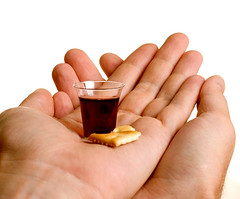
Christian custom of communion includes bread and wine
When you first start livin' la vida low-carb, it's almost impossible to think about all the ways your life will change overnight. Sure, you know you're not allowed to eat bread, pasta, sugar, candy, juice, rice, and just about anything sweet and starchy. You do it willingly because you realize that changing your lifestyle is about making healthier choices for your body so you can honor the temple that God has entrusted you with.
As a Christian low-carb dieter, it never occurred to me when I began this new way of eating in 2004 that it would make me choose between honoring God with one of the most important sacraments that Christians participate in or honoring my commitment to low-carb living. I'm referring to the act of communion where you consume a small cracker or unleavened bread wafer representing the body of Jesus and a small cup of grape juice or wine symbolizing Christ's blood sacrifice for our sins on the cross.
So what does a low-carb dieter who is a believer in Jesus Christ do when it comes to celebrating and participating in this holy act of remembrance? That's what one of my Christian readers wanted to know in an e-mail to me:
Hi Jimmy,
This might seem like a silly question but I'm guessing that since you are a Christian and are active in church that this issue has come up for you.
Do you take communion? Bread and grape juice do not fare well for my low-carb lifestyle but when I pass, I feel very odd because I want to participate for the spiritual meaning.
Let me know how you deal with this.
You know, it was funny the first time I was in church on a day when communion was taking place and I felt so awkward. Do I take part in it and glorify the memory of the greatest act of love and sacrifice the world has ever seen or do I refuse since I can't have that many carbohydrates as part of my new commitment to livin' la vida low-carb? It wasn't such an easy decision for me and I had a tough time at first.
But then I thought about it more and came to the conclusion that the amount of carbs in that little piece of bread and tiny glass of grape juice probably doesn't amount to more than 8-10g carbs maximum. It's not like this is an entire high-carb meal or anything. In the end, I believe God will honor your dietary commitment because you partook in communion.
So I proudly take communion at church the four or so times a year we celebrate it now and have no qualms whatsoever with it. It's a personal decision that each individual must make for themselves. Do what you feel the Lord would have you do. :)
Igniting Some Low-Carb Lifestyle Fourth Of July Fireworks
Before you celebrate the 4th of July, here's a low-carb update
It's almost time for the fireworks, backyard barbecues, vacations, and all the rest that comes with the extended Fourth of July weekend in celebration of our nation's independence. I am proud to be an American and appreciate all the freedoms and opportunities that this nation affords me as a citizen. While a lot has been said over the past few years about this great country I call "home," there's no denying the United States is and will always be the greatest socio-political experiment in the history of the world. God bless America now and forevermore!
Before you get caught up in all the busy activities of the holiday, I wanted to share a few low-carb headlines with you that have been in the news lately. It simply amazes me how a way of eating that has been so incredibly maligned and dragged through the mud like livin' la vida low-carb can somehow still be talked about so much in the media. Albeit it's not always in a positive light, but they can't help bringing it up. Maybe deep down inside they realize there is more to low-carb than they're letting on.
Here's what is going on in the world of low-carb right now:
People always ask me if low-carb living is healthy for children. Why wouldn't it be? Our bodies were never meant to handle high amounts of carbohydrates, so it stands to reason that eating a low-carb diet is gonna be healthier for kids. And now we have this study published in Asia Pacific Journal of Clinical Nutrition from a researcher down in Australia I've blogged about before named Dr. Manny Noakes. She found that an unlimited low-carb, high-carb diet produces more weight loss than higher carb diets with limited calories, primarily because the protein seems to increase satiety. Additionally, these obese elementary school study participants placed on a low-carb diet experienced a significant drop in their total cholesterol and triglycerides. WOO HOO!
From the Department of Well Duh!, the results of a 12-week low-carb program for Type 2 diabetics found that they were continuing to improve their health and weight one year later. The program is called "Why WAIT" and was shared at the recent 68th Annual Scientific Sessions of the American Diabetes Association. Lead researcher Dr. Osama Hamdy followed 85 people with type 2 diabetes for an average of 10 years. The plan included regular exercise as part of the initial 12-week plan.
Although there were obvious improvements at the end of the intervention period of the study, the remarkable thing is that the study participants CONTINUED to lose weight on their own. However, their A1C levels did increase, but blood pressure was stabilized and HDL cholesterol was "significantly higher" at the end of one year. And, one shocking finding in light of all the negativity about low-carb diets, the study participants saw an IMPROVEMENT in their kidney function with a slight decline in protein in the urine.
For the purposes of this study, carbohydrate restriction was defined as 40 percent of the calories from carbs which is closer to The Zone level of carbs than the Atkins diet. It does make you wonder how much BETTER the weight loss, A1C levels, cholesterol, and other health markers would be if a truly low-carb ketogenic diet would be used on these patients. Dr. Hamdy says the reason patients regain weight is because they don't eat enough protein or cut back on exercise which results in the accumulation of belly fat. Interestingly, the financial impact of diabetics losing weight, according to this study, is huge--a 65 percent DECREASE in medical expenses coming out to a cool $560 annually. And let's not forget how good healthy feels! You can't put a price on that!
Don't be alarmed at the question in that headline above, but it's basically what this column from MSNBC recently wanted to know. They analyzed the financial burden that overweight and obese people have on our society in a rather uncaring and some would say demeaning way. That's why I appreciated one of my readers sharing this blog post from Chet Day with a very impassioned response to such an insensitive post. While I don't subscribe to the fat acceptance movement that tells overweight and obese people to just be happy with their large bodies, I don't think threatening to wanna wipe out fat people is the right way to motivate them to make the changes necessary to improve their weight and health. But it is a sensitive subject that warrants a little more class and a lot less crass.
I was listening to the radio the other day and a commercial for a colon cleanse product asked the question, "Are you eating too much red meat..." I didn't even hear much of the rest of the ad because that turned me off so much. This idea that high-fat meat consumption is somehow harmful to your health is so teetering on insanity that we should get straight jackets ready for anyone who chooses to declare something as absurd as that. But leave it to our buddies at Newsweek to jump right off the cliff with a column a couple of weeks ago entitled "Your Lifestyle, Your Genes and Cancer."
They assert in this article that if people would simply live a "healthier lifestyle" (which isn't exactly what you and I might consider healthy), then 70 percent of all cancers would cease to exist. Okay, now that's a pretty bold statement, especially in light of the specific kind of changes they expect people to make--get thinner (easier said than done!), exercise regularly (is that cardio or resistance training?), avoid diets rich in red meat (why would I do that when this is the basis of a healthy low-carb lifestyle?), eat diets rich in fruits and vegetables (I already do being selective about choosing low-sugar fruits and non-starchy veggies), and stop using tobacco (you don't need to smoke--EVER!).
We learned from my podcast interview with Doug Kaufmann earlier this year that fungus is at the root cause of most cancers and the best way to reduce the existence of fungus is to eat a low-carb diet. In fact, Newsweek competitor Time magazine last September featured a column about German researchers using a very high-fat, low-carb ketogenic diet with GREAT success on cancer patients who have been told there was no hope for them. While it may be en vogue to continue repeating that red meat and saturated fat is harmful and leads cancer, the truth doesn't bear that out. These people won't be able to get away with such bombastic statements for very much longer without being sent to the funny farm!
You gotta love it! Mike Benoit competed recently in the Newfoundland and Labrador Amateur Bodybuilding Association Championships as a 37-year old man and placed first in the Light Heavyweight Division (176-198 lbs), first in the Masters Class (35 years and up), winning the Top Poser Award and capturing the overall title of Mr. Newfoundland and Labrador as the best of the best in this competition. He was the oldest person EVER to be given that distinction and he credits his win to something that should put a big smile on your face.
"I was the only one at the show that did fat burning; every other competitor there avoided fats to get lean where I consumed mostly fats, essential oils and protein...So I did a modified fat diet for the show and at 37-years-old, I was the leanest one there with doing the least amount of cardio. Many people have heard of the Atkins diet, well I basically did a modified Atkins diet."
Holy cow, isn't that amazing?! Mike consumed dietary fat to burn fat, was thinner than anyone else in the competition, did little to no cardio at all, and was livin' la vida low-carb. Can you say WOW?! I'd love to interview this guy and have him share some of his training techniques with us because I'm sure it will turn everything we think we know about fitness training on its head. The unbelievable part of this story is the fact that this was the first competition he participated in since the late 1990s. AMAZING!!! Kudo Mike Benoit and if you're reading this, contact me about that podcast interview at livinlowcarbman@charter.net.
We know how deceitful the American Diabetes Association (ADA) has been about the negative impact of carbohydrates on the health of people suffering from both Type 1 and Type 2 diabetes. But did you catch this recipe posted on their web site for a Strawberry-Banana Smoothie? They have GOT to be kidding, right? Check out the nutritional content of this concoction:
Calories 130 Calories from Fat 5 Total Fat 1g Saturated Fat 0g Trans Fat 0g Cholesterol 0mg Sodium 0mg Total Carbohydrate 32g Dietary Fiber 31g Sugars 23g Protein 1g Exchanges 2 fruit
Did anyone else catch a MAJOR problem with those numbers? Aside from the fact that a diabetic has NO business at all eating a very high-sugar food like a banana, check out the dietary fiber content of this recipe--the ADA claims it has 31 grams. HUH?! If the total carbohydrates include all sugars and dietary fiber, then those two numbers should add up...but they don't! If you add 31g (dietary fiber) plus 23g (sugars), then your total carbs are ACTUALLY 54g per serving. And this recipe makes 2 servings, so ostensibly a diabetic could see this as a "healthy" recipe and consume both servings for a grand total of 108g total carbohydrate if indeed those numbers are accurate.
What is the ADA trying to hide keeping these actual totals hidden like this? Are they TRYING to make it look lower in carbohydrate than it really is so they don't freak out their well-educated and informed Internet readers who know carbs will make their blood sugar levels go haywire? What is the story with this very obvious mistake? Send your e-mail to them at AskADA@diabetes.org and ask what's up. Let me know if you hear back from them with an explanation. :)
Everybody's favorite health and nutrition expert Dr. Jonny Bowden, author of Living The Low-Carb Life and 150 Healthiest Foods On Earth, was featured this week in the New York Times in a story entitled "The 11 Best Foods You Aren't Eating." Jonny is quoted promoting these 11 foods that are PERFECT for your healthy low-carb lifestyle because of their powerhouse nutritional content, including cinnamon, sardines, and frozen blueberries. Don't forget you can meet Jonny in person on The 2nd Annual Low-Carb Cruise coming up in January 2009 and hear him speak about the subject of weight loss and health. He'll also be a special guest on my podcast show again coming up soon to talk about his other projects, including his latest recipe book called Healthiest Meals On Earth as well as his brand new Diet Boot Camp that's been 13 years in the making.
I recently shared in this blog post that my total cholesterol is 326 which includes an LDL cholesterol reading of 246. While this may shock a lot of people who still buy into the traditional cholesterol hypothesis (that number is diminishing more and more each day!), the fact of the matter is I am healthier with these numbers than someone like the late Tim Russert was at the time of his unexpected death. Why? This well-written article by Dr. Paul E. Lemanski, MD explains all about how LDL particle size is what is most important in assessing heart health.
The most interesting part of this two-page paper was when Dr. Lemanski noted that "individuals with triglycerides below 70 do not have small, dense LDL," the kind that are especially dangerous to cardiovascular health risk. These people have the large "fluffy" kind of protective LDL particle size that you want. Only those with triglycerides above 100 and HDL below 50 need to be concerned about having their LDL particle size measured. We need more doctors who are willing to talk about particle size rather than the total or LDL cholesterol number if we are ever gonna actually help people get healthier.
Dr. Lemanski noted that statin drugs, like Lipitor and Crestor, "do not change particle size appreciably." So it doesn't really do any good going on these drugs when you can remedy particle size problems through changes to a low-carb diet. Additionally, triglyceride therapies are needed when those exceed 150, but once again a low-carb nutritional approach can bring those numbers down below 100. Low triglyceride levels (below 100) and high HDL numbers (above 50) are two of the most effective ways to improve your cardiovascular health and both can be accomplished by livin' la vida low-carb. Why wouldn't you do that instead of taking a bunch of pills?
One of the most popular diet programs in the world today is Weight Watchers. How in the world did they become so successful? They tapped into the community aspect of weight loss by bringing overweight people together in one place to share in their experiences as a group and to provide each other with the support they need to be the success they want to be. It's a good concept on paper. But it doesn't work for everybody.
And the people at Weight Watchers have been taking notice of this. That's why they created their program called "Weight Watchers Core." While this is indeed a low-carb option for people on Weight Watcher who need to be mindful of their carbohydrate intake, you can't help but notice all the low-fat crap they say you have to eat, too, that I wouldn't touch with a ten-foot pole: fat-free milk, fat-free cheese, fat-free sour cream, soy milk and cheese, whole-wheat pasta, brown rice, potatoes, and grains, cornmeal, rolled oats, puffed wheat, puffed rice, shredded wheat, and 100% bran cereals, "lean" meats, tofu, vegetarian burgers, fat-free salad dressings, fat-free margarine, fat-free mayonnaise, and popcorn--AAAAAACK! Make it stop! Make it stop!
If you wanna start livin' la vida low-carb, then just read Dr. Atkins' New Diet Revolution or Protein Power and do it! Keep attending your meetings if you are locked into an obligation to be there and show off your amazing weight loss totals. When they ask you how you do it, be sure to proudly say that you are consuming a healthy high-fat, low-carb diet. If the leaders keel over at that point in utter shock, then I think you will have made your point beautifully!
In early 2007, I shared with you about a new documentary film from an independent filmmaker named CJ Hunt called In Search Of The Perfect Human Diet. Hunt interviews all sorts of people in the world of diet and health including many low-carb researchers and activists you may know including Dr. Mike Eades, Dr. Barry Sears, Dr. Abby Bloch from the Atkins Foundation, Dr. Jay Wortman, Dr. Steve Phinney, Mrs. Veronica Atkins, Dr. Mary C. Vernon, Dr. Eric Westman, and MANY MANY more! It's quite a lineup and this film is now in post-production.
But the GOOD NEWS is CJ Hunt has received this letter of official interest from San Francisco's PBS station group led by KQED and they would like to share it with the 353 other stations in the PBS system to have them air this nationwide on PBS. How amazing would that be? CJ is hopeful this will be just what the film needs to secure the much-needed sponsorship and donations for the remaining completion funds.
I know I shouldn't do this to myself, but I subscribe to a wide variety of diet and health publications online that offer varying viewpoints about what is considered healthy. Reading some of this stuff helps me solidify in my mind exactly what I believe and why I believe it. This article from ShapeFit extolling the virtues of consuming carbohydrates for weight loss was just a little too much for me, though.
This line alone was enough to make me nearly blow a gasket: "To lose body fat, you want to shoot for 150 g carbs/day, 150 g protein/day, and 75 g fat/day if you were the above person!" They were referring to a 200-pound individual with 25 percent body fat. I wonder how many carbs they'd recommend for a 350-pound man with 45 percent body fat?! Would they dare say 300 g carbs/day?! Sheeeeez!!!
Then you look at this list of the top ten carbs and it's the same stuff we always see. not all of it is bad, but most of it is:
10.) Brown rice (just because it's brown don't make it healthy!)
9.) Steel cut whole oatmeal (not going inside my body!)
8.) Quinoa (if I can't pronounce it, I ain't eatin' it!)
7.) Yams/sweet potatoes (Uhhh, no!)
6.) Winter squashes (not too bad, these are good!)
5.) Peas and Legumes (I don't eat beans or peas--too starchy!)
4.) Colorful fibrous veggies (again, not bad, but be choosy!)
3.) Super fruits (berries are amazing, but most other fruit is not!)
2.) Leafy green vegetables (this is the lifeblood of a low-carb diet!)
1.) Cruciferous vegetables (non-starchy veggies are truly the best!)
Yes, you want to eat some carbohydrates for their phytonutrient profile and nutritional impact on your body. But giving people the impression that they should be consuming triple-digit carb counts is irresponsible no matter how virtuous you make the carbs sound. Limiting your carb intake to double digits will make you healthier, more fit, and live longer than you ever would consuming a consistently triple-digit daily carbohydrate diet. There's no debating that based on all we know about carbs.
In the UK, one of the leading voices on behalf of livin' la vida low-carb is Dr. John Briffa. It shouldn't come as a shock to anyone that he is under constant attack from the medical and health establishment in that country for his positions in support of the low-carb diet for diabetics and the obese. In fact, one prominent health blog called NHS Blog Doctor has been relentlessly railing against Dr. Briffa over the past month in posts here, here, here, here, here, and here, just to name a few (I think this Dr. John Crippen must have some sort of man-crush on Dr. Briffa as much as he's writing about him!).
Despite these personal assaults against him, Dr. Briffa is still able to be an influential voice of reason in the health media in the UK as evidenced by this Business Day column highlighting the findings of the large-scale Action in Diabetes and Vascular Disease study that found intensive treatment to lower blood sugar levels is a safe, effective way to reduce the serious complications of diabetes. This was the PERFECT response to the ridiculous ACCORD study funded by the National Institutes of Health (NIH) that warned diabetics AGAINST testing their blood sugars or else risk an increase in mortality rates.
Dr. Briffa breathed some sanity back into this discussion by stating the traditional diabetic diet of high-carb, low-fat "disruptive" foods just doesn't work to control blood sugars for diabetics. He adds that eating a diet low in carbohydrates and higher in vegetables and dietary fat will result in better control of this disease quite possibly without the need for medications. YES!!! THANK YOU Dr. Briffa for articulating what needs to be said.
I will be interviewing Dr. Briffa for my podcast show in the future when things settle down for him a bit. He's one of the most knowledgeable and articulate defenders of the healthy low-carb lifestyle across the pond and I'm grateful for the work he is doing there to help the British people suffering from weight and health ailments.
Just two years ago I reported in this blog post that the number of Americans with diabetes or pre-diabetes totaled 73 million. But in just two years, that number has already jumped to 81 million, including a 5 million American increase in diagnosed cases of all types of diabetes, according to this CNN story.
Dr. Ann Albright from the Centers for Disease Control was lauding the fact that there was a 5 percent drop in the number of people who had diabetes and were unaware of it--dipping down to 25 percent from 30 percent. But in today's information-oriented society, there's no reason why people can't tell if they are dealing with blood sugar issues or not. Blood glucose monitors are readily available and diabetes care is quickly becoming a common health condition (although the way many doctors are treating it is out of whack!). Expect those numbers to continue to rise unless groups like the ADA takes their recommendation of livin' la vida low-carb to the next level. Expect that to happen within the next few years as diabetes rates keep rising!
Do you remember those two stupid cartoon characters that the American Heart Association (AHA) created last year called Bad Fats Brothers? Sat and Trans (stands for saturated fat and trans fat) remind people of all the foods they are in and how much they'll "break your heart." Well, now the AHA has come out with a new set of characters Mon and Poly--aka the Better Fat Sisters. Get it? Mon for mono-unsaturated fat and Poly for polyunsaturated fat. Riiiiiiiight! These are supposedly the only healthy fats which is ridiculous since saturated fat isn't as bad for you as it has been made out to be by those brilliant minions at the AHA! And then to have Sally Squires from The Washington Post write this story about the Better Fat Sisters just puts this one over the top for me.
When the American Diabetes Association showed their support for low-carb diets in January 2008 just for weight loss up to one year, you had to know there would be some naysayers who are strongly in support of livin' la vida low-carb who realize this way of eating is more about blood sugar control than weight loss. And now it has happened.
This Diabetes Health column talks about a new study conducted by 24 doctors from around the world who say the ADA position of consuming a minimum of 130g carb daily is unreasonable for diabetics. This new "critical appraisal" of these recommendations is an effort to get the ADA and other diabetes health groups to rethink their position on low-fat, high-carb diets which usually lead to a pharmaceutical drug to handle the negative blood sugar/insulin response. YES! Here's hoping this leads to progress that will genuinely get the ADA to wake up to low-carb for diabetes control--and not just weight loss.
When I read this Newsweek magazine article, I couldn't help but laugh out loud because she was talking about people like ME! Of course, I disagree with her conclusions about how people on a diet that restricts their choice of foods leads to a drag on a summer party. Come on, don't put that onus on those of us who are choosing to live healthy lifestyles. ENJOY a good laugh with this one.
Finally, after posting this cheesecake recipe on YouTube a couple of weeks ago, I was happy to see this Commercial Appeal story pushing a low-carb cheesecake recipe for people with diabetes. YEPPERS and it's red, white, and blue colored just in time to celebrate Independence Day. :D
Unfortunately, you'll notice the recipe calls for fat-free cream cheese, confectioner's sugar (WHAT?!!!), bran cereal crumbs for the crust (UGH!), fat-free yogurt...OH MY! Make appropriate full-fat, sugar-free substitutions and this one has promise. I just can't believe they're pushing this HIGH-CARB cheesecake as a "low-carb" cheesecake. Come on, where is the journalistic integrity?
Got a low-carb diet, health, or nutrition story to share with me? I'd love to hear it, so e-mail me the blog idea anytime to livinlowcarbman@charter.net. THANKS for reading and be sure to have a SUPER July 4th weekend!
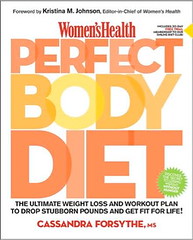
Low-carb researcher Cassandra Forsythe talks about her new book
I have great hope for the future of livin' la vida low-carb because there is a whole generation of young people who are championing this cause right now and will be for at least the next half century! That should get you very excited if you believe in the solid scientific foundation of the healthy low-carb lifestyle and I am privileged to be a part of something like this that is making such a positive difference in the lives of this generation and quite possibly many generations to come. My guest today on my podcast show is another one of these young people who is making waves for low-carb.
Click on the "LISTEN NOW" link below or download it to your iPod to hear Episode 154:
"The Livin' La Vida Low-Carb Show with Jimmy Moore" Episode 154 [31:18m]: LISTEN NOW | Download
Cassandra gets into a lot of subjects during this half-hour interview, including what it's like to try to appease a book publisher who thinks "low-carb is dead," who needs to be following a low-carb diet more than anyone else, what it's like working with Dr. Volek, her discovery of glucomannon fiber to help you feel fuller after eating, how your body fuels your workouts in the absence of carbohydrate, and an in-depth discussion about her Perfect Diet book. With all that's happening in her life right now with an impending wedding and finishing up her doctorate degree, I was appreciative of Cassandra's generosity of time to do this interview.
Connect with all my interviews whenever you'd like by:
Did you like what you had to hear from Cassandra Forsythe? Do you think she adequately responded to the criticism about her new book? You can talk about it in the show notes section of Episode 154. Visit Cassandra Forsythe's web site and her fabulous blog to stay on top of all the latest low-carb information she is providing the public.