|
PLEASE UPDATE YOUR BOOKMARKS TO LIVINLAVIDALOWCARB.COM/BLOG
'Livin' La Vida Low-Carb Show' Episode 154: Cassandra Forsythe Talks About Her 'Perfect Body Diet' Book
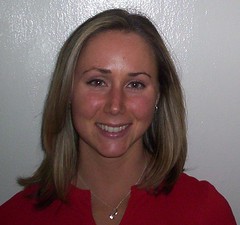 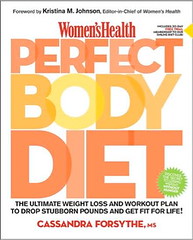 Low-carb researcher Cassandra Forsythe talks about her new book Low-carb researcher Cassandra Forsythe talks about her new bookI have great hope for the future of livin' la vida low-carb because there is a whole generation of young people who are championing this cause right now and will be for at least the next half century! That should get you very excited if you believe in the solid scientific foundation of the healthy low-carb lifestyle and I am privileged to be a part of something like this that is making such a positive difference in the lives of this generation and quite possibly many generations to come. My guest today on my podcast show is another one of these young people who is making waves for low-carb. In Episode 154 of "The Livin' La Vida Low-Carb Show with Jimmy Moore," we get to hear from the enthusiastic and lovely Cassandra Forsythe, a research assistant to world-renowned low-carb researcher Dr. Jeff Volek at the University of Connecticut and the author of two books of her own-- The New Rules Of Lifting For Women and her latest Women's Health Perfect Body Diet. Some have read Cassandra's new book and shared with me their concerns about how it promotes the use of low-fat products and a fiber-based substance called glucomannon for weight loss. So I wanted Cassandra to come on the show today to respond to these criticisms directly. Click on the "LISTEN NOW" link below or download it to your iPod to hear Episode 154:  "The Livin' La Vida Low-Carb Show with Jimmy Moore" Episode 154 [31:18m]: LISTEN NOW | DownloadCassandra gets into a lot of subjects during this half-hour interview, including what it's like to try to appease a book publisher who thinks "low-carb is dead," who needs to be following a low-carb diet more than anyone else, what it's like working with Dr. Volek, her discovery of glucomannon fiber to help you feel fuller after eating, how your body fuels your workouts in the absence of carbohydrate, and an in-depth discussion about her Perfect Diet book. With all that's happening in her life right now with an impending wedding and finishing up her doctorate degree, I was appreciative of Cassandra's generosity of time to do this interview. Connect with all my interviews whenever you'd like by: 1. Listening at the official web site2. Calling (818) 688-2763 to listen via Podlinez3. Subscribing to the RSS feed 4. Going to iTunes-- Click here to subscribe! Did you like what you had to hear from Cassandra Forsythe? Do you think she adequately responded to the criticism about her new book? You can talk about it in the show notes section of Episode 154. Visit Cassandra Forsythe's web site and her fabulous blog to stay on top of all the latest low-carb information she is providing the public. Come back on Thursday as I present my podcast interview with Charles Stuart Platkin, aka the "Diet Detective." He and I haven't always seen eye-to-eye on diet and health, but now I am the official low-carb contributor at his web site. :) Listen in as we talk about nutrition and fitness later this week. THANK YOU for listening to "The Livin' La Vida Low-Carb Show with Jimmy Moore."Labels: book, Cassandra Forsythe, diet, fiber, glucomannon, health, interview, Jimmy Moore, low-carb, Perfect Body Diet, The Livin' La Vida Low-Carb Show, weight loss, Women's Health
'Livin' La Vida Low-Carb Show' Episode 150: Week Of Weight Loss Wisdom--Rebecca Wilhoit
 Rebecca Wilhoit has a low-carb strategy for her PCOS Rebecca Wilhoit has a low-carb strategy for her PCOSWe're winding up this encouraging and inspiring "Week Of Weight Loss Wisdom" with our second to last podcast interview with yet another success story who has found great success livin' la vida low-carb. We've heard from a Zone dieter, a weight loss reality show dieter, and an Atkins dieter. Today we hear from someone who hasn't had to deal with a great obesity problem, but she has had a need for controlling a condition she has called polycystic ovarian syndrome (PCOS). We know from the research that a low-carb diet is great for this and it has worked fabulously for today's guest. In Episode 150 of "The Livin' La Vida Low-Carb Show with Jimmy Moore," tune in to hear Rebecca Wilhoit whose life took a turn for the worse when she was diagnosed with PCOS. The weight gain and the fertility problems that this insulin-resistant condition brings on can be scary, but Rebecca was fortunate enough to hook up with a fabulous low-carb researcher and nutritional consultant named Cassandra Forsythe who has made a huge difference in Rebecca's life. Listen in and learn how her fitness focus has changed since she began this low-carb lifestyle change. Click on the "LISTEN NOW" link below or download it to your iPod to hear Episode 150: "The Livin' La Vida Low-Carb Show with Jimmy Moore" Episode 150 [26:33m]: LISTEN NOW | DownloadRebecca Wilhoit is the perfect example of how this "Week Of Weight Loss Wisdom" is as much about improving health as it is shedding weight. Her life was changed for the better after reading The New Rules Of Lifting For Women and Women's Health Perfect Body Diet by Cassandra Forsythe, aka "Cass" as Rebecca kept calling her in the interview. You could really tell that there has been a strong bond of friendship between Rebecca and Cass and that has no doubt played a major role in Rebecca's success. I can't wait to share my interview with Cassandra Forsythe with you on June 30th. Be encouraged and inspired in your diet anytime by: 1. Listening at the official web site2. Calling (818) 688-2763 to listen via Podlinez3. Subscribing to the RSS feed 4. Going to iTunes-- Click here to subscribe! The fourth podcast interview in this special "Week Of Weight Loss Wisdom" with Rebecca Wilhoit is a good reminder about underlying conditions such as PCOS and how they can negatively impact the weight and health of women. Do you have PCOS and use a low-carb nutritional approach to overcome it? We'd love to hear your stories of triumph, so be sure to share those in the show notes section of Episode 150. We've had a great week of podcasts and there's one more coming tomorrow with Charlie Hills, the author of a very funny, but very real book about diets called Why Your Last Diet Failed You and How This Book Won't Help You on Your Next One. Of all the diets he's ever been on in his lifetime (and it's been a bunch!), only one has ever truly worked for him. Hmmmm, I wonder what it could be? Tune in to find out! Leave us your feedback about the show on our podcast hotline at (206) 202-6516 or you can e-mail me questions and comments anytime at livinlowcarbman@charter.net. THANK YOU for listening! Labels: Cassandra Forsythe, fitness, interview, Jimmy Moore, low-carb, PCOS, Perfect Body Diet, podcast, polycystic ovarian syndrome, Rebecca Wilhoit, The Livin' La Vida Low-Carb Show, weight loss
Still On Cloud Nine After ASBP/Nutrition & Metabolism Low-Carb Conference
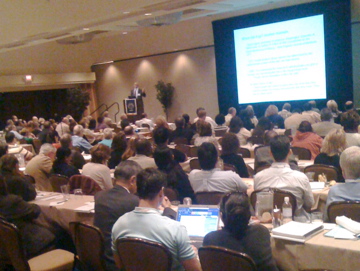 The 2008 ASBP scientific meeting in Phoenix, AZ was amazing! The 2008 ASBP scientific meeting in Phoenix, AZ was amazing!Sitting in a room full of bariatric physicians with lecturers who sometimes sound like they're speaking a foreign language with all the science and medical jargon they spout off isn't exactly the most ideal way to spend a few days away from home. But when all of the top low-carb researchers and practitioners from North America gather in one place to share their latest findings in the world of livin' la vida low-carb, you can't help but get super-excited about what is to come in the future of diet and health as the evidence in favor of low-carb diets continues to mount. What a weekend it was!  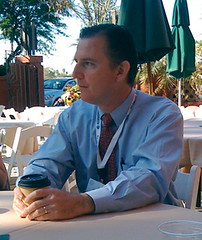 Sponsored by the American Society of Bariatric Physicians, the 2008 Nutrition & Metabolism Society Seminar held in Phoenix, Arizona presented the science supporting the low-carb lifestyle from the biggest names in the world of low-carb research--Phinney, Westman, Vernon, Volek, Feinman, Wortman, Tarino, and German. This year's conference included two half-day sessions on Saturday afternoon and Sunday morning that was in my opinion even better than the one in Nashville, TN last year. 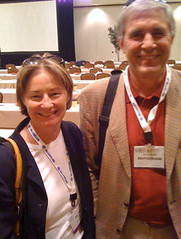 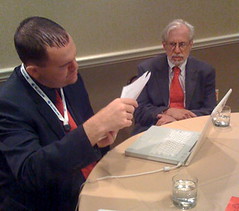 My only regret is that I didn't have a chance to interview more people at the conference than I did. However, I did get in a few outstanding ones in my limited time--Dr. Richard Feinman, director of The Nutrition & Metabolism Society and co-Editor-In-Chief of the Open Access online journal Nutrition & Metabolism, Drs. Mike and Mary Dan Eades from Protein Power (see Dr. Mike's blog post about the conference by clicking here), the producer of the hit CBC-Newsworld documentary film My Big Fat Diet (which we were able to watch on Sunday morning) about a group of First Nations people who returned to their native high-fat, low-carb diet named Mary Bissell, and a 45-minute chat with the author of Good Calories, Bad Calories Gary Taubes. These and MANY more interviews for my podcast show will be coming in the next few months from various people who attended the conference, so get ready. 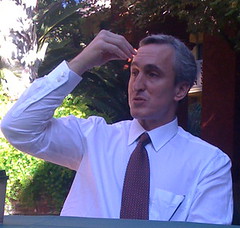 Speaking of Gary Taubes, it was such a pleasure meeting him in person. He's taller than I thought (he said the same thing about me) and could literally talk for hours about this unique role of carbohydrate in the obesity epidemic. You could really sense all the years he has invested in this subject has shaped his thinking about this so acutely that he is now a man on a mission. And he said it on several occasions throughout the weekend that he plans on pursuing this for as long as he has the energy and desire to do it. We need people like Gary Taubes who are unwilling to back down just because the message goes against conventional wisdom. He is certainly on the forefront of a revolution that could very well see a breaking point very soon. I was happy to see many of my fellow low-carb friends and champions of this cause at the 2008 ASBP/Nutrition & Metabolism conference in Phoenix: 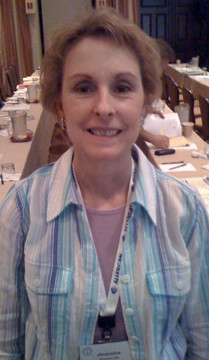 JACKIE EBERSTEIN JACKIE EBERSTEIN, who worked with Dr. Atkins for three decades and is one of the most knowledgeable Atkins diet experts in the world today. 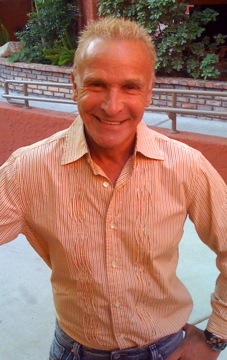 DR. JONNY BOWDEN DR. JONNY BOWDEN, author of Living The Low-Carb Life and various other books on nutritional health. It was a genuine surprise to see him there and he didn't even recognize me at first when I was speaking with Dr. Jeff Volek. Jonny greeted Jeff and started to walk away when I said, "Hey Jonny, it's Jimmy Moore!" The look back on his face was priceless! :) THANKS Jonny!  CASSANDRA FORSYTHE CASSANDRA FORSYTHE, who described herself as "Jeff Volek's slave" (she works with him at the University of Connecticut) was there as well and we got a few minutes to chat about the future of low-carb (read her blog post about the weekend by clicking here). She is certainly one of the rising stars in low-carb research and a name you will be hearing a lot more from in the coming years long after the old-timers have since passed on. She was a lot shorter than I expected, but I'm sure she could still kick my butt! :P 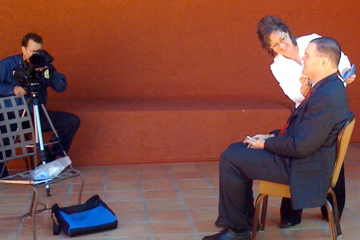 It was a real pleasure meeting Melanie Vogan from Atlanta Teleproductions, Inc. who was filming various interviews with people behind the scenes in the world of low-carb and I was honored to be a part of that. Melanie and her husband snagged a whole bunch of footage from everyone to piece together a documentary about the healthy low-carb lifestyle. I'm excited about this chance to share low-carb living in such a positive manner and Melanie is just the person to do it. She's fully committed to using her talents in the video broadcasting realm to make it happen. We'll be hearing more from her in the future and I'll let you know when the documentary will be available. 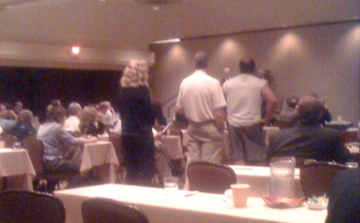 The days went kinda like this: wake up, go to breakfast (they weren't the best in the world considering this was an OBESITY conference), listen to a few lectures, take a break, listen to a few lectures, a time for questions and answers, go to lunch (which weren't any better than the breakfast!), listen to a few lectures, take a break, listen to a few more lectures, ask more questions from the speakers, and then go on your own for supper where most of us hung out at the Lantana restaurant each night just to chit-chat about whatever (the supper menus were the best--check out what I ate during this trip at my menus blog). Sounds riveting, doesn't it? Actually, YES IT WAS!!! When you get to come face-to-face with all these people you blog about, this is a VERY big deal. I liken it to being at the Super Bowl (which ironically was in Phoenix this year!) for fans of livin' la vida low-carb.  It was kinda cool sitting across from Dr. Eric Westman and Dr. Mary Vernon while sitting next to Drs. Mike and Mary Dan Eades for supper (in fact, Dr. Mary Dan couldn't finish her steak, so I happily obliged!). Rubbing elbows and listening in to the conversations that went on was absolutely priceless. I can't wait to share some of the findings that were presented at this conference as well as my interviews because it was a fabulous time for Christine and I to get away despite the hacker who brought down my forum just before I left.  Although I didn't get to hang out with her as much, I was happy to see my friend and fellow blogger Laura Dolson from the About.com Low-Carb Diets site (you can read her comments about the Phoenix event by clicking here). We had a chance to talk briefly on Saturday night, but I would have loved to been able to talk some more. There just wasn't enough time in the weekend to fit it all in! The weather was certainly a shock to my system going from a cool, humid climate here in South Carolina to the hot, dry climate in Arizona. On day two when I was planning on several interviews with people, I totally lost my voice. My nasal passages were like the Sahara desert and my groggy voice was only soothed after several hot lemon tea sips and constant water helped lubricate the voice box again. Whew, I hated that feeling and would never make it living in Phoenix, Arizona. But it was a fun place to visit and meet several of my readers who live there. 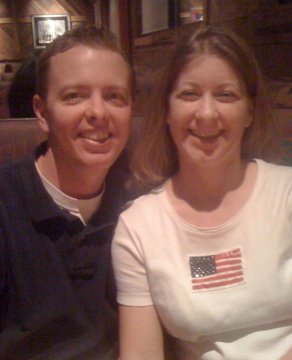 Dave and Kelly Damron (author of the book Tiny Toes and the blog Twin Peas) were very kind to pick us up from the airport and take us back on Sunday. I've had my nightmare experiences with cabs in New York City, so Kelly helped prevent that from happening in Phoenix. We enjoyed meeting up with them for dinner on Saturday night and talking about our failed IVF cycle experience in December. This is what Kelly dedicates herself to like I do low-carb, so it was kinda cool having someone who has been through it and survived despite great odds. Dave and Kelly both commented how well Christine and I have handled our situation and I told them it has only made us stronger as a couple. THANK YOU Kelly for all you are doing and I wish you and Dave all the best raising those little twin female munchkins. :) Hope to see you again someday. 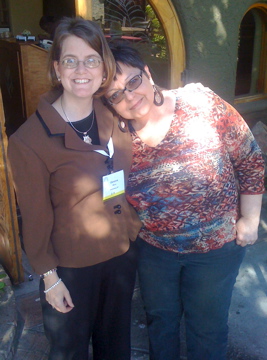 One of my longtime blog readers Jeri Sessler met with us on Friday and we had a blast just chatting it up over lunch. Jeri is such a sweetheart and I'm glad we got to meet her and spend a few minutes enjoying each other's company. What a delightful lady! We also met a relatively new fan of the livin' la vida low-carb concept who makes her own YouTube video series called the Monkaboo Project. Monyka is a real trip! I appreciate her engaging personality and it really shines through in person just like it does in her videos. We agreed to do a little segment for her latest video that I think you'll enjoy. That was a lot of fun! ;) All in all, it was a superb few days in Phoenix and I'd like to personally thank The American Society of Bariatric Physicians for extending an invitation to me and Christine to attend. We appreciate the privilege of coming to events like this despite having no background in medicine or nutrition. Anyone who is interested in the subject of weight loss, diet, and health needs to know about the fabulous work of ASBP as well as the Nutrition & Metabolism Society. Dr. Vernon was commenting about how the Nutrition & Metabolism portion of the week tripled from what it was in Nashville last year. This is real progress and I expect the numbers will continue to rise each year as the evidence keeps building and building in favor of low-carb dieting for weight and health management (and diabetes was a HUGE focus of many of the researchers as they see this as the primary front for legitimizing low-carb once again to the general public). Here's my take-home message from this conference--get involved, take the passion you have for what you believe in, and make a real difference in the world. I'll be blogging more about some specific things you can do to put some grassroots feet to spread the word. Let's just say it's time to turn up the heat on Congressmen in Washington, the American Diabetes Association, the American Heart Association, and anyone else who needs to listen to the low-carb message in a clear, unbiased manner. I have been inspired to begin working on a major project to help facilitate this. Stay tuned for many amazing things to come on this front! Now it's time to get caught up on e-mails, bringing my forum back online again, and, oh yeah, SLEEP! :) Labels: Cassandra Forsythe, conference, Eric Westman, health, Jonny Bowden, Kelly Damron, low-carb, Mary Vernon, Nutrition And Metabolism, Phoenix, research, Richard Feinman, science
Is Ketosis Necessary On A Low-Carb Diet? Let's Ask The Experts!
One of the most asked about aspects of livin' la vida low-carb has got to the issue of ketosis. There is so much misinformation about there about this very natural state that the body goes through when you are on a low-carb diet (primarily confusing it with a serious condition that diabetics must be careful of called ketoacidosis--NOT the same as ketosis). As such, there may be confusion that lingers out there among my readers who are just learning about this way of eating. In this recent blog post where I provided some "quickie one-liner" responses to some e-mails, I made the following statement: Being in ketosis is like being pregnant--you either are or you're not; regardless of what the Ketosticks show you, if you are eating less than 30g carbohydrates a day, then you ARE in ketosis.One of my readers named Charles Fred decided to respond to my statement which he disagreed with and it gets to the very heart of this issue about ketosis. Here's what he wrote: Your statement reflects today's informed opinion, but my article in work, Unified Physiology of the Metabolic Syndrome, has given me an unusual perspective which for the sake of brevity I'll state dogmatically.
Ketosis need not and should not be part of low-carb eating. Low-carb diets should never be labeled as ketogenic diets. Ketosis appears to be an Induction phase of low-carb eating, but in fact it is a last ditch response to inadequate glucose. As such it is either temporary or avoidable.
Low-carb eating is the evolution-derived diet of humans (unlike other primates). Humans are carnivores, hunters, because human evolution happened pre-fire and pre-agriculture when very few carbs were edible. For carnivores, gluconeogenesis in the liver supplies all necessary glucose.
But if someone abruptly switches from high carbs to very low carbs, gluconeogenesis will be inadequate to supply enough glucose - causing weakness, dizziness and ketosis.
Well if gluconeogenesis is supposed to be adequate, why does it fail? When you eat carbs they are stored as glucose (glycogen) in your glucose fuel tank - your liver. When you manufacture glucose from protein via gluconeogenesis it is stored in that same fuel tank, intermingled with those dietary carbs.
Enzymes, including gluconeogenic enzymes, are expressed only as needed. If your glucose storage is kept full by dietary carbs, expression of gluconeogenic enzymes is reduced. Eventually your gluconeogenic machinery becomes atrophied, inadequate to supply 100% of your glucose requirements.
So, contrary to usual practice, the proper way of switching from high-carb to low-carb is to gradually reduce dietary carbs over the course of about a month, inciting gradual rebuilding of gluconeogenic machinery. Then all those Induction woes which convince many that low-carb is not for them are avoided - as is ketosis. Did you get all that? You'll recall I've explained gluconeogenesis before and it's a beautiful metabolic process that allows your body to make its own carbs (glucose) for the body's needs from the protein you consume through the liver. So, therefore, there isn't a real need for dietary carbohydrate at all. But Mr. Fred believes eating too few carbohydrates to the point that your body is in a state of ketosis is harmful to your body and that a more gradual progression to lower and lower levels of carbohydrate is needed to keep the body from going through the "shock" of what many describe as the Induction flu. As someone who has gone through this experience and appreciated the benefits of making that "sudden" change, I could not disagree with him more. What do the low-carb experts have to say, though? I decided to pose this theory put forth by Mr. Fred to several of America's most respected low-carb diet authorities and have them respond: JACQUELINE EBERSTEIN, RNNot everyone who suddenly moves from a high-carb intake to Induction will get symptoms. Many make the transition very easily. My educated guess is that at least 50% make the transition easily. Others have only mild symptoms. A few have more severe symptoms that can be managed. I think the transition would be easier for more people if they read the book completely so they know what to expect and how to deal with symptoms.
After years in clinical practice I have only had a few patients that required a slow transition because of such severe symptoms. The Induction phase is important especially to those with a severe carb addiction. It is the fastest way to stabilize the blood sugar, control hunger and cravings and improve many diet related symptoms quickly. It is amazing how many people feel better once they are in ketosis by the 4th or 5th day.
Secondly, the mindset of the dieter is they want progress ASAP to stay motivated especially when having to give up some of their favorite foods. Induction provides that. By slowly lowering carbs many will give up too soon and miss the opportunity to find out how effective low-carb can be.
For people with severe health risks, rebalancing the body with a very low-carb intake can lead to rapid improvements in blood sugar, blood pressure, triglycerides and high insulin levels. Until insulin levels improve some of the other benefits of low-carb can't happen. I have seen many severely disordered insulin and blood sugar results that would take far too long to improve with even 60 or 70 grams of carbs.
Just as one diet does not fit all, one level of carb restriction does not fit all. We are all different. The level of carb intake needs to be the level that works for each person based on what we know about them. Dr. Atkins didn't always start in the Induction phase--some people didn't need it, yet many did and would not have been as successful without it.
Unfortunately, many are still stuck in the mindset that having ketones from fat burning is abnormal and undesirable. We know it is not. Dr. Veech, an NIH researcher, agrees that the negatives about dietary ketosis are misunderstood. REGINA WILSHIREHumans are omnivores--able to survive as carnivore, but thrives as omnivore.
Gluconeogenesis isn't solely a metabolic process induced by carbohydrate restriction; it is a normal homeostatic process to maintain blood glucose, so even those consuming a high carbohydrate diet will utilize it as needed (usually when engaged in high levels of activity or during the period of sleep).
The idea that if you don't use it, you lose it, is an incomplete view--yes the enzymes will be made in lesser amounts if one doesn't rely on gluconeogenesis to fully supply glucose, but to claim "atrophy" sets in is a bit over the top.
Some people do find this approach to be a gentler way to restrict carbohydrate--slowly lowering their intake over a period of time; others do better just going "cold turkey" and reducing carbohydrate below 40g. Both reach the same endpoint--persistent state ketosis and utilization of gluconeogenesis. The idea that one will not induce ketosis (burning fat) doing the former is physiologically not possible--if your carbohydrate is below a particular threshold, you're going to make ketone bodies.
The result of reducing carbohydrate slowly isn't a lack of ketone bodies being produced, but less of them wasted, thus the less likelihood a person will register ketosis on Ketostix. Those who restrict carbohydrate below 40g initially make more ketone bodies than necessary, so they "spill" the excess in urine, saliva and sweat. But someone reducing carbohydrate slowly is also making ketones--just less likely to be spilling excess ketones.
With time the person who reduced carbohydrate below 40g and stays there will also begin to not see any measurable ketones on the Ketostix as they get more efficient at making ketones for energy. There is less wasted ketones, thus less to see on the sticks, as time passes. But, if one is keeping carbohydrate below 40g, they're burning fat for their primary energy source, which means they are making ketones whether they register on the sticks or not.DR. ERIC WESTMANIn most medical terminology, "osis" implies "the abnormal condition of"--like onychomycosis means "abnormal nail fungus," halitosis means "bad breath." Perhaps this is one reason why people unfamiliar with low carb approaches jump to the conclusion that "ketosis" is harmful. If you have no insulin in your body, as in Type 1 diabetes, a potentially life-threatening condition called diabetic "ketoacidosis" can occur. My Duke colleague Will Yancy published a paper looking at the pH in the blood of people on two diets (low-carb vs. low-fat) and did not find low blood pH ("acidosis"), but because the blood bicarbonate was lowered below the normal range we called it a "compensated metabolic acidosis." Another published study by Brehm showed the average level of blood ketones goes down over time.
In our clinic, some people always have ketones in the urine, others never do, other fluctuate back and forth. Dr. Atkins used the phrase "benign dietary ketosis" in his books. I have wondered if it would be better to say: "ketosis without acidosis" or "ketonuria" instead of "ketosis." "Ketonemia", which means "ketones in the blood"
"ketonuria", which means "ketones in the urine."
I don't agree with Charles Fred's point of view. You can see why there might be confusion. If you said "if you are eating less than 20g of carb per day then you are burning fat, or in the fat burning zone, or the 'ketone zone'--apologies to Barry Sears and the Zone Diet--rather than "in ketosis," then this might be technically more correct.DR. JEFF VOLEK This does not make a lot of sense to me. Ketone production and utilization and
ultimately blood and urine levels vary along a continuum. So to suggest it is an
absolute yes or no is not accurate. There is also a diurnal variation and many
other factors that influence their metabolism other than diet (e.g., exercise).
There is also a lot of individual variation in regards to the level of
carbohydrate restriction required to see significant accumulation of ketones. So
I don't see it as black and white.
Gluconeogenesis is more than adequate to supply obligatory glucose needs. How
else would you explain the aboriginal hunting and fishing cultures (e.g., Inuit
of the Arctic and First Nations groups in Canada) who survived for millennia
with little if any identifiable dietary carbohydrate intake? I guess I'm not quite understanding the point of it all.DR. RICHARD FEINMANThere is a continuum of ketosis. In fact, one of the features of ketone bodies is that, unlike other fuels, glucose and fatty acids, they can be present in plasma over a wide range of concentrations. What is true is that Ketostix measure ketonuria which may or may not give you an accurate view of plasma ketone bodies. If ketone bodies are used as fast as they are made, you may never see ketosis. Also, I personally think there may be more aspecs of normal ketone body metabolism than we know about now. There is the idea, for example that glial cells may supply ketones as fuel for neurons:
Guzman M, Blazquez C. Ketone body synthesis in the brain: possible neuroprotective effects. Prostaglandins Leukot Essent Fatty Acids 2004;70(3):287-92.
Ketone bodies make an important contribution to brain energy production and biosynthetic processes when glucose becomes scarce. Although it is generally assumed that the liver supplies the brain with ketone bodies, recent evidence shows that cultured astrocytes are also ketogenic cells. These findings support the notion that ketone bodies produced by astrocytes may be used in situ as substrates for neuronal metabolism, and raise the possibility that astrocyte ketogenesis is a neuroprotective pathway.
This theory from Mr. Fred seems to assume that ketosis is somehow foreign or not part of normal metabolism. It is true that it may take some time to adapt to it but there is no reason to assume that it is inherently undesirable. Human evolution probably had a lot of starvation. The function of ketone bodies is to keep gluconeogenesis from having to supply all necessary glucose because it can be a drain on body protein.
I don't think gluconeogenesis fails. There is just some period of adaptation. If there is evidence for Mr. Fred's theory, then I would be interested. Practically, it may feel better to adapt to low-carb slowly--I think it depends on how much carbs you start out with--but the idea you can be on very low-carb and not be in ketosis has to be tested. I personally doubt it but I don't know.
Ketone body production is under the control of many factors: glucose, insulin, fatty acids, level of oxidative metabolism, etc. I think there is also a time factor. Many people eat one meal a day, are quite happy with it and they may be in ketosis at some point during the day. So, it may be useful for some people to get into low-carb slowly but I don't react well when somebody tells me didactically the proper way to eat. "Proper" usually means the way they do it. CASSANDRA FORSYTHE I don't agree with this man at all. Your body still produces ketones from all the extra dietary fat, and it gets better at doing that and using the ketones as time goes on. In our work at the University of Connecticut, with three months of following a weight loss ketogenic diet all subjects had a decline in urinary ketones over time even though they were eating the same foods and had the same caloric restriction.
What's happening is that the body is getting better at taking up the ketones--maybe ketone receptor unregulation. Also, they all still had ketones in their blood after three months and this was higher than baseline and much higher than those following a low-fat diet. Your body does not have enough metabolic machinery to produce enough of it's own glucose to support all organs (i.e. your heart).
Yes, it's true gluconeogenesis goes up, but most organs don't use it anyway. That's why blood glucose tends to drift up over time.Now that the experts have weighed in on Charles Fred's hypothesis, why not share YOUR thoughts based on your own experience following a low-carb diet. Did you ease into livin' la vida low-carb and have excellent results doing it that way? Or did you do like most of us did, myself included, and go from a high-carb to a low-carb diet overnight? Did you see measurable results doing it that way despite having some temporary unpleasantness? Share your thoughts in the comments section below. Special thanks to all the experts I quoted in this post for sharing their knowledge about this subject of ketosis. On behalf of me and my readers, THANKS SO MUCH! :) Labels: Cassandra Forsythe, Charles Fred, Eric Westman, gluconeogenesis, Induction, Jackie Eberstein, Jeff Volek, ketoacidosis, ketones, ketosis, regina wilshire, Richard Feinman
Study: Low-Carb Lowers, Low-Fat Diet Increases Inflammation, Saturated Fat In The Blood
 Dr. Jeff Volek says controlling insulin is vital to blood lipids Dr. Jeff Volek says controlling insulin is vital to blood lipidsA little over two years ago, I shared with you this study on the connection between metabolic syndrome and livin' la vida low-carb. The researchers were Dr. Jeff Volek from the University of Connecticut and Dr. Richard Feinman from SUNY Downstate Medical Center in Brooklyn, NY and they were absolutely fascinated by the rather obvious intertwining of a natural dietary approach like low-carb improving virtually every single area of metabolic syndrome (a precursor to diabetes, heart disease and stroke), including obesity, high triglycerides, low HDL "good" cholesterol, high blood sugar, hypertension and insulin resistance. Now there is brand new research from these same two researchers with something quite startling regarding a comparison between a low-fat and a low-carb diet as it relates to inflammation and saturated fat in the bloodstream. Lead researcher Dr. Jeff S. Volek, PhD, RD from the Department of Kinesiology at the University of Connecticut and his team of outstanding researchers (including Dr. Feinman, Dr. Stephen Phinney, and the soon-to-be Dr. Cassandra Forsythe, among others) tested the various components of metabolic syndrome comparing a carbohydrate-restricted diet with a low-fat diet in overweight men and women over a 12-week period. The study participants were split into one of two groups: VLCKD (very low-carb ketogenic diet)--1504 calories Fat/Protein/Carbohydrate ratio of 59/28/12 OR LFD (low-fat diet)--1478 calories Fat/Protein/Carbohydrate ration of 24/20/56 What did Dr. Volek and his team of researchers find? Total saturated fatty acids in the blood actually DECREASED in the VLCKD group while the anti-inflammatory markers also "significantly decreased." Meanwhile, the LFD group, which consumed two-thirds less saturated fat than the VLCKD group, saw an INCREASE in total saturated fat in the bloodstream despite reducing fat intake. This was totally unexpected as the conventional wisdom regarding saturated fat consumption is that it causes an increase in inflammation which leads to a worsening of the metabolic syndrome conditions and overall health. But that's not what happened. "A very low carbohydrate diet resulted in profound alterations in fatty acid composition and reduced inflammation compared to a low fat diet," the researchers concluded.This study was published in the November 29, 2007 issue of the scientific journal Lipids. So what are we to make of this research in light of all we've ever been told about saturated fat? Doctors and nutritionists have long told their patients with metabolic syndrome symptoms to eat a low-fat diet and now science like this one is showing the shortsightedness of this unproven recommendation. Livin' la vida low-carb is making great strides behind-the-scenes because it is an excellent way to reduce triglycerides and other essential health markers related to inflammation. Dr. Volek says this new study shows how a controlled-carbohydrate nutritional approach is "adding to the evolving picture of improvement in general health beyond simple weight loss in keeping blood glucose and insulin under control." And he believes this hyperinsulinemia is the root cause behind obesity, diabetes, and a whole host of other preventable diseases that all improve with the use of a low-carb diet. Interestingly, the Volek study in Lipids is only a small portion of a much larger study currently under peer review. The full study shows even more improvements in blood lipids (cholesterol) with the stunning conclusion that "lowering total and saturated fat only had a small effect on circulating inflammatory markers whereas reducing carbohydrate led to considerably greater reductions in a number of pro-inflammatory" markers. Dr. Volek says this puts the onus of health risks back on the consumption of carbohydrates. "These data implicate dietary carbohydrate rather than fat as a more significant nutritional factor contributing to inflammatory processes," he stated.Meanwhile, Richard Feinman, PhD from the biochemistry department at SUNY Downstate Medical Center says this new research demonstrably shows why carb-restricted diets work so remarkably well. "The real importance of diets that lower carbohydrate content is that they are grounded in mechanism: carbohydrates stimulate insulin secretion which biases fat metabolism towards storage rather than oxidation," Dr. Feinman explained. "The inflammation results open a new aspect of the problem. From a practical standpoint, continued demonstrations that carbohydrate restriction is more beneficial than low fat could be good news to those wishing to forestall or manage the diseases associated with metabolic syndrome."Most damning against the low-fat diet hypothesis is the fact that although there was a three-fold higher saturated fat consumption by the VLCKD group, it was the LFD group that experienced higher saturated fat in the blood. Counterintuitive? You betcha! "This clearly shows the limitations of the idea that ‘you are what you eat,'" Dr. Volek explained. "Metabolism plays a big role. You are what your body does with what you eat."I like that--YOU ARE WHAT YOUR BODY DOES WITH WHAT YOU EAT! And that's why I'm livin' la vida low-carb because I have all the confidence in the world with what my body will do with the low-carb foods I consume. Controlled blood sugar and insulin levels, reduced triglycerides, lower blood pressure, increased HDL "good" cholesterol, and so much more than I could have ever expected from a high-fat, low-carb diet. It's hard not to appreciate something like this when your life has been so radically changed for the better. Now the research is showing us why. Dr. Feinman succinctly repeated and summarized what I blogged about in this previous post regarding saturated fat consumption on the low-carb lifestyle in the following statement about this new study. "I think even if you allow for tremendous error, it says that if carbs are low, saturated fat doesn't have much effect on the plasma composition," he remarked.And that is why I don't worry about how much saturated fat I consume as long as my carbs are reduced. Now we have the science to back us up! You can share your appreciation to Dr. Jeff Volek for his fantastic research by e-mailing him at jeff.volek@uconn.edu as well as Dr. Richard Feinman at rfeinman@downstate.edu. Labels: Cassandra Forsythe, inflammation, insulin, Jeff Volek, lipids, low-carb, low-fat, metabolic syndrome, research, Richard Feinman, saturated fat, study
Wanted: Failed Female Low-Fat Dieters
 Author Cassandra Forsythe wants YOUR failed low-fat diet stories Author Cassandra Forsythe wants YOUR failed low-fat diet storiesDo you remember my interview with Cassandra Forsythe, a PhD Fellow at the University of Connecticut working with low-carb diet researcher Dr. Jeff Volek, earlier this year? Well, she is busy working on writing a book that will contain stories of women who have failed on a low-fat diet. With a book deadline looming at the end of this month, Forsythe has put out the call for females to answer this question-- "Has A Low-Fat Diet Failed You?". "I'm looking for a few testimonials from women that have tried a very-low fat diet and found that it failed them," Forsythe inquired at her blog. "If this is you, I'd love to include your story."Cassandra is passionate about women's nutrition and fitness, so this book is gonna be top-notch! She is a rising star working behind the scenes in the low-carb research community and I encourage you to share your low-fat failures with her. "Just let me know what happened to you when you followed the diet," Forsythe stated. "Did you gain weight? Did you become depressed? Did you crave peanut butter?"If you can testify about how awful the low-fat diet was for you, then e-mail Cassandra Forsythe ASAP at cassforsythe@gmail.com. Be sure to tell Cassandra hey for me, okay? THANKS for supporting Cassandra's new book! Labels: Cassandra Forsythe, diet, Jeff Volek, low-carb, low-fat
Forsythe: When Low-Carb Becomes 'A Way Of Life,' Mainstream Acceptance Will Come
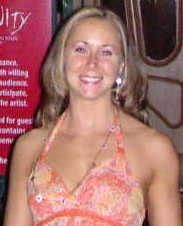 Up-and-coming low-carb researcher Cassandra Forsythe Up-and-coming low-carb researcher Cassandra ForsytheYou know, I'm spoiling you this week by publishing TWO interviews in the past few days. If you missed my interview with Dr. Gil and Regina Wilshire earlier this week, then you will want to go back and check it out. It was REALLY encouraging hearing these fantastic leaders in the low-carb community sharing their passion for livin' la vida low-carb. Today, I have another special treat to share with you. That beautiful woman you see at the top of this post is a young lady named Cassandra Forsythe from the Department of Kineseology at the University of Connecticut. You may not know who she is yet, but Cassandra is one of the rising research superstars who will thrust low-carb to the next level in the science lab in the decades to come. Get to know the future Dr. Cassandra Forsythe today in my exclusive interview with her as she shares what she is doing in her pursuit of a PhD and what she wants to do with her education after she graduates. Cassandra is EXACTLY the kind of people we need working behind-the-scenes on college campuses from coast to coast in the United States constantly looking to science for nutritional answers, not more of the same propaganda we hear from the so-called health "experts." ENJOY my interview with her and feel free to post your comments about it at the end of this post. I sure am glad Cassandra is fighting for the truth the old-fashioned way--empirical, science-based knowledge that comes from long-term research studies. 1. I'm pleased to welcome to the "Livin' La Vida Low-Carb" blog today a PhD student in nutrition and metabolism at the University of Connecticut named Cassandra Forsythe who works directly with one of the most influential members of the low-carb research community, Dr. Jeff Volek. Thanks for joining us today soon-to-be Dr. Forsythe (that does have a nice ring to it)! You have a very personal reason for livin' la vida low-carb that frankly has nothing with being overweight or obese. Tell my readers about your carbohydrate health horror story. Thank you Jimmy for inviting me to your blog. I'm very happy to share my story with your readers. For me, instead of being one of the many individuals who are carb insensitive (meaning that due years of carbohydrate-overexposure, their pancreas does not produce the insulin needed to clear the carbs from their bloodstream OR their tissues are unresponsive to insulin that is released). I'm someone that is TOO carb sensitive! Whenever I eat carbs, especially high glycemic carbs I become immediately hyperglycemic (aka high blood sugars) and then quickly hypoglycemic (aka low blood sugars). When I was tested in the hospital recently, after an oral glucose tolerance test, my blood sugar level went down as low as 30 mg/dl after only 2 1/2 hours! This reaction is known as reactive hypoglycemia, and I noticed Connie Bennett spoke about it recently on your blog. Now, doctors tell people with hypoglycemia to eat quickly digesting carbohydrates(like glucose tablets) immediately to help them get out of the blood sugar lows(these are the same doctors that tell diabetics to eat a low-fat diet, mind you). But, what this really results in is just another bout of reactive hypoglycemia! It was the sugars that put me there in the first place! So, I ignore the "wisdom" of these doctors and have learned to prevent hypoglycemic by staying away from carbohydrates and sugars. A low-carb lifestyle has been my saving grace. Now I focus my diet on protein, fats, and green vegetables. Before I discovered that I didn't have to eat carbs with every meal, or even carbs at all, I was always hungry, shaky and irritable due to the fact that my blood sugar levels were always on a rollercoaster ride. Now, my concentration levels, satiety and overall mood are so much better because I maintain euglycemia. 2. Despite all the attention on weight loss that the low-carb lifestyle receives (and rightfully so since it does perform that function well), it really is about controlling disease, isn't it? Whether it's hypoglycemia, metabolic syndrome, diabetes, cancer, or a myriad of other known illnesses associated with too much carb consumption, the most amazing part of livin' la vida low-carb is about naturally bringing these health ailments under control without the use of drugs or invasive surgical procedures of any kind, right?You're absolutely correct Jimmy. Proper food choices have the ability to make meaningful changes in anyone's body. It's amazing that drug companies have such a huge impact on our society when their products have so many uncomfortable side effects and are not even half as effective as changing one's eating habits around for the better. However, we all know that the reason drugs are so popular is because people have never been expected to take their health into their own hands. Instead of being responsible for their actions, they've been taught that they can reach for a pill whenever their health goes downhill. It's sad, really. 3. While I'm sure it is thrilling to be on the cutting edge of nutritional science as it relates to low-carb, no doubt the day-to-day activities of your studies may not be all that exciting to the average person. What is a typical day in the life of Cassandra Forsythe?Well, right now, I've been taking some time away from the research because I'm studying for my PhD exams. My supervisor Jeff Volek is letting me focus on passing those before I'm expected to return to the lab for the day-to-day research. Normally, though, a day in the life of Cassandra Forsythe is very exciting; but it's also one that requires a lot of self-motivation and passion for research. You see, as a researcher, no one is expecting me to clock in and clock out at some specific time. Instead, my day is built around the schedules of the research subjects we have participating in our studies, the classes I have to take for my degree, the readings I have to do to stay on top of the investigations done by other low-carb scientists, and the writing we have to do in order to communicate our findings to the world. Overall, my day doesn't just go from 7am to 5pm with a coffee break, lunch break and afternoon tea; rather, it's goes all day long and doesn't take breaks on the weekends. Now, that doesn't mean I have no social life or no escape from work, but it does mean that I spend less time watching TV, and more time getting in things that are important (such as working out). Also, our team of students at the lab is one of the best and we work very well together to accomplish some amazing research. It's all about team effort, because doing our jobs alone would not be possible. 4. Zeroing in on your primary fields of interest as it relates to livin' la vida low-carb, what are the major studies you are working on looking to discover? Without getting into the deep details of any ongoing study for obvious reasons, are you seeing any surprising trends among the data your team has compiled so far that could be damning for the low-fat diet in 2007 and beyond? When do you expect some of this research to be made public?The major questions we're looking to provide solid answers for is the effectiveness of a very-low-carbohydrate diet for the treatment of Metabolic Syndrome (the clustering of health disorders that predispose people to diabetes and cardiovascular disease) compared to a low-fat diet. We're also trying to determine what are the best types of fat to consume while following a very-low-carbohydrate diet. With respect to surprising data from our team, yes there are some very exciting results that we've discovered. This data will be published very soon and what it's going to show the world is that the beneficial effects of a low-carb diet extend further than just weight loss and improvements in blood triglycerides and cholesterol. A very-low-carb diet actually significantly improves the quality of our plasma membranes which results in better cell signaling, improved insulin sensitivity and decreased inflammation. These results are in comparison to a low-fat diet, and will cause advocates of a low-fat diet for treatment of Metabolic Syndrome to think twice about their recommendations. 5. Oh, that will be VERY exciting indeed, Cassandra! One specific field of interest in your research surrounds the much-vilified macronutrient known as fat. Society has grown accustomed to equating a low-fat diet with a healthy one while simultaneously considering any diet that is high in fat and low in carbohydrates as unhealthy. But there are differences in fat quality that the average Joe and Jane off the street do not differentiate or really understand for that matter. Can you share the basic difference between the various kinds of fat and which ones are actually good and even essential for you to consume?We all think of fat as just the white stuff you cut off your steak or the grease you drain out of the pan after you cook any type of meat. We also refer to certain fats as being saturated or unsaturated with the former being bad for you and the latter being good. What we don't understand though is that all foods that contain fat or any kind are a mixture of all different types of fatty acids. These fatty acids are basically long chains of carbons, oxygens and hydrogens that differ in the amount of bonds that are found between each carbon. Saturated fatty acids have single bonds between each carbon and are straight chains. Monounsaturated fatty acids have one double bond somewhere in the chain and are kinked as a result. Polyunsaturated fatty acids have two or more double bonds in the chain and a very kinked. There are also trans fatty acids, which are a type of polyunsaturated fatty acid, but instead of being kinked, their configuration makes them straight. Overall, straight chains of carbons are supposed to be the bad chains because in cell membranes they can lie closely side-by-side and cause the membrane to be very rigid. The unsaturated chains can't lie close together in membranes and as a result, cause the membrane to be more fluid and flexible. Also, in nutrition studies, researchers have found that foods that contain a high proportion of saturated fatty acids in them (remember, no food is 100% any type of fatty acid, instead, they are a MIXTURE of different types), cause increases in blood cholesterol and risk of disease. However, this research is very outdated and failed to look at what type of cholesterol was increased. Saturated fatty acids increase both the good and the bad cholesterol, so really their effects are not all that terrible. Also, in the majority of research, the effects of fatty acids were evaluated in the context of a high-carb diet. There may be a different effect of fatty acids depending on the amount and type of carbohydrate is consumed in conjunction. Our research here at UConn has given us evidence that saturated fats may not be as bad as once thought, and their effects are dictated more by the hormonal effects of carbohydrate in the diet. In summary, the only type of fatty acids you need to avoid completely in your diet are trans fatty acids. These types of fats are those found in deep fried and hydrogenated fat foods and are typically found in conjunction with carbs. However, some low-carb foods, like deep-fried chicken wings or dressings with hydrogenated oils should be avoided for their potential to contribute trans fatty acids. Foods with saturated fat, like dairy, and some meats, are not bad and don't need to be eliminated from a low-carb diet. 6. While it is universally known that trans fats are indeed bad news for the body as you just indicated, the same cannot necessarily be said for all saturated fats which have been severely maligned and misunderstood by low-fat zealots spreading ignorance about this vital ingredient in a healthy diet. You briefly hit on this in my last question, but what kind of saturated fats should people be eating and why? Do you have any studies in the works that will compare how the quality of fat consumed really does make a difference?Like I was saying above, there hasn't been enough research with saturated fatty acids to deem them as evil or not. What I mean is that no one has isolated saturated fatty acids from carbohydrates to see if they have the same effect on health markers as when the level of carbohydrate (an in turn, glucose and insulin in the body) are high. So, what I know right now about individual saturated fatty acids is just what I've read in studies that have included carbohydrate in the diet. Just based on this information, I can't really say what saturated fatty acids should be included and which should not because these recommendations would not apply to people following a low-carb lifestyle. However, with that said, the topic of my upcoming PhD dissertation project is to determine whether or not saturated fatty acids should be excluded from a low-carb diet. With the help of Dr. Volek and my fellow lab mates, I'm going to conduct a study that will look at a low-carb diet rich in saturated fatty acids with one that is rich in unsaturated fatty acids and see what happens to all risk factors for disease such as inflammatory markers, cell membrane composition, insulin sensitivity and blood cholesterol levels. Hopefully the results of this research will result in more investigations that will look at specific types of saturated fatty acids and how they effect health. 7. Your research experience combined with your writing talents (which are on full display at your remarkable blog located at CassandraForsythe.com) come in very handy with your contributions to some major health publications like Men's Health. You are helping to educate the public about why they should consider livin' la vida low-carb as their way to manage their weight and health. Where do you see low-carb living as a cultural phenomenon going in a year, five years, and even ten years from now? Will people ever really find out what "low-carb" means rather than what the media and the so-called health "experts" want them to believe about it (i.e. just eating bacon, eggs, and cheese all day)?Right now I think that low-carb is unfortunately still viewed as a bit of a "fad" (even though we know that it's not that at all). However, there are several prolific people in our low-carb circle that are making huge strides for the benefits of following a low-carb lifestyle. For example, as you know, Adam Campbell, the Men's Health sports and nutrition editor, has become a loud voice for low-carb. Through the magazine, he has the opportunity to reach out to thousands of people and tell them the truth behind carbs and the benefits of keeping carbs low. He wrote an amazing piece a few months back called "The Cure for Diabetes" that even made the ADA turn their heads! We've then got the brains in the Nutrition and Metabolism Society fighting the good fight for low-carb and providing all the science to back up everything that is stated. So, in my opinion, with all this power behind low-carb science, I think in five years, low-carb is going to become less of a "fad" and more of a way of life. Then, in ten years, our nutrition-governing bodies will finally accept low-carb as a way to treat certain health conditions like diabetes and certain forms of heart disease. (and I'm looking forward to being a part of that acceptance!) 8. What role do you plan on playing in the low-carb scientific realm after your work at the University of Connecticut is finished? Is this what you want to do for the rest of your life?After I'm done my degree here at UConn, I do plan on continuing researching low-carb. Ideally, I'd like to continue working with Jeff Volek. Dr. Volek is a brilliant person and has been an amazing mentor to me. He and I think very much the same and have many common interests. He's also a very hard worker and someone that gets the job done right every time. I've been fortunate to grow under his supervision. Once I'm officially a doctor, I will make it my top priority to either continue working at UConn or start a line of research on low-carb in a lab at another University with Dr. Volek as a co-investigator. As far as topics are concerned, I'm still interested in the quality of fat on a low-carb diet, meaning, since low-carb is going to become a way of life for many people, I want to help them understand what types of fat they should focus on so that they maximize their health benefits. So, this means continued research along the lines of my PhD dissertation project. 9. You are currently serving as the student representative for the International Society of Sports Nutrition (ISSN). What a platform for sharing the message of livin' la vida low-carb in an arena that may not know how well this way of eating functions for people who are active. Are there any specific areas of interest for you in terms of fitness that light your fire for telling people about low-carb?Yes, the ISSN is an awesome organization and I was so thrilled when I was voted at the new student representative. Since I've been involved with the ISSN, I've shared much of our research at UConn with people attending the various regional and international scientific meetings. Last year, I presented partial data from our low-carb and exercise study and it was very well received by the audience. With regards to fitness and low-carb, I'm very passionate about informing people that if you're a physically active individual, you DO NOT have to follow a high-carb diet! It is very possible and extremely effective to follow a low-carb diet, even if you're someone who is a long-distance endurance athlete or even someone who lifts heavy weights. Ultimately, just because you're an athlete, does not automatically mean you have to eat oodles of carbs just to be successful. Here at UConn, we're in the process of completing a study with low-carb and weight training and have not seen any negative effects on performance from following a low-carb lifestyle. In fact, the results are even better when people who are insensitive to carbs switch to low-carb and add exercise. However, this doesn't mean that every athlete should not eat carbs, or has to follow a low-carb diet. It just means that a low-carb diet is a good option for athletes and should be considered as an alternative to a typical carbo-loaded diet without any negative consequences. 10. WOW, what an honor it was to have you with us today, Cassandra...er, I mean the future Dr. Forsythe! I have a feeling we will be hearing a lot more from Dr. Cassandra Forsythe for many years to come and frankly I'm glad to have you working in the trenches bringing this fabulous research on low-carb to the forefront. Do you have anything encouraging and uplifting to share with any of my readers who may feel livin' la vida low-carb just isn't worth it to them anymore?Yes, I do. The benefits of a low-carb lifestyle for those who need it are so powerful that we're only just beginning to understand all of it's effects. These benefits positively effect things in your body that you can not see, but positively effect everything about your health. These things include changes in the way your genes are expressed to changes in the health of your cell membranes. Although you can't see these things, they're changing the quality of your life for the better. Living a low carb life isn't about cutting out things in your diet that you think taste good (i.e. cookies and cake), it's about changing the way you eat so that every aspect of your body is healthy, wealthy and full of energy. Are you as inspired by this young lady as I am? If so, then please share your feedback with her by clicking on the comments link below or you can e-mail her directly at Cassandra.Forsythe@uconn.edu. Let her know how much you appreciate her work and encourage her to keep the fire burning deep within her to share the truth about livin' la vida low-carb for many years to come. We are all so very proud of you, Cassandra! YOU GO GIRL! Labels: carbs, Cassandra Forsythe, diet, disease, fat, health, hypoglycemia, inspiration, interview, Jeff Volek, low-carb, low-fat, obesity, research, saturated fat, science, study, UConn
|


