PLEASE UPDATE YOUR BOOKMARKS TO LIVINLAVIDALOWCARB.COM/BLOG
Sunday, July 13, 2008
'Doc' Describes Me As A 'Dead Man Walking' Because Of My Elevated LDL Cholesterol
One of the risks that I willingly take blogging about health as someone who has not been trained in either medicine or nutrition is the fact that there are a whole lot of people who are much more intelligent than I am about the subjects I write about. It's just a fact of life that I've lived with since day one of my blog more than three years ago. And it doesn't bother me a bit that I don't have all the answers.
The purpose of my blog is for me to share about my experiences livin' la vida low-carb and to hopefully provide some interesting topics for discussion that will enable my readers as well as myself the chance to learn something about their own health that they probably didn't know before. One thing I've found since I started blogging in the health arena is that even the doctors and medical researchers don't always know as much as we think they do. There's a reason they call it "practicing" medicine.
In a very condescending tone in his e-mail, "Doc" proceeded to berate my gross ignorance of some rather "basic" health concepts that I apparently haven't fully grasped yet (get a load of this guy!):
I nearly fell off my chair reading your well-meaning but very erroneous blog on Tim Russert.
If larger fluffy, buffy LDLs are protective, why is it that people with the highest risk of atherosclerosis and premature death (i.e. familial hypercholesterolemia) have 100% fluffy, buffy, LDLs?? Sure does not protect them! You with an LDL-C greater than 200 likely have large LDLs and are a dead man walking.
If low HDL-C is always bad, why are their several genetic conditions associated with very low HDL-C and longevity? Check out JAMA. 2008;299(21):2524-2532
Why have there been numerous published articles in the last few years describing many patients with myocardial infarctions who have HDL-C > 90 mg/dL?
If low LDL-C is so dangerous, why do people with hypobetalipoproteinemia who go through life with LDL-C between 5 and 40 all have longevity with no ill effects of such low cholesterol levels?
Russert's Lipids: TC = 105 LDL-C = 68 HDL-C = 37
Of course that is impossible: TC = LDL-C + HDL-C + VLDL-C VLDL-C is derived by dividing TG by 5 thus VLDFL-C = TG/5
Thus using your numbers TG would be zero which is impossible. Of course if you knew anything about lipids, your blog would not contain so many basic errors.
Last bit of advice--Look up apolipoprotein B or LDL-P. Read the newest guidelines: A consensus statement from the ADA and ACC on Lipoprotein Management in Patients with Cardiometabolic Risk (like Russert). They were published in April in Diabetes Care and the Journal of the American College of Cardiology.
Had anyone measured LDL-P on Russert and then treated it aggressively, Russert would still be here. Of course since statins rarely normalize LDL-P, Russert needed additional medication beyond his statin to achieve apoB goal.
Hate to further blow away your statements, but if you read the new ADA/ACC statement you will see that data from three major trials (Framingham, MESA and EPIC Norfolk) have shown that LDL size is no longer considered an independent risk factor for CHD. Only thing that matters is apoB or LDL-P.
Happy reading and please correct your statements on the web site.
Well, I guess he told me, didn't he? It really depends on what research studies you are looking at and he pointed to a few that certainly made sense to him. As I stated before, I'm no expert when it comes to knowing anything and everything about the subjects I write about. I simply share what I do know and have seen applied in real life situations and let those results speak for themselves.
It's a bit presumptuous of this guy to call me a "dead man walking" because of my high "fluffy, buffy LDL" cholesterol. Further belittling my intelligence by attempting to point out my "errors" was also quite unbecoming of someone who alleges to be a professional physician whose goal is to help educate patients and make them healthy. I wouldn't want this fella being my doctor!
Although I didn't have the answers to his remarks, I knew someone who could provide an educated and reasoned response to "Doc." He's a real doctor and avid researcher on low-carb diets--Dr. Eric Westman. The following is Dr. Westman's comments back to "Doc" asking for clarification and presenting some counter-evidence rebutting the original claims made in his e-mail to me:
Thank you for forwarding this email.
1. The definition of "cardiometabolic risk" is changing, and its relationship to cardiovascular disease is imperfect. In spite of this, many medical authorities want you to do what they recommend. There are many exceptions to the recommendations, and I believe the authorities will acknowledge this readily.
2. Please teach me, "Doc." You wrote that people with "familial hypercholesterolemia have 100% fluffy, buffy, LDLs." Can you provide a reference for this statement (even case studies are fine)? Here is a recent article and it suggests otherwise...but the abstract doesn't really give enough information until I can read the full study. J Pediatr. 2008 Jun;152(6):873-8. Epub 2008 Feb 8
3. You wrote: "If low HDL-C is always bad, why are their several genetic conditions associated with very low HDL-C and longevity?"
I think that this just points out again how imperfect these markers are.
4. You wrote: "LDL size is no longer considered an independent risk factor for CHD. Only thing that matters is apoB or LDL-P."
"Doc" let me just take a moment to explain what "independent risk factor" means statistically--it is a common source of confusion. "Independent risk factor" means that, after accounting for some information, the addition of a new factor (variable) adds no more information (the association is no longer statistically significant).
My understanding is that LDL size and LDL-P are highly intercorrelated ("track together"), so that after accounting for one, the other is no longer statistically significant in its association with cardiovascular disease. It does NOT mean that LDL size is not important--it just means that you get no more additional information about the presence of cardiovascular disease from knowing LDL size when you already know LDL-P.
I look forward to learning more from you. Thanks.
Eric C. Westman, MD MHS Associate Professor of Medicine Director, Lifestyle Medicine Clinic
Excellent job, Dr. Westman! You took each of the points made by "Doc" and offered him the opportunity to see other data that he may not have considered otherwise. I appreciated you taking time out of your busy schedule to write back to "Doc" and give him a chance to learn something new himself. Unfortunately, that's the last we've heard of good ole "Doc." There's been nary a word out of him since Dr. Westman's reply.
Am I fallible? Yes, more than I'd like to admit. Do I know everything there is about diet, health, and nutrition? Anyone who tells you they do should be avoided because they are lying. Do I enjoy inciting an open discussion and debate of ideas? You bet your sweet bippy I do which is why I don't mind hearing from people who necessarily disagree with my viewpoints and wish to correct me. If I'm wrong and evidence is presented to me proving it, then I'm the first to make the corrections and admit the error of my ways.
But in this case, "Doc," I won't be changing a thing! By the way, where'd ya go? I'd love to hear what you have to say about what Dr. Westman said.
Post-Low-Carb Meal 5-Hour Glucose Tolerance Test Produces Rather Odd Results
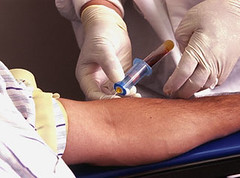
My arm had so much blood sucked out of it for these tests
I just returned late on Thursday from my 3-hour trip up I-85 North to Durham, North Carolina to spend some time with the Triangle (and Beyond) Low-Carb Meetup group there as well as seeing a great low-carb doctor from Duke University named Dr. Eric Westman to conduct some tests and talk about my recent blood sugar woes and pesky 30-pound weight gain in 2008 that won't come back down again no matter what I do. It was a good time away although I missed blogging and updating you about the healthy low-carb lifestyle. And I'll be leaving again on Tuesday to go see my brother Kevin in Pensacola, Florida for at least a week where I will have ZERO Internet access besides my iPhone (and, no offense, but I ain't up for blogging on that thing with the hunt and peck typing!), so I'll be trying to squeeze in as many posts as I can before then. It's gonna stay busy for me the next couple of months.
But so many of you have been wondering about how my visit with Dr. Westman went that I wanted to make sure I provided an update, especially with the results from my five-hour glucose tolerance test (GTT) following a low-carb meal which was conducted on Monday. If you thought my home testing of my blood sugars was interesting enough, just wait until I tell you what happened during the GTT. Unbelievably crazy! I'll share more about that in a moment.
First, let's look at the bazillion other tests Dr. Westman ran for me to see if there are other culprits going on with my health. A few of these I requested done because Dr. Keith Berkowitz (who I will be sharing a special two-part follow-up podcast interview with the first week in August about this answering your questions), who espouses the "reactive hypoglycemia" theory for long-term low-carbers, suggested I have them run.
Here were the results:
Vitamin B-12--529 (normal) Cortisol--8.9 (surprisingly normal) Homocysteine--6.7 (normal) 25-Hydroxyvitamin D3--42 (normal) HbA1c--5.0 (a little low, but normal) LDL particle number--1453 (borderline high) Small LDL particle number--30 (low is less than 600!)
By all accounts of these tests, I'm one extremely healthy guy! My thyroid function was all fine and so was my liver function. So it's good we can rule those out as culprits. I was quite frankly shocked to see my cortisol levels in the good range considering all the stress I've experienced lately, but this just confirms my body handles it all very well apparently. The A1c number was also encouraging since it is so spectacular and out of the diabetic range completely (although Dr. Berkowitz thinks it is a little low--a sign of the reactive hypglycemia according to him).
My LDL and total cholesterol are higher than normal as I've previously blogged, but look at the particle number of the dangerous "small" LDL--a measly little 30! That's just 0.02 percent of my total LDL particle number...in other words, quite negligible and protective considering over 95 percent of my LDL particle size is the large, fluffy kind. :D I'm not at all worried about my lipid profile with my HDL at 65 and triglycerides at 77. That's an HDL/triglycerides ratio I'd put up against anybody else's every day of the week.
Alright, so what the heck is going on with my blood sugars? And, more importantly, what is happening with my insulin levels when my blood sugar drops even after a low-carb meal? Inquiring minds, myself included, sincerely want to know. Here are the results of my GTT after eating a low-carb breakfast consisting of eggs and cheese with a chicken breast from Chick-Fil-A:
Fascinating test, huh? And it's just about what I expected was happening. My fasting glucose and insulin levels are perfect, but within a half hour of eating even a low-carb meal I'm seeing a TRIPLING in my insulin levels to keep my blood sugars in check. This would be a typical response if my insulin then came back down again within the first hour or two, but it doesn't.
As you can see, the insulin sustains at that higher level for two hours lingering at 13.7 then slowly dropping to 11.1 and then hitting 9.0 before dropping back down significantly in the third hour to get closer to baseline. During this time of elevated insulin, my blood sugar falls below fasting down about 10 points before rising back to where it started once the insulin comes down again. A normal response would show blood sugars going up quickly and then falling quickly, but not for Jimmy Moore. Lucky me, eh?
So what am I to make of this and what plan of action does Dr. Westman and his colleagues suggest I implement to limit this insulin response so that maybe I can get my recent weight gain to come back down again? I wish I could tell you it's a pretty cut and dry "do this and all will be well" solution, but it's not. The reality is I need to tweak this slowly by only changing one thing at a time. That one thing for me will include eating LESS protein than I have been and watching my specific portions of protein and overall intake just to see if it makes a difference.
Yes, I know cutting portions and even counting calories is almost taboo to talk about within low-carb circles and I'm not interested in that debate right now because I'm not fully convinced of it. Only time will tell. I haven't once counted calories or measured out my portion sizes in the past four and a half years of livin' la vida low-carb, so this is a tough sell for me. But I'm certainly game for doing something different to get my weight to come back down again, especially that little bit that has come back to my midsection.
Interestingly, Dr. Westman suggested I cut back on the amount of protein I have been consuming because it is possible that my body through gluconeogenesis is converting much of the dietary protein I have been consuming into glucose/sugar/carbs which COULD be the reason why I haven't been able to get my weight back down again. And this theory certainly has some merit since I consciously increased my protein intake when I started lifting weights for the first time in December 2007 shortly before my weight gain.
Sure, I also took creatine in the first six weeks and that may have had some impact on the weight gain. But consuming more protein-based foods in an effort to help with my muscle growth could have sabotaged my weight maintenance efforts somewhat. Although I have experienced quite an increase in the amount of muscle on my body after six months of training, it's not implausible that upwards of half of that weight gain is indeed muscle mass. The rest of the 15 or so pounds of weight I have put on over this period of time may be the result of excess glucose from protein.
Beginning yesterday, I started adding in more fat and deliberately trying to eat less total protein (not as a percentage, but overall) to see if it makes a difference. One way I'm doing this is to make sure any protein source I am eating is offset by an addition of more fat. For example, if I'm eating a chicken breast that is basically all protein and little fat, I'll slather it in butter and add cheese on top. Cheese in the form of brie or other fatty ones as a meal will also be a way to increase my fat while decreasing my protein. Cooking eggs in butter and adding cheese also will help with this. Nuts, coconut oil, heavy cream, and other high-fat foods will become more and more prevalent in my low-carb menus.
Since I already eat most of those foods anyway, this shouldn't be difficult to implement. Simply cutting back on protein could be as simple as eating half a steak or only one burger patty or chicken breast. Making sure I contribute fat and fiber to my meals will keep that ratio of fat to protein at the 3-1 ratio I am hoping to attain. Carbs, of course, will remain reduced to basically non-starchy, green leafy veggies.
What do you think about all of this? I'd love to know what you think about the results of my GTT. I'm also frightened to think what would happen if I did a traditional GTT with a glass of sugar water--EEEK! My insulin would go even MORE berserk! Your thoughts as always are welcomed. :)
I'm Gonna Be In And Out The Next Two Months, Visiting My Brother Kevin Soon
I wanted to give you a quick update about what's happening with my schedule before I leave out of town on Sunday after church. I'm about to go into about eight weeks of nearly non-stop busy, busy, busy with my schedule. Some of that time I will be near my computer and able to blog as usual. But other times I won't.
Here's a rough sketch of what is coming up for me:
Sunday, July 6, 2008 I'll be in Durham, North Carolina again to meet with the Triangle Low-Carb Meetup group as they gather together at 6:30pm at the Golden Corral on NC-55. Christine and I will be there and will have lots of fun and valuable door prizes to share with those in attendance. If you missed us on our last visit to Durham, then I hope you can make it out this time around. Anyone who is interested in the healthy low-carb lifestyle should come out and meet your fellow low-carbers in the Raleigh/Durham/Chapel Hill area.
Monday-Tuesday, July 7-8, 2008 Christine and I will be visiting with Dr. Eric Westman at the Duke Lifestyle Clinic to see if he can help identify what is happening with my weight this year. We've got a series of tests set up, including a glucose tolerance test to measure blood sugars and insulin after I consume a low-carb meal. I'm anxious to see what this finds. We'll also be running cortisol levels, vitamin D, and a few other blood tests to try to rule things out. We'll be discussing the reactive hypoglycemia theory espoused by Dr. Keith Berkowitz to see what role it might be playing in this. I'm anxious to figure this thing out already!
Wednesday, July 9, 2008 I've been invited to New York City to be one of the first to see, hear about, and taste the new products from food manufacturer Cargill Foods that are made with Truvia--a sweetener derived frm the stevia plant. You'll recall I blogged about Cargill and The Coca-Cola Company trying to get FDA approval for stevia as a sweetener and apparently that ruling is coming soon. The event I will be attending is located at The Rockefeller Center and will be taking place at the Truvia Greenhouse where there will be tons and tons of stevia plants all over the place. They've invited me to bring my video camera, so I plan on shooting some YouTube footage while I'm there. I'll be flying in from Raleigh/Durham that morning and flying back that afternoon, so it'll be a quickie trip! But I'm excited since it's only the second time I've ever been to NYC--we won't talk about the nightmare I had the first time I was there two years ago (this time I will have a car service taking me to and from the event so I don't have to worry about a crooked New York City cab driver again!).
Tuesday-????, July 15-???, 2008 Christine and I will be driving down to Pensacola, Florida to visit with my brother Kevin perhaps for one final time before the good Lord takes him home. I want to tell you how much I sincerely appreciate all the outpouring of love and support for me and my family during this difficult time with not knowing how much longer Kevin will be with us. I hope and pray we can spend a week or so one last time together and have one final happy memory with my only full-blooded brother. He's a good man who deserved so much more from this life than the hand he was dealt. I'm honored to be called Kevin's brother and will cherish this time with him and the rest of my family. I will not have any Internet access while I am in Florida other than on my iPhone, so there will be no blogging while we're there that week or so.
Saturday, August 16th to Monday, September 1, 2008 Coming up in August, I've got something pretty incredible happening in the Nashville, Tennessee area. You'll recall I interviewed former "Biggest Loser" contestant Isabeau Miller about her experience on the weight loss reality show. Well, she's now a personal trainer and wanted to give average, everyday people a chance to feel what it was like being on the show. That's why she started FitCamp which will take place over a two-week period in July and then again in August. Christine and I will be coming to the August session along with several of my readers who were the winners of an essay contest and received scholarships to come. I have already told Isabeau that I want to go through all the daily exercise and activities just like everyone else and I'll be video-blogging the entire experience as well as checking in each day with pictures and how it went. Considering I haven't lost any measurable weight since my sudden 30-pound weight gain earlier this year, this could be a great chance to get the scale moving in the right direction again. I'm so excited about this trip and can't wait to meet Isabeau and everyone else who will be there.
So that's about it going on in my life the next two months as far as trips go. I'm also in the midst of writing at least one and probably several books that will feature many of the most popular blog posts I have written at the "Livin' La Vida Low-Carb" blog. This has been a special request from many of my readers who know I've blogged about an issue they care about, but they can't seem to find it. I'm trying to remedy that problem by putting my best blog posts in a series of books. The working plan right now is to release a trilogy (Volume 1-3) that will contain thematic groupings of my best posts on a variety of subjects, including vegans and vegetarians, the failed low-fat diet, inspirational and motivational posts, the real fad diets, and so much more! I'm excited about this project and will be telling you more about it when we get closer to publication.
I've gotta get some sleep now since our choir is singing at the early service tomorrow morning for the 4th of July weekend. And you're not gonna believe what my church is doing as a churchwide event--they're serving red, white, and blue pancakes!!! UGH! The red comes from strawberries, the white is the whipped cream and the blue is from blueberries, but COME ON! PANCAKES?! I guess I don't have to tell you that Christine and I will be going to Denny's for a Grand Slam to get some good eggs, bacon, and sausage for our healthy low-carb lifestyle. Okay, rant over. SEE YA SOON! :D
As most of us who are livin' la vida low-carb can personally attest to, consuming foods high in protein like beef are an integral part of our weight loss and health improvements. We low-carbers uniquely realize that satiety is the secret to effective weight management and that studies have clearly shown that eating protein is indeed power food for weight loss because it controls our hunger well enough that we don't have to eat as many calories as people who consume carbohydrates in high quantities, for example.
But the best sources of protein are still eggs and beef for people who want to lose weight and keep it off for good. That's what this Internet seminar is designed to do featuring the top experts on the most current science behind protein consumption. Protein is oftentimes the neglected macronutrient in the diet wars where fat and carbohydrates seem to hog all the limelight. But is protein the missing link in the obesity epidemic? Find out during this special presentation which will feature someone you may recognize from the low-carb world.
Dr. Eric C. Westman, MD, MHS, an Associate Professor of Medicine and Director of the Lifestyle Medicine Clinic at Duke University Medical Center (and who is coming on the 2nd Annual Low-Carb Cruise with us in 2009), will be joined by Helene Charlebois, BSc, RD, a Registered Dietitian/Nutritionist from HC Nutrition Consulting & Wellness, to talk about the role of protein in weight and health management. It should be quite an informative bit of information for you to enrich your knowledge of why we eat the way we do.
The one-hour Nutricast™ Seminar is coming this Thursday, June 5, 2008 at 12:00pm EST and is available to anyone with Internet access. If you are unable to attend the event LIVE, then it will be archived and accessible for up to one year afterwards. Click here to register for this amazing event! SIGN UP TODAY!!!
Christine's Triglycerides Plummet 55% In Just Six Weeks On A Truly Low-Carb Diet
My wife Christine should be smiling with this great news
It's one thing to share with you the latest research and scientific studies that highlight the healthy benefits of carbohydrate restriction. But today I am overjoyed and jubilant to report to you the amazingly fast health improvements that are happening for the love of my life, Christine. This is absolutely incredible!
You'll recall less than two months ago when I reported to you that despite eating a lower-carb diet, which helped Christine drop 35 pounds last year, her triglycerides actually rose to 293 in March 2008 and opened her eyes to the damaging effect that carbohydrates were having on her health despite the fact her weight had gone down. It was a great reminder that livin' la vida low-carb is not just some quick fix weight loss regimen as it has often been portrayed by the media and those ever-so-present health "experts" out there who think they know how we're supposed to eat. Instead, it is a permanent lifestyle change that will improve virtually every single aspect of your health forever.
And Christine is living proof of that! After seeing nearly 300 for her triglycerides, we put together a solid plan of action to combat this problem head-on. She immediately gave up the M&M's, breaded meats, French fries, and buns she had been eating and replaced them with Atkins bars, low-carb wraps, cheese, and other delicious and nutritious low-carb alternatives to these foods she loves. It was a difficult transition at first, but now she's coasting along well (of course, it doesn't hurt to have a hubby to keep her on the straight and narrow). :D
Nearly two weeks ago, Christine and I went to see Dr. Eric Westman in Durham, NC to have our blood drawn to evaluate our lipids. I was especially anxious to see what impact in just six weeks had been made to Christine's triglycerides. Additionally, her insulin level in that March blood test was at 13--considered on the low end of high. Would there be any measurable difference in her triglycerides and insulin levels in such a short period of time?
Lemme tell you--YEP, YEP, YEPPERS!
Hold on to your hats, people, because this will blow you away. After putting Christine on regular liquid fish oil supplements and requiring her to eat a truly low-carb diet which even included a few "products" that helped keep her away from the real stuff, the results were UNBELIEVABLE!
Check this out:
MARCH 2008--Triglycerides--293 MAY 2008--Triglycerides--132
That's not a misprint! Christine's triglycerides fell sharply by a total of 161 points--that's a mind-boggling 55 percent in only six weeks! Let me reiterate, this does not include the use of any drugs, just diet and fish oil supplements. Her dietitian recommended she exercise by walking as well, but she hasn't done a whole lot of that yet. I do have her doing some light resistance training which she surprisingly loves. I'm so proud of her progress!
Wanna know what's even more amazing about these changes--there was no significant weight loss associated with it. That's right! Christine has only lost about two pounds over that period which is statistically no change. So, despite all the chants from those illustrious health "experts" out there about improving your health just by "losing a little weight," the fact is that's not necessarily true when you implement the appropriate dietary changes into your routine. YEAH LOW-CARB!!!
As for her insulin levels which were previously at 13, they were cut nearly in half falling to 6.7. It was yet another tell-tale sign that livin' la vida low-carb was working to improve Christine's health and the results were immediate. When she saw these numbers for herself, you would have thought she'd just won the lottery she was so happy. And, in a sense, she did win the health lottery by correctly choosing the method that would restore her health to where it needed to be using a simple change in diet to make it happen.
Oh, I have to share with you the story about what happened when we returned to see the dietitian with these results. This was bent-over-in-pain hilarious!
The dietitian said to Christine, "Well, I guess my recommendations are working for you." That's when my dear wife chimed in and said, "No, I'm eating a low-carb diet and taking fish oil." The dietitian stammered a second and then said, "Oh...(awkward pause)...well I guess it's working." Uh, YA THINK?!
When her dietitian asked about exercise, Christine said she's not walking much, but she's lifting some light weights since I was helping her with that. The dietitian replied, "Well, your numbers will drop even more if you just go walking more." UGH! Nevermind the HUGE change in your triglycerides and insulin levels, you had better listen to me (because I know more than you) and exercise. These people seem to be on automatic mode sometimes! ARGH!
Hopefully this story about Christine will encourage you to keep at it with your low-carb lifestyle even if the scale isn't exactly cooperating for you right now. It's all about your health first and foremost and then the weight loss will come. Be encouraged my friends and NEVER GIVE UP! This is a lifelong journey that will includes some bumps along the way. It's not always an easy road, but it is one you'll never regret.
Send your congratulatory notes to Christine at muzikgirl@charter.net. She loves getting e-mails and will be thrilled to read your encouraging comments for her today.
For those of you who are wondering about my blood work, I'll be blogging about it very soon. I can tell you this--it will be shocking to some who believe in the traditional hypothesis regarding cholesterol, but it is right in line with what is considered healthy by the latest research on lipids. As soon as I get the final report with the particle size breakdown of my cholesterol strands, I'll share with you my numbers, too. Get ready to watch the low-fatties faint when they see my numbers!
Meet Bowden, Westman, and Eberstein on 2009 low-carb cruise
A couple of weeks ago I was excited to tell you about The 2nd Annual Low-Carb Cruise coming up January 19-24, 2009 leaving out of Galveston, Texas on the luxurious Carnival Ecstasy ship. A group of 35 of us had a fabulous time in February this year on this exact same cruise down to Cozumel and Progreso, Mexico and it was simply amazing. We met so many people and built lasting friendships with people who are passionate about the healthy low-carb lifestyle. That's why we wanna go back again in 2009.
Just in case you are wondering, yes, you CAN eat low-carb on a cruise with a little guidance and we'll have three amazing low-carb experts on board to help provide that direction for you while you enjoy some fun in the sun on your low-carb vacation getaway. That's right, there will not one, not two, but THREE BIG LOW-CARB EXPERTS on board the ship providing seminars and one-on-one sessions with the people who attend. WOO HOO!
Dr. Jonny Bowden, Dr. Eric Westman, and Jackie Eberstein have all agreed to come on board this excursion with us to share their immense wealth of knowledge and experience about the healthy low-carb lifestyle. I've blogged so much about all three of these people that I feel like they don't need any introduction. But for those of you who haven't heard of them, allow me to introduce you to them now:
DR. JONNY BOWDEN, PhD, C.N.S.
He is the author of the must-have book for anyone going on a low-carb diet entitled Living The Low-Carb Life where each of the major low-carb plans are evaluated and compared so that you can choose the one that's right for YOU! Jonny's most recent books on Fair Winds Press have been very popular as well, including 150 Healthiest Foods On Earth, The Most Effective Natural Cures On Earth, and his upcoming release in June 2008 The Healthiest Meals On Earth, a cookbook featuring the healthy foods he wrote about in his first two books. This man is an incredible speaker and motivator on the subject of diet, health and weight loss as you will find out very quickly and will be a welcomed voice on this low-carb cruise.
DR. ERIC WESTMAN, MD, M.H.S.
As one of the world's leading researchers on carbohydrate-restricted diets, Dr. Westman has taken the knowledge he has observed in his study participants and is now applying what he has learned to his own patients who come to see him at his Durham, NC-based Duke Lifestyle Medicine Clinic with such serious health issues as obesity, diabetes, and worse. He is in my estimation one of the kindest men I have ever met in my life and is so very accessible with his time treating his patients like human beings rather than a statistic hurrying them through his office like some number. You'll immediately notice exactly what I'm talking about from the time you meet Dr. Westman and I'm thrilled to have him joining us on this cruise down to Mexico.
JACQUELINE EBERSTEIN, RN
The late great Dr. Robert C. Atkins was fortunate to have a nurse like Jackie Eberstein by his side for three decades as he treated patients with his world-famous low-carb nutritional approach. She really knows all the ins and outs of this way of eating so well that I consider her the foremost authority on the Atkins diet today. She was the co-author of the book Atkins Diabetes Revolution (with Dr. Mary C. Vernon) and has frequently defended the healthy low-carb lifestyle in columns and articles in the medical media. Anytime I have a question from a reader that leaves me stumped, Jackie is always there to provide her unique perspective and it is such an honor to have her join us on this special get-together on the Carnival Ecstasy.
Isn't this AWESOME?! And who knows, there may be even more low-carb experts who will be hopping on board this cruise coming up in January 2009, so what are you waiting for (you never know)? GO SIGN UP right now so you won't miss out on all the fun and excitement we're gonna have. Christine and I will be there as will Amy from "Eating Low,"Christin from "The Journey On,"Amy Dungan (Sparky's Girl) from "Healthy Low-Carb Living," and so many more. I think the best part about this year's cruise was all the NEW people I'd never met before. And most of them will be coming back again in 2009.
The original deadline for having the first $50 deposit per person was May 6th, but we have been granted a slight extension for those who have not yet signed up. If you sign up by next Wednesday, May 21, 2008, then you will still only be required to put down a $50 deposit per person or $100 a room (after May 21st, the first and second deposit will be due of $200 per person or $400 a room). If you get your first deposit in on time, then your second deposit of $150 isn't due until September 8, 2008 and then the remaining balance is due on November 6th. The total cost of this cruise is a very affordable $400 each which includes all your port charges and taxes. And the man who organized our cruise for us this year gave us a room credit of $75 that we could spend on anything we wanted on the ship. That was COOL and very unexpected!
I've been getting many e-mails from people telling me they REALLY want to go on the cruise, but they didn't know how to sign up. Here's how: it should be booked through Vacations To Go through our cruise agent Amelie Richards and you can contact her directly with any questions about the 2nd Annual Low-Carb Cruise by calling her toll-free 800-514-9986 ext. 7583 anytime Monday through Friday from 8am-5pm CST. Or you can e-mail her Amelie at arichards@vacationstogo.com. If you have any questions for our cruise leader, her name is Becky Regandy and she can be reached at xregandyx@yahoo.com. I appreciate all the hard work she put into this year's cruise and she's doing a superb job again for the one in 2009.
We visited Duke University on our recent Durham, NC trip
Last week Christine and I were in North Carolina for several days in Durham area to meet some truly fabulous low-carb supporters, speak with people who are interested in the healthy low-carb lifestyle, and observe in action an amazing low-carb researcher-turned-clinician who is changing the weight and health of people using a controlled-carbohydrate nutritional approach to help his patients do just that. In case you missed it, click here for a recap of our amazing visit including stories and pictures from our three days in Durham.
In Episode 36 of "Livin' La Vida Low-Carb On YouTube," we show you even more pictures and video footage we took of our meeting at Rio Churrascario in Cary, NC where we met up with about 18 enthusiastic low-carbers who are part of the Triangle Low Carb Cooking Meetup group, my talk to Dr. Eric Westman's patients from the Duke Lifestyle Medicine Clinic, and then took a tour through what a real low-carb doctor's office actually looks like. It was a great adventure that I'm excited to share with you today in our latest video.
Listen to me and Christine recollect on our Durham visit in today's video:
We'd love to come visit your area as well, so let us know if you'd be interested in having us speak to your group. Feel free to contact me at livinlowcarbman@charter.net if you'd like to set it up. This was an incredible experience and we will DEFINITELY be coming back to Durham again in the future. :)
If you've missed any of our YouTube videos, then get caught up now and also be sure to subscribe to our videos so you'll always be the first to see the new ones. E-mail us your show ideas, suggestions, and feedback anytime at livinlowcarbman@charter.net. THANK YOU for watching "Livin' La Vida Low-Carb On YouTube."
There are some very exciting things happening behind-the-scenes in Washington, DC right now as it relates to the next USDA-recommended Food Pyramid and Dietary Guidelines set to be released in 2010. As I blogged about in December 2007, President George W. Bush named Cornell University psychologist Dr. Brian Wansink (author of the bestselling 2007 book Mindless Eating) to head up the U.S. Department of Agriculture's Center for Nutrition Policy & Promotion. I was greatly encouraged by this appointment of Dr. Wansink because he has been very open to the low-carb message being heard for people like me out there who need to "lose a lot of weight on a serious diet."
In that blog post I wrote about his new leadership position over the 2010 nutritional recommendations, I was very hopeful and expectant that Dr. Wansink would continue to have those open lines of communication with the experts in the low-carb community to give their input about what should be included in the next updated Food Pyramid.
"It should be thrilling to know that there will now be someone within the USDA who isn't antagonistic against livin' la vida low-carb," I wrote in that December 2007 post. "Hopefully this open line of communication between Dr. Wansink and the low-carb message will remain that way while discussing the 2010 dietary guidelines."
So, imagine my delight when I saw this notice from the USDA (Note: this links to a PDF file download) requesting nominations for the new Dietary Guidelines Advisory Committee. Yes, that's right! They're taking nominations for who we think should be on that committee. This is open to any citizen of the United States to submit their choice(s) for who would be best qualified to serve in this capacity.
Dr. Wansink's appointment is through January 20, 2009, so there is little time to waste. That's why the nominations will only be considered through May 24, 2008. In other words, time is of the essence here. If you care about seeing the low-carb nutritional approach represented on this dietary recommendations panel (and you undoubtedly do if you read my blog!), then the time for action on this is RIGHT NOW! And we need to spread the word to everyone we know to do the same.
These new dietary guidelines are reviewed every five years and are supposed to reflect the latest research studies regarding diet and health to better inform the public about how to eat for managing their weight and health. The previous Food Pyramid in 2005 was an improvement upon the past ones, but was still sorely lacking any concept about the negative role of carbohydrate and the increasingly passive role of dietary fat, including saturated fat, in the American diet.
We NEED people who understand this connection to be seated on this committee for the sake of the future health of the American people. The low-fat lie has dominated the official government dietary guidelines since its inception in 1980 and we need to make some crucial changes in this policy if we're gonna get serious about this issue before it is too late. Haven't we suffered with the high-carb, low-fat message long enough? Will we continue to put up with such blatant disregard for the overwhelming evidence and real-life changes that are happening thanks to the healthy low-carb lifestyle? I'M NOT!
What is this committee actually gonna be doing? They will first look at the 2005 dietary guidelines and determine if any changes are necessary based on "a thorough evaluation of the most current scientific literature." If sufficient evidence is found to make changes, then new guidelines will begin being discussed by the Dietary Guidelines Advisory Committee in the Fall of 2008 through a series of two- or three-day meetings over a period of time. These meetings are open to the public as required by federal law.
The Secretaries of Agriculture (Ed Shafer) and Health and Human Services (Mike Leavitt) will oversee the reports from this advisory committee which will be led by Dr. Wansink. So, naturally, he will want to surround himself with the best possible candidates for this vital public health policy position. But who qualifies?
They are looking for people who are "knowledgeable of current scientific research in human nutrition and be respected and published experts in their fields." Additionally, according to the notice from the USDA, candidates for the advisory committee also need to be "familiar with the purpose, communication, and application of the Dietary Guidelines and have demonstrated interest in the public's health and well-being through their research and/or educational endeavors."
Here are the specific areas of expertise they want to be represented on the panel:
- Chronic Diseases such as obesity, Type 2 diabetes, and cancer - Energy Balance issues involving exercise - Epidemiology - Food Safety and Technology - General Medicine - Gerontology - Nutrient Bioavailability - Nutrition Biochemistry and Physiology - Nutrition Education - Pediatrics - Public Health - Evidence Review Methodology
I can think of quite a few qualified people who meet and surpass this criteria required by the USDA to appear on the Dietary Guidelines Advisory Committee. I'm officially offering the following five names up for consideration to be nominated for this all-important position at the U.S. Department of Agriculture's Center for Nutrition Policy & Promotion:
There are many more who fit the description of what the USDA is wanting for this distinguished panel, but any or all of these five individuals are more than qualified to offer all the evidence the committee wants about the low-carbohydrate nutritional approach and its impact on health. At the very least, we need a minimum of one of these low-carb experts to be placed on the Dietary Guidelines Advisory Committee.
Here's what you need to do to nominate someone:
- Write a letter of nomination stating the name and affiliation of the nominee, why that person deserves to be nominated for this position, and a statement that the nominee would indeed be willing to serve (I have spoken with each of these five individuals I am nominating and they are all willing to serve if selected)
- Provide your name, address, and daytime telephone number along with the name, address, telephone number and e-mail address of the nominee (much of this information can be found at the links provided above--if you provide their name and the school they are located at, then that should be enough information for them to contact the nominee)
- Share a copy of the nominee's curriculum vitae or resume (again, this information can be found at the links I provided above for each nominee)
When you gather all of this information, simply e-mail it to DG2010Nominations@cnpp.usda.gov no later than Saturday, May 24, 2008. You can also submit nominations via snail mail to Carole Davis, Nutrition Promotion Staff Director, Co-Executive Secretary Guidelines Advisory Committee, Center for Nutrition Policy and Promotion, U.S. Department of Agriculture, 3101 Park Center Drive, Room 1034, Alexandria, VA 22302. Or you can also fax your nomination to (703) 305-3300.
If you have any questions about this process, simply call (703) 305-7600. If you need any additional information about these candidates after you nominate them, then please don't hesitate to e-mail me and I'll be happy to get what you need. We all need to do this for the sake of our nation's future health policy. Don't put it off thinking there will be others nominating--MAKE YOUR VOICE HEARD LOUD AND CLEAR! We NEED to get a low-carb expert on this panel, so our unified voice behind these nominees will go a long way!
By the way, I am attempting to arrange a podcast interview with Dr. Brian Wansink and he has been in contact with me about this. Hopefully I will be able to conduct this interview soon and put a bug in his ear about having a low-carb researcher/practitioner serve on the Dietary Guidelines Advisory Committee. You just don't know how HUGE it would be to have a Westman, Vernon, Feinman, Phinney, or Volek on this committee--these are the people in the low-carb research world who are making the rest of the scientific community stand up and pay attention to the high-fat, low-carb diet again. Won't you do your part to nominate them TODAY? THANK YOU!!!
My Low-Carb Trip To Durham, NC Was Absolutely Awesome!
I've spent the past few days in the great state of North Carolina
Hellllllllooooooo? Anyone home?
Yes, I'm still here although I haven't blogged in a few days. Sorry about that. I have been away in Durham, North Carolina since Sunday with barely a moment of rest over the past three days. That's okay because Christine and I had an absolutely incredible time with the wonderful readers in the Triangle area who came out to see us on Sunday night.
What a blast it was to hang out with the Triangle Low-Carb Cooking Meetup group. It was such an honor and a privilege to meet these people in person and to thank them for their support! Dr. Eric Westman from Duke University along with his professional cohort Adele Hite also attended this gathering at a Brazilian restaurant called Rio Churrascaria in Cary, NC. It was hours (LITERALLY!) of fun with about 18 enthusiastic low-carbers and I sincerely appreciate everyone who came out to meet us.
The food was excellent (meat, meat, and more meat, baby!), although I didn't think they could serve it fast enough! All I had eaten on Sunday prior to this meal was some eggs for breakfast. So I was huuuuuungry when we got there on Sunday night. But I still didn't eat as much as I would have since we had so many people to talk to. Putting real live people in front of you instead of a username or an e-mail address was a great reminder that these are real people whose lives are being changed for the better because of what I am doing. It was a humbling experience.
Dr. Westman suggested we go around the table and introduce ourselves. It was during this time that I learned about the impact my blog, podcast, and YouTube videos have been making. When you're a blogger and sitting behind a computer for much of the day, it's sometimes hard to know if anyone is reading. They really are and Sunday night again reaffirmed that for me.
Of course, it was so funny when one sweet lady heard all these people talking about how Jimmy Moore has helped them and she turned to me when it was her turn and said, "I've never even heard of you...sorry!" LOL! That's okay, you'll be reading my blog now. :P What an inspiring experience it was to chit-chat with my readers from the Raleigh/Durham/Chapel Hill area of North Carolina! A big special THANK YOU to everyone who came out!
One person I was absolutely ecstatic to meet was one of my forum moderators named Charles Washington. He and his wife are two of the nicest people you'll ever meet. Christine and I felt like we'd known them our entire lives because that's the kind of warmth and friendliness they displayed towards us when we met them. Charles is a low-carb rebel and you gotta love it! The man eats zero carb and runs marathons (in fact, he had run a 5k that morning!). If you haven't signed up at my new forum yet, then it's worth it just to pick Charles' brain and learn from his experience. It was great to FINALLY meet you, Charles! THANKS for your friendship and dedication. YOU DA MAN!
Then on Monday night, I was asked to come speak to a group of Dr. Westman's patients in Durham, NC and it was my chance to be in my element. Nothing is more exciting than being in the small-group setting (like in previous events where I had shared here and here) where you can make eye contact with people and just be who you are. That's why I love doing these kind of events because there are desperate people willing to do almost anything to lose weight. If I can give them any hope at all that they can do it like I did, then my mission is accomplished.
Although many of the participants in the Monday night talk are patients of Dr. Westman, a few of them are not. It was fun to watch the faces of those who don't understand that fat is healthy for them. One sweet lady asked if she should pull the skin off of her chicken to make it healthier. I responded, "Actually, you should put double skin on it and dip it in butter!" The look she gave me back was priceless. :)
I met Dr. Westman in January 2006 for the first time at a low-carb conference in Brooklyn, New York and have since seen him at other meetings, including the one in Nashville in 2007 as well as in Phoenix last month. We've been talking for over a year about having Christine and I take the drive up I-85 for three hours to see what he does in action. It was great to finally get to do it and see how a low-carb doctor helps patients get better.
Seeing Dr. Westman and Adele working with real patients in a clinical setting was energizing to say the least. The patients who come to see Dr. Westman are generally Type 2 diabetic for the most part, obese, and many are taking a long list of medications. I was given an opportunity to meet a few of these patients and tell them my story. Watching these people talk about their quality of life reminded me so much of myself and I just wanted to grab them by the hand to begin this low-carb journey in earnest.
Seeing how in such a short amount of time they are coming off their medications or greatly reducing them is affirmation that this way of eating is healthier than we've been told by those so-called health "experts." In fact, one patient was able to reduce his insulin by 2/3 in a span of a month after he started livin' la vida low-carb--saving him literally hundreds of dollars a month in medicine! INCREDIBLE!
The work Dr. Westman is doing at the Duke Lifestyle Medicine Clinic is revolutionary! I'll be blogging more about the specifics of what he is doing with patients and take you through the process of how this internist is using what he has learned from the research community and practically applying it to the patients who need it the most. That'll be coming very soon. Also, we took some video footage during our visit and will recap our Durham visit in a YouTube video this week. Stay tuned!
A big THANK YOU to Dr. Westman, Adele, and everyone who came out to the events on both Sunday and Monday nights while we were in North Carolina. Your hospitality and genuine love for us was an experience we won't soon forget. God bless you for all you are doing to spread the message of livin' la vida low-carb in your neck of the woods and I wish you nothing but continued success in this journey to weight loss and improved health. We have the truth and we're living proof that low-carb WORKS!
Christine and I had so much fun visiting Durham and would love to do this kind of thing in other areas too. If you're interested in having us come visit your group, then drop me an e-mail at livinlowcarbman@charter.net so we can work out the details. Now that I'm back home again, it's time to get rolling on some blog posts and I've got so much backed up to share with you. So hold on to your hats everyone and keep on livin' la vida low-carb!
I hope to see you at the Rio Churrascaria in Cary, NC on Sunday
Plans have been made for my wife Christine and I to drive three hours up I-85 this Sunday for a trip to the Triangle area of North Carolina (aka Raleigh/Durham/Chapel Hill) for a series of events centered around the subject of livin' la vida low-carb.
First up is Sunday, May 4, 2008 at 6:00pm when we hope to meet so many of YOU at the uniquely low-carb Rio Churrascaria Brazilian steakhouse restaurant in Cary, NC. Their address is 107 Edinburgh Drive South right across the street from MacGregor Downs Country Club. I'd never heard of a Brazilian steakhouse until last month when friends of ours in Atlanta took us out to one and now I'm hooked! If you like to eat meat (and most low-carbers I know do!), then this is indeed your place to eat! Check out the menu for yourself by clicking here.
If you would like to come, we have dinner reservations for a party of 20 and we already have over a dozen signed up to be there. Please e-mail me at livinlowcarbman@charter.net if you are planning on coming so I can make sure we have a seat for you when you come on Sunday night. It's gonna be exciting to get to meet you all and there's a fairly large contingent of readers in that area. I'll have a special surprise gift for everyone who comes, so I hope you can make it out.
Then on Monday night, May 5th, I've been invited to come speak to the patients of Dr. Eric Westman, a well-known low-carb researcher and practitioner from Duke University who actively seeks to help people dealing with weight and health issues by using a low-carb nutritional approach. He's a real trailblazer for the work he is doing and I'm honored he would ask me to share a few words with his patients about my low-carb success. I'll be at Dr. Westman's clinic at 6:30pm on Monday for their monthly "Low-Glycemic Diet Support Group" and I look forward to meeting many of my readers who found out about him from my blog. :)
Finally, on Tuesday morning, I'll get to see Dr. Westman and his team in action at the Duke Lifestyle Medicine Clinic located at 4020 N. Roxboro Street in Durham. If I'm able to fit it into his schedule, then I may try to shoot some YouTube video footage. Otherwise, I'll just be observing what happens when someone comes into the clinic for help and see for myself how it all works. I know Dr. Westman told me when I saw him in Phoenix a few weeks ago that he has a full load of patients that keep him quite busy. That's a good problem to have!
Again, I hope to see you North Carolinians from the Triangle area on Sunday! Don't forget to let me know you're coming for dinner and I'll make sure you have a seat reserved JUST FOR YOU at 6:00PM. SEE YA THEN! :D
Jimmy & Christine Moore Coming To Raleigh/Durham, NC On May 4th
We're coming to the Triangle area of North Carolina in early May
If you live in the Raleigh/Durham/Chapel Hill area of North Carolina, then Christine and I would absolutely LOVE to meet you when we come to the area for a visit on May 4-6, 2008. Please contact me at livinlowcarbman@charter.net if you would like to meet for dinner on Sunday, May 4th at 6pm.
We are deciding between two places to eat:
Rio Churrascaria at US1 and 64W in Cary, NC or the Golden Corral at 3800 N. Roxboro Road in Durham, NC. I didn't want to exclude anyone who wanted to come because they couldn't afford the Brazilian steakhouse, so let me know what you preference is for the meetup. I'll e-mail everyone back who plans on attending to let you know where we will be eating. :)
There's a great group of low-carbers in that area who try to meet up every once in a while called the "Triangle Low-Carb Cooking Meetup," so I hope we can have a good crowd show up. It's good when we can get together and exchange ideas about how to make the low-carb lifestyle work in our own lives by learning from the experiences of others. If you live in this area, then I sincerely hope you can come.
I have been invited to speak to the patients of low-carb diet clinician Dr. Eric Westman at Duke University on that Monday night and then check out his clinic on Tuesday morning before heading back a few hours south to my home in Spartanburg, SC. It'll be a fun time to talk about how livin' la vida low-carb has changed my life and I know there are a whole bunch of you who read my blog from the Triangle area.
If you're coming, then I will have a special prize for you as a gift of gratitude for coming out to see me and Christine. It would be a true honor to be able to meet you in person and share how low-carb living has impacted our lives for the better. Remember to e-mail me at livinlowcarbman@charter.net if you are coming along with your preference about where to dine so we can know how many to plan for. SEE YA SOON! :)
Still On Cloud Nine After ASBP/Nutrition & Metabolism Low-Carb Conference
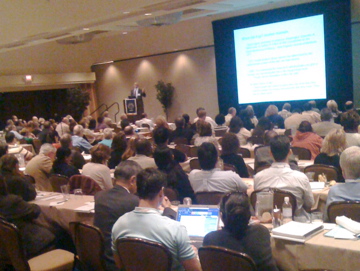
The 2008 ASBP scientific meeting in Phoenix, AZ was amazing!
Sitting in a room full of bariatric physicians with lecturers who sometimes sound like they're speaking a foreign language with all the science and medical jargon they spout off isn't exactly the most ideal way to spend a few days away from home. But when all of the top low-carb researchers and practitioners from North America gather in one place to share their latest findings in the world of livin' la vida low-carb, you can't help but get super-excited about what is to come in the future of diet and health as the evidence in favor of low-carb diets continues to mount. What a weekend it was!
My only regret is that I didn't have a chance to interview more people at the conference than I did. However, I did get in a few outstanding ones in my limited time--Dr. Richard Feinman, director of The Nutrition & Metabolism Society and co-Editor-In-Chief of the Open Access online journal Nutrition & Metabolism, Drs. Mike and Mary Dan Eades from Protein Power (see Dr. Mike's blog post about the conference by clicking here), the producer of the hit CBC-Newsworld documentary film My Big Fat Diet (which we were able to watch on Sunday morning) about a group of First Nations people who returned to their native high-fat, low-carb diet named Mary Bissell, and a 45-minute chat with the author of Good Calories, Bad Calories Gary Taubes. These and MANY more interviews for my podcast show will be coming in the next few months from various people who attended the conference, so get ready.
Speaking of Gary Taubes, it was such a pleasure meeting him in person. He's taller than I thought (he said the same thing about me) and could literally talk for hours about this unique role of carbohydrate in the obesity epidemic. You could really sense all the years he has invested in this subject has shaped his thinking about this so acutely that he is now a man on a mission. And he said it on several occasions throughout the weekend that he plans on pursuing this for as long as he has the energy and desire to do it. We need people like Gary Taubes who are unwilling to back down just because the message goes against conventional wisdom. He is certainly on the forefront of a revolution that could very well see a breaking point very soon.
I was happy to see many of my fellow low-carb friends and champions of this cause at the 2008 ASBP/Nutrition & Metabolism conference in Phoenix:
JACKIE EBERSTEIN, who worked with Dr. Atkins for three decades and is one of the most knowledgeable Atkins diet experts in the world today.
DR. JONNY BOWDEN, author of Living The Low-Carb Life and various other books on nutritional health. It was a genuine surprise to see him there and he didn't even recognize me at first when I was speaking with Dr. Jeff Volek. Jonny greeted Jeff and started to walk away when I said, "Hey Jonny, it's Jimmy Moore!" The look back on his face was priceless! :) THANKS Jonny!
CASSANDRA FORSYTHE, who described herself as "Jeff Volek's slave" (she works with him at the University of Connecticut) was there as well and we got a few minutes to chat about the future of low-carb (read her blog post about the weekend by clicking here). She is certainly one of the rising stars in low-carb research and a name you will be hearing a lot more from in the coming years long after the old-timers have since passed on. She was a lot shorter than I expected, but I'm sure she could still kick my butt! :P
It was a real pleasure meeting Melanie Vogan from Atlanta Teleproductions, Inc. who was filming various interviews with people behind the scenes in the world of low-carb and I was honored to be a part of that. Melanie and her husband snagged a whole bunch of footage from everyone to piece together a documentary about the healthy low-carb lifestyle. I'm excited about this chance to share low-carb living in such a positive manner and Melanie is just the person to do it. She's fully committed to using her talents in the video broadcasting realm to make it happen. We'll be hearing more from her in the future and I'll let you know when the documentary will be available.
The days went kinda like this: wake up, go to breakfast (they weren't the best in the world considering this was an OBESITY conference), listen to a few lectures, take a break, listen to a few lectures, a time for questions and answers, go to lunch (which weren't any better than the breakfast!), listen to a few lectures, take a break, listen to a few more lectures, ask more questions from the speakers, and then go on your own for supper where most of us hung out at the Lantana restaurant each night just to chit-chat about whatever (the supper menus were the best--check out what I ate during this trip at my menus blog). Sounds riveting, doesn't it? Actually, YES IT WAS!!! When you get to come face-to-face with all these people you blog about, this is a VERY big deal. I liken it to being at the Super Bowl (which ironically was in Phoenix this year!) for fans of livin' la vida low-carb.
It was kinda cool sitting across from Dr. Eric Westman and Dr. Mary Vernon while sitting next to Drs. Mike and Mary Dan Eades for supper (in fact, Dr. Mary Dan couldn't finish her steak, so I happily obliged!). Rubbing elbows and listening in to the conversations that went on was absolutely priceless. I can't wait to share some of the findings that were presented at this conference as well as my interviews because it was a fabulous time for Christine and I to get away despite the hacker who brought down my forum just before I left.
Although I didn't get to hang out with her as much, I was happy to see my friend and fellow blogger Laura Dolson from the About.com Low-Carb Diets site (you can read her comments about the Phoenix event by clicking here). We had a chance to talk briefly on Saturday night, but I would have loved to been able to talk some more. There just wasn't enough time in the weekend to fit it all in!
The weather was certainly a shock to my system going from a cool, humid climate here in South Carolina to the hot, dry climate in Arizona. On day two when I was planning on several interviews with people, I totally lost my voice. My nasal passages were like the Sahara desert and my groggy voice was only soothed after several hot lemon tea sips and constant water helped lubricate the voice box again. Whew, I hated that feeling and would never make it living in Phoenix, Arizona. But it was a fun place to visit and meet several of my readers who live there.
Dave and Kelly Damron (author of the book Tiny Toes and the blog Twin Peas) were very kind to pick us up from the airport and take us back on Sunday. I've had my nightmare experiences with cabs in New York City, so Kelly helped prevent that from happening in Phoenix. We enjoyed meeting up with them for dinner on Saturday night and talking about our failed IVF cycle experience in December. This is what Kelly dedicates herself to like I do low-carb, so it was kinda cool having someone who has been through it and survived despite great odds. Dave and Kelly both commented how well Christine and I have handled our situation and I told them it has only made us stronger as a couple. THANK YOU Kelly for all you are doing and I wish you and Dave all the best raising those little twin female munchkins. :) Hope to see you again someday.
One of my longtime blog readers Jeri Sessler met with us on Friday and we had a blast just chatting it up over lunch. Jeri is such a sweetheart and I'm glad we got to meet her and spend a few minutes enjoying each other's company. What a delightful lady! We also met a relatively new fan of the livin' la vida low-carb concept who makes her own YouTube video series called the Monkaboo Project. Monyka is a real trip! I appreciate her engaging personality and it really shines through in person just like it does in her videos. We agreed to do a little segment for her latest video that I think you'll enjoy. That was a lot of fun! ;)
All in all, it was a superb few days in Phoenix and I'd like to personally thank The American Society of Bariatric Physicians for extending an invitation to me and Christine to attend. We appreciate the privilege of coming to events like this despite having no background in medicine or nutrition. Anyone who is interested in the subject of weight loss, diet, and health needs to know about the fabulous work of ASBP as well as the Nutrition & Metabolism Society. Dr. Vernon was commenting about how the Nutrition & Metabolism portion of the week tripled from what it was in Nashville last year. This is real progress and I expect the numbers will continue to rise each year as the evidence keeps building and building in favor of low-carb dieting for weight and health management (and diabetes was a HUGE focus of many of the researchers as they see this as the primary front for legitimizing low-carb once again to the general public).
Here's my take-home message from this conference--get involved, take the passion you have for what you believe in, and make a real difference in the world. I'll be blogging more about some specific things you can do to put some grassroots feet to spread the word. Let's just say it's time to turn up the heat on Congressmen in Washington, the American Diabetes Association, the American Heart Association, and anyone else who needs to listen to the low-carb message in a clear, unbiased manner. I have been inspired to begin working on a major project to help facilitate this. Stay tuned for many amazing things to come on this front!
Now it's time to get caught up on e-mails, bringing my forum back online again, and, oh yeah, SLEEP! :)
Is Ketosis Necessary On A Low-Carb Diet? Let's Ask The Experts!
One of the most asked about aspects of livin' la vida low-carb has got to the issue of ketosis. There is so much misinformation about there about this very natural state that the body goes through when you are on a low-carb diet (primarily confusing it with a serious condition that diabetics must be careful of called ketoacidosis--NOT the same as ketosis). As such, there may be confusion that lingers out there among my readers who are just learning about this way of eating.
In this recent blog post where I provided some "quickie one-liner" responses to some e-mails, I made the following statement:
Being in ketosis is like being pregnant--you either are or you're not; regardless of what the Ketosticks show you, if you are eating less than 30g carbohydrates a day, then you ARE in ketosis.
One of my readers named Charles Fred decided to respond to my statement which he disagreed with and it gets to the very heart of this issue about ketosis. Here's what he wrote:
Your statement reflects today's informed opinion, but my article in work, Unified Physiology of the Metabolic Syndrome, has given me an unusual perspective which for the sake of brevity I'll state dogmatically.
Ketosis need not and should not be part of low-carb eating. Low-carb diets should never be labeled as ketogenic diets. Ketosis appears to be an Induction phase of low-carb eating, but in fact it is a last ditch response to inadequate glucose. As such it is either temporary or avoidable.
Low-carb eating is the evolution-derived diet of humans (unlike other primates). Humans are carnivores, hunters, because human evolution happened pre-fire and pre-agriculture when very few carbs were edible. For carnivores, gluconeogenesis in the liver supplies all necessary glucose.
But if someone abruptly switches from high carbs to very low carbs, gluconeogenesis will be inadequate to supply enough glucose - causing weakness, dizziness and ketosis.
Well if gluconeogenesis is supposed to be adequate, why does it fail? When you eat carbs they are stored as glucose (glycogen) in your glucose fuel tank - your liver. When you manufacture glucose from protein via gluconeogenesis it is stored in that same fuel tank, intermingled with those dietary carbs.
Enzymes, including gluconeogenic enzymes, are expressed only as needed. If your glucose storage is kept full by dietary carbs, expression of gluconeogenic enzymes is reduced. Eventually your gluconeogenic machinery becomes atrophied, inadequate to supply 100% of your glucose requirements.
So, contrary to usual practice, the proper way of switching from high-carb to low-carb is to gradually reduce dietary carbs over the course of about a month, inciting gradual rebuilding of gluconeogenic machinery. Then all those Induction woes which convince many that low-carb is not for them are avoided - as is ketosis.
Did you get all that? You'll recall I've explained gluconeogenesis before and it's a beautiful metabolic process that allows your body to make its own carbs (glucose) for the body's needs from the protein you consume through the liver. So, therefore, there isn't a real need for dietary carbohydrate at all.
But Mr. Fred believes eating too few carbohydrates to the point that your body is in a state of ketosis is harmful to your body and that a more gradual progression to lower and lower levels of carbohydrate is needed to keep the body from going through the "shock" of what many describe as the Induction flu. As someone who has gone through this experience and appreciated the benefits of making that "sudden" change, I could not disagree with him more.
What do the low-carb experts have to say, though? I decided to pose this theory put forth by Mr. Fred to several of America's most respected low-carb diet authorities and have them respond:
Not everyone who suddenly moves from a high-carb intake to Induction will get symptoms. Many make the transition very easily. My educated guess is that at least 50% make the transition easily. Others have only mild symptoms. A few have more severe symptoms that can be managed. I think the transition would be easier for more people if they read the book completely so they know what to expect and how to deal with symptoms.
After years in clinical practice I have only had a few patients that required a slow transition because of such severe symptoms. The Induction phase is important especially to those with a severe carb addiction. It is the fastest way to stabilize the blood sugar, control hunger and cravings and improve many diet related symptoms quickly. It is amazing how many people feel better once they are in ketosis by the 4th or 5th day.
Secondly, the mindset of the dieter is they want progress ASAP to stay motivated especially when having to give up some of their favorite foods. Induction provides that. By slowly lowering carbs many will give up too soon and miss the opportunity to find out how effective low-carb can be.
For people with severe health risks, rebalancing the body with a very low-carb intake can lead to rapid improvements in blood sugar, blood pressure, triglycerides and high insulin levels. Until insulin levels improve some of the other benefits of low-carb can't happen. I have seen many severely disordered insulin and blood sugar results that would take far too long to improve with even 60 or 70 grams of carbs.
Just as one diet does not fit all, one level of carb restriction does not fit all. We are all different. The level of carb intake needs to be the level that works for each person based on what we know about them. Dr. Atkins didn't always start in the Induction phase--some people didn't need it, yet many did and would not have been as successful without it.
Unfortunately, many are still stuck in the mindset that having ketones from fat burning is abnormal and undesirable. We know it is not. Dr. Veech, an NIH researcher, agrees that the negatives about dietary ketosis are misunderstood.
Humans are omnivores--able to survive as carnivore, but thrives as omnivore.
Gluconeogenesis isn't solely a metabolic process induced by carbohydrate restriction; it is a normal homeostatic process to maintain blood glucose, so even those consuming a high carbohydrate diet will utilize it as needed (usually when engaged in high levels of activity or during the period of sleep).
The idea that if you don't use it, you lose it, is an incomplete view--yes the enzymes will be made in lesser amounts if one doesn't rely on gluconeogenesis to fully supply glucose, but to claim "atrophy" sets in is a bit over the top.
Some people do find this approach to be a gentler way to restrict carbohydrate--slowly lowering their intake over a period of time; others do better just going "cold turkey" and reducing carbohydrate below 40g. Both reach the same endpoint--persistent state ketosis and utilization of gluconeogenesis. The idea that one will not induce ketosis (burning fat) doing the former is physiologically not possible--if your carbohydrate is below a particular threshold, you're going to make ketone bodies.
The result of reducing carbohydrate slowly isn't a lack of ketone bodies being produced, but less of them wasted, thus the less likelihood a person will register ketosis on Ketostix. Those who restrict carbohydrate below 40g initially make more ketone bodies than necessary, so they "spill" the excess in urine, saliva and sweat. But someone reducing carbohydrate slowly is also making ketones--just less likely to be spilling excess ketones.
With time the person who reduced carbohydrate below 40g and stays there will also begin to not see any measurable ketones on the Ketostix as they get more efficient at making ketones for energy. There is less wasted ketones, thus less to see on the sticks, as time passes. But, if one is keeping carbohydrate below 40g, they're burning fat for their primary energy source, which means they are making ketones whether they register on the sticks or not.
In most medical terminology, "osis" implies "the abnormal condition of"--like onychomycosis means "abnormal nail fungus," halitosis means "bad breath." Perhaps this is one reason why people unfamiliar with low carb approaches jump to the conclusion that "ketosis" is harmful. If you have no insulin in your body, as in Type 1 diabetes, a potentially life-threatening condition called diabetic "ketoacidosis" can occur. My Duke colleague Will Yancy published a paper looking at the pH in the blood of people on two diets (low-carb vs. low-fat) and did not find low blood pH ("acidosis"), but because the blood bicarbonate was lowered below the normal range we called it a "compensated metabolic acidosis." Another published study by Brehm showed the average level of blood ketones goes down over time.
In our clinic, some people always have ketones in the urine, others never do, other fluctuate back and forth. Dr. Atkins used the phrase "benign dietary ketosis" in his books. I have wondered if it would be better to say: "ketosis without acidosis" or "ketonuria" instead of "ketosis." "Ketonemia", which means "ketones in the blood" "ketonuria", which means "ketones in the urine."
I don't agree with Charles Fred's point of view. You can see why there might be confusion. If you said "if you are eating less than 20g of carb per day then you are burning fat, or in the fat burning zone, or the 'ketone zone'--apologies to Barry Sears and the Zone Diet--rather than "in ketosis," then this might be technically more correct.
This does not make a lot of sense to me. Ketone production and utilization and ultimately blood and urine levels vary along a continuum. So to suggest it is an absolute yes or no is not accurate. There is also a diurnal variation and many other factors that influence their metabolism other than diet (e.g., exercise). There is also a lot of individual variation in regards to the level of carbohydrate restriction required to see significant accumulation of ketones. So I don't see it as black and white.
Gluconeogenesis is more than adequate to supply obligatory glucose needs. How else would you explain the aboriginal hunting and fishing cultures (e.g., Inuit of the Arctic and First Nations groups in Canada) who survived for millennia with little if any identifiable dietary carbohydrate intake? I guess I'm not quite understanding the point of it all.
There is a continuum of ketosis. In fact, one of the features of ketone bodies is that, unlike other fuels, glucose and fatty acids, they can be present in plasma over a wide range of concentrations. What is true is that Ketostix measure ketonuria which may or may not give you an accurate view of plasma ketone bodies. If ketone bodies are used as fast as they are made, you may never see ketosis. Also, I personally think there may be more aspecs of normal ketone body metabolism than we know about now. There is the idea, for example that glial cells may supply ketones as fuel for neurons:
Ketone bodies make an important contribution to brain energy production and biosynthetic processes when glucose becomes scarce. Although it is generally assumed that the liver supplies the brain with ketone bodies, recent evidence shows that cultured astrocytes are also ketogenic cells. These findings support the notion that ketone bodies produced by astrocytes may be used in situ as substrates for neuronal metabolism, and raise the possibility that astrocyte ketogenesis is a neuroprotective pathway.
This theory from Mr. Fred seems to assume that ketosis is somehow foreign or not part of normal metabolism. It is true that it may take some time to adapt to it but there is no reason to assume that it is inherently undesirable. Human evolution probably had a lot of starvation. The function of ketone bodies is to keep gluconeogenesis from having to supply all necessary glucose because it can be a drain on body protein.
I don't think gluconeogenesis fails. There is just some period of adaptation. If there is evidence for Mr. Fred's theory, then I would be interested. Practically, it may feel better to adapt to low-carb slowly--I think it depends on how much carbs you start out with--but the idea you can be on very low-carb and not be in ketosis has to be tested. I personally doubt it but I don't know.
Ketone body production is under the control of many factors: glucose, insulin, fatty acids, level of oxidative metabolism, etc. I think there is also a time factor. Many people eat one meal a day, are quite happy with it and they may be in ketosis at some point during the day. So, it may be useful for some people to get into low-carb slowly but I don't react well when somebody tells me didactically the proper way to eat. "Proper" usually means the way they do it.
I don't agree with this man at all. Your body still produces ketones from all the extra dietary fat, and it gets better at doing that and using the ketones as time goes on. In our work at the University of Connecticut, with three months of following a weight loss ketogenic diet all subjects had a decline in urinary ketones over time even though they were eating the same foods and had the same caloric restriction.
What's happening is that the body is getting better at taking up the ketones--maybe ketone receptor unregulation. Also, they all still had ketones in their blood after three months and this was higher than baseline and much higher than those following a low-fat diet. Your body does not have enough metabolic machinery to produce enough of it's own glucose to support all organs (i.e. your heart).
Yes, it's true gluconeogenesis goes up, but most organs don't use it anyway. That's why blood glucose tends to drift up over time.
Now that the experts have weighed in on Charles Fred's hypothesis, why not share YOUR thoughts based on your own experience following a low-carb diet. Did you ease into livin' la vida low-carb and have excellent results doing it that way? Or did you do like most of us did, myself included, and go from a high-carb to a low-carb diet overnight? Did you see measurable results doing it that way despite having some temporary unpleasantness? Share your thoughts in the comments section below.
Special thanks to all the experts I quoted in this post for sharing their knowledge about this subject of ketosis. On behalf of me and my readers, THANKS SO MUCH! :)