PLEASE UPDATE YOUR BOOKMARKS TO LIVINLAVIDALOWCARB.COM/BLOG
Saturday, July 12, 2008
Post-Low-Carb Meal 5-Hour Glucose Tolerance Test Produces Rather Odd Results
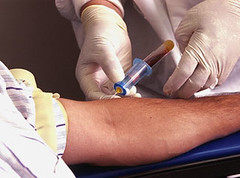
My arm had so much blood sucked out of it for these tests
I just returned late on Thursday from my 3-hour trip up I-85 North to Durham, North Carolina to spend some time with the Triangle (and Beyond) Low-Carb Meetup group there as well as seeing a great low-carb doctor from Duke University named Dr. Eric Westman to conduct some tests and talk about my recent blood sugar woes and pesky 30-pound weight gain in 2008 that won't come back down again no matter what I do. It was a good time away although I missed blogging and updating you about the healthy low-carb lifestyle. And I'll be leaving again on Tuesday to go see my brother Kevin in Pensacola, Florida for at least a week where I will have ZERO Internet access besides my iPhone (and, no offense, but I ain't up for blogging on that thing with the hunt and peck typing!), so I'll be trying to squeeze in as many posts as I can before then. It's gonna stay busy for me the next couple of months.
But so many of you have been wondering about how my visit with Dr. Westman went that I wanted to make sure I provided an update, especially with the results from my five-hour glucose tolerance test (GTT) following a low-carb meal which was conducted on Monday. If you thought my home testing of my blood sugars was interesting enough, just wait until I tell you what happened during the GTT. Unbelievably crazy! I'll share more about that in a moment.
First, let's look at the bazillion other tests Dr. Westman ran for me to see if there are other culprits going on with my health. A few of these I requested done because Dr. Keith Berkowitz (who I will be sharing a special two-part follow-up podcast interview with the first week in August about this answering your questions), who espouses the "reactive hypoglycemia" theory for long-term low-carbers, suggested I have them run.
Here were the results:
Vitamin B-12--529 (normal) Cortisol--8.9 (surprisingly normal) Homocysteine--6.7 (normal) 25-Hydroxyvitamin D3--42 (normal) HbA1c--5.0 (a little low, but normal) LDL particle number--1453 (borderline high) Small LDL particle number--30 (low is less than 600!)
By all accounts of these tests, I'm one extremely healthy guy! My thyroid function was all fine and so was my liver function. So it's good we can rule those out as culprits. I was quite frankly shocked to see my cortisol levels in the good range considering all the stress I've experienced lately, but this just confirms my body handles it all very well apparently. The A1c number was also encouraging since it is so spectacular and out of the diabetic range completely (although Dr. Berkowitz thinks it is a little low--a sign of the reactive hypglycemia according to him).
My LDL and total cholesterol are higher than normal as I've previously blogged, but look at the particle number of the dangerous "small" LDL--a measly little 30! That's just 0.02 percent of my total LDL particle number...in other words, quite negligible and protective considering over 95 percent of my LDL particle size is the large, fluffy kind. :D I'm not at all worried about my lipid profile with my HDL at 65 and triglycerides at 77. That's an HDL/triglycerides ratio I'd put up against anybody else's every day of the week.
Alright, so what the heck is going on with my blood sugars? And, more importantly, what is happening with my insulin levels when my blood sugar drops even after a low-carb meal? Inquiring minds, myself included, sincerely want to know. Here are the results of my GTT after eating a low-carb breakfast consisting of eggs and cheese with a chicken breast from Chick-Fil-A:
Fascinating test, huh? And it's just about what I expected was happening. My fasting glucose and insulin levels are perfect, but within a half hour of eating even a low-carb meal I'm seeing a TRIPLING in my insulin levels to keep my blood sugars in check. This would be a typical response if my insulin then came back down again within the first hour or two, but it doesn't.
As you can see, the insulin sustains at that higher level for two hours lingering at 13.7 then slowly dropping to 11.1 and then hitting 9.0 before dropping back down significantly in the third hour to get closer to baseline. During this time of elevated insulin, my blood sugar falls below fasting down about 10 points before rising back to where it started once the insulin comes down again. A normal response would show blood sugars going up quickly and then falling quickly, but not for Jimmy Moore. Lucky me, eh?
So what am I to make of this and what plan of action does Dr. Westman and his colleagues suggest I implement to limit this insulin response so that maybe I can get my recent weight gain to come back down again? I wish I could tell you it's a pretty cut and dry "do this and all will be well" solution, but it's not. The reality is I need to tweak this slowly by only changing one thing at a time. That one thing for me will include eating LESS protein than I have been and watching my specific portions of protein and overall intake just to see if it makes a difference.
Yes, I know cutting portions and even counting calories is almost taboo to talk about within low-carb circles and I'm not interested in that debate right now because I'm not fully convinced of it. Only time will tell. I haven't once counted calories or measured out my portion sizes in the past four and a half years of livin' la vida low-carb, so this is a tough sell for me. But I'm certainly game for doing something different to get my weight to come back down again, especially that little bit that has come back to my midsection.
Interestingly, Dr. Westman suggested I cut back on the amount of protein I have been consuming because it is possible that my body through gluconeogenesis is converting much of the dietary protein I have been consuming into glucose/sugar/carbs which COULD be the reason why I haven't been able to get my weight back down again. And this theory certainly has some merit since I consciously increased my protein intake when I started lifting weights for the first time in December 2007 shortly before my weight gain.
Sure, I also took creatine in the first six weeks and that may have had some impact on the weight gain. But consuming more protein-based foods in an effort to help with my muscle growth could have sabotaged my weight maintenance efforts somewhat. Although I have experienced quite an increase in the amount of muscle on my body after six months of training, it's not implausible that upwards of half of that weight gain is indeed muscle mass. The rest of the 15 or so pounds of weight I have put on over this period of time may be the result of excess glucose from protein.
Beginning yesterday, I started adding in more fat and deliberately trying to eat less total protein (not as a percentage, but overall) to see if it makes a difference. One way I'm doing this is to make sure any protein source I am eating is offset by an addition of more fat. For example, if I'm eating a chicken breast that is basically all protein and little fat, I'll slather it in butter and add cheese on top. Cheese in the form of brie or other fatty ones as a meal will also be a way to increase my fat while decreasing my protein. Cooking eggs in butter and adding cheese also will help with this. Nuts, coconut oil, heavy cream, and other high-fat foods will become more and more prevalent in my low-carb menus.
Since I already eat most of those foods anyway, this shouldn't be difficult to implement. Simply cutting back on protein could be as simple as eating half a steak or only one burger patty or chicken breast. Making sure I contribute fat and fiber to my meals will keep that ratio of fat to protein at the 3-1 ratio I am hoping to attain. Carbs, of course, will remain reduced to basically non-starchy, green leafy veggies.
What do you think about all of this? I'd love to know what you think about the results of my GTT. I'm also frightened to think what would happen if I did a traditional GTT with a glass of sugar water--EEEK! My insulin would go even MORE berserk! Your thoughts as always are welcomed. :)
Don't you know that your body needs carbs in order to function properly?! Come on, you idiot low-carb supporters, how can you tell people to cut down or even eliminate most of their dietary carbohydrate intake from things like healthy whole grain foods like brown rice and pasta and even fruits and vegetables? What kind of reasonable diet would suggest you remove whole categories of foods like this in order to lose weight and live a healthy lifestyle, hmmmm? Well? WELL?!?! How about it Mr. Livin' La Vida Low-Carb Man?!
Siiiiiiiiiiggggghhhhh. That, my friends, is just a typical day in the life of what I put up with in my e-mail box most of the time. People have become so incredibly misinformed about diet and health that they are content with merely repeating back the same old diatribes from those so-called health "experts." It really is a pity that more people can't learn to think for themselves by getting all the facts, analyzing them carefully with the intent on learning the truth, and then applying that knowledge to their own personal experience while sharing it with others. That's what I try to do here at my blog and all my other projects.
It certainly gives you more credibility if you constantly remain a student of health whether you are a doctor, dietitian, nurse, or even a low-carb blogger. I may not have a bunch of letters after my name (although I do have an M.A. in Public Policy...does that count?), I have worked hard to NEVER stop soaking in every bit of information that I can about health so I can share what I discover with you. Then, hopefully you can take that knowledge, apply what is relevant to your own life, share it with someone else, and continue to education further. We live in an age of information and ignorance is no longer a viable excuse--especially on the subject of diet and health.
In Episode 45 of "Livin' La Vida Low-Carb On YouTube," Christine and I wanted to share with the YouTube viewers about a word that is inextricably linked to low-carb dieting, but you really don't hear about it much outside the realm of low-carb research. The word is gluconeogenesis and I contend every single person who is on a carbohydrate-restricted or even a zero carb diet needs to know about this word. I've blogged about it and even did a podcast show on it, but this is much too important a concept for people to miss. Although gluconeogenesis (GNG) is rather complex from a metabolic standpoint looking at all the biochemistry that's involved. Check out this T-shirt from The Nutrition & Metabolism Society that illustrates all the pathways involved with GNG:
Order one of these "geeky" shirts TODAY by clicking here
Learn more about gluconeogenesis in today's video:
Since I uploaded this video to YouTube, there has been some confusion about what I shared in it about how the protein is converted into glucose. My friend Charles Washington, the zero-carb half-marathon runner who recently wrote a guest blog post said it seemed like I was saying that ALL protein gets converted to glucose. I certainly don't want to mislead anyone in that direction because it's not a one for one ratio of conversion. Dr. Eric Westman from Duke University says the studies he has seen say for every 2g of dietary protein consumed, one gram of it is converted to glucose/sugar/carbs. So it's about a 2-1 ratio of conversion which could cause SOME people problems who are especially carbohydrate sensitive (like me!).
This is what I was referring to when I said eating too much protein could POSSIBLY stall your weight loss if you are especially sensitive to carbohydrate whether through eating them or through gluconeogenesis. In looking at some of the reasons for my own struggle this year to get my weight back down despite doing all the right things, gluconeogenesis has come up as a possible culprit for my difficulty. Perhaps for me I need to be eating LESS protein than I currently am while increasing my fat and keeping my carbs to a minimum. This isn't a universal thing for everyone and could be genetic in nature. I'll be blogging more with an update about my weight and health situation very soon.
You guys are awesome for watching our "Livin' La Vida Low-Carb On YouTube" videos and we appreciate hearing your comments about them and suggestions for future topics at livinlowcarbman@charter.net. Don't miss our previous YouTube videos and be sure to subscribe to our YouTube videos if you like what you see. THANK YOU for all of your support and, as always, let us know how we can help you along in this journey to better health. Keep on livin' la vida low-carb! :D
As most of us who are livin' la vida low-carb can personally attest to, consuming foods high in protein like beef are an integral part of our weight loss and health improvements. We low-carbers uniquely realize that satiety is the secret to effective weight management and that studies have clearly shown that eating protein is indeed power food for weight loss because it controls our hunger well enough that we don't have to eat as many calories as people who consume carbohydrates in high quantities, for example.
But the best sources of protein are still eggs and beef for people who want to lose weight and keep it off for good. That's what this Internet seminar is designed to do featuring the top experts on the most current science behind protein consumption. Protein is oftentimes the neglected macronutrient in the diet wars where fat and carbohydrates seem to hog all the limelight. But is protein the missing link in the obesity epidemic? Find out during this special presentation which will feature someone you may recognize from the low-carb world.
Dr. Eric C. Westman, MD, MHS, an Associate Professor of Medicine and Director of the Lifestyle Medicine Clinic at Duke University Medical Center (and who is coming on the 2nd Annual Low-Carb Cruise with us in 2009), will be joined by Helene Charlebois, BSc, RD, a Registered Dietitian/Nutritionist from HC Nutrition Consulting & Wellness, to talk about the role of protein in weight and health management. It should be quite an informative bit of information for you to enrich your knowledge of why we eat the way we do.
The one-hour Nutricast™ Seminar is coming this Thursday, June 5, 2008 at 12:00pm EST and is available to anyone with Internet access. If you are unable to attend the event LIVE, then it will be archived and accessible for up to one year afterwards. Click here to register for this amazing event! SIGN UP TODAY!!!
Research Showing There's No Debate About The Fate Of Low-Carb In 2008
I've become convinced that one of the greatest assets that those of us who believe in the power of livin' la vida low-carb possess is the ever-growing litany of respectable published research that continues to pour in at breakneck speed. A young researcher from the University of Pennsylvania recently confirmed that there is "strong interest" in low-carb diets and how they relate to treating obesity and disease. This has me very excited about the future of the low-carb lifestyle because we're just getting started.
Now that the new year is here, there will be even more positive studies regarding livin' la vida low-carb to be released. All this encouraging research shows us there's no debate about the fate of low-carb in 2008. Things are looking up--WAY UP!--and we should be holding our heads high as the science finally begins catching up with the experiences those of us who have been eating this way already know.
Today I have four newly-released published studies that will encourage you as you continue to live the low-carb life. It's an amazing journey that is so much deeper and more meaningful than simple weight loss. It's about living healthier than you ever thought possible while enjoying amazing high-fat, low-carb foods that are delicious, nutritious, and will keep you satisfied. What other "diet" plan can you say THAT about? Anyone? :)
Here are those new studies for you to add to your arsenal:
Looking at female athletes, the researchers wanted to see if the amount of dietary fat intake played a role in the occurrence of foot and knee injuries sustained during training and competition. They observed 86 female runners who ran at least 20 miles a week and asked them to keep a food log for a period of one year. The study participants were asked to report any injuries they sustain over that period of time for the researchers to analyze their food intake to see if there was a contributing factor.
The results were astonishing! Those female runners who were injured were more likely to be consuming "significantly lower intakes of total fat" and calories from fat compared with the study participants who did not sustain an injury. In fact, the researchers conducted a logistic regression analysis to predict with 64 percent certainty which of the female athletes would be injured based on their dietary fat intake.
MY CONCLUSION: If a female runner wants to reduce her risk of an injury, then the best course of action is to EAT MORE FAT! Betcha didn't see that one coming!
What seems like an encouraging bit of research about a low-carb diet for controlling Type 2 diabetes over a one-year controlled study is actually anything but. All you need to do is read Regina Wilshire's take at the "Weight Of The Evidence" blog to realize this study was bogus from the start. Why? Because their idea of a "low-carb" diet is putting the study participants on (hold on to your hat) NEARLY 200 grams of carbs a day! HOLY CRAP! Are they TRYING to kill these people?!
It should come as no surprise that all the major health indicators got WORSE on this diet, including weight gain, HbA1c increases, HDL "good" cholesterol decline, sharp increases in triglycerides--all tell-tale signs that these people did NOT follow the dictates of the low-carb lifestyle. Perhaps the researchers would do themselves a lot of good if they performed this same study using a very low-carb ketogenic diet consisting of 10g carbohydrates for comparison purposes. The results of this study would be quite stark!
MY CONCLUSION: Just because research shows some supposed positive aspect of livin' la vida low-carb in a twisted interpretation of the data doesn't mean it should be celebrated. Demand better and more accurate studies to compare the REAL low-carb with the fake 200g carbohydrates one!
Like that last study, this one was also published in the same journal. But unlike the previous one, this is a legitimate body of research that bears a closer look. The lead researcher is Dr. Alex Johnstone from the Rowett Research Institute who I previously blogged about her study of low-carb diets on brain health. This time she wanted to know if changing the amount of protein and carbs in the diet would impact hunger for the study participants. Specifically, is being in a state of ketosis brought on by a high-protein, low-carb ketogenic diet more satiating and effective for weight loss than a high-protein, moderate-carb nonketogenic diet? Interesting study, huh?
She carefully observed 17 obese men over a four-week period as part of a residential trial and carefully measured out the specific food content for each of the study participants. Each of them were provided 2 high-protein diets (consisting of 30 percent of total calories) along with either a low-carb diet (consisting of 4 percent of total calories like the Atkins diet) or a moderate-carb diet (consisting of 35 percent of total carbohydrates a la The Zone). She measured their body weight daily along with ketosis. Computer analysis also measured hunger.
The results? Hunger was lower and weight loss was "significantly greater" with the low-carb diet compared with the moderate-carb diet. This all happened while the low-carb participants remained in ketosis and actually ate less food for the duration of the study. It was further proof that ketosis is indeed safe and extremely effective for both satiation and losing weight. Of course, we knew that already.
MY CONCLUSION: If you're looking for a diet composition where you are never hungry, will lose a whole lotta weight, and will feel better than you ever thought possible, then you should turn to a high-fat, moderate protein, low-carb ketogenic diet. Ketosis is the key. Nuff said!
Although the American Diabetes Association (ADA) recently endorsed low-carb as equally effective for diabetics to use as part of their weight management program, similar positions have not been taken by other health advocacy groups like the American Medical Association (AMA) and the American Heart Association (AHA) for example. But there hasn't been as much published research on low-carb weight loss for Type 2 diabetics--until now!
Researchers from the Oxford, England-based Center for Diabetes, Endocrinology and Metabolism wanted to compare the effects of a low-carb diet on the body weight, HbA1c levels, ketones and cholesterol levels in both diabetics and non-diabetics to see if there would be a difference over a three-month period. A total of 13 Type 2 diabetics controlling their disease with disease or metformin as well as 13 non-diabetics were placed on either a low-carb diet (with 40g or less carbohydrates daily) or a "healthy-eating diet" as prescribed by the ADA-equivalent group in the UK (basically a moderate-to-high-carb, low-fat diet).
The low-carb study participants, both diabetic and non-diabetic, experienced "greater" weight loss with no changes in HbA1c, ketone or lipid levels. While I'm encouraged by the weight change that occurred, I'm surprised there were not improvements in the HbA1c and lipid levels at all on those who followed low-carb. But it's still good new for the low-carb lifestyle.
MY CONCLUSION: Whether you have diabetes or not, livin' la vida low-carb is an "equally effective" way to lose weight and get healthy. Are you hearing this AMA and AHA as well as the low-fat bureaucrats in the FDA and USDA? If low-carb and low-fat are equal, then why not recommend them side-by-side as the ADA began doing this year, hmmmm?
Keep reading the "Livin' La Vida Low-Carb" blog throughout 2008 as we'll continue to share with you the latest from the research community. If you see any studies about livin' la vida low-carb that catch your eye and you want to bring them to my attention, then please e-mail me a link to the study or article about it anytime at livinlowcarbman@charter.net.
Want proof that livin' la vida low-carb is still having an impact on our culture in the year 2007? Well, look no further than this Natural Products Insider column to see what research & development marketing guru Dr. Karen Grenus says is the next big diet trend in beverages.
Although it has been mocked and scorned by the so-called health "experts" and their willing accomplices in the media, protein is the first of two new "it" ingredients that every beverage manufacturer is clamoring to put into new products to show consumers they care about helping them get healthy and lose weight.
Many credit low-carb diets like Atkins, Protein Power, and South Beach for launching this new trend which will begin to manifest itself in the very near future. All I can say is that it's about time (although we've already had lots of protein in the delicious Atkins Nutritionals shakes for years)!
Low-carb researcher Dr. Donald Layman from the University of Illinois at Urbana-Champaign shared in my interview with him last year that a higher-protein diet combined with moderate exercise results in greater weight loss and effective fat-burning while preserving lean muscle mass.
The evidence is very strong and the marketing machines at the largest beverage companies in the world are already salivating at the sales potential they will muster up from this new trend. We've already seen signs of it with the release of new diet beverages this year such as Diet Coke Plus, Diet Pepsi MAX, Enviga, and even FUZE.
Look for these efforts to be stepped up even more.
Dr. Grenus says the allure of using a beverage as a meal replacement is about convenience and controlling the nutrients that go inside your body with precision.
"Today, consumers know about macronutrients and are more likely to purchase products after looking at carbohydrates, net carbohydrates, protein, fat and fiber," she wrote.
She added that consumers demand the product "must taste good enough for consumption and be palatable; cause fullness during consumption, or satiation; cause a continued sense of fullness until the next meal, or satiety; and remain palatable over the course of the diet."
This is where protein comes into play. Manufacturers are realizing that adding enough protein to their product can help their beverage meet all these requests by the customer. People realize protein satisfies, so they're looking for it to squelch their hunger.
Interestingly, Dr. Grenus explained that protein also adds "viscosity, emulsification, opacity and flavor." Hmmm, I did not know that. Additionally, there are several different blends of proteins used to find the perfect match for the beverage that ends up on store shelves.
Here is a listing of the various proteins used in beverages:
1. Casein
This milk protein is generally combined with calcium, sodium, or both. Sodium Caseinate is best used in shakes and drinks that contain fat while calcium caseinate works better in water-based drinks for protein potency.
2. Whey
Another milk protein which packs a punch with concentrated amino acids that help protect lean muscle mass, suppresses appetite, and nutrient-dense.
3. Soy
A plant-based protein that is low-fat and low-cholesterol. In fact, soy protein isolates contain nearly ZERO carbs while adding dietary fiber to the mix.
"Soluble and insoluble fiber have been linked to the reduction of blood cholesterol and certain cancers, respectively," she explained. "There is no question that soluble and insoluble fibers should be a part of every healthy diet. In the event that fiber-rich grains, fruits and vegetables are replaced by weight-loss drinks, it’s essential that fiber be incorporated into the beverage."
In fact, fiber is becoming so popular now that there are even diet books being written with fiber as the central ingredient. Beverage makers are keenly aware of this, too, and are working on ways to put it in their products.
Just like proteins, there are several kinds of fibers, too:
1. Soy fiber
Made from soybeans, this is a commonly used product in weight loss drinks because it has the health benefits of soluble fiber while working well in the digestive tract in the way insoluble fiber performs.
2. Polydextrose
A fiber-based bulking agent added to artificial sweeteners to serve as a prebiotic which allows good bacteria to grow in the gut. This fiber is extremely low-calorie, low-glycemic, and studies have shown it to increase satiety.
3. Inulin
A soluble fiber with prebiotic properties which can pass right through the body without ever being metabolized. It is fermented by bacteria in the colon.
4. Fructooligosaccharides (FOS)
In addition to providing soluble fiber, this also is used as a sweetening and bulking agent that does not raise blood sugars. Sweeter than inulin, this fiber allows for a "creamy mouthfeel" (if you've ever tried the delicious low-carb ChocoPerfection chocolate bars made with an FOS called oligofructose, then you know what I'm talking about). Additionally, this can actually be used as a replacement for fat and sugar.
The most important thing to the consumer is to make sure the beverages they are drinking to help them lose weight taste good while maintaining nutritional integrity. That's the biggest trick, according to Dr. Grenus.
"Products formulated for health instead of taste need the magic of flavor houses to make drinking them a memorable experience," she remarked. "Flavors can mask undesired characteristics from added ingredients, enhance existing flavors and create the signature taste of weight-loss beverages."
If a product tastes funky, then it should come as no surprise that people won't keep buying it. That's exactly what happened when the "low-carb craze" hit. Too many of those products tasted DISGUSTING and thus did not sell. That doesn't mean low-carb itself failed (as has been the MO of those who oppose livin' la vida low-carb), but these manufacturers hurriedly pushing out products to supposedly meet the demand rather than taking their time to do it right.
To me, the worst-tasting products that are out there right now have to be the ones that contain soy in them. I don't know if my taste buds are so acutely tuned in to it or not, but everything I eat with some measure of soy in it just tastes gross to me. It's got a nasty wang time and time again. I hate that, but it is what it is.
The key to remember with these new protein and fiber fortified beverages is to READ THE LABELS and make sure they contain low enough sugar (ZERO or next to none is preferable) if you are livin' la vida low-carb. It does absolutely no good to drink a protein-based product for weight loss if you are simply gonna sabotage it with carbohydrates your body DOESN'T need!
If this topic is interesting to you, then I encourage you to read the full report which appeared in Food Product Design. Dr. Grenus discusses the various sweeteners on the market (although she makes a faux pas when she states Pepsi One is sweetened with ACE-K and ASPARTAME--nope, it's ACE-K and Splenda!) and she even brings up stevia (which The Coca-Cola Company is trying to get FDA-approval for a new version of Diet Coke) as an up-and-coming sweetening agent in beverages. WELL WORTH THE READ!
Antonia Trichopoulou found that higher protein leads to increased death
Oh no! I guess all of us low-carbers need to make sure our will is written because it looks like we're all headed for a one-way ticket to the cemetary. Well, that's what some are claiming after reading this European Journal of Clinical Nutrition study about mortality rates of people on a high-protein, low-carb diet.
Lead researcher Antonia Trichopoulou from the Department of Hygiene and Epidemiology in the School of Medicine at the University of Athens in Athens, Greece wanted to see what the mortality rates of people who stay on a high-protein, low-carb diet over the long-term.
Using the Greek population to comprise her pool of study participants, Trichopoulou observed the diet of 22,944 healthy adults and assessed their diet by way of a questionnaire. The researchers paid especially close attention to the protein and carbohydrate levels of the people in the study and more specifically their relationship to the rate of death among specific categories of people.
What she found was that 455 deaths happened over the 10-year period which Trichopoulou contributed to "high values of the additive low carbohydrate-high protein" diet. She also added that the study participants who ate such a diet saw more cardiovascular and cancer deaths than those who ate a high-carb diet.
Trichopoulou's grim conclusion? She said, "Prolonged consumption of diets low in carbohydrates and high in protein is associated with an increase in total mortality."
Aw man! I was just getting used to eating this way and now this researcher has to come along and ruin my day like this! Actually, while it is certainly an interesting study to look at, I'm not buying it. Whenever you leave the study data in the hands of the participants as they did in this study, you are opening yourself up for suspicious results.
But, despite my doubts about the veracity of the study results, you and I were challenged by a board certified dietitian named Dr. Steven Acocella to refute it under the assumption that it is a legitimate study. Before I share with you his challenge, I think you need to know a little more about this gentleman first.
As you can see from this DiseaseProof.com article featuring Dr. Acocella, he's no fan of the late great Dr. Robert C. Atkins and his low-carb, high-protein diet. As a fellow colleague of low-fat vegetarian diet advocate Dr. Joel Furhman, we can presume he too believes meat should not be a major part of a healthy diet. Thus, a study like this one from Greece seems to further his position.
So, here's his challenge to people who are livin' la vida low-carb:
Dear Jimmy and blog members -
I know that the low-carb approach focuses caloric intake on high-fat but we all agree by default this diet style is also low-carb and high in protein, as fatty foods are often derived from high-protein foods. I know I'm in the lion's den here but Jimmy often posts opposing view and allows hearty debate. My post will hopefully inspire such discourse.
I will not editorialize on the study, but simply listen to you and your reader’s comments. I will say that there's no reason that we need to dispute the efficacy of the study itself. Let's go from the position that the study is not flawed. Let's discuss the science and findings.
The conclusions of the authors are reproducible and consistent. What do you all think? If you do post this study I applaud your willingness to explore the science and not ignore nor dismiss it.
I am keen on hearing the comments.
Dr. Steven Acocella Board Certified Dietitian Doctor of Chiropractic Medicine Master of Science Human Nutrition Fellow - American College of Lifestyle Medicine Diplomate - American Clinical Board of Nutrition
THANK YOU for the challenge, Dr. Acocella! I'm more than happy to let my intelligent audience of readers share with you their collective wisdom about carbohydrate restriction. Debate of ideas is what I'm all about and I appreciate your willingness to listen.
Okay, if you are on a high-protein, low-carb diet and STILL living, please let us know by leaving a comment. LOL! Just kidding, but I think it makes a point.
The idea that you are killing yourself eating this way is absolutely absurd, study or no study. I don't need a study to tell me this because I'm living it, Dr. Acocella. And so are millions more to the betterment of their health and weight.
Also, you can e-mail Antonia Trichopoulou about her study at antonia@nut.uoa.gr.
Each 6-piece serving of "Texas Toasters" has just 1g net carb
Traditional bread made with white flour is taboo when you are livin' la vida low-carb. But when you are eating a salad and want something crunchy to eat with it or if you get the inkling for some tuna salad or other hors d'voures on your low-carb lifestyle, it would be nice to have an all-natural and delicious low-carb alternative you can turn to.
Now you've got it!
It's called Carb Counters "Texas Toasters" Twice Ovenbaked Bread Crisps from our friends at the Houston, TX-based Dixie Diner. I couldn't believe these were low-carb the first time I ate them because they are really quite delicious and give you that need for a salty side item with a crispy crunch.
My favorite part about these all-natural tasty bread crisps with absolutely ZERO artificial ingredients or preservatives in them is the fact that they only have 1g net carbs for about 6 of them. WOW! That's hardly anything on your carb counts (even during Induction!) and yet you'll get to enjoy the benefits of eating these with confidence knowing they won't throw your low-carb diet into a tizzy!
You'll be amazed by how awesome these taste and they come in three scrumptuous flavor varieties: Good N Plain, Dill & Onion, and Pizza (my personal favorite)! You can top them with a little spaghetti sauce, pepperoni, and mozzarella cheese for some mini-pizzas. Or scoop them in some French onion dip for a yummy snack. The possibilities for eating these are endless!
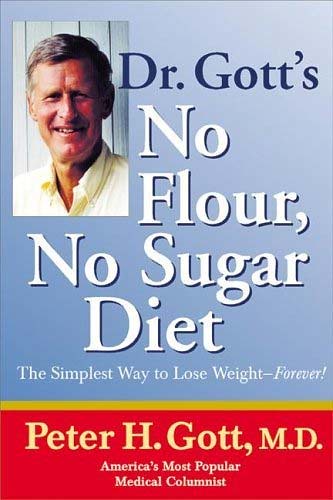
A book about avoiding flour and sugar--a low-carber's dream!
I live my life by the KISS motto--keep it simple stupid!
That's because simplicity is the most effective way to make something as complicated as something like a healthy diet as understandable as possible to everyone who hears it. People are already confused enough from the health "experts" about how many calories they need to be eating, what kinds of foods they should be consuming, trying to figure out the proper ratio of carbohydrates, fat and protein they should be eating--somebody please make the madness of it all go away! AAAAACK!
Well, that is exactly what syndicated health columnist Dr. Peter H. Gott ("Ask Dr. Gott") has attempted to do with his very simple, yet incredibly effective four-word diet plan and here it is: NO FLOUR, NO SUGAR! That's it! Nothing more, nothing less. Just avoid the white flour and eliminate all forms of sugar from your diet and you will lose and maintain your weight forever and ever, amen. Sounds easy enough, doesn't it?
It's this kind of bare minimum advice that is winning Dr. Gott's No Flour, No Sugar Diet enthusiastic fans the world over. For those of us who are livin' la vida low-carb, we already know how important it is to remove flour and sugar from our diet because these are the kind of carbohydrates that are making Americans fat and unhealthy at a record pace. However, there can also be a case made for avoiding other high-carb foods like potatoes, rice, pasta, processed foods, and junk foods, too. But this is at least a good start.
If the issue of obesity were simply a matter of cosmetics, then it wouldn't be such a crisis right now. But the sad fact that Dr. Gott points out very clearly in his book is that the resulting health problems that have come from the existence and prevalence of obesity alone is unnecessarily having an adverse impact on the quality of life of tens of millions of Americans. In fact, it is leading to hundreds of thousands of deaths annually and nobody seems to care!
As a diet and weight loss advocate myself, I was pleased to see Dr. Gott talk so openly about important elements of living healthy such as keeping a food journal, carefully reading nutritional labels, finding support from people who will help you lose weight, exercising regularly, adequately planning for your new lifestyle change, avoiding the real fad diets, staying focused on the plan, and making your new habits stick for proper weight maintenance for many years to come.
All of this is excellent advice, but...
Unfortunately, Dr. Gott doesn't embrace livin' la vida low-carb as a viable means for permanently losing weight and keeping it off forever because he thinks it is "potentially harmful" to eat the high amounts of protein and saturated fat from animal sources while allegedly decreasing the amount of fiber as well as fruits and veggies consumed with such an "extreme" plan like the Atkins diet. He sounds the warning bell that all of this will lead to an even bigger risk of heart disease, obesity, and maybe even cancer over the long-term.
Puh-leeze, Dr. Gott!
Very simply put, no it does not! If you read any of the latest studies coming out about the healthy low-carbohydrate nutritional approach, then you will very clearly see that there is nothing "potentially harmful" in terms of heart health or otherwise about this way of eating over the span of at least one year and quite probably even longer than that. Sensationalizing low-carb diets as somehow inherently "dangerous" or "unhealthy" is so yesterday's news. Most people are thankfully beginning to realize that dog don't hunt anymore.
Meanwhile, there are PLENTY of studies showing how a high-carb, low-fat intake is indeed leading to an increase in heart disease (likely from the gumming up of the arteries from excessive refined carbohydrates), making people gain more weight specifically in their abdomen area (yes, low-fat diets DO make you fatter--studies confirm it!), and bringing on both such conditions as kidney, esophageal, pancreatic, and even brain cancer in people who would otherwise remain healthy had they simply followed a low-carb diet. It's all in the medical journals in black and white for anyone with eyes willing to see it.
It is the height of hypocrisy and nothing more than a bald face lie to tell people eating protein and saturated fat is unhealthy for them. Again, go read the studies, Dr. Gott! The evidence simply does not bear this out and you should be ashamed of yourself for suggesting otherwise. Talk about making it simple, why do you insist on spreading such unproven nonsense about protein and fat? What are you afraid of people learning about these macronutrients if they wisely begin adding them to their diet in lieu of carbohydrates?
As for sharing your complete ignorance about the so-called lack of fiber on low-carb as well as fruits and vegetables in a low-carb diet, I'll have you know I eat about 50g fiber daily (without even counting, too!) and my amazingly delicious and nutritious low-carb diet is rich in such vitamin-rich non-starchy vegetables as spinach greens, cauliflower, green beans, cucumbers, tomatoes AND even low-glycemic fruits (GASP--you mean you can eat fruit on low-carb? Somebody stop the presses!) as strawberries, blueberries, honeydew, and cantaloupe--just to name a few!
How in the world did I ever lose nearly 200 pounds, keep the weight off for over three years, then get healthy and stay healthy eating this way, hmmm? How indeed.
Additionally, Dr. Gott repeats the ridiculous claims that low-carb "stresses the kidneys and liver" and leads to osteoporosis. Again, check your facts before going off on a tangent you obviously know nothing about, sir! There is no evidence that low-carb causes harm to the kidneys or the liver and there have been very clear studies on the myth about bone loss on a low-carb diet. LOOK IT UP and don't forget to apologize for your mistake later!
This continued assault against low-carb diets really needs to stop, especially from people like Dr. Gott who are for all intents and purposes is promoting the very same principles that the late great Dr. Robert C. Atkins made his entire life's work. If Dr. Atkins had never spoke out so strongly against the impact of garbage carbohydrates like white flour and sugar for nearly three decades, then Dr. Gott would probably have never released this book. That's a fact, Jack!
Frankly it was quite difficult to even get into this book after reading the jibberish about low-carb living and Dr. Gott's all-out assault against the very way of eating that helped me lose my weight and get healthy for the first time in my life. What's wrong with people that they have to tear down the Atkins low-carb diet in order to prop up their own dietary advice. I've just never understood this and probably never will.
Nevertheless, I forced myself to keep reading even as I was biting my tongue at times. Ironically, people who support livin' la vida low-carb will probably like what they see from Dr. Gott regarding the purpose of Dr. Gott's No Flour, No Sugar Diet. Primarily, it is to reduce calorie intake which then leads to weight loss. While he subscribes to the now-defunct "calories in, calories out" theory, this lower-calorie approach does somewhat explain why his plan works for weight loss.
The elimination of sugar from your diet under Dr. Gott's plan does not mean you can't have any of the plentiful array of sugar-free products made with artificial sweeteners like Splenda, aspartame, saccharin, and others--all of which he discusses at length in the book. He does not put any limitations on such things because they can help you get rid of sugar from your diet, an area where Dr. Gott and I strongly agree. I was happy to see him warn people about the nasty stomach-busting side effects of sugar alcohols like maltitol, lactitol, and sorbitol.
Also, for those of you who need direction, Dr. Gott provides a whole list of what you SHOULD eat and what you SHOULD NOT eat as well as two weeks worth of menu plans to help you get an idea about how Dr. Gott's No Flour, No Sugar Diet works from a practical standpoint. Plus, what's a diet book without recipes? Dr. Gott aims to please with plenty of them at the back of the book for everything from breakfast to dessert. Mmmmm.
Where we very sharply disagree, though, is on what constitutes a healthy diet.
Dr. Gott says carbs like whole grains, beans, starchy vegetables like potatoes, and high-sugar fruits like bananas are excellent choices for people when they are trying to lose weight. Frankly, they are not and will sabotage you even before you start due to their impact on your blood sugar levels and ability to reach ketosis.
On the subject of fat, we both agree that trans fats are bad news, but Dr. Gott believes saturated fat is just as damaging to cholesterol levels and heart disease and cancer risk as trans fats are. WRONG-O! The body of research that is building in support of saturated fat intake in conjunction with a low-carbohydrate diet is compelling indeed and I can only urge people to read the data for themselves and draw their own conclusions.
Finally, Dr. Gott says protein intake should be limited to lean animal sources to prevent an overabundance of saturated fat from entering their diet. Sigh. Will we ever get past this stigma that has been unnecessarily attached to saturated fat? Hello people?! It's not the great enemy people like Dr. Gott are making it out to be!
At least Dr. Gott's No Flour, No Sugar Diet does emphasize eating "nutrient-dense" foods that are packed with healthy nutrition. Again, this is something people who are livin' la vida low-carb advocate as well and it's good to see it being recognized by a health expert like Dr. Gott. Although his definition of "nutrient-dense" may be slightly different from mine, mostly he's referring to whole, all-natural foods--perfect choices for a healthy low-carb lifestyle.
One aspect of this book that I actually enjoyed was the liberal use of actual letters Dr. Gott has received over the years in regards to his "no flour, no sugar" diet plan. They helped tell the overall story about how and why this diet works from the perspective of real people living this way with amazing success. They found what works for them and now they're doing it. Who can argue with results?
All in all, Dr. Gott's No Flour, No Sugar Diet is not one that should be entirely dismissed even by people on a low-carb diet. If you can get beyond the perplexing bias against livin' la vida low-carb that overwhelmingly pervades certain sections of this book, then it actually has some fantastic information in it. It's just too bad Dr. Gott felt compelled to jump on the anti-low-carb bandwagon to placate his fellow health "expert" buddies.
If you like the "low-carb" Oh Yeah! bars, then you MUST read this!
One of the things you hear me repeat over and over again within the context of livin' la vida low-carb is to be sure you are reading the nutrition labels on everything you buy carefully. I know there are some food purists out there who will preach to me that if it has a label on it, then it's probably not something you need to be buying. Yeah, yeah! That's nice for you, but in the real world there are those of us who enjoy having some low-carb treats every now and then.
With that said, I am constantly having to caution people to read labels like a hawk or else you may be setting yourself up for disaster and disappointment in your low-carb weight loss efforts by consuming more "hidden" sugars and carbs than you bargained for. This is not good.
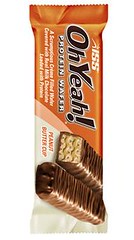
But what if that favorite "low-carb" bar of yours that you've put your trust and faith in the manufacturer telling you the truth about what you are putting in your mouth ain't exactly as low in carbohydrates as they claim it is after all, hmmm? Unfortunately, that's exactly what has happened with the popular new Oh Yeah! protein wafer sticks from a company called ISS Research now appearing in several of the major online low-carb and health retail sites.
BUYER BEWARE!
These are the latest protein bars to hit the market and they come in several tempting and tantalizing flavors, including Chocolate Chocolate, Chocolate Mint, Chocolate Peanut Butter, Peanut Butter Cup, Vanilla Creme, and Vanilla Peanut Butter Creme. Plus, they supposedly only have 3g carbs for the two-stick serving, according to the nutritional information currently published on various web sites carrying these Oh Yeah! protein wafer bars.
Check out this fun video review of the Chocolate Mint flavor of the Oh Yeah! bars from my friend and fellow blogger Melting Mama who both she and her husband lost well over 100 pounds each following gastric bypass surgery and now the low-carb lifestyle (she REALLY likes them as you'll quickly discover):
Although Melting Mama says she enjoys these Oh Yeah! protein wafer bars that are what she says "like a thick Kit Kat bar," it seems the manufacturer ISS Research has engaged in one of the most deceptive nutritional label marketing practices that exists today. It literally makes me sick to my stomach to even think about all the poor, unsuspecting low-carb dieters who are shelling out good money for a product like this when the fact is it isn't at all what it claims to be.
What did ISS Research do?
Well, the dirty little secret about their allegedly 3g carb protein sticks is the fact that it grossly understates the actual carbs by more than half! Actually, the entire package of Oh Yeah! protein wafer bars have 8g carbs for the two wafers (not 3g as has been purported), or 6g net carbs (when you subtract the 2g dietary fiber).
But even 6g is DOUBLE the 3g that has been floated around out there about these sticks. Now, if they listed the serving size as 1 stick rather than the entire packaging, then they could have gotten away with marketing this product as 3g net carbs. Unfortunately, that's not what they did and now people have caught on to the scheme.
This may not seem like a big deal, but it is. How many people will decide to purchase the Oh Yeah! protein wafer bars simply because they ASSUMED the 3g total carbs for both sticks in the package was valid? Haven't we all at one time or another while livin' la vida low-carb simply trusted the label to tell us the truth and we did? You have, I have, we all have.
So now what?
Well, ISS Research claims they recently corrected all the nutritional info on their site after having their products tested in the lab for the accurate carb count following several complaints from concerned customers. But apparently they haven't informed all of their distributors of this major change yet since the old information still persists on several online retail stores.
If you are a low-carb retailer and carry the Oh Yeah! protein wafer bars, then please check your web site listing to make sure it isn't still listed as 3g carbs per package. Please contact ISS Research immediately about updating you with the latest nutritional info changes because this could seriously jeopardize your reputation amongst your regular clientele. I'm sure your customers will not be very happy or forgiving if you keep selling them something that claims to have 3g carbs and it really has 8g. EEEEK!
You can get all the latest on the most up-to-date nutritional info available on the Oh Yeah! protein wafer bars by visiting the ISS Research page about this product. While you are there, you can also access the recent Certificate of Analysis for each of the various bars for their actual carb count which can be as high as nearly 10g carbs per package. 8-O
This just goes to show you that it's better to sometimes count those low-carb treats as a few MORE carbs than what's listed on the packaging in your daily carb count so you don't go over your budgeted carbs for the day. Let this Oh Yeah! protein wafer bar story serve as an excellent lesson learned so you're not saying "oh no" when you step on that scale.
Don't be discouraged by this. Instead, let it serve as a reminder of what you are doing and where you are headed with your weight and health. There will be tiny obstacles like this that will come your way from time to time, but stay strong and vigilant in the face of adversity. In the end, you'll come out a better person because of it. Just keep on livin' la vida low-carb! :)
You can send your feedback about this issue to ISS Research by using this contact page.
Whew, what a day this was for me! After more than two years of praying, saving up money, and a rather fortuitous miracle of the right set of circumstances, today I was able to get my roof worked on to try to stop the many leaks coming through the ceiling of my house. We didn't get finished with the job before sunset and there is a big thunderstorm coming on Sunday, but we should have it completed by Monday afternoon! WOO HOO!
Right now, though, my body aches so much from hauling about a bazillion shingles today that I can barely type this post without some sort of pain radiating throughout my entire body. Nevertheless, it's been worth every minute of sacrifice of blogging and energy today to make it happen. YEAH! Can you tell I'm happy? :)
Anyways, I've been meaning to blog about a recurring topic that keeps coming up from time to time among many of my readers. In fact, it shows up in my Statcounter keywords that people use to find my blog via Google and other search engines virtually every single day.
What is it? Here's an e-mail illustration to explain it:
"Hello there. Congrats on your weight loss success. I have a question for you. I am doing the high protein diet but I am ALWAYS hungry and eat all the time. I eat all protein and A LOT of it. Was it the same for you? How can I fix this? I feel like at this rate I will gain weight not lose it."
Sound familiar anyone? It simply amazes me how people can claim to be livin' la vida low-carb and be in CONSTANT hunger. This is one of the major reasons why low-fat and low-calorie diets fail, not the low-carb ones people. The key difference between those failed diet plans and livin' la vida low-carb is the satiety factor. Satiety equals NO HUNGER!
In fact, studies have shown satiety, or the ability to be satisfied after eating, to be the secret to low-carb diets and why they work so well for so many people. I was absolutely miserable in 1999 when I was on my low-fat diet and I could not keep it up despite losing a lot of weight. Why? H-U-N-G-E-R!!!
But what's with this hungry thing on low-carb, hmm? I have to be honest with you and say that just totally baffles me because it has not been my experience on low-fat. Ask my wife Christine, I do NOT like feeling hungry. It's one reason I started livin' la vida low-carb in the first place. Actually, I previously blogged about how waiting for hunger is awful and it's so true!
Being the ever-so-curious (okay, I'm nosy!) person that I am, I just had to ask my hungry, protein-eating dieting reader to share with me what she eats on her "high-protein diet." The answers she provide were quite illuminating.
Check out this list of foods she typically eats:
- Boiled chicken breast with tobasco sauce - Turkey - 4 oz cheese - Egg whites with tobasco sauce - Turkey bacon - 2-3 cups lettuce with vinegar - High-protein puddings - Cheese-flavored bars - Soy jerky
EWWWW! Can you see why this person is "ALWAYS hungry" on her low-carb, high-protein plan? It's pretty obvious to anyone who has been livin' la vida low-carb for any length of time and been successful at it--she's doing low-carb the wrong way which is the best one-way ticket to becoming a crash and burn weight loss failure.
This is PRECISELY what happens when you don't read a reputable low-carb book before attempting to start livin' la vida low-carb. I feel like a broken record saying this because I repeat this message so often until I get blue in the face. But apparently the message is not getting through and I'm happy to KEEP repeating it until it finally sinks in.
I've seen it happen a million times before from many well-meaning people, but it totally breaks my heart when I see it happening again and again. Even when people sit down long enough to read a popular low-carb plan like Atkins, Protein Power, or South Beach, they always seem to think they know how to make it healthier themselves by cutting the fat, too! UGH! Why do people do that to themselves?!
When you do that, you simply negate the positive benefits that fat can have in your body when carbohydrates are significantly reduced. In a high-carb diet, fat is destructive to your body and will lead straight to obesity and other health ailments. But with a low-carb diet, fat (even saturated fat!) is your friend and you NEED it to provide your body with energy as well as fighting hunger!
Yep, that's right! While protein is certainly an important element in keeping your full and satisfied throughout the day, fat also prevents the body from becoming ravenously hungry as well. This is one of the major elements that my reader has lacking in her current diet. Just about everything she eats is much lower in fat than it needs to be (boiled chicken, turkey bacon, and soy jerky?).
Here are a few suggestions I have for her to improve her diet:
- Add non-starchy veggies like cauliflower, broccoli, and green beans - Include more salad greens (spinach) with tomatoes and cucumbers - Avoid the processed cheese bars that aren't real cheese - Start eating the egg yolk because that's the healthiest part - Enjoy the naturally healthy low-carb foods God created
There are many more suggestions about improving her diet, but these are an excellent start. The bottom line is there is absolutely NO reason why anyone should EVER be hungry when they are livin' la vida low-carb. That's one of the major benefits of this permanent lifestyle change that helps people get on it and stay on it! It's worked for me for over three years and counting now.
Have you experienced hunger at some point on your low-carb lifestyle and figured out ways to avoid it? Please feel free to share your insights and wisdom with us in the comments section below. When people who are on low-carb tell me they're hungry, my response to them is, "Then go eat something!" Make it low-carb, of course! :)
Dr. Wayne Campbell reveals a surprising weight loss power food--PORK!
It seems like we are seeing lots of research coming out all the time regarding the health and weight benefits of eating meat because of the healthy levels of protein it provides (some examples of these studies can be found here, here, and here). These exciting new scientific foundations for protein consumption are revealing what many of us who are livin' la vida low-carb have already discovered--protein and fat in animal-based foods are playing a major role in keeping hunger satisfied while aiding in permanent weight loss. It's about time, right?
This PR Newswire column today shares about another one of these kind of studies on the benefits of protein, this time zeroing in specifically on pork meat. However, there is one specific certain aspect of this research that is a bit disconcerting to me which I will address in a moment.
Lead researcher Dr. Wayne W. Campbell, associate professor of Foods And Nutrition in Purdue University's Laboratory for Integrative Research in Nutrition, Fitness and Aging, and his fellow researchers observed 46 overweight and obese women between the ages of 28 to 80 with a BMI of 26-37 over a period of 12 weeks. What they wanted to know was the impact of dietary protein on weight loss, appetite, mood, as well as cardiovascular and kidney health.
Each of the study participants were placed on one of two specific low-calorie diets:
NORMAL-PROTEIN (NP) GROUP--A 750-calorie diet with 18% protein HIGH-PROTEIN (HP) GROUP--A 750-calorie diet with 30% protein
Both of these groups were also split into pre-obese and obese subcategories according to their BMI. The HP group was provided with 6 ounces of lean pork on average daily as part of their high-protein consumption.
At the end of the study, all of the participants involved had lost weight, fat mass, and lean body mass. But the lean body mass losses were less in the HP group than the NP group. In fact, the pre-obese HP group lost less lean body mass (3.3 pounds) than the obese NP group (6.2 pounds).
This lines up with previous research from Dr. Donald Layman and Anssi Manninen who both found that muscle mass is preserved on a high-protein, low-carb diet. Nothing is said about the carbohydrate or fat content of the diet Dr. Campbell put these study participants on, but we can infer from the lean pork that it was lower in fat and higher in carbs.
Additionally, the HP group experienced greater satiety than the NP group (something research has shown protein to provide), thus the perceived pleasure of the diet was increased with the HP group and decreased with the NP group. Finally, blood pressure and cholesterol levels improved for all groups while kidney function had no significant change, regardless of the protein consumption. These findings were important since people who oppose high-protein diets worry about damage to the kidneys and heart (although this recent study confirmed there are no heart health risks to a high-protein, low-carb diet).
The results of this study were published in this week's issue of the scientific journal Obesity.
Dr. Campbell said the presence of protein from the lean pork consumed by the HP group made the difference in weight loss and lean muscle mass preservation.
"After 12 weeks, our study found that the group of women who followed a reduced-calorie eating plan while consuming a higher level of protein was more effective in maintaining lean body mass during weight loss compared to those who consumed the same amount of calories with less protein," he said.
Maintaining muscle mass helps burn more calories which is crucial in bringing about faster weight loss and eventual weight control, Dr. Campbell added. Plus, hunger was a non-factor among the study participants who ate higher amounts of protein which led that group to feel more confident and energized as they went through their diet.
"The women on the higher protein diet rated themselves more positively in terms of overall mood and feelings of pleasure during dieting which could help dieters stay true to their weight loss plans longer," the researchers contended.
Interestingly, this was the first such study on high-protein diets on weight loss where pork was the primary source of the protein. While that is significant primarily as a marketing tool for the National Pork Board, who commissioned and funded this study, I believe they missed an excellent opportunity to educate and discuss the health benefits of consuming the fatty cuts of pork as part of a healthy diet, too.
But that's not what they did with their study which is a real shame. Trying to appease the low-fat crowd for whatever reason, the marketing people representing the pork industry highlighted the six cuts of pork that fall within the USDA's definition of the word "lean" for having less than 10g fat. Why hide and be ashamed of your best cuts of meat, hmmm? That's just selling yourself short and a great disservice to the public about the amazingly healthy products you have to offer them.
I'd love for Dr. Campbell and his researchers to do this exact same study again except this time make the HP group a high-fat and low-carb diet group as well--maybe a 40-50-10 diet ratio of protein-fat-carbohydrates. I would bet they would see a MUCH more pronounced difference in weight loss and lean muscle mass preservation among this HPHFLC group than any other diet comparison. How about it, Dr. Campbell? Are you and the pork people up to testing my theory?
"The Livin' La Vida Low-Carb Show with Jimmy Moore" Episode 25 [11:48m]: Play in Popup | Download
More "Fact-Filled February" coming your way today as I turn to the subject of dietary protein. Did you know there has been a whole host of research coming out showing how protein is important for people desiring weight loss? Yep, that's right and it may surprise you WHY that is the case. Listen to Episode 25 and leave your comments about it with me!
These are the ways you can access "The Livin' La Vida Low-Carb Show":
Share your experiences eating a high-protein diet and how it has helped you lose weight and get healthy. Episode 25 explains the science behind it, but I'd like to hear from YOU about how eating this way has made a difference in your life.
Tune in on Thursday as I continue the protein theme when the topic of the podcast will be on eggs--YUMMY! You won't want to miss it! Spread the word and tell everyone you know to tune in to "The Livin' La Vida Low-Carb Show with Jimmy Moore." THANKS for your support!
Kelly Frazier wrote the education materials for "Shrinkdown"
I recently shared with you an initiative that is taking place in my home state of South Carolina to help people lose weight and get healthy. It's called "Shrinkdown" and is sponsored by the local YMCA chapters. In fact, I decided to join this year to see what it was all about.
After the intial weigh-in and a check of the key health statistics a couple of weeks back, participants in the "Shrinkdown" program were given a "Healthy Living Guide" three-ring binder to bring with them to their weekly Friday weigh-ins. Additional materials have been distributed each week and will continue to for the remaining weeks in the program.
But imagine my horror today when I got my new materials and saw on page 3:21 a section entitled "Why Do I Need Carbohydrates?" What the heck is this crappy health information all about and why is it in a packet about "healthy living"?!
When I looked closer for the source of this page, I saw it was from a woman named Kelly Frazier from the Department of Health & Exercise Science at the nearby Furman University in Greenville, SC. She is a member of the American College for Sports Medicine (ACSM) and lectures regularly on diet, health, nutrition, and fitness.
I couldn't help but notice she has a link to more information about the "Vegetarian Lifestyle" on her web site. Hmmm, if she's being fair and balanced, then why not have a resource link to a site about the low-carb lifestyle, Ms. Frazier? You could easily link to blogs by Regina Wilshire, Dr. Michael Eades, and so many more I could go on for days listing.
Nevertheless, in her article about carbohydrates, Frazier wrote that they are absolutely necessary for "energy" and for the added nutrients your body needs to "stay healthy."
"Adults should get 45 percent to 65 percent of their calories from carbohydrates, 20 percent to 35 percent from fat, and 10 to 35 percent from protein."
Even more disturbing to me was the fact that they actually RECOMMENDED the consumption of "added sugars" for people to consume. Here's what they wrote:
"Added sugars should comprise no more than 25 percent of total calories consumed. Added sugars are those incorporated into foods and beverages during production which usually provide insignificant amounts of vitamins, minerals, or other essential nutrients. Major sources include soft drinks, fruit drinks, pastries, candy, and other sweets."
Let me get this straight. This so-called health organization, which is being quoted by Frazier in the "Shrinkdown" materials, is actually recommending as much as 65 percent of daily caloric intake comes from carbohydrates, including the consumption of junk foods containing sugar and gobs of high fructose corn syrup? Seriously?!
Plus, let's talk about this business of "proper brain function" for a moment. We've seen in studies I have highlighted here at my blog that eating too many carbs which elevates your blood sugar levels can lead to Alzheimer's disease (which incidentally is greatly IMPROVED by a low-carb diet) and poor mental health. Further research is already underway in Scotland on the effect of low-carb on brain health.
But Frazier didn't stop there. She added that "carbohydrates are the preferred fuel of the brain" and that not eating carbs will result in "fatigue, dizziness, irritability, and decreased concentration and cognitive function." This all happens, according to this self-appointed health expert, because "the brain does not have enough fuel to function properly."
This is the kind of garbage nutritional science that is being let loose on all those unsuspecting participants looking to lose weight in the "Shrinkdown" program! UGH! Let's see if we can educate Ms. Frazier and others who believe this nonsense.
This amazing biological process enables the body to make its own carbs from the protein it consumes. In other words, Ms. Frazier, YOU DON'T NEED CARBS FOR FUEL as you so erroneously claim. What you need to eat to fuel you body with is FAT (even eating the much-vilified saturated fat is VERY healthy for you!) despite the common myth you are simply perpetuating with your ridiculous essay on carbohydrates.
Regarding this business about not eating carbs causing all those symptoms you listed, you have GOT to be joking, right? I've blogged about this previously and I'm beginning to wonder if Ms. Frazier has some of the same retarded beliefs about livin' la vida low-carb as this other so-called health "expert" did!
Frazier turned her attention to the subject of whether carbs will make you fat and said flat out that they will not.
"Contrary to common misconception, carbohydrates are not fattening. Your body needs carbohydrates for energy throughout the day."
Yadda yadda yadda...we've been over this before. You don't NEED carbs. But catch this caveat she included in this paragraph where she backtracks just a bit.
"However, if you eat too many carbohydrates over several days then they can be stored as fat. Excess calories from fat, protein, and alcohol can also be stored as fat."
Wait a minute, wait a minute. Now this is getting REALLY good! :) Frazier says eating "too many" carbs will be stored as fat. What is the definition of "too many?" I think 100g is WAY too many carbs for someone to be eating in one day and yet Ms. Frazier says the minimum should be 130. Could it be deduced that eating 100g carbs daily COULD result in stored fat, hmmm? That would be "too many" in my book.
She tries to save face when she makes the comment about eating too many calories from other sources will also lead to weight gain, but none are as detrimental to your weight and health as carbohydrates. The volumes of science coming out about the damaging impact of carbs on various aspects of health is indeed mindboggling. Stick around my blog a while, Ms. Frazier, and you'll see what I mean!
Frazier then moved her attention squarely on livin' la vida low-carb and how it supposedly helps people lose weight. Here's what she wrote about it:
"Low-carbohydrate diets typically result in rapid weight loss during the first few weeks. Current research suggests that this intial weight loss is due to water loss...excess protein increases urination...which results in rapid water loss."
In a word, Ms. Frazier, WRONG-O! We've heard this exact same thing before from another "expert," but it doesn't add up. A real low-carb expert who worked with the late Dr. Robert C. Atkins in his clinical practice for decades has addressed the "water weight" controversy before--click here to read what Jackie Eberstein has to say. Plus, this study from Temple University last year should put this issue to rest for good.
On the subject of long-term low-carbing, Frazier said it "may result in weight loss," but that it will only happen because of the "restriction of calories, not the restriction of carbohydrates."
Again, the science doesn't support this, including a Canadian study from the early 1990s where twelve sets of male twins were overfed 1000 calories per day purposefully over an 84-day time frame. The researchers wanted to test the theory that it's all about the calories. They should have all gained 24 pounds each, but instead the weight gain varied from 9.5-29 pounds.
But even if livin' la vida low-carb resulted in eating less calories as Frazier so smugly reports, so freakin' what?! If you ask me, I'd rather have the natural calorie-reduction that comes from eating low-carb than having to painstakingly count each and every little calorie I put in my mouth. NO THANK YOU!
Yes, calories DO count, but thank the good Lord YOU don't have to count them on low-carb! :) Only a twisted mind would see eating low-carb for reducing calories as a BAD thing.
Finally, Frazier said low-carb is not for the long-term because it's too restrictive and difficult to maintain while not giving you the proper nutrition.
"A diet high in meat, eggs, and cheese is not balanced...A healthier weight-loss plan incorporate regular physical activity and smaller portions of healthy foods, such as whole grains, vegetables, fruits, lean protein, and healthy fats."
Oh yippee, we get that favorite word of the dietary dunces--BALANCED! Guess what? Low-carb gives me all the balance I need for my health thank you very much! Ms. Frazier has fallen victim (by choice!) to the "meat, eggs, and cheese" myth about livin' la vida low-carb.
NEWSFLASH, Ms. Frazier: Low-carb living DOES incorporate exercise, vegetables, fruits, protein, and fats. You just described this incredible way of eating perfectly. Do yourself a favor, Ms. Frazier! READ THE BOOK! Any of the low-carb books would give you more education about this amazing lifestyle and you might just realize it's not as unhealthy as you think it is.
My concern is all those "Shrinkdown" participants who don't know any better and will take what Ms. Frazier has written in this literature at face value. What a crying shame!
1-21-07 UPDATE: Unfortunately, Kelly Frazier took great offense to my column in response to her materials written for the "Shrinkdown" program regarding carbohydrates. If you read the comments section of this post, then you will also see several interesting responses from Kelly's sisters, too. It's all very interesting, but none of it changes anything about the truth of what I wrote.
Here is Kelly's e-mail to me:
Dear Jimmy,
I must admit that I was very hurt when I read your blog. It caused me a great deal of pain and I couldn't understand why you would write these things. Then I found this post you wrote on your website:
"As anyone who is overweight or obese will tell you, being fat is quite a traumatic thing for many people because it brings on the intense ridicule and scorn of people who may or may not know just how hurtful they are being. The scars from these experiences can be very deep-rooted and cause very real pain to linger on for many years and many times drawing these people into serious depression, loneliness and even suicidal. It breaks my heart to see this happening in a society that is tolerant of virtually every group of people--EXCEPT THE OBESE!
Thankfully, God can reach down through this sea of pain and into the souls of people like this to begin the healing process from within these beautiful people so they can finally deal with their weight problem in earnest and restore the temple of the Holy Spirit, their bodies, to their proper weight and get their life back.
I honestly don't know how people who do not believe in God can deal with these kinds of struggles they face, such as being overweight and all that comes with that, without Him! Jesus Christ is the anchor of my life and I would literally be lost in this dying world and very likely would be obese today without God in my life! I wholeheartedly believe that to be true."
After reading that message, I knew that I had to respond to you. Jimmy, I am also a Christian. I try to carry myself with integrity and show the love of Jesus Christ to all kinds of people. I do not benefit financially from the South Carolina Shrinkdown program. I have prepared the materials on my own personal time over the past three years, sacrificing time from my family. I have spent all of these hours trying to help people, much like you do.
I started to cry when I read about the pain that you have experienced. I am so sorry that you have suffered so much. I realize now why you responded with such hostility and are so passionate about your way of life. My sister was obese growing up and also experienced those same feelings of depression, loneliness, and suicide. I spoke with a Shrinkdown participant last year who told me that she had prayed for God to take her life because she felt so hopeless. When she told me that, my heart broke.
I realize that we do not agree on the fundamentals of human physiology. I am sorry if you felt misled by the program. We definitely do not recommend a low-carbohydrate diet and have not marketed the program in that way.
I understand that low-carbohydrate diets can result in long-term weight loss. I understand that they can provide a solution to many people who struggle with weight loss. After reviewing the current literature and recommendations from worldwide nutrition authorities, however, our sponsors sincerely do not believe that low-carbohydrate diets are the healthiest way of life.
Jimmy, I wish you the best on your weight loss journey and your mission to help others. I apologize for my sisters clogging up your forum. As you can see, we have a very close family.
Best wishes,
Kelly
This was my response to Kelly's e-mail:
Hey Kelly,
THANK YOU so much for your very kind comments in response to my blog post about your beliefs. Let me begin by saying that I definitely meant no harm to you personally in my column. If you and your sisters will go back and read it again closer, then you will see I only addressed the substance of your materials and did not "bash" you personally at any point.
I can appreciate the sacrifice you made to present those materials to the "Shrinkdown" program with no pay. But that doesn't give you the right to share information that is just not true. What about gluconeogenesis? What about the spikes in blood sugar that come from eating over 100g carbs daily? How about those concepts in your materials? There was no mention of them.
One of the biggest challenges I see in the United States today as it relates to helping people overcome their obesity is the inconsistent message they keep receiving from advocates of only one way to lose weight. While you acknowledge livin' la vida low-carb will work for weight loss over the long-term for some people (myself included), why can't we teach that alongside the low-fat, low-calorie, moderation diet that your sisters were preaching to me?
I apologize that you experienced pain from my column, but that was definitely not my intention. I am passionate about what I write about because I've weighed over 400 pounds and want people to know the truth. Won't you join me in the effort to promote not just your way, but many ways to weight loss? Isn't doing something, even if you believe it's not for you, better than having people remain obese? That's why I do what I do.
The overwhelming evidence that is coming out of the scientific community about just how healthy low-carb is for people is difficult to ignore. I am in the best shape of my entire life right now because of this amazing lifestyle that God has helped me stick with for three years now. I could very well have been dead right now if I chose to heed the warnings of people like yourself regarding low-carb.
When I interviewed Dr. Dean Ornish a few months ago, he said that low-carb and low fat advocates need to try to come to a consensus about what is healthy and stop the bickering. That's my point exactly, which is why I have to defend this way of eating whenever it is so blatantly challenged and ridiculed in any public forum.
We do want to help people not just with their physical needs, but also their spiritual ones because they are hurting. That breaks my heart to see people continue to wallow in their hurt and shame of being fat because I KNOW they can overcome it quite possibly through low-carb living. That's my only goal is to help those tens of thousands of people who visit my blog each and every month looking for hope and inspiration. And I plan to give it to them.
Again, I meant no harm to you or your family. I appreciate your willingness to share from your heart and hope you understand why I had to do what I did. God bless you and your family as you continue to shine for Jesus in all that you do. Take care and please don't hesistate to contact me anytime if you have any questions or concerns.
Jimmy
I don't think I exhibited any "hostility" at any point and was nothing but cordial to both Kelly and her sisters. Sometimes in my zest for challenging those who oppose this amazingly healthy low-carb life, my passion overflows and people mistake my authoritative style as being overly brash. I can't help it and don't plan to change. If we are going to make a difference, then truth needs to be spoken loud and clear.
THANK YOU, Kelly, for writing to me about this. I appreciate your words and hope that you understand why I was concerned about the materials you submitted to the "Shrinkdown" program. I encourage you to click on some of those links I provided to see exactly where I am coming from because it's not just my opinion. The facts are what they are and I lay them out there for everyone to see.
Like I said, what's the harm in promoting VARIOUS ways to getting healthy, hmmmm?