Quality photos print in seconds on this nifty KODAK printer
I'm not usually very impressed by many new gizmos and gadgets because quite frankly most of them don't ever live up to the hype. It's like all those television infomercials you see that declare the next great whatever for only $19.99, but then you get it and find out why it only costs that much. UGH UGH UGH!
But let me tell you about a product that not only lives up to the hype, it actually meets and surpasses every expectation I had for it more than I would have ever imagined--it's the KODAK EasyShare 5300 All-In-One Printer. You gotta get yourself one of these if you are as much of a picture-taking fool as I am!
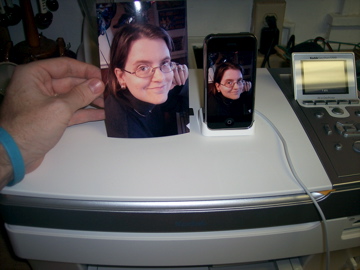
I couldn't believe how easy it was to be up and running with this thing. All I did was plug it in to the socket, do a few setup instructions to coordinate the printer, and it was ready to rock and roll! Since I have an iPhone and an iMac, printing out pictures was as easy as a push of a button.
You'll notice in that picture at the top of this post that I have a photo of my gorgeous wife Christine right there on my iPhone on the right and then the same picture less than a minute later printed out on the left. Is that not too cool or what? And the quality is as good or better than what you'd get a one of those machines at Wal-mart or a drugstore that usually costs 25 cents a pop for each photo. You'll save a lot of time and money the more you use this printer.
Once you have one of these in your home, you'll never have to drive anywhere or pay another dime to a store just to have pictures made. With the KODAK EasyShare 5300 All-In-One Printer, you won't have to do that ever again because everything you'll need to make great pictures will be at your fingertips! It's one of the most user-friendly printers you could ever have for photos, but there's even more to it than that!
You'll also be pleased to learn that this printer allows you to also scan, copy, and print paper documents as well, so it can play double duty with your computer as your super-duper printer as well. Take photos with your digital camera, cut and crop them in your photo program, and then print them out on your new printer. Then type up a letter, print it out, and then mail it to grandma with those pictures you just printed.
This is a handy machine to have around, especially during the holidays. I'm so pleased with this product that I can't wait to put one in the hands of one of my readers as part of my Kodak "Picture Perfect Low-Carb Holiday" Contest. If you haven't entered yet, then you still have time--but you need to hurry since the contest ends this FRIDAY, December 14, 2007.
I previously shared with you two outstanding entries from readers who submitted eligible photos and I have another delightful one to show you today. Here it is:
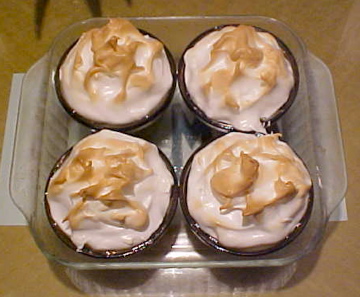
Submitted by CANDY B. from Hawaii
Lemon meringue pie should be just that - lemon and meringue! Rich crusts and sugared fillings aren't needed. I skipped the crust and used a sugar substitute. It's not only low-carb - you'll enjoy more lemon taste. Make individual pies to control over-indulging, yet looking specially made for each guest!
Get in on the action like Candy did and have a chance to win your very own KODAK EasyShare 5300 All-In-One Printer just in time for Christmas! Cook up your favorite low-carb holiday recipe and then enter the contest before Friday! GOOD LUCK EVERYONE!!!
Olivia Brown takes advantage of the new video review format at Amazon
You really have to admire the marketing brilliance of a company like Amazon.com. They are true innovators and undeniable leaders in their industry because they never just settle for the amazing success they have been able to achieve. Instead, they keep improving and improving by offering their customers unique features that keep them coming back.
The latest such improvement is the addition of a brand new feature that allows for video reviews of the products on Amazon. Yep, now not only can you WRITE about what you think of your favorite CD, book, electronic device or whatever else you purchase on their site, but you can also TELL everyone by making your own video reviews. It's the new wave of technology in product reviews and I think it adds a personal touch to their web site.
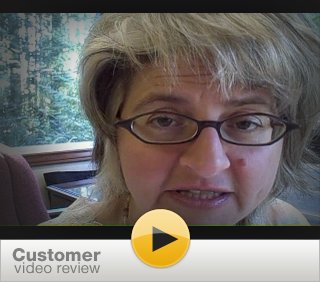
One of the most enthusiastic reviewers on Amazon who has taken this new video review format and run with it is Top 1000 Amazon Reviewer Olivia Brown. What a spunky woman this is and she's a self-described "a voracious reader and consummate blogger." Her blog is Happy Luau and I'm impressed by how elaborate it is because she has a lot to say. In fact, Olivia reads MY blog and has commented here quite a bit lately.
Because of her prestigious position at Amazon as a highly-respected and prolific reviewer, Olivia's opinions carry a lot of weight. So when she started video reviewing beginning a couple of weeks ago when Amazon rolled out this new format, people began taking immediate notice. And when she reviewed what is arguably the most compelling book about diet and health in the last century, I took notice.
Check out Olivia Brown's video review of Good Calories, Bad Calories by Gary Taubes to see how detailed she gets with her reviews. This woman is absolutely amazing and thorough in her analysis of the books she reads and I was impressed with what she said about the Taubes book. It sounds like that book has genuinely changed her life.
But Olivia didn't stop with Good Calories, Bad Calories for her video reviews. She also did an awesome one for Jonny Bowden's classic book Living The Low-Carb Life which compares the various low-carb plans and gives an overview of each one to help you decide which diet is best for you. I reviewed this book and have spoken very highly of it for anyone who is livin' la vida low-carb. Olivia was inspired by this book to continue her new low-carb lifestyle journey.
Finally, I was pleasantly surprised to see Olivia's video review of my book Livin' La Vida Low-Carb. She was very kind in her remarks about the book I wrote about my low-carb weight loss journey. And she saw EXACTLY what I was attempting to do with my book: help motivate others in their own journey to lose weight and get healthy. THANK YOU Olivia!
Check out more from Olivia Brown as she is adding lots of new reviews--both the "old school" written ones and the hip new video ones, too! GREAT JOB, Olivia! Keep 'em coming!
Ever since my wife Christine and I launched our brand new YouTube video series on August 22, 2007, it has quickly grown into an Internet phenomenon with hoards of excited and inspired viewers each and every day. I am grateful for the support so many of you have given this new extension of the "Livin' La Vida Low-Carb" family of resources and hope you will continue to spread the word about these FREE videos we enjoy making in support of the healthy low-carb lifestyle.
In our previous episode in the "Livin' La Vida Low-Carb On YouTube" series, we offered our very first prize incentive to leave a comment. If you'll go to the comments section for Episode 6, then you'll see a user named "Mommy 826" (aka Denise). She was the WINNER of the $20 in gift certificates to Captain D's restaurant from that video. We have another awesome prize to give away in Episode 7 today, so keep reading and watch the new video to find out what it is and how to win.
In Episode 7, I wanted to share with you just a few of those books that have made the biggest impact on my education about the low-carb lifestyle. This is by no means a comprehensive list of books for you to read if you are low-carbing, but it will get you started off VERY well if you begin with these. There are some old and new ones here, so get ready to grab a pen and paper to write these down because you're gonna want to check them out if you haven't already.
Watch the video and see what my current Top 12 favorite low-carb books are:
Most of the books I mentioned in this video I have reviewed here at my blog. Let's go down the list of those books and I'll provide a link to my review or to where you can get it to learn more about them. Here they are in no particular order:
I'm sure you've seen or read about most of these books, but there's probably a few you haven't heard about yet. So take some time to click on the links and find out more about the ones that intrigue you the most. In fact, I'm gonna give you a chance to win a FREE PERSONALLY AUTOGRAPHED COPY of my book Livin' La Vida Low-Carb: My Journey From Flabby Fat To Sensationally Skinny In One Year just by leaving a comment for Episode 7 at YouTube. This was very popular last week and I'm happy to offer yet another giveaway for you to win this week. We'll announce the winner in "Livin' La Vida Low-Carb On YouTube" Episode 8 next week. GOOD LUCK EVERYONE!
Have you missed any of the other YouTube videos? Here are links to those:
- Promo video--A half-minute promotion of the new video series - Episode 1--Introduction of Jimmy & Christine Moore - Episode 2--What kind of fruits can you have on a low-carb diet? - Episode 3--What kind of veggies can you have on a low-carb diet? - Episode 4--What does a low-carber do for something sweet? - Episode 5--Why is fat so healthy for you on the low-carb lifestyle? - Episode 6--Which restaurants can you go to on the low-carb lifestyle?
Brand new subscribers to our YouTube videos keep signing up all the time, so be sure to be one of those so you'll never miss a new video when we upload it. It has been an incredible pleasure to make these videos which we hope demonstrate how fun and exciting the healthy low-carb lifestyle can be for people to follow.
As always, THANK YOU for watching and please send us your feedback, suggestions for future show ideas, comments, and questions at livinlowcarbman@charter.net. We'll personally answer you in a prompt manner and do our best to serve you to the best of our ability as we continue to educate, encourage, and inspire our readers and viewers with the uplifting message of low-carb living. We appreciate you so much!
'The F-Factor Diet' Gets An 'F' For Snubbing Low-Carb While Espousing Its Truths
Dietitian Tanya Zuckerbrot says eat your fiber, but don't cut out foods
There's not a doubt in my mind how healthy consuming fiber is as part of my healthy low-carb lifestyle. When I lost 180 pounds on the Atkins diet in 2004, my adequate consumption of delicious sources of fiber was a major part of my success. For people who complain about constipation on low-carb, there's no better cure than big gulps of water and enough fiber to allow your bowel to shake, rattle and roll!
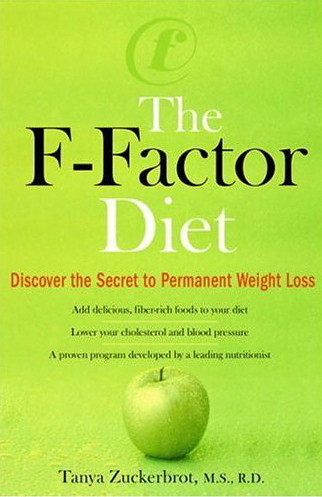
Oooh, the "secret to permanent weight loss" is certainly a compelling a bold claim to make. But nutritionist Tanya Zuckerbrot is convinced she can confidently back up that claim made by her book with the principles she shares in it. And I must say, some of what she writes about is right in line with what I personally believe regarding a healthy weight loss diet.
Here are ten solid examples of where I agree with Zuckerbrot:
1. Eat a moderate-fiber, low-carb diet for first 2 weeks 2. Consuming too many carbohydrates leads to weight gain 3. "Whole wheat" or "whole grains" foods not necessarily healthy 4. Don't skip meals or snacks during your weight loss 5. Fat-free foods with sugar are foolish 6. Adequate protein intake is a must 7. All carbs turn to sugar inside the body 8. Non-starchy vegetables are preferred over potatoes 9. Beware of hidden sugars in so-called "healthy" foods 10. Keep a journal of the foods you are eating
As much as I agree with all of those wonderful things which are contained within the pages of The F-Factor Diet, imagine my disgusted surprise at some of the hyperbolic mischaracterizations of low-carb diets espoused by Zuckerbrot elsewhere in the book. In light of our many areas of agreement, this was utterly shocking to say the least.
Here are ten things Zuckerbrot thinks are true about low-carb:
These are some fundamentally flawed arguments being made about livin' la vida low-carb in this book from someone who is supposed to be more knowledgeable about nutrition than most average, ordinary Americans. That's what disappoints me about this book which could have been a nice addition to my health book collection, but has been incessantly tainted by the blatant unabashed bias against low-carb.
As much as I can appreciate all the wonderful tips and suggestions, delicious recipes at the back of the book, detailed menu plans for the various stages of weight loss and weight maintenance, and all the like in this book, I cannot in good conscience recommend this as a resource for people desiring weight loss and improvements in their health. If she's lying about some things, then what else is she withholding the truth about.
Can somebody explain something to me? Why is it that health experts like Zuckerbrot feel the need to publicly flog and snub their nose at livin' la vida low-carb in their diet books and then turn right around and espouse the very truths that make up that particular way of eating? Hmmm?
Sounds preposterous and hypocritical, but it is happening more and more over the past couple of years. Why not just recommend low-carb by name rather than being so coy about what you believe nutritionally? Millions of us have changed our lives forever on the amazingly healthy and delicious low-carb lifestyle, so stop trying to beat us. Join us instead.
I don't have any problem at all with you advocating the basic principles of low-carb living in your The F-Factor Diet, Ms. Zuckerbrot. I know you are given the unique opportunity to speak about health on both television and in print, so people are familiar with who you are and place their trust in you. So why not flash them those beautiful pearly whites of yours and admit that the low-carb lifestyle fits right in line with the overall message of your book? Is that too much to ask?
No antagonism, no hyperbole, and no more outright lies. Overweight and obese people deserve to have the truth as it relates to a healthy diet, which is what I try to provide them on a daily basis at my blog. Weight loss is hard enough without having to deal with ignorance from those who should know better. I challenge you to remember that the next time you decide to write a book about diet and health.
Basing a diet on the glycemic index sounds good, but is it?
It's interesting to see how many diet books have come out in recent years taking portions of the wildly popular Atkins diet and tried to transform them into nicely packaged "new" diets. Sadly, most of these so-called diets greatly miss the mark of the masterpiece of the original.
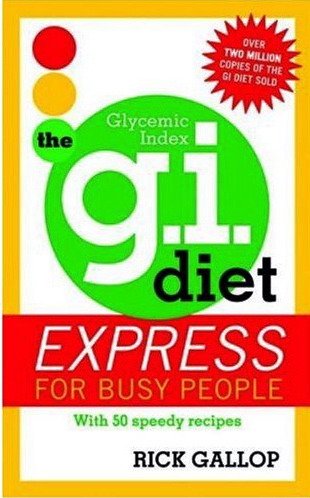
Such is the case with Rick Gallop and his series of books on The G.I.Diet. It's an interesting concept that Gallop has capitalized on selling millions of his little books. But is the information he provides useful to people who are livin' la vida low-carb? Let's examine his latest book to find out.
It's called The G.I. Diet Express: For Busy People and is aimed to reach the active dieter. Isn't that ALL of us who are attempting to lose weight? Yep and Gallop knows that, too!
Looking at the "diet in a nutshell" outlined in this book, Gallop explains what the glycemic index is since most Americans haven't really caught on to it yet. It's all about the impact of foods on blood sugar and to choose foods that will slowly digest to prevent your body from making too much insulin which can lead to diabetes.
Here's a key point to remember: All low-carb foods are also low-G.I. foods, but not all low-G.I. foods are low-carb. This is too important to be overlooked as you delve deeper into this new diet. The ratio of carbohydrates/protein/fat is 50/40/10. Yikes!
Gallop bemoans saturated fat as "positively dangerous to your health and can increase your risk of heart disease, stroke, and some cancers." Um, no it doesn't, Mr. Gallop! You're referring to the MUCH more dangerous and unhealthy trans fats found in many of those high-carb foods you love people to eat on your diet.
Using traffic light colors as symbols throughout the book, Gallop lists his approved "Greenlight" foods that I wouldn't touch with a 10-foot pole on my low-carb diet--bread, cereal, margarine, pasta, potatoes, dairy, oatmeal, and rice. Is he joking? This can't be a seriously "healthy" diet!
Sadly, that's EXACTLY what he's trying to fool people into believing. What really got me was how much emphasis was placed on portion sizes, calories, fat, salt, fiber, protein and sugar...but nary a word about total carbohydrates! Very telling!
In fact, the more I read The G.I. Diet Express: For Busy People, it quickly obvious that this book was nothing more than a wolf in sheep's clothing as a front for the USDA-indoctrinated Food Pyramid. That tried and true failure of diet consisting of high-carb, low-fat, low-calorie, portion-controlled meals we've been forced to accept as "healthy" our entire lives! Not anymore!
Many of these "50 Speedy Recipes" included in the book are quite high in carbs, although most of them could be converted into genuinely healthy low-carb meals by removing the suspiciously high-carb ingredients. I wouldn't buy the book just to have to make all these changes to the recipes, though.
And I just about had to pick my jaw up off the floor when I saw Gallop RECOMMEND fast food restaurants for his diet. He gushed over Subway for their "broad range of low-fat products" and claiming they "deserve a G.I. Diet gold star and warrant your support" for offering such high-carb junk as ham, roast beef, and turkey breast subs. Wanna take a guess how many carbs that bread has in it, Mr. Gallop? Do you care?
McDonald's, Burger King, Wendy's, Taco Bell, Arby's, and even Pizza Hut all get the thumbs up from this brilliant diet book author seeking to help people find a way to lose weight. From the looks of these recommendations, that's probably the last thing he's doing.
Sure, some people will do this diet and think it's great because their body can somehow handle the same high-carb, low-fat diet which Dr. Dean Ornish has been pushing for decades. But not for people like me who react strongly to the presence of carbohydrate in our diet in any form--after all, it turns to sugar in the body just the same.
Finally, in the FAQ section of the book, we get the real agenda of Gallop and his opposition to livin' la vida low-carb when he describes low-carb diet plans such as Atkins as "diuretics" which only work "in the short term." Hmm, that's strange you say that, Mr. Gallop since I lost 180 pounds on that diet in 2004 and have kept it off ever since.
You're just a big fraud and I'm happy to expose you as such! But you don't care since you're laughing all the way to the bank with the millions of dollars you've bilked out of people who have bought your books. Shyster!
New York Times journalist asks Americans to begin "Rethinking Thin"
We all want it so badly, crave it deeper than even a big slice of the most decadent dessert you could ever imagine, and millions would quite literally do anything to attain it. After all, there's a steady streamline of positive images associated with this thrown in front of us day after day after day that it has become a national obsession.
What is it? The insatiable and desirable quest to be thin.
Just take a quick look at all the magazine ads, television commercials, and billboards used in marketing nowadays. Have you ever noticed how nearly ALL of them are unreasonably, even abnormally thin? When did our society make this the model for what bodily perfection looks like? Have we artificially raised the expectations of what is healthy, beautiful, and normal?
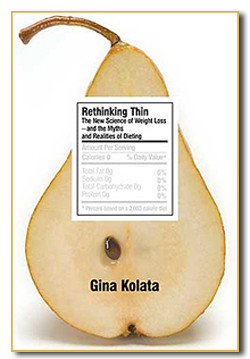
These are just a few of the questions that New York Times science reporter Gina Kolata sought to answer in her book entitled Rethinking Thin: The New Science of Weight Loss--and the Myths and Realities of Dieting. With our culture seemingly mesmerized by the latest diet fads and weight loss gimmicks that keep coming out, Kolata wanted to bring a touch of reality and common sense to this issue that encompasses so many physical and emotional ties to the lives of overweight and obese people.
As a former 400-pounder who was able to overcome morbid obesity through the use of the Atkins low-carb diet, I was personally excited about reading this book that charges people to begin Rethinking Thin. There are so many good overall themes that Kolata makes in this book, but there were also some recurrent and glaring omissions that made me just shake my head in disgust because people who read the book will not get the whole picture.
Kolata said she was almost shocked by how eerily similar the stories of people who had gone on a diet sounded. They started on a plan, lost some weight, reached a point where discouragement set in, and then gained it all back and then some when they got off the plan that helped them lose weight to begin with. This vicious cycle accurately describes the fate of most of the people who fall under the "dieter's spell," as Kolata puts it.
However, after I lost 180 pounds in 2004, I have been able to keep the weight off in the three years since. How? By refusing to allow any external or internal forces to get me down so low that I choose to give up on the fantastic low-carb nutritional approach that has helped make me skinny. For me, this has not just been a diet but a real permanent lifestyle change that I will be doing for the rest of my life. I only wish Kolata would have acknowledged people like me who have been successful at losing weight and keeping it off because we refused to give up or give in.
Another excellent point Kolata makes in Rethinking Thin is how our culture has devolved from a half-century ago when being at a normal weight was not considered a travesty as it is today. Size 0 in 2007 is even too fat for our got-to-be-thin-no-matter-what social norms. Kolata says this puts an unreasonable expectation on people to try to be something they'll never be.
Yet, at the same time, we need to be reasonable about what normal is. Just as seeking to be as super-thin as those supermodels on the front cover of magazines is extreme, so too is allowing your weight to continue on an upward path to health destruction. Again, Kolata does not acknowledge that there are tens of millions of Americans carrying around extra weight which is putting an incredible burden on their health, and, in turn, our healthcare system today. Clearly, obesity is a real issue that needs to be seriously addressed.
Kolata says she is hopeful about the research that is coming to help with obesity, but states the solution is more about figuring out the physical defect in the individual who is fat rather than their unhealthy behaviors. While I don't deny there are real genetic and other forces at work that keep some people overweight, the vast majority of obese people simply use that as an excuse for refusing to do anything about their weight. I used to think the same thing before I finally broke out of my self-pity and did something about my personal problem.
Let me be very clear--being overweight and purposefully staying there is NOT healthy or normal. Going on a sound nutritional approach, such as Atkins, South Beach, Protein Power, or The Zone diets, is NOT suffering from starvation as Kolata describes. It is important for people who are overweight or obese to pursue meaningful measures to protect their health from future harm. Kolata would rather people remain obese than to do something about their weight and that's a very dangerous message to promote. I hope she reconsiders her conclusion because it is 100% dead wrong!
Rethinking Thin is very well-written (as you would expect from a professional journalist), but unfortunately lacks the depth that you would expect from a truly investigative piece on obesity. That's the way it has been marketed and obviously it is not. If Kolata was able to convince everybody who reads her book that she's right, then what would be the result? Even more massive obesity, continued health problems, and a confused nation of people wondering why they can't lose weight. But at least they'll feel good about their fatness!
Instead, why don't we tell people that they do have hope for a brighter tomorrow and that their dreams of becoming thin can become a reality? It's not an easy thing to do, something Kolata acknowledges, but that doesn't mean you just give up on weight loss forever. People need to find the plan that works for them, follow that plan exactly as prescribed by the author, and then keep doing that plan for the rest of your life. It sounds simple, but that's the answer to most weight problems.
Take it from me, the payoff in the end is worth every bit of energy, determination, and inner strength you can muster up to do this. You're gonna be tempted, you're gonna feel like giving up, and you can't rely on others to stand in the gap with you. Even still, weight loss and improved health is well within your grasp and I personally cheer you on to great success. YOU CAN DO IT!!!
Gina Kolata wrote at the end of Rethinking Thin that she sees a major paradigm shift coming soon about diets that will radically change how we think about obesity. Here's what she wrote:
"I believe that research by scientists who have open minds about obesity and its causes and consequences is starting to open doors. I believe that we will see the fruits of that research and that they may not be what we expect or what we hope for. But I also believe that one result will be that the age-old assumption that the perfect diet will somehow emerge will, eventually, fade away."
This is the result of the low-fat lie we have been forced to live with for many decades. I agree with Kolata that the scientific research into things like the negative impact of carbohydrate consumption and the positive health benefits of saturated fat and animal foods is going to change that monopolistic opinion of what a healthy diet is. There are many ways to get thin--now let's give people a wide variety of options to choose what works best for them.
I think I love this guy (in a brotherly kind of way, of course!) because he just makes sense. And he should know what he's talking about since he has appeared on magazine covers, on television shows, and headed up an anti-obesity campaign in Houston, Texas. As a world-class bodybuilder, Labrada has seen all the good and the bad when it comes to health and he shares it in this engaging book.
With a natural wit and ability to connect with his reader, Labrada goes through step-by-step what YOU need to do to overcome the mental obstacles that stand in the way of your eventual success, provides examples of people who have been successful to serve as inspiration for your new journey, arm you with ample motivation for getting the job done, providing specifics about the kind of diet you should be eating to attain optimal results, and, of course, give you specific direction about how to workout your body to look and feel better than you ever imagined.
Sounds awesome, doesn't it? But aren't books like The Lean Body Promise just a bunch of marketing hype from people who have never had to deal with being overweight and out of shape? While that's probably true about many such programs, you can sense Labrada takes a personal interest in seeing real success from average everyday people like you and me. I think he really does care about YOUR success and will celebrate with you once you reach your goals.
The chapters in this book zoom by quickly thanks to Labrada's unique conversational style and the very clean formatting. Of course, it doesn't hurt to have his smiling picture looking at you from time to time to encourage you to implement his strategies into your life to change it for the better. It's like he's watching you as your own personal weight and fitness coach!
Easy-to-digest sections in each chapter are followed up by "The Skinny So Far..." to recap the primary points Labrada wanted you to remember. This is an extremely helpful way to reinforce the lessons you have learned so that you'll be well on your way to having that "lean body" he promises in just three months! YOU CAN DO IT!
As someone who has lost nearly 200 pounds on the low-carb lifestyle, I did have a few concerns about Labrada's views about diet in The Lean Body Promise. It wasn't all bad, especially his disdain for sugar and simple carbs, processed foods, trans fats, junk foods, and even those packaged low-fat foods. We totally agree that these are NOT good for you no matter how you slice it.
Where we part company is on the subjects of saturated fat and complex carbs.
Tons of research has come out and will be coming out very soon (remember the names Dr. Jeff Volek and Dr. Stephen Phinney) showing the minimized impact of saturated fat on the body when carbohydrate-restriction is in place. On a low-carb diet, such as Dr. Atkins New Diet Revolution (the one I followed), consumption of red meat, egg yolks, bacon, butter, and the like are all extremely healthy for you because the atherogenic impact is minimized.
Actually, what Volek and Phinney have found is those who eat a high-carb diet that is lower in saturated fat content actually have more saturated fat in their blood than those who eat a low-carb diet that is higher in saturated fat content. This is a revolutionary new discovery that's gonna turn everything we've ever known about fat and heart health on its head. It's something the late great Dr. Robert C. Atkins talked about frequently and now the science is catching up to him.
As for the subject of complex carbohydrates, Labrada claims these are not as bad for you as simple carbs because they take more time to be digested and broken down which slows their impact on your blood sugar. While that's true, these carbs are still metabolized in the body as sugar. Even the supposedly "healthy" whole grain foods like oatmeal, brown rice, beans, corn, rice cakes, peas, and whole-grain breads and pastas should be avoided as much as possible to limit insulin spikes.
Despite our differences on these issues, I am still glad to know there are people like Lee Labrada out there trumpeting the cause of improving health and helping people realize they CAN change their diet for the better. The Lean Body Promise is an excellent resource for anyone who wants to learn more about how to whip their body into shape, shed the pounds, burn the body fat, and get healthier than they've ever been in their entire life.
That's a promise this former Mr. Universe says you can take to the bank!
Dr. Richard Bernstein doesn't just teach, but lives the low-carb way
Diabetes is a disease that used to only afflict young children when Type 1 was so dominant. But now it's the 21st Century and Type 2 diabetes hasn't just risen, but exploded into a full-fledged epidemic as one of the biggest health threats of our day. What's really scary is the fact that the problem is expected to get that much worse over the next few decades. Yikes!
In 1997, Dr. Richard K. Bernstein first introduced what would become the pinnacle diabetes bible to the world when he published the first edition of The Diabetes Solution: The Complete Guide to Achieving Normal Blood Sugars. Controversial, against the grain, but extremely effective, the low-carbohydrate dietary approach to treating diabetes has never been more clearly explained.
Now, Dr. Bernstein has revised and expanded his classic bestselling book to make it even better than it was when it released a decade ago. As a man who has lived with Type 1 diabetes since childhood, he knows from whence he speaks and now wants to help others find the "solution" that he discovered a long time ago.
Controlling diabetes as much as possible without little to no use of insulin or medications is the goal of The Diabetes Solution. While the American Diabetes Association (ADA) feels good about recommending a high-carb, low-fat diet (which requires HIGHER doses of insulin and prescription diabetes drugs), Dr. Bernstein believes that is the wrong way to go about managing blood sugars.
Written in a very informative and entertaining style, this book answers all those little nagging questions diabetics may have about this method of treatment, including the uniquely damaging role of carbohydrate in the diet, what the best pharmaceuticals and how they can help, a comprehensive look at the various types of insulin and which should be used, and what to do to manage your disease naturally.
Is low-carb dieting controversial? Sure. But so are a whole lot of other things that we used to think were strange, but now they're normal years later after much research has proven them to be true. The same goes for the low-carb lifestyle as a treatment option for diseases like diabetes and aiding in weight loss. The science is catching up to a reality that Dr. Bernstein unveiled years ago.
I personally lost nearly 200 pounds on this way of eating. Although I don't have diabetes, it runs in my family and I was borderline when I weighed over 400 pounds. But then I started a low-carb diet in 2004 and changed my life forever. Dr. Robert C. Atkins, like Dr. Bernstein, was also before his time espousing the benefits of livin' la vida low-carb.
Living with diabetes need not be a hopeless situation where you feel all alone. Dr. Bernstein has The Diabetes Solution and wants you to experience the freedom that comes from knowing you can beat your diabetes. Never give up the hope for a better life, even with diabetes.
Dr. Bernstein, we salute you for your contribution to diabetes management and low-carb living. You should be honored and hailed for standing up for what you know is right and refusing to just settle for the failed methods for treating your diabetes. I think your life speaks for itself. CONGRATULATIONS!
Dr. Don Colbert applies his Biblical worldview to health
While God most certainly played a role in my nearly 200-pound weight loss on the Atkins diet in 2004, you are not necessarily required to be a Christian in order for the diet (or ANY diet!) to work. I've been asked questions like "Do you have to be religious to do your diet?" by well-meaning members of the secular media when I bring up the role of my faith in my journey towards better health.
The short answer is "no," but it certainly helps to have the power of the Almighty Creator on your side for those times when you need His divine strength to carry you through the valleys that most certainly come when you try to lose weight. If you've ever gone through a weight loss experience without support, then you know exactly how hard it can be. You need a friend that sticks closer than a brother to be there for you when you need Him the most.
What if you could invest a mere 10-15 minutes a day for less than two months of you life and learn practical Biblical advice about improving your health? Would you be interested in learning more about it? If you are a Christian or desire to do something positive and productive about your weight and health, then of course you would.
That's precisely why prolific Christian author Dr. Don Colbert wrote his bestselling book entitled The Seven Pillars Of Health: The Natural Way To Better Health For Life. This 50-day all-inclusive health manual will empower you with tons of information that can be absorbed and immediately applied into your life to bring about big changes in a short period of time. This could be the miracle you have been praying for.
Dr. Colbert is well-known as the premier "health doctor" within Christian circles. I remember selling many of his other 30-something titles when I was working in Christian bookstores in the mid-to-late 1990s. He is highly-regarded for making complex medical conditions and treatments understandable to the common person as you will quickly find out when you read this book.
1. WATER 2. SLEEP AND REST 3. LIVING FOOD 4. EXERCISE 5. DETOXIFICATION 6. NUTRITIONAL SUPPLEMENTS 7. COPING WITH STRESS
This book reads like a daily devotional journal providing you with a few power-packed pages at a time to soak in the message Dr. Colbert wants to share with you. Each chapter (or "pillar") takes about a week to go through, so you are able to meditate and fully concentrate on one concept at a time. I enjoyed this format because the lessons you learned the first day were then reinforced on the next and the next to complement your health education. More books need to be written this way!
There's some real eye-opening content in this book that you are just gonna have to read to believe. If I didn't already drink upwards of 1-2 gallons of water a day already, then you bet your sweet bippy I'd be guzzling it like it was going out of style after reading the water chapter. I don't think people have any idea just how crucial fresh water is to their health. I'll drink to that!
At the end of each day's journal, you get a nice little wrap-up of the major points in that section with Dr. Colbert's "Building Blocks To A Healthy Life." Consider it your Cliff's Notes version of the content you just read and the take home message he doesn't want you to forget. There's the "Points To Ponder" as well as the practical application under the "Action Step" that allow you to begin using the information in your own life right away.
Another eye-catching feature of this book is the "Dr. Colbert Approved" or "Dr. Colbert Recommended" check marks with straight-up advice for people to follow directly from the good doctor himself. For people who need direction that slaps them in the face, these frequent helpful hints lay it all out clearly and easily for everyone to see. Additionally, there are also extra boxes with essential information to lead you by the hand to making The Seven Pillars Of Health your new way of life.
Although this book isn't as blatantly against the Atkins low-carb diet as other "Bible-based" health programs are, Dr. Colbert does get in a few comments that had me raising my eyebrows just a bit. For example, in the SLEEP AND REST chapter, he mentions low-carb diets as a reason why you can't get a good night's sleep because they allegedly "create a low-blood-sugar reaction, causing you to awaken in the middle of the night."
Um, what in the world are you talking about, Dr. Colbert? I've been eating this way for three years and the only thing that wakes me up in the middle of the night is the porcelain goddess and that beautiful snoring creature on the other side of my bed! Sure, some low-carbers MAY experience hypoglycemic reactions at some point when they are livin' la vida low-carb, but don't paint us all with a broad brush and make it universally true. It clearly is not.
There are some other issues that I disagree with him in The Seven Pillars Of Health (especially regarding saturated fat intake, artificial sweeteners, and meat consumption), but overall there are some redeeming qualities about the book that I cannot overlook either. His shunning of junk carbs, including sugar and white flour, is a major plus as well as the promotion of organic foods and proper supplementation. And the chapter on COPING WITH STRESS alone is worth getting this book!
Scripture verses are sprinkled throughout to back up all the information that Dr. Colbert is providing. You can tell he took calculated steps to ensure that everything he was sharing was grounded in the Word of God. I can appreciate that fine attention to detail to get it right because he is honoring the Lord with the information he is sharing. I especially enjoyed the "appreciation list" and the "day of jubilee" because they pay tribute to God's providential hand in all things, including health.
I wanted to share a brief passage from The Seven Pillars Of Health that sadly illustrates where we are regarding health in the United States and why we need more books like this one and doctors like Don Colbert speaking out with the truth about diet and health:
"A woman walked into my office weighing nearly three hundred pounds. It was the first time I'd seen her. Her back was slightly bent with osteoporosis, and she was suffering from arthritis and shortness of breath so severe that she had to move very slowly. I examined her, performed lab work, a chest X-ray, and an EKG, and I found she had angina, heart disease, high blood pressure, arthritis, type 2 diabetes, and other obesity-related problems. Her cholesterol was even over 300.
'I eat the four basic food groups,' she told me. 'I don't understand why I gained fifty pounds over the past year.'
I asked her what specifically she ate. 'Well, I fast every morning,' she began. 'I miss breakfast. Then for lunch I have my four food groups--a Quarter-Pounder with cheese, lettuce, and tomato on a bun. Sometimes I have a jelly sandwich made with strawberry preserves, too. So I get my fruit.
'For dinner,' she said, "I'm a meat-and-potatoes woman. I get my vegetables from potatoes, and I love T-bone steaks. So that satisfies my meat group requirement. I always include bread for my grains, and I put lots of butter on it to meet my needs for the dairy group. And I like a tall glass of orange juice or grape juice for my fruit group needs.'
I was stunned almost to silence. No wonder she was obese and had a host of medical problems."
WOW! Isn't that amazing! It really makes you wonder how many people are living in American today who think just like this patient that saw Dr. Colbert that they are eating healthy when very clearly they are eating themselves to sickness and even death! That's why it is so vitally important to constantly build on what you have already learned about healthy living and never settle for what everyone else is doing.
If that was working so well, then why is two-thirds of our nation overweight or obese, hmmm? Regardless of how we got there, it's high time we do something about our weight and health as a society before we destroy ourselves physically, economically, and even spiritually. Read The Seven Pillars Of Health to find out how we can break this disturbing trend as soon as possible.
I don't know about you, but there's no way in the world I could ever go completely without chocolate in this world. Say what you want about this food, it is one of God's greatest gifts to the human race. And there are even studies showing chocolate has health benefits. So, to all you anti-chocolate antagonists out there, go stick it where the sun don't shine!
Of course, one of the problems with most chocolate bars has to do with one of the primary ingredients in it--SUGAR! UGH! Some people justify eating chocolate for health benefits but neglect the gobs of unhealthy carbohydrate-infested sugar they put in it. That's why I'm very critical of the well-meaning but not-so-good-for-you CocoaVia chocolate bars.
In fact, I recently learned that according to the government standards in Europe, you can't call something chocolate if it DOESN'T have sugar in it! WHAT?! How ridiculous is it to think you MUST have sugar in chocolate for it to be chocolate.
Well, it seems I'm not the only one raving on the ChocoPerfection bars. Fellow blogger and HUGE weight loss champion Beth Badore--aka Melting Mama--has been doing a series of video reviews lately of various health food products and now she's positively reviewed ChocoPerfection.
Check out Beth's fantastic video review of ChocoPerfection for yourself:
Ya know, I think she actually likes them! Hee hee! Yeah, me too, Beth. That's why I'm glad to be giving away some in my blogiversary contest this month. I wouldn't go a month without having my ChocoPerfection fix. :D THANKS for the fantastic review! They really are ALL THAT, aren't they?
We all owe ChocoPerfection founder Mary Jo Kringas a BIG THANK YOU!
Find out more about ChocoPerfection sugar-free, low-carb chocolate bars that are out of this world by visiting ChocoPerfection.com.
"Dr. Manny" arms you with informed health information you can use
A 37-year old businessman has to leave work early to pass a kidney stone. A 62-year old grandmother keeps turning the television up louder and louder to hear it while her grandkids cover their ears. A sad and despondent teenager thinks she is too fat and begins throwing up to help her lose weight. An expectant mother-to-be has high blood pressure and wonders how that will impact the health of her baby.
If there was a way to prevent these everyday moments in life from happening, would you want to know about it? If somehow you inherently knew what was about to happen to your health in the next 5, 10, even 50 years, then how would that change the way you live your life? What if there was some sort of manual to provide guidance and direction about how to stay ahead of the curve and actually prevent the most common ailments from afflicting you before they happen?
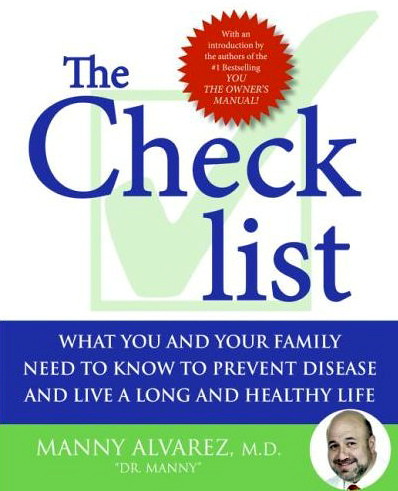
Most people know "Dr. Manny" from his fantastic work as a health correspondent on the FOX News Channel. Seeing a void in the health market for a book explaining what happens to the typical person at various stages of their life, Dr. Manny decided to write The Checklist so that people won't be caught off guard when calamity hits.
Of course, he is not so presumptuous to think that people can only be stricken with certain diseases and health complications during a given decade. We all know that we are susceptible to just about anything given the circumstances, so this book is merely a guide of what COULD happen in the future or maybe even sooner. That's why it's probably an excellent idea for you to go ahead and skip to the chapters ahead of your current age so you can prepare yourself and even ward off what for many is the inevitable.
I love the breakdown Dr. Manny provides for each of the major life stages:
Prenatal The "Most Important" Decade (Ages 0-9) The "Beautiful" Decade (Ages 10-19) The "Real World" Decade (Ages 20-29) The "Living Responsibly" Decade (Ages 30-39) The "Cadillac" Decade (Ages 40-49) The "Keeping Up With The Joneses" Decade (Ages 50-59) The "Only Just Begun" Decade (Ages 60-69) The "Beauty Of Age" Decade (Ages 70+)
As I was reading page by page of The Checklist, I couldn't help but be reminded of the perennial bestselling book for new mothers called What To Expect When You're Expecting. Dr. Manny's book is written in much the same manner, except it's a "What To Expect When You're Living Life" kind of book.
Dr. Manny really packs a loaded punch in chapter after chapter because he wants you and your family to know what's coming around the next corner of life. His philosophy is if you are prepared for the health issues that hit most people, then you can be ready for whatever comes your way and quite possibly head it off at the pass so that it never happens to you. What a noble effort and I appreciate that a book like this was not only imagined, but was actually brought to fruition.
For those whose attention span is about as far from here to there, Dr. Manny provides a convenient "checklist" for each decade (thus, the name of the book!) at the end of each chapter. It's very important to go straight down the list of health markers and have those tests and vital signs conducted at the frequency he recommends so you know where your health stands. If you follow Dr. Manny's advice now, then you'll save a lot of pain (in your body and wallet!) in the years to come.
As someone who has lost nearly 200 pounds and kept it off for three years, I was a bit put off by Dr. Manny's "Freedom Diet" plan that oversimplifies the obesity problem. Here's his plan in a nutshell: eat less and exercise more. Hmmm, it seems we've tried to spread that message for decades, Dr. Manny, but with little to no success. In fact, the number of overweight and obese people has actually INCREASED since the low-fat, low-calorie lie has been perpetrated on the American people.
I'm all for joining you in spreading the word about how to fight obesity, but the widening disconnect between the health message you are promoting and the public embracing it has never been greater. Rather than dismissing low-carb programs like the Atkins and South Beach diets as "low-calorie nutrition plans disguised by clever marketing gimmicks," how about encouraging people to find what works for them and follow through with that customized plan? Doesn't that sound more reasonable than dismissing these plans altogether as "gimmicks?"
The fact is I've eaten around 2500-3000 calories per day on my low-carb lifestyle--a daily total that would cause the eyes of many nutritionists and health "experts" to bug out. But I don't worry about calories as long as I am avoiding such garbage carbohydrates as sugar, white flour, processed foods, fast food, junk food, starchy veggies, and high-sugar fruits. Instead, I eat high-quality and nutritious carb sources--namely non-starchy green leafy vegetables and low-glycemic fruits.
Nevertheless, Dr. Manny weaves an easy-to-read writing style with solid facts and a sprinkling of humor to make The Checklist a worthwhile read. Don't forget to read the special "Living Long" chapter where he provides a comprehensive "master checklist" of every test and vaccination you can think of to let you know why you need it, when you should have it done, what results you can expect from it, and what that will mean to your future health. If for no other reason than to have this invaluable list, then get this book!
I have the highest amount of respect for what Dr. Manny Alvarez does to further the cause of healthy living to the masses. It is a mutual respect, too, as he named my "Livin' La Vida Low-Carb" blog among the top ten health web sites on the Internet in 2006. We need more people like Dr. Manny who are willing to share what they know about health in order to give others hope for a long, happy, and healthy life. Get The Checklist and begin taking this journey for yourself!
A book about avoiding flour and sugar--a low-carber's dream!
I live my life by the KISS motto--keep it simple stupid!
That's because simplicity is the most effective way to make something as complicated as something like a healthy diet as understandable as possible to everyone who hears it. People are already confused enough from the health "experts" about how many calories they need to be eating, what kinds of foods they should be consuming, trying to figure out the proper ratio of carbohydrates, fat and protein they should be eating--somebody please make the madness of it all go away! AAAAACK!
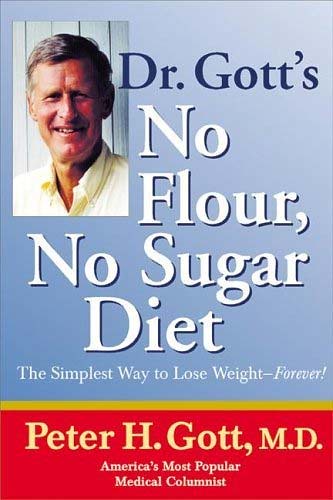
Well, that is exactly what syndicated health columnist Dr. Peter H. Gott ("Ask Dr. Gott") has attempted to do with his very simple, yet incredibly effective four-word diet plan and here it is: NO FLOUR, NO SUGAR! That's it! Nothing more, nothing less. Just avoid the white flour and eliminate all forms of sugar from your diet and you will lose and maintain your weight forever and ever, amen. Sounds easy enough, doesn't it?
It's this kind of bare minimum advice that is winning Dr. Gott's No Flour, No Sugar Diet enthusiastic fans the world over. For those of us who are livin' la vida low-carb, we already know how important it is to remove flour and sugar from our diet because these are the kind of carbohydrates that are making Americans fat and unhealthy at a record pace. However, there can also be a case made for avoiding other high-carb foods like potatoes, rice, pasta, processed foods, and junk foods, too. But this is at least a good start.
If the issue of obesity were simply a matter of cosmetics, then it wouldn't be such a crisis right now. But the sad fact that Dr. Gott points out very clearly in his book is that the resulting health problems that have come from the existence and prevalence of obesity alone is unnecessarily having an adverse impact on the quality of life of tens of millions of Americans. In fact, it is leading to hundreds of thousands of deaths annually and nobody seems to care!
As a diet and weight loss advocate myself, I was pleased to see Dr. Gott talk so openly about important elements of living healthy such as keeping a food journal, carefully reading nutritional labels, finding support from people who will help you lose weight, exercising regularly, adequately planning for your new lifestyle change, avoiding the real fad diets, staying focused on the plan, and making your new habits stick for proper weight maintenance for many years to come.
All of this is excellent advice, but...
Unfortunately, Dr. Gott doesn't embrace livin' la vida low-carb as a viable means for permanently losing weight and keeping it off forever because he thinks it is "potentially harmful" to eat the high amounts of protein and saturated fat from animal sources while allegedly decreasing the amount of fiber as well as fruits and veggies consumed with such an "extreme" plan like the Atkins diet. He sounds the warning bell that all of this will lead to an even bigger risk of heart disease, obesity, and maybe even cancer over the long-term.
Puh-leeze, Dr. Gott!
Very simply put, no it does not! If you read any of the latest studies coming out about the healthy low-carbohydrate nutritional approach, then you will very clearly see that there is nothing "potentially harmful" in terms of heart health or otherwise about this way of eating over the span of at least one year and quite probably even longer than that. Sensationalizing low-carb diets as somehow inherently "dangerous" or "unhealthy" is so yesterday's news. Most people are thankfully beginning to realize that dog don't hunt anymore.
Meanwhile, there are PLENTY of studies showing how a high-carb, low-fat intake is indeed leading to an increase in heart disease (likely from the gumming up of the arteries from excessive refined carbohydrates), making people gain more weight specifically in their abdomen area (yes, low-fat diets DO make you fatter--studies confirm it!), and bringing on both such conditions as kidney, esophageal, pancreatic, and even brain cancer in people who would otherwise remain healthy had they simply followed a low-carb diet. It's all in the medical journals in black and white for anyone with eyes willing to see it.
It is the height of hypocrisy and nothing more than a bald face lie to tell people eating protein and saturated fat is unhealthy for them. Again, go read the studies, Dr. Gott! The evidence simply does not bear this out and you should be ashamed of yourself for suggesting otherwise. Talk about making it simple, why do you insist on spreading such unproven nonsense about protein and fat? What are you afraid of people learning about these macronutrients if they wisely begin adding them to their diet in lieu of carbohydrates?
As for sharing your complete ignorance about the so-called lack of fiber on low-carb as well as fruits and vegetables in a low-carb diet, I'll have you know I eat about 50g fiber daily (without even counting, too!) and my amazingly delicious and nutritious low-carb diet is rich in such vitamin-rich non-starchy vegetables as spinach greens, cauliflower, green beans, cucumbers, tomatoes AND even low-glycemic fruits (GASP--you mean you can eat fruit on low-carb? Somebody stop the presses!) as strawberries, blueberries, honeydew, and cantaloupe--just to name a few!
How in the world did I ever lose nearly 200 pounds, keep the weight off for over three years, then get healthy and stay healthy eating this way, hmmm? How indeed.
Additionally, Dr. Gott repeats the ridiculous claims that low-carb "stresses the kidneys and liver" and leads to osteoporosis. Again, check your facts before going off on a tangent you obviously know nothing about, sir! There is no evidence that low-carb causes harm to the kidneys or the liver and there have been very clear studies on the myth about bone loss on a low-carb diet. LOOK IT UP and don't forget to apologize for your mistake later!
This continued assault against low-carb diets really needs to stop, especially from people like Dr. Gott who are for all intents and purposes is promoting the very same principles that the late great Dr. Robert C. Atkins made his entire life's work. If Dr. Atkins had never spoke out so strongly against the impact of garbage carbohydrates like white flour and sugar for nearly three decades, then Dr. Gott would probably have never released this book. That's a fact, Jack!
Frankly it was quite difficult to even get into this book after reading the jibberish about low-carb living and Dr. Gott's all-out assault against the very way of eating that helped me lose my weight and get healthy for the first time in my life. What's wrong with people that they have to tear down the Atkins low-carb diet in order to prop up their own dietary advice. I've just never understood this and probably never will.
Nevertheless, I forced myself to keep reading even as I was biting my tongue at times. Ironically, people who support livin' la vida low-carb will probably like what they see from Dr. Gott regarding the purpose of Dr. Gott's No Flour, No Sugar Diet. Primarily, it is to reduce calorie intake which then leads to weight loss. While he subscribes to the now-defunct "calories in, calories out" theory, this lower-calorie approach does somewhat explain why his plan works for weight loss.
The elimination of sugar from your diet under Dr. Gott's plan does not mean you can't have any of the plentiful array of sugar-free products made with artificial sweeteners like Splenda, aspartame, saccharin, and others--all of which he discusses at length in the book. He does not put any limitations on such things because they can help you get rid of sugar from your diet, an area where Dr. Gott and I strongly agree. I was happy to see him warn people about the nasty stomach-busting side effects of sugar alcohols like maltitol, lactitol, and sorbitol.
Also, for those of you who need direction, Dr. Gott provides a whole list of what you SHOULD eat and what you SHOULD NOT eat as well as two weeks worth of menu plans to help you get an idea about how Dr. Gott's No Flour, No Sugar Diet works from a practical standpoint. Plus, what's a diet book without recipes? Dr. Gott aims to please with plenty of them at the back of the book for everything from breakfast to dessert. Mmmmm.
Where we very sharply disagree, though, is on what constitutes a healthy diet.
Dr. Gott says carbs like whole grains, beans, starchy vegetables like potatoes, and high-sugar fruits like bananas are excellent choices for people when they are trying to lose weight. Frankly, they are not and will sabotage you even before you start due to their impact on your blood sugar levels and ability to reach ketosis.
On the subject of fat, we both agree that trans fats are bad news, but Dr. Gott believes saturated fat is just as damaging to cholesterol levels and heart disease and cancer risk as trans fats are. WRONG-O! The body of research that is building in support of saturated fat intake in conjunction with a low-carbohydrate diet is compelling indeed and I can only urge people to read the data for themselves and draw their own conclusions.
Finally, Dr. Gott says protein intake should be limited to lean animal sources to prevent an overabundance of saturated fat from entering their diet. Sigh. Will we ever get past this stigma that has been unnecessarily attached to saturated fat? Hello people?! It's not the great enemy people like Dr. Gott are making it out to be!
At least Dr. Gott's No Flour, No Sugar Diet does emphasize eating "nutrient-dense" foods that are packed with healthy nutrition. Again, this is something people who are livin' la vida low-carb advocate as well and it's good to see it being recognized by a health expert like Dr. Gott. Although his definition of "nutrient-dense" may be slightly different from mine, mostly he's referring to whole, all-natural foods--perfect choices for a healthy low-carb lifestyle.
One aspect of this book that I actually enjoyed was the liberal use of actual letters Dr. Gott has received over the years in regards to his "no flour, no sugar" diet plan. They helped tell the overall story about how and why this diet works from the perspective of real people living this way with amazing success. They found what works for them and now they're doing it. Who can argue with results?
All in all, Dr. Gott's No Flour, No Sugar Diet is not one that should be entirely dismissed even by people on a low-carb diet. If you can get beyond the perplexing bias against livin' la vida low-carb that overwhelmingly pervades certain sections of this book, then it actually has some fantastic information in it. It's just too bad Dr. Gott felt compelled to jump on the anti-low-carb bandwagon to placate his fellow health "expert" buddies.