PLEASE UPDATE YOUR BOOKMARKS TO LIVINLAVIDALOWCARB.COM/BLOG
Friday, July 11, 2008
Should A Christian Low-Carb Dieter Refuse High-Carb Communion?
Christian custom of communion includes bread and wine
When you first start livin' la vida low-carb, it's almost impossible to think about all the ways your life will change overnight. Sure, you know you're not allowed to eat bread, pasta, sugar, candy, juice, rice, and just about anything sweet and starchy. You do it willingly because you realize that changing your lifestyle is about making healthier choices for your body so you can honor the temple that God has entrusted you with.
As a Christian low-carb dieter, it never occurred to me when I began this new way of eating in 2004 that it would make me choose between honoring God with one of the most important sacraments that Christians participate in or honoring my commitment to low-carb living. I'm referring to the act of communion where you consume a small cracker or unleavened bread wafer representing the body of Jesus and a small cup of grape juice or wine symbolizing Christ's blood sacrifice for our sins on the cross.
So what does a low-carb dieter who is a believer in Jesus Christ do when it comes to celebrating and participating in this holy act of remembrance? That's what one of my Christian readers wanted to know in an e-mail to me:
Hi Jimmy,
This might seem like a silly question but I'm guessing that since you are a Christian and are active in church that this issue has come up for you.
Do you take communion? Bread and grape juice do not fare well for my low-carb lifestyle but when I pass, I feel very odd because I want to participate for the spiritual meaning.
Let me know how you deal with this.
You know, it was funny the first time I was in church on a day when communion was taking place and I felt so awkward. Do I take part in it and glorify the memory of the greatest act of love and sacrifice the world has ever seen or do I refuse since I can't have that many carbohydrates as part of my new commitment to livin' la vida low-carb? It wasn't such an easy decision for me and I had a tough time at first.
But then I thought about it more and came to the conclusion that the amount of carbs in that little piece of bread and tiny glass of grape juice probably doesn't amount to more than 8-10g carbs maximum. It's not like this is an entire high-carb meal or anything. In the end, I believe God will honor your dietary commitment because you partook in communion.
So I proudly take communion at church the four or so times a year we celebrate it now and have no qualms whatsoever with it. It's a personal decision that each individual must make for themselves. Do what you feel the Lord would have you do. :)
Chris Rosenbloom, meet zero-carb runner Charles Washington!
We are surrounded by people who insist on repeating the same health mantras we've always heard over and over again until they're blue in the face. I'm sure they mean well with their conventional advice and had the right motives when they continued their education into the subject of diet and fitness. But somewhere along the line, many of these people who are placed on a pedestal and declared "experts" have lost their objectivity and ability to think logically about the advice they are sharing. Such is most definitely the case with those healthy journalists at major newspapers.
But today I wanted to bring in a special guest to respond to a rather ludicrous column that appeared in the Atlanta Journal-Constitution this week by Chris Rosenbloom, Ph.D., R.D. called "For runners: 'A low-carb approach...can spell disaster'." She asserts in not-so-uncertain terms that a runner absolutely NEEDS carbs for fuel during their workout and that a low-carb diet is NOT recommended for running. We already know the "body needs carbs" mantra is nonsense because of a fascinating metabolic process that is essential to livin' la vida low-carb called gluconeogeneis where the body makes its own carbs through the liver from the dietary protein you consume. You never hear any of these "experts" even mention this--EVER!
How about we hear from someone from the OTHER side who chooses to burn FAT for fuel during his running experiences? His name is Charles Washington and he is one of my moderators over at my "Livin' La Vida Low-Carb Discussion" forum. For those of you who have not heard about Charles, this man is simply amazing. He runs in half-marathons throughout the spring and summer and does it all eating a ZERO-CARB diet. That's right, he doesn't even eat veggie carbs. He's hardcore on what he describes as the "Zero Carb Path" and I'll be sharing an interview with Charles on my podcast show coming up in July.
For now, I wanted to introduce you to Charles by allowing him to respond to Rosenbloom's idiotic column. As you will quickly see in this guest blog post from Charles, he is quite knowledgeable about what he writes about and has the personal experience from his own life to back up everything he says. I appreciate his willingness to share today and I hope you enjoy this very intelligent rebuttal to the claim that you need carbohydrates for athletic performance. ENJOY!
Here's what Charles wrote in response to Chris Rosenbloom:
Dr. Barry Groves observed that athletics is becoming increasingly competitive. More and more stress is being placed on how well we perform. To reach our highest potential, all of our body systems must be perfectly tuned. Nothing is more important to our well-being and ability to perform than good nutrition. Eating the right foods helps us to maintain desirable body weight, stay physically fit, and establish optimum nerve-muscle reflexes. Without the right foods, even physical conditioning and expert coaching aren't enough to push you to your best. Good nutrition must be a key part of your training program if you are to succeed.
The problems arise when deciding the best nutrition for exercise and athletics.
Chris Rosenbloom of The Atlanta Journal-Constitution recently posted an article describing the preparations of runners preparing to race in the world-renowned Peachtree Road Race in Atlanta. She quoted Lee Fidler, an area running coach since the early 1980’s:
"Nutrition is an important part of preparing for a road race. I try to get a balance of fruits, vegetables, dairy products and some high-quality protein, but I also use sports drinks and energy bars to boost my calorie and fluid intake. I see too many runners try a low-carb approach, but that can spell disaster for a runner."
That's very interesting because I am a runner and I have no carbohydrates or sports drinks as a part of my diet. Has it always been this way that carbohydrates were totally necessary for athletics?
The late Gordon Pirie, an Olympic medalist from the 1952 games in Helsinki wrote a book called Running Fast and Injury Free. There he wrote:
“Never eat white flour or its products, nor any sugars, nor any milk that has been homogenized. Scientists can tell you this, unless they are funded by one of the major food companies. Do not believe scientific 'facts' that have been purchased on the backs of food packages.”
Nowadays, athletes regularly use sugar and sugar drinks as training aids. How did we get to this point and is this a healthy way to achieve the performance we all seek?
Chris Rosenbloom quoted athletes as all agreeing that carbohydrates with some protein are crucial for training. Pasta and pizza were top choices, with potatoes, brown rice, whole grains, fish and chicken all making an appearance at their training tables. Some rely on energy bars and energy drinks, but most stick to real foods for their training.
To this information, Rosenbloom assigns a letter grade of “A” because in her opinion, carbohydrates fuel runners. “Protein, while important, is not a good substitute for carb[ohydrate]s.” She would love for runners to have iron-rich foods as well to help carry oxygen to muscles.
Unfortunately, advice like this is peddled about in most major athletics publications and most of us accept these so-called truths without qualification. However, upon closer inspection, we find that there is:
No mention of the best fuel for the body: fat. In fact it says earlier that “Carbohydrates are crucial for training.” There was not even a mention of the essential fatty acids necessary to sustain life. Neither does the advice recommend that the fruit and vegetables be cooked. As we know any minerals and vitamins these may contain (and there are actually precious few to begin with) are not released from uncooked fruit and vegetables.
It is also important to note her understanding of what constitutes a “low-carbohydrate” diet. The emphasis is on protein, not fat. We need to understand that low-carbohydrate diets are not high-protein diets. Rather, they are high-fat diets and they regularly only contain little more protein than that recommended by so-called balanced diets. Consuming a high-protein diet causes serious problems as the Inuit Eskimos sometimes learned in the springtime when only lean rabbits were available. They suffered a malaise that swept over the entire population. They called it rabbit starvation. In scientific terms, Dr. Groves explains:
"Excess intake of nitrogen leads in a short space of time to hyperammonaemia, which is a build up of ammonia in the bloodstream. This is toxic to the brain. Many human cultures survive on a purely animal product diet, but only if it is high in fat. A lean meat diet, on the other hand cannot be tolerated; it leads to nausea in as little as three days, symptoms of starvation and ketosis in a week to ten days, severe debilitation in twelve days and possibly death in just a few weeks. A high-fat diet, however, is completely healthy for a lifetime."
Therefore, one would not want to substitute protein for carbohydrates as Rosenbloom assumes. Those like her who recommend carbohydrates as the “best fuel for the body” don’t seem to realize two very important points:
First, the body can't store carbohydrates in large quantities and most people already get more than enough carbohydrates to fuel their bodies' daily activities. All carbohydrates, whether they are bread, pasta, sugar or jam when you put them in your mouth, enter the bloodstream as glucose. And the bloodstream can only hold so much.
The body, being a well-run power plant, puts the leftovers in storage to use in the future if it's needed. Some is stored as a type of starch called glycogen, but as it can't store much of this, the body turns most of the excess into fat and keeps it on deposit in the body's fat cells. We see it walking around the streets wherever we go, hanging off bodies in a most unattractive way.
Put simply, carbo-loading cannot work simply because excess carbohydrates are not stored in a readily usable way.
The second problem lies in how the body uses its various options for fuel. Each of our body's cells contains lots of very small power plants called mitochondria. It is they that produce the energy we need from the food that we consume. Glucose is usually called the body's 'preferred fuel' because, if it is available, our bodies have been conditioned from birth to use it first. But it is not the best fuel. That distinction belongs to fats--or fatty acids, to give them their scientific name. Before the mitochondria can use either glucose or fatty acid as a fuel, it has to be transported into the mitochondria.
Fatty acids are transported into the mitochondria as completely intact molecules. Glucose, on the other hand, can be transported only after it has been broken down first into pyruvate by the process of glycolysis. This is then used anaerobically to produce energy with lactate as a by-product.
The by-products of the energy-production process when fatty acids are used are carbon dioxide and water, both of which are easily excreted. But when glucose is used, the lactic acid produced in the conversion process can build up in muscle cells and make them ache. It is this that is the cause of the aching muscles or pain involved in strenuous exercise--'the wall' as athletes call it. This 'wall' severely limits an athlete's performance.
So why would a person want to limit their performance by using carbohydrates for fuel?
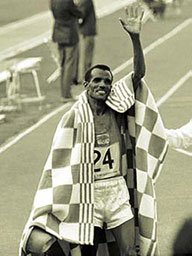
Ethiopian Olympic sprinter Mamo Wolde
Don’t take my word for it, how about the 1968 Olympic Marathon Champion, Mamo Wolde? It was 1968 at the Mexico City Olympic Games. The spectators at the marathon went wild as a relatively unknown Ethiopian, Mamo Wolde, won the marathon. Not only was the thirty-five-year-old runner the oldest man ever to win this prestigious event, he did it in record time. He also was a silver medalist in the 10,000 meters at the same Olympics.
Wolde grew up in an Ethiopian village. His life consisted of running after and hunting wild game on foot. His diet was high in animal meat and fat, with practically no carbohydrate. Subsequent tests showed that Wolde's body, under conditions of physical load, readily burned fat as its main energy source. Wolde had no concept of 'hitting the wall'. It never happened to him.
While there is little or no scientific evidence that carbohydrates are a particularly good energy food, we know that fats are. Dr. Groves explains further why the best performance is only possible with the correct diet and this applies to humans and animals. With the correct diet, constant exercise and practice to maintain muscle suppleness, strength and stamina doesn't seem to be needed either.
It is well known that carnivorous animals such as lions and tigers are fed their natural diet of fatty meat, even when confined in cages or small pens in zoos for long periods of time, without the opportunity to exercise, do not lose their vigor, strength and endurance. Such animals in circuses are even more confined but they are still able to make prodigious leaps when called upon to do so.
Eskimo sled dogs are normally kept on leashes or in small kennels during the summer months and fed fat meat and fish. When, after some months of such inactivity, the winter arrives and they are required to pull sleds again, they have no need of a period of training or conditioning before they go about their arduous task. And they still manage to pull heavy sleds for up to twelve hours a day. The same applies to English hunting dogs. They do not lose their ability to run hard for long distances when correctly fed.
The same is true of Man. The Eskimo spends most of the year in practical inactivity during the winter months. Confined to his snow-covered hut or igloo, eating meat, fish and fat, he rarely ventures outside for months at a time. But when spring arrives, he immediately begins a very strenuous life, traveling many miles to hunting grounds. He, too needs no period of conditioning after his long winter of inactivity. He also requires less sleep and is much more resistant to fatigue.
In 1895 two Norwegians, Fridtjof Nansen and Frederik Johansen, landed on an island of the Franz Joseph group. They had 'conventional' provisions to last for several weeks but, as there was abundant game in the form of walrus and polar bear, they decided to live off the land and save their provisions until the following summer. From the end of August 1895 until the spring break up of the arctic ice they got no exercise, did not wash themselves or change their clothes, yet they remained in perfect health and were able to do a full day's sledging on their first day of travel.
Rear Admiral Robert Peary also noted the ability of Arctic explorers to subsist for more than a year with no food other than pemmican twice a day. Men doing heavy work required two pounds of pemmican, which was the equivalent of six pounds of meat and a pound of fat per day.
This ability to do fantastic feats of strength and endurance was not confined to the Arctic. Native porters in Australia, eating only kangaroo meat, carried heavy loads for up to twelve hours without rest or refreshment; and Aborigines in the desert, would lope for distances of up to twenty miles, with occasional bursts of speed to catch game, on a handful of worms, bugs and insects, and kangaroo meat.
What all these people (and animals) have in common is their carbohydrate-free diet. Fat is the best fuel for an athlete, carbohydrates are the worst. It really is as simple as that.
THANKS for that well-reasoned retort to the Atlanta Journal-Constitution column touting carbohydrate consumption for runners, Charles. You know from whence you speak and I look forward to sharing our interview with everyone in July. Let's e-mail Chris Rosenbloom at dietitian@ajc.com and let her know about how high-fat, low-carb living (or in Charles' case, NO carbs!) has positively impacted your athletic performance.
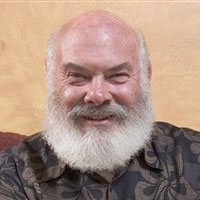
Dr. Andrew Weil now recognizes the importance of carb control
Light bulb moments can happen at virtually anytime to anyone. We all have our own biases and predetermined beliefs about just about everything in life that make up who we are. But even when you try to keep an open mind and stay objective, those rock solid ideals that encapsulate who you are can be difficult to change. Only the strongest among us are able to admit when we were wrong about something and then completely change our way of thinking based on new evidence that has come to light.
That's exactly what has happened with one of the world's most recognized and renowned health leaders of our day Dr. Andrew Weil. For the past three decades, this man has dedicated his life to the subject of health by authoring a plethora of books, lecturing about the negative impact of unhealthy eating, and establishing himself firmly into diet and nutrition by encouraging a comprehensive integrative approach to treating disease. He really is a legend in the health industry which is what makes what I am about to share with you all the more astounding!
You'll recall that right after the release of Gary Taubes' bestselling blockbuster book Good Calories, Bad Calories was released last Fall, there was a panel discussion about the book on CNN's Larry King Live show with Joy Behar guest hosting along with guests Taubes, Dr. Mehmet Oz, personal trainer from "The Biggest Loser" Jillian Michaels, and others. Right smack dab in the middle of that discussion was commentary from Dr. Weil about what he thought of the book. Click here to see a nearly 7-minute clip of what he had to say.
For anyone who watched that October 2007 show which Taubes described as "quite a circus," this short segment with Dr. Andrew Weil's comments was indeed the most valuable and surprising revelation that came out of it. Guest host Joy Behar described Dr. Weil's comments as a "Valentine" for Taubes and it was obvious to everyone that he was the ONLY person on the panel who had actually read Good Calories, Bad Calories prior to coming on the show. But this "light bulb moment" for Dr. Weil was extraordinary to watch happening right before our very eyes.
This is the equivalent of low-fat diet guru Dr. Dean Ornish coming out and saying that the late great Dr. Robert C. Atkins was right and that there are some people who should be eating more fat and less carbohydrates if they need to manage their weight and health. Following my recent interview with Dr. Ornish, I sincerely doubt THAT will ever happen. But Dr. Weil's virtual endorsement of livin' la vida low-carb was unmistakable and it didn't end there.
It turns out that he himself decided to begin implementing carbohydrate-restriction in his own personal weight management routine with AMAZING success! According to this interview with Dr. Weil appearing on his web site this week (hat tip to my reader Peter who pointed this out to me!), reading the Taubes book has changed his life because he now realizes he is "quite sensitive to high-glycemic-load carbohydrates."
"Most of the processed, refined, manufactured foods are the ones that are quick digesting and problematical," Dr. Weil explained. "Cutting back on them has helped me get my weight down, because my metabolism is certainly carbohydrate sensitive."
Can I just tell you how incredibly HUGE this is?! Dr. Weil acknowledges that there is "a real explosion of quality research" coming out so far in this century about carbohydrate restriction and the impact it can have on insulin sensitivity and weight gain. And he's even coming around on the subject of saturated fat, too.
"With regard to saturated fat, I tell people that you can have some saturated fat in your diet; just think about where you want to spend your saturated fat budget. I choose to spend mine on quality cheese," Dr. Weil stated.
Oh man, I'd love it if Dr. Weil could attend that Nutrition & Metabolism Symposium in Phoenix, Arizona in April where the very latest research on saturated fat consumption and heart disease will be presented by some of the best and brightest researchers and scholars on the subject today, including Dr. Eric Westman, Dr. Richard Feinman, Dr. Jeff Volek, Dr. Patty Tarino, Dr. J. Bruce German, Dr. Mary Vernon, Dr. Jay Wortman, Dr. Steve Phinney, and Gary Taubes. I'll be there covering the event for my blog and interviewing many of these participants for my podcast show. It would not surprise me to see Dr. Weil sitting there soaking in all the very research that is quite literally changing his life forever.
Wanna see how low-carb living has changed Dr. Weil? Check out this recent video of him posted on YouTube:
Doesn't he look fantastic? And I'm confident his health has also seen a correlating improvement along with the weight loss. Dr. Weil says he is "much happier" now eating less carbohydrates and the remarkable impact that it has made on him personally. Can you imagine how this personal transformation is going to seep into the very crevices of everything Dr. Weil does now with his work helping others with their weight and health? It's gonna revolutionize everything he does and make it that much better.
For those of you who think livin' la vida low-carb isn't making an impact on our society like it should, I just want you to remember what you have seen happen to Dr. Andrew Weil over these past six months. You cannot underestimate the power of a changed life and especially when that life is one that has been making recommendations about health for so long. Be encouraged everyone--better days are DEFINITELY coming!
I've written to Dr. Weil requesting an interview with him for my podcast show to talk about the changes he has made in his mode of thinking and where he will be going from here both personally and with the people he counsels regarding diet and health. It's a long shot, but wish me luck landing that one. And, by all means, take the advice of Dr. Andrew Weil and keep on livin' la vida low-carb! :)
Dr. James Ntambi says some obesity attributed to high-carb diet
Although his September 2007 release Good Calories, Bad Calories has been met with much skepticism and criticism by those deeply entrenched in the conventional wisdom about diet and health who have interviewed him over the past couple of months since its release, New York Times science journalist Gary Taubes is adamant that the more than five years of research he conducted is merely the BEGINNING regarding the hypothesis that it is carbohydrates that is the root cause of obesity and other health-related diseases in people with a certain genetic disorder making them highly susceptible to rapid weight gain when they consume carbs of any kind. And he's definitely not alone now in this assertion within the medical community.
Dr. Andrew Weil understood it right away after reading Taubes' bestselling book as does Dr. David Ludwig who shared his own study recently on the ill effects of carbohydrates on the condition known as "fatty liver" disease. Now brand new research on the negative impact of carbs on weight and health sanctioned by the National Institutes of Health (NIH) is adding yet another layer of scientific truth and confirmation to what most of us who are livin' la vida low-carb already knew.
Lead researcher James M. Ntambi, PhD, Katherine Berns Von Donk Steenbock Professor of Biochemistry and Nutritional Sciences at the University of Wisconsin-Madison, and his team of researchers have discovered a specific gene in the liver known as SCD-1, short for stearoyl-Coenzyme A desaturase 1. I like SCD-1 better, don't you? :)
It turns out this SCD-1 gene may be the culprit in why some people who eat a high-carb diet keep gaining and gaining weight while others who consume the same diet don't. Apparently, this gene actually causes dietary carbs to be turned into stored body fat rather than being broken down for energy. Conversely, mice that did not have SCD-1 in their liver were able to use the carbohydrates instead of having it turn to fat. Hmmmmmm...
Dr. Ntambi even fed a starchy, sugary diet to mice without SCD-1 in their liver and the excessive carbohydrates were used up and not stored. In other words, the carbs were not a contributing factor to any weight gain in the mice without SCD-1. But normal functioning livers in the control mice with the presence of SCD-1 saw just the opposite happen--the high-carb diet they consumed quickly poured on body fat by eating the exact same food.
In the battle against the bulge, Dr. Ntambi said his study shows that genetic liver function seems to play a more critical role than thought that may react differently in people with varying levels of the SCD-1 gene.
"It looks like the SCD gene in the liver is responsible for causing weight gain in response to a high-carbohydrate diet, because when we take away the gene's activity the animals no longer gain the weight," he said. "These findings are telling us that the liver is a key tissue in mediating weight gain induced by excess carbohydrates."
Well, look what we have here. As much as the so-called health "experts" like Glenn Gaesser go around ignorantly spouting off their mouth about how consuming a high-carb, sugary diet is perfectly fine for people to manage their weight, along comes a monkey wrench in that theory that is invariably tied to genetics. It makes you wonder just how many people are walking around and have this SCD-1 factor going on in their liver. While I don't know for sure, I'd be willing to bet with high probability that this explains how I got to 410 pounds back in 2004 and why carbohydrate restriction worked so well for me to shed over 180 pounds.
And the eye-opening results of this study are not lost on Dr. Ntambi who believes this study should open the door for even more research into the damning role of carbohydrates in weight gain and producing excessive stored fat. He sees this as a solid first step in bringing about major changes in how obesity is treated in the future.
If it can be determined that SCD-1 exists in a more concentrated form among the overweight and obese, then the golden opportunity to offer a natural, dietary solution like livin' la vida low-carb to them exists and should be actively promoted to them.
"We think that obese individuals, in general, may have higher SCD activity in both the liver and in adipose tissue," Dr. Ntambi explained. "So, they may have a higher capability of converting carbohydrate into fat."
This is some of the most amazing research in favor of low-carb as a viable option for people struggling with weight issues to come out over the past few years because it lends credibility to the idea that lowering your carbohydrates is a very good thing for a whole lot of people. We already know from this Harvard study that people with high insulin levels don't do well on a high-carb, low-fat diet. Perhaps they have this SCD-1 gene, too. It's an exciting development for people like me who found merit in this way of eating independent from what my doctor and common societal knowledge told me was right. I believe this study could be a godsend for others who struggle being overweight, too, because it could convince them to take charge of their own weight and health like I did.
Sadly, the Standard American Diet (SAD) is chock full of carbohydrates galore no thanks in part to ridiculous food ingredients such as high fructose corn syrup (HFCS) that shows up in just about everything nowadays, especially soft drinks and candy. It's disgusting how little outrage there is over the presence of HFCS in so much of what we eat while people go around getting their panties in a wad over seeing a little bit of saturated fat on a food label (scaremongering by the American Heart Association and their "Bad Fat Brothers" campaign hasn't helped matters either). UGH! Are we bassackwards regarding nutrition nowadays or what?
Perhaps this is the kind of research that will FINALLY get the traditionalists to think outside the box and realize there is something more to the idea that consuming sugar is unhealthy and not conducive to weight management because of a genetic predisposition. Whether that has ever been clearly articulated before, it certainly has now with this study.
"This is a very good example of a diet-gene interaction," Dr. Ntambi noted.
In fact, this latest research is part of an ongoing look at other parts of the body where SCD-1 may exist, such as the liver, muscles, brain, pancreas and adipose tissue to see what would happen. When SCD-1 was nonexistent, it didn't matter how many carbohydrates the researchers fed the mice--THEY DIDN'T GAIN A POUND! It makes me wonder if my wife Christine is fortunate enough to have a low amount of SCD-1 in her body since she can get away with eating A LOT MORE CARBS than I can and maintain her weight (ya know, it makes me sick!). :D
Interestingly, Dr. Ntambi found a rather peculiar and distinctive dichotomy among those mice that lacked the SCD-1 gene--they GAINED weight on a diet higher in fat versus a diet high in sugary carbs and low in fat which protected their health as well. In other words, a low-carb diet provided no weight management benefit to them which lends credence to my philosophy that people need to find the nutritional plan that works for THEM and follow that individualized program to properly take care of their own weight and health.
So what does all this mean? The first thing that pops in my mind is how utterly meaningless and ridiculous it is to have universal health recommendations for the general population. While a low-fat diet has long been trumpeted as "healthy" for everyone, that's obviously just not true. Now more than ever we need to see the low-carb diet promoted alongside the low-fat diet as another option for those people with this SCD-1 condition. Otherwise, you're destined to keep those people fat for the rest of their lives because they'll constantly get frustrated when their weight fails to stabilize on a fat-restricted diet.
I'm thinking out loud here, but there ought to be a test where people can determine what the level of SCD-1 in their liver is. I'm not a doctor, but it doesn't seem like this would be very hard if you did a biopsy or blood test of the liver to see. Those who have a strong presence of the gene should be placed on a strict low-carb diet regimen and those with little to no SCD-1 (ostensibly thinner by default) would be placed on a strict high-carb, low-fat diet.
In the mice that did not have any SCD-1, glucose production was basically shut down which prevented excessive insulin to be created in the body but subsequently led to an increased risk of hypoglycemia, or low blood sugar (which is why a high-carb diet is necessary for blood sugar management for them). Additionally, glycogen stores are not able to be created because the oleic acid, which helps with the breakdown of carbs, is rendered useless since the body converts them into energy.
"It looks to us that if you don't have enough oleic acid - which the SCD enzyme makes - then the carbohydrate does not proceed through normal glucose metabolism," Dr. Ntambi concluded.
To confirm this, the researchers added oleic acid supplements to the diet of these SCD-1 lacking mice and their metabolism returned to normal function. But it looks like the more carbs consumed, the higher amount of SCD-1 is present which can produce an overflow of oleic acid which then leads to stored fat and thus obesity. So it's never a good idea to go too overboard on the carbohydrates, simple or otherwise, as has been previously suggested and encouraged many times before by supposedly educated health "experts."
Dr. Ntambi agrees.
"Too much carbohydrate is not good," he remarked. "That's basically what we are saying."
Well, it's about time SOMEBODY in the medical research world said it and I hope this is merely the start of an exciting new trend. My desire is that this research will continue forward by Dr. Ntambi and other courageous researchers willing to let the data speak for itself without being dictated b any preconceived notions or low-fat dogma. And it looks like Dr. Mary C. Vernon's dream that the NIH would begin funding more low-carb studies is coming to fruition. The ball is now moving forward on the research, so I'm ready to see even more of it in the coming years! BRING IT ON!!!
You can e-mail Dr. James Ntambi about his remarkable research on the role of the SCD-1 gene in the liver and the negative role it plays when combined with a high-carb diet at ntambi@biochem.wisc.edu. We need to encourage MORE of these kind of studies to be conducted, so share your positive comments with him about this one.
Dr. Glenn Gaesser is peddling in place with his nutritional blather
The damning evidence against a high-carb, low-fat diet keeps getting worse and worse all the time as studies continually show that particular nutritional approach is a uniquely unhealthy way to eat to live. British health expert Dr. John Briffa told me in a recent interview I conducted with him that a high-carb diet leads to a variety of negative health conditions.
"A high-carb diet can upset blood sugar and insulin balance that can lead to symptoms such as sweet cravings, fuzzy thinking, fatigue and waking in the night in the short term, and problems such as weight gain, type 2 diabetes and heart disease in the long term. Plus, high-carb diets often fail to really satisfy the appetite, making them quite unsustainable. It is just this sort of diet than can make ‘career dieters’ out of people. And these diets can be lacking in key nutrients, so that individuals can end up overweight and malnourished, all at the same time. Hardly ideal!"
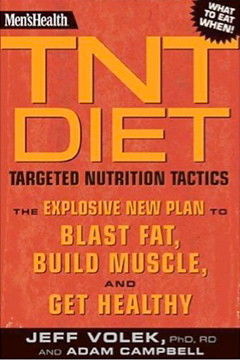
Noted low-carb researcher Dr. Jeff Volek from the University of Connecticut (who recently released a book entitled the Men's Health TNT Diet co-written with Men's Health Features editor Adam Campbell) explained in my interview with him last September why it is simply futile to be eating a high-carb, low-fat diet as part of a healthy life.
"The potential problem with low fat/high carbohydrate diets is that they can exacerbate the features associated with metabolic syndrome, unless you also exercise or lose weight as part of the low fat diet. High carbohydrate diets increase triglycerides, lower HDL-cholesterol, and lead to greater fluctuations in glucose and insulin. There is also an emerging concept that carbohydrates tend to be more pro-inflammatory. To some extent the over-emphasis on carbohydrates explains why we have seen such an increase in diabetes."
With all this preponderance of the evidence AGAINST consuming a high-carb, low-carb diet for the sake of your weight and health, then obviously there can't be anyone in their right mind who would dare to RECOMMEND such a diet for people seeking to lose weight and improve their health, right?
Well, I did say "in their right mind" so that leaves the door open for people like Dr. Glenn Gaesser from the University of Virginia. He is an associate professor of exercise physiology and director of the kinesiology program in the Curry School of Education who doesn't mind telling people exactly what he thinks about livin' la vida low-carb as evidenced by this recent press release.
"That's just nonsense," Dr. Gaesser contended regarding the claim by people who eat a low-carb diet that it is the carbohydrates that made them fat.
He was responding to those of us who criticized this ridiculous study and his comments about it that released last week in the Journal Of The American Dietetic Association concluding that the high-carb, low-fat diet promoted by Dr. Dean Ornish was best among the most popular diets for heart health. Predictably, the Atkins low-carb diet was dead last (since they based the comparison on criteria that call for higher carbohydrate intake and lower fat intake, the result was not surprising!).
This Dr. Gaesser is a real piece of work, though. He claims there is nothing at all wrong with consuming sugar, white flour, processed and whole grains, and other high-glycemic (aka HIGH-CARB) foods as part of a healthy and fit lifestyle.
"There is no reason to be eating fewer carbs – they're not the enemy,” he exclaimed. "People who consume high-carb diets tend to be slimmer, and often healthier, than people who consume low-carb diets."
Oh now why did you have to go and throw in "than those who consume low-carb diets," Dr. Gaesser? Are you TRYING to pick an idealogical fight you know you can't win? Apparently so, because he contends there is NO COMPELLING EVIDENCE that points to carbohydrate restriction as a means for improving health. Um, would you care to click on any of the links I provided at the top of this blog post for all the evidence you'll need, sir?
It is quite obvious this professor has not done his homework and is simply adhering to the same old line of dietary convention that has led us to become the obese population that we are with declining health that just keeps getting worse. Because of high-carb, low-fat apologists like Dr. Gaesser, we have not moved the conversation about a healthy diet forward in this country because they refuse to give even a little credence to this way of eating that has helped so many of us manage our weight and health for the first time in our lives.
Of course, Dr. Gaesser has a vested interest in his hypothesis because he wrote a book in 2004 entitled It's The Calories, Not The Carbs as well as another book called Big Fat Lies: The Truth About Your Weight and Your Health that simply repeats his hypothesis regarding a high-carb, low-fat diet to control weight.
As if these written statements from Dr. Gaesser were not inflammatory enough, I have some audio from him to share with you so you can hear right from the horse's mouth exactly what he thinks about livin' la vida low-carb. CLICK HERE to listen to a few minutes of his argument in favor of high-carb, low-fat diets over the low-carb lifestyle.
I wrote an e-mail to Dr. Gaesser requesting an interview with him to further clarify his negative statements about low-carb, but he never responded. I was ready to give him an opportunity to state his case about why he believes what he does, but unfortunately he did not avail himself of that opportunity to speak to the low-carb community through my generous invitation.
However, leave it to one my incredibly faithful readers who took my advice at the end of this previous blog post to write an impassioned e-mail directly to Dr. Gaesser about her low-carb experience and she confronted him about his rather narrow-minded views about this healthy nutritional approach.
Here's what she wrote to him in an e-mail (this is AWESOME!):
Dear Dr. Gaesser:
I am now nearing 71 years old. For 45 years I faithfully followed the low-fat mantra of the AHA and ADA while my weight skyrocketed to 236 pounds, diabetes ran rampant, hypertension soared, my lipid profile ballooned, and I finally suffered a heart attack. Hunger and guilt plagued my efforts as I destroyed my joints from exercise abuse.
Four years ago I discovered the Atkins diet. I have lost 40 pounds effortlessly for the first time ever, my only diabetic medication is metformin, my lipid profile is now normal with no medicine, and my cardiologist says my heart keeps getting stronger. I consume far more calories than I ever did. Nearly 80% of my diet is saturated fat. At last life is good. If only I had known years ago what I know now!
Thousands of other people are finding the same fantastic results, yet you insist that a low-fat diet that failed them in the past is the answer. How do you explain my results?
Our fat-phobic society is sickly, obese, diabetic and heart-diseased because fat consumption has steadily decreased over the last 30 years. (See pages 232-233 in Gary Taubes' new book GOOD CALORIES, BAD CALORIES for verification.) Sure, a cookie or a piece of pie occasionally will do little harm, but the poison of carb addiction must be handled carefully, just like smoking and illegal drugs. I know from my own actual experience.
The statement "Most studies indicate that people who consume a lot of carbohydrates generally are thinner than those who do not" is ridiculous. Why are all those who eat mostly carbs every day and never touch fat and little protein, which is the majority, obese? Kids are perfect examples, and you know what is happening to them.
As long as the low carb success continues to spread, the more it will wipe out low fat misery. It is time to accept the inevitable and do all you can to get this nation onto the road toward health and vigor, even if it means giving up cherished, outdated beliefs.
BRAVO to this very brave and admirable reader!!! I could not have said it any better myself and I REALLY like the way she worded this. It was not just her belief about livin' la vida low-carb, but actually what SHE LIVES and that is very powerful. And that phrase "it will wipe out low fat misery" gave me chills down my spine! WOW!
But you wanna know what? It didn't end there. This Dr. Gaesser character actually had the gall to RESPOND to this impassioned e-mail from my reader with this rather terse and heartless e-mail designed to discourage her and single her out as the exception. What a real piece of work this professor is!
Here's what he had to say about my reader's e-mail to him:
I can understand your point of view if you have had success with low-carb eating. However, my comments on the news pertained to a thorough examination of literature that I had published in the October 2007 issue of the Journal of the American Dietetic Association, on the subject of carbohydrate intake and body weight. The article went thorugh a rigorous peer-review process, and the results are unequivocal: high-carb, low-fat diets are consistently associated with lower body weights in men and women, young and old. The studies included in my analysis represent data on hundreds of thousands of study participants.
Even eating a lot of so-called "bad carbs" was not linked to higher body weights. Some large studies even showed that eating lots of so-called "bad" carbs was linked to better weight control. I should also mention that consumption of sugar (perhaps the ultimate "bad" carb) is consistently linked to lower body weights in adults. The reasons for these findings remain unclear, but may have to do with the fact that high-carb diets tend to be associated with higher consumption of dietary fiber, especially cereal fiber, and cereal fiber has been linked to better weight control and good health.
One point of clarification: Taubes' assertion that fat intake has been steadily decreasing for the past 30 years is not true. Dietary fat intake--measured in actual grams of fat consumed per day--has not changed appreciably during the past 30 years. In fact, data from the National Health and Nutrition Examination Surveys suggest that since about 1980 dietary fat intake of U.S. women has actually increased a bit. The PERCENTAGE of fat intake has decreased, but only because total calorie intake (mainly from carbs) has increased during this period. Thus the so-called "low-fat" period of the American diet is more aptly described as "high calorie"--and calories, regardless of type, do count. Taubes is clearly off base on this point.
Sincerely,
Glenn A. Gaesser, Ph.D. Professor and Director Kinesiology Program University of Virginia
What a freakin' clown this guy is! I'm sorry, but he doesn't deserve to be respected with a moronic response like that one to a very reasoned and well-written comment. Can you believe someone who is supposed to be at least halfway intelligent as the professor of a major college in the United States of America would make the claim that eating SUGAR leads to LOWER body weights in adults? Say what? Has this professor completely lost his mind?! (It's just like the head of the Corn Refiner's Association attempting to tell me that high fructose corn syrup is healthy! Yeah, riiiiiiiiiggght!)
Regarding his rant against Taubes, he never claimed that fat consumption has steadily decreased. In fact, if you will watch that video I linked in this recent blog post with Gary Taubes, Dean Ornish, and Barbara Howard, then you will hear Ornish attempt to say the same thing about fat intake remaining static while Taubes defends his statement by saying it was the PERCENTAGE of fat intake that fell with carbohydrates taking up more and more of the macronutrient ratio.
When Dr. Gaesser made the statement that "Taubes is clearly off base," then it proved to me beyond a shadow of a doubt that he absolutely has no idea what he's talking about. Why do people like this feel like they have to get up on their high horse and act all sanctimonious about what they believe? Share your ideas about what you believe and do it in such a manner that people will be attracted to what you have to say based on the results. There's no need to drag down alternative choices that some of us have chosen to make for our lives.
The fact remains, Dr. Gaesser, whether you will ever acknowledge it or not, there are countless examples of people like my reader who courageously wrote to you with her story, this man typing this blog post whose life was forever changed for the better after losing nearly 200 pounds and living healthier than he ever thought possible, and many more who are quietly living their lives, watching their carbs, and never regretting their decision to eat a deliciously healthy high-fat, low-carb diet.
You may try to act like we don't exist, but the reality is clear--WE DO EXIST! And the good news is we ain't going anywhere anytime soon either, so expect us to continue to challenge people like you, Dr. Ornish, and anyone else who would dare disrespect us as human beings like you have because we have chosen a nutritional path that runs counter to what you believe.
As participants in the conversation about weight and health, wouldn't you want people to find their own customized pathway to success? That's my philosophy, Dr. Gaesser, and I challenge you to do the same for the sake of helping people beat their obesity and get healthy. It's for the greater good!
Would you like to send your own personal story to Dr. Gaesser about how livin' la vida low-carb has greatly improved your weight and health? Send him an e-mail at gag2q@virginia.edu. I'm sure he'd LOVE to hear from about a hundred enthusiastic fans of livin' la vida low-carb, don't you agree? :D
10-11-07 UPDATE: Although he refuses to respond to my request for an interview, Dr. Gaesser has been quite responsive to many of you who have written to him. Here's what one of my long-time readers wrote to him yesterday:
Dr. Gaesser,
I was amazed to read today that you are stating that junk carbs are not the cause of weight gain. These unrefined carbs are the major cause of so many health issues in not only the USA but the world and the problem for young and old alike.
There are just too many REAL medical studies showing the damage sugar is doing to our bodies to dispute. Personally, when I stopped eating the junk carbs I lost 75 pounds, kept it off for 3 years so far and my blood work looks excellent now where I was moving into serious danger in all areas.
My husband decided to drop the junk carbs and lost 60 pounds and also moved from pre-diabetic to excellent blood work also. At age 59 I've tried your so called low fat high carb way of eating and trust me, it stinks big time. I feel sorry for those people that you are influencing to continue their destructive path.
Here was Dr. Gaesser's smug response to my very successful reader:
My guess is that you and your husband must have been eating a lot of what you call junk carbs if you lost so much weight after eliminating them. And that is not inconsistent with my message. My evaluation of the science, that was published in the Journal of the American Dietetic Association, indicated that refined grain intake was not consistently linked to higher body weights.
In fact, carbohydrate intake was universally associated with lower body weights. In one study, published by Harvard researchers, men who who consumed the most refined grain weighed no more than men who barely consumed any refined grain. Also, sugar intake is consistently linked to lower body weights.
I am not advocating loading up on sugar and refined grain, but rather only wanted to make a point that blaming Americans' obesity problem on their consumption is not justifed. You may disagree, but these are the facts.
As a point of clarification, I do not advocate a low-fat, high-carb diet without qualifying that I also emphasize consumption of fiber-rich foods, mainly cereal fiber.
Glenn A. Gaesser, Ph.D. Professor and Director Kinesiology Program University of Virginia
I agree with my reader that this message from Dr. Gaesser is still VERY unstable dietary advice for people wanting to lose weight and get healthy. What say you?
Adam Campbell and Dr. Jeff Volek team up for new low-carb fitness book
The number of influential members of the health media today who believe in the efficacy of livin' la vida low-carb is ridiculously small in comparison to those who still subscribe to the same old failed high-carb, low-fat diet. That's one of the reasons I chose to start my blog and other media outlets because there is a noticeable vacuum in this medium that is begging to be filled.
It's rather sad that we have supposedly intelligent people purporting to know their stuff as it relates to diet, health, and fitness, but yet they hold on so tightly to an archaic belief. Isn't there ANYONE in the major health media who thinks on his own and has been watching all of the evidence in favor of low-carb diets come out over these past few years?
Yes there is! Enter Adam Campbell.
Adam individually stands out among his peers because he is unafraid and unashamed of shining the light of truth on the nutritional ruse that has been happening right in front of us for decades and quite frankly he is as sick of it as those of us in the low-carb community are. Writing for Men's Health magazine isn't a bad gig!
Today we are thrilled to have Adam here for an interview to talk about the low-carb lifestyle and why it deserves to have more attention paid to it for the sake of weight, health, and fitness. With his third book he co-wrote with respected low-carb researcher Dr. Jeff Volek on the way, you'll get some exclusive sneak preview quotes from this "explosive" (sorry for the pun!) new addition to your low-carb library!
Adam Campbell is certainly one to keep an eye on as livin' la vida low-carb becomes more and more accepted by our culture. And it is my estimation that he may very well be one of the reasons why it will happen sooner rather than later. Enjoy hearing from this young, energetic, and knowledgeable man of conviction today as he talks about living healthy--the low-carb way.
1. I am pleased to welcome to the "Livin' La Vida Low-Carb" blog today author, journalist, and the Features editor for Men's Health magazine, Adam Campbell. He has had the opportunity to work in the research lab while earning his master's degree in exercise physiology from the University of Kansas and took part in studies about energy balance and human performance as it relates to athletes and overweight people. Today he is one of the foremost voices in the world of nutrition and fitness with his unique role at Men's Health. After discovering Adam was a supporter of low-carb, I can't help but ask the question, "How'd you manage to get on staff at such a powerhouse health publication like Men's Health?"
I got lucky. I was planning to get my Ph.D. in exercise physiology at the University of Kansas, and pursue a career in research. But for some reason, it didn't feel quite right. (Perhaps it was the tens of thousands of dollars in school loans it was going to cost to me.) So I opted out during the semester I was completing my Master’s degree.
A week later, I was scanning the National Strength and Conditioning Association’s career site, and noticed that Men's Health had posted a job for a reporter. I applied—I have a bachelor's degree in English—and somehow survived the interview process. Keep in mind, I was 29 at the time—and starting at the bottom rung of a new field.
2. Congratulations on your success so far in your writing career at Men's Health and I'm sure it will continue on for many years to come. Yours is a voice that is sorely needed in the health debate. Speaking of that, what an amazing column you wrote late last year about the failures of the American Diabetes Association (ADA) which garnered your fair share of criticism from them.
But you didn't back down from your thesis that a low-carb diet could very well be the cure diabetics have been looking for because you had the scientific and anecdotal support from people like Dr. Mary C. Vernon to support everything you wrote. Tell us why you felt compelled to address that controversial topic.
The main reason is that the current recommendations don't make a lot of sense. Why would you tell someone who can't tolerate carbohydrates—at least not without medication—to make them the foundation of their diet? It seemed that the ADA should at least present the alternatives to doctors and patients. Instead, they push diabetics to consume the same diet that you might recommend to an elite endurance athlete. Bottom line: I was frustrated. I know you and your readers can certainly identify.
3. Absolutely! I understand you are currently putting those stellar writing talents of yours to work on your third book in collaboration with low-carb researcher Dr. Jeff Volek from the University of Connecticut. What's the book called, when will it be available, what's it about, and why do low-carbers and people interested in health and fitness need to pay attention to it when it comes out?
Not surprisingly, a low-carb diet is the foundation of TNT, since that's one of Jeff's primary research interests. It'll be available October 2nd from Rodale books.
In fact, you might call it an evolution of the classic low-carb diet, since it not only includes an exercise program, but also teaches you how to eat around your workout in order to optimize your results. While we provide several different eating plans in the book, our goal was to help readers understand the basic principles of why our strategy works. That way, they can tweak the diet for their lifestyle and goals. For instance, we talk a lot about glycogen in the book. Here's a quick exclusive excerpt for your readers:
"Glycogen is the name for carbohydrates that are stored in your muscles. An easy way to understand glycogen is to picture it as a storage tank for sugar, the form of carbohydrate your body uses for fuel. So just as you have fat stores, you also have sugar stores. However, unlike your fat stores, which are able to expand (read: you can get fatter and fatter), your glycogen tank has a limited capacity to store sugar. For instance, think of your car: If you own a midsize, you probably have about a 14-gallon fuel tank. Try to fill it with 20 gallons, though, and the other six would spill out onto the pavement. It's the same way with sugar and your glycogen tank.
And therein lies the problem: A full glycogen tank signals your body to use incoming carbohydrates for energy instead of your stored fat. Otherwise, your glycogen tank will overflow. As a result, your body not only stops burning fat, it starts conserving it—just in case of starvation. This is one of the main reasons for America’s growing obesity problem. Because most people’s diets are excessively high in carbohydrates, their glycogen levels are always at peak capacity. In turn, their bodies won’t allow them to use their stored fat for energy.
What’s more, there are also serious health ramifications to perpetually high glycogen levels. When excess carbohydrates from your diet can’t be stored as sugar in your glycogen tank, the overflow causes sugar to build up in your blood stream. The result: Chronically high blood sugar, which can damage the large blood vessels of your heart and brain, and the small vessels of your kidneys and eyes. As a consequence, your body starts shuttling the overflow of sugar to your liver, where it’s then converted to a blood fat known as triglycerides. If you’ve ever had blood work done, you might recognize triglycerides as one of the measurements that your doctor ordered.
And for good reason: Elevated triglycerides are a risk factor for heart disease, and an early predictor of future diabetes. To make matters even worse, once sugar becomes triglycerides, or fat, it can be stored as fat. Ever been told carbs can’t make you fat? Think again.
Remember, this isn't to suggest that you can't eat carbohydrates without getting fat. It's to show what happens when you overeat carbohydrates, which most people are doing. For instance, if you look at dietary intake in the US over the last three decades from the Nutrition Examination Surveys (NHANES), you'll notice an interesting pattern. In men, average daily energy intake during the early 1970s was 2450 calories. But by the year 2000, that number had increased to 2618. An even greater increase in calories was seen in women. Where did these extra calories come from? According to the NHANES data it was almost exclusively derived from carbohydrates. Interestingly, there were minuscule changes in the intake of protein and fat. (In fact, fat intake decreased in men.)
So sure, people are eating too much. But they’re eating too many carbohydrates, not too much protein and fat. And that's a glaring problem with the government’s nutrition recommendations—one that's seemingly being ignored.
4. Fitness is obviously one of your passions as you run an outstanding blog for Men's Health called "The Fitness Insider." You are an NSCA Certified Strength and Conditioning Specialist, so you have an extensive book knowledge about how and why humans need exercise. But in the real world, most people can't seem to muster up the energy and commit themselves to a regular exercise routine. What advice can you share from your own experiences to help those who are reluctant to start their own fitness schedule? Also, is there an ideal mix of cardiovascular and resistance training that people should know about?
First, let’s talk about the commitment issue. I'm reminded of an interesting study that I wrote about in this story:
In June of this year, researchers at Leeds Metropolitan University, in the United Kingdom, released findings of a new study that looked at how exercise affects job performance. It worked like this: They asked 210 workers to provide feedback on their job-related duties and time management, on a day when they participated in an exercise program and again on a day when they did no exercise. They simply reported observations of their own behavior based on a 7-point scale. For example, they were asked to rate their ability to work without stopping for unscheduled breaks, and how effectively they were able to stick to their "to-do" lists. They also provided details about their workloads and exercise sessions. When the results were tallied, even the researchers were surprised.
Workers scored 15 percent higher in their ability to meet both time and output demands on the day they exercised. "What we found staggered us, and we were left wondering what companies might do otherwise to produce these 15 percent improvements," says Jim McKenna, Ph.D., the lead researcher.
Now consider for a moment what these numbers mean to you: On days when you exercise, you can -- theoretically, at least -- accomplish in an 8-hour day what normally would take you 9 hours and 25 minutes. Or you'd still work 9 hours, but get more done, leaving you feeling less stressed and happier with your job, another perk that McKenna says the workers reported. Obviously, the responses that led to these results were subjective. But it's hard to deny that perception is reality when it comes to job satisfaction. And a 15 percent boost in productivity might just give you a case for a similar boost in pay.
Besides showing how Hillman's laboratory findings are expressed in the real world, this study may also explain why busy men who regularly exercise are able to fit cardio into their schedules, while equally busy men who don't exercise claim they don't have the time. Arkansas governor Mike Huckabee can relate to both sides of the story. In June 2003, he was sedentary and weighed 280 pounds; he now runs marathons and weighs 170.
"I've never found time to exercise," he says. "I make time."
Consider him a poster boy for what cardio can do for a man who's already good at his job. Huckabee, ever the conscientious politician, wants to be clear: He didn't have a problem keeping his schedule or accomplishing tasks before he started running. And it's true; this guy became governor in 1996 -- 7 years before he initiated his exercise program -- and was reelected twice along the way. It's just that he's even better now.
"I'm more creative, because I have mental energy. When I finish running several miles, it's like my mind is running on overdrive," he says. And, he adds, "It's made a dramatic difference in my ability to focus."
The only way to discover this yourself is to give it a try. But one of the big mistakes people make is to try to do too much in the beginning. Just get started—even if it's only 10 minutes for 3 days a week. The reality is that the less trained you are, the less you have to do to see a benefit. Of course, while you can improve strength or endurance quite quickly, it still takes time to see visible results. This is where people often get frustrated. So it takes some patience. In the TNT Diet, Jeff and I have this passage:
"A training program is only effective if you actually have time to follow-through with it. For instance, consider that U.K. researchers recently determined that men who lifted weights three days a week for 5 weeks increased muscle size by about 0.2 percent per day. Sure, this amount of growth is unnoticeable from day to day. But imagine how dramatic the cumulative effect would be were you to work all your major muscle groups three days a week, 52 weeks a year. This is called consistency, and it's the true key to achieving the most success possible on any exercise program.
If you work out 3 days a week, 52 weeks a year, you'll like the results. But few people make it beyond a month. Which is interesting because almost everyone will tell you they feel better—even great—after exercising. I guess our memories are pretty short.
One way to combat this lack of motivation is to make a deal with yourself: On days you don't want to work out, force yourself to complete all of the sets of your first exercise. If you want to call it a day after that, then feel free to hit the showers. However, much of the time, you'll find your mood has changed and you'll be motivated to complete your entire session. It seems the process of simply getting started—going to the gym, changing clothes, etc.—is our biggest obstacle.
As far as an ideal mix of exercise, that depends on your goals. If you're following a smart diet (ahem, TNT, ahem), then resistance training is going to make the best use of your time for fat loss. While everyone thinks that aerobic exercise is the best choice for this goal, we recommend weight training. Here's another bit from our book to help explain why:
You've Been Told: “Running is the best way to lose weight.”
The Origin: In 1977, Jim Fixx published The Complete Book of Running. This bestselling book popularized the notion of running to improve health and lose weight, and is widely credited with kicking off the jogging boom of the 1980s. Furthermore, most exercise scientists during this time were recreational or competitive runners themselves. As a result, running and other types of endurance activities were the type of exercise that was most often studied, particularly in terms of health benefits (and there are many).
And because these researchers reported that running burns a lot more calories than weight training—while requiring nothing but a pair of functional legs—the majority of experts began to widely promote it as the best mode of exercise for fat loss. However, they didn’t—and still don’t—have the data to support that assertion. What Science Shows: First, it’s important to point out that engaging in a regular running program—or any kind of exercise for that matter—without also adopting a prudent diet is a very inefficient way to lose weight. After all, a typical fast food double-decker cheeseburger and large fries contain more than 1100 calories—a meal most red-blooded American men can wolf down in less than 5 minutes. However, to burn that many calories, the average guy would have to run for 53 minutes at an 8:30 per mile pace. Which is why your diet has a greater impact on total weight loss than exercise.
As we’ve already discussed, though, it's not simply weight loss that’s important—it’s the quality of your weight loss that matters most. That is, the amount of your weight loss that’s pure fat—since that’s what really counts. Perhaps surprisingly, endurance exercise—such as running, cycling, or walking—does little to further augment fat loss when combined with a good diet. Weight training, however, has a dramatic impact. Consider a study we conducted back in 1999. We put overweight men on a diet that was approximately 1500 calories a day, and then divided them into either a diet only group, a diet group that also performed endurance exercise, or a diet group that performed both endurance exercise and weight training.
After three months, each of the groups had lost almost the same amount of weight—about 21 pounds. But the quality of their weight loss was much different. The men in the weight-training group lost five pounds more fat than the other two groups. You might wonder how that’s possible when they all dropped the same amount of weight. The answer is that the men who dieted or dieted and performed only endurance exercise lost about 15 pounds of fat, but also lost several pounds of muscle. Those who lifted weights lost almost pure fat.
You see, weight training is a powerful tool when it comes to fat loss. Because it stimulates your muscles to grow, your body is less apt to part with your hard-earned muscle. This is crucial because the more muscle you have, the bigger your body’s fat-burning furnace. What’s more, if you lose muscle, you not only reduce your ability to burn fat, your glycogen tank becomes smaller. (Remember, most of your glycogen is located in your muscles.) So you have less room to store carbohydrates, increasing the likelihood that they’ll be converted to fat in your liver. Endurance exercise provides none of these benefits.
But what about the fact that running burns more calories than weight training? Turns out, when scientists at the University of Southern Maine used an advanced method to estimate energy expenditure during exercise, they found that weight training burns as many as 71 percent more calories than originally thought. In fact, the researchers calculated that performing just one circuit of eight exercises—which takes about 8 minutes—can expend 159 to 231 calories. That’s about the same as running at a 6-minute mile pace for the same duration. And just as important, research shows that weight training—unlike endurance exercise—can elevate your metabolism for up to 39 hours after your workout session.
As for overall health, adding a short interval training session after your weight workout or on the days in between is the most efficient way to boost your aerobic fitness, while burning even more fat than a slow to medium jog.
A lot of people become intimidated at the idea of intervals, which are short, high-intensity “sprints” interspersed with periods where you either rest completely or simply slow down. They shouldn’t be. For those who are “out of shape,” these sprints could be fast walk. It’s all relative to what’s intense for you. The best part of intervals is that they’re time-saving: You can do more physical work in less time than classic forms of cardio.
That said, if you really like running, by all means keep at it, as any activity that you enjoy is a great one to do. And there are certainly main health benefits to be achieved with regular aerobic exercise.
5. I recently interviewed a good friend of yours, the soon-to-be Dr. Cassandra Forsythe. Her work alongside Dr. Volek has been crucial in understanding the metabolic mechanisms that make the low-carb diet work extremely well for weight loss, normalized blood sugars, and many other health benefits. The impetus for her involvement in low-carb was a personal one--she's carb sensitive! How about you? What made Adam Campbell interested in livin' la vida low-carb?
In my 20s, before I went to grad school, I was working as a commodities trader at the Mercantile Exchange in Chicago. (I was really putting that English degree to good use!) Because the market I worked was only open from 8:30 to 3:15 (in those days, markets didn’t trade around the clock like they do now), I had a lot of time on my hands. So I spent it working out and going out—as in eating and drinking.
While I could tell I was putting on muscle from my gym work, I couldn’t figure out why I still had a gut. A smart friend suggested it was a nutrition problem (surprise!). So I hit the local B&N and picked up a copy of The Zone Diet by Dr. Barry Sears, which had just hit the bestseller list. At the time, I didn’t know the difference between a carbohydrate and a fat. So this was really the start of my nutrition education.
I dedicated myself to Dr. Sears’ eating plan, and was quickly amazed at the changes in my physique—and the way I felt. I continued to follow a Zone-friendly diet until I went to grad school about three years later. There, I enrolled in my first nutrition class, and soon found out that much of what Dr. Sears said was wrong!
I’m being facetious here, of course. But the point is that my formal nutrition education contradicted what I learned from The Zone. So I was constantly pondering this question: Was Dr. Sears “wrong,” or was it my college instructors and textbooks? Remember, this was when The Zone was still somewhat controversial, and the Atkins Diet wasn’t even being studied. In fact, Atkins was considered a health hazard, even more so than it is now (and typically by people who’ve never read the book).
In 2000, I started my career at Men’s Health. I hadn’t fully bought into everything I had been taught in college, but there was definitely some “brainwashing.” That’s when I started corresponding with Jeff Volek, and immersed myself in nutrition studies and books, which included re-reading the textbooks from grad school with a more discerning eye. The rest is just the logical progression of 7 years of continuing education.
6. As you have noted in your own education, we live in a society that worships the low-fat diet as the gospel truth. They have so demonized fat, especially saturated fat, that people are quite literally scared to death of it despite all the research showing the health benefits of fat consumption. What can be done to reverse the fat phobia that exists and how can we convince those same people that sugar and refined carbohydrates are very likely the culprit in their weight and health problems?
I’m not sure it will change anytime soon. Researchers like Jeff Volek, Richard Feinman, Eric Westman, Steve Phinney, Jay Wortman, and Ron Krauss are certainly providing the ammunition to blow away the saturated fat dogma, but it’s so heavily ingrained that it’s only people who have an open mind who will get it. People like you, Mike and Mary Dan Eades, Regina Wilshire, Gary Taubes, and Nina Teicholz (look for an article about saturated fat from her in the November issue of Men's Health) are obviously raising awareness, though.
I really think the key is that people have to figure it out for themselves. It’s very hard to convince someone of the merits of a low-carb lifestyle if he or she has already decided that it’s unhealthy or impractical. All you can really do is present the science.
Of course, when faced with research that shows low-carb diets are better at lowering heart disease risk factors than low-fat diets, health “experts” always counter with the same argument: They simply point out that there isn’t any long-term data from experimental studies to support a low-carb recommendation. The reality, though, is that this type of research doesn’t exist for low-fat diets either.
7. Low-carb supporters can sometimes feel like lonely wanderers in a harsh and cruel world treating us as outcasts for our nutritional choice. Do you see anything monumental happening in the next few months and years that will serve to rekindle the fire in the low-carb community?
I think (and hope) that Gary Taubes’ (Good Calories, Bad Calories) book will help. But ultimately, these transitions are slow. One well-known scientist told me that he thinks it will be another 20 years before we see a paradigm shift. That might sound pessimistic, but you could think of it this way: We live in a society where people are going to eat poorly no matter what the recommendations.
And while those who choose not to eat poorly might not adopt a low-carb approach, they’ll ultimately find a diet that emphasizes whole foods, and discourages those that are highly processed or contain lots of added sugars. That’s a strategy that just about everyone promotes.
As an example, a nutrition expert I really respect, Alan Aragon, has said—and I’m paraphrasing here—you should eat as many carbs as you can tolerate. So if carbs aren’t a problem for you—you’re lean, you don’t overeat, you have plenty of energy, you sleep well, your blood work is good—who are we to tell you that you should cut back on them? Maybe you don’t need to.
But if you’re experiencing some of the negatives that can be associated with a higher carb diet—like high blood pressure, high triglycerides, or one of the other symptoms mentioned above—you may want to reconsider. Some people can tolerate lots of carbs, others can tolerate very few. For instance, a 245-pound bodybuilder who has 8 percent body fat can often handle a lot—they have bigger glycogen tanks due to their muscle mass, and also perform high amounts of physical activity. However, a 45-year old guy who’s packing 25 pounds of excess belly-fat and sits at a desk all day probably can’t. So your lifestyle and body type can make a major difference.
8. THANK YOU so much for sharing your thoughts and wisdom with us today, Adam. It's nice to know there are people like Adam Campbell out there working on our behalf in the public forum sharing about livin' la vida low-carb in a non-threatening, yet assertive manner. I know it can't be easy being labeled a contrarian for not buying into the low-fat lie, but you are doing it! Is there anything else you would like to share with my readers to encourage and edify them to continue on with their low-carb way of life?
Don’t let anyone tell you what the right diet for you is. No one knows. In the TNT Diet, we encourage people to get blood work done before you start the diet, so that you have a baseline measurement. This way, you can see for yourself what’s happening to markers for heart disease risk, in addition to what happens in the mirror.
Just as important, you need to start monitoring how you feel when experimenting with a diet. We go into this in some detail in our book, but I discuss it in this blog post.
These are important factors to look at, but almost no one does this. They’re typically only interested in what happens on the scale. Interestingly, we’ve seen such great results from some people on our plan that the scale actually becomes deceiving. Here’s an example from the book:
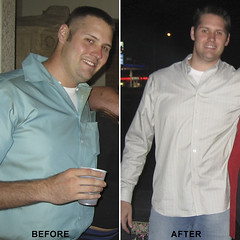
He only lost 7 pounds, but look at the amazing difference!
If you were to judge Lucas Hutchinson’s results by the numbers on the scale, you wouldn’t be too impressed. After all, in 12 weeks on the TNT Diet and Exercise Plan, he lost only 7 pounds of body weight.
But remember, it’s body composition that matters. And by that standard, Lucas made one of the most dramatic transformations we’ve seen in any of our studies. That’s because he lost 19 pounds of fat, while packing on 12 pounds of muscle.
In fact, his results were so amazing that we double and triple-checked the readings to be sure they were correct. Not that we should have been that surprised: The change in his body was obvious. And not just to us: “In the first month, I noticed that my pants were fitting a little looser. As the study progressed, I had to keep tightening my belt, and it felt great every time I did it.”
Lucas added more muscle—a pound a week—than anyone in our studies to date. And although we can’t tell you exactly why—hey, everyone responds a little differently—we do know that he made a point to enjoy the meal plan. “The best part of the diet by far is the fat. I was able to use as much as I wanted, and it always made my meals taste better,” says Lucas. There’s an important lesson here: By not fearing fat, and eating all the calories that he desired, he allowed the TNT Diet and Exercise Plan to work its magic—diverting nutrients away from the fat depots that surround his belly, and toward the muscles of his chest, back, and legs.
What about his health? Judge for yourself. Lucas’ total cholesterol fell 17 percent and his triglycerides dropped an astounding 58 percent. On top of it all, there was another benefit: “I slept better and had more energy when I woke up,” he says.
People, well, guys mostly, always say they want to lose fat and build muscle, but when it actually happens, they can become frustrated because the scale doesn’t move faster. Sometimes that’s actually a good thing! (Thankfully, Lucas had the advantage of being in one of Jeff’s studies—so his body composition changes were measured using DEXA, the most sensitive technology available for tracking changes in body fat and muscle mass.)
In Episode 83 of "The Livin' La Vida Low-Carb Show with Jimmy Moore," we discuss carbohydrates--GASP!--and their role in a low-carb diet--DOUBLE GASP! Although we're often told that low-carbers completely reject all carbs of any kind, the truth might just surprise you. Hear about the carbs most of us DO eat on a low-carb diet by clicking on the "Play In Popup" link below or by downloading it to your iPod:
"The Livin' La Vida Low-Carb Show with Jimmy Moore" Episode 83 [14:25m]: Play in Popup | Download
The whole low-carb means "no carb" correlation that has been sprung on our culture by the health "experts" and their willing accomplices in the media has long distorted what truly healthy low-carb living is all about. While people who are livin' la vida low-carb do indeed eat LESS carbs (sometimes substantially less!) than the typical diet, the fact is we DO eat carbs. This will be news to many people.
But the point is our carb intake, which could range from nearly zero all the way up to 100g daily depending on the individual, is the norm while people who eat hundreds and even over 1000g carbs in a day (I regularly did prior to going on the Atkins diet in 2004) are on the extreme level of carbohydrate consumption. Now you tell me who's eating healthier--someone eating 50g carbs or 500g carbs? It's obvious, isn't it?
Don't ever miss a single episode of the podcast by:
What are some of the healthy carbs that you consume as part of your low-carb lifestyle? Why do you choose to eat those specific kinds of carbs in your diet? Also, what carbohydrates have you vowed to either greatly reduce or NEVER eat again?
Let's talk about it and learn from each other what livin' la vida low-carb means to each of us. This should be educational for everyone (are you listening, media?).
Don't miss Thursday's episode of "Livin' La Vida Low-Carb Show with Jimmy Moore" as I'll have an interview with reproductive endocrinologist Dr. Gil Wilshire here to talk about the importance of a controlled-carb approach to treating infertility and how conditions such as metabolic syndrome and PCOS are improved on low-carb which makes a pregnancy more likely to happen. This will be a CAN'T MISS episode so we'll see you then!
I have a little mix 'em up, match 'em up of topics to share with you in this blog post today, so let's get started!
First up is a neat column on carbs from friend and fellow blogger Amy Tenderich from the "Diabetes Mine" blog who asks "Why Did God Make Carbs So Yummy?" As a diabetic seeking to control blood sugar levels through carbohydrate restriction, Amy has a rather humorous look at those darn carbs! I'm sure my readers will get a big kick out of this post!
Next, we have a rather alarmist column on diet sodas entitled "Is Your Favorite Drink Toxic?" from Dr. Jonny Bowden. Jonny's main issue with the sugar-free, bubbly soft drinks has more to do with the use of the artificial sweetener aspartame (which I call NASTY-tame!) in them than anything else. And yet he came down rather harshly against them as a whole in this article.
"Obviously stevia is a no-problem, no-brainer. The problem for me is I hate the taste and aftertaste, but I see no health problems whatsoever with it.
Splenda SO FAR seems to me pretty innocuous. I know my friend Dr. Joseph Mercola doesn't agree, but I've looked like mad and can't find any really good, responsible argument against it that can be substantiated.
That does NOT mean I won't be proven wrong in a year and I reserve the right to change my mind if there's more compelling stuff coming out. But right now I see it as the least bad of the choices."
Fair enough, Jonny! THANKS for the clarification.
Finally, I received an e-mail from someone about whether livin' la vida low-carb is appropriate for feeding young children or if it's better to wait until the children become adults. Here's the e-mail:
My wife & I are in the process of adopting a child from Russia. We're tentatively thinking that we'll be standing in Red Square by Fall. It's understandably an exciting time for us and we're doing as much preparation, planning, and research as we can to be ready for this addition to our lives.
With that in mind...
We're also both in the early phases of going low-carb (although my loving wife is having a tougher time making this commitment than I am) and I'm wondering how much of our newfound low-carb eating habits should we try to encourage with our new child, when he arrives?
The established dietary guidelines for toddler's are quite carb-heavy with lots of fruits & grains, but I'm wondering if that's okay due to the unique dietary needs of a developing post-infant-aged child. Now sure, I know that we can steer some of those choices in better directions by choosing more nutritionally-dense fruits (like raspberries or melon instead of sugary raisins or apples) and vegetables (maybe broccoli instead of carrots?) but should we do more than that?
Ultimately, I guess I'm asking, at what age is it appropriate to begin limiting carbs and/or emphasizing protein consumption with the goal of sorta having the whole family eating similar foods.
As soon as I got this e-mail, I knew EXACTLY who to ask--my reader Valerie Jacobsen who is the mother of ELEVEN CHILDREN!!! Yep, I'd say she qualifies to answer this one. :D
Forget the Brady Bunch, Valerie's even got them beat! See a picture of her robust family before the newborn arrived a few months back by clicking here. She's quite the knowledgeable one regarding livin' la vida low-carb, so there was nobody else who could answer this question quite like Valerie. Here's her response:
How thrilling! Thank you for giving a home to a child who needs one!
I'll just share my experience and opinions, because there is no definite, clear, research-based answer on this. Also, you should know that while our children have never had refined carbs in significant amounts, their mommy just started eating low carb in 2003. I am definitely still learning!
We have 11 children ages 17 years to 6 months. I woke up this morning to see the box of 5 dozen eggs open on the counter with a beautiful tray beside it arranged with browned ground turkey, sliced cheddar cheese, and sliced red and yellow peppers. A bag of frozen broccoli was steaming in the microwave. This all for made-to-order omelets already in preparation.
Children in cultures all over the world have eaten diets based on combinations of protein, fat, vegetables and fruits in season for thousands of years. We don't have sufficient, recent, long-term controlled studies to satisfy the American Academy of Pediatrics that this is a healthy way to eat, but one of the joys and blessings of being a parent is doing your own research, knowing your own child well (you will!), and making your own best decisions.
Given adequate calories and abundant fat and no portion control, this parent believes that low-carb food choices are fine for toddlers--and the AAP does not have long-term controlled studies to show me otherwise. ;-)
I like to have my children avoid artificial sweeteners and low-carb "products" with the exception of rare treats until near adulthood--but that's me. You'll know your own child, you'll observe his growth and watch how he reacts to different foods--and you'll make your own good decisions based on your observations. Even without AAP oversight for every decision, this is what loving parents do.
While I think that a low-carb diet is a healthy choice even for toddlers, my husband and I do believe that healthy, active children are able to safely consume more carbs than most adults--provided that those carbs are unrefined and eaten as close to their natural state as possible. Low-sugar fruits and modest amounts of whole grains probably don't cause obesity in active children--but I definitely wouldn't want to build in them a taste for junk.
We do allow birthday cakes (a dozen a year!) and occasional whole grain cookies. (My eldest daughter's first birthday cake was a whole grain carrot cake sweetened with stevia. You may or may not want to do something like that in your family, but this kind of rare treat is at least not the kind of white flour + white sugar + fluorescent food coloring garbage that builds an appetite for a lifetime of eating trash!)
We encourage our kids to eat all different kinds of vegetables. When a child meets a veggie that he doesn't like, I just tell him, "Well, that's because your tongue is still little and it hasn't learned to like broccoli yet. If you help your tongue practice, then you will see that it will learn as it grows. Try just one bite." And I tell him, "Remember, your tongue is not the boss of what you eat; YOU ARE!" :-)
When we go to the grocery store, even my tiny children will point at the refined carbs and say, "THAT'S not our kind," with a tone implying wonder that anyone would want to eat it.
We also encourage our children to be active explorers of their environment--to take family nature hikes, play in the back yard, build things, dig holes, play kickball, play volleyball, play sports. Part of the low-carb healthy lifestyle is to live an active life! We have no video games and very little TV here. It's not that I think they are poison, necessarily, I just don't want those things to take the place of better, more healthy life experiences!
These are just my thoughts. I think you can invite your child to your table to eat what you eat. If he needs something more or different, you'll know it. One of the reasons that I can have 11 children without tearing my hair out is that I believe caring for them is far less complex and more intuitive than a mountain of childcare experts would lead us to believe. :-)
THANK YOU for sharing your experiences, Valerie! By the way, are you going for a full dozen? LOL! Wish you could spread the wealth a little with me and Christine. :D
That's it for my little low-carbonanza! Gotta go for now, but we'll do this again real soon. Ya'll come back now, ya hear?