The New England Journal Of Medicine is highly prestigious
While I was away on vacation in Florida seeing my brother recently, a well-publicized weight loss study comparing a low-carbohydrate, Mediterranean, and low-fat diet was released and published in the July 17, 2008 issue of The New England Journal Of Medicine. All the headlines were screaming how the Atkins diet is best and livin' la vida low-carb is champion of them all. It was in virtually every newspaper (including this Wall Street Journal story I was quoted in), local and national television news outlet, and all the health and weight loss blogs--A BIG STORY!
And because it put low-carb living in such a positive light as compared with the low-fat diet or the much-beloved Mediterranean diet, you would think I'd be a happy camper touting this study as the best thing to happen for low-carb in a long while. But as I stated after this other highly-publicized study out of Stanford published in Journal of the American Medical Association last March, I can't get too thrilled about yet another study that shows such insignificant weight loss on a low-carb diet after two years and doesn't really require the participants to adhere closely to anything resembling the Atkins weight loss diet. This puts me in the minority I'm sure, but I have to say this is one big reason why I was disappointed with the New England Journal study.
For those of you who missed this study, lead researcher Iris Shai, R.D., Ph.D. from the S. Daniel Abraham International Center for Health and Nutrition in Israel, put 322 "moderately obese subjects" on one of three specific diets for a two-year observation:
- LOW-CARB--Two months of 20g daily and slowly increase to 120g maximum for the duration of the study. Calorie-restriction was not required for this group. - MEDITERRANEAN--Calorie restriction of 1500 daily for females, 1800 daily for males consuming a diet with 35 percent fat from olive oil and nuts while consuming fish and poultry in place of higher-fat cuts of meat like pork and beef. - LOW-FAT--Calorie restriction of 1500 daily for females, 1800 daily for males consuming a diet with 30 percent of calories from fat as recommended by the American Heart Association (AHA)
Before I share the results, I have some comments. While 20g carbs is indeed the Induction phase of the Atkins diet, 120g is nowhere close to ANY phase of the Atkins diet. EVER! Why do they put people on a low-carb diet and then let 'em go to town eating carbs later? What's so freakin' hard about requiring them to stay at or under 50g a day? I just don't get that with these studies. I do like the fact there were no constraints on calories with the low-carb group and they just naturally kept their calories in check eating this way.
The Mediterranean diet group looked fine, but I was surprised to see the low-fat diet group to include so much fat. While the AHA may consider a 30 percent fat diet to be low (and it is relatively speaking), it doesn't come anywhere near the kind of low-fat diet that the infamous Dr. Dean Ornish said in my first interview with him suggesting obese and unhealthy people go on to lower their weight and improve their health. His plan is a 10 percent fat diet with upwards of 70-80 percent carbohydrates. That's not what they did with this study which is too bad since it supposedly shows the difference between low-fat and low-carb. We'll have more from Ornish is a moment.
First, let's take a look at the results of this less-than-spectacular study:
The LOW-CARB group lost the most amount of weight with 12.1 pounds followed by the MEDITERRANEAN group who lost 10.1 pounds and bringing up the tail was the LOW-FAT group who only shed 7.3 pounds (confirming the results of this long-term large study that found weight loss was insignificant on a reduced-fat diet). The researchers also observed what happened to HDL and triglycerides on these various nutritional approaches and the results were not at all shocking to those of us paying attention to our health--LOW-CARB saw a greater INCREASE in their HDL "good" cholesterol and a more significant DECREASE in their dangerous triglyceride levels making their ratio of HDL/total cholesterol much better than the other groups. Additionally, the A1C levels, an important marker in blood sugar health, as well as their C-reactive protein levels, a marker look at dangerous inflammation, both improved more with the LOW-CARB group.
Pretty good news, right? Well, it depends on who you ask. Let's see what Dr. Ornish thought about this study in this op-ed piece published in Newsweek magazine. It appears he had an issue with several things that may or may not have validity:
1. The study was funded by The Atkins Foundation, a non-profit organization led by Veronica Atkins that has donated millions of dollars to various researchers looking into low-carb diets and their effect on weight and health carrying on the legacy of the late great Dr. Robert C. Atkins.
This shouldn't disqualify the study altogether, but Ornish seems to think it does. So, are we to negate all the research conducted by you and your group on low-fat diets using the same logic, Dr. Ornish? You're better than this.
2. The LOW-FAT participants didn't eat a "low-fat" diet.
I agree, Dr. Ornish. But neither did the LOW-CARB group eat a genuinely "low-carb" diet beyond the first couple of months of the study. If we are ever gonna see a real comparison of low-fat and low-carb diets going head-to-head, then mandatory compliance is gonna have to be implemented. That's the only way to keep advocates on both sides from whining about the diet not being the actual diet every time one of these comparison studies is released.
3. The study is questionable because of calories difference.
Dr. Ornish claims the study lacks "quality" because the LOW-FAT group ate less calories but lost less weight. He says this calls into question the veracity of the data because it is "physiologically impossible" to eat less calories and lose less weight than the other groups. Ornish believes in the mistaken notion of calories in, calories out, so this is not surprising. How about that metabolic advantage at work? :D
4. The Atkins diet group ate "vegetarian sources of fat and protein" which isn't the Atkins diet with all the bacon and beef you can eat.
I'll agree that vegetarian fats and proteins are not preferred over animal fats on the Atkins diet, it's ludicrous to continue stating that the Atkins diet by the book doesn't include veggies. Anyone who has read the book and doesn't have an agenda like Dr. Ornish knows that you get two cups of green leafy veggies as well as one cup of non-starchy vegetables per day on the most restrictive Induction phase of the Atkins diet. Hello?! You make yourself look idiotic when you keep repeating the same lie over and over again, Dr. Ornish.
As for the actual sources of fat and protein in the LOW-CARB group, low-carb researcher Dr. Eric Westman from Duke University asked Dr. Shai to clarify what kind of foods were eaten by members of the low carb group. The notion that the researchers pushed a "vegetarian low-carb diet" on the participants is NOT what was done.
Here was Dr. Shai's response to Dr. Westman's inquiry:
This is kind of funny that some could think of a "vegetarian low-carb" diet. Is it a new suggested strategy? Could be interesting idea but this wasn't the case here. Our low-carb diet was based on Atkins, the participants read the book and the recipes were more or less comparable to what you know in the states.
Beef is the main red meat. What could be different? People here (in Israel) would not mix in the same meal meat and butter, a salad is considered a very rich one and not a lettuce based, and the main dressing is olive oil. As for beverages, same industry that makes money everywhere.
For example, a plate could include: fish or fried/not bread coated chicken/or red meet, broccoli and mushrooms coated with eggs, roasted eggplants, vegetable salad (peppers, cucumber, green leaves, not lettuce) with olive oil dressing. I understand that some of the low-fat people find it hard to believe that such a low-carb diet was tremendously favorable within 2 years in a well designed study, but these are the facts and the science of tomorrow, with the next long-term studies in the pipeline, may confirm or not these findings.
So, as you can see, the LOW-CARB did indeed follow more of an Atkins diet approach in terms of the specific foods they ate, not the mocking of a "vegetarian low-carb diet" as Dr. Ornish made fun of in his op-ed column.
5. HDL is only a risk factor among many to be looked at.
Oh, how convenient for you, Dr. Ornish. Yes, we know all about your "garbage trucks" analogy for HDL stating that you need more of them when you have more "junk" (LDL) to be removed. But the fact is eating a high-carb diet as Ornish suggests leads to LOWER HDL and HIGHER triglycerides, neither of which is healthy by any stretch of the imagination. And the very latest researcher is showing us that LDL and total cholesterol are not nearly as important as the HDL/triglycerides ratio that is becoming the new standard bearer for heart health. Dr. Ornish may dismiss these improvements with HDL and triglycerides by the LOW-CARB group as insignificant, but we know better.
At the end of his op-ed trying to dismiss this study as irrelevant in the grand scheme of things, Dr. Ornish states that it's time to "call a truce in the diet wars." That's something I've tried to do before noting all the areas of agreement between low-fat and low-carb, but the fact does remain we don't all agree on what is healthy, Dr. Ornish. To state so bluntly that "an optimal diet is one that is low in fat" shows just how entrenched you remain in your ideology without looking at the latest data (and I'm sure you STILL haven't read Gary Taubes' Good Calories, Bad Calories because you're afraid to have your lifelong beliefs about health challenged with evidential facts!).
Okay, enough about what Ornish thinks of this study. Let's see what some other prominent and REAL health experts think about the New England Journal study:
"Call me crazy, but I can't help wondering if the low-carb group would had lost even more weight if they had eaten less than the 120 grams of carbs these folks ate, all the while keeping calories at a moderate, reduced amount and incorporating other lifestyle changes like exercise and stress reduction. Can you imagine? A more reasonable level of under 100 grams a day (or even less) might have made a lot of difference--that's a level that seems to work the best for people who have problems with sugar, insulin and carbohydrates in general."
"This study adds to the body of evidence that suggests that lower carb and carb-controlled eating has distinct merit and generally has the capacity to out-perform low-fat diets in the weight-loss stakes (and without any conscious restriction of food intake, either). The results of this study suggest that such a diet may be superior in terms of cardiovascular disease risk too."
DR. RICHARD FEINMAN
"The major significance of the NEJM paper is that it is confirmatory of much work that has gone before. It is really not, as portrayed in the media, revolutionary. Much prior work from the laboratories of Jeff Volek, Eric Westman, Steve Phinney, Jay Wortman, Mary Gannon and Frank Nuttal and others has shown that carbohydrates, beyond simple calories, have a role in controlling how fats are used or stored. Directly or indirectly through insulin, carbohydrates encourage the storage rather than burning of fat and lead to the organization of fat into the cholesterol-containing particles that have been associated with cardiovascular disease. At the same time, the NEJM paper also confirms the evolving picture of fat as playing a passive role and emphasizes that what was once thought to be an intuitive benefit for lowering fat has consistently not panned out. The new article is a key block in a scientific structure that has been put together by many previous investigators. If the NEJM paper finally catalyzes some recognition of the scientific principles of carbohydrate restriction it will be a very important contribution."
"For years, carbohydrate restriction and the low-carb folks, those of us who really spent our lives telling patients they could regain metabolic control and kind of being ostracized for it, we’re finally validated."
DR. JEFF VOLEK
"The findings from the recent NEJM study that showed a diet lower in carbohydrate outperformed a low fat diet confirms our previous work and that of many others. It is unique in that the intervention was 2 years and yet there was a very low subject attrition rate over such a long period of time. The low carbohydrate diet was only moderately restricted in carbohydrates (about 40% of calories). Based on our research, had the level of carbohydrate restriction been in the 10-15% range, the results would have been even more impressive. The results add to a growing body of work supporting the value of restricting carbohydrate as opposed to fat for superior weight management and metabolic health."
"These latest trials just happen to be the best data we have on the long-term effects of saturated fat in the diet, and the best data we have says that more saturated fat is better than less. It may be true that if we lowered saturated fat further — say to 7 % of all calories as the American Heart Association is now recommending — or total fat down to 10 percent, as Dean Ornish argues, or raised saturated fat to 20 percent of calories, as Keys did, that we’d see a different result, but that’s just another hypothesis. The trials haven’t been done to test it. It’s also hard to imagine why a small decrease in saturated fat would be deleterious, but a larger decrease would be beneficial.
It’s also true that I don’t think that LDL is a particularly meaningful predictor of heart disease risk, and I think total cholesterol is meaningless (based on the evidence that I recount in the book). But the point is that the AHA and the National Cholesterol Education Program and the authorities at the National Heart, Lung and Blood Institute do think LDL is meaningful, and that’s the basis by which they have always recommended low-saturated-fat diets. They also think that total cholesterol/HDL is the single best predictor of heart disease risk, so by their assessment, more saturated fat is better than less. I think the best predictors of risk regarding cholesterol profiles are HDL and the size and density of the LDL particles themselves, and maybe measurements of a protein known as ApoB (the protein component of the LDL particle itself) — and the existing diet trials in those cases also suggest that saturated fats are at worst harmless and perhaps even beneficial.
Last point, the funding. It’s true that the study was financed by the Atkins Foundation, but to assume that the researchers went out and falsified their findings or twisted their observations to satisfy the source of funding is naive. Regrettably, the only institutions that will finance clinical trials, for the most part, are those that stand to gain from the results. That’s why the pharmaceutical industry finances drug trials. It would be nice if the government financed all these trials, but they don’t. So it’s up to the Atkins Foundation and any other organizations that might hold similar beliefs. In this case, the Atkins-funded diet trial observed the exact same results as similar NIH-funded diet trials."
Incidentally, Taubes says the National Institutes of Health (NIH) has spent $5 million for a large (300+ subjects, two-year-long) Atkins vs. AHA low-fat diet trial--the REAL THING! This is a larger and longer version of a pilot trial that observed results similar to the Israeli trial. This is the largest diet/weight loss trial the NIH has ever funded. The principal investigator is Gary Foster of Temple University, currently the president of the Obesity Society. In February 2007, Dr. Foster told Taubes the researchers had "completed the final 2 year assessments on most but not all" of their subjects. Currently the paper is "in the peer review process" and that's all we know at this point. Cross your fingers that this is the great elusive study that actually looks at low-carb vs. low-fat once and for all.
Coming as a shock to nobody, the AHA weighed in on this study expressing their concerns over the long-term weight and health impact of low-carb diets and saturated fat consumption and the lack of application to women since the majority of the study participants were men. Yadda yadda yadda...what do you expect from a group pushing two cartoon characters known as "The Bad Fat Brothers" named "Sat" and "Trans?" These people lost all dignity a long time ago.
I have long held the position that if low-carb is at least as effective as low-fat for weight loss and health, then both should be recommended alongside one another as healthy options for people to choose from. The American Diabetes Association recognized low-carb diets to diabetics for the first time beginning in January 2008 and the AHA, AMA, and other health groups should follow suit. The evidence is there if you'll simply open your eyes to it. We don't need another study, flawed or otherwise, to tell us that one way of eating that is working for so many people is livin' la vida low-carb. GIVE PEOPLE THE TRUTH and then let them choose. It's that easy.
Although I'm not particularly overjoyed by this latest study out of Israel, that doesn't mean I don't appreciate the way it helped carry on the conversation about low-carb living across mainstream America. My stepdad Frank, who only recently started on the Atkins diet to lose about 50 pounds along with my mother, was all excited when he saw the television news coverage about this study a couple of weeks back. If this excites people and gets them interested in learning more about the healthy low-carb lifestyle, then that's awesome! I can't wait to see that new NIH study Taubes was talking about, though. That one looks like the REAL DEAL.
You can e-mail Dr. Iris Shai about this study at irish@bgu.ac.il.
Click on the "LISTEN NOW" link below or download it to your iPod to hear Episode 140:
"The Livin' La Vida Low-Carb Show with Jimmy Moore" Episode 140 [26:44m]: LISTEN NOW | Download
Gary Taubes continues his discussion of his book Good Calories, Bad Calories, including how much he initially hated that title for his book until his wife convinced him otherwise, the impact of carbohydrate calories on weight, the change of heart that Dr. Andrew Weil has had regarding low-carb, the theories espoused by low-fat diet guru Dr. Dean Ornish, and what can be done to influence the health authorities about the positive impact of low-carb living.
Check out interviews like this one with Gary Taubes by:
Now that the Taubes interview is completed, share what you thought about it in the show notes section of Episode 140. If you happened to miss any of my blog posts about Gary Taubes and Good Calories, Bad Calories, then you can see them all in one place by clicking here. You can also provide us with your audio feedback about this interview by calling (206) 202-6516. Special thanks to Gary Taubes for his generous donation of time at the ASBP/Nutrition & Metabolism conference in Phoenix, AZ last month.
Coming up next week, we'll shift gears a bit on Monday's podcast as Christine and I talk with a reproductive endocrinologist from the Institute For Progressive Medicine named Dr. Julie Kahn about the role of diet and fertility and then on Thursday's show I'll be speaking with Cracking The Metabolic Code author Dr. Jim LaValle. DON'T MISS IT!!!
Is Dean Ornish prepared to admit a high-fat, low-carb diet is healthy?
I have had ample opportunities to meet and interview some of the best and brightest minds in the world of diet and health over the past couple of years and I consider it a real privilege and an honor anytime I am afforded the chance to glean from the many years of knowledge and experience that these people possess. As a simple layperson without any medical or nutritional background or education, I am merely a student trying to learn everything he can in order to make informed decisions about what is right for me and my body.
You can read my blog interviews or listen to my podcast interviews which now total well over 100 to see and hear from these amazing people and the fine work they are doing to promote good health. I honestly believe that everyone who is involved in this industry is doing it for the right reasons in their heart of hearts even if they are misguided in some areas. It's okay to have disagreements as long as you don't become disagreeable in the process.
That's sorta what I wanted to talk about today because I received a rather terse e-mail response from noted low-fat diet guru Dr. Dean Ornish (who I have interviewed TWICE in the past two years) earlier this week that accused me of making him out to be a "straw man" with the same old "stereotypes" about him that have existed for decades as the face of the low-fat diet. You'll recall I recently interviewed Dr. Ornish for a four-part podcast about his new book entitled The Spectrum where he supposedly has shifted his dietary philosophy away from a strict low-fat diet into one that allows people to make choices along a spectrum of choices. It's a nice concept on paper and I certainly applauded him for moving away from his dogmatic belief that a low-fat, high-carb diet is the ONLY way to good health.
However, during our interview and while reading through The Spectrum, I couldn't help but notice that despite the grand plans of branching out and broadening his nutritional horizons, not much has changed about what Dr. Dean Ornish actually believes. Once you get into the meat (which, by the way, you can't have according to Dr. Ornish since it is in the "least healthy" Group 5 end of the spectrum) of what he writes, everything he considers "healthy" is merely a bunch of the same old high-carb, low-fat propaganda we've always heard from Dr. Ornish. I explained my concerns about this in great detail in a post-interview blog I wrote a couple of weeks ago.
While I was critical of Dr. Ornish in the blog post (and rightfully so), I still appreciated the open dialog that he invited to discuss and debate the ideas he presented in his book. I have nothing against him personally and he's been nothing but respectful to me in all of our conversations. We just disagree about what a healthy diet looks like a lot more than he wants to admit it. And deep down inside, he knows that.
While he says we all agree and believe many of the same things, I have yet to hear Dr. Dean Ornish confirm that a low-carb nutritional approach may be needed for some people. He's just never done it despite being given several opportunities by me to state it rather explicitly. And even I am the first to admit that low-carb is not necessarily right for everyone. That's why studies have shown you need to find the diet that's right for YOU and then DO IT and I believe that with every fiber of who I am! It simply amazes me that a world-famous diet doctor like Dean Ornish can't even acknowledge this basic truth about health.
After having such an extended interview in which I thought I was clarifying my position about carbs--including acknowledging that Robert Atkins was right about the unhealthful properties of refined carbohydrates but disagreeing that all carbs are bad and acknowledging that fat also plays an important role in health and illness, especially in weight control--that you continue to use me as a straw man.
In your latest email (referring to my blog post), you write, "This is the equivalent of low-fat diet guru Dr. Dean Ornish coming out and saying that the late great Dr. Robert C. Atkins was right and that there are some people who should be eating more fat and less carbohydrates if they need to manage their weight and health. Following my recent interview with Dr. Ornish, I sincerely doubt THAT will ever happen." But I say in my new book that there are many people who should be eating less refined carbohydrates--and more unrefined, high-fiber carbs, not necessarily more fat.
I had hoped that we could get past these stereotypes.
With best wishes,
Dean
As I sat there and read Dr. Ornish's e-mail, I pondered what he had to say. But I couldn't help but come back to the elementary questions that still linger in the back of my mind about what he thinks we all "agree" on when very clearly we have some major differences about livin' la vida low-carb that he continues to deny.
Here was my response:
Hello Dr. Ornish,
THANKS for your e-mail. With regard to your concerns about my latest blog column which discusses Dr. Andrew Weil agreeing that total carbohydrate restriction in conjunction with an increase in fat intake as outlined by Gary Taubes in GOOD CALORIES BAD CALORIES is indeed based on solid scientific evidence and experience, I don't see where we're in disagreement about this. We both agree that controlling at least some carbohydrate intake and consuming at least some fat is indeed a healthy way to keep your weight reduced and your health in order.
What we do disagree on is by how much.
I'm sorry if you feel my using you as an analogy of the magnitude of this change in perspective by Dr. Weil in favor of a more carbohydrate-restricted for weight and health management was inaccurate. But based on both what I read in your book THE SPECTRUM and heard directly from you during our 100-minute interview a few weeks back, I did not sense any agreement on your end that a moderate-to-high fat, controlled-carbohydrate ketogenic dietary approach as espoused by the late Dr. Robert C. Atkins and then brought back to the discussion by Gary Taubes is one you would even remotely consider recommending for anyone as part of your "spectrum" of choices since most of the foods that fall within this way of eating are in Group 5--what you consider the "least healthy" choices. Please tell me where I got it wrong, Dr. Ornish, because it looks like I've hit the nail on the head about what you believe based on what I've read and heard from you.
Based on that alone, it appears what I stated was not inaccurate at all. Please feel free to correct my misunderstanding if you would like because I'm sincerely interested in what you have to say about what you believe regarding a high-fat, low-carb diet. I'm happy to give you the opportunity to officially come out and state with great clarity that you believe a high-fat, low-carbohydrate diet is indeed an acceptable way for certain people to manage their weight and health.
I'd be delighted to share this great news with my enthusiastic readers that we all agree this particular nutritional approach is one you endorse just like Dr. Weil does now. Nothing would give me greater pleasure than to share that Dr. Dean Ornish agrees with so many of my readers that restricting carbohydrate intake and consuming fat can be a part of a healthy lifestyle. Keep in mind, this isn't a low-fat vs. low-carb issue either. It's simply about realizing and recognizing that there are certain ends of your "spectrum" which aren't as unhealthy as you claim. Despite that, though, we're absolutely all in agreement, right?
THANKS for sharing your concerns and I do hope to hear back from you soon with a crystal clear message of support for livin' la vida low-carb that I can share with my readers. Take care! :)
Jimmy Moore
It has been five days since I sent that e-mail to Dr. Ornish and he has yet to respond. I suppose we can deduct from his failure to provide an answer to my simple question about where he stands regarding a high-fat, low-carb diet for certain people that he still believes it is unhealthy. That's too bad since most of the health establishment is in major disagreement with him about his monopolistic low-fat, high-carb recommendations for everyone. Even Dr. Weil no longer believes that.
The floor is still open to you, Dr. Ornish. If you truly want to mend the fences you have destroyed by needlessly attacking the Atkins diet over the years, then here is the PERFECT chance for you to do it. Reach across the aisle to your low-carb counterparts and tell us where we have common ground with you since we all agree total carbohydrate restriction and increased fat intake is an essential to a healthy lifestyle. You wanted the opportunity and here it is.
How about it, Dr. Dean Ornish? Are you supporting livin' la vida low-carb as a viable nutritional approach for controlling weight and health? Admit a high-fat, low-carb diet is healthy. It's not a difficult question and we're patiently awaiting your answer.
Dr. Andrew Weil now recognizes the importance of carb control
Light bulb moments can happen at virtually anytime to anyone. We all have our own biases and predetermined beliefs about just about everything in life that make up who we are. But even when you try to keep an open mind and stay objective, those rock solid ideals that encapsulate who you are can be difficult to change. Only the strongest among us are able to admit when we were wrong about something and then completely change our way of thinking based on new evidence that has come to light.
That's exactly what has happened with one of the world's most recognized and renowned health leaders of our day Dr. Andrew Weil. For the past three decades, this man has dedicated his life to the subject of health by authoring a plethora of books, lecturing about the negative impact of unhealthy eating, and establishing himself firmly into diet and nutrition by encouraging a comprehensive integrative approach to treating disease. He really is a legend in the health industry which is what makes what I am about to share with you all the more astounding!
You'll recall that right after the release of Gary Taubes' bestselling blockbuster book Good Calories, Bad Calories was released last Fall, there was a panel discussion about the book on CNN's Larry King Live show with Joy Behar guest hosting along with guests Taubes, Dr. Mehmet Oz, personal trainer from "The Biggest Loser" Jillian Michaels, and others. Right smack dab in the middle of that discussion was commentary from Dr. Weil about what he thought of the book. Click here to see a nearly 7-minute clip of what he had to say.
For anyone who watched that October 2007 show which Taubes described as "quite a circus," this short segment with Dr. Andrew Weil's comments was indeed the most valuable and surprising revelation that came out of it. Guest host Joy Behar described Dr. Weil's comments as a "Valentine" for Taubes and it was obvious to everyone that he was the ONLY person on the panel who had actually read Good Calories, Bad Calories prior to coming on the show. But this "light bulb moment" for Dr. Weil was extraordinary to watch happening right before our very eyes.
This is the equivalent of low-fat diet guru Dr. Dean Ornish coming out and saying that the late great Dr. Robert C. Atkins was right and that there are some people who should be eating more fat and less carbohydrates if they need to manage their weight and health. Following my recent interview with Dr. Ornish, I sincerely doubt THAT will ever happen. But Dr. Weil's virtual endorsement of livin' la vida low-carb was unmistakable and it didn't end there.
It turns out that he himself decided to begin implementing carbohydrate-restriction in his own personal weight management routine with AMAZING success! According to this interview with Dr. Weil appearing on his web site this week (hat tip to my reader Peter who pointed this out to me!), reading the Taubes book has changed his life because he now realizes he is "quite sensitive to high-glycemic-load carbohydrates."
"Most of the processed, refined, manufactured foods are the ones that are quick digesting and problematical," Dr. Weil explained. "Cutting back on them has helped me get my weight down, because my metabolism is certainly carbohydrate sensitive."
Can I just tell you how incredibly HUGE this is?! Dr. Weil acknowledges that there is "a real explosion of quality research" coming out so far in this century about carbohydrate restriction and the impact it can have on insulin sensitivity and weight gain. And he's even coming around on the subject of saturated fat, too.
"With regard to saturated fat, I tell people that you can have some saturated fat in your diet; just think about where you want to spend your saturated fat budget. I choose to spend mine on quality cheese," Dr. Weil stated.
Oh man, I'd love it if Dr. Weil could attend that Nutrition & Metabolism Symposium in Phoenix, Arizona in April where the very latest research on saturated fat consumption and heart disease will be presented by some of the best and brightest researchers and scholars on the subject today, including Dr. Eric Westman, Dr. Richard Feinman, Dr. Jeff Volek, Dr. Patty Tarino, Dr. J. Bruce German, Dr. Mary Vernon, Dr. Jay Wortman, Dr. Steve Phinney, and Gary Taubes. I'll be there covering the event for my blog and interviewing many of these participants for my podcast show. It would not surprise me to see Dr. Weil sitting there soaking in all the very research that is quite literally changing his life forever.
Wanna see how low-carb living has changed Dr. Weil? Check out this recent video of him posted on YouTube:
Doesn't he look fantastic? And I'm confident his health has also seen a correlating improvement along with the weight loss. Dr. Weil says he is "much happier" now eating less carbohydrates and the remarkable impact that it has made on him personally. Can you imagine how this personal transformation is going to seep into the very crevices of everything Dr. Weil does now with his work helping others with their weight and health? It's gonna revolutionize everything he does and make it that much better.
For those of you who think livin' la vida low-carb isn't making an impact on our society like it should, I just want you to remember what you have seen happen to Dr. Andrew Weil over these past six months. You cannot underestimate the power of a changed life and especially when that life is one that has been making recommendations about health for so long. Be encouraged everyone--better days are DEFINITELY coming!
I've written to Dr. Weil requesting an interview with him for my podcast show to talk about the changes he has made in his mode of thinking and where he will be going from here both personally and with the people he counsels regarding diet and health. It's a long shot, but wish me luck landing that one. And, by all means, take the advice of Dr. Andrew Weil and keep on livin' la vida low-carb! :)
Agreement and civility are mutually exclusive of one another
It's been a few weeks since I was given the unique opportunity to speak with low-fat diet guru Dr. Dean Ornish to discuss his new book entitled The Spectrum. Now that all four parts of the interview has been aired on my podcast show, I'd like to offer a postscript expressing my thoughts about what was said during the interview by Dr. Ornish.
Anyone who has not listened to the 100-minute interview, here are the direct links to each segment for your convenience. It's pretty fascinating stuff and quite confrontational at times, so give it a listen if you haven't already done so:
Before I share my opinions about the interview itself, let me give you some background about how this came about. In early 2006, I decided on a whim that I wanted to try to get an interview with Dr. Dean Ornish to talk with him about his dietary philosophy. My modus operandi was nothing more than to hear what the man had to say about what he believes regarding diet, health, and nutrition.
I initiated contact with him through every means I knew to reach Dr. Ornish and was pleasantly surprised to hear back from him within a couple of months about setting up the interview. This was only about a year after I started my blog and many months before I had my own podcast show. In fact, I wasn't even sure how I was gonna record the interview since I didn't have ANY equipment to make it happen.
As it turns out, in the summer of that year Dr. Ornish got married to his wife Anne and our interview was delayed until October. It was a long time coming, but we finally made it happen and you can read all about it with the transcripts of that interview here, here, here, and here and even listen to the raw audio footage I taped using a digital recorder and a speaker phone by clicking here and here. I even wrote this post-interview challenge to Dr. Ornish and low-fat advocates to pursue those areas of common beliefs to help those who struggle with weight and health issues understand some of the basics of what is generally accepted by everyone as healthy.
Fast forward to early 2008 and this time around Dr. Ornish contacted me to see if I'd like to interview him again to talk about his new book. He explained that he wrote The Spectrum because he was inspired by our previous interview and those areas where we agreed. I was excited to hear that this man who had based his entire career on advocating a high-carb, low-fat, vegetarian diet was open to the possibility of finding merit in other nutritional approaches that run counter to what he has always believed. I honestly held out hope that The Spectrum would show progress in the way Dr. Ornish now thought about livin' la vida low-carb.
Unfortunately, that was not to be.
I will give him credit that the ideals espoused in his book are definitely a step forward in attempting to forge some common ground among those who advocate a low-fat or a low-carb diet, but it didn't take long to see that what Dr. Ornish believed was on the healthy end of the "spectrum" of food choices was the same old high-carb, low-fat vegetarian choices and the foods on the least healthy end were the more fatty, meat-based choices. In other words, not much has changed at all!
While our interview was indeed a cordial one because I am not the kind of person who seeks to rip the throat out of someone I am speaking with, I wasn't going to let Dr. Ornish dominate the conversation tee-totally as I did by design with my first interview. This time around I challenged him where I thought we disagreed as he requested upfront before our interview even began. Boy did I ever!
Let me tell you, though, it was quite nauseating for Dr. Ornish to implore a strategy designed to make it seem like we all agreed when in fact we didn't. You'll notice quite often during our interview, he made references like "we all agree" or "we're not in disagreement about" prior to making a point. The first couple of times he did that, I was only casually listening to what he had to say next. But when it became a habitual part of his communication strategy, my ears perked up every single time he did that.
You don't know how tempted I was to say back to him, "Oh, so since we all agree on what a healthy diet looks like, then that must mean you think a high-saturated fat, low-carbohydrate nutritional plan is needed to bring about improvements in weight and health. After all, we're not in disagreement about this at all, are we?" Dr. Ornish would have crapped in his pants if I actually said that and it would have been snarky for me to do so. That said, he KEPT on doing it and I finally had to call his bluff on it. When I did, he seemed to get perturbed with me and contend that I'm making this a "low-carb versus low-fat" thing.
And that's another issue I had with Dr. Ornish during our interview. Every single time I brought up a question about carbohydrate or fat intake, he'd use this excuse that he's not interested in the "diet wars" which he declared as over and done with now. How convenient for you, Dr. Ornish! While you say you no longer want to engage in the macronutrient debate (which is obviously not true as evidenced by this attack by you against the Atkins diet in March 2007), the fact is you have built your entire reputation on the high-carb, low-fat, vegetarian diet. It's what you will always be remembered for--good, bad or ugly.
While it's nice that you finally agree with low-carb advocates that refined carbohydrates are not as healthy as you once believed they were, even that's not entirely true based on your placement of this category of foods in the moderately healthy part of your "spectrum." What's up with that? Sure, you say that if they are eaten by themselves they should be considered among the least healthy, but that caveat is NOT explained in your book. And, I'm sorry, but eating more fiber with those carbohydrates will NOT significantly slow the blood sugar rise and insulin response in the body as you claim. It would send me into a sugar rush tailspin that would take days to recover from!
And that's another issue of contention I had with Dr. Ornish. While I can appreciate his insistence on looking at the data and the science behind what he recommends, it seems he quite conveniently neglects all the preponderance of the evidence that has come out in recent years regarding a high-fat, controlled-carbohydrate dietary approach. Every researcher he cited you'll notice was his "friend." People like Dr. David Ludwig, a low-carb researcher interested in issues involving childhood health (I recently reviewed his fabulous book Ending the Food Fight), are considered by Dr. Ornish to be on his side of the health debate. But something tells me this "friend" he cites would have something to say about being associated with the high-carb, low-fat, vegetarian diet that runs directly counter to what his research is showing him about a healthy diet.
Then, when I mentioned the name of Gary Taubes and his brilliant book Good Calories, Bad Calories, you would have thought I had just cursed his grandmother! Oh the vitriol that came out of Dr. Ornish's mouth about Gary Taubes was enough to see exactly who he is and what he's about. It very clearly showed me he was uninterested in the evidence and simply stuck on his own monopolistic viewpoints.
When I asked if he had read the Taubes book, you'll notice Dr. Ornish never really answered that question. He said it was on his desk, but that doesn't mean he read it. The disrespect he showed Gary Taubes by claiming he was "just a journalist" put his snobby, elitist attitude on full display for everyone to see. So, does it disqualify Gary Taubes from conducting over six years of research with 150 pages of references in his book because he's not a researcher with an MD or PhD behind his name, Dr. Ornish?
I think not.
I don't have those credentials either, Dr. Ornish, so why would you waste your time on a nothing blogger like me since obviously you look at me in a similar light as you do Gary Taubes? This is why low-carb supporters continue to be skeptical of any changes in you, Dr. Ornish--we don't see any evidence that you're different in either your message or the manner in which you communicate it. It's just more and more of the same old stuff that's been repackaged to seem different. But it's not.
Then there's the issue of people like me who have been highly successful at losing weight on a diet that runs absolutely opposite of what Dr. Ornish has been promoting his whole life. When I asked him about that, he skirted the question rather quickly and moved into talking about all his research about low-fat diets again. Ummm, that wasn't the question, sir. HOW DO YOU EXPLAIN JIMMY MOORE and others who have been successful at not just losing weight on low-carb, but keeping it off over the long-term? It's not a difficult question to answer and I'd STILL love to hear what he has to say about it.
Dr. Dean Ornish is very good at creating diversions from the difficult questions. If he wasn't involved in the health industry, then I'm sure one of the major political parties would LOVE to have him run for office since he can wiggle and maneuver his way out of all the tight circumstances. It's no doubt something he has to do nowadays in light of all the evidence that keeps pouring in from the research community shooting down every single theory he has ever held about a healthy diet.
That's fine that he declares his diet is the only one to be proven to "reverse heart disease" but I'm not buying it. To state as you have your entire career that the healthiest way to eat is a high-carb, low-fat, vegetarian diet is not only false, but completely misleading to a nation full of people who deserve better than that, Dr. Ornish. There should be just as much emphasis on the negative role of carbohydrate in your "spectrum" and not just the refined carbs. Even some whole grains are detrimental to the health of those who are especially insulin resistant--and it's a lot more people than you're willing to admit are out there, my friend.
I'm sure this blog post will be reason enough for Dean Ornish to never want to do another interview with me again, but that's no concern for me right now. I had to speak the truth and the truth is I couldn't remain silent about the continued lies he is sharing with people about his failed dietary philosophy. Get with the times already, Dr. Ornish. Whether you like it or not, livin' la vida low-carb IS mainstream now and here to stay. It's not low-carb versus low-fat--it's what works for the individual. Your refusal to even acknowledge that a low-carb program will work for some gets to the very heart of the matter.
Even I am the first to admit that low-carb will not work for everyone, but it's an option that should at least be promoted by health groups and tried by people who have struggled on a high-carb, low-fat diet as I did for most of my life before going on the Atkins diet in 2004. My mantra is for people to find the proven and effective plan that works for them, follow that plan exactly as prescribed by the author, and then keep doing that plan for the rest of their life. If that's an Ornish-styled low-fat diet, then I say GO FOR IT. But if it's an Atkins-styled low-carb diet, then that should be something you should openly encourage people to follow, too.
Now that's something we ALL agree about anyway, right Dr. Ornish?
In Episode 118 of "The Livin' La Vida Low-Carb Show with Jimmy Moore", Dr. Ornish and I talk about his diet philosophy where he gets rather angry at me for suggesting that his dietary recommendations are a low-fat, high-carb diet. He repeated asked me to stop characterizing his work as a "low-fat" diet and that he's tired of compartmentalizing the dietary debate as "low-fat vs. low-carb." I couldn't agree more, although the totality of what he wrote in his book is overwhelmingly a low-fat, vegetarian diet. The truth hurts, Dr. Ornish!
Click on the "LISTEN NOW" link below or download Part 4 to your iPod to hear Episode 118:
"The Livin' La Vida Low-Carb Show with Jimmy Moore" Episode 118 [21:33m]: LISTEN NOW | Download
You'll notice very quickly in this episode that Dr. Ornish was getting a bit testy and didn't appreciate the questions I was asking him. It was as if he was hoping for another breeze of an interview like the one we did back in October 2006. Nope, not this time. I had to call his bluff when I believed he was wrong, although Dr. Ornish insisted that we don't disagree on many points. That was a clever tactic he kept using, but I wasn't buying it and neither was anyone listening.
I'll be expounding on my post-interview thoughts in a blog post very soon, but for now let's just say it was good to see that we at least could come together to talk about a very real difference ideas without resorting to needless name calling or disparaging remarks. You could tell at the conclusion of the interview that Dr. Ornish appreciates the work I am doing and acknowledged it as much in his closing remarks. I appreciate and respect that he sees the positive of what I do despite his disagreements with what I share.
Check out the latest info from top health experts anytime by:
My interview with Dr. Dean Ornish is finished now, so please share your comments in the show notes section of Part 4 in Episode 118 to compile what you think about Dr. Ornish and his new book The Spectrum. Was there anything I forgot to ask him about? What did you like best about the interview? Is there anything I could have done to make it even better? Please share your thoughts!
As I previously stated, I will be writing a blog post in the next few days with my thoughts about this Ornish interview. I certainly give him credit for being willing to speak with somebody like me because he didn't have to talk to me at all. But he came to me requesting the interview and I was grateful for the opportunity to share about his new book and his attempt to continue forging that "common ground" with low-carbers. Although he's still got a long way to go, it's an important first step.
We'll be keeping the lines of communication open for future opportunities to interview Dr. Dean Ornish and any other low-fat diet supporters who want to appear on my podcast show. Hopefully I've shown that we can disagree without being disagreeable and that an open and honest debate of ideas is always welcomed for better understanding of diet, health and nutrition. THANKS for listening and we'll be back again on Monday with another episode of "The Livin' La Vida Low-Carb Show with Jimmy Moore."
Click on the "LISTEN NOW" link below or download Part 3 to your iPod to hear Episode 117:
"The Livin' La Vida Low-Carb Show with Jimmy Moore" Episode 117 [29:59m]: LISTEN NOW | Download
Although I treated Dr. Ornish with nothing but respect, you'll notice I openly challenged him at times about what he believes and why he believes it. So when I asked him point blank if he supports the idea that people should find the plan that works for them, follow that plan exactly as prescribed, and then keep doing that plan for the rest of their life, Dr. Ornish replied that he agrees a customized program for the individual is indeed the approach he supports with The Spectrum. Ergo, you can say that he now has shown support for a low-carb diet, right? Because we all agree a low-carb diet is a healthy one, right Dr. Ornish? THANKS for agreeing with us finally.
Hear interviews with Dr. Dean Ornish and others anytime by:
With only one more segment to go in my four-part interview with Dr. Dean Ornish, please leave your remarks in the show notes section of Part 3 in Episode 117 and let us know what you think about Dr. Ornish and his new book The Spectrum. Are you buying anything he has to say so far? Has his recommendations evolved at all from his radical high-carb, low-fat diet dogma from the past three decades?
Dr. Dean Ornish talks with me about his new book The Spectrum
Before I left for vacation last weekend, I teased you when I revealed there would be a special 4-part interview with someone in the realm of diet, health and nutrition beginning this past week and continuing into next week. Now that I'm back, I guess you've discovered who it was already--low-fat diet advocate Dr. Dean Ornish. He contacted me about a month ago and asked if I would like to interview him again about his new book entitled The Spectrum: A Scientifically Proven Program to Feel Better, Live Longer, Lose Weight, and Gain Health. As my regular readers will recall, that previous 4-part interview in October 2006 was pretty much an open invitation for Dr. Ornish to share what he believes without any challenge whatsoever. Listen to Part 1 and Part 2 of that interview to hear what he had to say.
But in Episode 115 and Episode 116 of "The Livin' La Vida Low-Carb Show with Jimmy Moore", you'll notice a decidedly different tone this time around by design. Even Dr. Ornish requested me to feel free to challenge and question him on areas where we disagreed. And boy did I ever! Although Dr. Ornish continually tried to say we agreed with each other about various concepts, it was very evident that we clearly DO NOT agree as much as he thinks. You'll hear the frustration in my voice when he claims "we all agree" on this and that when we obviously don't. The back and forth exchange was fiery at times, but that sure makes for an entertaining podcast interview to listen to, though! :D
Click on the "LISTEN NOW" link below or download Part 1 to your iPod to hear Episode 115:
"The Livin' La Vida Low-Carb Show with Jimmy Moore" Episode 115 [22:10m]: LISTEN NOW | Download
Click on the "LISTEN NOW" link below or download Part 2 to your iPod to hear Episode 116:
"The Livin' La Vida Low-Carb Show with Jimmy Moore" Episode 116 [28:46m]: LISTEN NOW | Download
Dr. Dean Ornish is very polished in his presentation of what he believes about a healthy diet. The only problem is he is so deep into his own philosophical views and talking points that he forgets to answer the questions that are presented to him in black and white. Several times I asked him questions that merited a direct answer and he breezed right over them with something tee-totally different. Why is that? Is it so difficult to give a direct answer to a direct question, Dr. Ornish?
Get more exclusive interviews and health news anytime by:
We've got two more segments of my 100-minute interview with Dr. Dean Ornish, but tell us what you think about what you've heard so far. Leave your comments in the show notes section of Part 1 in Episode 115 as well as Part 2 in Episode 116 to share your thoughts about what you have heard from Dr. Ornish and his new book The Spectrum.
Incidentally, here is the breakdown of the five groups in The Spectrum from "most healthy" to "least healthy" according to Dr. Ornish (I OBVIOUSLY disagree with his definition of "healthy" and categorization of what that constitutes):
Group 1 These are the most healthful foods, predominantly fruits, vegetables, whole grains, legumes, soy products, nonfat dairy, and egg whites in their natural forms, as well as some good fats that contain omega‑3 fatty acids.
Group 2 These are also predominantly plant-based but somewhat higher in fat (predominantly monounsaturated fat and polyunsaturated fat) such as avocados, seeds, nuts. Oils are included but in small amounts, since they are so dense in calories. Group 2 also includes foods canned in water (rather than sugary syrup or oil), canned vegetables (if sodium is not too high), low-fat dairy products (1%), decaffeinated beverages, low-sodium soy sauce, and so on.
Group 3 These foods include some seafood, some refined carbohydrates (Dr. Ornish has an interesting explanation in Part 2 of my interview about why these were not listed in Group 5) and concentrated sweeteners (in moderation), some oils that are higher in saturated fat, some reduced fat (2%) dairy products, margarines free of trans fatty acids, sweeteners containing high fructose corn syrup, and higher sodium.
Group 4 In this group foods contain additional fat, higher animal protein and fewer protective nutrients. These include poultry, fish that are higher in mercury, whole milk/dairy products, margarine, mayonnaise, pastries, cakes, cookies, and pies.
Group 5 In general, these foods are considered the least healthful. They are the lowest in protective substances and are highest in “bad fats.” Some food included in this group are red meat, egg yolks, fried poultry, fried fish, hot dogs, organ meats, butter, cream, and tropical oils like coconut oil.
UGH! As you can see, he's just about got the Groups backwards! When you see that refined carbohydrates are middle of the road "healthy" and egg yolks, butter and coconut oil are considered "least healthy," then you know we have a very clear difference of opinion regarding what is healthy and what is not. Keep listening to the rest of the interview to hear more about why Dr. Ornish thinks The Spectrum is far superior to anything he has ever written about nutrition before and why I think it is nothing more than the same old, same old we've always heard from him. I'll let YOU decide who to believe after listening to the final two segments of the interview on "The Livin' La Vida Low-Carb Show with Jimmy Moore."
The second half of my interview with Dr. Dean Ornish
Following Part 1 of my exclusive interview with low-fat diet guru Dr. Dean Ornish, I'm pleased to bring you Part 2 today in Episode 96 of "The Livin' La Vida Low-Carb Show with Jimmy Moore." Again, the quality of the interview is a bit fuzzy, but when it was recorded one year ago I did not have the nice recording equipment I have today. In fact, I didn't even have a podcast show yet at the time. But I thought it was interesting to hear the specific answers to my questions from Dr. Ornish in his own voice.
Click on the "LISTEN NOW" link below or download it to your iPod:
"The Livin' La Vida Low-Carb Show with Jimmy Moore" Episode 96 [28:02m]: LISTEN NOW | Download
Today we conclude the second half of my interview with Dr. Dean Ornish, which originally appeared as a 4-part transcript last year and you can see the relevant parts of today's podcast for yourself here and here. Dr. Ornish comments on artificial sweeteners, McDonald's, the latest low-carb studies, and more! At the end of our interview, I identified a surprising list of 20 areas of agreement where low-carbers can agree with Dr. Ornish. This is worthy of continuing the conversation with low-fat supporters to see if we can find more areas of consensus for the sake of helping people who want to lose weight and get healthy.
If you want your low-carb, then you get your low-carb by:
Now that you have heard from Dr. Dean Ornish talking about why he believes what he believes, what do you think about what he had to say? Is it a worthwhile pursuit to "look for common ground" as Dr. Ornish suggested at the end of the interview or should we hold fast in our belief in livin' la vida low-carb? Don't hold back on what you think and let us all know what you think.
I am happy to interview Dr. Ornish again in the future to ask some more specific questions about what he believes regarding a myriad of ideas, including much of what Gary Taubes discussed in his bestselling new book Good Calories, Bad Calories. In fact, I've invited him to share his comments about the Taubes book, but he has not provided them to date. Nevertheless, I was privileged to have had the opportunity to interview him for my blog and now my podcast show.
For the first time ever, audio from my interview with Dean Ornish
It was about one year ago that I was given the opportunity to interview someone who many in the low-carb community consider public enemy #1: Dr. Dean Ornish. Over the years, Dr. Ornish has made a career out of being the king of the low-fat diet and has become quite an established guru among his peers. He is arguably the most famous low-fat diet proponent in the world today and it was truly an honor to have had the opportunity to interview him despite our obvious differences.
In Episode 95 of "The Livin' La Vida Low-Carb Show with Jimmy Moore," you will get to hear for the very first time ever the first part this exclusive interview I conducted with Dr. Ornish with all of his answers to the questions I had for him. If you're expecting a debate between him and I, then I'm sorry to disappoint you. The purpose of this interview was to simply listen to what the man had to say to see what he believes--straight from the horse's mouth!
Click on the "LISTEN NOW" link below or download it to your iPod (I apologize for the poor audio quality of this recording--this was before I had my own podcast show and I was using primitive digital equipment that sounded like we were talking into cardboard boxes. Do your best to listen and read the transcripts linked below to follow along):
"The Livin' La Vida Low-Carb Show with Jimmy Moore" Episode 95 [27:21m]: LISTEN NOW | Download
Many of my longtime readers will recall seeing the 4-part transcript of my interview with Dr. Ornish last year and you can see the relevant parts of today's podcast for yourself here and here. I think what was most shocking about his comments in this podcast had to be his assertion that he doesn't really advocate a low-fat diet except for those who are trying to reverse heart disease (which I still find VERY hard to believe since that's his biggest claim to fame) and that he believes HDL "good" cholesterol is like "garbage trucks" for the body (getting rid of the fat which he thinks is the "garbage" in your body--something the always-lucid Dr. Mike Eades more than adequately responded to). I really had to bite my tongue throughout this interview with Dr. Ornish.
Listen early and listen often to low-carb podcasting by:
What did you think about what Dr. Ornish had to share in this portion of my interview with him? Did he say anything that you would agree with or do you think he was simply on his talking points the entire time? Talk about what you think and respond to anything you disagreed with. I can't imagine that anyone reading this would challenge a single word Dr. Ornish said...LOL!
Come back on Thursday for part two of my interview with Dr. Dean Ornish heard exclusively on "The Livin' La Vida Low-Carb Show with Jimmy Moore." THANK YOU for listening and for helping to spread the positive message of the healthy low-carb lifestyle with everyone you know.
The word is certainly getting out about Gary Taubes' instant classic
Oftentimes when the anticipation and expectations for something that is truly fantastic finally arrives, there is usually a huge letdown shortly thereafter. But that is most certainly not the case with the release of the much-awaited Gary Taubes book Good Calories, Bad Calories.
Although it has only been available for a little more than two weeks, the ripple effect from this book touting fat consumption and carbohydrate restriction has moved beyond the friendly confines of the low-carb community and right smack dab in the center of the mainstream health arena where it belongs. I'm very surprised to see such a welcoming embrace for a book with the counterintuitive message that this one clearly outlines.
After seeing Taubes take on low-fat diet icon Dr. Dean Ornish in a televised debate a few years back, I was anxious to see what he had to say about the new Gary Taubes book. Since I had interviewed Dr. Ornish last year and felt he would definitely have an opinion about this book, I contacted him about it for a quote. He responded wanting to know what I thought about it. Um, YOU FIRST! We'll see if that ever happens because something tells me Mr. Low-Fat Diet hopes this book gets buried.
One person that most certainly has something to share about Good Calories, Bad Calories is a woman who worked directly with the late great low-carb advocate himself Dr. Robert C. Atkins for three decades. It's Jacqueline Eberstein, R.N., co-author of Atkins Diabetes Revolution, who is arguably the most knowledgeable Atkins diet expert in the world right now. She's carrying on the message that Dr. Atkins championed during his life at her Controlled Carbohydrate Nutrition web site.
Here are some comments from Eberstein about Taubes' book:
Read Good Calories, Bad Calories by Gary Taubes (Knopf, 2007). It is well worth your time.
I worried that the book might be too complex or dry for the consumer. I found it to be engaging and readable. My husband (not a medical person) found it well reasoned, thorough and fair. He got as angry as I often did as he learned how conjecture was turned into the dogma that continues to be foisted on the public even while the U.S. population is getting sicker and sicker.
This is not a diet book but rather a review and commentary of years of research examining how low fat and the diet-heart hypothesis has become written in stone.
Not everything in the book was new to me, because I spent more than 30 years working with Dr. Atkins and low carb. I know how effective, safe and healthy a low carb approach is.
The book added to my knowledge about the politics of research, how research is often manipulated or spun and how dissenting voices, however correct, can be and are squashed. Dr. Atkins and I often talked about how the low carb message would not be given a fair hearing because the powers that be are too strong and pervasive while an uncritical media supports the status quo. After reading this book I have come to realize Dr. Atkins wasn't being unfair—just accurate.
This book can be especially helpful for those who have had success with low carb and still worry when media, family members or healthcare providers offer negative or unsupported "advice." This book provides the analysis needed to feel confident about your lifestyle choice and respond to the naysayer or the simply ill-informed. The same can be said for anyone sitting on the fence about low carb as a healthy way of life.
You may not remember details of the studies Taubes reviews, but you'll certainly have an understanding of the results and how those results have been misrepresented by those whose interest it is to continue to support the current diet-heart hypothesis.
This book may also open the eyes of healthcare providers who don't feel quite comfortable moving beyond the standard protocol. As all of us who provide patient care quickly learn, one diet does not work for or suit all. Taubes' book will make it easier for inquiring, unbiased practitioners to satisfy themselves that controlling carbohydrates makes sense physiologically and is a healthy way of life.
Taubes' thorough review of the history of diets and why and how the message changed over the years is instructive even though human physiology and genetics stayed the same.
I firmly believe that present policy is influenced by politics, money and lobbyists. I believe this is also true with healthcare--one place where science, physiology and truth should prevail. After reading this book, you will have a much more comprehensive understanding how research funding, biased points of view and closed-mindedness stifles investigating alternative approaches, to the detriment of our health.
While reading this book, there were many times I would have loved to be able to discuss various points with Bob Atkins. I think he would have been pleased with the thoughtful and careful work Gary did to write "Good Calories, Bad Calories." Those of us who passionately believe that low carb must become an acceptable lifestyle choice know the struggle continues, and this book provides a welcome, needed and important resource and educational tool.
Well said, Jackie! I think you echo the sentiment that so many of us low-carbers feel about this book right now and we appreciate your one-of-a-kind take on a book of this magnitude. Here's hoping those healthcare professionals and consumers who need to read it do.
If you haven't been to the Amazon.com page for this book, then you really oughta take a look. Sure, there are some knuckleheads on there who haven't read the book posting negative, low-rated "reviews" of Good Calories, Bad Calories, but there are also some real gems on there, too. Be sure to take a look at Olivia Brown's exclusive video review of the book while you are there. She is a regular reader of my blog and was so excited to share her comments about the book.
One of the Amazon readers named Myrna responded to my interview with Gary Taubes that I reposted there and she had a question about it.
Low-Carb Man, I appreciate your interview very much. But, like J L West, I was really struck at Taubes remark about the "40 percent of what I wrote in the Times article I no longer believe." I understand your explanation that your interview questions were not real-time, but I sure would like to hear the man, himself, elaborate on that comment. Since you are so connected and into all of this, maybe you can be the conduit. Thanks.
Since he was kind enough to agree to an interview with me for my blog, I went ahead and forwarded the question to Taubes for a response. Within a few hours, he answered it clarifying what he meant by the statement in my interview.
When I reported and wrote the NYT Magazine article, I implicitly believed that fattening and obesity were caused by consuming more calories than we expend. This means I also believed implicitly that excess calories are just dumped into the fat tissue when we don't use them. This is why I gave credence to David Ludwig's hypothesis that perhaps we get fat on refined carbohydrates because they cause this overshoot of insulin and in turn a dip in blood sugar that makes us eat more. I also took seriously Michael Schwartz's notion that insulin works primarily to inhibit appetite in the brain. I believed that Atkins diet might work by suppressing hunger in the brain, perhaps via some effect of ketones.
Again, all these ideas are based on the assumption that the primary causal factor in weight is eating too much -- hence, hunger -- rather than a direct effect of insulin and carbohydrates on the fat tissue itself. By the time I had finished researching the book (if you could say, I'm ever finished) I believed that fat accumulation is regulated very carefully by hormonal and neural factors and that the only way to accumulate excessive fat is to screw with this regulation, which is what carbohydrates do. Overeating is then a side-effect that facilitates fattening, not a cause. When I wrote the NYT Magazine article, I also had no reason to question the glycemic index concept. Now I think it may have done more harm than good because it directed attention away from the fructose component of sugar and high fructose corn syrup and it's conceivable that the high fructose concentration in modern diets is the primary health problem.
I like the fact that Gary Taubes did not go into the writing process with any preconceived notions. He simply followed the data and let the science dictate what the truth was. That's what makes Good Calories, Bad Calories so special and people are beginning to realize that. That's why this book will have legs well beyond the 60-90 days that are typical for most books.
Speaking of Amazon, Gary Taubes was as shocked as anyone when his book shot up the charts seemingly out of nowhere on Wednesday afternoon. But, little did he know at the time that arguably the most prominent media figure in America today had mentioned it on his program. That's right, Rush Limbaugh gave a shout out for Good Calories, Bad Calories in the opening segment of his popular radio talk show on Wednesday and sales skyrocketed! The book quickly moved from #75 up to #15 within a couple of hours.
Limbaugh's take on the "fat is bad for you" crowd is a refreshing change from those who would prefer to keep their head in the sand pretending that the failed low-fat diet approach is the gospel truth. While Limbaugh himself has struggled managing his own weight, he supports people making their own personal choices about what's healthy for them. It's obvious the government hasn't got a clue what is actually good for us or not.
The man Rush Limbaugh was quoting from in his segment where he talked about Good Calories, Bad Calories was John Tierney from the TierneyLab column at the NY Times. You must read his thought-provoking column "How the Low-Fat, Low-Fact Cascade Just Keeps Rolling Along" for his theory about cascading theories that become perceived facts since they remain unchallenged and generally accepted. Low-fat diets are best for health and help you live longer is one major cascade Tierney discusses. It's a fascinating concept to think about...one that ties in well with the Taubes book. Look for more nuggets of wisdom from Tierney about Good Calories, Bad Calories coming soon.
Friend and fellow low-carb blogger Regina Wilshire from the "Weight Of The Evidence" blog has also weighed in with her review of the Taubes book. She said the "the silence around the release of the book is deafening" and I don't disagree with her about that. But like I said regarding Dr. Dean Ornish refusing to comment about it, they're just hoping it goes away. I'm gonna make sure it DOESN'T by celebrating Gary Taubes Month (and it may be YEAR before we're done with it)! :)
Is Gary Taubes releasing a follow-up book this soon?
Incidentally, there has been some confusion going around recently over another seemingly new Gary Taubes book on Amazon.com set to release in January 2008 entitled The Diet Delusion: Challenging the Conventional Wisdom on Diet, Weight Loss and Disease. If the subtitle looks familiar, it should! It's the EXACT SAME SUBTITLE as Good Calories, Bad Calories because this is the EXACT SAME BOOK--it's the UK version set to release on January 17, 2008. The book is 640 pages long (not 448 as Amazon shows) and will be released by Vermilion, a division of Random House--who published the American version of the book. If you're still confused, just remember this--IT'S THE SAME BOOK! End of story. :)
Much of the press around Good Calories, Bad Calories has been rather great! After some pretty major appearances on Good Morning America and ExtraTV recently, the echo factor from that exposure has found its way into the op-ed pages of some major newspapers and blogs. Here's just a small sampling:
The ever-entertaining and informative Dr. Mike Eades from Protein Power fame took a good look at the Tierney hypothesis about cascades and extended it with his own unique brand of commentary and analysis. If you aren't regularly reading Dr. Mike's blog, then BOOKMARK IT NOW! You won't EVER want to miss what he has to say.
Columnist Rowland Nethaway wonders out loud if we have been lied to by our government and health leaders about high-fat diets being the culprit behind obesity and disease, then what else have we been lied to about? What else indeed!
Contributing writer Nora Ephron, a self-proclaimed livin' la vida low-carb supporter, was excited about the Taubes release because it's what she has been doing her entire life. I love her matter-of-fact writing style ("Let me explain this: you can eat all sorts of things that are high in dietary cholesterol--like lobster and cheese and eggs--and they have NO EFFECT WHATSOEVER on your cholesterol count. NONE. WHATSOEVER. DID YOU HEAR ME? I'm sorry to have to resort to capital letters, but what is wrong with you people?"). Sounds like something I would write! LOL! Go Nora!
Reviewer Jeff Bercovici noted the huge backlash that Gary Taubes received after his infamous NY Times column in 2002 undoubtedly prepared him to be extremely thorough in Good Calories, Bad Calories so that the information he presented was beyond reproach. And he has succeeded at doing just that and more, Bercovici explained. Interestingly, Taubes was quoted as saying he inadvertently became the "savior of the low-carb diet community." Well, I'll at least call him an angel for bringing the right message at the right time.
Blogger Muata, who subscribes to and has been very successful on a calorie-controlled, low-carb diet a la what Australian independent researcher Anthony Colpo describes in his Fat Loss Bible book, believes Good Calories, Bad Calories is uniting the low-carb community at a time when people are asking questions about the role of fat and cholesterol in a healthy diet. Be sure to read his three concluding points about the book that will have you cheering in agreement. EXCELLENT REVIEW, Muata!
You'll notice Muata mentioned at the end of his post that there would be a chapter-by-chapter discussion of Good Calories, Bad Calories at my "Livin' La Vida Low-Carb Discussion" forum coming soon. Yep, by popular demand from this thread discussing the book, I have decided to host one chapter a week for discussion beginning on Monday, October 29, 2007. In fact, Gary Taubes has agreed to answer any questions where we are all stumped by something in the book, so this should be quite exciting. Be sure to register now at the forum so you can participate in the discussion.
We'll be keeping our eyes open for even more news about this book (and will hold out hope that Dr. Ornish may wise up and actually say something about it one of these days). If you haven't even picked up a copy of Good Calories, Bad Calories yet, then what are you waiting for? CLICK HERE and find out for yourself why it's the most talked about health book of the year!
10-12-07 UPDATE: Well, it's not Dr. Ornish, but he's just as inflammatory about fat consumption--Dr. Joel Fuhrman has weighed in on the new Taubes book (hat tip to my regular reader Mr. Fritz):
Amazing how stupid people are. Gary Taubes is a known Atkins' devotee and nutritionally naïve and led by the Atkins' crowd. Now he has his own book. All I can say is that this makes me look like a genius comparatively when I am only stating the obvious. All I can say is:
Heath = Nutrition / Calories
What the heck is "Heath?" Oh, I see, he meant to say HEALTH! Ah, sitting here banging my head against the wall trying to figure out what HEATH meant. :P
Dr. Fuhrman makes the claim that Taubes is simply parroting what the low-carb community is telling him to say. Um, that would be news to him, sir. This man is about as thorough and meticulous as anyone I have ever met. He simply followed the evidence and took it where it led him. Just because you personally disagree with his conclusions, that doesn't mean they are wrong.
Consider the source. He's no "genius"--Dr. Fuhrman refuses to acknowledge that livin' la vida low-carb is helping real people like you and me lose weight and get healthy. Even I am not that "nutritionally naïve" to foolishly believe there is one set diet for everyone as he believes.
My philosophy for a healthy lifestyle is this: Find the plan that works for you, educate yourself completely about that plan, follow that plan exactly as prescribed by the author, and then KEEP doing it for the rest of your life. If people like Dr. Furhman and Dr. Ornish would simply adopt a similar strategy as I have, then perhaps we could actually make a positive difference in the obesity and health problems people have.
Will Dr. Fuhrman be a real leader by toning down the sensationalism so that people could actually be helped for a change? And why is Dr. Fuhrman still refusing my request for an interview? The invitation is still wide open and I don't have any idea why he wouldn't do it like Dr. Ornish did last year.



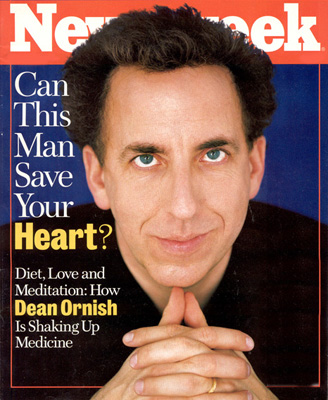
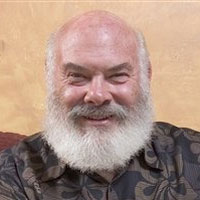



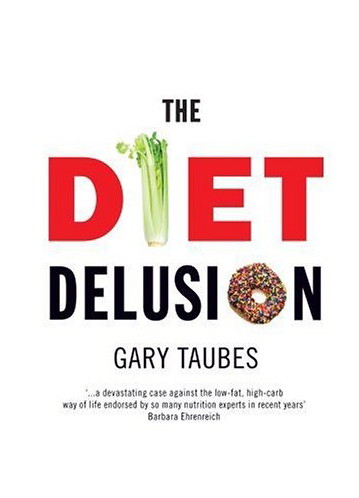
 . If the subtitle looks familiar, it should! It's the EXACT SAME SUBTITLE as Good Calories, Bad Calories because this is the EXACT SAME BOOK--it's the UK version set to release on January 17, 2008. The book is 640 pages long (not 448 as Amazon shows) and will be released by Vermilion, a division of Random House--who published the American version of the book. If you're still confused, just remember this--IT'S THE SAME BOOK! End of story. :)
