The New England Journal Of Medicine is highly prestigious
While I was away on vacation in Florida seeing my brother recently, a well-publicized weight loss study comparing a low-carbohydrate, Mediterranean, and low-fat diet was released and published in the July 17, 2008 issue of The New England Journal Of Medicine. All the headlines were screaming how the Atkins diet is best and livin' la vida low-carb is champion of them all. It was in virtually every newspaper (including this Wall Street Journal story I was quoted in), local and national television news outlet, and all the health and weight loss blogs--A BIG STORY!
And because it put low-carb living in such a positive light as compared with the low-fat diet or the much-beloved Mediterranean diet, you would think I'd be a happy camper touting this study as the best thing to happen for low-carb in a long while. But as I stated after this other highly-publicized study out of Stanford published in Journal of the American Medical Association last March, I can't get too thrilled about yet another study that shows such insignificant weight loss on a low-carb diet after two years and doesn't really require the participants to adhere closely to anything resembling the Atkins weight loss diet. This puts me in the minority I'm sure, but I have to say this is one big reason why I was disappointed with the New England Journal study.
For those of you who missed this study, lead researcher Iris Shai, R.D., Ph.D. from the S. Daniel Abraham International Center for Health and Nutrition in Israel, put 322 "moderately obese subjects" on one of three specific diets for a two-year observation:
- LOW-CARB--Two months of 20g daily and slowly increase to 120g maximum for the duration of the study. Calorie-restriction was not required for this group. - MEDITERRANEAN--Calorie restriction of 1500 daily for females, 1800 daily for males consuming a diet with 35 percent fat from olive oil and nuts while consuming fish and poultry in place of higher-fat cuts of meat like pork and beef. - LOW-FAT--Calorie restriction of 1500 daily for females, 1800 daily for males consuming a diet with 30 percent of calories from fat as recommended by the American Heart Association (AHA)
Before I share the results, I have some comments. While 20g carbs is indeed the Induction phase of the Atkins diet, 120g is nowhere close to ANY phase of the Atkins diet. EVER! Why do they put people on a low-carb diet and then let 'em go to town eating carbs later? What's so freakin' hard about requiring them to stay at or under 50g a day? I just don't get that with these studies. I do like the fact there were no constraints on calories with the low-carb group and they just naturally kept their calories in check eating this way.
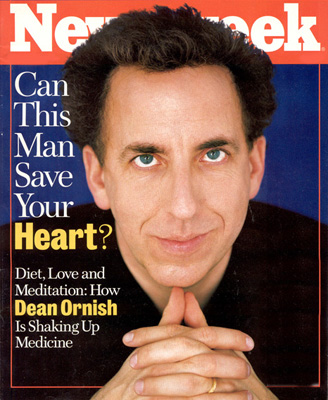
The Mediterranean diet group looked fine, but I was surprised to see the low-fat diet group to include so much fat. While the AHA may consider a 30 percent fat diet to be low (and it is relatively speaking), it doesn't come anywhere near the kind of low-fat diet that the infamous Dr. Dean Ornish said in my first interview with him suggesting obese and unhealthy people go on to lower their weight and improve their health. His plan is a 10 percent fat diet with upwards of 70-80 percent carbohydrates. That's not what they did with this study which is too bad since it supposedly shows the difference between low-fat and low-carb. We'll have more from Ornish is a moment.
First, let's take a look at the results of this less-than-spectacular study:
The LOW-CARB group lost the most amount of weight with 12.1 pounds followed by the MEDITERRANEAN group who lost 10.1 pounds and bringing up the tail was the LOW-FAT group who only shed 7.3 pounds (confirming the results of this long-term large study that found weight loss was insignificant on a reduced-fat diet). The researchers also observed what happened to HDL and triglycerides on these various nutritional approaches and the results were not at all shocking to those of us paying attention to our health--LOW-CARB saw a greater INCREASE in their HDL "good" cholesterol and a more significant DECREASE in their dangerous triglyceride levels making their ratio of HDL/total cholesterol much better than the other groups. Additionally, the A1C levels, an important marker in blood sugar health, as well as their C-reactive protein levels, a marker look at dangerous inflammation, both improved more with the LOW-CARB group.
Pretty good news, right? Well, it depends on who you ask. Let's see what Dr. Ornish thought about this study in this op-ed piece published in Newsweek magazine. It appears he had an issue with several things that may or may not have validity:
1. The study was funded by The Atkins Foundation, a non-profit organization led by Veronica Atkins that has donated millions of dollars to various researchers looking into low-carb diets and their effect on weight and health carrying on the legacy of the late great Dr. Robert C. Atkins.
This shouldn't disqualify the study altogether, but Ornish seems to think it does. So, are we to negate all the research conducted by you and your group on low-fat diets using the same logic, Dr. Ornish? You're better than this.
2. The LOW-FAT participants didn't eat a "low-fat" diet.
I agree, Dr. Ornish. But neither did the LOW-CARB group eat a genuinely "low-carb" diet beyond the first couple of months of the study. If we are ever gonna see a real comparison of low-fat and low-carb diets going head-to-head, then mandatory compliance is gonna have to be implemented. That's the only way to keep advocates on both sides from whining about the diet not being the actual diet every time one of these comparison studies is released.
3. The study is questionable because of calories difference.
Dr. Ornish claims the study lacks "quality" because the LOW-FAT group ate less calories but lost less weight. He says this calls into question the veracity of the data because it is "physiologically impossible" to eat less calories and lose less weight than the other groups. Ornish believes in the mistaken notion of calories in, calories out, so this is not surprising. How about that metabolic advantage at work? :D
4. The Atkins diet group ate "vegetarian sources of fat and protein" which isn't the Atkins diet with all the bacon and beef you can eat.
I'll agree that vegetarian fats and proteins are not preferred over animal fats on the Atkins diet, it's ludicrous to continue stating that the Atkins diet by the book doesn't include veggies. Anyone who has read the book and doesn't have an agenda like Dr. Ornish knows that you get two cups of green leafy veggies as well as one cup of non-starchy vegetables per day on the most restrictive Induction phase of the Atkins diet. Hello?! You make yourself look idiotic when you keep repeating the same lie over and over again, Dr. Ornish.
As for the actual sources of fat and protein in the LOW-CARB group, low-carb researcher Dr. Eric Westman from Duke University asked Dr. Shai to clarify what kind of foods were eaten by members of the low carb group. The notion that the researchers pushed a "vegetarian low-carb diet" on the participants is NOT what was done.
Here was Dr. Shai's response to Dr. Westman's inquiry:
This is kind of funny that some could think of a "vegetarian low-carb" diet. Is it a new suggested strategy? Could be interesting idea but this wasn't the case here. Our low-carb diet was based on Atkins, the participants read the book and the recipes were more or less comparable to what you know in the states.
Beef is the main red meat. What could be different? People here (in Israel) would not mix in the same meal meat and butter, a salad is considered a very rich one and not a lettuce based, and the main dressing is olive oil. As for beverages, same industry that makes money everywhere.
For example, a plate could include: fish or fried/not bread coated chicken/or red meet, broccoli and mushrooms coated with eggs, roasted eggplants, vegetable salad (peppers, cucumber, green leaves, not lettuce) with olive oil dressing. I understand that some of the low-fat people find it hard to believe that such a low-carb diet was tremendously favorable within 2 years in a well designed study, but these are the facts and the science of tomorrow, with the next long-term studies in the pipeline, may confirm or not these findings.
So, as you can see, the LOW-CARB did indeed follow more of an Atkins diet approach in terms of the specific foods they ate, not the mocking of a "vegetarian low-carb diet" as Dr. Ornish made fun of in his op-ed column.
5. HDL is only a risk factor among many to be looked at.
Oh, how convenient for you, Dr. Ornish. Yes, we know all about your "garbage trucks" analogy for HDL stating that you need more of them when you have more "junk" (LDL) to be removed. But the fact is eating a high-carb diet as Ornish suggests leads to LOWER HDL and HIGHER triglycerides, neither of which is healthy by any stretch of the imagination. And the very latest researcher is showing us that LDL and total cholesterol are not nearly as important as the HDL/triglycerides ratio that is becoming the new standard bearer for heart health. Dr. Ornish may dismiss these improvements with HDL and triglycerides by the LOW-CARB group as insignificant, but we know better.
At the end of his op-ed trying to dismiss this study as irrelevant in the grand scheme of things, Dr. Ornish states that it's time to "call a truce in the diet wars." That's something I've tried to do before noting all the areas of agreement between low-fat and low-carb, but the fact does remain we don't all agree on what is healthy, Dr. Ornish. To state so bluntly that "an optimal diet is one that is low in fat" shows just how entrenched you remain in your ideology without looking at the latest data (and I'm sure you STILL haven't read Gary Taubes' Good Calories, Bad Calories because you're afraid to have your lifelong beliefs about health challenged with evidential facts!).
Okay, enough about what Ornish thinks of this study. Let's see what some other prominent and REAL health experts think about the New England Journal study:
"Call me crazy, but I can't help wondering if the low-carb group would had lost even more weight if they had eaten less than the 120 grams of carbs these folks ate, all the while keeping calories at a moderate, reduced amount and incorporating other lifestyle changes like exercise and stress reduction. Can you imagine? A more reasonable level of under 100 grams a day (or even less) might have made a lot of difference--that's a level that seems to work the best for people who have problems with sugar, insulin and carbohydrates in general."
"This study adds to the body of evidence that suggests that lower carb and carb-controlled eating has distinct merit and generally has the capacity to out-perform low-fat diets in the weight-loss stakes (and without any conscious restriction of food intake, either). The results of this study suggest that such a diet may be superior in terms of cardiovascular disease risk too."
DR. RICHARD FEINMAN
"The major significance of the NEJM paper is that it is confirmatory of much work that has gone before. It is really not, as portrayed in the media, revolutionary. Much prior work from the laboratories of Jeff Volek, Eric Westman, Steve Phinney, Jay Wortman, Mary Gannon and Frank Nuttal and others has shown that carbohydrates, beyond simple calories, have a role in controlling how fats are used or stored. Directly or indirectly through insulin, carbohydrates encourage the storage rather than burning of fat and lead to the organization of fat into the cholesterol-containing particles that have been associated with cardiovascular disease. At the same time, the NEJM paper also confirms the evolving picture of fat as playing a passive role and emphasizes that what was once thought to be an intuitive benefit for lowering fat has consistently not panned out. The new article is a key block in a scientific structure that has been put together by many previous investigators. If the NEJM paper finally catalyzes some recognition of the scientific principles of carbohydrate restriction it will be a very important contribution."
"For years, carbohydrate restriction and the low-carb folks, those of us who really spent our lives telling patients they could regain metabolic control and kind of being ostracized for it, we’re finally validated."
DR. JEFF VOLEK
"The findings from the recent NEJM study that showed a diet lower in carbohydrate outperformed a low fat diet confirms our previous work and that of many others. It is unique in that the intervention was 2 years and yet there was a very low subject attrition rate over such a long period of time. The low carbohydrate diet was only moderately restricted in carbohydrates (about 40% of calories). Based on our research, had the level of carbohydrate restriction been in the 10-15% range, the results would have been even more impressive. The results add to a growing body of work supporting the value of restricting carbohydrate as opposed to fat for superior weight management and metabolic health."
"These latest trials just happen to be the best data we have on the long-term effects of saturated fat in the diet, and the best data we have says that more saturated fat is better than less. It may be true that if we lowered saturated fat further — say to 7 % of all calories as the American Heart Association is now recommending — or total fat down to 10 percent, as Dean Ornish argues, or raised saturated fat to 20 percent of calories, as Keys did, that we’d see a different result, but that’s just another hypothesis. The trials haven’t been done to test it. It’s also hard to imagine why a small decrease in saturated fat would be deleterious, but a larger decrease would be beneficial.
It’s also true that I don’t think that LDL is a particularly meaningful predictor of heart disease risk, and I think total cholesterol is meaningless (based on the evidence that I recount in the book). But the point is that the AHA and the National Cholesterol Education Program and the authorities at the National Heart, Lung and Blood Institute do think LDL is meaningful, and that’s the basis by which they have always recommended low-saturated-fat diets. They also think that total cholesterol/HDL is the single best predictor of heart disease risk, so by their assessment, more saturated fat is better than less. I think the best predictors of risk regarding cholesterol profiles are HDL and the size and density of the LDL particles themselves, and maybe measurements of a protein known as ApoB (the protein component of the LDL particle itself) — and the existing diet trials in those cases also suggest that saturated fats are at worst harmless and perhaps even beneficial.
Last point, the funding. It’s true that the study was financed by the Atkins Foundation, but to assume that the researchers went out and falsified their findings or twisted their observations to satisfy the source of funding is naive. Regrettably, the only institutions that will finance clinical trials, for the most part, are those that stand to gain from the results. That’s why the pharmaceutical industry finances drug trials. It would be nice if the government financed all these trials, but they don’t. So it’s up to the Atkins Foundation and any other organizations that might hold similar beliefs. In this case, the Atkins-funded diet trial observed the exact same results as similar NIH-funded diet trials."
Incidentally, Taubes says the National Institutes of Health (NIH) has spent $5 million for a large (300+ subjects, two-year-long) Atkins vs. AHA low-fat diet trial--the REAL THING! This is a larger and longer version of a pilot trial that observed results similar to the Israeli trial. This is the largest diet/weight loss trial the NIH has ever funded. The principal investigator is Gary Foster of Temple University, currently the president of the Obesity Society. In February 2007, Dr. Foster told Taubes the researchers had "completed the final 2 year assessments on most but not all" of their subjects. Currently the paper is "in the peer review process" and that's all we know at this point. Cross your fingers that this is the great elusive study that actually looks at low-carb vs. low-fat once and for all.
Coming as a shock to nobody, the AHA weighed in on this study expressing their concerns over the long-term weight and health impact of low-carb diets and saturated fat consumption and the lack of application to women since the majority of the study participants were men. Yadda yadda yadda...what do you expect from a group pushing two cartoon characters known as "The Bad Fat Brothers" named "Sat" and "Trans?" These people lost all dignity a long time ago.
I have long held the position that if low-carb is at least as effective as low-fat for weight loss and health, then both should be recommended alongside one another as healthy options for people to choose from. The American Diabetes Association recognized low-carb diets to diabetics for the first time beginning in January 2008 and the AHA, AMA, and other health groups should follow suit. The evidence is there if you'll simply open your eyes to it. We don't need another study, flawed or otherwise, to tell us that one way of eating that is working for so many people is livin' la vida low-carb. GIVE PEOPLE THE TRUTH and then let them choose. It's that easy.
Although I'm not particularly overjoyed by this latest study out of Israel, that doesn't mean I don't appreciate the way it helped carry on the conversation about low-carb living across mainstream America. My stepdad Frank, who only recently started on the Atkins diet to lose about 50 pounds along with my mother, was all excited when he saw the television news coverage about this study a couple of weeks back. If this excites people and gets them interested in learning more about the healthy low-carb lifestyle, then that's awesome! I can't wait to see that new NIH study Taubes was talking about, though. That one looks like the REAL DEAL.
You can e-mail Dr. Iris Shai about this study at irish@bgu.ac.il.
Charles Washington makes a compelling argument for zero carbs
Oftentimes people who are unfamiliar with livin' la vida low-carb mistakenly describe it as a "zero-carb diet." Anyone who has ever read Protein Power, Dr. Atkins' New Diet Revolution, or any of the other respectable books about low-carb dieting knows that NONE of them advocate NO carbs. Not a single one. It just doesn't exist despite that pervading stereotypical view of what this way of eating is all about. But today's guest not only eating zero carbs, but he is also an active athlete running in half marathons.
In Episode 162 of "The Livin' La Vida Low-Carb Show with Jimmy Moore," we hear from Charles Washington, one of my moderators at the "Livin' La Vida Low-Carb Discussion" forum, and he's proudly zero-carbing and loving it. After following the low-fat diet dutifully and losing a good amount of weight on it, Charles gained it all back when he started lifting weights. That's what drove him to learn more about low-carb nutrition, led him to my blog, and put him on a learning path that has him doing what he is doing today.
Click on the "LISTEN NOW" link below or download it to your iPod to hear Episode 162:
"The Livin' La Vida Low-Carb Show with Jimmy Moore" Episode 162 [31:10m]: LISTEN NOW | Download
There's one thing about Charles Washington that you cannot deny--he backs up everything he says with the facts from researchers, authors, and people who survived and thrived on basically a zero-carb diet. For someone who has not been trained in medicine or nutrition, he articulates his point of view clearly and logically. That can be difficult to pull off when you are suggesting something like eating only meat for your diet, but Charles does it.
He's been sharing his views on the zero-carb path at my forum with quite a response--it's the #1 most-read thread at "Livin' La Vida Low-Carb Discussion!" Today's podcast is the first time many people will hear Charles talking about eating this way, why he chose zero-carb over low-carb, how Gary Taubes' book Good Calories, Bad Calories changed his life, what he does to prepare for a half-marathon eating no carbs, his response to Dr. Mike Eades' recent blog post stating that calories count on a low-carb diet, and so much more! I've been dying to share this interview with you and now it's here.
Hear all kinds of perspectives on low-carb living anytime by:
What's your impression of Charles Washington and his zero-carb diet? Were you persuaded that perhaps eating no carbohydrates is possibly a healthy way not just to live, but also a preferred method for runners and athletes looking for maximum performance? Tell us about what you think in the show notes section of Episode 162. Read more from Charles Washington by visiting LivinLowCarbDiscussion.com.
Coming up on Thursday's podcast--another one of my moderators at my forum named Christin Sherburne. This former cover girl in Woman's World magazine last year is one of the central characters in the continuing Kimkins diet scam saga and she wanted to provide an update about what is happening with the continuing lawsuit against Kimkins founder Heidi Diaz. You'll enjoy hearing from Christin pouring out her heart and soul about how this entire experience has changed her life.
More Incredible Feel Good Success Stories About Healthy Low-Carb Living
Wanna be a low-carb success? Read about other successes!
Success always begets success begets success.
Just in case you haven't noticed it before, I like to encourage people. It's always been in my nature to pass on positive thoughts to those who need an uplifting word to get them through a difficult time. I'm a "can-do" kinda guy and want others to be able to experience all the best that life has to offer them. For all intents and purposes in my mind, it's the way things are meant to be.
That's why I LOVE hearing from people who have been able to accomplish incredible things with their health while livin' la vida low-carb. And that's not by accident either. This way of eating, whether the media and those so-called "experts" ever want to admit it or not, is an incredibly amazing and simple way to bring about massive improvements in not just your weight but your health, too.
I've blogged about so many ways your health is supercharged with low-carb living, but let's just take a look at a few right now, shall we?
When you start eating low-carb:
- Weight loss commences without counting calories - Triglycerides drop below 100 very easily and quickly - Blood sugars stabilize - HDL "good" cholesterol rises above 50 - Sensitivity to insulin is improved - Blood pressure decreases - Insulin levels in the body are reduced - Muscle mass is preserved - Epilepsy is virtually cured - Cancer is not allowed to spread and grow - Concentration and clarity of thought emerges - Energy like you haven't seen before - More sound sleep - A positive mood and attitude - NO HUNGER!!! - Beaming confidence about yourself - Incredible fat loss
I could go on and on and on, but I've blogged about these and so many other ways your health gets better and better as a result of livin' la vida low-carb. Today, I wanted to share some more incredible feel good success stories about healthy low-carb living from some of your fellow readers who were inspired to tells their great news to me.
After sharing about my wife Christine's 55% drop in her triglycerides in just six weeks and my own incredible lipid profile numbers, the floodgates opened up and you couldn't help but express how much the low-carb lifestyle has and is STILL changing your life for the better. Be encouraged as you read these remarkable changes that have happened without the use of any prescription medications or other medicinal interventions.
Just diet, baby--a low-carb one, that is! ENJOY! :D
Hey Jimmy,
I left the American Heart Association diet to eat only meat, fish, eggs, butter and vegetables. No grains, sugar, fruit or starchy veggies of any kind. My blood pressure went down from 141/90 average to 116/65 average also was able to stop all my BP meds. Total cholesterol went from 241 down to 180 and HDL went from 43 to 62. Was able to stop taking Lipitor. Sorry but Atkins was more or less right. I no longer buy the no-fat nonsense.
YOU GO BOY! Your health improvements are indeed SPECTACULAR!!!
Jimmy,
Thank you so much for your support in my new way of eating. I read and listen to you almost every day. I read your blog about your blood sugar woes with great interest. I have been Livin' La Vida Low Carb for about 6 months only for blood sugar issues. I have had high fasting blood sugar for over 20 years. It has never progressed to anything beyond that and all other tests are normal.
I lost 30 pounds 2 years ago through sheer willpower and my fasting blood sugar did not improve. I have low trigylcerides and high HDL, and my BMI is 21. My only issue is the fasting number. My post meal numbers seem normal. I am so lost and I can't seem to get these numbers down. I am lucky my new physician has agreed that 30 carbs is a good daily max. Is there anyone out there can help me understand why nothing is helping these morning numbers!! Maybe I need to eat more fat and less protein.
I did read about a form of diabetes called mature onset diabetes of the young (MODY) where the only problem is fasting blood glucose and it never progresses to anything beyond that if carbs are controlled. I didn't start controlling my carbs at all until about a year ago and then really got serious about 6 months ago.
Can you point me to any good information about this?
It certainly sounds like you're on the right path, so don't give up hope. If you missed my podcast interview with Dr. Keith Berkowitz from last week, then you really should check it out because he may have some information that could help you. I'll be following up with him in another podcast soon, so let me know if you have any specific questions you'd like for me to ask Dr. Berkowitz. You're doing GREAT!
Hi Jimmy,
I found your podcasts today as I embark again on my low-carb "adventure." I have spent most of the evening listening, watching your YouTube videos and reading your blog and it's been a great inspiration.
I too was an Atkins follower back in 2003 and shed about 30 pounds to hit my goal weight and it was great. But things change and I left the low-carb way and I have paid for it. Still here we go again and I'm truly excited and will continue to listen and watch and read you as my body flips back (hopefully!) into the low-carb lifestyle!
Thanks very much and I hope your battle with the 30 pounds is not dragging you down too much. I am sure you will crack it!
THANK YOU so much and welcome back to livin' la vida low-carb. I urge you to make this your permanent lifestyle change and never let life get in the way again. Low-carb eating is HEALTHY eating, so there's no sense in ever eating any other way again, right? As for my recent weight woes, I'm not discouraged. Even if for some reason these 30 pounds refuse to budge, I KNOW without a shadow of a doubt that I'm healthier than I'd EVER be eating any other way. The good news is I feel better now at the age of 36 than I have in my entire life. How many people can say that? :)
Hi Jimmy:
It's your fellow low-carb buddy here. I have been following your info about Christine's triglycerides on the blog and I just had to share some related news of my own that I got last week!
I got my first ever cholesterol test done since I've been low-carbing now for about 8 months, and let me tell you it was SOOOO VALIDATING!!!
Here are my numbers:
Total Cholesterol: 197 HDL: 64 LDL: 120 Triglycerides: 61
What I find absolutely fascinating about these numbers is when you compare them to my last test in 2004 when I was in the middle of doing Weight Watchers to lose the last of my pregnancy weight. I have the food journals I kept during that 30-pound weight loss and it was soooo carb heavy (it's amazing I even lost weight). I was also exercising 1 hour a day during that time. So here's what the numbers were:
Total Cholesterol: 210 HDL: 72 LDL: 100 Triglycerides: 188!!!!
When I compared the two triglyceride numbers (61 now on low-carb, 188 then on high-carb, low-fat) I just about fainted. Totally amazing. So I wanted to add my story as more proof that consuming massive quantities of fat-laden foods does not kill you, it makes you healthier--AS LONG AS YOU KEEP YOUR CARBS LOW!!!
Oh, I had such a great time this weekend showing this to all my friends who are FREAKING out because I eat whole milk, butter and steak. It was great. I hope Christine continues to see her levels stay healthy.
The only question I have is: Can you have triglyceride levels that are too low? Any danger in that one? I hope not, cause I'm sure proud right now. Keep up the good work!!!
WOWSERS! I love the enthusiastic response you have for livin' la vida low-carb and can only tell you to keep doing what you're doing. The difference between your low-fat triglyceride numbers and your low-carb ones is astonishing. Not surprising, though, since you eat so many carbohydrates on a low-fat diet. We should pay more attention to triglycerides when we talk about heart health, but doctors usually only give it a cursory glance compared to the LDL and total cholesterol which is their be-all, end-all for determining your cardiovascular risk. Puhleez! Give me low-carb any day of the week. And I wouldn't worry about "too low" triglycerides. Mine were once as low as 43, but when they're below 100 it shows you are indeed doing low-carb the right way. YOU GO GIRL with your bad self!!! :D
Changing the world one dietician at a time!
In all seriousness though, think about what keeps people from doing low-carb in the U.S., which we know works for the vast majority of people, for weight loss and so many other levels. I've thought about this in my own efforts to help those in my own small circle that have asked for advice in achieving some of the success that I've enjoyed with low-carb. Even with the proof of a real human being standing in from of them, it's can be difficult for people to convince themselves that it's worth a try. It's not lack of knowledge, because the research has been done. It's not poverty or lack of access to the right foods. It's what I would call the "social" factors.
I stole this term from the computer world where they refer to computer hackers (sorry to have to use the "h" word) doing "social" hacking, as opposed to "technical" hacking. That is, taking the route of sweet talking or deceiving people into giving up their passwords, as opposed to using some program to guess the password, which is a lot more difficult. The white hat guys that focus their efforts on preventing the "social" hacking, by convincing users to create tough passwords and guard their information, are doing a lot more good, just in terms of sheer scale of hacking prevented, than the guys focused on the technical approach like installing better firewalls.
I make the analogy to what you are doing with helping people get past the barriers to starting low-carb. They're not technical barriers. Rather, it almost takes a rebel these days to do low-carb in the face of official opposition, in spite of the well-documented benefits and logical physiological underpinnings. Most doctors don't advocate it or they even discourage it. The USDA, ADA (OK, a glimmer of hope there), AHA, Ornish, Oz, and other high profile entities actively discourage it. If people can get past these "barriers to entry," then they will, in all likelihood, be successful.
Jimmy, you are helping to break down these barriers and in effect giving people permission to do low-carb without thinking that they will drop of a heart attack after 6 months from the fat intake. In so doing, you're doing more good to address the biggest health issue in the U.S. (and much of the world) today--the obesity and diabetes epidemics--than probably hundreds of doctors do in their lifetimes.
It's not that the technical medical advocates aren't important, but I don't think they have the potential for the scale of impact. You're doing it with ideas, and by making the ideas accessible to millions through the Internet. Let's review that again, because I really mean it, and I get the feeling you may be too humble to have digested it the first time--doing more to help more people than hundreds of doctors do in their lifetimes!
We can only imagine how many more husbands, wives, brothers, sisters, children, and grandchildren would have many more quality years with their loved ones if the professionals and professional organizations were to actually SUPPORT the low-carb approach. And I know you're working on them too! I think that day will come in our lifetimes.
OK, that turned into a long speech. But I've been thinking about these matters a lot since I got past the anger I felt initially after educating myself with information from books like Good Calories, Bad Calories. BTW, I'll be listening to more of your podcasts right after I'm finished writing this.
So, keep up the good work. Hopefully I'll get to go on one of your cruises eventually, but unfortunately I won't be able to make it this year. Phenomenal line-up you've got though, and very reasonably priced as well. Enjoy it.
What can I say to something like that? THANK YOU! I never realized when I decided to start blogging about my experiences on the low-carb lifestyle that my writings and other projects would reach so many people. All I wanted to do was have an outlet for sharing my experiences with this way of eating to show others there is an alternative to the failed low-fat diets that have been shoved down our throats for decades. It is humbling for me to think about the over three million people who have graced my blog over the past three years. I hope to keep this going for as long as the fire is inside of me to write passionately about the transforming power of low-carb living. Right now, that looks like it's gonna be FOREVER! :D THANKS for your support!
Jimmy,
I love your web site and appreciate very much what you are doing. I am just dropping a line to let you know I am a devout follower of yours and am better physically and mentally for it. Please never quit what you're doing for us low-carbers out here. Your impact is tremendous.
I have posted my story along the way on the Active Low-Carber forum. I was chronically obese, adult onset, for over 10 years. I tried dieting with Weight Watchers and on my own versions of a low-fat plan. But it never worked. I had to do something because I was definitely starting to see physical problems compiling.
My family physician--mum on diet plans--suggested I see a psychologist about my weight problem and he has been great. The first visit he had me get a copy of Protein Power. Since that January 2007 visit to him I have lost 125 pounds and counting (330/205/185). My life has improved so much.
I soak in all of your postings, all of the Drs. Eades postings, everything Gary Taubes writes, and whatever else I can find. I feel like I really understand my body now and can keep my weight stabilized without much effort. I have people all the time asking me how I've done it. I say low-carb. Most tell me they could never do it. I say I could no longer eat the way they are now because it was killing me. Anyway, thank you so much again.
Now that's interesting. Your doctor was clueless about what other diet options were out there to put you on, but he recommended a psychologist who said you should try livin' la vida low-carb. HA! That's hilarious. So a mental health doctor is better equipped to help you with your physical health than your own general practitioner?! Unbelievable! Maybe that's why people are losing faith in the medical profession and turning to alternative health sources like psychologists, chiropractors, and even online bloggers like me to give them truth that can help them truly change their lives. Your story is remarkable and probably more indicative of what is actually happening right now in our society. Physicians have let us down, so now we must take back control of our own health.
Hi Jimmy,
Thank you for the wonderful insights and speakers you provide on your blog. I just got through listening to the Berkley talk given by Gary Taubes. Actually, I found you because of him. My sister, who is a writer, is friends with him and told me about his work.
I have really enjoyed your blog and have been living low-carb for a little over a month now. Wow! What a difference! I am so happy that there is somewhere to go that provides insight, cooking tips, and general positive messages.
My husband and I are both eating this way and it has truly opened up an exciting new world. I can't shut up about it and am even chronicling my journey in a book that I am writing. I would love to send it to you when I am finished. This change has been a long time coming, but with all the information out there and my deep desire to make life better, it is a snap judgment. There is no return and that's a good thing.
I love that I have taken away my mode of coping with discomfort (food, sugar, sugar, and lots of carbs) and left myself no other option but to find real solutions. My husband and I both enjoy all the information and tips. (I tell him everything I learn.)
Thanks again and congratulations on Christine's triglycerides.
AWESOME! I look forward to reading that book when the story is completed. :)
Hi Jimmy,
The blogging world sure does take a while to get used to. I have a large number of blogging friends on MySpace and we all blog about weight loss and try and support each other. I am the only one that is living low-carb and I have a few blogging friends who don't like it when I post about low-carb.
One of them posted a blog today called "The Risks of Low Carb." It shocked me since I support all of their different lifestyles and have never posted anything bad about their diets. I was even more shocked when I read what it said. Anyway, to make a long story short I just told her that my lab work shows I am living a healthy lifestyle.
I believe it's healthier to eat a diet that allows me not to have to take my medications rather than eating carbs and have to be on medications all the time to stop the side effects carbs have on my body. It just made me feel so sad for her. She has diabetes and PCOS and I know this lifestyle is what she needs so badly.
What a witness you are for this way of eating and I admire you for standing up for the convictions of your heart about this. I've never understood the abject animosity people have for those of us who are livin' la vida low-carb. Here we are with a diet full of healthy and (GASP!) delicious whole foods like eggs, meats, butter, cream, cheese, nuts, etc. and all they can do is poo-poo it? If somebody wants to eat a low-fat diet, then knock yourself out. You won't find me criticizing you for doing so and I expect the same consideration about the way I eat, too. Remain firm in what you know is right for you and never let anyone convince you otherwise. WAY TO GO!!!
Dear Mr. Moore,
I was on the net today looking for info on Gary Taubes and his new book. I read about him in a magazine and am in absolutely in agreement with his science. The reason why I agree with him is this--I am a 60-year old woman who, when I was 22 or 23, read an article in Time magazine that dispelled the myth of eggs raising the level of cholesterol. At that time, folks were all talking about cholesterol.
A survey for cholesterol was done by some company in America, in which they took a few hundred people and put them on an egg diet. Some folks had one egg a day and the another lot had two, another three and so on up to some having 5 eggs a day. At the end of the survey which I think was done over a year, the amount of cholesterol level that the folks who had 5 eggs a day had risen minimally! There were figures and other proofs but I can't remember them, it was all so long ago.
I was particularly interested in the Time magazine article because my family had a cholesterol problem so it seems with my granddad and my father dying from heart attacks. Anyway I decided at that vain age of 23 that I would go on an egg diet in spite of the family's history and lost several pounds feeling healthier and happier.
Recently, in spite of the Atkins diet being vilified, and me being 28 pounds overweight, after having tried several diets, I reverted to the egg diet and lost those all those pounds within 3 weeks. A month has gone by and now and because of my age, I almost live on eggs and am healthy strong and still enjoying my nursing career. If you know Gary Taubes email please send him a copy of my email to him. I'm sure he would be really happy to hear about the Time magazine survey of so long ago. Maybe he could pull it out of the archives and say, "There you are, I told you so."
LOL! That's GREAT! You sure are a fireball and I like it. I hope to have at least that much energy and vibrancy when I reach 60 in another quarter century. :) It truly is amazing that low-carb is so well-documented throughout scientific history with studies just like the egg one you noted and yet all we hear about is how Atkins low-carb is just a "fad" that is "dangerous" to your health. Oh really? If it's that bad, then why has it continued to stick around for 150 years if you go all the way back to William Banting's day? Wouldn't we be seeing massive sickness and death of Biblical proportions if low-carb was truly as bad as it has been made out to be? Me thinks these nincompoops protesteth too much! THANKS for your note and I did forward it to Gary Taubes who expressed his sincerest appreciation.
I saw the doctor today and I have GREAT NEWS. Everything went great at my check up!! I got on the scale and it said 266!!!! He looked back in my chart to see my starting weight from when he put me on his low-carb diet and was shocked to see how much weight I had lost!!! 59 pounds to his charts!!! Woohoo!! Woohoo!! Woohooo!!
He is keeping me at 500 mg of Metformin but I don't have to take any others meds!!!! He is a small town doctor here where we live and he told me that in his 30 years of practice he has never had a diabetic patient do so well and change their health around the way I have!!! Another Woohoo!!! He said he wished he could have his other patients follow me around so I could teach them how to do it!!!! LOL! He made my day! I also told him about your blog and he said he was going to look it up!
WOO HOO is right! This is the kind of story that needs to get out there to other doctors who are struggling with knowing what to do for their diabetic patients who keep getting WORSE on their recommended low-fat, low-cholesterol, high-carb diet. Put 'em on low-carb and watch how better they get almost instantaneously. This is what low-carb practitioners like Dr. Mary C. Vernon, Dr. Eric Westman, Dr. Jeffry Gerber, Dr. Keith Berkowitz, and so many more so in their practices on a daily basis. Changed lives because of livin' la vida low-carb. It's something EVERY doctor should know about and use for their patients who have not been successful on the more traditional treatment methods.
Dear Jimmy,
Last summer I was sent to a heart specialist who wanted to put me on statins for high cholesterol. I told him that I wanted to try diet and exercise. I followed a low-fat, high-carb diet dutifully for four months and lost 50 pounds. I was so excited to go in and get my cholesterol checked. I was stricken and dumbfounded when total cholesterol improved only marginally and HDL dropped and triglycerides rose.
It has taken since September 2007 for me to read and talk to enough people to finally get to the truth of the matter. I have been re-reading Atkins, Taubes, and other resources recently to figure this thing out. I have been following Atkins imperfectly for the past several months. I say imperfectly because following a non-traditional way of eating requires some very intense faith. My logic and emotions say that Atkins is great. My traditional Food Pyramid, clean your plate upbringing tells me to run to the nearest bag of carrots. With the help of the nurse today and my great HDL reading (85) and low triglycerides (78), the high-fat message has finally sunk in.
Total cholesterol 264 HDL 85 LDL 164 Triglycerides 78
All of those readings are better than my August test after two and a half months of the low-fat program, especially, the two most important indicators of heart health HDL and triglycerides. The nurse was definitely in agreement with a high-fat, low-carb diet. She told me she had been cautioned twice against this by her superiors and asked me not to mention our conversation to anyone. This is a big hospital with a huge pharmaceutical component.
Thanks so much for everything.
Now that's so scary! Here you have a nurse who "gets it" and has to engage in a covert low-carb mission to help patients like you get better. Why does a nurse who doesn't have nearly the amount of education and experience of a doctor (okay, maybe the experience, but not the book knowledge!) know more about healthy nutrition than a trained, professional doctor? What is WRONG with this picture? Frankly, I'm surprised they didn't give you a hard time about your LDL cholesterol being 164 and total cholesterol being 264. My own doctor freaked out with similar number and I haven't even shown him my recent 326 total cholesterol yet. He'd faint if he saw it! Keep fighting the good fight, my friend. You're doing super!
Do YOU have a story of low-carb success you'd like to share with me? I'd LOVE hearing from you, so don't be a stranger. Send me an e-mail with your fabulous low-carb results anytime at livinlowcarbman@charter.net. THANK YOU for being such a beacon of light in my life and giving me the motivation to keep doing what I'm doing for the sake of livin' la vida low-carb. The truth WILL prevail if we keep sharing it with a world full of people who feel so hopeless and helpless about what to do about their weight and health. God bless you guys!
Click on the "LISTEN NOW" link below or download it to your iPod to hear Episode 140:
"The Livin' La Vida Low-Carb Show with Jimmy Moore" Episode 140 [26:44m]: LISTEN NOW | Download
Gary Taubes continues his discussion of his book Good Calories, Bad Calories, including how much he initially hated that title for his book until his wife convinced him otherwise, the impact of carbohydrate calories on weight, the change of heart that Dr. Andrew Weil has had regarding low-carb, the theories espoused by low-fat diet guru Dr. Dean Ornish, and what can be done to influence the health authorities about the positive impact of low-carb living.
Check out interviews like this one with Gary Taubes by:
Now that the Taubes interview is completed, share what you thought about it in the show notes section of Episode 140. If you happened to miss any of my blog posts about Gary Taubes and Good Calories, Bad Calories, then you can see them all in one place by clicking here. You can also provide us with your audio feedback about this interview by calling (206) 202-6516. Special thanks to Gary Taubes for his generous donation of time at the ASBP/Nutrition & Metabolism conference in Phoenix, AZ last month.
Coming up next week, we'll shift gears a bit on Monday's podcast as Christine and I talk with a reproductive endocrinologist from the Institute For Progressive Medicine named Dr. Julie Kahn about the role of diet and fertility and then on Thursday's show I'll be speaking with Cracking The Metabolic Code author Dr. Jim LaValle. DON'T MISS IT!!!
Gary Taubes sat down with me in Phoenix, AZ to discuss low-carb
One of the most influential voices in the diet and health arena this decade isn't a doctor, researcher, clinician, dietitian, fitness buff, or any of the other so-called "experts" that we usually hear from as it relates to this subject. Nope, it's none of them and instead is, of all things, an American journalist named Gary Taubes. Unless you've been living under a rock for the past year, then you should be very well aware of Taubes and his bestselling book about the unique role of carbohydrates as the root cause for obesity and most diseases called Good Calories, Bad Calories which continues and expands upon the ideas he wrote about in his infamous 2002 New York Times op-ed piece "What If It's All Been A Big Fat Lie?"
Click on the "LISTEN NOW" link below or download it to your iPod to hear Episode 139:
"The Livin' La Vida Low-Carb Show with Jimmy Moore" Episode 139 [24:59m]: LISTEN NOW | Download
Gary Taubes has been traveling around the nation giving a rather succinct lecture on the basic tenets of what he wanted to convey with his book. If you haven't seen the lecture, then you really should check it out for yourself because it is well worth the 72-minute investment of your time to listen to what this man has to say. As he revealed in today's segment, Taubes hopes to convince his publisher to allow him to create a more user-friendly book out of that lecture for the sake of clarity and understandability by those of us who are not medically inclined (which was the primary audience of Good Calories Bad Calories).
Hear interviews from REAL experts like Gary Taubes whenever you'd like by:
So what do you think so far? Gary Taubes could literally talk on and on for hours about this subject which encompasses so much of his life right now and we need more people like him out there vocalizing what you and I have seen happen in our own lives since we started livin' la vida low-carb. This isn't some dangerous "fad" diet which we've been led to believe by the media and the "experts"--it's a life-changing event that could literally save the lives of millions more if it weren't so vilified. That's why Taubes wrote his book and is lecturing about this so fervently.
Talk about what you heard in Part 1 of the Taubes interview in the show notes section of Episode 139. If you happened to miss any of my blog posts about Gary Taubes and Good Calories, Bad Calories, then you can see them all in one place by clicking here. You can also provide us with your audio feedback about this interview by calling (206) 202-6516.
A special CONGRATULATIONS to Justin Wallraven, Maya, and Steve Whitley for being my three winners of the hit Canadian low-carb documentary called My Big Fat Diet. Last Monday I conducted a giveaway during Episode 137 by requesting a brief essay explaining how a high-fat, low-carb diet has transformed and changed your life forever. There were lots and lots of entries, so THANK YOU to everyone who tried to win. Keep listening for more chances to win FREE STUFF in the future. I appreciate your support! :)
This particular conference in Phoenix beginning on Tuesday is where all of the nation's top bariatrics physicians come together to talk about and exchange ideas about how to deal with the ever-increasing problem of obesity and to find out what is working and what is not. Yes, many bariatric physicians seem to get a bad rap for their seeming quick embracing of weight loss surgery, but a lot of the ones I interviewed for my podcast show last year looked at natural dietary ways of dealing with it first before even contemplating going under the knife with their patients. Most of these doctors are fully dedicated to helping their patients find the proven and effective plan that works best for them and they come to conferences like these to hear seminars from other experts in the field to learn how to be even better at what they do.
As an added bonus set of sessions presented by the Nutrition & Metabolism Society, the weekend part of the conference is almost entirely dedicated to the truth from the research community about saturated fat, carbohydrate restrictions, and heart disease. The very latest cutting edge evidence will be presented, including examining whether there is a real connection between saturated fat and heart disease, seeking to understand what role carbohydrates play in cardiovascular risks, and comparing whether carbohydrate restriction or saturated fat restriction is preferred when attempting to prevent and treat heart disease. What a fascinating set of topics that correlates perfectly with what I do here on a daily basis and one I will be taking copious notes, I can assure you.
The highlight of the conference taking place at the Pointe Hilton Squaw Peak Resort in Phoenix is hearing from bestselling author of Good Calories, Bad CaloriesGary Taubes as he presents two lectures--"The Real Cause Of Obesity" on Saturday and "History of Dietary Saturated Fat-Restriction Recommendations" on Sunday. I'll be right there listening in to what he has to say as well as conducting my own interview with Taubes who has generously agreed to appear on my podcast show, too. WOO HOO!
Other notables presenting information at this event who I am hoping to meet and interview while I am there include Dr. Eric Westman from Duke University, Dr. Richard Feinman from SUNY Downstate, Dr. Jeff Volek from the University of Connecticut, Dr. J. Bruce German and Dr. Steven Phinney (who I've been trying to interview for the past three years) from the University of California-Davis, Dr. Mary C. Vernon from the University of Kansas, Dr. Donald Layman from from The University of Illinois at Urbana-Champaign, and Dr. Jay Wortman who constructed the diet used by the First Nations people on the hit CBC-TV documentary "My Big Fat Diet."
It will be a true honor being in the midst of these true greats who are working tirelessly behind the scenes researching the validity of the low-carbohydrate dietary approach. I consider these men and women the REAL heroes of this way of eating because they have sometimes put their own personal careers and reputations on the line in an effort to share the truth that the data shows them about livin' la vida low-carb. We all owe them a great debt of gratitude for the work they are doing to educate the public about the healthy low-carb lifestyle.
I'm also excited about meeting some other wonderful people in the world of low-carb living who will be in attendance at this conference, including Protein Power authors Drs. Mike and Mary Dan Eades, Jackie Eberstein from Controlled Carbohydrate Nutrition (and who worked with Dr. Robert C. Atkins for three decades), University of Connecticut researcher Cassandra Forsythe, About.com Low-Carb Diets blogger Laura Dolson, Colette Heimowitz from Atkins Nutritionals, and many more! Christine and I can't wait to get on that plane on Thursday and spend a few days in the "valley of the sun" to get educated, encouraged and inspired anew about the healthy low-carb lifestyle. When I get back, hopefully I'll have TONS of podcasts, blog post ideas and even a YouTube video or two to share with you about this incredible conference.
If you have any questions you would like for me to ask any of the people I mentioned in this blog post during my interviews, then please e-mail those to me no later than Tuesday, April 8, 2008. I will do my best to ask the experts about what's on your mind and get the answer directly from the horse's mouth. :) THANKS for supporting the work I am doing here at the "Livin' La Vida Low-Carb" blog. I appreciate you guys!
By the way, if you live in the Phoenix, AZ area, then we'd love to meet you while we are there. E-mail me and maybe we can meet at the hotel to chat or have dinner with you. It would be such a privilege to come face-to-face with the people who enthusiastically support me in the work I am doing. THANK YOU!
Is Dean Ornish prepared to admit a high-fat, low-carb diet is healthy?
I have had ample opportunities to meet and interview some of the best and brightest minds in the world of diet and health over the past couple of years and I consider it a real privilege and an honor anytime I am afforded the chance to glean from the many years of knowledge and experience that these people possess. As a simple layperson without any medical or nutritional background or education, I am merely a student trying to learn everything he can in order to make informed decisions about what is right for me and my body.
You can read my blog interviews or listen to my podcast interviews which now total well over 100 to see and hear from these amazing people and the fine work they are doing to promote good health. I honestly believe that everyone who is involved in this industry is doing it for the right reasons in their heart of hearts even if they are misguided in some areas. It's okay to have disagreements as long as you don't become disagreeable in the process.
That's sorta what I wanted to talk about today because I received a rather terse e-mail response from noted low-fat diet guru Dr. Dean Ornish (who I have interviewed TWICE in the past two years) earlier this week that accused me of making him out to be a "straw man" with the same old "stereotypes" about him that have existed for decades as the face of the low-fat diet. You'll recall I recently interviewed Dr. Ornish for a four-part podcast about his new book entitled The Spectrum where he supposedly has shifted his dietary philosophy away from a strict low-fat diet into one that allows people to make choices along a spectrum of choices. It's a nice concept on paper and I certainly applauded him for moving away from his dogmatic belief that a low-fat, high-carb diet is the ONLY way to good health.
However, during our interview and while reading through The Spectrum, I couldn't help but notice that despite the grand plans of branching out and broadening his nutritional horizons, not much has changed about what Dr. Dean Ornish actually believes. Once you get into the meat (which, by the way, you can't have according to Dr. Ornish since it is in the "least healthy" Group 5 end of the spectrum) of what he writes, everything he considers "healthy" is merely a bunch of the same old high-carb, low-fat propaganda we've always heard from Dr. Ornish. I explained my concerns about this in great detail in a post-interview blog I wrote a couple of weeks ago.
While I was critical of Dr. Ornish in the blog post (and rightfully so), I still appreciated the open dialog that he invited to discuss and debate the ideas he presented in his book. I have nothing against him personally and he's been nothing but respectful to me in all of our conversations. We just disagree about what a healthy diet looks like a lot more than he wants to admit it. And deep down inside, he knows that.
While he says we all agree and believe many of the same things, I have yet to hear Dr. Dean Ornish confirm that a low-carb nutritional approach may be needed for some people. He's just never done it despite being given several opportunities by me to state it rather explicitly. And even I am the first to admit that low-carb is not necessarily right for everyone. That's why studies have shown you need to find the diet that's right for YOU and then DO IT and I believe that with every fiber of who I am! It simply amazes me that a world-famous diet doctor like Dean Ornish can't even acknowledge this basic truth about health.
After having such an extended interview in which I thought I was clarifying my position about carbs--including acknowledging that Robert Atkins was right about the unhealthful properties of refined carbohydrates but disagreeing that all carbs are bad and acknowledging that fat also plays an important role in health and illness, especially in weight control--that you continue to use me as a straw man.
In your latest email (referring to my blog post), you write, "This is the equivalent of low-fat diet guru Dr. Dean Ornish coming out and saying that the late great Dr. Robert C. Atkins was right and that there are some people who should be eating more fat and less carbohydrates if they need to manage their weight and health. Following my recent interview with Dr. Ornish, I sincerely doubt THAT will ever happen." But I say in my new book that there are many people who should be eating less refined carbohydrates--and more unrefined, high-fiber carbs, not necessarily more fat.
I had hoped that we could get past these stereotypes.
With best wishes,
Dean
As I sat there and read Dr. Ornish's e-mail, I pondered what he had to say. But I couldn't help but come back to the elementary questions that still linger in the back of my mind about what he thinks we all "agree" on when very clearly we have some major differences about livin' la vida low-carb that he continues to deny.
Here was my response:
Hello Dr. Ornish,
THANKS for your e-mail. With regard to your concerns about my latest blog column which discusses Dr. Andrew Weil agreeing that total carbohydrate restriction in conjunction with an increase in fat intake as outlined by Gary Taubes in GOOD CALORIES BAD CALORIES is indeed based on solid scientific evidence and experience, I don't see where we're in disagreement about this. We both agree that controlling at least some carbohydrate intake and consuming at least some fat is indeed a healthy way to keep your weight reduced and your health in order.
What we do disagree on is by how much.
I'm sorry if you feel my using you as an analogy of the magnitude of this change in perspective by Dr. Weil in favor of a more carbohydrate-restricted for weight and health management was inaccurate. But based on both what I read in your book THE SPECTRUM and heard directly from you during our 100-minute interview a few weeks back, I did not sense any agreement on your end that a moderate-to-high fat, controlled-carbohydrate ketogenic dietary approach as espoused by the late Dr. Robert C. Atkins and then brought back to the discussion by Gary Taubes is one you would even remotely consider recommending for anyone as part of your "spectrum" of choices since most of the foods that fall within this way of eating are in Group 5--what you consider the "least healthy" choices. Please tell me where I got it wrong, Dr. Ornish, because it looks like I've hit the nail on the head about what you believe based on what I've read and heard from you.
Based on that alone, it appears what I stated was not inaccurate at all. Please feel free to correct my misunderstanding if you would like because I'm sincerely interested in what you have to say about what you believe regarding a high-fat, low-carb diet. I'm happy to give you the opportunity to officially come out and state with great clarity that you believe a high-fat, low-carbohydrate diet is indeed an acceptable way for certain people to manage their weight and health.
I'd be delighted to share this great news with my enthusiastic readers that we all agree this particular nutritional approach is one you endorse just like Dr. Weil does now. Nothing would give me greater pleasure than to share that Dr. Dean Ornish agrees with so many of my readers that restricting carbohydrate intake and consuming fat can be a part of a healthy lifestyle. Keep in mind, this isn't a low-fat vs. low-carb issue either. It's simply about realizing and recognizing that there are certain ends of your "spectrum" which aren't as unhealthy as you claim. Despite that, though, we're absolutely all in agreement, right?
THANKS for sharing your concerns and I do hope to hear back from you soon with a crystal clear message of support for livin' la vida low-carb that I can share with my readers. Take care! :)
Jimmy Moore
It has been five days since I sent that e-mail to Dr. Ornish and he has yet to respond. I suppose we can deduct from his failure to provide an answer to my simple question about where he stands regarding a high-fat, low-carb diet for certain people that he still believes it is unhealthy. That's too bad since most of the health establishment is in major disagreement with him about his monopolistic low-fat, high-carb recommendations for everyone. Even Dr. Weil no longer believes that.
The floor is still open to you, Dr. Ornish. If you truly want to mend the fences you have destroyed by needlessly attacking the Atkins diet over the years, then here is the PERFECT chance for you to do it. Reach across the aisle to your low-carb counterparts and tell us where we have common ground with you since we all agree total carbohydrate restriction and increased fat intake is an essential to a healthy lifestyle. You wanted the opportunity and here it is.
How about it, Dr. Dean Ornish? Are you supporting livin' la vida low-carb as a viable nutritional approach for controlling weight and health? Admit a high-fat, low-carb diet is healthy. It's not a difficult question and we're patiently awaiting your answer.
Dr. Andrew Weil now recognizes the importance of carb control
Light bulb moments can happen at virtually anytime to anyone. We all have our own biases and predetermined beliefs about just about everything in life that make up who we are. But even when you try to keep an open mind and stay objective, those rock solid ideals that encapsulate who you are can be difficult to change. Only the strongest among us are able to admit when we were wrong about something and then completely change our way of thinking based on new evidence that has come to light.
That's exactly what has happened with one of the world's most recognized and renowned health leaders of our day Dr. Andrew Weil. For the past three decades, this man has dedicated his life to the subject of health by authoring a plethora of books, lecturing about the negative impact of unhealthy eating, and establishing himself firmly into diet and nutrition by encouraging a comprehensive integrative approach to treating disease. He really is a legend in the health industry which is what makes what I am about to share with you all the more astounding!
You'll recall that right after the release of Gary Taubes' bestselling blockbuster book Good Calories, Bad Calories was released last Fall, there was a panel discussion about the book on CNN's Larry King Live show with Joy Behar guest hosting along with guests Taubes, Dr. Mehmet Oz, personal trainer from "The Biggest Loser" Jillian Michaels, and others. Right smack dab in the middle of that discussion was commentary from Dr. Weil about what he thought of the book. Click here to see a nearly 7-minute clip of what he had to say.
For anyone who watched that October 2007 show which Taubes described as "quite a circus," this short segment with Dr. Andrew Weil's comments was indeed the most valuable and surprising revelation that came out of it. Guest host Joy Behar described Dr. Weil's comments as a "Valentine" for Taubes and it was obvious to everyone that he was the ONLY person on the panel who had actually read Good Calories, Bad Calories prior to coming on the show. But this "light bulb moment" for Dr. Weil was extraordinary to watch happening right before our very eyes.
This is the equivalent of low-fat diet guru Dr. Dean Ornish coming out and saying that the late great Dr. Robert C. Atkins was right and that there are some people who should be eating more fat and less carbohydrates if they need to manage their weight and health. Following my recent interview with Dr. Ornish, I sincerely doubt THAT will ever happen. But Dr. Weil's virtual endorsement of livin' la vida low-carb was unmistakable and it didn't end there.
It turns out that he himself decided to begin implementing carbohydrate-restriction in his own personal weight management routine with AMAZING success! According to this interview with Dr. Weil appearing on his web site this week (hat tip to my reader Peter who pointed this out to me!), reading the Taubes book has changed his life because he now realizes he is "quite sensitive to high-glycemic-load carbohydrates."
"Most of the processed, refined, manufactured foods are the ones that are quick digesting and problematical," Dr. Weil explained. "Cutting back on them has helped me get my weight down, because my metabolism is certainly carbohydrate sensitive."
Can I just tell you how incredibly HUGE this is?! Dr. Weil acknowledges that there is "a real explosion of quality research" coming out so far in this century about carbohydrate restriction and the impact it can have on insulin sensitivity and weight gain. And he's even coming around on the subject of saturated fat, too.
"With regard to saturated fat, I tell people that you can have some saturated fat in your diet; just think about where you want to spend your saturated fat budget. I choose to spend mine on quality cheese," Dr. Weil stated.
Oh man, I'd love it if Dr. Weil could attend that Nutrition & Metabolism Symposium in Phoenix, Arizona in April where the very latest research on saturated fat consumption and heart disease will be presented by some of the best and brightest researchers and scholars on the subject today, including Dr. Eric Westman, Dr. Richard Feinman, Dr. Jeff Volek, Dr. Patty Tarino, Dr. J. Bruce German, Dr. Mary Vernon, Dr. Jay Wortman, Dr. Steve Phinney, and Gary Taubes. I'll be there covering the event for my blog and interviewing many of these participants for my podcast show. It would not surprise me to see Dr. Weil sitting there soaking in all the very research that is quite literally changing his life forever.
Wanna see how low-carb living has changed Dr. Weil? Check out this recent video of him posted on YouTube:
Doesn't he look fantastic? And I'm confident his health has also seen a correlating improvement along with the weight loss. Dr. Weil says he is "much happier" now eating less carbohydrates and the remarkable impact that it has made on him personally. Can you imagine how this personal transformation is going to seep into the very crevices of everything Dr. Weil does now with his work helping others with their weight and health? It's gonna revolutionize everything he does and make it that much better.
For those of you who think livin' la vida low-carb isn't making an impact on our society like it should, I just want you to remember what you have seen happen to Dr. Andrew Weil over these past six months. You cannot underestimate the power of a changed life and especially when that life is one that has been making recommendations about health for so long. Be encouraged everyone--better days are DEFINITELY coming!
I've written to Dr. Weil requesting an interview with him for my podcast show to talk about the changes he has made in his mode of thinking and where he will be going from here both personally and with the people he counsels regarding diet and health. It's a long shot, but wish me luck landing that one. And, by all means, take the advice of Dr. Andrew Weil and keep on livin' la vida low-carb! :)
It's been a little while since I've updated you on the latest Gary Taubes news and that's because there hasn't really been anything of significance to report. But after Taubes presented a rather comprehensive talk about the concepts and hypotheses he shares in his bestselling Good Calories, Bad Calories book while lecturing at the Hoboken, New Jersey-based Stevens Institute of Technology on Wednesday, February 6, 2008, I decided to bring it to you today here at my blog.
The following video of a lecture called "Big Fat Lies" is Gary Taubes at his best passionately expressing the very principles that we believe in so strongly as believers in the low-carb lifestyle. He sets up the history of how we got fat, discusses why the solutions that have been provided to the overweight and obese have been decided ineffective, gives evidence why fat is healthy and the heart disease hypothesis is just plain wrong, and why carbohydrate in your diet raises blood sugar as well as releases insulin which causes damage to both weight and health.
If you want to better understand the purpose of diet in health, then I highly encourage you to make a 72-minute investment to watch this lecture with Gary Taubes from start to finish. It's a little technical at times, but Taubes has done his homework and knows what he's talking about. You'll be more informed about diet, weight loss, and health than about 99% of the population today, so view every bit of it if you can.
It's a lot to digest, but well worth your time. I'm so excited about seeing this lecture from Taubes and the latest research on carbohydrate restriction live in April when I attend the Nutrition & Metabolism Society Symposium in Phoenix, Arizona as part of the 2008 Western Regional Obesity Course (PDF download of the speaker schedule) sponsored by the American Society of Bariatric Physicians (ASBP). Dr. Eric Westman, Dr. Richard Feinman, Dr. Patty Tarino, Dr. Jeff Volek, Dr. J. Bruce German, Dr. Donald Layman, Dr. Barbara Howard, Dr. Mary Vernon, Dr. Jay Wortman, and Dr. Steve Phinney headline this amazing conference on the very latest research regarding saturated fat and health. Christine and I will be there to report on the latest science, interview the people on the frontlines of the research, and even record some video footage for our YouTube series. Coming in mid-April! WOO HOO!
The positive impact of Good Calories, Bad Calories is still happening in people who have read the book and fully grasped what Gary Taubes wrote. Here is an e-mail I received from someone who read the book and then watched a previous video I shared with a similar lecture that Taubes gave at Berkeley last year. The light bulb moment happened and now it just all makes sense. Here's what he wrote:
Holy Wah! I just watched the entire webcast and let me say it was an hour plus well spent and much easier than reading the book. Gary provides scientific support to your (and now my) Livin' La Vida Low Carb lifestyle. Thanks for bringing it to our attention. When it was over I was so excited I ran to the kitchen and cooked up a cheeseburger!
On a side note: I've been livin' la vida low-carb for 82 days now, have lost 61 pounds, and my doctor just called with my latest cholesterol numbers: every component has improved, some quite significantly. All are now in the desirable/optimal range. I was told to keep up the good work, to stay on my low-fat diet, and to limit eating eggs. Jimmy, I didn't have the heart to tell him I eat eggs almost every day and still love bacon. I'll just let the numbers speak for themselves.
OUTSTANDING! And this is precisely why Gary Taubes wrote his book. This is real life stuff here and should be taken much more seriously than it is. Unfortunately, until our medical community and the powers that be who dominate the information distributed to doctors, nutritionists, and even patients start to accept the truths that are shared in Good Calories, Bad Calories, nothing meaningful is gonna be done to curb the obesity tide that is happening all across the United States and around the world. WAKE UP PEOPLE! The evidence is right there, so stop ignoring it!
Special thanks again to Gary Taubes for putting his entire career on the line to stand up for the solid science that is behind livin' la vida low-carb. It's easy to fall in line with the high-carb, low-fat diet dogma, but that would be dishonest based on the latest data. Taubes and others who seek to educate with the truth should be hailed for their willingness to put it all on the line for what they believe in.
It's making the rounds on the Internet right now, but Gary Taubes participated in a televised web cast at the University of California at Berkeley on November 27, 2007 entitled "The Quality of Calories: What Makes Us Fat and Why Nobody Seems to Care." If you can set aside the time to watch this from start to finish, then you will learn more about nutritional science and why it's so whacked out in our society today than anywhere else (he even shares a lot more than what was in Good Calories, Bad Calories). Taubes was brilliant despite being in the midst of the lion's den. THIS IS WELL WORTH WATCHING!!!
And the buzz around this webcast is still raging at places like Dr. Mike Eades' "Health & Nutrition" blog, Seth Roberts' blog (who quotes some rather damning information about the American Heart Association's bias against the Atkins diet!), and the "Heart Cipher" blog, among others. Gary told me that while there were a lot of skeptics in the audience at the beginning of his talk, several of them were open to the idea that carbohydrates play a more important role in weight and health than they realized. That's progress!
Here are a few more news and notes about Gary Taubes and his book:
ATKINS NUTRITIONALS INTERVIEWS GARY TAUBES
The company whose namesake is the man who made low-carbohydrate living mainstream interviewed Gary Taubes in their November 2007 newsletter. Atkins Nutritionals, Inc. asked Taubes a series of questions about Good Calories, Bad Calories that you really should read in its entirety. My favorite part of the interview is when Taubes recounts how modern dietary recommendations became the way they did because of a few well-meaning doctors who had their mind set on one singular theory--fat makes you fat:
"I don't believe in conspiracy theories. But these people could not have done more harm or killed the underlying science more effectively had there been some grand conspiracy manipulated by the sugar industry behind the scenes."
I'm no conspiracy theorist either, but it does make you stop and wonder what else they could have done to totally confuse and befuddle the public about what a healthy diet looks like. Up is down and round is square in the world of nutrition these days!
BLOGGERS STILL LOVIN' GOOD CALORIES, BAD CALORIES
The word is getting out about Good Calories, Bad Calories in no small part because of the enthusiastic response from so many bloggers all across the web. And these aren't just health-related blogs either which shows just how universal this book is regardless of how it may be pigeon-holed by those who disagree with it.
Here's an eclectic list of blogs commenting on Taubes:
You might be wondering, "Who is Israel Ramirez and why do I care what he thinks?" Good question. But to Shangri-La Diet author Seth Roberts, who gleaned inspiration from Ramirez for his own book, this man carries a lot of intellectual weight. In this blog post he shared what Ramirez had to say about Taubes' contention that carbohydrate consumption leads to a rise in insulin which causes obesity and disease. Here's a brief snippet from what Ramirez wrote:
"There are clinical trials in people and lab rats showing that high protein, low carbohydrate, diets suppress intake. For people, the effects are modest in the long term, amounting to a few pounds greater loss than for people given a low fat diet at the end of a one year trial. There is some evidence that this weight loss might not be maintained after the first year. Trials showing weight loss on low carbohydrate diets required eating less carbohydrate than that consumed by 99% of lean people."
Is this guy on acid or what? First he describes livin' la vida low-carb as "high-protein" which it is not--it's more high-fat than anything. Then he repeats that all-too-familiar line that low-carb may be better for weight loss, but it's only for one year and not for the long term (how the heck are you supposed to eat beyond that year, hmmm?). But that last sentence takes the proverbial cake--who cares if I eat less carbs than 99% of lean people, Mr. Ramirez. At least I'm maintaining my weight while keeping my health in check! What a dope!
READER RESPONSE TO TAUBES' BOOK CONTINUES
It's been neat to read some of the positive comments people have shared with me after they finished reading Good Calories, Bad Calories. You can tell people have had a light bulb moment and can't wait to share it with me. Here are a couple that were especially moved by the positive message of Taubes' book:
"OMG! I am about 150 pages in to Good Calories, Bad Calories. You're right, not only is it a lot to take it but I find I have to pick my jaw up off of the floor every few pages! It's so intense but fascinating reading.
You know what I love about it? Gary is not a doctor, not a registered dietitian but someone who is an amazing scientific journalist with nothing to gain (not tied to any big companies or pharmaceuticals) and his information is just down right solid research and journalism and that is something you can't ignore nor write off as fluff.
There's a part of me that's rather disturbed, though.
It's sort of like how Phillip Morris turns their back (and gets away with) the connection between cigarettes and cancer. The food manufacturers, nutritionists, etc. really are ignoring the correlation between obesity and "carbage"--this is so amazing to me. This book is really great--thank you for sharing about it on your blog! It's super and very much appreciated." ********** Dear Jimmy,
I want to thank you for your great blog. I am a happily married 43 year old man, proud father of two, but as I come upon middle age I've wanted to drop these 30 pounds that I have gained over the years. I am 5'11" and my weight over the last several years has fluctuated between 220 and 195 pounds.
For years I have sworn by the fact that a low-fat, high-carb diet has to work and is by far the most healthiest. In that light, I had every book by Dean Ornish. So various times during the year I would get on an exercise and Ornish kick, I would lose some weight, but it didn't seem worth it given the effort and lack of satiety on the Ornish diet. For years I have thought the Atkins diet was a scam! Seriously, how can anyone in their right mind call the Atkins diet healthy, or so I thought.
About a month ago, quite accidentally I saw Gary Taubes on the Larry King show where he was with Dr. Mehmet Oz (I have his books too) and Dr. Weil. I was very impressed with the case that Gary was making. But I just couldn't believe my eyes that our country's obesity epidemic could be correlated with our carb intake and that it wasn't simply an issue of too much fat in the diet. So with some trepidation, I checked out several of Dr. Atkins' books and decided to give Induction a try. The low-carb route is really the only thing I have not tried to get my weight down and improve my blood pressure.
I am on day 10 of the Induction phase and surprisingly I am down 8 pounds as of this morning. My impression is that I have eaten more food than I have ever in the past while being on a diet. However all the critics of the low-carb approach will say that I am simply losing water weight. I will keep it up though.
One concern that I have and would hope you could address this. I have noticed a dramatic increase in the frequency of my urination, especially at night. I am getting up 5-7 times a night to urinate. I am concerned about this, is this too much for my kidneys? It is clearly disturbing my sleep. I want to make an appointment with my urologist for some tests, enlarged prostate, etc. But the dramatic increase in my night time urination correlates with the begining of my my induction.
Is this a normal side effect of induction? Will it go away? Are there things that I can do to address this? Thank you again for the great Blog. You have been a source of great information and an inspiration.
Yes, drinking more water and the release of water stores in your muscles can happen when you start livin' la vida low-carb. That's a VERY GOOD thing to happen and is a positive sign that you are well on your way to being happy and healthy on the low-carb life. KEEP IT UP!!!
OTTAWA CITIZEN IS ON A ROLL LATELY
I don't know what's gotten into the Ottawa Citizen newspaper lately, but they have published some absolutely fabulous columns on saturated fat being healthy and promoting low-carb diets as a way for their readers to get healthy. AMAZING! They continue this trend with an article entitled "Good Food, Bad Food" which examines what Gary Taubes wrote in Good Calories, Bad Calories to see if it makes sense. A good breakdown of the book is included and I couldn't help but smile when I saw this quote from Taubes referring to our diet now compared with our early human ancestors:
"It's not about what you do eat, it's about what you don't eat. And what you're not eating is what we didn't eat as a species until at the very least 2,000 years ago, and for foods like refined sugar, 200 years ago. I can't imagine how that could be unhealthy."
In other words, if eating a low-carb, high saturated fat diet kept Mr. Caveman lean and healthy all those years, what makes us think in modern society that a high-carb, low-fat diet will suddenly do the trick for us? The answer is IT WON'T! Makes me glad I'm livin' la vida low-carb, baby!