|
PLEASE UPDATE YOUR BOOKMARKS TO LIVINLAVIDALOWCARB.COM/BLOG
Why I Was Somewhat Disappointed With The July 2008 New England Journal Weight Loss Study
 The New England Journal Of Medicine is highly prestigious The New England Journal Of Medicine is highly prestigiousWhile I was away on vacation in Florida seeing my brother recently, a well-publicized weight loss study comparing a low-carbohydrate, Mediterranean, and low-fat diet was released and published in the July 17, 2008 issue of The New England Journal Of Medicine. All the headlines were screaming how the Atkins diet is best and livin' la vida low-carb is champion of them all. It was in virtually every newspaper (including this Wall Street Journal story I was quoted in), local and national television news outlet, and all the health and weight loss blogs--A BIG STORY! And because it put low-carb living in such a positive light as compared with the low-fat diet or the much-beloved Mediterranean diet, you would think I'd be a happy camper touting this study as the best thing to happen for low-carb in a long while. But as I stated after this other highly-publicized study out of Stanford published in Journal of the American Medical Association last March, I can't get too thrilled about yet another study that shows such insignificant weight loss on a low-carb diet after two years and doesn't really require the participants to adhere closely to anything resembling the Atkins weight loss diet. This puts me in the minority I'm sure, but I have to say this is one big reason why I was disappointed with the New England Journal study. For those of you who missed this study, lead researcher Iris Shai, R.D., Ph.D. from the S. Daniel Abraham International Center for Health and Nutrition in Israel, put 322 "moderately obese subjects" on one of three specific diets for a two-year observation: - LOW-CARB--Two months of 20g daily and slowly increase to 120g maximum for the duration of the study. Calorie-restriction was not required for this group. - MEDITERRANEAN--Calorie restriction of 1500 daily for females, 1800 daily for males consuming a diet with 35 percent fat from olive oil and nuts while consuming fish and poultry in place of higher-fat cuts of meat like pork and beef. - LOW-FAT--Calorie restriction of 1500 daily for females, 1800 daily for males consuming a diet with 30 percent of calories from fat as recommended by the American Heart Association (AHA) Before I share the results, I have some comments. While 20g carbs is indeed the Induction phase of the Atkins diet, 120g is nowhere close to ANY phase of the Atkins diet. EVER! Why do they put people on a low-carb diet and then let 'em go to town eating carbs later? What's so freakin' hard about requiring them to stay at or under 50g a day? I just don't get that with these studies. I do like the fact there were no constraints on calories with the low-carb group and they just naturally kept their calories in check eating this way. The Mediterranean diet group looked fine, but I was surprised to see the low-fat diet group to include so much fat. While the AHA may consider a 30 percent fat diet to be low (and it is relatively speaking), it doesn't come anywhere near the kind of low-fat diet that the infamous Dr. Dean Ornish said in my first interview with him suggesting obese and unhealthy people go on to lower their weight and improve their health. His plan is a 10 percent fat diet with upwards of 70-80 percent carbohydrates. That's not what they did with this study which is too bad since it supposedly shows the difference between low-fat and low-carb. We'll have more from Ornish is a moment. First, let's take a look at the results of this less-than-spectacular study: The LOW-CARB group lost the most amount of weight with 12.1 pounds followed by the MEDITERRANEAN group who lost 10.1 pounds and bringing up the tail was the LOW-FAT group who only shed 7.3 pounds (confirming the results of this long-term large study that found weight loss was insignificant on a reduced-fat diet). The researchers also observed what happened to HDL and triglycerides on these various nutritional approaches and the results were not at all shocking to those of us paying attention to our health-- LOW-CARB saw a greater INCREASE in their HDL "good" cholesterol and a more significant DECREASE in their dangerous triglyceride levels making their ratio of HDL/total cholesterol much better than the other groups. Additionally, the A1C levels, an important marker in blood sugar health, as well as their C-reactive protein levels, a marker look at dangerous inflammation, both improved more with the LOW-CARB group. Pretty good news, right? Well, it depends on who you ask. Let's see what Dr. Ornish thought about this study in this op-ed piece published in Newsweek magazine. It appears he had an issue with several things that may or may not have validity: 1. The study was funded by The Atkins Foundation, a non-profit organization led by Veronica Atkins that has donated millions of dollars to various researchers looking into low-carb diets and their effect on weight and health carrying on the legacy of the late great Dr. Robert C. Atkins.This shouldn't disqualify the study altogether, but Ornish seems to think it does. So, are we to negate all the research conducted by you and your group on low-fat diets using the same logic, Dr. Ornish? You're better than this. 2. The LOW-FAT participants didn't eat a "low-fat" diet.I agree, Dr. Ornish. But neither did the LOW-CARB group eat a genuinely "low-carb" diet beyond the first couple of months of the study. If we are ever gonna see a real comparison of low-fat and low-carb diets going head-to-head, then mandatory compliance is gonna have to be implemented. That's the only way to keep advocates on both sides from whining about the diet not being the actual diet every time one of these comparison studies is released. 3. The study is questionable because of calories difference.Dr. Ornish claims the study lacks "quality" because the LOW-FAT group ate less calories but lost less weight. He says this calls into question the veracity of the data because it is "physiologically impossible" to eat less calories and lose less weight than the other groups. Ornish believes in the mistaken notion of calories in, calories out, so this is not surprising. How about that metabolic advantage at work? :D 4. The Atkins diet group ate "vegetarian sources of fat and protein" which isn't the Atkins diet with all the bacon and beef you can eat.I'll agree that vegetarian fats and proteins are not preferred over animal fats on the Atkins diet, it's ludicrous to continue stating that the Atkins diet by the book doesn't include veggies. Anyone who has read the book and doesn't have an agenda like Dr. Ornish knows that you get two cups of green leafy veggies as well as one cup of non-starchy vegetables per day on the most restrictive Induction phase of the Atkins diet. Hello?! You make yourself look idiotic when you keep repeating the same lie over and over again, Dr. Ornish. As for the actual sources of fat and protein in the LOW-CARB group, low-carb researcher Dr. Eric Westman from Duke University asked Dr. Shai to clarify what kind of foods were eaten by members of the low carb group. The notion that the researchers pushed a "vegetarian low-carb diet" on the participants is NOT what was done. Here was Dr. Shai's response to Dr. Westman's inquiry: This is kind of funny that some could think of a "vegetarian low-carb" diet. Is it a new suggested strategy? Could be interesting idea but this wasn't the case here. Our low-carb diet was based on Atkins, the participants read the book and the recipes were more or less comparable to what you know in the states.
Beef is the main red meat. What could be different? People here (in Israel) would not mix in the same meal meat and butter, a salad is considered a very rich one and not a lettuce based, and the main dressing is olive oil. As for beverages, same industry that makes money everywhere.
For example, a plate could include: fish or fried/not bread coated chicken/or red meet, broccoli and mushrooms coated with eggs, roasted eggplants, vegetable salad (peppers, cucumber, green leaves, not lettuce) with olive oil dressing. I understand that some of the low-fat people find it hard to believe that such a low-carb diet was tremendously favorable within 2 years in a well designed study, but these are the facts and the science of tomorrow, with the next long-term studies in the pipeline, may confirm or not these findings.So, as you can see, the LOW-CARB did indeed follow more of an Atkins diet approach in terms of the specific foods they ate, not the mocking of a "vegetarian low-carb diet" as Dr. Ornish made fun of in his op-ed column. 5. HDL is only a risk factor among many to be looked at.Oh, how convenient for you, Dr. Ornish. Yes, we know all about your "garbage trucks" analogy for HDL stating that you need more of them when you have more "junk" (LDL) to be removed. But the fact is eating a high-carb diet as Ornish suggests leads to LOWER HDL and HIGHER triglycerides, neither of which is healthy by any stretch of the imagination. And the very latest researcher is showing us that LDL and total cholesterol are not nearly as important as the HDL/triglycerides ratio that is becoming the new standard bearer for heart health. Dr. Ornish may dismiss these improvements with HDL and triglycerides by the LOW-CARB group as insignificant, but we know better. At the end of his op-ed trying to dismiss this study as irrelevant in the grand scheme of things, Dr. Ornish states that it's time to "call a truce in the diet wars." That's something I've tried to do before noting all the areas of agreement between low-fat and low-carb, but the fact does remain we don't all agree on what is healthy, Dr. Ornish. To state so bluntly that "an optimal diet is one that is low in fat" shows just how entrenched you remain in your ideology without looking at the latest data (and I'm sure you STILL haven't read Gary Taubes' Good Calories, Bad Calories because you're afraid to have your lifelong beliefs about health challenged with evidential facts!). Okay, enough about what Ornish thinks of this study. Let's see what some other prominent and REAL health experts think about the New England Journal study: DR. JONNY BOWDEN"Call me crazy, but I can't help wondering if the low-carb group would had lost even more weight if they had eaten less than the 120 grams of carbs these folks ate, all the while keeping calories at a moderate, reduced amount and incorporating other lifestyle changes like exercise and stress reduction. Can you imagine? A more reasonable level of under 100 grams a day (or even less) might have made a lot of difference--that's a level that seems to work the best for people who have problems with sugar, insulin and carbohydrates in general."DR. JOHN BRIFFA"This study adds to the body of evidence that suggests that lower carb and carb-controlled eating has distinct merit and generally has the capacity to out-perform low-fat diets in the weight-loss stakes (and without any conscious restriction of food intake, either). The results of this study suggest that such a diet may be superior in terms of cardiovascular disease risk too."DR. RICHARD FEINMAN"The major significance of the NEJM paper is that it is confirmatory of much work that has gone before. It is really not, as portrayed in the media, revolutionary. Much prior work from the laboratories of Jeff Volek, Eric Westman, Steve Phinney, Jay Wortman, Mary Gannon and Frank Nuttal and others has shown that carbohydrates, beyond simple calories, have a role in controlling how fats are used or stored. Directly or indirectly through insulin, carbohydrates encourage the storage rather than burning of fat and lead to the organization of fat into the cholesterol-containing particles that have been associated with cardiovascular disease. At the same time, the NEJM paper also confirms the evolving picture of fat as playing a passive role and emphasizes that what was once thought to be an intuitive benefit for lowering fat has consistently not panned out. The new article is a key block in a scientific structure that has been put together by many previous investigators. If the NEJM paper finally catalyzes some recognition of the scientific principles of carbohydrate restriction it will be a very important contribution."DR. MARY C. VERNON"For years, carbohydrate restriction and the low-carb folks, those of us who really spent our lives telling patients they could regain metabolic control and kind of being ostracized for it, we’re finally validated."DR. JEFF VOLEK"The findings from the recent NEJM study that showed a diet lower in carbohydrate outperformed a low fat diet confirms our previous work and that of many others. It is unique in that the intervention was 2 years and yet there was a very low subject attrition rate over such a long period of time. The low carbohydrate diet was only moderately restricted in carbohydrates (about 40% of calories). Based on our research, had the level of carbohydrate restriction been in the 10-15% range, the results would have been even more impressive. The results add to a growing body of work supporting the value of restricting carbohydrate as opposed to fat for superior weight management and metabolic health."GARY TAUBES"These latest trials just happen to be the best data we have on the long-term effects of saturated fat in the diet, and the best data we have says that more saturated fat is better than less. It may be true that if we lowered saturated fat further — say to 7 % of all calories as the American Heart Association is now recommending — or total fat down to 10 percent, as Dean Ornish argues, or raised saturated fat to 20 percent of calories, as Keys did, that we’d see a different result, but that’s just another hypothesis. The trials haven’t been done to test it. It’s also hard to imagine why a small decrease in saturated fat would be deleterious, but a larger decrease would be beneficial.
It’s also true that I don’t think that LDL is a particularly meaningful predictor of heart disease risk, and I think total cholesterol is meaningless (based on the evidence that I recount in the book). But the point is that the AHA and the National Cholesterol Education Program and the authorities at the National Heart, Lung and Blood Institute do think LDL is meaningful, and that’s the basis by which they have always recommended low-saturated-fat diets. They also think that total cholesterol/HDL is the single best predictor of heart disease risk, so by their assessment, more saturated fat is better than less. I think the best predictors of risk regarding cholesterol profiles are HDL and the size and density of the LDL particles themselves, and maybe measurements of a protein known as ApoB (the protein component of the LDL particle itself) — and the existing diet trials in those cases also suggest that saturated fats are at worst harmless and perhaps even beneficial.
Last point, the funding. It’s true that the study was financed by the Atkins Foundation, but to assume that the researchers went out and falsified their findings or twisted their observations to satisfy the source of funding is naive. Regrettably, the only institutions that will finance clinical trials, for the most part, are those that stand to gain from the results. That’s why the pharmaceutical industry finances drug trials. It would be nice if the government financed all these trials, but they don’t. So it’s up to the Atkins Foundation and any other organizations that might hold similar beliefs. In this case, the Atkins-funded diet trial observed the exact same results as similar NIH-funded diet trials."Incidentally, Taubes says the National Institutes of Health (NIH) has spent $5 million for a large (300+ subjects, two-year-long) Atkins vs. AHA low-fat diet trial--the REAL THING! This is a larger and longer version of a pilot trial that observed results similar to the Israeli trial. This is the largest diet/weight loss trial the NIH has ever funded. The principal investigator is Gary Foster of Temple University, currently the president of the Obesity Society. In February 2007, Dr. Foster told Taubes the researchers had "completed the final 2 year assessments on most but not all" of their subjects. Currently the paper is "in the peer review process" and that's all we know at this point. Cross your fingers that this is the great elusive study that actually looks at low-carb vs. low-fat once and for all. Coming as a shock to nobody, the AHA weighed in on this study expressing their concerns over the long-term weight and health impact of low-carb diets and saturated fat consumption and the lack of application to women since the majority of the study participants were men. Yadda yadda yadda...what do you expect from a group pushing two cartoon characters known as "The Bad Fat Brothers" named "Sat" and "Trans?" These people lost all dignity a long time ago. I have long held the position that if low-carb is at least as effective as low-fat for weight loss and health, then both should be recommended alongside one another as healthy options for people to choose from. The American Diabetes Association recognized low-carb diets to diabetics for the first time beginning in January 2008 and the AHA, AMA, and other health groups should follow suit. The evidence is there if you'll simply open your eyes to it. We don't need another study, flawed or otherwise, to tell us that one way of eating that is working for so many people is livin' la vida low-carb. GIVE PEOPLE THE TRUTH and then let them choose. It's that easy. Although I'm not particularly overjoyed by this latest study out of Israel, that doesn't mean I don't appreciate the way it helped carry on the conversation about low-carb living across mainstream America. My stepdad Frank, who only recently started on the Atkins diet to lose about 50 pounds along with my mother, was all excited when he saw the television news coverage about this study a couple of weeks back. If this excites people and gets them interested in learning more about the healthy low-carb lifestyle, then that's awesome! I can't wait to see that new NIH study Taubes was talking about, though. That one looks like the REAL DEAL. You can e-mail Dr. Iris Shai about this study at irish@bgu.ac.il. Labels: Atkins, Dean Ornish, diet, Gary Taubes, HDL, health, Iris Shai, Israel, low-carb, low-fat, Mediterranean, research, study, triglycerides
A High-Carb, Protein-Packed Breakfast For Weight Loss? Not In This Lifetime!
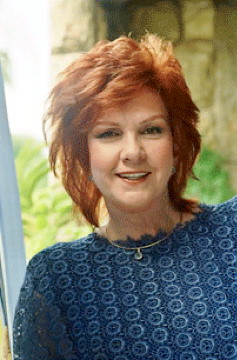 Dr. Daniela Jakubowicz encourages a high-carb breakfast Dr. Daniela Jakubowicz encourages a high-carb breakfastHave you heard about this silly study presented at The Endocrine Society's 90th Annual Meeting in San Francisco, California on Tuesday? I hear some real doozies every now and then when it comes to nutritional science as it relates to weight loss, but this one takes the proverbial cake for being one of the most bizarre, outrageous, and idiotic to come along in a while (but now let me tell you how I REALLY feel!). This story was all over the news yesterday and it just about made me nauseous with all the fawning the media was giving it. Here are some researchers who claim to have found a way to overcome the problem with cravings on a diet which eventually leads to dieters regaining their weight. It's a big top-secret bit of nutritional advice that they've unleashed on the world. Wanna know what it is? EAT A HUGE HIGH-CARB, HIGH-PROTEIN BREAKFAST and then EAT LOW-CALORIE AND LOW-CARB MEALS for the rest of the day. That's it! If you eat this "big breakfast," then you are guaranteed not just to lose weight, but keep the weight off long-term, according to the author of the study Dr. Daniela Jakubowicz from the Hospital de Clinicas, Caracas, Venzezuela. I'm sorry, Dr. Jakubowicz, but with all due respect to your research my body does not need to be inundated with carbohydrates early in the day in order for me to feel satisfied and free from cravings the rest of the day. It can be argued that eating those carbs in the morning even with a high-protein intake will result in a spike in blood sugar leading to a quick mid-morning crash and hunger like you wouldn't believe. That's why I started livin' la vida low-carb so I wouldn't have to deal with that anymore. Of course, if you are gonna consume a large amount of carbs, then it is better for it to be earlier in the day so you have time to burn them off as part of your daily activities. But this does not abdicate the body's natural response to them over the course of the day which can have health implications if this high-carb breakfast strategy is implemented long-term. This kinda sounds like a reverse Carbohydrate Addict's Diet if you ask me. The study itself was conducted in conjunction with researchers from Virginia Commonwealth University in Richmond, Virginia and Dr. Jakubowicz wanted to see what the long-term impact of satiety (the feeling of being "full") and cravings using a strict low-fat, low-calorie, low-carb diet and one that included the "big breakfast" on 94 obese inactive women. Well, there's your first problem. A truly effective low-carb diet cannot be calorie-restricted or fat-limited. Fat is the fuel for your body when you remove the carbohydrates, so limiting your calories from this macronutrient while cutting your portions down to minimize your caloric intake is setting your diet up for disaster from the beginning. I've said it many times before, but I'll say it again: DON'T MIX LOW-FAT AND LOW-CARB TOGETHER! It will only lead to a miserable weight loss experience. There were a total of 46 women place on the very low-carb diet with the following macronutrient and caloric breakdown: FAT--78g PROTEIN--51g CARBOHYDRATE--17g TOTAL CALORIES--1,085 Am I the only one to look at that minuscule amount of food and say EEEEK?! While the ratio of fat/protein/carbs is excellent coming it at around 79/14/7, the calories are way too low. I even added up the numbers and I only came up with 974 calories--over 100 calories less than the researchers claimed. If you multiply 78 X 9 calories for each gram of fat, that gives you 702 fat calories. Add that to the 51 X 4 calories each for the protein to give you a total of 204 protein calories and 17 X 4 calories each for the carbohydrate to give you a total of 68 carb calories. Adding up these three numbers, you only get 974. Do I need to tell you how deficient this is for a healthy low-carb diet? The percentages are fine, but the portions are inadequate. Their breakfast was the smallest meal of the day at just 290 calories and they could use up to 7g of carbs in the form of bread, fruit, cereal and milk and only 12 grams of protein coming from meat and eggs, for example. The researchers were trying hard to keep this control group from having a "big breakfast" with too much protein. But let's call their bluff again on this one. Who follows a low-carb lifestyle and has bread, fruit, cereal and milk for breakfast? Anyone? I've never heard of someone who is livin' la vida low-carb eating such foods because they are NOT permitted during Induction as this group was supposed to represent. I just did a YouTube video on what you can eat on Induction and it doesn't include any of those things. Instead, it's all about consuming healthy amounts of fat and protein to keep your hunger at bay to help you get through the day. That's what Dr. Atkins advocated, NOT this made-up version of low-carb these researchers put these people on. Conversely, there were 48 women place on the "big-breakfast diet" with the following macronutrient breakdown: FAT--46g PROTEIN--93g CARBOHYDRATE--97g TOTAL CALORIES--1,240 The ratio of fat/protein/carbs is about evenly balanced coming it at around 36/31/33, which isn't exactly low-carb by any real stretch of the imagination. And once again the calories don't seem to add up only totaling 1174--66 calories less than what the researchers stated. If you multiply 46 X 9 calories for each gram of fat, that gives you 414 fat calories. Add that to the 93 X 4 calories each for the protein to give you a total of 372 protein calories and 97 X 4 calories each for the carbohydrate to give you a total of 388 carb calories. What's up with this screwy math? Regardless, it's quite easy to see that the huge high-carb "big breakfast" meal at the beginning of the day for the dieters in this group greatly skews their macronutrient totals for the day making this an odd "low-carb" diet. They consumed a 610-calorie breakfast with 58 grams of carbohydrate, 47 grams of protein, and 22 grams of fat. Their lunch was 395 calories of another high-carb, low-fat meal (13/28/34) followed by supper being a 235-calorie meal that's very low-carb, high-fat (26/18/5). I can only imagine what the bodies of these poor women were thinking on this diet. WHAT IN THE WORLD ARE YOU DOING TO ME?!?! So, what were the "results" of this suspicious eight-month study? Four months focused on weight loss followed by another four months of weight maintenance. The strict low-carb, low-calorie group lost an average of 28 pounds compared with the "big breakfask" group who only lost 23 pounds. Statistically, this is not a big difference, according to the researchers. But the "ah hah" part of this study Dr. Jakubowicz wants people to remember about it is what happened at the end of the eight months--after four months of maintenance. The low-carb, low-calorie dieters regained an average of 18 pounds for a cumulative weight loss of 10 pounds--just 4.5 percent of their body weight. Meanwhile, the "big breakfast" group lost an additional 16.5 pounds for a total weight loss of 39.5 pounds--an amazing 21 percent of their body weight. Dr. Jakubowicz reminds people that the women who had the "big breakfast" said they weren't as hungry before lunch and lacked the cravings for carbohydrates that the low-carb, low-calorie dieters did. "Most weight loss studies have determined that a very low carbohydrate diet is not a good method to reduce weight," Dr. Jakubowicz concluded. "It exacerbates the craving for carbohydrates and slows metabolism. As a result, after a short period of weight loss, there is a quick return to obesity."Oh really, Dr. Jakubowicz. Is that a fact? Livin' la vida low-carb makes carb cravings WORSE and slows down your metabolism?! WRONG!!! My experience has been that eating a truly low-carb diet (not one that starts off your day with cereal or bread!) keeps the cravings away and consuming plenty of fat and moderate protein as every good low-carb diet does will rev up your metabolism into a fat-burning machine while you enjoy delicious foods that will keep your energy level up all day. The major flaw in this study was the restriction on calories it placed on the low-carb dieters in the control group. Have them get rid of the fruit, milk and bread for breakfast and let them eat all the eggs and sausage they need to satisfy their hunger. Then at lunch, have them eat a hamburger patty or two with some cheese on top and a little mayo with a side salad and Ranch dressing. For supper, let them cook up a nice fatty steak and serve a little steamed broccoli or cauliflower with butter on the side. Snacks in between those meals can include almonds, macadamia nuts, sugar-free chocolates, cheese sticks, pepperoni slices, and other snackable low-carb foods. If your control group was allowed to truly eat a healthy low-carb lifestyle as outlined above, then they would have lost more than 28 pounds in four months and they most certainly would not have gained anything back. Speaking of that, how did they gain the weight back? Did they add back more calories in the form of carbs to go with the fat they were eating? Anyone with a brain knows that a high-fat, high-carb diet is unhealthy, so why should it be surprising they'd gain the weight back, hmmmmm? This just seems so suspicious to me and they're pointing the finger of blame at the diet itself. Look, livin' la vida low-carb works when you work it. If you stop doing it, then you are no longer following a low-carb diet. Trying to pin the blame of weight gain on low-carb is like blaming President George Washington for getting us in the war in Iraq. The only person you can fault when you decide to stop low-carbing is YOU. Dr. Jakubowicz says only 5 percent of low-carb dieters are still at it two years later, but whose responsibility is that? The diet or the dieter? I don't think you can lay that one at the feet of livin' la vida low-carb. I know many people who have been eating this way for years and they've done just fine. Dr. Jakubowicz also says that low-carb living does not address addictive eating impulses, but I could not disagree more. When you eat this way, you bring so much balance back into your health by getting off of those blood sugar swings that are causing insulin to spike inside of your body and setting off a whole string of health consequences. Yes, you can certainly lose weight eating carbs, but what is happening to your health? There are no guarantees you are putting yourself in a better position with weight loss on a low-fat diet. So this "big breakfast" approach is supposed to be the "be-all, end-all" diet for people now, huh Dr. Jakubowicz. It's supposed to control my appetite and make me not crave sugary and starchy carbs, eh? And it's HEALTHIER than anything else out there because you get to eat more fruit on it. Wanna know what I think (you probably don't, but you're gonna get it anyway!)? I think you're just another low-fat diet lover trying your darndest to discredit and taint the healthy low-carb lifestyle under the guise of science. People like you doing this kind of research are what's WRONG with medical studies today. Your bias could not be more evident if you tried. Why not actually read Dr. Atkins' New Diet Revolution or Protein Power and see what they doctors have written about low-carb living. It's MUCH different than what you stupid study would have people believe and yet somehow I don't think you really care. And that's the most regrettable part of this entire scenario. 6-19-08 UPDATE: The always entertaining and opinionated Dana Carpender weighed in on this "study" today with a column entitled "Oh, Fercryinoutloud! The "Big Breakfast" Study" where she echoes many of the same points I made. GET 'EM DANA!!! :) 6-22-08 UPDATE: My blog post about this study appeared in business journalist Dana Blankenhorn's latest column entitled "Have You Tried The IHOP Diet?"6-22-08 UPDATE: I heard from the researcher's son Dr. Salomon Jakubowicz today who said the media distorted what her research was all about. Here's what he wrote: Regarding my mother Daniela Jakubowicz's study she tried to make a low-carb diet including breakfast for both subjects and controls but the journalists increased the importance of the carbs during breakfast incorrectly calling it a "High-Carb And High-Protein Breakfast." She does know that protein's satiety power is bigger than carbs or fats. Your review is challenging although not very respectful for a health researcher.Well, #1 I'm not a health researcher. I'm a guy who lost weight and got healthy on a truly low-carb diet. That notwithstanding, I think it is incumbent upon your mother to set the record straight since the headlines completely skew what her study intended. I have invited Dr. Salomon to ask his mother if she would like to appear on my podcast show to clear the air about how her study was misinterpreted. We'll see what she says. :) Labels: big breakfast, Daniela Jakubowicz, health, high-carb, low-calorie, low-carb, low-fat, research, study, The Endocrine Society, weight loss
Here's Your Chance, Dean Ornish: Admit A High-Fat, Low-Carb Diet Is Healthy
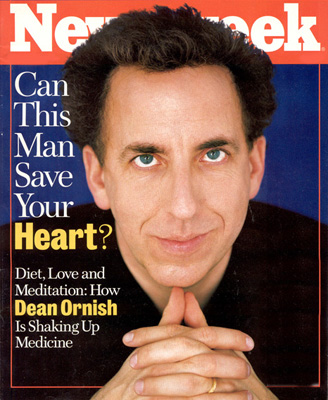 Is Dean Ornish prepared to admit a high-fat, low-carb diet is healthy? Is Dean Ornish prepared to admit a high-fat, low-carb diet is healthy?I have had ample opportunities to meet and interview some of the best and brightest minds in the world of diet and health over the past couple of years and I consider it a real privilege and an honor anytime I am afforded the chance to glean from the many years of knowledge and experience that these people possess. As a simple layperson without any medical or nutritional background or education, I am merely a student trying to learn everything he can in order to make informed decisions about what is right for me and my body. You can read my blog interviews or listen to my podcast interviews which now total well over 100 to see and hear from these amazing people and the fine work they are doing to promote good health. I honestly believe that everyone who is involved in this industry is doing it for the right reasons in their heart of hearts even if they are misguided in some areas. It's okay to have disagreements as long as you don't become disagreeable in the process. That's sorta what I wanted to talk about today because I received a rather terse e-mail response from noted low-fat diet guru Dr. Dean Ornish (who I have interviewed TWICE in the past two years) earlier this week that accused me of making him out to be a "straw man" with the same old "stereotypes" about him that have existed for decades as the face of the low-fat diet. You'll recall I recently interviewed Dr. Ornish for a four-part podcast about his new book entitled The Spectrum where he supposedly has shifted his dietary philosophy away from a strict low-fat diet into one that allows people to make choices along a spectrum of choices. It's a nice concept on paper and I certainly applauded him for moving away from his dogmatic belief that a low-fat, high-carb diet is the ONLY way to good health. However, during our interview and while reading through The Spectrum, I couldn't help but notice that despite the grand plans of branching out and broadening his nutritional horizons, not much has changed about what Dr. Dean Ornish actually believes. Once you get into the meat (which, by the way, you can't have according to Dr. Ornish since it is in the "least healthy" Group 5 end of the spectrum) of what he writes, everything he considers "healthy" is merely a bunch of the same old high-carb, low-fat propaganda we've always heard from Dr. Ornish. I explained my concerns about this in great detail in a post-interview blog I wrote a couple of weeks ago. While I was critical of Dr. Ornish in the blog post (and rightfully so), I still appreciated the open dialog that he invited to discuss and debate the ideas he presented in his book. I have nothing against him personally and he's been nothing but respectful to me in all of our conversations. We just disagree about what a healthy diet looks like a lot more than he wants to admit it. And deep down inside, he knows that. While he says we all agree and believe many of the same things, I have yet to hear Dr. Dean Ornish confirm that a low-carb nutritional approach may be needed for some people. He's just never done it despite being given several opportunities by me to state it rather explicitly. And even I am the first to admit that low-carb is not necessarily right for everyone. That's why studies have shown you need to find the diet that's right for YOU and then DO IT and I believe that with every fiber of who I am! It simply amazes me that a world-famous diet doctor like Dean Ornish can't even acknowledge this basic truth about health. And yet after he read this blog post I wrote about Dr. Andrew Weil last weekend where he openly acknowledges the carbohydrate connection to obesity and disease and I made an analogy to how big this news was stating it was tantamount to him coming out and endorsing the Atkins diet, Dr. Ornish became very angry with me and shot off the following e-mail. Dear Jimmy,
After having such an extended interview in which I thought I was clarifying my position about carbs--including acknowledging that Robert Atkins was right about the unhealthful properties of refined carbohydrates but disagreeing that all carbs are bad and acknowledging that fat also plays an important role in health and illness, especially in weight control--that you continue to use me as a straw man.
In your latest email (referring to my blog post) , you write, "This is the equivalent of low-fat diet guru Dr. Dean Ornish coming out and saying that the late great Dr. Robert C. Atkins was right and that there are some people who should be eating more fat and less carbohydrates if they need to manage their weight and health. Following my recent interview with Dr. Ornish, I sincerely doubt THAT will ever happen." But I say in my new book that there are many people who should be eating less refined carbohydrates--and more unrefined, high-fiber carbs, not necessarily more fat.
I had hoped that we could get past these stereotypes.
With best wishes,
DeanAs I sat there and read Dr. Ornish's e-mail, I pondered what he had to say. But I couldn't help but come back to the elementary questions that still linger in the back of my mind about what he thinks we all "agree" on when very clearly we have some major differences about livin' la vida low-carb that he continues to deny. Here was my response: Hello Dr. Ornish,
THANKS for your e-mail. With regard to your concerns about my latest blog column which discusses Dr. Andrew Weil agreeing that total carbohydrate restriction in conjunction with an increase in fat intake as outlined by Gary Taubes in GOOD CALORIES BAD CALORIES is indeed based on solid scientific evidence and experience, I don't see where we're in disagreement about this. We both agree that controlling at least some carbohydrate intake and consuming at least some fat is indeed a healthy way to keep your weight reduced and your health in order.
What we do disagree on is by how much.
I'm sorry if you feel my using you as an analogy of the magnitude of this change in perspective by Dr. Weil in favor of a more carbohydrate-restricted for weight and health management was inaccurate. But based on both what I read in your book THE SPECTRUM and heard directly from you during our 100-minute interview a few weeks back, I did not sense any agreement on your end that a moderate-to-high fat, controlled-carbohydrate ketogenic dietary approach as espoused by the late Dr. Robert C. Atkins and then brought back to the discussion by Gary Taubes is one you would even remotely consider recommending for anyone as part of your "spectrum" of choices since most of the foods that fall within this way of eating are in Group 5--what you consider the "least healthy" choices. Please tell me where I got it wrong, Dr. Ornish, because it looks like I've hit the nail on the head about what you believe based on what I've read and heard from you.
Based on that alone, it appears what I stated was not inaccurate at all. Please feel free to correct my misunderstanding if you would like because I'm sincerely interested in what you have to say about what you believe regarding a high-fat, low-carb diet. I'm happy to give you the opportunity to officially come out and state with great clarity that you believe a high-fat, low-carbohydrate diet is indeed an acceptable way for certain people to manage their weight and health.
I'd be delighted to share this great news with my enthusiastic readers that we all agree this particular nutritional approach is one you endorse just like Dr. Weil does now. Nothing would give me greater pleasure than to share that Dr. Dean Ornish agrees with so many of my readers that restricting carbohydrate intake and consuming fat can be a part of a healthy lifestyle. Keep in mind, this isn't a low-fat vs. low-carb issue either. It's simply about realizing and recognizing that there are certain ends of your "spectrum" which aren't as unhealthy as you claim. Despite that, though, we're absolutely all in agreement, right?
THANKS for sharing your concerns and I do hope to hear back from you soon with a crystal clear message of support for livin' la vida low-carb that I can share with my readers. Take care! :)
Jimmy MooreIt has been five days since I sent that e-mail to Dr. Ornish and he has yet to respond. I suppose we can deduct from his failure to provide an answer to my simple question about where he stands regarding a high-fat, low-carb diet for certain people that he still believes it is unhealthy. That's too bad since most of the health establishment is in major disagreement with him about his monopolistic low-fat, high-carb recommendations for everyone. Even Dr. Weil no longer believes that. The floor is still open to you, Dr. Ornish. If you truly want to mend the fences you have destroyed by needlessly attacking the Atkins diet over the years, then here is the PERFECT chance for you to do it. Reach across the aisle to your low-carb counterparts and tell us where we have common ground with you since we all agree total carbohydrate restriction and increased fat intake is an essential to a healthy lifestyle. You wanted the opportunity and here it is. How about it, Dr. Dean Ornish? Are you supporting livin' la vida low-carb as a viable nutritional approach for controlling weight and health? Admit a high-fat, low-carb diet is healthy. It's not a difficult question and we're patiently awaiting your answer. Labels: Andrew Weil, Atkins, Dean Ornish, diet, Gary Taubes, health, interview, Jimmy Moore, low-carb, low-fat, The Spectrum, weight
'Livin' La Vida Low-Carb Show' Episode 124: Talking A Little 'Reality Fitness' With Nicki Anderson
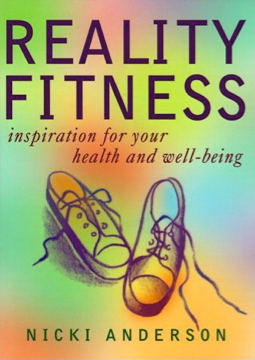 Nicki Anderson puts some reality back into your fitness routine Nicki Anderson puts some reality back into your fitness routineIn Episode 124 of "The Livin' La Vida Low-Carb Show with Jimmy Moore", I'm pleased to share with you an interview I did with friend and fellow fitness encourager Nicki Anderson from the Napierville, IL-based Reality Fitness. Ever since I first discovered her "Happy Monday" newsletter a little more than two years ago, I have been a BIG FAN of the work Nicki is doing to educate and encourage a healthy lifestyle for the clients at her workout center. But even more exciting than that is the transformation that is happening to Nicki's philosophy about a healthy diet over the past couple of years that is evident in columns she has written about eating fat here, here, and here. Two prominent low-carb books-- Life Without Bread and Good Calories, Bad Calories--along with reading my blog and other online resources has helped transform Nicki's old way of thinking forever. Click on the "LISTEN NOW" link below or download it to your iPod to hear Episode 124:  "The Livin' La Vida Low-Carb Show with Jimmy Moore" Episode 124 [27:29m]: LISTEN NOW | DownloadWhen you've been active in the health industry for as long as Nicki Anderson has, it's difficult not to fall in line with what conventional wisdom has always taught us regarding diet--low-fat, low-calorie, portion control. And yet it is people like her who have chosen to remain open-minded and willing to accept new information based on the science in order to shape and mold what she believes that will kick start the next revolution. Despite the heavy criticism she has received, Nicki remains steadfast in her newfound belief that carbohydrate is at the center of disease and obesity. YEAH! Hear from old and new low-carb enthusiasts anytime by: 1. Listening at the official web site2. Calling (818) 688-2763 to listen via Podlinez3. Subscribing to the RSS feed 4. Going to iTunes-- Click here to subscribe! What do think about someone like Nicki Anderson coming around to the truth about livin' la vida low-carb after years of helping clients with weight loss and exercise? Is this the beginning of a glorious trend that was bound to happen in light of all the overwhelmingly positive data about the healthy low-carb lifestyle? Let's kick it around a bit in the show notes section of Episode 124. Coming up next week, we have two more exciting interviews to share with you from international author and health activist Phoenix Gilman who wrote a fabulous low-carb fitness book that's in your face entitled Diet Failure...The Naked Truth. You are gonna absolutely ADORE Phoenix and I can't wait to share my interview with her on Monday and Thursday in a special two-part interview. THANK YOU for listening to "The Livin' La Vida Low-Carb Show with Jimmy Moore."Labels: fitness, health, interview, Jimmy Moore, low-carb, low-fat, Nicki Anderson, podcast, Reality Fitness, The Livin' La Vida Low-Carb Show
Note To Dr. Dean Ornish: We DON'T All Agree About What Is Considered Healthy
 Agreement and civility are mutually exclusive of one another Agreement and civility are mutually exclusive of one anotherIt's been a few weeks since I was given the unique opportunity to speak with low-fat diet guru Dr. Dean Ornish to discuss his new book entitled The Spectrum. Now that all four parts of the interview has been aired on my podcast show, I'd like to offer a postscript expressing my thoughts about what was said during the interview by Dr. Ornish. Anyone who has not listened to the 100-minute interview, here are the direct links to each segment for your convenience. It's pretty fascinating stuff and quite confrontational at times, so give it a listen if you haven't already done so: - My Second Interview with Dr. Dean Ornish- Dean Ornish, Jimmy Moore Debate 'The Spectrum'- Does Dean Ornish Now Support A Low-Carb Diet?- Whatever You Do, Don't Call Dean Ornish A Low-Fat VegetarianBefore I share my opinions about the interview itself, let me give you some background about how this came about. In early 2006, I decided on a whim that I wanted to try to get an interview with Dr. Dean Ornish to talk with him about his dietary philosophy. My modus operandi was nothing more than to hear what the man had to say about what he believes regarding diet, health, and nutrition. I initiated contact with him through every means I knew to reach Dr. Ornish and was pleasantly surprised to hear back from him within a couple of months about setting up the interview. This was only about a year after I started my blog and many months before I had my own podcast show. In fact, I wasn't even sure how I was gonna record the interview since I didn't have ANY equipment to make it happen. As it turns out, in the summer of that year Dr. Ornish got married to his wife Anne and our interview was delayed until October. It was a long time coming, but we finally made it happen and you can read all about it with the transcripts of that interview here, here, here, and here and even listen to the raw audio footage I taped using a digital recorder and a speaker phone by clicking here and here. I even wrote this post-interview challenge to Dr. Ornish and low-fat advocates to pursue those areas of common beliefs to help those who struggle with weight and health issues understand some of the basics of what is generally accepted by everyone as healthy. Fast forward to early 2008 and this time around Dr. Ornish contacted me to see if I'd like to interview him again to talk about his new book. He explained that he wrote The Spectrum because he was inspired by our previous interview and those areas where we agreed. I was excited to hear that this man who had based his entire career on advocating a high-carb, low-fat, vegetarian diet was open to the possibility of finding merit in other nutritional approaches that run counter to what he has always believed. I honestly held out hope that The Spectrum would show progress in the way Dr. Ornish now thought about livin' la vida low-carb. Unfortunately, that was not to be. I will give him credit that the ideals espoused in his book are definitely a step forward in attempting to forge some common ground among those who advocate a low-fat or a low-carb diet, but it didn't take long to see that what Dr. Ornish believed was on the healthy end of the "spectrum" of food choices was the same old high-carb, low-fat vegetarian choices and the foods on the least healthy end were the more fatty, meat-based choices. In other words, not much has changed at all! While our interview was indeed a cordial one because I am not the kind of person who seeks to rip the throat out of someone I am speaking with, I wasn't going to let Dr. Ornish dominate the conversation tee-totally as I did by design with my first interview. This time around I challenged him where I thought we disagreed as he requested upfront before our interview even began. Boy did I ever! Let me tell you, though, it was quite nauseating for Dr. Ornish to implore a strategy designed to make it seem like we all agreed when in fact we didn't. You'll notice quite often during our interview, he made references like "we all agree" or "we're not in disagreement about" prior to making a point. The first couple of times he did that, I was only casually listening to what he had to say next. But when it became a habitual part of his communication strategy, my ears perked up every single time he did that. You don't know how tempted I was to say back to him, "Oh, so since we all agree on what a healthy diet looks like, then that must mean you think a high-saturated fat, low-carbohydrate nutritional plan is needed to bring about improvements in weight and health. After all, we're not in disagreement about this at all, are we?" Dr. Ornish would have crapped in his pants if I actually said that and it would have been snarky for me to do so. That said, he KEPT on doing it and I finally had to call his bluff on it. When I did, he seemed to get perturbed with me and contend that I'm making this a "low-carb versus low-fat" thing. And that's another issue I had with Dr. Ornish during our interview. Every single time I brought up a question about carbohydrate or fat intake, he'd use this excuse that he's not interested in the "diet wars" which he declared as over and done with now. How convenient for you, Dr. Ornish! While you say you no longer want to engage in the macronutrient debate (which is obviously not true as evidenced by this attack by you against the Atkins diet in March 2007), the fact is you have built your entire reputation on the high-carb, low-fat, vegetarian diet. It's what you will always be remembered for--good, bad or ugly. While it's nice that you finally agree with low-carb advocates that refined carbohydrates are not as healthy as you once believed they were, even that's not entirely true based on your placement of this category of foods in the moderately healthy part of your "spectrum." What's up with that? Sure, you say that if they are eaten by themselves they should be considered among the least healthy, but that caveat is NOT explained in your book. And, I'm sorry, but eating more fiber with those carbohydrates will NOT significantly slow the blood sugar rise and insulin response in the body as you claim. It would send me into a sugar rush tailspin that would take days to recover from! And that's another issue of contention I had with Dr. Ornish. While I can appreciate his insistence on looking at the data and the science behind what he recommends, it seems he quite conveniently neglects all the preponderance of the evidence that has come out in recent years regarding a high-fat, controlled-carbohydrate dietary approach. Every researcher he cited you'll notice was his "friend." People like Dr. David Ludwig, a low-carb researcher interested in issues involving childhood health (I recently reviewed his fabulous book Ending the Food Fight), are considered by Dr. Ornish to be on his side of the health debate. But something tells me this "friend" he cites would have something to say about being associated with the high-carb, low-fat, vegetarian diet that runs directly counter to what his research is showing him about a healthy diet. Then, when I mentioned the name of Gary Taubes and his brilliant book Good Calories, Bad Calories, you would have thought I had just cursed his grandmother! Oh the vitriol that came out of Dr. Ornish's mouth about Gary Taubes was enough to see exactly who he is and what he's about. It very clearly showed me he was uninterested in the evidence and simply stuck on his own monopolistic viewpoints. When I asked if he had read the Taubes book, you'll notice Dr. Ornish never really answered that question. He said it was on his desk, but that doesn't mean he read it. The disrespect he showed Gary Taubes by claiming he was "just a journalist" put his snobby, elitist attitude on full display for everyone to see. So, does it disqualify Gary Taubes from conducting over six years of research with 150 pages of references in his book because he's not a researcher with an MD or PhD behind his name, Dr. Ornish? I think not. I don't have those credentials either, Dr. Ornish, so why would you waste your time on a nothing blogger like me since obviously you look at me in a similar light as you do Gary Taubes? This is why low-carb supporters continue to be skeptical of any changes in you, Dr. Ornish--we don't see any evidence that you're different in either your message or the manner in which you communicate it. It's just more and more of the same old stuff that's been repackaged to seem different. But it's not. Then there's the issue of people like me who have been highly successful at losing weight on a diet that runs absolutely opposite of what Dr. Ornish has been promoting his whole life. When I asked him about that, he skirted the question rather quickly and moved into talking about all his research about low-fat diets again. Ummm, that wasn't the question, sir. HOW DO YOU EXPLAIN JIMMY MOORE and others who have been successful at not just losing weight on low-carb, but keeping it off over the long-term? It's not a difficult question to answer and I'd STILL love to hear what he has to say about it. Dr. Dean Ornish is very good at creating diversions from the difficult questions. If he wasn't involved in the health industry, then I'm sure one of the major political parties would LOVE to have him run for office since he can wiggle and maneuver his way out of all the tight circumstances. It's no doubt something he has to do nowadays in light of all the evidence that keeps pouring in from the research community shooting down every single theory he has ever held about a healthy diet. That's fine that he declares his diet is the only one to be proven to "reverse heart disease" but I'm not buying it. To state as you have your entire career that the healthiest way to eat is a high-carb, low-fat, vegetarian diet is not only false, but completely misleading to a nation full of people who deserve better than that, Dr. Ornish. There should be just as much emphasis on the negative role of carbohydrate in your "spectrum" and not just the refined carbs. Even some whole grains are detrimental to the health of those who are especially insulin resistant--and it's a lot more people than you're willing to admit are out there, my friend. I'm sure this blog post will be reason enough for Dean Ornish to never want to do another interview with me again, but that's no concern for me right now. I had to speak the truth and the truth is I couldn't remain silent about the continued lies he is sharing with people about his failed dietary philosophy. Get with the times already, Dr. Ornish. Whether you like it or not, livin' la vida low-carb IS mainstream now and here to stay. It's not low-carb versus low-fat--it's what works for the individual. Your refusal to even acknowledge that a low-carb program will work for some gets to the very heart of the matter. Even I am the first to admit that low-carb will not work for everyone, but it's an option that should at least be promoted by health groups and tried by people who have struggled on a high-carb, low-fat diet as I did for most of my life before going on the Atkins diet in 2004. My mantra is for people to find the proven and effective plan that works for them, follow that plan exactly as prescribed by the author, and then keep doing that plan for the rest of their life. If that's an Ornish-styled low-fat diet, then I say GO FOR IT. But if it's an Atkins-styled low-carb diet, then that should be something you should openly encourage people to follow, too. Now that's something we ALL agree about anyway, right Dr. Ornish? Labels: Atkins, Dean Ornish, health, high-carb, interview, low-carb, low-fat, podcast, vegetarian
Fred Hahn's Top 20 Most Effective Fat Loss Tips
 "Slow Burn" trainer Fred Hahn offers up 20 fat-burning ideas! "Slow Burn" trainer Fred Hahn offers up 20 fat-burning ideas!After reading and reviewing his fantastic book entitled The Slow Burn Fitness Revolution in January, I was not just enamored by the overall fitness philosophy of personal trainer Fred Hahn who advocates lifting weights slowly as the safest, most effective way to build muscle. But after interviewing him at my blog and realizing he promotes a solid controlled-carbohydrate nutritional approach to work in tandem with the "Slow Burn" program, I knew Fred was somebody I wanted to hear more from in the future. In fact, my favorite quote from that interview is what Fred Hahn recommends as the perfect post-workout meal: A juicy bacon cheeseburger (no bun) with lettuce, tomatoes, onion, and avocado, or steak and eggs with sliced tomatoes.YEAH BABY!!! Now that's what I'm talking about! :D If you like that kind of honest opinions and information about what to do regarding your own health and fitness routine, then you'll want to bookmark Fred Hahn's blog and visit often. He is always posting some interesting thoughts, so visit early and visit often. There's never a dull moment with Fred in the blogosphere! ;) Today I have a very special surprise from our friend Fred Hahn. As part of his Slow Burn Fitness System--a special combination of insulin-controlled diet and strength training exercise--he has graciously provided me a list of 20 of his most effective fat loss tips to impart to the wonderful readers of the "Livin' La Vida Low-Carb" blog. This program has been proven to be highly efficient at helping its participants begin burning fat, gaining strength, improving their health, and becoming more energetic and youthful than they have ever been in their entire lives. To complement what you are already doing as part of your healthy low-carb lifestyle, Fred recommends the following 20 tips to boost your fat loss results. ENJOY! 1. DRINK A GALLON OF REFRIGERATED WATER A DAYA gallon of cold water will burn around 150 calories of energy to heat the cold water to body temperature for voiding! (And it's good for your skin and hair too!) Note from Jimmy: I would only caution you to watch your body temperature if you decide to do this tip because I used to drink my water cold until a doctor told me I was freezing my insides. I was drinking upwards of 1-2 gallons a day and was ALWAYS cold. Even now, when I drink large amounts of TAP water, my hands get as cold as ice. 2. BEFORE YOU CHEAT, DRINK WATER AND BRUSH YOUR TEETHIf you get hungry and feel you're going to cheat, quickly drink a big glass of cool water and brush and floss your teeth. While doing so, think this thought: "There is no food that tastes as good as being lean and strong feels!" Note from Jimmy: This REALLY works and you'll be surprised how well it does, too. If you aren't in a position to brush your teeth when the craving comes on, then pop a sugar-free mint or piece of mint-flavored sugar-free gum. In those very rare occasions when you don't have access to those things (always keep them handy!), eat something high-fat to ward off the sugar/carb cravings. Works every time! 3. TAKE A CASUAL STROLL 30 MINUTES AFTER DINNERA half hour after dinner, take a casual stroll for 15-20 minutes whenever possible. Do not walk fast or jog. Just take a pleasant, easy stroll and enjoy your time outdoors. This keeps from from snacking after dinner. Note from Jimmy: If you make this stroll a regular part of your dinnertime routine, then it will also keep you from stuffing yourself too full because you'll be too uncomfortable even for a casual stroll around the block. What a perfect opportunity to get in some quality time with your family in the process, too. 4. AVOID SUGAR/STARCHY CARBS BEFORE BEDTIMEAvoid eating sugar or starches a few hours before bedtime. This can decrease growth hormone release at night and store unwanted calories as fat. Note from Jimmy: Better yet, why not avoid sugar and starches ALL THE TIME? Sounds like a plan to me! :D 5. GET A SOLID EIGHT HOURS OF SLEEP A NIGHTGet a full 8 hours of sleep as often as possible. Avoid TV and other distractions as much as you can at night. Deep sleep is when your body is regulating and upgrading your hormonal tone. So get some rest! Note from Jimmy: And just laying in bed doesn't count as sleep. I know there are some nights it can take me 2-3 hours to get to sleep because I'm thinking about things in my life, worrying about upcoming events, or just so exhausted and tired that sleep evades me. Try to leave all that stuff outside your bedroom and use every moment for tremendous restful sleep. A good workout a few hours before bedtime can help! 6. DRESS AND SLEEP AS COOL AS YOU CANDress and sleep cool. The cooler you stay, the more heat your body must produce to keep you warm and this means more calories burned. Feeling a bit on the chilly side means you are a fat burning dynamo! Always keep as cool as you can when you are exercising. Sweating is overheating and staying cool is much better for exercise performance as well as for fat loss. Note from Jimmy: I showed this tip to my wife Christine as a reason for running the fan at night in our bedroom. But when she started shivering and her teeth were chattering, I had to stop. Instead of wallowing in the blankets now, I try to sleep with as little cover as possible to stay cool. Working out, though, is another matter. I still sweat quite a bit during exercise, especially when working with my trainer. Every time I feel the sweat dripping down my face, I tell my trainer I'm overheating (as per what Fred said in this tip). My complaints are usually ignored as I'm instructed to continue the workout. Isn't it ironic that you can burn more fat staying cool rather than dripping soaking wet with sweat? 7. EAT SLOWLY AND STOP WHEN HUNGER CEASESEat slowly and stop when you are no longer hungry before you feel full. Note from Jimmy: This is an important tip because most of us eat all the way until we are full. But try going through a day where your purpose in eating is to simply take away your hunger. For some people, this could be as little as just a few bites. Savor each bite and you'll probably feel more satisfied than if you "hork" (thanks for sharing this GREAT word, Christin!) it all down in just a few minutes. You may end up eating every 2-3 hours as the hunger bug returns, but that's okay, too. Let your body tell you when to eat, not the time on the clock. 8. DON'T EAT OUT AT RESTAURANTSMake and take your meals with you. Refrain from eating out. There are tons of hidden calories in most restaurant foods. (You'll save lots of money too!) Note from Jimmy: Boy, is Fred ever right about this one! When you go out to a restaurant to eat, you can never really know what they're putting in the food. From IHOP putting pancake batter in their omelets to hidden sugars injected into the steaks at Applebee's, you're just better off making the food yourself at home. It'll save you a lot of heartache on the scale later on if you just make all of your own food. 9. POST MEANINGFUL REMINDERS AND INSPIRATIONAL SAYINGSPin notes on your refrigerator, front door, bedroom mirror, etc. with phrases such as "Take your lunch!" "Drink your water!" and "I will succeed!" Anything that will remind you of what to do and why you are doing it is a very potent motivational tool. Note from Jimmy: Most of us who have allowed our weight to get out of control have issues with self-esteem and feeling worthy. So writing things like "You are AWESOME!" "I'm so proud of what you are accomplishing!" and "NEVER GIVE UP!!!" are an essential part of keeping yourself uplifted and inspired in your daily struggle to lose the weight and get healthy. Don't underestimate the power of such a simple act because it can reap BIG DIVIDENDS for you with constant positive reinforcement on a daily basis. 10. NEVER SKIP A MAJOR MEALNever skip breakfast or any main meal. Thinking you will lose fat faster by skipping meals is a huge step in the wrong direction. Huge! Your body need to feel "satisfied" and requires adequate nutrition to shed body fat and build muscle. Note from Jimmy: There was a 10-year study published in the September 2005 issue of the Journal of the American Dietetic Association that concluded eating breakfast leads to lower body mass index compared to those who skip breakfast. And it's true! You need to fuel up for your day with a hearty high-fat, moderate protein meal to give your body the energy it needs to get through the day. That's why I like to begin my day with some delicious eggs cooked in butter along with a side of bacon or sausage. Mmm mmm--a nutritious way to start your day! 11. PURCHASE A GOAL OUTFIT AND TRY IT ON WEEKLYSelect a piece of clothing that you want to fit into again and try it on once a week. Note from Jimmy: Actually, I did this when I weighed 410 pounds. My wife Christine and I went to JCPenney's in January 2004 and at the time I was wearing size 62-inch waist pants. So, imagine the surprise on Christine's face when I picked up a pair of 42-inch waist khaki pants! Yep, she was shocked to say the least. But I put those "goal pants" up on the wall and dreamed of being able to fit into them by the end of that year. In early November 2004 after losing around 165 pounds, I tried them on and they FINALLY fit me (albeit, they were tight, but they got around me!). It was such a thrilling moment in my weight loss journey and those pants went on to become very loose on me by the end of the year. WOO HOO! 12. READ ONE HEALTH-RELATED BOOK A WEEKRead a book a week that is health related or motivational in nature. Note from Jimmy: Because I run a diet and health-focused blog that gets a fair share of daily traffic, access to the latest health and motivational books is easy for me. The ones I think are the best get featured at my blog, so be on the lookout for my posts featuring books that may help you in your healthy lifestyle. Some blog posts where I have featured new books on nutrition and fitness can be found here, here, here, here, and here. 13. AVOID ALCOHOLIC BEVERAGES WITH EMPTY CALORIESLimit or avoid alcohol. Drinks can be very high in calories so beware! Note from Jimmy: I'm not a drinker, but I equate drinking alcohol with those people who drink sugary sodas. Both will stop the fat-burning process until all the carbs (alcohol included) is burned first. While the low-carb beer market has experienced a tremendous growth spurt over the past year, the fact remains that alcohol will inhibit fat-burning and weight loss just as much as eating a slice of chocolate cake would. So if you can do without it, you'll do your body some good! 14. GET BUSY WITH A FAVORITE ACTIVITY AT NIGHTFind a hobby that keeps you occupied in the evening. You're less likely to snack if your hands are busy and you may be surprised what you can accomplish! Note from Jimmy: I can think of a few things to do...at night! ;) 15. EAT HIGH-FIBER VEGGIES, LOW-SUGAR FRUITSEat fruits and veggies instead of cakes and sweets and when you think fruit think berries. The higher the fiber content in the food, the better. Note from Jimmy: I happen to think the generic recommendation to "eat more fruits and vegetables" is a big fat copout by those who claim to care about the weight and health of overweight and obese people. As I stated repeatedly to Dr. Dean Ornish during my recent interview with him, the KIND of fruits and vegetables is extremely important when you are talking to people about what's good for them and what is not. Fried potatoes, which dominates the "veggie" intake of nearly half of kids and one-fourth of adults, is very clearly NOT the kind of vegetable people should be eating. Non-starchy veggies like broccoli, cauliflower, green beans, spinach, and kale are excellent choices. And Fred is so right about fruit--stick with the berries! 16. AVOID THE BREAD, EAT A SALAD, DRINK LOTS OF WATERIf you must eat out, send the bread basket back once it arrives. Order a salad as your appetizer and an appetizer as your main course. Keep that ice water coming! Note from Jimmy: Whenever I eat out somewhere often enough, the servers KNOW not to bring me crackers or bread with my meal. If they forget and bring it to me anyway, I simply look at it and state, "I won't be needing that, thank you!" It's better not to even have it on the table with you so you'll never be tempted. If you do decide to order a meal from one of the main courses, keep in mind the portion size may be much bigger than your body actually needs to get rid of your hunger. Don't be afraid to take some food home in a carryout box. 17. COMPLETELY AVOID ALL FOODS TOUTING "LOW-FAT"Avoid purchasing and eating foods that are labeled as "low fat" or "no fat." Note from Jimmy: Wanna hear a dirty little secret about these so-called "healthy" low-fat or fat-free foods you see in the stores these days? When they remove the fat from them, guess what they have to ADD to them to make them taste at least halfway close to the original (yeah right!)? SUGAR!!! And many times it is in the form of high-fructose corn syrup which is even worse. Why do that to yourself? Just eat the full-fat foods with confidence and let the low-fatties suffer eating fat-free cheese that tastes like cardboard and the watery skim milk! 18. PRACTICE DAILY VISUALIZATION OF THE NEW YOU TO COMETry to visualize your leaner, stronger, healthier self a few times each day. See yourself as you wish to be. Imagine that new you and think everyday you are one step closer to achieving your goal. Care about yourself. You're worth it!Note from Jimmy: You just don't realize how powerful this is! As I previously stated, most of us have a self-worth that is next to nothing when we began our low-carb weight loss journey. It's difficult enough trying to lose weight, but then we pile on all this extra baggage from the circumstances in our life that it's almost impossible to ever imagine life as a thin and happy person. But that's exactly what you must do to prepare yourself mentally for the BIG CHANGES that are to come. Believe me, getting your mind to believe in what is to come makes it that much easier to accept the new physical you when it gets here. Start thinking you look good NOW! 19. RESIST THE URGE TO OVER-EXERCISEAvoid excessive amounts of exercise. Too much exercise makes cortisol levels rise which in turn causes muscle wasting and can aid in fat storage. You do not receive benefits from exercise when you are exercising. You receive the benefits when you are resting and recovering from the exercise. If your eating habits are proper, you do not need to try and burn off additional fat via exercise. You'll save yourself from orthopedic problems as well. Note from Jimmy: It seems logical--the more you exercise, the more calories you can burn off and weight loss will happen. And yet there is the risk of inflammation from doing too much exercise and the cortisol issue as Fred explained. This is a controversial recommendation since most people don't get nearly ENOUGH exercise. But I've seen the workaholics in the gym who spend hours upon hours beating their bodies to a pulp trying to salvage every last bit of energy out of themselves thinking that's gonna make them a lean, mean fighting machine. In a word, NOPE! Get in a solid workout, eat healthy low-carb meals with plenty of fat and protein, and let your body do the rest. It's no more difficult than that! 20. GET REAL WITH YOURSELFBE REALISTIC. This is perhaps the most important tip of all. Do not try to avoid every bad food in the whole world everyday. Do not expect your program to transform your physique into a Greek god or goddess. We can't all look like movie start--but we can all dramatically change our bodies for the better and live long, healthy lives following the very simple and extremely efficient Slow Burn Program. Note from Jimmy: Fred is right! Livin' la vida low-carb isn't about what you CAN'T have as much as it is what you CAN. I challenge anyone to tell me that this way of eating isn't the most luxurious, delicious "diet" plan you could possibly go on and still lose body fat while vastly improving your health. It truly is a miracle and I'm thrilled to be eating this way for the rest of my life. Combining low-carb living with the "Slow Burn" resistance training developed by Fred Hahn will have you looking better than you ever thought possible. YOU CAN DO IT!!! Labels: diet, eat, exercise, fat loss, fitness, food, Fred Hahn, health, hunger, low-carb, low-fat, restaurants, sleep, Slow Burn, tips, water, weight loss
'Livin' La Vida Low-Carb Show' Episode 118: Whatever You Do, Don't Call Dean Ornish A Low-Fat Vegetarian
 Dr. Dean Ornish continues discussing his new book The Spectrum Dr. Dean Ornish continues discussing his new book The SpectrumToday is the fourth and final segment of my interview with low-fat diet activist Dr. Dean Ornish discussing the concepts in his new book The Spectrum: A Scientifically Proven Program to Feel Better, Live Longer, Lose Weight, and Gain Health. In case you missed any of the previous three podcasts featuring the first three parts of my interview with Dr. Ornish, then you can listen to Part 1, Part 2, and Part 3 right now. In Episode 118 of "The Livin' La Vida Low-Carb Show with Jimmy Moore", Dr. Ornish and I talk about his diet philosophy where he gets rather angry at me for suggesting that his dietary recommendations are a low-fat, high-carb diet. He repeated asked me to stop characterizing his work as a "low-fat" diet and that he's tired of compartmentalizing the dietary debate as "low-fat vs. low-carb." I couldn't agree more, although the totality of what he wrote in his book is overwhelmingly a low-fat, vegetarian diet. The truth hurts, Dr. Ornish! Click on the "LISTEN NOW" link below or download Part 4 to your iPod to hear Episode 118: "The Livin' La Vida Low-Carb Show with Jimmy Moore" Episode 118 [21:33m]: LISTEN NOW | DownloadYou'll notice very quickly in this episode that Dr. Ornish was getting a bit testy and didn't appreciate the questions I was asking him. It was as if he was hoping for another breeze of an interview like the one we did back in October 2006. Nope, not this time. I had to call his bluff when I believed he was wrong, although Dr. Ornish insisted that we don't disagree on many points. That was a clever tactic he kept using, but I wasn't buying it and neither was anyone listening. I'll be expounding on my post-interview thoughts in a blog post very soon, but for now let's just say it was good to see that we at least could come together to talk about a very real difference ideas without resorting to needless name calling or disparaging remarks. You could tell at the conclusion of the interview that Dr. Ornish appreciates the work I am doing and acknowledged it as much in his closing remarks. I appreciate and respect that he sees the positive of what I do despite his disagreements with what I share. Check out the latest info from top health experts anytime by: 1. Listening at the official web site2. Calling (818) 688-2763 to listen via Podlinez3. Subscribing to the RSS feed 4. Going to iTunes-- Click here to subscribe! My interview with Dr. Dean Ornish is finished now, so please share your comments in the show notes section of Part 4 in Episode 118 to compile what you think about Dr. Ornish and his new book The Spectrum. Was there anything I forgot to ask him about? What did you like best about the interview? Is there anything I could have done to make it even better? Please share your thoughts! As I previously stated, I will be writing a blog post in the next few days with my thoughts about this Ornish interview. I certainly give him credit for being willing to speak with somebody like me because he didn't have to talk to me at all. But he came to me requesting the interview and I was grateful for the opportunity to share about his new book and his attempt to continue forging that "common ground" with low-carbers. Although he's still got a long way to go, it's an important first step. We'll be keeping the lines of communication open for future opportunities to interview Dr. Dean Ornish and any other low-fat diet supporters who want to appear on my podcast show. Hopefully I've shown that we can disagree without being disagreeable and that an open and honest debate of ideas is always welcomed for better understanding of diet, health and nutrition. THANKS for listening and we'll be back again on Monday with another episode of "The Livin' La Vida Low-Carb Show with Jimmy Moore."Labels: book, Dean Ornish, health, interview, Jimmy Moore, low-carb, low-fat, The Livin' La Vida Low-Carb Show, The Spectrum, vegetarian
'Livin' La Vida Low-Carb Show' Episode 117: Does Dean Ornish Now Support A Low-Carb Diet?
 Dr. Dean Ornish continues discussing his new book The Spectrum Dr. Dean Ornish continues discussing his new book The SpectrumWe pick up with Part 3 of my four-part interview with low-fat diet activist Dr. Dean Ornish today talking about his new book The Spectrum: A Scientifically Proven Program to Feel Better, Live Longer, Lose Weight, and Gain Health ( Click here to listen to Part 1 and Part 2). In Episode 117 of "The Livin' La Vida Low-Carb Show with Jimmy Moore", Dr. Ornish shares why he believes the theories espoused by people like Gary Taubes (author of Good Calories, Bad Calories) are foolish and irrelevant, why HDL cholesterol is not as good as we think it is, and how taking a few moments to reflect on life in the quiet moments of the day is just as important to health as what you eat. Click on the "LISTEN NOW" link below or download Part 3 to your iPod to hear Episode 117: "The Livin' La Vida Low-Carb Show with Jimmy Moore" Episode 117 [29:59m]: LISTEN NOW | DownloadAlthough I treated Dr. Ornish with nothing but respect, you'll notice I openly challenged him at times about what he believes and why he believes it. So when I asked him point blank if he supports the idea that people should find the plan that works for them, follow that plan exactly as prescribed, and then keep doing that plan for the rest of their life, Dr. Ornish replied that he agrees a customized program for the individual is indeed the approach he supports with The Spectrum. Ergo, you can say that he now has shown support for a low-carb diet, right? Because we all agree a low-carb diet is a healthy one, right Dr. Ornish? THANKS for agreeing with us finally. Hear interviews with Dr. Dean Ornish and others anytime by: 1. Listening at the official web site2. Calling (818) 688-2763 to listen via Podlinez3. Subscribing to the RSS feed 4. Going to iTunes-- Click here to subscribe! With only one more segment to go in my four-part interview with Dr. Dean Ornish, please leave your remarks in the show notes section of Part 3 in Episode 117 and let us know what you think about Dr. Ornish and his new book The Spectrum. Are you buying anything he has to say so far? Has his recommendations evolved at all from his radical high-carb, low-fat diet dogma from the past three decades? Be sure you tune in on Thursday for Part 4 of my interview with Dr. Dean Ornish at "The Livin' La Vida Low-Carb Show with Jimmy Moore." When the podcast has finished, I'll probably write a blog post with my afterthoughts of this interview like I did with my previous interview with Dr. Ornish. I've got a whole lot to say about this one as you can imagine! Labels: Dean Ornish, diet, health, interview, Jimmy Moore, low-carb, low-fat, The Livin' La Vida Low-Carb Show, The Spectrum
Seven Cutting Edge Low-Carb Diet And Health Science News Stories
You keep hearing me say this, but I sincerely believe the tide is turning in favor of the healthy low-carb lifestyle. It has been rumbling in the research realm for several years and is now FINALLY spilling over into the mainstream through various media outlets. It's not an overwhelming embracing of carbohydrate restriction for weight and health management, but is certainly one step closer to acceptance. Today I have seven cutting edge low-carb diet and health science news stories to illustrate this point. If you support livin' la vida low-carb and strongly believe that this way of eating deserves recognition for the improvements it is making in the lives of real people, then be encouraged by these and spread the word! We ARE making a difference as more and more people begin understanding how low-carb living can improve their life forever. Here are those seven stories: 1. The "Good Carbs" Debate Focuses On Glycemic IndexThe editors of Prevention magazine actually extols the virtues of watching the kind of carbohydrates that diabetics should be consuming by looking at the glycemic index. A strong case is made for paying better attention to the GI in foods, although the glycemic LOAD is much more relevant in my opinion. Nevertheless, we see that there is a clear delineation about carbohydrates being made in an MSNBC story and that's a very good thing! 2. Traditional Diabetes Study Stopped After Too Many DeathsThis New York Times story should be shocking news to anyone using traditional measures for taking on their diabetes (that would be the high-carb, low-fat dietary recommendations along with lots of insulin shots that the American Diabetes Association promoted prior to their change of heart to also encourage low-carb diets that happened this year). It turns out that a diabetes study yielded HIGHER DEATH RATES among those participants who injected themselves with multiple shots of insulin (visa vi from eating too many carbohydrates and requiring the additional injections). Many of these were from heart attacks and the researchers conducting this study were floored. This sad incident merely adds to the argument that low-carb supporters have been stating for years that higher insulin levels in the body are the REAL culprit in heart disease and NOT dietary fat. The truth is there for anyone willing to see it. 3. Long-term Low-Carb Use Reduces Risk Of Type 2 DiabetesThis is a continuation of a study published in the November 9, 2006 issue of the New England Journal of Medicine that I actually first blogged about previously from Harvard researchers Thomas Halton and Dr. Frank Hu looking at the long-term health impact of livin' la vida low-carb on the general population. Now they have turned their attention to Type 2 diabetics to see if consuming a low-carb diet will help or hurt their disease over the years. The results of the study are encouraging: a high-fat, low-carb diet does NOT increase the risk of Type 2 diabetes in women and actually "may modestly reduce the risk of diabetes." YEAH BABY! This was published in the February 2008 issue of the journal American Society for Nutrition. 4. The "Unintended Consequences" Of The Low-Fat DietCause and effect should always go into any decision that we or our government leaders make because the "unintended consequences" of taking certain actions can sometimes be worse than anyone expected. Such is the case with low-fat diets in this Medical News Today story. Echoing what reproductive endocrinologist Dr. Gil Wilshire stated in June 2006 when he called for a moratorium on the low-fat dietary recommendations until more LEVEL 1 scientific evidence can be presented in support of it, Dr. Paul R. Marantz, Elizabeth Bird, and Dr. Michael H. Alderman all from the Albert Einstein College of Medicine say that "these dietary guidelines might actually be endangering health...[as] currently developed and issued." WOW! You can say that again! The most telling quote from them about how low-fat diets have failed to produce weight and health improvements over the years was this: "When the prevailing message fails to achieve its intended aims or achieves the wrong ends, the solution is not to abandon the enterprise but to reshape the message to achieve desired outcomes." Yes--and that means promoting low-carb alongside low-fat diets so that people can decide which nutritional approach will work best for them. It's time to make this happen in the United States of America! Are you listening up there in the USDA office, Dr. Wansink?5. "What's Cooking" features Rocco DiSpirito disdaining sugarAnyone who watches the hit NBC-TV show "The Biggest Loser" on a regular basis like me knows that famous chef Rocco DiSpirito was a guest this week during one of the challenges for the contestants. They were to create a three-course meal using Rocco's recipes and making them even more "healthy." Of course, that's code word for low-fat, low-calorie, low-salt and the dishes were judged accordingly. But Rocco appeared on a CRN Digital Talk Radio show called "What's Cooking" this week just before low-carb cooking friend and author Judy Barnes Baker and said something remarkable about "The Biggest Loser" segment I wanted to share with you. He said the producers of the show made him cook with zero fat and zero salt because they wanted to see "maximum weight loss." However, he did say at the end of his interview that anyone who thinks that sugar doesn't matter needs to realize that it provokes insulin that will make your body store fat. EXCELLENT! And I know Judy loved that perfect lead-in! :D 6. "Healthy" Foods That Aren't So HealthyWe are very fortunate to have some strong voices on behalf of low-carb living out there in the mainstream sharing their philosophy regarding diet and health with the masses. Take Adam Campbell and Cassandra Forsythe, for example. Adam writes for Men's Health magazine and recently released a fantastic book with low-carb research giant Dr. Jeff Volek from the University of Connecticut called The TNT Diet. Interestingly, Dr. Volek is Cassandra's boss as she works in the research lab pursuing her doctorate at UConn. Adam and Cassandra teamed up for a column for Men's Health again on the MSNBC site looking at the so-called "health" foods that are out there and put them in their proper place. If you've ever been on a diet before, then no doubt you have eaten at least half of the food on this list! Find out why it didn't do you a lick of good (if you didn't already know!). 7. An Atkins-Styled Low-Carb Diet Controls SeizuresFinally, we have more research confirming that livin' la vida low-carb is an excellent way to manage epileptic seizures as I've blogged about previously here and here. Johns Hopkins researchers are convinced that adults suffering from this condition should follow an Atkins-styled low-carb diet to best control their disease. The story said about a third of the participants couldn't stay on the diet because it was "too tough to do." I don't know about you, but if I could control my seizures by eating a high-fat, low-carb diet then I would probably FORCE myself to eat that way even if it wasn't as pleasurable as it is. That's just crazy to me! Thankfully, those patients who did try it and stay on it saw remarkable results. And the doctors encouraged them to stay on it for many years to come--a virtual admission that livin' la vida low-carb over the long-term ain't so unhealthy after all! Hmmmm...but we knew that already! Got some low-carb news to share with me? Send it on anytime at livinlowcarbman@charter.net. Labels: carbs, diabetes, diet, glycemic index, health, low-carb, low-fat, media, news, Rocco DiSpirito, seizures, weight loss
|


