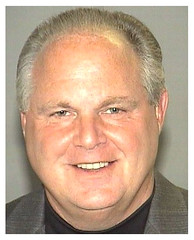
The word is certainly getting out about Gary Taubes' instant classic
Oftentimes when the anticipation and expectations for something that is truly fantastic finally arrives, there is usually a huge letdown shortly thereafter. But that is most certainly not the case with the release of the much-awaited Gary Taubes book Good Calories, Bad Calories.
Although it has only been available for a little more than two weeks, the ripple effect from this book touting fat consumption and carbohydrate restriction has moved beyond the friendly confines of the low-carb community and right smack dab in the center of the mainstream health arena where it belongs. I'm very surprised to see such a welcoming embrace for a book with the counterintuitive message that this one clearly outlines.
After seeing Taubes take on low-fat diet icon Dr. Dean Ornish in a televised debate a few years back, I was anxious to see what he had to say about the new Gary Taubes book. Since I had interviewed Dr. Ornish last year and felt he would definitely have an opinion about this book, I contacted him about it for a quote. He responded wanting to know what I thought about it. Um, YOU FIRST! We'll see if that ever happens because something tells me Mr. Low-Fat Diet hopes this book gets buried.
One person that most certainly has something to share about Good Calories, Bad Calories is a woman who worked directly with the late great low-carb advocate himself Dr. Robert C. Atkins for three decades. It's Jacqueline Eberstein, R.N., co-author of Atkins Diabetes Revolution, who is arguably the most knowledgeable Atkins diet expert in the world right now. She's carrying on the message that Dr. Atkins championed during his life at her Controlled Carbohydrate Nutrition web site.
Here are some comments from Eberstein about Taubes' book:
Read Good Calories, Bad Calories by Gary Taubes (Knopf, 2007). It is well worth your time.
I worried that the book might be too complex or dry for the consumer. I found it to be engaging and readable. My husband (not a medical person) found it well reasoned, thorough and fair. He got as angry as I often did as he learned how conjecture was turned into the dogma that continues to be foisted on the public even while the U.S. population is getting sicker and sicker.
This is not a diet book but rather a review and commentary of years of research examining how low fat and the diet-heart hypothesis has become written in stone.
Not everything in the book was new to me, because I spent more than 30 years working with Dr. Atkins and low carb. I know how effective, safe and healthy a low carb approach is.
The book added to my knowledge about the politics of research, how research is often manipulated or spun and how dissenting voices, however correct, can be and are squashed. Dr. Atkins and I often talked about how the low carb message would not be given a fair hearing because the powers that be are too strong and pervasive while an uncritical media supports the status quo. After reading this book I have come to realize Dr. Atkins wasn't being unfair—just accurate.
This book can be especially helpful for those who have had success with low carb and still worry when media, family members or healthcare providers offer negative or unsupported "advice." This book provides the analysis needed to feel confident about your lifestyle choice and respond to the naysayer or the simply ill-informed. The same can be said for anyone sitting on the fence about low carb as a healthy way of life.
You may not remember details of the studies Taubes reviews, but you'll certainly have an understanding of the results and how those results have been misrepresented by those whose interest it is to continue to support the current diet-heart hypothesis.
This book may also open the eyes of healthcare providers who don't feel quite comfortable moving beyond the standard protocol. As all of us who provide patient care quickly learn, one diet does not work for or suit all. Taubes' book will make it easier for inquiring, unbiased practitioners to satisfy themselves that controlling carbohydrates makes sense physiologically and is a healthy way of life.
Taubes' thorough review of the history of diets and why and how the message changed over the years is instructive even though human physiology and genetics stayed the same.
I firmly believe that present policy is influenced by politics, money and lobbyists. I believe this is also true with healthcare--one place where science, physiology and truth should prevail. After reading this book, you will have a much more comprehensive understanding how research funding, biased points of view and closed-mindedness stifles investigating alternative approaches, to the detriment of our health.
While reading this book, there were many times I would have loved to be able to discuss various points with Bob Atkins. I think he would have been pleased with the thoughtful and careful work Gary did to write "Good Calories, Bad Calories." Those of us who passionately believe that low carb must become an acceptable lifestyle choice know the struggle continues, and this book provides a welcome, needed and important resource and educational tool.
Well said, Jackie! I think you echo the sentiment that so many of us low-carbers feel about this book right now and we appreciate your one-of-a-kind take on a book of this magnitude. Here's hoping those healthcare professionals and consumers who need to read it do.
If you haven't been to the Amazon.com page for this book, then you really oughta take a look. Sure, there are some knuckleheads on there who haven't read the book posting negative, low-rated "reviews" of Good Calories, Bad Calories, but there are also some real gems on there, too. Be sure to take a look at Olivia Brown's exclusive video review of the book while you are there. She is a regular reader of my blog and was so excited to share her comments about the book.
One of the Amazon readers named Myrna responded to my interview with Gary Taubes that I reposted there and she had a question about it.
Low-Carb Man, I appreciate your interview very much. But, like J L West, I was really struck at Taubes remark about the "40 percent of what I wrote in the Times article I no longer believe." I understand your explanation that your interview questions were not real-time, but I sure would like to hear the man, himself, elaborate on that comment. Since you are so connected and into all of this, maybe you can be the conduit. Thanks.
Since he was kind enough to agree to an interview with me for my blog, I went ahead and forwarded the question to Taubes for a response. Within a few hours, he answered it clarifying what he meant by the statement in my interview.
When I reported and wrote the NYT Magazine article, I implicitly believed that fattening and obesity were caused by consuming more calories than we expend. This means I also believed implicitly that excess calories are just dumped into the fat tissue when we don't use them. This is why I gave credence to David Ludwig's hypothesis that perhaps we get fat on refined carbohydrates because they cause this overshoot of insulin and in turn a dip in blood sugar that makes us eat more. I also took seriously Michael Schwartz's notion that insulin works primarily to inhibit appetite in the brain. I believed that Atkins diet might work by suppressing hunger in the brain, perhaps via some effect of ketones.
Again, all these ideas are based on the assumption that the primary causal factor in weight is eating too much -- hence, hunger -- rather than a direct effect of insulin and carbohydrates on the fat tissue itself. By the time I had finished researching the book (if you could say, I'm ever finished) I believed that fat accumulation is regulated very carefully by hormonal and neural factors and that the only way to accumulate excessive fat is to screw with this regulation, which is what carbohydrates do. Overeating is then a side-effect that facilitates fattening, not a cause. When I wrote the NYT Magazine article, I also had no reason to question the glycemic index concept. Now I think it may have done more harm than good because it directed attention away from the fructose component of sugar and high fructose corn syrup and it's conceivable that the high fructose concentration in modern diets is the primary health problem.
I like the fact that Gary Taubes did not go into the writing process with any preconceived notions. He simply followed the data and let the science dictate what the truth was. That's what makes Good Calories, Bad Calories so special and people are beginning to realize that. That's why this book will have legs well beyond the 60-90 days that are typical for most books.
Speaking of Amazon, Gary Taubes was as shocked as anyone when his book shot up the charts seemingly out of nowhere on Wednesday afternoon. But, little did he know at the time that arguably the most prominent media figure in America today had mentioned it on his program. That's right, Rush Limbaugh gave a shout out for Good Calories, Bad Calories in the opening segment of his popular radio talk show on Wednesday and sales skyrocketed! The book quickly moved from #75 up to #15 within a couple of hours.
Limbaugh's take on the "fat is bad for you" crowd is a refreshing change from those who would prefer to keep their head in the sand pretending that the failed low-fat diet approach is the gospel truth. While Limbaugh himself has struggled managing his own weight, he supports people making their own personal choices about what's healthy for them. It's obvious the government hasn't got a clue what is actually good for us or not.
The man Rush Limbaugh was quoting from in his segment where he talked about Good Calories, Bad Calories was John Tierney from the TierneyLab column at the NY Times. You must read his thought-provoking column "How the Low-Fat, Low-Fact Cascade Just Keeps Rolling Along" for his theory about cascading theories that become perceived facts since they remain unchallenged and generally accepted. Low-fat diets are best for health and help you live longer is one major cascade Tierney discusses. It's a fascinating concept to think about...one that ties in well with the Taubes book. Look for more nuggets of wisdom from Tierney about Good Calories, Bad Calories coming soon.
Friend and fellow low-carb blogger Regina Wilshire from the "Weight Of The Evidence" blog has also weighed in with her review of the Taubes book. She said the "the silence around the release of the book is deafening" and I don't disagree with her about that. But like I said regarding Dr. Dean Ornish refusing to comment about it, they're just hoping it goes away. I'm gonna make sure it DOESN'T by celebrating Gary Taubes Month (and it may be YEAR before we're done with it)! :)
Is Gary Taubes releasing a follow-up book this soon?
Incidentally, there has been some confusion going around recently over another seemingly new Gary Taubes book on Amazon.com set to release in January 2008 entitled The Diet Delusion: Challenging the Conventional Wisdom on Diet, Weight Loss and Disease. If the subtitle looks familiar, it should! It's the EXACT SAME SUBTITLE as Good Calories, Bad Calories because this is the EXACT SAME BOOK--it's the UK version set to release on January 17, 2008. The book is 640 pages long (not 448 as Amazon shows) and will be released by Vermilion, a division of Random House--who published the American version of the book. If you're still confused, just remember this--IT'S THE SAME BOOK! End of story. :)
Much of the press around Good Calories, Bad Calories has been rather great! After some pretty major appearances on Good Morning America and ExtraTV recently, the echo factor from that exposure has found its way into the op-ed pages of some major newspapers and blogs. Here's just a small sampling:
The ever-entertaining and informative Dr. Mike Eades from Protein Power fame took a good look at the Tierney hypothesis about cascades and extended it with his own unique brand of commentary and analysis. If you aren't regularly reading Dr. Mike's blog, then BOOKMARK IT NOW! You won't EVER want to miss what he has to say.
Columnist Rowland Nethaway wonders out loud if we have been lied to by our government and health leaders about high-fat diets being the culprit behind obesity and disease, then what else have we been lied to about? What else indeed!
Contributing writer Nora Ephron, a self-proclaimed livin' la vida low-carb supporter, was excited about the Taubes release because it's what she has been doing her entire life. I love her matter-of-fact writing style ("Let me explain this: you can eat all sorts of things that are high in dietary cholesterol--like lobster and cheese and eggs--and they have NO EFFECT WHATSOEVER on your cholesterol count. NONE. WHATSOEVER. DID YOU HEAR ME? I'm sorry to have to resort to capital letters, but what is wrong with you people?"). Sounds like something I would write! LOL! Go Nora!
Reviewer Jeff Bercovici noted the huge backlash that Gary Taubes received after his infamous NY Times column in 2002 undoubtedly prepared him to be extremely thorough in Good Calories, Bad Calories so that the information he presented was beyond reproach. And he has succeeded at doing just that and more, Bercovici explained. Interestingly, Taubes was quoted as saying he inadvertently became the "savior of the low-carb diet community." Well, I'll at least call him an angel for bringing the right message at the right time.
Blogger Muata, who subscribes to and has been very successful on a calorie-controlled, low-carb diet a la what Australian independent researcher Anthony Colpo describes in his Fat Loss Bible book, believes Good Calories, Bad Calories is uniting the low-carb community at a time when people are asking questions about the role of fat and cholesterol in a healthy diet. Be sure to read his three concluding points about the book that will have you cheering in agreement. EXCELLENT REVIEW, Muata!
You'll notice Muata mentioned at the end of his post that there would be a chapter-by-chapter discussion of Good Calories, Bad Calories at my "Livin' La Vida Low-Carb Discussion" forum coming soon. Yep, by popular demand from this thread discussing the book, I have decided to host one chapter a week for discussion beginning on Monday, October 29, 2007. In fact, Gary Taubes has agreed to answer any questions where we are all stumped by something in the book, so this should be quite exciting. Be sure to register now at the forum so you can participate in the discussion.
We'll be keeping our eyes open for even more news about this book (and will hold out hope that Dr. Ornish may wise up and actually say something about it one of these days). If you haven't even picked up a copy of Good Calories, Bad Calories yet, then what are you waiting for? CLICK HERE and find out for yourself why it's the most talked about health book of the year!
10-12-07 UPDATE: Well, it's not Dr. Ornish, but he's just as inflammatory about fat consumption--Dr. Joel Fuhrman has weighed in on the new Taubes book (hat tip to my regular reader Mr. Fritz):
Amazing how stupid people are. Gary Taubes is a known Atkins' devotee and nutritionally naïve and led by the Atkins' crowd. Now he has his own book. All I can say is that this makes me look like a genius comparatively when I am only stating the obvious. All I can say is:
Heath = Nutrition / Calories
What the heck is "Heath?" Oh, I see, he meant to say HEALTH! Ah, sitting here banging my head against the wall trying to figure out what HEATH meant. :P
Dr. Fuhrman makes the claim that Taubes is simply parroting what the low-carb community is telling him to say. Um, that would be news to him, sir. This man is about as thorough and meticulous as anyone I have ever met. He simply followed the evidence and took it where it led him. Just because you personally disagree with his conclusions, that doesn't mean they are wrong.
Consider the source. He's no "genius"--Dr. Fuhrman refuses to acknowledge that livin' la vida low-carb is helping real people like you and me lose weight and get healthy. Even I am not that "nutritionally naïve" to foolishly believe there is one set diet for everyone as he believes.
My philosophy for a healthy lifestyle is this: Find the plan that works for you, educate yourself completely about that plan, follow that plan exactly as prescribed by the author, and then KEEP doing it for the rest of your life. If people like Dr. Furhman and Dr. Ornish would simply adopt a similar strategy as I have, then perhaps we could actually make a positive difference in the obesity and health problems people have.
Will Dr. Fuhrman be a real leader by toning down the sensationalism so that people could actually be helped for a change? And why is Dr. Fuhrman still refusing my request for an interview? The invitation is still wide open and I don't have any idea why he wouldn't do it like Dr. Ornish did last year.
Popular talk show host and FOX News contributor worried about weight
What's going on with radio talk show hosts lately obsessing weight loss?
First you've got Rush Limbaugh bragging about his fast weight loss following his calorie-restricted diet plan which he has since revealed is the Nutrisystem program (which has a lower-carb option that I think he's using). Good for him finding something that he can implement as part of his regular routine.
Then today I was listening to The Mike Gallagher Show when the host Mike Gallagher started talking towards the end of his program about his uncontrollable urge to eat, eat, eat lately. He remarked how the weight loss he experienced last year is all gone and now he's ballooning back up again.
In fact, he admitted eating FOUR COOKIES in one sitting during his show today while bemoaning why he has gained back all the weight he previously lost on Weight Watchers. It was very hard for me to hear him struggling with something that once had such a firm grip on my life, too.
Here's a picture of Mike Gallagher after his 40-pound weight loss in 2006
Hearing Gallagher pour out his heart about how difficult getting a handle on his weight has been really struck me to the core and I felt compelled to try to help him in some small way. It's not an easy road thinking you have to count calories, watch portion sizes, limit your favorite foods, and all the other things that most people think they have to do to get and stay fit and trim.
You may have heard Mike Gallagher on the radio or seen him on television since he is a regular contributor on the FOX News Channel. He was discussing today how his agent put together a press package for him with video from his appearances and he was shocked. It's funny how seeing yourself in pictures and video can shake you into reality about your weight problem. I believe that's what happened to Gallagher today.
See for yourself if you agree with his weight concerns by watching this short clip of Gallagher in action on FOX News (ignore the content of his comments if they are offensive to you...that's not the point of this post so don't give me any grief about it!):
Obviously, Gallagher is quite upset about this (rightfully so) and cried out for help as his show was ending today. My wife Christine said, "Jimmy, you need to call Mike and encourage him with your weight loss success story." When she said that, I had just finished sending an e-mail to him through his web site, but I decided to call his show as well.
Fortunately, I got right through and I was on the air in less than a minute. A gentleman who had lost 30 pounds was on the line just before me talking with Gallagher about what he thought would help the downtrodden host. But then I got my chance to have the last work with him before the show ended.
"Next up on The Mike Gallagher Show we've got Jimmy who lost how much weight?" Gallagher exclaimed.
I responded, "190 pounds, Mike!" He was amazed and wanted to know what I did. I explained that I started on the Atkins diet in 2004 by permanently changing my habits to something I felt I could do forever for me. Clearly, Gallagher was amazed by my tremendous success.
When he asked how I've been able to keep the weight off, I told him what I've told you here at my blog so many times.
"Find something that will work for you, follow that plan exactly, and then keep doing it for the rest of your life," I told him.
Sharing how despondent he was about his current situation, Gallagher was appreciative of my inspiring story and I was happy to provide what I hope was a small glimmer of hope for him as he begins anew on this journey towards better health.
Mike, you can do this and I am here to cheer you on all the way! Don't EVER give up and just stay in the game. Your career is at a point where it is in your best interest to stay in the best shape of your life for the sake of your health. I'm proud of you for recognizing your need to get a handle on this now before it's too late. Now GO FOR IT!!!
Feel free to share your encouragement and positive reinforcement for Mike Gallagher as he continues down this weight loss adventure by clicking here. Let's give him a warm, loving, and receptive "Livin' La Vida Low-Carb" welcome, ya'll. We already KNOW how hard it is, but we also KNOW how the low-carb lifestyle changed our lives for the better.
The last time I blogged about Rush Limbaugh's incredible 2007 weight loss last month, several people who disagree with the #1 conservative talk show host's politics about took my head off with their complaints that I would even dare mention this man's name at my "Livin' La Vida Low-Carb" blog. Some even threatened to stop reading me because of it. Get a life people!
Today I'm gonna blog about Limbaugh and his weight loss success--AGAIN!--for several reasons.
First, like him or not, Rush Limbaugh is an influential personality with millions of daily listeners to his popular midday radio show. Whether it's politics, cigars, or even weight loss, there are people who will listen to what this man has to say about just about anything and trust him. That's not always a good thing, but it is what it is and Limbaugh knows it.
Second, since I was guessing he is losing his weight on a low-carb plan, I was surprised to find out the details of Limbaugh's exact plan when he talked about the specifics of it on his April 20th broadcast. More about that in a moment.
Finally, because Limbaugh has struggled with his weight time and time again and he has now found something that he says can become his permanent lifestyle change, then I deem that blogworthy for what I write about here at my blog.
If you can't handle that, then that's YOUR problem, not mine.
For the rest of you, here's what Limbaugh said about his weight loss:
A caller spoke with Rush Limbaugh during his show on Friday and asked the rapidly shrinking radio host, "How the heck are you getting that weight off?" Yes, inquiring minds want to know.
While Limbaugh has been coy about it when he's been asked before, he did reveal a little more about his secret diet plan and even gave some spot-on commentary about livin' la vida low-carb.
Check this out:
"I'm just restricting what I eat. You know, one thing I've learned is I've done every diet there is, and they all work, and what they all end up doing, if they work, if you do it right, is they force you to end up eating less. Like the Atkins diet. I did that, too. The Atkins diet is the low-carb diet, the high protein, high fat diet. What actually happens is you go into a state of ketosis in that diet, and that kills your appetite. So you actually end up eating less," Limbaugh explained.
WOW, that's pretty good analysis, although I disagree that it is the ketosis that "kills your appetite." My contention is that the fat and protein leave you so satisfied and full that you are not hungry. That's how you are able to eat less because you just don't have hunger pangs like you do when you eat a high-carb, low-fat diet. If you are hungry on a low-carb diet, then something is wrong.
So, how many calories is Rush Limbaugh eating in a day?
"I'm just doing 1200 to 1400 calories a day, some days 800 if I'm not hungry at dinner," he admitted.
WHOA! Did he just say his caloric intake could be as low as 800 in a DAY? EEEK! That is DEFINITELY borderline unhealthy. I know the calorie restriction advocates are very high on limiting calories to below 1,000, but 1,200-1,400 daily calories is really a bare minimum. Even the caller responded with a surprised, "Wow."
Limbaugh says he's watching his fat grams and "not counting the carbs." But he did say he's avoiding fried foods, salty snacks, and other such junk foods. At the same time, he added that he's not eating starchy foods like potatoes either. So which is it, Rush? Are you watching your carbs or your fat? Maybe both? Sounds a lot like Kimkins if you ask me!
Then there's the subject of alcoholic beverages. He explains why it is important to avoid it when you are trying to lose weight.
"You cannot consume adult beverages and lose weight, because what happens with that is the alcohol gets metabolized as pure sugar and then that triggers insulin, and the long and short of that is that insulin is bad for anybody who wants to lose weight because insulin is actually one of the first processes necessary to gain weight. So you can't consume adult beverages," Limbaugh revealed.
Another salient point regarding weight loss that Limbaugh makes is on the issue of attitude towards making your new way of eating into a permanent, healthy lifestyle change. It's something I harp on often here at my blog and he explains this as well as anyone else who's ever said anything about it.
"You have to have the attitude. You're not going to be able to do it 'til you want to. You're not going to be able to accomplish anything until you want to. Desire is 80% of achievement, and until you get to that point, it isn't going to happen, and there will be something...that will trigger it. You'll get up one day feeling like garbage or your pants won't fit and you're going to be miserable. Something will trigger it, and then you'll get the commitment," he stated.
He is EXACTLY right! Until you make up your mind ahead of time that this is what you want to do (which this British study clearly showed), then it doesn't matter what plan you choose to lose weight. You are destined for failure unless you have prepared yourself for success. Those of us who have tried and failed countless times and then FINALLY succeeded with weight loss know exactly what Limbaugh is referring to. And that trigger really does happen.
"It could be something inside your head attitudinally that has nothing to do with how you feel that triggers it. It could be a visit to the doctor; you never know. Something will trigger it. Not until you want to, are you actually going to be able to start it and stick with it," Limbaugh said.
Boy is he right! My "trigger" of sorts was that little 6th grade boy who boldly announced to the class when I was substitute teaching his class months before I started livin' la vida low-carb that "Mr. Moore is fffffffaaaaat!!!" You can read all about it in this Spartanburg Journal newspaper story.
Yep, that was a BIG "trigger" for me that started my weight loss and I've never forgotten it to this day. Without a trigger to get you going, though, people can get themselves into a self-pity party when they don't see immediate results on their "diet."
"You need to be on [your weight loss plan] a week or ten days to show results--and the worst part of a diet is the first week, getting started, because you don't see any results. 'Oh, woe is me. This isn't working.' It's easy to say, 'I'll get off this, and I'll try it in a week or two,' and it's self-defeating. So, as a veteran of ten or 12 diets, I know what has to happen, and I don't try one when I'm not motivated," Limbaugh confessed.
Motivation is not everything, but it certainly helps especially in the early days of your weight loss experience. If you're deflated from the start, then you might as well not even begin this journey. When you psyche yourself up to get serious about this, find the plan that's gonna work for you, learn all you can about that plan, and then DO IT, there's absolutely no reason at all why you can't be just as successful as me, Limbaugh, or anyone else who has lost weight.
He warned his caller about eating and drinking too many calories because "calories are calories."
"It doesn't matter whether they're liquid. They're just as hard to lose when you put 'em on. It doesn't matter," Limbaugh concluded.
For Limbaugh, it's been all about the speed ("I want to get this over with as quickly as possible") at which he is losing his weight. He didn't announce his total weight loss during this segment of his show on Friday, but Limbaugh did say he added another 8-pound weight loss on top of his 40-pound weight loss in the previous two months on his show on Monday.
Well, I lost 30 pounds on my first month of Atkins in January 2004 followed by another 40 pounds int he second month. That was 70 pounds in 60 days. Of course, I weighed 410 pounds and had a LOT to lose, but still.
Although the weight loss has been fast for Limbaugh, he made one final comment that makes me think this will be the last time he'll ever go on a "diet" again in his life.
"Something's happening to me on this diet that's never happened before, and that is I'm thinking of staying on this the rest of my life because I am not hungry. I don't miss the food. I had a big bash last weekend. I went off the diet, and I thought, 'All right, this is going to be cool,' and it wasn't that big a deal. I even lost a pound over that weekend. I didn't have all that much, but what I did taste, it did not have the sense of nirvana to it that I thought it would. I haven't felt this well in a long time, so why change it?"
When it's your lifestyle change, why indeed. Rush Limbaugh has found what works for him and now he's doing it. How about YOU? Have you decided that you are ready to get serious about your weight and health and want to start livin' la vida low-carb? If so, then GREAT! It's time to get serious about this and to MAKE IT HAPPEN! There's no time like the present to get it started. Now GO FOR IT!
The popular radio talk show mogul boasts of quick weight loss
Losing weight is hard enough for the tens of millions of average, everyday Americans who are either overweight or obese in the United States today. But can you imagine how much harder it is for someone who lives in the constant public spotlight as a well-known celebrity?
Well, just ask radio talk show host Rush Limbaugh whose popular weekday program still dominates the airwaves with a robust 20 million listeners weekly. The most readers I've ever gotten at my blog in one week is 35,000, so I'm certainly envious of Limbaugh's ability to attract an enormous audience with his politically conservative message. But I'm gonna catch up to you someday, Rush. Start quaking in your boots, buddy! :)
Regular listeners of Limbaugh's nearly two-decade long mid-day radio show airing on over 600 radio stations from coast to coast have heard him talk about losing weight yet again recently. Fans of the controversial Republican mouthpiece are all-too-familiar with the constant fluctuations in Limbaugh's weight throughout his career.
I first noticed Rush Limbaugh's weight had really gotten up there yet again recently when he appeared on the new Fox News Channel political satire comedy show called "The 1/2 Hour News Hour." Here's a two-minute opening clip from the inaugural episode featuring Limbaugh as the president of the United States:
As you can see from this clip taped back in January 2007, Limbaugh has gotten rather chubby and noticeably so in the face. But you can't blame him since the man has endured some rather huge life changes in recent years--drug addiction, divorce, a stint in rehab, loss of hearing, etc.--that have very likely led him to use food for comfort. This is what I was referring to in this blog post earlier this week regarding change and its impact on your diet.
But Limbaugh proudly announced in the opening moments of his three-hour radio show on Friday that he has now lost a total of 30 pounds in just the past 40 days. Thumping his chest and exclaiming how proud he is of sticking with this mysterious quick weight loss plan he is following, Limbaugh reported that his friends have been asking him what he is doing to lose the weight.
Avoiding any specific mention of the plan he is using, Limbaugh did state in his opening monologue that he visited a restaurant last night and was offered an alcoholic beverage which he politely declined because it is prohibited on his new diet. He said his dining guests were appalled that they would have to do without alcohol if they wanted to follow Limbaugh's diet.
"Then don't do it," Limbaugh exclaimed on his program on Friday.
So what could this new diet that Rush Limbaugh is on possibly be? He's losing almost a pound a day which sounds very familiar to those of us in the early days of livin' la vida low-carb. I lost 70 pounds in 60 days when I first went on the Atkins diet in January 2004 at 410 pounds. Eventually I went on to lose 180 pounds in one year and have maintained my weight ever since continuing to eat this way.
It's merely speculation on my part, but I think Rush Limbaugh is on some kind of low-carb diet. Avoiding alcohol is important in the early stages of a low-carb weight loss effort (although my friend and fellow author Bradley Scott Cailor may disagree) because alcohol has to be burned off just as carbohydrates like sugar and starch are.
"This is sugar! We're talking about sugar," Limbaugh exclaimed on his July 12, 2005 program. "We're not talking about a killer substance here."
But he did admit at the time that children seem to handle sugar consumption a whole lot better than adults do.
"A kid certainly can certainly drink three cans of Coke a day," he said at the time. "That's when a kid can metabolize. That's when a kid can do things."
Perhaps Limbaugh realized even then that he is now at the point in his life where consuming such high-carb garbage as sugary sodas and other carb-loaded food and beverages may not be the best thing for him as he approaches the big 6-0 in a few years. Livin' la vida low-carb may be EXACTLY what he needs to keep his weight under control while vastly improving his health.
Heart disease, diabetes, cancer, and worse are all very real possibilities for people like Limbaugh who have allowed their weight to get out of control and stay out of control for so many years. I sincerely hope that if he is indeed livin' la vida low-carb that he will commit to do it for the rest of his life as a permanent lifestyle change. Otherwise, it will all be for naught.
Whether you love him or hate him, you have to admire that Limbaugh is at the very least taking a step in the right direction to lose weight while he is still able. I know I have added many more years to my life because of low-carb living and it is my sincerest desire to see people just like Rush Limbaugh do the same for themselves.
If you are looking for a way to shed the pounds and get healthy just like me and Rush Limbaugh, then come join the millions upon millions of people who are living the low-carb life and lovin' every minute of it! It's the best thing that ever happened to me and I'll never stop sharing with others about the change that it brought me.
Is Rush Limbaugh on low-carb? If so, then he's at least got that much right! :)

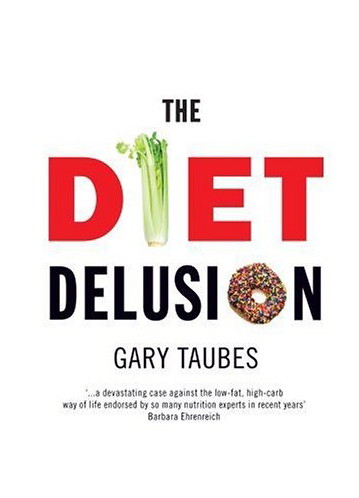
 . If the subtitle looks familiar, it should! It's the EXACT SAME SUBTITLE as Good Calories, Bad Calories because this is the EXACT SAME BOOK--it's the UK version set to release on January 17, 2008. The book is 640 pages long (not 448 as Amazon shows) and will be released by Vermilion, a division of Random House--who published the American version of the book. If you're still confused, just remember this--IT'S THE SAME BOOK! End of story. :)