|
PLEASE UPDATE YOUR BOOKMARKS TO LIVINLAVIDALOWCARB.COM/BLOG
Zone Diet Success Stories Wanted For First Magazine Feature Story
 The Zone Diet will soon be featured in FIRST magazine The Zone Diet will soon be featured in FIRST magazineI got word from the people at the Zone Diet today that they are teaming up with the popular First magazine to do a story on people who have implemented the Zone strategies for weight loss. What they REALLY want to see are people who have been using fish oil supplements with GREAT success in improving both their weight and health. Here's your chance to have YOUR story heard in a well-known national publication! Those of us who are livin' la vida low-carb recognize the importance of getting the proper balance of essential omega fatty acids to reduce inflammation and this is a subject that is near and dear to the heart of Zone creator Dr. Barry Sears (who by the way is coming out with a new book in September 2008 entitled Toxic Fat: When Good Fat Turns Bad). They want first-hand testimonials of women (sorry guys!) who have experienced an amazing turnaround in how they look because of the Zone diet and fish oil supplementation (like Zone spokesperson Sue Knorr who I recently featured at my podcast show). Time is of the essence and this story is on a deadline, so get on this ASAP if you are genuinely interested in sharing what happened to you. Here are the requirements: - You MUST be female - You MUST be willing to reveal before and after photos - Your story MUST include your testimony about the Zone diet/fish oil If you fit all of this criteria and can send me your story quickly, then please e-mail this information to me at livinlowcarbman@charter.net. I'll forward them to the people at the Zone diet and cross my fingers for you that yours will be chosen. GOOD LUCK TO YOU and remember--DON'T DELAY! Send your story in today. Labels: Barry Sears, diet, First magazine, fish oil, low-carb, magazine, story, success, Zone
Woman's World: 'We Can't Stand Behind' Our Kimkins Diet Story
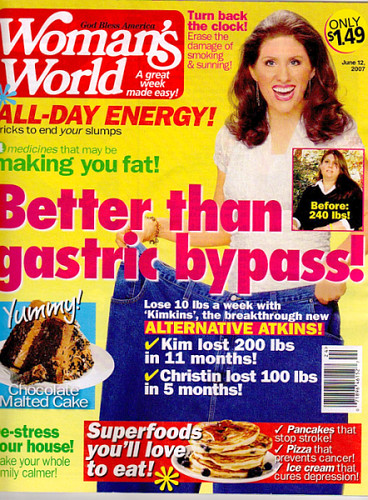 The notorious Woman's World magazine Kimkins cover story The notorious Woman's World magazine Kimkins cover storyIt took them eight months to do it, but Woman's World magazine has FINALLY acknowledged the cover story they did on the now-notorious Kimkins diet contained some "inaccurate information" from and about the founder of the low-fat, low-calorie, starvation scheme--the lying and manipulative Heidi Diaz. Ever since a private investigator released photos of a morbidly obese Diaz back in September 2007, literally thousands of concerned readers have flooded Woman's World with letters and e-mails begging them to print a retraction of their June 2007 story featuring the Kimkins diet prominently with two real people-- Christin Sherburne and Deni Huttula--and a fake photograph and story of Diaz who referred to herself in the magazine as Kim Drake.  Christin Sherburne and Deni Huttula have repudiated Kimkins Christin Sherburne and Deni Huttula have repudiated KimkinsAlthough Heidi Diaz alleged to have lost 200 pounds, it was one big lie and it took a class action lawsuit deposition for her to admit that after many months of speculation following the private investigator's shocking photo discovery. In the meantime, some of the most ardent former supporters of this diet have been speaking out about how the Kimkins diet program has negatively impacted their health and even got a local television station in Los Angeles (KTLA-TV) to pick up the story in October 2007. Despite this, Woman's World was eerily silent. But then the Kimkins diet fraud was given a nationally-televised audience for the first time in November 2007 when it was featured on FOX-TV's "The Morning Show with Mike & Juliet" where Christin and Deni shared their concerns about Diaz and the ultra-low-calorie diet plan she was pushing on the members of Kimkins who joined as a result of the Woman's World story. They warned that this diet simply promoted "anorexia" and should be avoided. Even still, Woman's World did nothing. The public spokesperson for the Kimkins diet at the time was a woman named Jeannie Battinger who severed ties with the organization in response to her own concerns about the now-exposed Kimkins founder. Even as Battinger was trying to defend the indefensible during her appearance on "The Morning Show," you could tell she knew that something was awry. Her resignation took place about a week after the show aired. And yet again, Woman's World took no action. However, the most significant exposure of the Kimkins calamity to date took place last month when ABC News was looking for people harmed by Kimkins and ran this story that was featured on "Good Morning America." The tidal wave of concern about Kimkins apparently grew to the point after that segment aired that Woman's World came to their senses and decided to post a statement. Here's what the statement reads: A statement from Woman's World Magazine. Please accept our apology. We at Woman’s World pride ourselves on finding inspiring diet successes to share with our readers every week. That's why we were so distressed to learn that Kim Drake, the founder of Kimkins.com, gave us inaccurate information about herself and her weight loss. Though the article appeared several months ago, in our June 12, 2007 issue, and nutritionists assure us the diet information we provided was accurate, we deeply regret having shared with you a story we can't stand behind. Your trust means everything to us, and we want to bring you the very best magazine we can, each and every week.All I can say is IT'S ABOUT TIME!!! Considering all the preponderance of the evidence that had previously come out in the eight months since the story was published, it should not have taken this long for action to be taken. They are now asking for people to e-mail them at dearww@bauerpublishing.com if they have any concerns or questions about this decision. According to our friends at Kimkins Scam, the retraction will appear in the March 4th issue and will be on newsstands the week of February 25th. The skepticism of the Kimkins Scam author about this is difficult to argue with or ignore. "Now, you know this retraction will be buried way back in the back, in itty bitty letters. Just CYA...that's all it is...CYA."She's right! But at least they took SOME kind of action to right this wrong that set in motion a flood of new Kimkins members to the web site to be sucked in by a professional scam artist who is still bilking members out of $80 even today (it used to be $60 before that $40 before that $15 before that $10...is it gonna cost a hundred bucks next, Heidi?!). If you're even thinking about joining this web site, don't waste your money. There are plenty of FREE low-carb support groups like my "Livin' La Vida Low-Carb Discussion" forum, Low-Carb Friends, Active Low-Carber forum, The Low-Carb Cafe forum, Eating Low with Amy, Atkins All The Way, and MANY MANY MORE (my apologies for leaving some out...but there are a BUNCH of 'em)! The point is you don't NEED to pay money to get the support you need in your low-carb lifestyle. You can glean all the helpful support and information you need to get started right livin' la vida low-carb by relying on the collective wisdom of those of us who have been eating this way a while. We're ready to help you on this amazing journey to lose weight and get healthy, so hop on board one or more of these sites today to get started! I think we should all e-mail Woman's World at dearww@bauerpublishing.com to thank them for stepping up and doing the right thing. Yes, it took them a long time to do it, but at least they did it and printing a retraction takes a lot of guts for a magazine to do. They don't like getting a story wrong, so let's encourage them and share how much we appreciate the courage they have taken in doing this. Perhaps you can send them your story of success by livin' la vida low-carb if they want to talk about REAL success the healthy low-carb way. Ladies only please! :D Labels: Christin Sherburne, Deni Huttula, diet, fraud, health, Heidi Diaz, Kimkins, magazine, retraction, scam, story, support, weight loss, Woman's World
7 Red-Hot Reads To Awaken The Low-Carb Fire That Burns Within
 Seven super sizzling columns to light up your low-carb fire again Seven super sizzling columns to light up your low-carb fire againThere's so much positive news I've seen about livin' la vida low-carb lately in the blogosphere and even in the mainstream news lately that I can barely get to it all. So rather than hoarding all of it to myself and trying to blog about it when I can, I thought I'd share the following columns and posts with you today. These will absolutely get your fire lit again for low-carb living if you feel it has fizzled a bit. I have no doubt you're gonna LOVE these! ENJOY! 1. "For Guys Who Need To Lose 100 Pounds" SOURCE: Mr. Low Body Fat's BlogI just love Muata, the author of the blog Mr. Low Body Fat. This is the incredible transformational story of a man who took up the challenge of not just losing weight but quite literally changing his life forever. In the process he lost over 100 pounds and went from a chunky man into one with a six-pack. I have nothing but deep respect for what he has accomplished and I HIGHLY recommend you read his blog! He wrote a column designed specifically for men who want or need to shed triple digits. Since that is something I have a little bit of experience with (*smile*), I was intrigued by what Muata had to say. And I was NOT disappointed. In fact, much of it echoed many of the same themes I have blogged about here-- setting many small goals along the way, making the way you eat a long-term permanent and healthy lifestyle change, don't worry about loose skin following weight loss, and so much more! Whether you've got more than 100 pounds to lose or not, you'll learn a lot from Muata's experience. 2. "5 Reasons You're Not Losing Weight"SOURCE: MSN Health & Fitness PageOne of my readers was so excited when she saw this column because she felt it was about time the low-carb message reached such a major media outlet as MSN. Of course, when I clicked on the link and saw the authors were University of Connecticut low-carb researcher Dr. Jeff Volek and Men's Health Features editor Adam Campbell, authors of the fabulous new low-carb fitness book Men's Health TNT Diet, a great big smile came on my face. I knew the column was gonna be outstanding. And it is! Get a load of the five reasons you're not losing weight: You're Following Bad Advice, You Eat Fat-Free Foods, You (Still) Don't Eat Breakfast, You're Eating Too Much Sugar, and You Don't Lift Weights. This is one column you'll probably want to print out, tape up to the wall, and read often. Volek and Campbell are 100% right with what they share in this article and I think you'll agree with much of what they say. 3. "Saturated Fat Is Your New Friend"SOURCE: Male Pattern Fitness BlogDo you read Lou Schuler's Male Pattern Fitness Blog? Well, why the heck not? Lou is one of the minority of voices out there who espouses the basic principles of livin' la vida low-carb in a very entertaining and "daily news" type of format. He's like a talk show host going over the health news of the day and adding in his own one-of-a-kind commentary. This post he wrote about saturated fat is absolutely, positively fabulous! As a former writer for Men's Health magazine, Lou is stunned that they would even dare run a positive story on the role of saturated fat in a healthy diet (which I'll be highlighting next). As a low-carber, he realizes the paradigm shift is happening right before our eyes and is excited about the prospects for the future. 4. "What If Bad Fat Is Actually Good For You?"SOURCE: Men's Health MagazineHere's that Men's Health column that has Lou Schuler all excited. It was written by Nina Teicholz and is quite a detailed look at how saturated fat became so vilified in the United States and around the world. The story is especially damning of Ancel Keys for starting this anti-saturated fat movement without having any real evidence to back up his claims that it is unhealthy. A brand new 12-week study cited in the story conducted by Dr. Volek on the impact of saturated fat on overweight men and women was astonishing (although not to people who understand how low-carb diets work)! The low-carbers ate 36g saturated fat a day--THREE TIMES the amount of the low-fat dieters--but they saw their small, dense LDL cholesterol particles (the VERY dangerous ones for heart health) DECREASE, their triglycerides drop by MORE THAN HALF, and their HDL/LDL ratio improved more than those on the low-fat diet. Print this one out, too, and wave it at those people who tell you that saturated fat you're eating on your low-carb lifestyle will kill you. WRONG! 5. "Low-Fat vs. Low-Carb: Time for a Truce in the Diet Wars?"SOURCE: Male Pattern Fitness BlogOne more post from Lou Schuler's blog was worth mentioning. He looks at the ongoing debate between low-fat and low-carb diet advocates and wonders if there is any room for common ground. In fact, Lou cites this blog post I wrote following my interview with Dr. Dean Ornish last year (and was aired on my podcast show recently) outlining 20 shared beliefs between the two sides. You gotta love the way Lou just tells it like it is: "Cut the crap out of your diet, exercise, and you'll probably hit a good, healthy weight relative to your genetics. If you need more intervention than that, go with more protein and less carbohydrate. The first data set I used, the one about total calories produced in the U.S., showed that about 13 percent of the calories we have access to come from protein. About 51 percent come from carbohydrates. If you double the protein and cut the carbs in half, good things will happen. If that's still not enough, go low-carb."Don't miss a single blog post from Lou Schuler again! Bookmark the Male Pattern Fitness Blog TODAY! 6. "Stop Blaming Saturated Fat"SOURCE: Men's Health MagazineWe go back to Men's Health Magazine again for a joint column from Dr. Volek and Adam Campbell to see further evidence why saturated fat is not the great evil it has been made out to be. If you're looking for the VERY LATEST research on why saturated fat is GOOD FOR YOU, then READ THIS ARTICLE!!! Here are the key findings: Saturated fat is beneficial because it raises your HDL "good" cholesterol, there's no evidence from prior research that saturated fat leads to heart disease, saturated fat intake has gone down in the past three decades while obesity and heart disease have been on the rise, saturated fat is NOT harmful when you simultaneously reduce the carbohydrate in your diet, and an increase in consumption of saturated fat on a low-carb diet actually leads to a DECREASE in the amount of saturated fat in the bloodstream compared with a low-fat diet. Cutting edge research and you heard it here first! 7. "Curbing The Carbs"SOURCE: The Ottawa CitizenFinally, we head north to our friends in Canada for a superb story written by Mike Sornberger from The Ottawa Citizen about the continuing importance of livin' la vida low-carb STILL happening in the year 2007 despite the fact that the "low-carb diet craze" is long gone. The article quotes Stanford University professor Dr. Christopher Garder who authored this JAMA study that found Atkins was best among the diets earlier this year and is in general very favorable coverage for low-carb living that you should find interesting. It describes the unique role of insulin in weight gain and health decline--something New York Times science journalist Gary Taubes who wrote the 2007 blockbuster health book Good Calories, Bad Calories has repeated quite often based on his own look at the research. Those will keep you busy a while, so check 'em out and tell me what you think. The low-carb lifestyle is DEFINITELY seeing a comeback and it's good to know these kind of stories are getting out there in the mainstream. Regardless of what the negative naysayers toward livin' la vida low-carb have to say about our healthy way of eating, this is our chosen method for not just losing weight but also maintaining our weight and health for the rest of our long and prosperous life! And we wouldn't have it any other way. Have you seen some positive news in the media about low-carb that I may have missed? If so, then feel free to e-mail me a link to the story anytime at livinlowcarbman@charter.net. Mark my words, you're gonna see a dramatic change in the coverage towards livin' la vida low-carb real soon as a whole lot more research keeps confirming what we already know--this way of eating optimal for shedding the pounds and improving your health. Labels: Adam Campbell, fat, Gary Taubes, Jeff Volek, Lou Schuler, low-carb, low-fat, magazine, Male Pattern Fitness, Men's Health, Mr. Low Body Fat, Nina Teicholz, positive, saturated fat
'Livin' La Vida Low-Carb Show' Episode 98: Want Low-Carb Magazines? You're Out Of Luck!
In Episode 98 of "The Livin' La Vida Low-Carb Show with Jimmy Moore," I wanted to address the noticeable lack of low-carb print magazines available on the market today. Back in the heyday of low-carb a few years ago, you could find all sorts of magazines espousing the latest information, recipes, and success stories from the perspective of the low-carb lifestyle. So where'd they all go? Click on the "LISTEN NOW" link below or download it to your iPod to hear today's podcast and find out what happened to the most popular low-carb magazines:  "The Livin' La Vida Low-Carb Show with Jimmy Moore" Episode 98 [11:54m]: LISTEN NOW | DownloadThe two top low-carb magazines just two years ago were Low-Carb Living and Low-Carb Energy. I was so thrilled to find these resources for my continuing weight loss journey after losing 180 pounds on the Atkins diet in 2004. There's just something about holding a paper magazine in your hands and coming back to it time and time again. As much as we would like to think the information superhighway has completely taken over modern-day society, it hasn't. That's why print magazines are still relevant in 2007. So, for that reason, we need to see low-carb represented in this medium. Unfortunately, last summer was the end of the low-carb magazines when SheKnows LowCarb, formerly known as Low-Carb Energy decided to shut down operations of their print division (although they started back up with an online magazine in December 2006). I've held on to this copy of the magazine as a keepsake since it featured my low-carb weight loss success story--plus it may be the very last low-carb magazine ever! Never miss a single low-carb bite of this podcast by: 1. Listening at the official web site2. Going to iTunes3. Calling (818) 688-2763 to listen via Podlinez4. Subscribing to the RSS feed Do you miss having a low-carb print magazine to subscribe to and read? If so, then what is it about low-carb magazines that is so appealing to you since there are plenty of online resources for much of the same information? Let's hear what you think about low-carb magazines and whether you would support another one if some savvy investors take up my offer to finance a new one. One week from today will be my historic 100th podcast episode. Not many podcast shows last long enough to get to 100 episodes, so I am very humbled to have reached this point with "The Livin' La Vida Low-Carb Show with Jimmy Moore." We'll be celebrating this momentous occasion with lots of cool prizes and giveaways, so be sure to tune in next week to find out how YOU can win. :D Come back on Monday as I interview a very special woman in my life--my MOM! She had gastric bypass surgery in December 2003 (just a few weeks before I went on the Atkins diet) and has seen all the ups and downs that come from that controversial weight loss method. It's quite an eye-opening experience you will have to hear to believe! That's coming up in Episode 99, so we'll see you then! 11-1-07 UPDATE: One of my readers/listeners thinks bringing back a low-carb magazine would be a GREAT idea! Hi Jimmy!
I would definitely be interested in a low carb magazine. I guess the positive side for me is there being an unexpected treat in my mailbox, a reminder that there are more recipes out there than the ones I have just grown accustomed to making.
It’s a monthly reminder to get out of my rut, and try something new. I know, I know, there are about 30 cookbooks in my kitchen, but they become part of the scenery. So again, the new monthly issue of a magazine is a smack upside the head to try something new.Absolutely, the monthly or even quarterly magazine could be a great reminder of why you are livin' la vida low-carb. Anyone else? Labels: Jimmy Moore, low-carb, magazine, podcast, The Livin' La Vida Low-Carb Show
Campbell: People Aren't Just Eating Too Much, They're Eating 'Too Many Carbohydrates'
 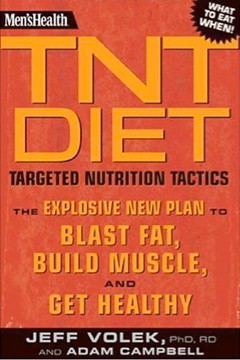  Adam Campbell and Dr. Jeff Volek team up for new low-carb fitness book Adam Campbell and Dr. Jeff Volek team up for new low-carb fitness bookThe number of influential members of the health media today who believe in the efficacy of livin' la vida low-carb is ridiculously small in comparison to those who still subscribe to the same old failed high-carb, low-fat diet. That's one of the reasons I chose to start my blog and other media outlets because there is a noticeable vacuum in this medium that is begging to be filled. It's rather sad that we have supposedly intelligent people purporting to know their stuff as it relates to diet, health, and fitness, but yet they hold on so tightly to an archaic belief. Isn't there ANYONE in the major health media who thinks on his own and has been watching all of the evidence in favor of low-carb diets come out over these past few years? Yes there is! Enter Adam Campbell. Adam individually stands out among his peers because he is unafraid and unashamed of shining the light of truth on the nutritional ruse that has been happening right in front of us for decades and quite frankly he is as sick of it as those of us in the low-carb community are. Writing for Men's Health magazine isn't a bad gig! Today we are thrilled to have Adam here for an interview to talk about the low-carb lifestyle and why it deserves to have more attention paid to it for the sake of weight, health, and fitness. With his third book he co-wrote with respected low-carb researcher Dr. Jeff Volek on the way, you'll get some exclusive sneak preview quotes from this "explosive" (sorry for the pun!) new addition to your low-carb library! Adam Campbell is certainly one to keep an eye on as livin' la vida low-carb becomes more and more accepted by our culture. And it is my estimation that he may very well be one of the reasons why it will happen sooner rather than later. Enjoy hearing from this young, energetic, and knowledgeable man of conviction today as he talks about living healthy--the low-carb way. 1. I am pleased to welcome to the "Livin' La Vida Low-Carb" blog today author, journalist, and the Features editor for Men's Health magazine, Adam Campbell. He has had the opportunity to work in the research lab while earning his master's degree in exercise physiology from the University of Kansas and took part in studies about energy balance and human performance as it relates to athletes and overweight people. Today he is one of the foremost voices in the world of nutrition and fitness with his unique role at Men's Health. After discovering Adam was a supporter of low-carb, I can't help but ask the question, "How'd you manage to get on staff at such a powerhouse health publication like Men's Health?"I got lucky. I was planning to get my Ph.D. in exercise physiology at the University of Kansas, and pursue a career in research. But for some reason, it didn't feel quite right. (Perhaps it was the tens of thousands of dollars in school loans it was going to cost to me.) So I opted out during the semester I was completing my Master’s degree. A week later, I was scanning the National Strength and Conditioning Association’s career site, and noticed that Men's Health had posted a job for a reporter. I applied—I have a bachelor's degree in English—and somehow survived the interview process. Keep in mind, I was 29 at the time—and starting at the bottom rung of a new field. 2. Congratulations on your success so far in your writing career at Men's Health and I'm sure it will continue on for many years to come. Yours is a voice that is sorely needed in the health debate. Speaking of that, what an amazing column you wrote late last year about the failures of the American Diabetes Association (ADA) which garnered your fair share of criticism from them.
But you didn't back down from your thesis that a low-carb diet could very well be the cure diabetics have been looking for because you had the scientific and anecdotal support from people like Dr. Mary C. Vernon to support everything you wrote. Tell us why you felt compelled to address that controversial topic.The main reason is that the current recommendations don't make a lot of sense. Why would you tell someone who can't tolerate carbohydrates—at least not without medication—to make them the foundation of their diet? It seemed that the ADA should at least present the alternatives to doctors and patients. Instead, they push diabetics to consume the same diet that you might recommend to an elite endurance athlete. Bottom line: I was frustrated. I know you and your readers can certainly identify. 3. Absolutely! I understand you are currently putting those stellar writing talents of yours to work on your third book in collaboration with low-carb researcher Dr. Jeff Volek from the University of Connecticut. What's the book called, when will it be available, what's it about, and why do low-carbers and people interested in health and fitness need to pay attention to it when it comes out?The book is called Men's Health TNT Diet: The Explosive New Plan to Blast Fat, Build Muscle, and Get Healthy in 12 Weeks. TNT, or Targeted Nutrition Tactics, is just what it sounds like: specific nutrition (and exercise) strategies that enable you to reach your body composition goals as fast as possible. Essentially, it's what you should eat, and when you should eat it. Not surprisingly, a low-carb diet is the foundation of TNT, since that's one of Jeff's primary research interests. It'll be available October 2nd from Rodale books. In fact, you might call it an evolution of the classic low-carb diet, since it not only includes an exercise program, but also teaches you how to eat around your workout in order to optimize your results. While we provide several different eating plans in the book, our goal was to help readers understand the basic principles of why our strategy works. That way, they can tweak the diet for their lifestyle and goals. For instance, we talk a lot about glycogen in the book. Here's a quick exclusive excerpt for your readers: "Glycogen is the name for carbohydrates that are stored in your muscles. An easy way to understand glycogen is to picture it as a storage tank for sugar, the form of carbohydrate your body uses for fuel. So just as you have fat stores, you also have sugar stores. However, unlike your fat stores, which are able to expand (read: you can get fatter and fatter), your glycogen tank has a limited capacity to store sugar. For instance, think of your car: If you own a midsize, you probably have about a 14-gallon fuel tank. Try to fill it with 20 gallons, though, and the other six would spill out onto the pavement. It's the same way with sugar and your glycogen tank.
And therein lies the problem: A full glycogen tank signals your body to use incoming carbohydrates for energy instead of your stored fat. Otherwise, your glycogen tank will overflow. As a result, your body not only stops burning fat, it starts conserving it—just in case of starvation. This is one of the main reasons for America’s growing obesity problem. Because most people’s diets are excessively high in carbohydrates, their glycogen levels are always at peak capacity. In turn, their bodies won’t allow them to use their stored fat for energy.
What’s more, there are also serious health ramifications to perpetually high glycogen levels. When excess carbohydrates from your diet can’t be stored as sugar in your glycogen tank, the overflow causes sugar to build up in your blood stream. The result: Chronically high blood sugar, which can damage the large blood vessels of your heart and brain, and the small vessels of your kidneys and eyes. As a consequence, your body starts shuttling the overflow of sugar to your liver, where it’s then converted to a blood fat known as triglycerides. If you’ve ever had blood work done, you might recognize triglycerides as one of the measurements that your doctor ordered.
And for good reason: Elevated triglycerides are a risk factor for heart disease, and an early predictor of future diabetes. To make matters even worse, once sugar becomes triglycerides, or fat, it can be stored as fat. Ever been told carbs can’t make you fat? Think again.Remember, this isn't to suggest that you can't eat carbohydrates without getting fat. It's to show what happens when you overeat carbohydrates, which most people are doing. For instance, if you look at dietary intake in the US over the last three decades from the Nutrition Examination Surveys (NHANES), you'll notice an interesting pattern. In men, average daily energy intake during the early 1970s was 2450 calories. But by the year 2000, that number had increased to 2618. An even greater increase in calories was seen in women. Where did these extra calories come from? According to the NHANES data it was almost exclusively derived from carbohydrates. Interestingly, there were minuscule changes in the intake of protein and fat. (In fact, fat intake decreased in men.) So sure, people are eating too much. But they’re eating too many carbohydrates, not too much protein and fat. And that's a glaring problem with the government’s nutrition recommendations—one that's seemingly being ignored. 4. Fitness is obviously one of your passions as you run an outstanding blog for Men's Health called "The Fitness Insider." You are an NSCA Certified Strength and Conditioning Specialist, so you have an extensive book knowledge about how and why humans need exercise. But in the real world, most people can't seem to muster up the energy and commit themselves to a regular exercise routine. What advice can you share from your own experiences to help those who are reluctant to start their own fitness schedule? Also, is there an ideal mix of cardiovascular and resistance training that people should know about?First, let’s talk about the commitment issue. I'm reminded of an interesting study that I wrote about in this story: In June of this year, researchers at Leeds Metropolitan University, in the United Kingdom, released findings of a new study that looked at how exercise affects job performance. It worked like this: They asked 210 workers to provide feedback on their job-related duties and time management, on a day when they participated in an exercise program and again on a day when they did no exercise. They simply reported observations of their own behavior based on a 7-point scale. For example, they were asked to rate their ability to work without stopping for unscheduled breaks, and how effectively they were able to stick to their "to-do" lists. They also provided details about their workloads and exercise sessions. When the results were tallied, even the researchers were surprised.
Workers scored 15 percent higher in their ability to meet both time and output demands on the day they exercised. "What we found staggered us, and we were left wondering what companies might do otherwise to produce these 15 percent improvements," says Jim McKenna, Ph.D., the lead researcher.
Now consider for a moment what these numbers mean to you: On days when you exercise, you can -- theoretically, at least -- accomplish in an 8-hour day what normally would take you 9 hours and 25 minutes. Or you'd still work 9 hours, but get more done, leaving you feeling less stressed and happier with your job, another perk that McKenna says the workers reported. Obviously, the responses that led to these results were subjective. But it's hard to deny that perception is reality when it comes to job satisfaction. And a 15 percent boost in productivity might just give you a case for a similar boost in pay.
Besides showing how Hillman's laboratory findings are expressed in the real world, this study may also explain why busy men who regularly exercise are able to fit cardio into their schedules, while equally busy men who don't exercise claim they don't have the time. Arkansas governor Mike Huckabee can relate to both sides of the story. In June 2003, he was sedentary and weighed 280 pounds; he now runs marathons and weighs 170.
"I've never found time to exercise," he says. "I make time."
Consider him a poster boy for what cardio can do for a man who's already good at his job. Huckabee, ever the conscientious politician, wants to be clear: He didn't have a problem keeping his schedule or accomplishing tasks before he started running. And it's true; this guy became governor in 1996 -- 7 years before he initiated his exercise program -- and was reelected twice along the way. It's just that he's even better now.
"I'm more creative, because I have mental energy. When I finish running several miles, it's like my mind is running on overdrive," he says. And, he adds, "It's made a dramatic difference in my ability to focus."The only way to discover this yourself is to give it a try. But one of the big mistakes people make is to try to do too much in the beginning. Just get started—even if it's only 10 minutes for 3 days a week. The reality is that the less trained you are, the less you have to do to see a benefit. Of course, while you can improve strength or endurance quite quickly, it still takes time to see visible results. This is where people often get frustrated. So it takes some patience. In the TNT Diet, Jeff and I have this passage: "A training program is only effective if you actually have time to follow-through with it. For instance, consider that U.K. researchers recently determined that men who lifted weights three days a week for 5 weeks increased muscle size by about 0.2 percent per day. Sure, this amount of growth is unnoticeable from day to day. But imagine how dramatic the cumulative effect would be were you to work all your major muscle groups three days a week, 52 weeks a year. This is called consistency, and it's the true key to achieving the most success possible on any exercise program.If you work out 3 days a week, 52 weeks a year, you'll like the results. But few people make it beyond a month. Which is interesting because almost everyone will tell you they feel better—even great—after exercising. I guess our memories are pretty short. One way to combat this lack of motivation is to make a deal with yourself: On days you don't want to work out, force yourself to complete all of the sets of your first exercise. If you want to call it a day after that, then feel free to hit the showers. However, much of the time, you'll find your mood has changed and you'll be motivated to complete your entire session. It seems the process of simply getting started—going to the gym, changing clothes, etc.—is our biggest obstacle. As far as an ideal mix of exercise, that depends on your goals. If you're following a smart diet (ahem, TNT, ahem), then resistance training is going to make the best use of your time for fat loss. While everyone thinks that aerobic exercise is the best choice for this goal, we recommend weight training. Here's another bit from our book to help explain why: You've Been Told: “Running is the best way to lose weight.”
The Origin: In 1977, Jim Fixx published The Complete Book of Running. This bestselling book popularized the notion of running to improve health and lose weight, and is widely credited with kicking off the jogging boom of the 1980s. Furthermore, most exercise scientists during this time were recreational or competitive runners themselves. As a result, running and other types of endurance activities were the type of exercise that was most often studied, particularly in terms of health benefits (and there are many).
And because these researchers reported that running burns a lot more calories than weight training—while requiring nothing but a pair of functional legs—the majority of experts began to widely promote it as the best mode of exercise for fat loss. However, they didn’t—and still don’t—have the data to support that assertion.
What Science Shows: First, it’s important to point out that engaging in a regular running program—or any kind of exercise for that matter—without also adopting a prudent diet is a very inefficient way to lose weight. After all, a typical fast food double-decker cheeseburger and large fries contain more than 1100 calories—a meal most red-blooded American men can wolf down in less than 5 minutes. However, to burn that many calories, the average guy would have to run for 53 minutes at an 8:30 per mile pace. Which is why your diet has a greater impact on total weight loss than exercise.
As we’ve already discussed, though, it's not simply weight loss that’s important—it’s the quality of your weight loss that matters most. That is, the amount of your weight loss that’s pure fat—since that’s what really counts. Perhaps surprisingly, endurance exercise—such as running, cycling, or walking—does little to further augment fat loss when combined with a good diet. Weight training, however, has a dramatic impact. Consider a study we conducted back in 1999. We put overweight men on a diet that was approximately 1500 calories a day, and then divided them into either a diet only group, a diet group that also performed endurance exercise, or a diet group that performed both endurance exercise and weight training.
After three months, each of the groups had lost almost the same amount of weight—about 21 pounds. But the quality of their weight loss was much different. The men in the weight-training group lost five pounds more fat than the other two groups. You might wonder how that’s possible when they all dropped the same amount of weight. The answer is that the men who dieted or dieted and performed only endurance exercise lost about 15 pounds of fat, but also lost several pounds of muscle. Those who lifted weights lost almost pure fat.
You see, weight training is a powerful tool when it comes to fat loss. Because it stimulates your muscles to grow, your body is less apt to part with your hard-earned muscle. This is crucial because the more muscle you have, the bigger your body’s fat-burning furnace. What’s more, if you lose muscle, you not only reduce your ability to burn fat, your glycogen tank becomes smaller. (Remember, most of your glycogen is located in your muscles.) So you have less room to store carbohydrates, increasing the likelihood that they’ll be converted to fat in your liver. Endurance exercise provides none of these benefits.
But what about the fact that running burns more calories than weight training? Turns out, when scientists at the University of Southern Maine used an advanced method to estimate energy expenditure during exercise, they found that weight training burns as many as 71 percent more calories than originally thought. In fact, the researchers calculated that performing just one circuit of eight exercises—which takes about 8 minutes—can expend 159 to 231 calories. That’s about the same as running at a 6-minute mile pace for the same duration. And just as important, research shows that weight training—unlike endurance exercise—can elevate your metabolism for up to 39 hours after your workout session.As for overall health, adding a short interval training session after your weight workout or on the days in between is the most efficient way to boost your aerobic fitness, while burning even more fat than a slow to medium jog. A lot of people become intimidated at the idea of intervals, which are short, high-intensity “sprints” interspersed with periods where you either rest completely or simply slow down. They shouldn’t be. For those who are “out of shape,” these sprints could be fast walk. It’s all relative to what’s intense for you. The best part of intervals is that they’re time-saving: You can do more physical work in less time than classic forms of cardio. That said, if you really like running, by all means keep at it, as any activity that you enjoy is a great one to do. And there are certainly main health benefits to be achieved with regular aerobic exercise. 5. I recently interviewed a good friend of yours, the soon-to-be Dr. Cassandra Forsythe. Her work alongside Dr. Volek has been crucial in understanding the metabolic mechanisms that make the low-carb diet work extremely well for weight loss, normalized blood sugars, and many other health benefits. The impetus for her involvement in low-carb was a personal one--she's carb sensitive! How about you? What made Adam Campbell interested in livin' la vida low-carb?In my 20s, before I went to grad school, I was working as a commodities trader at the Mercantile Exchange in Chicago. (I was really putting that English degree to good use!) Because the market I worked was only open from 8:30 to 3:15 (in those days, markets didn’t trade around the clock like they do now), I had a lot of time on my hands. So I spent it working out and going out—as in eating and drinking. While I could tell I was putting on muscle from my gym work, I couldn’t figure out why I still had a gut. A smart friend suggested it was a nutrition problem (surprise!). So I hit the local B&N and picked up a copy of The Zone Diet by Dr. Barry Sears, which had just hit the bestseller list. At the time, I didn’t know the difference between a carbohydrate and a fat. So this was really the start of my nutrition education. I dedicated myself to Dr. Sears’ eating plan, and was quickly amazed at the changes in my physique—and the way I felt. I continued to follow a Zone-friendly diet until I went to grad school about three years later. There, I enrolled in my first nutrition class, and soon found out that much of what Dr. Sears said was wrong! I’m being facetious here, of course. But the point is that my formal nutrition education contradicted what I learned from The Zone. So I was constantly pondering this question: Was Dr. Sears “wrong,” or was it my college instructors and textbooks? Remember, this was when The Zone was still somewhat controversial, and the Atkins Diet wasn’t even being studied. In fact, Atkins was considered a health hazard, even more so than it is now (and typically by people who’ve never read the book). In 2000, I started my career at Men’s Health. I hadn’t fully bought into everything I had been taught in college, but there was definitely some “brainwashing.” That’s when I started corresponding with Jeff Volek, and immersed myself in nutrition studies and books, which included re-reading the textbooks from grad school with a more discerning eye. The rest is just the logical progression of 7 years of continuing education. 6. As you have noted in your own education, we live in a society that worships the low-fat diet as the gospel truth. They have so demonized fat, especially saturated fat, that people are quite literally scared to death of it despite all the research showing the health benefits of fat consumption. What can be done to reverse the fat phobia that exists and how can we convince those same people that sugar and refined carbohydrates are very likely the culprit in their weight and health problems?I’m not sure it will change anytime soon. Researchers like Jeff Volek, Richard Feinman, Eric Westman, Steve Phinney, Jay Wortman, and Ron Krauss are certainly providing the ammunition to blow away the saturated fat dogma, but it’s so heavily ingrained that it’s only people who have an open mind who will get it. People like you, Mike and Mary Dan Eades, Regina Wilshire, Gary Taubes, and Nina Teicholz (look for an article about saturated fat from her in the November issue of Men's Health) are obviously raising awareness, though. I really think the key is that people have to figure it out for themselves. It’s very hard to convince someone of the merits of a low-carb lifestyle if he or she has already decided that it’s unhealthy or impractical. All you can really do is present the science. Of course, when faced with research that shows low-carb diets are better at lowering heart disease risk factors than low-fat diets, health “experts” always counter with the same argument: They simply point out that there isn’t any long-term data from experimental studies to support a low-carb recommendation. The reality, though, is that this type of research doesn’t exist for low-fat diets either. 7. Low-carb supporters can sometimes feel like lonely wanderers in a harsh and cruel world treating us as outcasts for our nutritional choice. Do you see anything monumental happening in the next few months and years that will serve to rekindle the fire in the low-carb community?I think (and hope) that Gary Taubes’ (Good Calories, Bad Calories) book will help. But ultimately, these transitions are slow. One well-known scientist told me that he thinks it will be another 20 years before we see a paradigm shift. That might sound pessimistic, but you could think of it this way: We live in a society where people are going to eat poorly no matter what the recommendations. And while those who choose not to eat poorly might not adopt a low-carb approach, they’ll ultimately find a diet that emphasizes whole foods, and discourages those that are highly processed or contain lots of added sugars. That’s a strategy that just about everyone promotes. As an example, a nutrition expert I really respect, Alan Aragon, has said—and I’m paraphrasing here—you should eat as many carbs as you can tolerate. So if carbs aren’t a problem for you—you’re lean, you don’t overeat, you have plenty of energy, you sleep well, your blood work is good—who are we to tell you that you should cut back on them? Maybe you don’t need to. But if you’re experiencing some of the negatives that can be associated with a higher carb diet—like high blood pressure, high triglycerides, or one of the other symptoms mentioned above—you may want to reconsider. Some people can tolerate lots of carbs, others can tolerate very few. For instance, a 245-pound bodybuilder who has 8 percent body fat can often handle a lot—they have bigger glycogen tanks due to their muscle mass, and also perform high amounts of physical activity. However, a 45-year old guy who’s packing 25 pounds of excess belly-fat and sits at a desk all day probably can’t. So your lifestyle and body type can make a major difference. 8. THANK YOU so much for sharing your thoughts and wisdom with us today, Adam. It's nice to know there are people like Adam Campbell out there working on our behalf in the public forum sharing about livin' la vida low-carb in a non-threatening, yet assertive manner. I know it can't be easy being labeled a contrarian for not buying into the low-fat lie, but you are doing it! Is there anything else you would like to share with my readers to encourage and edify them to continue on with their low-carb way of life?Don’t let anyone tell you what the right diet for you is. No one knows. In the TNT Diet, we encourage people to get blood work done before you start the diet, so that you have a baseline measurement. This way, you can see for yourself what’s happening to markers for heart disease risk, in addition to what happens in the mirror. Just as important, you need to start monitoring how you feel when experimenting with a diet. We go into this in some detail in our book, but I discuss it in this blog post. These are important factors to look at, but almost no one does this. They’re typically only interested in what happens on the scale. Interestingly, we’ve seen such great results from some people on our plan that the scale actually becomes deceiving. Here’s an example from the book: 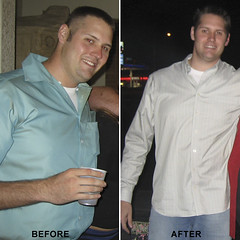 He only lost 7 pounds, but look at the amazing difference!“I had to keep tightening my belt.” He only lost 7 pounds, but look at the amazing difference!“I had to keep tightening my belt.”
Name: Lucas Hutchinson
Age: 25
Height: 6’4”
Weight before: 250
Weight after: 243
If you were to judge Lucas Hutchinson’s results by the numbers on the scale, you wouldn’t be too impressed. After all, in 12 weeks on the TNT Diet and Exercise Plan, he lost only 7 pounds of body weight.
But remember, it’s body composition that matters. And by that standard, Lucas made one of the most dramatic transformations we’ve seen in any of our studies. That’s because he lost 19 pounds of fat, while packing on 12 pounds of muscle.
In fact, his results were so amazing that we double and triple-checked the readings to be sure they were correct. Not that we should have been that surprised: The change in his body was obvious. And not just to us: “In the first month, I noticed that my pants were fitting a little looser. As the study progressed, I had to keep tightening my belt, and it felt great every time I did it.”
Lucas added more muscle—a pound a week—than anyone in our studies to date. And although we can’t tell you exactly why—hey, everyone responds a little differently—we do know that he made a point to enjoy the meal plan. “The best part of the diet by far is the fat. I was able to use as much as I wanted, and it always made my meals taste better,” says Lucas. There’s an important lesson here: By not fearing fat, and eating all the calories that he desired, he allowed the TNT Diet and Exercise Plan to work its magic—diverting nutrients away from the fat depots that surround his belly, and toward the muscles of his chest, back, and legs.
What about his health? Judge for yourself. Lucas’ total cholesterol fell 17 percent and his triglycerides dropped an astounding 58 percent. On top of it all, there was another benefit: “I slept better and had more energy when I woke up,” he says.People, well, guys mostly, always say they want to lose fat and build muscle, but when it actually happens, they can become frustrated because the scale doesn’t move faster. Sometimes that’s actually a good thing! (Thankfully, Lucas had the advantage of being in one of Jeff’s studies—so his body composition changes were measured using DEXA, the most sensitive technology available for tracking changes in body fat and muscle mass.) Find more of Adam Campbell's thoughts about fitness and nutrition at his "The Fitness Insider" blog which will feature brand new posts starting Monday, September 10, 2007. And go ahead and PRE-ORDER YOUR COPY OF The TNT Diet today! Labels: Adam Campbell, blog, carbohydrates, diet, fitness, health, interview, Jeff Volek, Jimmy Moore, low-carb, magazine, Men's Health, nutrition, The Fitness Insider, The TNT Diet
Women With 200+ Pound Weight Loss Success Needed For A National Magazine
Are you female and have lost at least 200 pounds? If so, then your story is WANTED by a major American women's magazine. If that's YOU or someone you know, then you must act quickly as the deadline for this story is rapidly approaching. Here's what they're looking for--women who have managed to shed a significant amount of weight loss by following a diet plan of their own choosing or by combining the best parts of several different diets. The magazine wants to share your dieting tips and remarkable success story with their readers. What an opportunity to spread the positive message of livin' la vida low-carb with those who are looking for hope and inspiration in their own journey to better health. If you are female (sorry guys!), between the ages of 22-60, and lost 200+ pounds through the diet you customized for yourself, then please submit the following information NO LATER THAN MONDAY AUGUST 6, 2007 to writer Amelia R. Farquhar: - Your name - Your age - Your city and state - How much weight you lost (beginning/end weight) - How long it took to lose the weight - What were the secrets to your success? Does your story fit this criteria? If so, then e-mail Amelia ASAP with your story. Be sure to tell her you found out about this from the "Livin' La Vida Low-Carb" blog. And when you become famous because of this, remember us little people. :D Labels: Amelia Farquhar, diet, low-carb, magazine, success, weight loss, women
Lora Ruffner's 'Long Story' About 'Low-Carb Luxury' Laid Bear In My Upcoming Interview
 "Low-Carb Luxury" creator Lora Ruffner contacted me this week "Low-Carb Luxury" creator Lora Ruffner contacted me this weekOne week ago today, I asked the question here at my blog, "Have We Seen The Last Of Low-Carb Luxury?" after several of my concerned readers inquired with me about the future of the Internet's most prominent low-carb magazine. Where has it gone? Is it ever coming back? It has now been over three months since Low-Carb Luxury magazine was last updated and many of us who have enjoyed the high-quality, professional layout of this remarkable low-carb resource want to know what has happened to it. Did they just pack up their bags and call it a day after eight wonderful years of excellence? Let me tell you, I wouldn't blame Low-Carb Luxury creator Lora Ruffner if she ever decided to do that because pumping out brand new information, especially with a niche subject like the low-carb lifestyle, can be a real challenge sometimes. Sure, there are always things to talk about, but keeping it interesting and building on an ever-changing base of readers takes a lot of work. But Ruffner, along with her devoted life partner Neil Beaty, has been plugging along beautifully up until February this year. I suppose people had gotten so used to seeing new articles each month at Low-Carb Luxury that they now realize how much they probably took it for granted now that it's missing. It's too bad it takes circumstances like the sudden absence of something you love so much to realize how much you enjoyed having it. So what's the deal? Is Low-Carb Luxury no more? That's the million dollar question I wanted answered when I blogged about this last week and I was pleased to hear from Lora Ruffner herself this week in an e-mail. She said that someone she knew who reads my blog had forwarded my blog post to her (THANK YOU to whoever that was!) inquiring about what has become of Low-Carb Luxury and Lora stated she wanted to respond to me "right away." "There's a long story behind all that has happened," Lora explained, relaying that she has had some pretty major health concerns to come up this year.Without divulging the specifics to you, let's just say it's one of those things you wouldn't wish on your worst enemy to go through. Just because she has a wildly popular web site about diet and health doesn't mean she's immune to life's unexpected twists and turns. And that's exactly what Lora has been going through in 2007. After a brief e-mail exchange, Lora and I have set up a meeting in June to get together and find out more about her story so I can share it with you either in a written interview here at my blog or for my podcast show. "Then I can give you the skinny," Lora exclaimed about our interview next month.She did want me to reassure fans of Low-Carb Luxury that you shouldn't give up on the site just yet because it is still possible the magazine could come back bigger and better than it ever was before. But it is going to take some hard work. "There are a number of things that need to happen for the site to survive, but we may be able to make it happen," Lora admitted without getting into the details of what that may entail.Perhaps we will learn more about what we as low-carbers can do to help in this effort as fans of Low-Carb Luxury following my interview with Lora Ruffner. Now more than ever with the resurgence of livin' la vida low-carb happening in the scientific community right now, we need every positive voice we can get in the diet and health debate. The low-carb comeback is imminent and all hands need to be on deck for it! Just so you know, your concerns for not just the Low-Carb Luxury magazine, but for Ruffner and Beaty as human beings going through an incredibly difficult situation at this time, have not gone unnoticed by them. "Thanks for caring," Lora said. "It really does mean a lot to us."And the "us" in that statement is an important part of where Low-Carb Luxury is headed from here because it is a collaborative effort between both Ruffner and Beaty. Despite the nasty whispers that may have been floating around out there about a rift between them, Lora said it's time to "put all those rumors to rest." "They're not at all true," she explained. "We're as close as two people can be...without his love and support, I wouldn't be here now."I'm thrilled to FINALLY have the opportunity to meet Lora Ruffner in person for the first time ever and it's been a long time coming since I've been writing about my nearly 200-pound low-carb weight loss success since 2004. My upcoming interview in the next few weeks should answer a lot of the questions you may have about what is happening with Low-Carb Luxury and where it will be going from here. As soon as the interview is completed sometime next month, I'll post it for you to read at my blog or hear as a special edition of my podcast show. THANK YOU again to everyone who has e-mailed me over the past few months about the sudden departure of Low-Carb Luxury magazine. There's a story behind everything and soon we will know about all that's going on with this one. Stay tuned! Labels: interview, Lora Ruffner, low-carb, Low-Carb Luxury, magazine, Neil Beaty
Have We Seen The Last Of Low-Carb Luxury?
 Online since 1999, Low-Carb Luxury has taken a sudden hiatus Online since 1999, Low-Carb Luxury has taken a sudden hiatusLong before the days of the "Livin' La Vida Low-Carb" blog began in 2005, there was an amazing low-carb magazine called Low-Carb Luxury that began back in 1999 prior to the big hey day of the "low-carb craze" that hit in 2003-2004. Professionally written and with a gorgeous layout, this was and still is the premier low-carb magazine on the Internet. The brainchild of a 100-pound Atkins low-carb weight loss success story named Lora Ruffner along with her faithful companion Neil Beaty (an extremely talented photographer by the way), Low-Carb Luxury has been at the top of their game for low-carb information for nearly a decade. I'm very proud of the road they paved over the years so that web sites and blogs like mine could flourish and prosper even after the supposed decline in interest. NOT! In fact, I named Ruffner and Beaty in my list of the Top 10 Movers & Shakers of 2005. Although I've never had the pleasure of meeting them in person, I am personally grateful for their many years of product reviews, low-carb advocacy, and keeping it all in perspective through their unstoppable resource. But one of my readers e-mailed me recently echoing the concerns that many of you have had about what has happened to Low-Carb Luxury. Here's what she wrote: Hi Jimmy,
I read all the low-carb web sites, including yours. I love them all because I like to stay informed and educated. However, I have not been able to find anything new from Low Carb Luxury since February . Have you heard whether this low-carb magazine is finished or what? I am a subscriber to their online magazine and was just wondering if you know anything about their absence. Was the Feburary 2007 issue of Low-Carb Luxury their swan song? Was the Feburary 2007 issue of Low-Carb Luxury their swan song?Great question and I was wondering the same thing since there has been no new content on Low-Carb Luxury since the February 2007 issue just as my reader indicated. Where did they go? Have we REALLY seen the last of Low-Carb Luxury? I hope not. It is quite a challenge to keep fresh content online all the time (I've only done it for two years--they've been doing this for 8 years!!!), so perhaps a life's circumstance in Ruffer and/or Beaty's life has come up to put things on hold either temporarily or permanently. I really hate to speculate, but I hope and pray everything is okay with them. If anyone has any other information about what has happened to Low-Carb Luxury, then I'd love to find out. I invite Ruffner and/or Beaty to contact me directly at livinlowcarbman@charter.net to let me and my readers know what's going on. We appreciate all of your contributions to the low-carb community over the years and wish only great things for you because you deserve it. Anyone who has any information about the future of Low-Carb Luxury, then please feel free to post your comments. Are you a fan of their magazine and have you been wondering where they've been for the past three months? Also, share your thoughts about what that publication has meant to you over the years. Labels: Lora Ruffner, low-carb, Low-Carb Luxury, magazine, Neil Beaty
Kimkins Low-Carb Diet Hotties To Grace Woman's World Magazine In June
Vote For 2007's Best, Worst Low-Carb Sites
It may seem early to start thinking about the best low-carb and health web sites of 2007, but Low-Carb Monthly Magazine is already looking for nominations for the "best" and "worst" blogs and sites focused on the subject of low-carb living. As a regular reader of the various low-carb web sites and blogs online, most of you probably already have your finger to the pulse of who is doing an outstanding job and who is not. SO SHARE YOUR OPINIONS!Here is what CEO Mark Moxom from Low-Carb Monthly said about his call for nominations for the prestigious distinction of "the best" low-carb and health sites on the Internet in 2007: "The world has moved on and things change from month to month. In the last twelve months over 28,000 new low-carb and health web sites have appeared on the Internet, ranging from the mediocre to very good. No one has the time or resources to visit them all on their own, but together we can virtually inspect nearly all of them. Many readers said that they thought we should include low-carb and health blogs as there are quite a number now that are actually very good. Well, we agree and after a little thought and deliberation we have opened up a new category specifically for blogs. So if you want to nominate and vote for your favorite low-carb or health blog as well as your favorite low-carb or health web site--now's your chance to do just that!"If you would like to see a comprehensive listing of most of the current web sites and blogs in the wonderful world of livin' la vida low-carb, then please visit my "Livin' La Vida Low-Carb Links" blog and browse around. Tell Low-Carb Monthly who you like the best and who you think is the worst by using this online form. You may only vote once for each blog or web site you support and despise, so please be sure to use the full web address for each site that you nominate (i.e. www.yourfavoritelowcarbwebsite.com). You will be asked for your full name, e-mail address, city, state, country and nominations for best/worst low-carb web site and best/worst low-carb blog. Your information will be kept confidential, but will help Low-Carb Monthly track the votes for the various sites entered. This should be fun and nominations are being accepted NOW through May 31, 2007. GOOD LUCK TO ALL THE LOW-CARB BLOGS AND WEB SITES! Labels: best, blogs, health, low-carb, Low-Carb Monthly, magazine, poll, web site
SheKnows LowCarb Magazine Returns Online


SheKnows LowCarb magazine returns with online-only presence When January 2006 rolled around, there was only ONE low-carb magazine that had survived the media onslaught against livin' la vida low-carb-- LowCarb Energy. In February 2006, they changed their name to SheKnows LowCarb and even did a feature story on my 180-pound low-carb weight loss success! That was cool! Then, right before the summer they announced they would be shifting the low-carb content to their Diet & Fitness magazine, but then Coincide Publishing suddenly pulled the plug altogether on low-carb in June 2006 thinking interest in that subject was long gone. In other words, no more low-carb magazines! Boo hoo! So imagine my surprise over the Thanksgiving holiday weekend when one of my readers alerted me to the fact that SheKnows LowCarb was back...er, sorta. While they are not bringing back the print version of this once-glorious low-carb magazine that struggled to be profitable enough to continue on earlier this year, the folks over at Coincide must think there is enough of a resurgence in the demand for low-carb information to provide some exclusive online content via their SheKnows LowCarb web site. Currently there are two special issues for viewing RIGHT NOW! The first one is a Holiday 2006 special bonus issue featuring strategies for resisting temptation, delicious low-carb dessert recipes and easy-to-make breakfast casseroles with tips for feeding a hungry party crowd for Christmas and New Year's! The second one is the Winter 2007 issue and contains advice on making low-carb soup, creating a hearty low-carb meatloaf, a reference guide for eating out at an Italian restaurant, unique and scrumptuos omelets, fun and helpful kitchen gadgets and LOTS more recipes that SheKnows LowCarb has always been famous for. If you are hoping to access this content for FREE, though, guess again. While it would be nice to have yet another place for low-carb recipes and information online at no charge, Coincide Publishing is charging an introductory fee of $9.99 for a one-year online access only subscription to SheKnows LowCarb. While that is cheaper than the $6 they used to charge for the quarterly print magazine, it's still a little higher than I think most people will be willing to pay since there are many other FREE sources of low-carb recipes, news, product reviews and information like my blog as well as Low-Carb Luxury, among many others that I have listed at my "Livin' La Vida Low-Carb Links" blog. Sure, I'm glad to see SheKnows LowCarb is trying to get back in the mix again, at least for the time being. But when their subscribers don't come flocking to them for a fee-based online magazine, I hope they don't get the idea that a low-carb magazine is a bad idea because I don't think it is. I can't tell you how many people have BEGGED me to make a "Livin' La Vida Low-Carb" print magazine. If the number of people reading my blog and listening to my podcast show are any indication of the number of people who are STILL interested in the low-carb lifestyle despite the constant negativity in the media, then it is my opinion that a print magazine is indeed a viable and potentially profitable option to return to the bookstore, drug store, and big box retailer shelves. The only people truly aprehensive about "low-carb" are those who oppose it! I have contacted SheKnows LowCarb to find out what they plan on doing with their magazine and if there is anything special they will have for subscribers. Before they shut down the print magazine, I was supposed to be one of their contributing writers. In fact, I had already written TWO columns for them that were scheduled to be published in August and October. They never went to press. :( If I hear back from them about their return, then I'll let you know what they have to say. Until then, if you'd like to subscribe, then CLICK HERE. If the online version is anything like the print version was, then this magazine will be well worth your time to check out. Let me know how you like it if you decide to subscribe. Labels: Coincide Publishing, low-carb, Low-Carb Luxury, LowCarb Energy, magazine, recipes, SheKnows LowCarb
LowCarb Energy Magazine Names The Best Low-Carb Blogs Of 2005
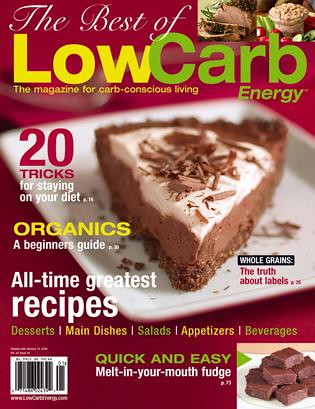 New issue of LowCarb Energy features top 3 low-carb blogs of 2005 New issue of LowCarb Energy features top 3 low-carb blogs of 2005Hot off the presses today is the latest issue of LowCarb Energy magazine. On the front cover, there is a picture of a delectably mouthwatering chocolate cream pie that you will immediately turn to page 71 to find the recipe to. But, before you start cooking this delightful dessert dish, let me invite you to check out page 8 where they name their annual "Best of Blogs 2005." LowCarb Energy listed the three blogs that "draw us back time and time again with their freshness, insight and information": 1. SUGAR SHOCK!My friend Connie Bennett's blog about the dangers of sugar made the list of top blogs. They describe the blog as "very well-written, sometimes edgy and always worth a daily read." I have grown to know Connie personally through my friendship with her in the past few months at LowCarbNewsline.com and LowCarb Energy doesn't even know the half of it about this woman! LOL! She is very savvy and passionate about eliminating sugar and sugar alternatives from every aspect of our life. I am proud to say I know Connie and I congratulate her on making this prestigious list. WAY TO GO, CONNIE!!! 2. Low-Carb FreedomAnother new friend I met this year also made the list of top blogs according to LowCarb Energy -- Katherine Prouty. A 50-pound low-carb weight loss success story, they note that she "keeps us updated on low-carb products and services" with content that is "thought-provoking and always full of useful gems." Katherine was one of the first blogs that I started reading when I decided to start my own blog and she was an inspiration to me with the professionalism and thoroughness she took to making her blog the best it can be. Again, CONGRATULATIONS Katherine for being named in the top three blogs of 2005! 3. Livin' La Vida Low-CarbSay who, what, where, why, when, how? Whoa, wait a minute! That's MY blog! Of all the low-carb blogs out there in the blogosphere, LowCarb Energy magazine names this little hobby of mine in their top three?! They describe me as "a low-carb legend" (in my own mind, maybe -- LOL!) who is "on a mission to help others attain the health and vigor he now enjoys." They add, "He's a direct and wisely opinionated voice we like to hear." Gee, thanks! I don't like to mince words, that's for sure! :-) WOW! What an honor it is to be listed among the best of the best low-carb blogs. I am truly humbled by this and cannot thank LowCarb Energy enough for recognizing the efforts I have invested into my blog. Thanks also to my friend Carla Gray, who also happened to write an article in this issue of LowCarbEnergy on page 22 about low-carb and fast food, for informing me that I made the list. Since I launched in April 2005, I have probably put in about 1500-2000 hours of time into making this blog the best it can possibly be. With more than 50,000 pageviews over that time period, I am privileged to be doing this as a labor of love on behalf of the low-carb lifestyle and for those who have chosen to do this miraculous way of eating for themselves. Go out to your local pharmacy or bookstore and pick up your copy of LowCarb Energy magazine. You have to check out the EXCELLENT story on page 80 with the winner of NBC's "The Biggest Loser" from Season One Ryan Benson. Did you know he is low-carbin' it to keep the 122 pounds he lost off for good?! Labels: blogs, Livin' La Vida Low-Carb, Low-Carb Freedom, LowCarb Energy, magazine, SUGAR SHOCK
|


