|
PLEASE UPDATE YOUR BOOKMARKS TO LIVINLAVIDALOWCARB.COM/BLOG
'Doc' Describes Me As A 'Dead Man Walking' Because Of My Elevated LDL Cholesterol
One of the risks that I willingly take blogging about health as someone who has not been trained in either medicine or nutrition is the fact that there are a whole lot of people who are much more intelligent than I am about the subjects I write about. It's just a fact of life that I've lived with since day one of my blog more than three years ago. And it doesn't bother me a bit that I don't have all the answers. The purpose of my blog is for me to share about my experiences livin' la vida low-carb and to hopefully provide some interesting topics for discussion that will enable my readers as well as myself the chance to learn something about their own health that they probably didn't know before. One thing I've found since I started blogging in the health arena is that even the doctors and medical researchers don't always know as much as we think they do. There's a reason they call it "practicing" medicine. With that said, I recently received a rather challenging e-mail from someone purporting to be a "Doc" according to their e-mail address who wanted to take me to task over the assertions I made in this blog post about my latest cholesterol numbers and specifically the particle size of my LDL as well as my hard-hitting column about the death of the late NBC "Meet The Press" anchorman Tim Russert. It seems the good "Doc" took great exception to my belief that the HDL/triglyceride ratio is a better indicator of heart disease risk than LDL or total cholesterol and that having large LDL particle size is protective against a cardiovascular event. In a very condescending tone in his e-mail, "Doc" proceeded to berate my gross ignorance of some rather "basic" health concepts that I apparently haven't fully grasped yet (get a load of this guy!): I nearly fell off my chair reading your well-meaning but very erroneous blog on Tim Russert.
If larger fluffy, buffy LDLs are protective, why is it that people with the highest risk of atherosclerosis and premature death (i.e. familial hypercholesterolemia) have 100% fluffy, buffy, LDLs?? Sure does not protect them! You with an LDL-C greater than 200 likely have large LDLs and are a dead man walking.
If low HDL-C is always bad, why are their several genetic conditions associated with very low HDL-C and longevity? Check out JAMA. 2008;299(21):2524-2532
Why have there been numerous published articles in the last few years describing many patients with myocardial infarctions who have HDL-C > 90 mg/dL?
If low LDL-C is so dangerous, why do people with hypobetalipoproteinemia who go through life with LDL-C between 5 and 40 all have longevity with no ill effects of such low cholesterol levels?
Russert's Lipids: TC = 105 LDL-C = 68 HDL-C = 37
Of course that is impossible: TC = LDL-C + HDL-C + VLDL-C
VLDL-C is derived by dividing TG by 5 thus VLDFL-C = TG/5
Thus using your numbers TG would be zero which is impossible. Of course if you knew anything about lipids, your blog would not contain so many basic errors.
Last bit of advice--Look up apolipoprotein B or LDL-P. Read the newest guidelines: A consensus statement from the ADA and ACC on Lipoprotein Management in Patients with Cardiometabolic Risk (like Russert). They were published in April in Diabetes Care and the Journal of the American College of Cardiology.
Had anyone measured LDL-P on Russert and then treated it aggressively, Russert would still be here. Of course since statins rarely normalize LDL-P, Russert needed additional medication beyond his statin to achieve apoB goal.
Hate to further blow away your statements, but if you read the new ADA/ACC statement you will see that data from three major trials (Framingham, MESA and EPIC Norfolk) have shown that LDL size is no longer considered an independent risk factor for CHD. Only thing that matters is apoB or LDL-P.
Happy reading and please correct your statements on the web site.Well, I guess he told me, didn't he? It really depends on what research studies you are looking at and he pointed to a few that certainly made sense to him. As I stated before, I'm no expert when it comes to knowing anything and everything about the subjects I write about. I simply share what I do know and have seen applied in real life situations and let those results speak for themselves. It's a bit presumptuous of this guy to call me a "dead man walking" because of my high "fluffy, buffy LDL" cholesterol. Further belittling my intelligence by attempting to point out my "errors" was also quite unbecoming of someone who alleges to be a professional physician whose goal is to help educate patients and make them healthy. I wouldn't want this fella being my doctor! Although I didn't have the answers to his remarks, I knew someone who could provide an educated and reasoned response to "Doc." He's a real doctor and avid researcher on low-carb diets--Dr. Eric Westman. The following is Dr. Westman's comments back to "Doc" asking for clarification and presenting some counter-evidence rebutting the original claims made in his e-mail to me: Thank you for forwarding this email.
1. The definition of "cardiometabolic risk" is changing, and its relationship to cardiovascular disease is imperfect. In spite of this, many medical authorities want you to do what they recommend. There are many exceptions to the recommendations, and I believe the authorities will acknowledge this readily.
2. Please teach me, "Doc." You wrote that people with "familial hypercholesterolemia have 100% fluffy, buffy, LDLs." Can you provide a reference for this statement (even case studies are fine)? Here is a recent article and it suggests otherwise...but the abstract doesn't really give enough information until I can read the full study. J Pediatr. 2008 Jun;152(6):873-8. Epub 2008 Feb 8
3. You wrote: "If low HDL-C is always bad, why are their several genetic conditions associated with very low HDL-C and longevity?"
I think that this just points out again how imperfect these markers are.
4. You wrote: "LDL size is no longer considered an independent risk factor for CHD. Only thing that matters is apoB or LDL-P."
"Doc" let me just take a moment to explain what "independent risk factor" means statistically--it is a common source of confusion. "Independent risk factor" means that, after accounting for some information, the addition of a new factor (variable) adds no more information (the association is no longer statistically significant).
My understanding is that LDL size and LDL-P are highly intercorrelated ("track together"), so that after accounting for one, the other is no longer statistically significant in its association with cardiovascular disease. It does NOT mean that LDL size is not important--it just means that you get no more additional information about the presence of cardiovascular disease from knowing LDL size when you already know LDL-P.
I look forward to learning more from you. Thanks.
Eric C. Westman, MD MHS
Associate Professor of Medicine
Director, Lifestyle Medicine ClinicExcellent job, Dr. Westman! You took each of the points made by "Doc" and offered him the opportunity to see other data that he may not have considered otherwise. I appreciated you taking time out of your busy schedule to write back to "Doc" and give him a chance to learn something new himself. Unfortunately, that's the last we've heard of good ole "Doc." There's been nary a word out of him since Dr. Westman's reply. Am I fallible? Yes, more than I'd like to admit. Do I know everything there is about diet, health, and nutrition? Anyone who tells you they do should be avoided because they are lying. Do I enjoy inciting an open discussion and debate of ideas? You bet your sweet bippy I do which is why I don't mind hearing from people who necessarily disagree with my viewpoints and wish to correct me. If I'm wrong and evidence is presented to me proving it, then I'm the first to make the corrections and admit the error of my ways. But in this case, "Doc," I won't be changing a thing! By the way, where'd ya go? I'd love to hear what you have to say about what Dr. Westman said. Labels: cholesterol, diet, Doc, Eric Westman, fluffy, HDL, health, Jimmy Moore, LDL, low-carb, nutrition, particle size, Tim Russert
'Livin' La Vida Low-Carb Show' Episode 113: The Most Effective Natural Cures With Jonny Bowden (Part 1)
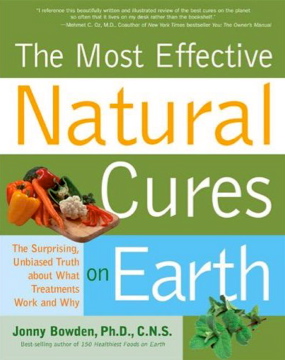 Dr. Jonny Bowden talks about the best natural health cures I have had the distinct privilege to interview some of the best and brightest minds in the world of diet and health ever since I started blogging and podcasting about livin' la vida low-carb over the past couple of years. It's a great way hear all the latest information about nutrition, fitness, and living better than you ever thought possible! Today is no exception! In Episode 113 of "The Livin' La Vida Low-Carb Show with Jimmy Moore", I am pleased to bring you Part 1 of my interview with one of the most entertaining and informative health speakers of our day-- Dr. Jonny Bowden! He wrote an amazing book that I believe every low-carber should own called Living The Low-Carb Life and recently released a brand new book on Fair Winds Press called The Most Effective Natural Cures On Earth (a follow-up to his bestselling The 150 Healthiest Foods On Earth). As you will hear in today's segment, Jonny is no fan of the Kevin Trudeau philosophy of a conspiratorial "us versus them" mentality that tends to dominate this category of books. Tune in to see how natural cures without any pretenses or ulterior motives can indeed help heal your mind, body, and soul without the use of surgery or drugs. Click on the "LISTEN NOW" link below or download it to your iPod to hear today's podcast:  "The Livin' La Vida Low-Carb Show with Jimmy Moore" Episode 113 [35:16m]: LISTEN NOW | DownloadTo say that Dr. Jonny Bowden is enthusiastic and passionate about what he does is an understatement. The man lives and breathes everything related to diet and health and is unabashed in his opinions which are always based on the facts from the science as well as in the experiences of real people who have been positively impacted by these remedies he mentions in his book. We just barely scratch the surface in Part 1 and will get into the nitty gritty of how livin' la vida low-carb is so helpful in a number of health ailments in Part 2 on Thursday. You can hear experts like Dr. Jonny Bowden anytime by: 1. Listening at the official web site2. Calling (818) 688-2763 to listen via Podlinez3. Subscribing to the RSS feed 4. Going to iTunes-- Click here to subscribe! What's your reaction to what you heard from Dr. Jonny Bowden today? Do you agree with him that there are certain natural cures that can be used as a first line of defense against disease rather than a pharmaceutical or medicinal intervention? Talk about it in the show notes section of Episode 113 and share from your experiences regarding health issues in your own life that have been improved with a natural cure. I announced the three winners of a FREE E-BOOK COPY of my book Livin' La Vida Low-Carb: My Journey From Flabby Fat To Sensationally Skinny In One Year in Episode 113, so be sure to listen to see if YOU were one of those winners! THANKS so much for leaving a comment and be looking for more contests in the future. Many of you have been asking about the older archived podcasts and why they are not available on iTunes anymore. Well, we've figured out the problem and now you can access nearly 100 of the previous episodes of the #1 low-carb podcast on the Internet today. That means you can download these into your iPod and listen while you workout, cook, clean, or just relaxing. THANKS so much for supporting this podcast and allowing me to spend a few moments with you each week sharing about the amazingly healthy low-carb lifestyle! SEE YA! Labels: diet, health, Jimmy Moore, Jonny Bowden, Most Effective Natural Cures On Earth, natural cures, nutrition, podcast, The Livin' La Vida Low-Carb Show
The Most Beneficial Health Supplement You've Probably Never Heard Of--CoQ10!
Most people are confused and bewildered about what supplements they should be taking as part of a healthy lifestyle change like livin' la vida low-carb. We all know the benefits of a solid multivitamin as part of your daily nutritional routine. But what else can we take to help improve our health while losing and then maintaining our weight? I've shared a few of the specific supplements I take on a daily basis in this YouTube video as well as this blog post. But there is one that you may not have heard much about because quite frankly the medical industry doesn't want you to know there's an over-the-counter dietary supplement that will replace some very expensive prescription drugs you may be taking. It's called CoQ10. CoQ10 stands for Co-enzyme Q10 and is as crucial for protecting your body against heart disease, cancer, AIDS, hypertension, muscular dystrophy, brain disorders like Parkinson's and Alzheimer's as well as memory loss as anything else you could take. Heck, it's even good for your gums, too! Although the benefits of taking CoQ10 as regular part of your healthy routine are well-known overseas, doctors here in the United States, including cardiologists who are supposed to be treating heart health ailments, have downplayed its importance because there's no money in promoting something that could replace many of the most bestselling drugs available today. It's kinda like our cherished low-carb lifestyle. Most doctors frown and turn their nose up at the use of low-carb diets for weight loss because of its alleged dangers. But then when someone starts using it and the weight comes pouring off, A1C numbers drop, HDL "good" cholesterol rises, triglycerides plummet, and all the other excellent health benefits of eating this way kick in, there's little a doctor can say in reaction to these results. Even still, some doctors decry these improvements as a fluke and that continuing to eat this way long-term will cause damage. WHATEVER! So you think you might wanna be a rebel and start taking CoQ10 anyway despite any objections from your doc, eh? Here are six reasons why you should consider this small, but incredible investment (and, yes, CoQ10 is a bit pricey, but well worth it for the benefits you receive) in the future of your health: 1. It naturally lowers your blood pressure.This is something that I was so pleased to know about CoQ10 because I had been taking blood pressure medicine prior to my low-carb lifestyle and taking supplements. Within a few months of taking CoQ10, I started blacking out when I stood up. It was the weirdest thing and I couldn't figure out what was happening. When I went to the doctor about it, he said my blood pressure was TOO LOW with the medication, so I'd have to stop taking it. WOO HOO! CoQ10 was doing the trick for managing my blood pressure. In fact, this University of Texas study found that over HALF of patients with high blood pressure were able to reduce or eliminate their need for blood pressure drugs after just one month of taking CoQ10. AMAZING! 2. Destroy cell-damaging free radicals.CoQ10 is a potent antioxidant (it comes in 100mg, 200mg, 300mg, and 400mg--I personally use either 300mg or 400mg) and should be replenished in your body on a daily basis for the protection of your heart, brain, kidneys, and liver from the damage that can be caused by the existence of free radicals. Think of CoQ10 as the "premium grade" of gasoline for your car helping it to run as smoothly as possible. 3. Reduces oxidized fat that leads to clogged arteries.While limiting your carbohydrate intake is certainly protective for the heart while on the low-carb lifestyle, you still want to limit the creation of arteriosclerosis that happens when fatty deposits begin to fill up in the blood vessels. CoQ10 helps to prevent this by preventing the oxidation of fat cells from happening. 4. Alleviates major heart health risk factors.If you have heart disease, hypertension (high blood pressure), or hypercholesterolemia (high cholesterol), then taking CoQ10 on a daily basis can give you relief from these conditions and quite possibly improve them! Why wouldn't you want to do that? 5. Improves pain felt by chronic stable angina patients.For those people with chronic stable angina, CoQ10 gives them the necessary relief from chest pains and the ability to perform certain cardiovascular exercise to improve their health health. 6. Regulates the rhythm of your heart rate.Having a steady heartbeat gives you peace of mind about the state of your heart health. If CoQ10 can help manage a fluttering heart, then everyone who has one should be taking this supplement! Interestingly, did you know the dangerous cholesterol-lowering statin drugs like Lipitor, Crestor, and Zetia actually ROBS THE BODY of CoQ10? Yep, that's a dirty little secret you won't be hearing in all those cutesy little commercials on television about these awful prescription medicines. And when one company attempted to supplement the statin with some extra CoQ10, they decided not to do it since they feared it would cut into the sales of their statin drugs if the word got out about the CoQ10 depletion. INCREDIBLE! As you can see, CoQ10 is an important supplement for creating energy and to help your mitochondria function (where you get your energy from!) the way it is supposed to. Taking this supplement daily will keep your cells youthful and vibrant for many years to come! Be sure to keep your fat intake up when you are taking CoQ10 since it is a fat-soluble nutrient. But you're already doing that, of course, since you're livin' la vida low-carb! Regardless of your current health, I think everyone should be taking this supplement now to prevent any possible ailments that may come in the future. You won't hear your doctor or pharmacist touting CoQ10, but it very well could be the most beneficial supplement you've never heard of. Labels: blood pressure, cells, CoQ10, drugs, free radicals, health, heart disease, low-carb, mitochondria, nutrition, prescription, supplements
15 New And Essential Diet & Health Books I've Been Reading Lately
I don't know about you, but ever since I started livin' la vida low-carb I've had such an unprecedented hunger and thirst for information about nutrition, fitness, diet and health like never before in my life with any other subject. Even when I was studying government and politics in college and graduate school, I never felt THIS excited about reading so many books and resources. It's an educational awakening that I think most low-carbers go through because of the enlightenment we see happening to our own weight and health. To that end, I'm always happy to share with you some of the most current and not-so-current books I have come across and read while studying this fascinating subject. But, as will often be the case, the books do tend to pile up on me a bit, so today I'm gonna highlight 15 new and essential books about diet and health that I've been reading lately along with a few comments about each one. Keep in mind that not all of these "diet" books are explicitly low-carb friendly, but that's okay since I think we can still find merit in the experiences shared by the authors of those books (even if we have to hold our noses with some of their "expert" opinions). Likewise, several of these books will have you stand up and cheer because they quite clearly espouse the basic tenets of a healthy low-carb lifestyle. So, without further delay, let's take a look at these 15 books: 
1. The Slow Burn Fitness Revolution: The Slow-Motion Exercise That Will Change Your Body In 30 Minutes A Week by Fred Hahn, Dr. Michael Eades, and Dr. Mary Dan Eades After I decided to finally get serious about starting a resistance training regimen a few weeks ago (which is going great so far and I'll have an update on my progress soon), I received several e-mails from my blog readers who told me to look into the "slow burn" method for training. I had no idea what they were talking about because I wasn't really into weight lifting until recently. It turns out this was a unique form of weight lifting that was developed by Fred Hahn in conjunction with two of my favorite low-carb advocates: Dr. Michael Eades (who should be our next president, ya know...LOL!) and his lovely wife Dr. Mary Dan Eades. Hahn as been a professional trainer for over two decades and believes people have been given useless information as it relates to exercise. As a natural skeptic of anything regarding health since starting low-carb, my curiosity was piqued. Rather than doing hours upon hours of cardio training every week, Hahn says, why not invest in a deliberate and very intense weight lifting that is unlike anything you've ever seen or done before? That's what The Slow Burn Fitness Revolution is all about and it will radically change what you think you know about building muscle. When these strategies outlined by Hahn and the Eades are implemented correctly, your body will get stronger, burn more fat, rev up your metabolism, and you'll do it faster than you ever thought would be possible. In fact, he says you can get all the workout you need in just 30 minutes a week. Yep--A WEEK! In conjunction with a healthy low-carb lifestyle, you'll be lifting slowly, feeling the burn in your muscles quickly, and getting stronger and stronger as the weeks go by. Whether you have access to gym equipment or if you can only fit it in your schedule from home, it's all in this book and then some. Specific detailed instructions about the exercises you need to do are included and they answer all the questions you may have about each one. After spending a lifetime of torturing yourself on a treadmill to try to lose weight with little to no results, maybe it's time to give The Slow Burn Fitness Revolution a try to get stronger, feel better, and do your body some good. I'll be interviewing Fred Hahn very soon about his one-of-a-kind fitness routine that stresses low-carb nutrition to correspond with effective muscle-building workouts. Stay tuned! 
2. Start Living, Start Losing: Inspirational Stories That Will Motivate You Now by Weight Watchers Although I'm certainly no fan of the low-fat philosophy embraced by Weight Watchers, what I DO support is people finding a proven and effective weight management plan that they can do over the long-term for the rest of their life. For some people, that diet that's right for them is indeed Weight Watchers as the book Start Living, Start Losing illustrates. If you're a sucker for hearing weight loss success stories, then this is quite an inspirational book for you to read. It is sanctioned by the Weight Watchers organization, so all of the more than 60 stories are from people who followed that plan. But I liked the format of this book and it would make for an excellent book about low-carb success stories one of these days. Each chapter features stories from people of all ages, backgrounds, occupations, and health. They are written from the first person which is always more interesting hearing directly from the person who went through the hard work and effort themselves to lose the weight. At the end of the 2-3 page story, a quick "take-away" message is provided to hammer home the key ingredient in that person's success along with a motivational quote from the individual who was featured. Although I could never do the Weight Watchers program (and many of them are totally enthralled by livin' la vida low-carb), I'm always the first to applaud success when it happens. If someone is happy on Weight Watchers, then who am I to tell them it's not right? But the same goes for my decision to be on the healthy low-carb lifestyle and sharing my story too. Weight loss isn't about whose diet is better, but rather what can produce results. Make your choice and then stick with it! 
3. Modern Nutritional Diseases And How To Prevent Them: Heart Disease, Stroke, Type-2 Diabetes, Obesity, Cancer by Drs. Fred and Alice Ottoboni So much of the research into the most destructive health ailments we now face is focusing on the role of the diet. This is something Dr. Fred Ottoboni and his wife Dr. Alice Ottoboni know a thing or two about. Before retirement, they had spent many years of their career investigating, studying, and researching disease occurrence among various people groups around the world and they discovered something quite revealing in light of our current crisis with obesity, diabetes and worse: much of it is preventable by simply ignoring the high-carb, low-fat, low-cholesterol advice that has sadly become accepted as the "healthy" diet. In Modern Nutritional Diseases , Drs. Ottoboni explain in meticulous detail why those diets are useless against most modern diseases and shares the research showing the elimination of sugars and starches will put us back on the road to health faster than removing saturated fat and cholesterol from our diet. There's even an invaluable chapter on how to distinguish good science from bad science among the many voices telling us what the facts are. The references and charts contained in this book make it well worth having in your low-carb library. I'll warn you now that it does get a bit technical in some areas, but this stuff isn't simple either. There are many things to evaluate and analyze in the process of coming to the conclusions about nutrition and metabolism that Drs. Ottoboni do. This is every bit as good a book to read as Gary Taubes' Good Calories, Bad Calories was because it complements much of the same concepts and ideas. My favorite part is at the end in a chapter called "What do you do now?" the authors give you practical instructions about making the changes you need in order to ward off the modern nutritional diseases in your own life. Specifics about diet, supplements, exercise, and suggested resources for further education are provided. This is an invaluable tool for anyone following a controlled-carbohydrate nutritional approach or who wants to learn more about why this way of eating works so well. 
4. The Fattening Of America: How The Economy Makes Us Fat, If It Matters, and What To Do About It by Eric A. Finkelstein & Laurie Zuckerman Have you noticed that EVERYBODY is an obesity "expert" nowadays? It's not just nutritionists, nurses, researchers and physicians either. We've got psychologists, government officials, and even economists weighing in on the subject using their experiences to try to resolve this growing problem. That's what happens in The Fattening Of America by Dr. Eric Finkelstein and Laurie Zuckerman. They look at the obesity epidemic as an issue with money (or the lack thereof) and what role the government should play in dealing with what they call "The ObesEconomy." Although there are many good points made in the book about the obesity issue, I couldn't help but notice one VERY glaring omission as to why this problem still exists in 2008: special interest protection of the grain, sugar, processed foods, and low-fat industries. If they were left dangling on their own in the free marketplace just as the egg and beef companies have been, then the low-carb lifestyle would perhaps become more widely accepted as an alternative nutritional approach for people struggling with their weight. Unfortunately, Dr. Finkelstein chooses to ignore this and simply spread the "blame" around to everyone else for obesity. But that's not all that got under my skin about the conclusions made in this book. Although he agrees with me that individuals, not the government or society, must deal with obesity, Dr. Finkelstein says that the government needs to step in to treat childhood obesity when the parents aren't doing a good enough job at it. Say what?! I don't think so. If the government can't even give credence to low-carb the way they do low-fat diets, then I certainly don't think they have a shred of credibility about how children should be fed in order to properly manage their weight. Leave that job to the parents and give THEM education that is based on the latest science and not some opinions a bunch of "experts" came up with decades ago about what's healthy! The overall conclusion of The Fattening Of America is that it should be easier and more affordable to get thin and eat healthy in the United States than it is to purchase cheap junk food that's gonna keep making us fat. Amen to that and hopefully there are feasible ways of making that happen. It may take bringing down some very powerful industries that won't go down without a fight! 
5. The All-New Atkins Advantage: The 12-Week Low-Carb Program to Lose Weight, Achieve Peak Fitness and Health, and Maximize Your Willpower to Reach Life Goals by Dr. Stuart L. Trager and Colette Heimowitz What's with a brand new "Atkins" book being published years after the famous low-carb diet doctor has deceased? Well, it's not by the late great Dr. Robert C. Atkins, but you could say he was the one who inspired it and may have indeed written it himself had he lived a few more years. It's called The All-New Atkins Advantage featuring the writing and research of Ironman competitor and orthopedic surgeon Dr. Stuart Trager as well as Atkins Nutritionals, Inc. spokeswoman Colette Heimowitz. I'm gonna admit I was quite skeptical of this book when I first heard about it. I mean, come on! Do we REALLY need another book to tell us how to do the Atkins diet? Well, yes and no. As someone who lost 180 pounds after reading and implementing the principles found in Dr. Atkins' New Diet Revolution back in 2004, I couldn't imagine what this "new Atkins" book would tell me to improve upon what I previously learned. But I try to keep an open and am always willing to learn. This new Atkins is very focused on giving people a specific 12-week plan for success, including tips about how to implement the diet into your life with menu plans and advice about how to become a success. One of the ways that is done is by providing a myriad of low-carb plans to choose from based on YOUR specific needs. When I was losing weight on Atkins, my carbohydrates needed to stay around 35g a day in order for me to keep losing weight. Some people need less than that while others can get away with more carbs. Since we're all different, The All-New Atkins Advantage tries to accommodate and customize this plan to your specifications based on your body. They don't really tell you which one to follow, so I suppose you start at 20g and work your way up. How is this different from the Atkins diet I did? Well, there is one major difference about this book that was not given as much space in any of the previous Atkins books. Dr. Trager uses his fitness experience and provides pictorial demonstrations of various exercises you should be doing as part of your healthy low-carb lifestyle. This is indeed a sorely needed addition to the Atkins plan that I'm happy to see. Answers to the most common questions and criticisms of livin' la vida low-carb are also included in this book which was inspired by all the positive developments that have been happening in the research world since the passing of Dr. Atkins. It makes you wonder if he would have written a similar book had he stuck around a few more years. Who knows? Regardless, you'll enjoy this book immensely if you are new to the Atkins lifestyle or if you are seeking to learn more about low-carbohydrate dieting. Don't miss the comprehensive list of low-carb studies in the back of the book to see all of the amazing science that has been flooding health research journals in recent years. 
6. The Inside-Out Diet: 4 Weeks to Natural Weight Loss, Total Body Health, and Radiance by Dr. Cathy Wong For those of us who have struggled with our weight for the majority of our lives, we know that simply cutting back on our calories and fat ain't gonna cut it. When most people get exacerbated by the continued failure of these kind of diets, they turn to weight loss pills or surgery instead. Not good! That's where Dr. Cathy Wong's The Inside-Out Diet comes in. Instead of focusing on the weight loss (which will still happen, by the way!), this plan gets people to eat for the sake of their health instead by consuming a nutritional program that will allow your liver to function better than it ever has before. Yes, this is a detoxification diet, but it's so much more. I especially enjoyed the step-by-step approach of this diet looking at every possibility for why you might not be losing weight, including food allergies and intolerances, stress, excessive insulin production, and more. It's as if Dr. Wong takes you by the hand to assure you that we WILL get to the bottom of your obesity problem and attack it from "the inside-out." For fans of recipes, Dr. Wong includes 50 of her favorites in the back of the book. She earnestly believes in the slow, methodical approach to weight loss because it's about eating healthier first and foremost. If more people took on this philosophy of eating primarily for the sake of their health, then obesity rates would drop faster than they ever have before. 
7. Men's Health TNT Diet: The Explosive New Plan to Blast Fat, Build Muscle, and Get Healthy in 12 Weeks by Dr. Jeff Volek and Adam Campbell University of Connecticut researcher Dr. Jeff Volek, who has been behind some of most "explosive" research into low-carb diets and, most recently, saturated fat consumption as part of a healthy lifestyle, teamed up with Men's Health Features editor Adam Campbell to create a dietary fitness plan tailored for people who want to burn body fat, increase their muscle, and live healthier. That's what the TNT Diet is all about. You know with Dr. Volek and Campbell behind this book, you ain't gonna be stuck eating a miserable low-fat, calorie-restricted diet. No way! Instead, you won't count a single calorie, you'll get to eat delicious and nutritious fatty foods that have never been a part of a "diet" before, and you'll only have to invest 90 minutes of exercise a week. Sound like a plan, man? They don't sugarcoat the message you need to hear and speak honestly about the investment of consistent time and energy to doing this throughout the book. Of course, those "TNT Transformation" stories sprinkled throughout the book will keep you motivated in your own journey. It's not just about the weight loss, but the changes you are making to your body's muscles. It won't take long to notice the difference! There's a mouthwatering list of TNT Diet-approved recipes between the nutrition and training section so you'll be fueled up ready to go with your workouts. And it's not all fun and games--although the picture demonstrations about how to do each exercise helps you know EXACTLY what to do. There's a nice summary of what you can expect to happen to your health after going on this diet in the back. It will be what motivates you to get serious about your health for good this time. 
8. The Hershberg Diet: Discover How the Fourth Macro Can Help You Shed Pounds and Beat the Metabolic Syndrome by Dr. Melissa Hershberg We all know about the three macronutrients which have been at the very heart of debates about diet for the past few decades--fat, protein, and carbohydrate. But, according to Canadian nutrition activist Dr. Melissa Hershberg, there's a "fourth macronutrient" we all should be aware of and strive to get more into our bodies in order to lose weight and get healthy. It's WATER! Just as I recently shared in a YouTube video, drinking plenty of water is an important part of your healthy lifestyle and that's the essence of what has become The Hershberg Diet. And it's not just the water you drink straight from that tap, but the plethora of food choices that contain lots of water, too. Dr. Hershberg explains it all for you in her book. In fact, she names a FIFTH macronutrient when she reveals alcohol contains 7 calories for each gram that is consumed. Most people don't think about these additional calories from alcohol, but they can add up despite being low-carb and sugar-free. You need to budget for alcohol in your diet if that's something you want, but it's not a freebie by any means. I appreciate Dr. Hershberg's focus on the role of insulin in obesity, but then she recommends all this low-fat and fat-free crap that quite frankly I can do without! Keep your lean ground turkey and skim milk, thank you very much. Unfortunately, this diet is indeed a low-calorie, low-fat program along with all that water you'll eat and drink. It's a nice concept, but the wrong dietary plan for most people. 
9. The True You Diet: The revolutionary diet programme that identifies your unique body chemistry and reveals the foods that are right for YOU by Dr. John Briffa One of the most respected and outspoken doctors who is speaking common sense as it relates to diet and health is Dr. John Briffa from the UK. Unlike most of the medical establishment these days, Dr. Briffa realizes that weight loss can never be solved with a one-size-fits-all remedy as has too often been tried. That's why he came up with The True You Diet. He believes that most people should look at their early ancestors for the answers about how to remain lean and fit. These "hunter-gatherers" didn't worry about obesity and disease because their non-processed, low-carb, high-fat diets gave them all the energy their bodies needed to survive and thrive. Returning to this original diet is the missing element in our diet in the 21st century. If you are a low-carber, then you'll be grinning from ear to ear as you read The True You Diet. Dr. Briffa delivers a solid message in an engaging fashion about many of the most fundamental truths that support low-carb living. His practical advice from years of treating patients arms you with knowledge you can rely on to help you stay committed to your permanent lifestyle change. 
10. Hungry: Lessons Learned on the Journey from Fat to Thin by Allen Zadoff What if your problem with weight had more to do with a deep hunger for meaning in the world rather than for that big slice of chocolate cake staring at you? Could our obesity not really have anything at all to do with calories, but rather attaining the hopes and dreams we don't even know we want yet? Deep questions like these are what Allen Zadoff explores in his book entitled Hungry. After allowing his weight to get up to 350 pounds in his late 20s, Zadoff thought he knew why he got to be so big. It had to be a whole host of reasons--a slow metabolism, not enough willpower, a big appetite, a desire to be manly and eat that way, big boned, and it made him happy. But in the end, he wasn't happy and traveled down a path that led him to lose over 100 pounds while gaining a whole new perspective on life. Hungry takes you down this road that Allen Zadoff took to shed the pounds and turn his world upside down. It's an inspiring story of hope for better tomorrow with behavioral methods concerning food that would intrigue a psychologist for weeks! And before you ask, his diet had very little to do with what kind of food he ate. That didn't matter to him (and he doesn't think it should matter to you). 
11. Natural Health & Weight Loss by Dr. Barry Groves Another of the very few loud voices speaking out on behalf of a high-fat, low-carb diet in the UK is Dr. Barry Groves. With Dr. Atkins no longer with us, Dr. Groves has taken up the torch and carried it boldly and proudly for all the world to see. He's convinced that fat is not the source of our weight and health troubles--CARBOHYDRATES ARE! That's the underlying conclusion he shares in his book Natural Health & Weight Loss. After years of researching, studying, writing, lecturing, and, most importantly, LIVING the low-carb lifestyle, Dr. Groves has a lifetime of experiences to share about how eating fat to replace carbohydrate in our diet will keep your body healthy, fit, and lean when a high-carb, low-fat diet fails you. He says people should eat more real food if they want to ward off the diseases that afflict so many people these days, namely obesity, diabetes, and heart disease. Of course, all of his claims are backed up by the research and his more than four decades of personal and professional experience. In fact, you can even check out this thread at my LowCarbDiscussion.com forum dedicated to people following Dr. Barry Groves for lots of support and assistance as you implement these principles into your life. Dr. Groves has even been known to pop in to make comments and answer questions from time to time, too. Natural Health & Weight Loss is a book that you'll be proud to own and I cannot encourage you enough to get it, love it, and then LIVE IT! 
12. The Serotonin Power Diet: Use Your Brain's Natural Chemistry to Cut Cravings, Curb Emotional Overeating, and Lose Weight by Dr. Judith Wurtman and Nina Marquis There are as many theories about why people get fat as there are stars in the sky and many of them have some merit in terms of having some kind of effect on obesity. Unfortunately, though, too often the actual CAUSE of weight and health problems is not addressed which is why the issue still remains. I believe The Serotonin Power Diet by Dr. Judith Wurtman and Nina Marquis simply looks at an effect of weight and health rather than what is at the root of the issue. The premise of this book goes something like this: you feel down and depressed because the serotonin levels in your brain are reduce; raise your serotonin by eating foods that will increase it, then you will take care of your weight and health. Oh, if it were just that simple. What's rudimentary here is the clear lack of respect for the research supporting the low-carb lifestyle by the authors. In a recent DietDetective.com column Dr. Wurtman claimed that saturated fat intake leads to the development of diabetes. HUH? Diabetes is caused by an overproduction of insulin that results from raise blood sugars brought on by consuming too many carbohydrates. This is where there's a clear disconnect. Most of the foods on The Serotonin Power Diet are VERY high in carbs to try to lift your spirits. Check out this list: biscotti, cereal, cinnamon raisin bread, crackers, fig newtons, graham crackers, granola bars, marshmallows, pita bread, popcorn, pretzels, rice cakes, and waffles. Shall I go on? Do you see what ALL of those foods have in common--VERY HIGH IN CARBOHYDRATE! Yes, they may make your serotonin levels go up, Dr. Wurtman, but the unpredictable blood sugar swings and constant hunger from the emptiness you feel from eating such a diet devoid of nutrients are why this diet would fail me miserably. Something tells me it would do the exact same thing to a bunch of other people, too. By the way, I've been eating a low-carb diet for four years and don't have ANY issues with being depressed or other side effects allegedly brought on by low serotonin levels. I wonder why that is, Dr. Wurtman? Any ideas? 
13. Fit and Fabulous in 15 Minutes by Teresa Tapp and Barbara Smalley In the 1980s, Olivia Newton John had a #1 hit single called "Let's Get Physical" and that exactly the motto that Teresa Tapp took on when she created her famous T-Tapp Workout routine as outlined in Fit and Fabulous in 15 Minutes. In just a few minutes a day, she gives you a full cardiovascular workout that doesn't require any equipment or joint-jarring movements. Actually, you'll probably have fun while you're exercising which will make it more successful than if you dreaded doing it! This book provides you with all the instructions a busy mom or working professional needs to get in a good workout at the beginning of your day or after the kids have gone to bed. It's low-impact and will clear up virtually any and all issues you may have with pain and soreness in your body. T-Tapp offers real results really fast! Teresa herself demonstrates the moves you need to get your body in shape and she provides real-life examples of people who have implemented T-Tapp into their life with amazing results. If the idea of exercise makes you want to run and scream in the other direction, then perhaps you should check out Fit and Fabulous in 15 Minutes for a nonthreatening alternative. 
14. The Prayer Diet: The Unique Physical Mental and Spriritual Approach to Healthy Weight Loss by Dr. Matthew Anderson, D.Min. I strongly believe in the power of prayer and credit it for helping me in my low-carb weight loss journey back in 2004. God gave me the strength to stay on plan even when I felt like giving up and He rewarded me with a 180-pound weight loss in just one year. So naturally I am supportive of anyone who wishes to implore the Almighty as part of their weight management plan. The Prayer Diet espoused by Dr. Matthew Anderson is focused specifically on making prayer the central focus of your weight and health plan. By taking the focus off of food, your weight, the health problems you may be facing, and all those other issues that tend to dominate the discussion regarding your diet, Dr. Anderson shifts the focus to God where it belongs and His sovereignty to make the necessary changes in you to bring about weight loss. If you're not a Christian, then you probably won't understand why this diet could possibly work for you. But any believer who trusts Jesus Christ as their personal Lord and Savior will tell you how essential prayer is to a healthy spiritual life. And The Prayer Diet simply extends this to your physical life, too. Specific prayers for yourself and others are included in the book to help guide you towards God's will regarding the weight and health of you and your loved ones. 
15. Ending the Food Fight: Guide Your Child to a Healthy Weight in a Fast Food/Fake Food World by Dr. David Ludwig and Suzanne Rostler Our most precious commodity in this world are our children and making sure they are eating properly is a challenging task to say the least. With fast food and junk food being dangled in front of them on television commercials and on the Internet using cartoon characters and clever marketing to appeal to them, it's literally a war out there--a "food fight" between parents and their kids about what to eat. That's why pediatric physician Dr. David Ludwig wrote Ending the Food Fight because he wanted to show parents that it IS possible to feed your children healthy foods without having them pitch a fit. The 9-week OWL program that Dr. Ludwig uses with children all the time at the Children's Hospital Boston has a proven track record of helping even the most defiant, sugar-addicted kids to eat better. It's all found in this book! You'll recall that Dr. Ludwig has published some research on "fatty liver" being a problem with eating too many carbohydrates, so he is certainly a proponent of livin' la vida low-carb based on what the science has shown him. And applying those principles to children makes sense to him which is the heartbeat of everything he does. If you are a parent, then you should own a copy of Ending the Food Fight. Do you have a diet and/or health-related book you'd like for me to read and review? Please e-mail me at livinlowcarbman@charter.net with the details and I'd be happy to share my thoughts and comments about it with my readers. Labels: books, diet, fitness, health, healthy, low-carb, nutrition, reviews
It's Celebrate Gary Taubes Week With The Release Of 'Good Calories, Bad Calories'
 All eyes are on the man of the hour, Gary Taubes! It all started on July 7, 2002 for a man by the name of Gary Taubes, a talented and highly-respected science journalist for The New York Times who, whether intentionally or not, set off one of the most controversial diet and health discussions in American history when he wrote an 8,000-word column entitled "What if It's All Been a Big Fat Lie?" Whether he even realized at the time the enormous impact he would have on our culture, who knows? But he's about to do it all over again! Ever since that explosive article rocked the world over five years ago by lending credence to the high-fat, low-carb nutritional approach with irrefutable facts, Taubes has been busy continuing the work he started in that brilliant piece. And some of his views have changed as new revelations have come to light in his pursuit of the truth as he revealed in my recent interview with him. When I heard about a new book that would expand upon the thesis of that original New York Times article, I attempted to contact Taubes in April 2006 to ask him when the book would be available. There were high hopes he would release it in early 2007, but some crucial changes to the title and length of the book were in order (it originally was going to be an 800-page encyclopedia, but the editors at Knopf chopped it down to size). Finally, in July 2007 I announced the release date and final title change of the Taubes book that Veronica Atkins, Drs. Mike and Mary Dan Eades, Dr. Gil and Regina Wilshire, me and so many others have been been waiting for. And that time is now here. Remember the date--September 25, 2007! That's the day when the long-awaited Gary Taubes book Good Calories, Bad Calories: Challenging The Conventional Wisdom On Diet, Weight Control and Disease released. And it's ready to shake the health and nutrition "experts" to their very core if they are willing to hear the truth and learn from it!  I have dubbed this "Gary Taubes Week" here at my blog because I believe every single low-carb supporter, dietitian, doctor, health professional, journalist, and consumer should get their hands on a copy of Good Calories, Bad Calories because it is chock full of scientific truths that you won't hear about anywhere else. Although our dogmatic views on nutrition have guided us down this path to obesity and disease, Taubes brilliantly lays all the evidence on the table and allows the reader to draw their own conclusions while simultaneously challenging those in authority over health to open their eyes to the truth. Taubes has done the phenomenal footwork over these past five years searching and searching through literally thousands upon thousands of pages of the scientific data to give us what so many low-carb antagonists have been asking for: PROOF! Well, here it is, folks, and it's time we help spread the message in a BIG WAY! How can we do that? By pushing Good Calories, Bad Calories to #1 on Amazon.com and the exposure that will give to this book's message. It's already cracked the Top 200 the day before the release date and, with YOUR help, it'll be #1 on Tuesday when it goes on sale. If you haven't already picked up this amazing new book with a wealth of wisdom on the efficacy of livin' la vida low-carb, then ORDER NOW and get SEVERAL copies to hand out to your doctor, nutritionist, family, and friends. This is THE most important health book to come out this century and I cannot recommend it enough. I've had a pre-pub copy of this book for the past month or so and have been dying to tell you about it! Let's just say you'll be pleasantly surprised. The prologue of Good Calories, Bad Calories mentions a book by a man named William Banting called Letter On Corpulence which you can get a FREE copy of for your reference by clicking here. This will be an excellent companion reference piece to set the tone for what Taubes shares in his book. If you order now, then you should receive your copy of Good Calories, Bad Calories by the end of the week. Be sure to post a review and share what you thought about the book at Amazon and other places as soon as you can absorb it all. It's 600 pages long--200 of which are references you can check for yourself--and will take some time to absorb. But let it sink into every crevice of your mind as you realize the bill of goods we have been sold about diet, weight loss, and health has been just about as wrong as wrong can be. Yeah, we knew that already! ;) THANK YOU GARY TAUBES!!! 9-25-07 UPDATE: Wanna know why Gary Taubes is so brilliant and knows from whence he speaks regarding diet and health? Check out this New York Magazine column entitled "The Scientist and the Stairmaster: Why most of us believe that exercise makes us thinner—and why we're wrong." Taubes zings 'em again! GO GET 'EM GARY! 9-26-07 UPDATE: I just found out that Gary Taubes will be appearing on Connie Bennett's SUGAR SHOCK! radio show on Thursday as well as WUNC's People's Pharmacy radio show with Dr. Joe Graedon on Saturday. I've requested audio for the latter interview when it become available. 9-27-07 UPDATE: Gary Taubes appeared on ABC-TV's Good Morning America this morning to talk about his new book. Check out this FREE except from Good Calories, Bad Calories. Labels: Amazon, book, diet, fat, Gary Taubes, Good Calories Bad Calories, health, high-fat, low-carb, New York Times, nutrition, weight, weight loss, William Banting
Campbell: People Aren't Just Eating Too Much, They're Eating 'Too Many Carbohydrates'
 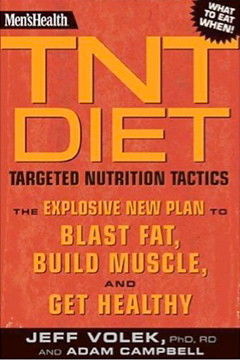 Adam Campbell and Dr. Jeff Volek team up for new low-carb fitness book The number of influential members of the health media today who believe in the efficacy of livin' la vida low-carb is ridiculously small in comparison to those who still subscribe to the same old failed high-carb, low-fat diet. That's one of the reasons I chose to start my blog and other media outlets because there is a noticeable vacuum in this medium that is begging to be filled. It's rather sad that we have supposedly intelligent people purporting to know their stuff as it relates to diet, health, and fitness, but yet they hold on so tightly to an archaic belief. Isn't there ANYONE in the major health media who thinks on his own and has been watching all of the evidence in favor of low-carb diets come out over these past few years? Yes there is! Enter Adam Campbell. Adam individually stands out among his peers because he is unafraid and unashamed of shining the light of truth on the nutritional ruse that has been happening right in front of us for decades and quite frankly he is as sick of it as those of us in the low-carb community are. Writing for Men's Health magazine isn't a bad gig! Today we are thrilled to have Adam here for an interview to talk about the low-carb lifestyle and why it deserves to have more attention paid to it for the sake of weight, health, and fitness. With his third book he co-wrote with respected low-carb researcher Dr. Jeff Volek on the way, you'll get some exclusive sneak preview quotes from this "explosive" (sorry for the pun!) new addition to your low-carb library! Adam Campbell is certainly one to keep an eye on as livin' la vida low-carb becomes more and more accepted by our culture. And it is my estimation that he may very well be one of the reasons why it will happen sooner rather than later. Enjoy hearing from this young, energetic, and knowledgeable man of conviction today as he talks about living healthy--the low-carb way. 1. I am pleased to welcome to the "Livin' La Vida Low-Carb" blog today author, journalist, and the Features editor for Men's Health magazine, Adam Campbell. He has had the opportunity to work in the research lab while earning his master's degree in exercise physiology from the University of Kansas and took part in studies about energy balance and human performance as it relates to athletes and overweight people. Today he is one of the foremost voices in the world of nutrition and fitness with his unique role at Men's Health. After discovering Adam was a supporter of low-carb, I can't help but ask the question, "How'd you manage to get on staff at such a powerhouse health publication like Men's Health?"I got lucky. I was planning to get my Ph.D. in exercise physiology at the University of Kansas, and pursue a career in research. But for some reason, it didn't feel quite right. (Perhaps it was the tens of thousands of dollars in school loans it was going to cost to me.) So I opted out during the semester I was completing my Master’s degree. A week later, I was scanning the National Strength and Conditioning Association’s career site, and noticed that Men's Health had posted a job for a reporter. I applied—I have a bachelor's degree in English—and somehow survived the interview process. Keep in mind, I was 29 at the time—and starting at the bottom rung of a new field. 2. Congratulations on your success so far in your writing career at Men's Health and I'm sure it will continue on for many years to come. Yours is a voice that is sorely needed in the health debate. Speaking of that, what an amazing column you wrote late last year about the failures of the American Diabetes Association (ADA) which garnered your fair share of criticism from them.
But you didn't back down from your thesis that a low-carb diet could very well be the cure diabetics have been looking for because you had the scientific and anecdotal support from people like Dr. Mary C. Vernon to support everything you wrote. Tell us why you felt compelled to address that controversial topic.The main reason is that the current recommendations don't make a lot of sense. Why would you tell someone who can't tolerate carbohydrates—at least not without medication—to make them the foundation of their diet? It seemed that the ADA should at least present the alternatives to doctors and patients. Instead, they push diabetics to consume the same diet that you might recommend to an elite endurance athlete. Bottom line: I was frustrated. I know you and your readers can certainly identify. 3. Absolutely! I understand you are currently putting those stellar writing talents of yours to work on your third book in collaboration with low-carb researcher Dr. Jeff Volek from the University of Connecticut. What's the book called, when will it be available, what's it about, and why do low-carbers and people interested in health and fitness need to pay attention to it when it comes out?The book is called Men's Health TNT Diet: The Explosive New Plan to Blast Fat, Build Muscle, and Get Healthy in 12 Weeks. TNT, or Targeted Nutrition Tactics, is just what it sounds like: specific nutrition (and exercise) strategies that enable you to reach your body composition goals as fast as possible. Essentially, it's what you should eat, and when you should eat it. Not surprisingly, a low-carb diet is the foundation of TNT, since that's one of Jeff's primary research interests. It'll be available October 2nd from Rodale books. In fact, you might call it an evolution of the classic low-carb diet, since it not only includes an exercise program, but also teaches you how to eat around your workout in order to optimize your results. While we provide several different eating plans in the book, our goal was to help readers understand the basic principles of why our strategy works. That way, they can tweak the diet for their lifestyle and goals. For instance, we talk a lot about glycogen in the book. Here's a quick exclusive excerpt for your readers: "Glycogen is the name for carbohydrates that are stored in your muscles. An easy way to understand glycogen is to picture it as a storage tank for sugar, the form of carbohydrate your body uses for fuel. So just as you have fat stores, you also have sugar stores. However, unlike your fat stores, which are able to expand (read: you can get fatter and fatter), your glycogen tank has a limited capacity to store sugar. For instance, think of your car: If you own a midsize, you probably have about a 14-gallon fuel tank. Try to fill it with 20 gallons, though, and the other six would spill out onto the pavement. It's the same way with sugar and your glycogen tank.
And therein lies the problem: A full glycogen tank signals your body to use incoming carbohydrates for energy instead of your stored fat. Otherwise, your glycogen tank will overflow. As a result, your body not only stops burning fat, it starts conserving it—just in case of starvation. This is one of the main reasons for America’s growing obesity problem. Because most people’s diets are excessively high in carbohydrates, their glycogen levels are always at peak capacity. In turn, their bodies won’t allow them to use their stored fat for energy.
What’s more, there are also serious health ramifications to perpetually high glycogen levels. When excess carbohydrates from your diet can’t be stored as sugar in your glycogen tank, the overflow causes sugar to build up in your blood stream. The result: Chronically high blood sugar, which can damage the large blood vessels of your heart and brain, and the small vessels of your kidneys and eyes. As a consequence, your body starts shuttling the overflow of sugar to your liver, where it’s then converted to a blood fat known as triglycerides. If you’ve ever had blood work done, you might recognize triglycerides as one of the measurements that your doctor ordered.
And for good reason: Elevated triglycerides are a risk factor for heart disease, and an early predictor of future diabetes. To make matters even worse, once sugar becomes triglycerides, or fat, it can be stored as fat. Ever been told carbs can’t make you fat? Think again.Remember, this isn't to suggest that you can't eat carbohydrates without getting fat. It's to show what happens when you overeat carbohydrates, which most people are doing. For instance, if you look at dietary intake in the US over the last three decades from the Nutrition Examination Surveys (NHANES), you'll notice an interesting pattern. In men, average daily energy intake during the early 1970s was 2450 calories. But by the year 2000, that number had increased to 2618. An even greater increase in calories was seen in women. Where did these extra calories come from? According to the NHANES data it was almost exclusively derived from carbohydrates. Interestingly, there were minuscule changes in the intake of protein and fat. (In fact, fat intake decreased in men.) So sure, people are eating too much. But they’re eating too many carbohydrates, not too much protein and fat. And that's a glaring problem with the government’s nutrition recommendations—one that's seemingly being ignored. 4. Fitness is obviously one of your passions as you run an outstanding blog for Men's Health called "The Fitness Insider." You are an NSCA Certified Strength and Conditioning Specialist, so you have an extensive book knowledge about how and why humans need exercise. But in the real world, most people can't seem to muster up the energy and commit themselves to a regular exercise routine. What advice can you share from your own experiences to help those who are reluctant to start their own fitness schedule? Also, is there an ideal mix of cardiovascular and resistance training that people should know about?First, let’s talk about the commitment issue. I'm reminded of an interesting study that I wrote about in this story: In June of this year, researchers at Leeds Metropolitan University, in the United Kingdom, released findings of a new study that looked at how exercise affects job performance. It worked like this: They asked 210 workers to provide feedback on their job-related duties and time management, on a day when they participated in an exercise program and again on a day when they did no exercise. They simply reported observations of their own behavior based on a 7-point scale. For example, they were asked to rate their ability to work without stopping for unscheduled breaks, and how effectively they were able to stick to their "to-do" lists. They also provided details about their workloads and exercise sessions. When the results were tallied, even the researchers were surprised.
Workers scored 15 percent higher in their ability to meet both time and output demands on the day they exercised. "What we found staggered us, and we were left wondering what companies might do otherwise to produce these 15 percent improvements," says Jim McKenna, Ph.D., the lead researcher.
Now consider for a moment what these numbers mean to you: On days when you exercise, you can -- theoretically, at least -- accomplish in an 8-hour day what normally would take you 9 hours and 25 minutes. Or you'd still work 9 hours, but get more done, leaving you feeling less stressed and happier with your job, another perk that McKenna says the workers reported. Obviously, the responses that led to these results were subjective. But it's hard to deny that perception is reality when it comes to job satisfaction. And a 15 percent boost in productivity might just give you a case for a similar boost in pay.
Besides showing how Hillman's laboratory findings are expressed in the real world, this study may also explain why busy men who regularly exercise are able to fit cardio into their schedules, while equally busy men who don't exercise claim they don't have the time. Arkansas governor Mike Huckabee can relate to both sides of the story. In June 2003, he was sedentary and weighed 280 pounds; he now runs marathons and weighs 170.
"I've never found time to exercise," he says. "I make time."
Consider him a poster boy for what cardio can do for a man who's already good at his job. Huckabee, ever the conscientious politician, wants to be clear: He didn't have a problem keeping his schedule or accomplishing tasks before he started running. And it's true; this guy became governor in 1996 -- 7 years before he initiated his exercise program -- and was reelected twice along the way. It's just that he's even better now.
"I'm more creative, because I have mental energy. When I finish running several miles, it's like my mind is running on overdrive," he says. And, he adds, "It's made a dramatic difference in my ability to focus."The only way to discover this yourself is to give it a try. But one of the big mistakes people make is to try to do too much in the beginning. Just get started—even if it's only 10 minutes for 3 days a week. The reality is that the less trained you are, the less you have to do to see a benefit. Of course, while you can improve strength or endurance quite quickly, it still takes time to see visible results. This is where people often get frustrated. So it takes some patience. In the TNT Diet, Jeff and I have this passage: "A training program is only effective if you actually have time to follow-through with it. For instance, consider that U.K. researchers recently determined that men who lifted weights three days a week for 5 weeks increased muscle size by about 0.2 percent per day. Sure, this amount of growth is unnoticeable from day to day. But imagine how dramatic the cumulative effect would be were you to work all your major muscle groups three days a week, 52 weeks a year. This is called consistency, and it's the true key to achieving the most success possible on any exercise program.If you work out 3 days a week, 52 weeks a year, you'll like the results. But few people make it beyond a month. Which is interesting because almost everyone will tell you they feel better—even great—after exercising. I guess our memories are pretty short. One way to combat this lack of motivation is to make a deal with yourself: On days you don't want to work out, force yourself to complete all of the sets of your first exercise. If you want to call it a day after that, then feel free to hit the showers. However, much of the time, you'll find your mood has changed and you'll be motivated to complete your entire session. It seems the process of simply getting started—going to the gym, changing clothes, etc.—is our biggest obstacle. As far as an ideal mix of exercise, that depends on your goals. If you're following a smart diet (ahem, TNT, ahem), then resistance training is going to make the best use of your time for fat loss. While everyone thinks that aerobic exercise is the best choice for this goal, we recommend weight training. Here's another bit from our book to help explain why: You've Been Told: “Running is the best way to lose weight.”
The Origin: In 1977, Jim Fixx published The Complete Book of Running. This bestselling book popularized the notion of running to improve health and lose weight, and is widely credited with kicking off the jogging boom of the 1980s. Furthermore, most exercise scientists during this time were recreational or competitive runners themselves. As a result, running and other types of endurance activities were the type of exercise that was most often studied, particularly in terms of health benefits (and there are many).
And because these researchers reported that running burns a lot more calories than weight training—while requiring nothing but a pair of functional legs—the majority of experts began to widely promote it as the best mode of exercise for fat loss. However, they didn’t—and still don’t—have the data to support that assertion.
What Science Shows: First, it’s important to point out that engaging in a regular running program—or any kind of exercise for that matter—without also adopting a prudent diet is a very inefficient way to lose weight. After all, a typical fast food double-decker cheeseburger and large fries contain more than 1100 calories—a meal most red-blooded American men can wolf down in less than 5 minutes. However, to burn that many calories, the average guy would have to run for 53 minutes at an 8:30 per mile pace. Which is why your diet has a greater impact on total weight loss than exercise.
As we’ve already discussed, though, it's not simply weight loss that’s important—it’s the quality of your weight loss that matters most. That is, the amount of your weight loss that’s pure fat—since that’s what really counts. Perhaps surprisingly, endurance exercise—such as running, cycling, or walking—does little to further augment fat loss when combined with a good diet. Weight training, however, has a dramatic impact. Consider a study we conducted back in 1999. We put overweight men on a diet that was approximately 1500 calories a day, and then divided them into either a diet only group, a diet group that also performed endurance exercise, or a diet group that performed both endurance exercise and weight training.
After three months, each of the groups had lost almost the same amount of weight—about 21 pounds. But the quality of their weight loss was much different. The men in the weight-training group lost five pounds more fat than the other two groups. You might wonder how that’s possible when they all dropped the same amount of weight. The answer is that the men who dieted or dieted and performed only endurance exercise lost about 15 pounds of fat, but also lost several pounds of muscle. Those who lifted weights lost almost pure fat.
You see, weight training is a powerful tool when it comes to fat loss. Because it stimulates your muscles to grow, your body is less apt to part with your hard-earned muscle. This is crucial because the more muscle you have, the bigger your body’s fat-burning furnace. What’s more, if you lose muscle, you not only reduce your ability to burn fat, your glycogen tank becomes smaller. (Remember, most of your glycogen is located in your muscles.) So you have less room to store carbohydrates, increasing the likelihood that they’ll be converted to fat in your liver. Endurance exercise provides none of these benefits.
But what about the fact that running burns more calories than weight training? Turns out, when scientists at the University of Southern Maine used an advanced method to estimate energy expenditure during exercise, they found that weight training burns as many as 71 percent more calories than originally thought. In fact, the researchers calculated that performing just one circuit of eight exercises—which takes about 8 minutes—can expend 159 to 231 calories. That’s about the same as running at a 6-minute mile pace for the same duration. And just as important, research shows that weight training—unlike endurance exercise—can elevate your metabolism for up to 39 hours after your workout session.As for overall health, adding a short interval training session after your weight workout or on the days in between is the most efficient way to boost your aerobic fitness, while burning even more fat than a slow to medium jog. A lot of people become intimidated at the idea of intervals, which are short, high-intensity “sprints” interspersed with periods where you either rest completely or simply slow down. They shouldn’t be. For those who are “out of shape,” these sprints could be fast walk. It’s all relative to what’s intense for you. The best part of intervals is that they’re time-saving: You can do more physical work in less time than classic forms of cardio. That said, if you really like running, by all means keep at it, as any activity that you enjoy is a great one to do. And there are certainly main health benefits to be achieved with regular aerobic exercise. 5. I recently interviewed a good friend of yours, the soon-to-be Dr. Cassandra Forsythe. Her work alongside Dr. Volek has been crucial in understanding the metabolic mechanisms that make the low-carb diet work extremely well for weight loss, normalized blood sugars, and many other health benefits. The impetus for her involvement in low-carb was a personal one--she's carb sensitive! How about you? What made Adam Campbell interested in livin' la vida low-carb?In my 20s, before I went to grad school, I was working as a commodities trader at the Mercantile Exchange in Chicago. (I was really putting that English degree to good use!) Because the market I worked was only open from 8:30 to 3:15 (in those days, markets didn’t trade around the clock like they do now), I had a lot of time on my hands. So I spent it working out and going out—as in eating and drinking. While I could tell I was putting on muscle from my gym work, I couldn’t figure out why I still had a gut. A smart friend suggested it was a nutrition problem (surprise!). So I hit the local B&N and picked up a copy of The Zone Diet by Dr. Barry Sears, which had just hit the bestseller list. At the time, I didn’t know the difference between a carbohydrate and a fat. So this was really the start of my nutrition education. I dedicated myself to Dr. Sears’ eating plan, and was quickly amazed at the changes in my physique—and the way I felt. I continued to follow a Zone-friendly diet until I went to grad school about three years later. There, I enrolled in my first nutrition class, and soon found out that much of what Dr. Sears said was wrong! I’m being facetious here, of course. But the point is that my formal nutrition education contradicted what I learned from The Zone. So I was constantly pondering this question: Was Dr. Sears “wrong,” or was it my college instructors and textbooks? Remember, this was when The Zone was still somewhat controversial, and the Atkins Diet wasn’t even being studied. In fact, Atkins was considered a health hazard, even more so than it is now (and typically by people who’ve never read the book). In 2000, I started my career at Men’s Health. I hadn’t fully bought into everything I had been taught in college, but there was definitely some “brainwashing.” That’s when I started corresponding with Jeff Volek, and immersed myself in nutrition studies and books, which included re-reading the textbooks from grad school with a more discerning eye. The rest is just the logical progression of 7 years of continuing education. 6. As you have noted in your own education, we live in a society that worships the low-fat diet as the gospel truth. They have so demonized fat, especially saturated fat, that people are quite literally scared to death of it despite all the research showing the health benefits of fat consumption. What can be done to reverse the fat phobia that exists and how can we convince those same people that sugar and refined carbohydrates are very likely the culprit in their weight and health problems?I’m not sure it will change anytime soon. Researchers like Jeff Volek, Richard Feinman, Eric Westman, Steve Phinney, Jay Wortman, and Ron Krauss are certainly providing the ammunition to blow away the saturated fat dogma, but it’s so heavily ingrained that it’s only people who have an open mind who will get it. People like you, Mike and Mary Dan Eades, Regina Wilshire, Gary Taubes, and Nina Teicholz (look for an article about saturated fat from her in the November issue of Men's Health) are obviously raising awareness, though. I really think the key is that people have to figure it out for themselves. It’s very hard to convince someone of the merits of a low-carb lifestyle if he or she has already decided that it’s unhealthy or impractical. All you can really do is present the science. Of course, when faced with research that shows low-carb diets are better at lowering heart disease risk factors than low-fat diets, health “experts” always counter with the same argument: They simply point out that there isn’t any long-term data from experimental studies to support a low-carb recommendation. The reality, though, is that this type of research doesn’t exist for low-fat diets either. 7. Low-carb supporters can sometimes feel like lonely wanderers in a harsh and cruel world treating us as outcasts for our nutritional choice. Do you see anything monumental happening in the next few months and years that will serve to rekindle the fire in the low-carb community?I think (and hope) that Gary Taubes’ (Good Calories, Bad Calories) book will help. But ultimately, these transitions are slow. One well-known scientist told me that he thinks it will be another 20 years before we see a paradigm shift. That might sound pessimistic, but you could think of it this way: We live in a society where people are going to eat poorly no matter what the recommendations. And while those who choose not to eat poorly might not adopt a low-carb approach, they’ll ultimately find a diet that emphasizes whole foods, and discourages those that are highly processed or contain lots of added sugars. That’s a strategy that just about everyone promotes. As an example, a nutrition expert I really respect, Alan Aragon, has said—and I’m paraphrasing here—you should eat as many carbs as you can tolerate. So if carbs aren’t a problem for you—you’re lean, you don’t overeat, you have plenty of energy, you sleep well, your blood work is good—who are we to tell you that you should cut back on them? Maybe you don’t need to. But if you’re experiencing some of the negatives that can be associated with a higher carb diet—like high blood pressure, high triglycerides, or one of the other symptoms mentioned above—you may want to reconsider. Some people can tolerate lots of carbs, others can tolerate very few. For instance, a 245-pound bodybuilder who has 8 percent body fat can often handle a lot—they have bigger glycogen tanks due to their muscle mass, and also perform high amounts of physical activity. However, a 45-year old guy who’s packing 25 pounds of excess belly-fat and sits at a desk all day probably can’t. So your lifestyle and body type can make a major difference. 8. THANK YOU so much for sharing your thoughts and wisdom with us today, Adam. It's nice to know there are people like Adam Campbell out there working on our behalf in the public forum sharing about livin' la vida low-carb in a non-threatening, yet assertive manner. I know it can't be easy being labeled a contrarian for not buying into the low-fat lie, but you are doing it! Is there anything else you would like to share with my readers to encourage and edify them to continue on with their low-carb way of life?Don’t let anyone tell you what the right diet for you is. No one knows. In the TNT Diet, we encourage people to get blood work done before you start the diet, so that you have a baseline measurement. This way, you can see for yourself what’s happening to markers for heart disease risk, in addition to what happens in the mirror. Just as important, you need to start monitoring how you feel when experimenting with a diet. We go into this in some detail in our book, but I discuss it in this blog post. These are important factors to look at, but almost no one does this. They’re typically only interested in what happens on the scale. Interestingly, we’ve seen such great results from some people on our plan that the scale actually becomes deceiving. Here’s an example from the book: 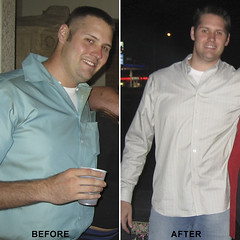 He only lost 7 pounds, but look at the amazing difference!“I had to keep tightening my belt.”
Name: Lucas Hutchinson
Age: 25
Height: 6’4”
Weight before: 250
Weight after: 243
If you were to judge Lucas Hutchinson’s results by the numbers on the scale, you wouldn’t be too impressed. After all, in 12 weeks on the TNT Diet and Exercise Plan, he lost only 7 pounds of body weight.
But remember, it’s body composition that matters. And by that standard, Lucas made one of the most dramatic transformations we’ve seen in any of our studies. That’s because he lost 19 pounds of fat, while packing on 12 pounds of muscle.
In fact, his results were so amazing that we double and triple-checked the readings to be sure they were correct. Not that we should have been that surprised: The change in his body was obvious. And not just to us: “In the first month, I noticed that my pants were fitting a little looser. As the study progressed, I had to keep tightening my belt, and it felt great every time I did it.”
Lucas added more muscle—a pound a week—than anyone in our studies to date. And although we can’t tell you exactly why—hey, everyone responds a little differently—we do know that he made a point to enjoy the meal plan. “The best part of the diet by far is the fat. I was able to use as much as I wanted, and it always made my meals taste better,” says Lucas. There’s an important lesson here: By not fearing fat, and eating all the calories that he desired, he allowed the TNT Diet and Exercise Plan to work its magic—diverting nutrients away from the fat depots that surround his belly, and toward the muscles of his chest, back, and legs.
What about his health? Judge for yourself. Lucas’ total cholesterol fell 17 percent and his triglycerides dropped an astounding 58 percent. On top of it all, there was another benefit: “I slept better and had more energy when I woke up,” he says.People, well, guys mostly, always say they want to lose fat and build muscle, but when it actually happens, they can become frustrated because the scale doesn’t move faster. Sometimes that’s actually a good thing! (Thankfully, Lucas had the advantage of being in one of Jeff’s studies—so his body composition changes were measured using DEXA, the most sensitive technology available for tracking changes in body fat and muscle mass.) Find more of Adam Campbell's thoughts about fitness and nutrition at his "The Fitness Insider" blog which will feature brand new posts starting Monday, September 10, 2007. And go ahead and PRE-ORDER YOUR COPY OF The TNT Diet today! Labels: Adam Campbell, blog, carbohydrates, diet, fitness, health, interview, Jeff Volek, Jimmy Moore, low-carb, magazine, Men's Health, nutrition, The Fitness Insider, The TNT Diet
|


