|
PLEASE UPDATE YOUR BOOKMARKS TO LIVINLAVIDALOWCARB.COM/BLOG
Declining Health Illustrated: The 'Disturbed Way Of Handling Carbohydrates' Tree
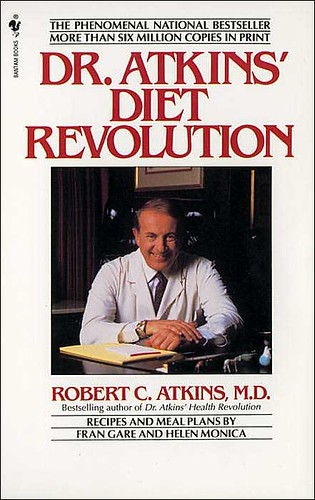 The original 1972 book that made Dr. Atkins famous! The original 1972 book that made Dr. Atkins famous!Sometimes I don't even think we realize just how brilliant the late great Dr. Robert C. Atkins really was for espousing what he did during his amazing career. Sure, low-carb diets had been out there in the public eye for over a century (most notably from William Banting in 1864 with his Letter On Corpulence) before he came along. But it was the charisma and enthusiasm for the low-carb lifestyle that Dr. Atkins brought to the public arena that captured the attention of millions of people worldwide who were interested in learning more about how low-carb could help them shed the pounds and restore their good health. When the original Dr. Atkins' Diet Revolution was published in 1972, it ignited a firestorm of controversy that still lingers on to this day. Despite all the best efforts by those who have appointed themselves the "experts" in diet and health in the United States over the years, none of them have been able to slow down the momentum that the healthy Atkins low-carb nutritional approach has had in the United States and around the world. And if I have anything to say about it, we'll keep that ball rolling for many more years to come. While his original book has since been updated several times since with Dr. Atkins' New Diet Revolution, there were some incredible nuggets of truth shared in that original book that make it worth having a copy of for your low-carb library. ORDER A COPY and read it from cover to cover because you will learn more about livin' la vida low-carb in just that one book alone that was written nearly forty years ago. Like I said, we're only just beginning to realize what a genius Dr. Atkins really was. One of my blog readers from Green Bay, Wisconsin named Dave Hatch wrote to me recently stating he had read Gary Taubes' Good Calories, Bad Calories and that inspired him to go back to the original Atkins' Diet Revolution book from the 1970's and read it again. When he did, a light bulb moment happened for Dave when he saw the following quote from Dr. Atkins. "A TREE WITH DEADLY BRANCHES. There is a tree...it's branches are called, Diabetes, Heart Disease, Overweight, Low Blood Sugar, Peptic Ulcer, Migraine, Allergy and half a dozen other diseases that are so common nowadays. The name of the tree might be, A Disturbed Way Of Handling Carbohydrates."That quote appears on page 48 of Atkins' Diet Revolution and it got the wheels turning inside of Dave's head to recreate that image into the shape of a real tree illustration to vividly demonstrate these signs of failing health and their connection to carbohydrate intake. He did a masterful job of showing that carbs are the roots that feed all of these diseases that Dr. Atkins talked about in his book. Click on the image below to see a larger version of Dave's tree: 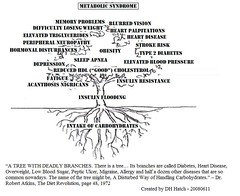 Isn't this GREAT?! Dave did a yeoman's job of taking that quote from the 1972 book and illustrating it perfectly so that anyone and everyone will be able to see the carbohydrate connection to all of these conditions. And every single one of those health ailments have been documented in the research literature to be tied to the consumption of carbohydrates. My favorite part of the tree analogy is the trunk itself. As I stated, the roots are the "intake of carbohydrates" and the branches are the negative health manifestations from eating all those carbs. But look right there in the middle of those two things at what is the real reason that most people should be livin' la vida low-carb--INSULIN! Yes, this "flooding" of insulin into our bodies is a direct result of consuming carbohydrates, especially in the amounts that are being recommended by people supposedly in authority over matters concerning health. And don't even get me started on the diet diabetics are told is best for them by the American Diabetes Association (ADA). UGH! If a doctor or dietitian tries to convince a diabetic to include eating lots of "healthy" carbs, then they ought to have their medical and nutritional credentials revoked! If you control the insulin, then you can prevent these diseases from happening in the first place. And the best way to control this insulin release is by following a significantly reduced-carbohydrate diet. There's just no bones about it, this way of eating that we talk about here is not just a healthy diet (which it is), but it is the ONLY way you can eat to prevent this insulin rush from happening. Try eating a low-fat diet and you'll find yourself trying to make up that lost fat intake with (surprise, surprise!) MORE carbohydrates. This in turn produces MORE insulin which leads to the vicious cycle of disease all over again. Why do that to yourself? While low-carb is often dismissed by its critics for supposedly being too "high-protein" (it's not high in protein, but rather moderate in protein) and/or "high-fat" (which is not a negative factor for your health when you are reducing your carbohydrates and only the total caloric percentage of your fat actually goes up), the fact of the matter is neither of these other macronutrients have the instantaneous insulin response that carbohydrates do. Carbs equals insulin equals disease. Nobody can even dispute this fact. It's impossible to ignore the indelible link between carbs which heavily increases insulin in the body which then manifests itself in all of these terrible health conditions. Dr. Atkins saw this coming decades ago and yet we still ignore all the warning signs and try to come up with a pharmaceutical answer to these health problems in 2008. Haven't we learned ANYTHING in the years since 1972 when Dr. Atkins wrote his book? You very likely don't need a prescription drug to treat that medical condition you have. Just take a closer look at your diet and realize you are feeding your disease by the foods you are eating. Fix that and you'll very likely fix your health problem. Low-carb is not some "magic pill" for every health problem you will encounter. But it will certainly address MANY of the ones that are tied metabolically to carbs. And there's a bunch of 'em! Dr. Atkins, you were indeed a bona fide genius and your legacy will continue to live on strong for many years to come! Special thanks to my reader Dave Hatch for sharing his tree illustration with us and I think he'd appreciate hearing what you have to say about it in the comments section. Do you think he encapsulated what Dr. Atkins was talking about in the quote? Or does that illustration lack essential part of the equation? Share your thoughts about it below. Labels: Atkins diet, Atkins Diet Revolution, book, carbohydrate, Dave Hatch, disease, health, illustration, insulin, Robert C. Atkins, William Banting
It's Celebrate Gary Taubes Week With The Release Of 'Good Calories, Bad Calories'
 All eyes are on the man of the hour, Gary Taubes! All eyes are on the man of the hour, Gary Taubes!It all started on July 7, 2002 for a man by the name of Gary Taubes, a talented and highly-respected science journalist for The New York Times who, whether intentionally or not, set off one of the most controversial diet and health discussions in American history when he wrote an 8,000-word column entitled "What if It's All Been a Big Fat Lie?" Whether he even realized at the time the enormous impact he would have on our culture, who knows? But he's about to do it all over again! Ever since that explosive article rocked the world over five years ago by lending credence to the high-fat, low-carb nutritional approach with irrefutable facts, Taubes has been busy continuing the work he started in that brilliant piece. And some of his views have changed as new revelations have come to light in his pursuit of the truth as he revealed in my recent interview with him. When I heard about a new book that would expand upon the thesis of that original New York Times article, I attempted to contact Taubes in April 2006 to ask him when the book would be available. There were high hopes he would release it in early 2007, but some crucial changes to the title and length of the book were in order (it originally was going to be an 800-page encyclopedia, but the editors at Knopf chopped it down to size). Finally, in July 2007 I announced the release date and final title change of the Taubes book that Veronica Atkins, Drs. Mike and Mary Dan Eades, Dr. Gil and Regina Wilshire, me and so many others have been been waiting for. And that time is now here. Remember the date--September 25, 2007! That's the day when the long-awaited Gary Taubes book Good Calories, Bad Calories: Challenging The Conventional Wisdom On Diet, Weight Control and Disease released. And it's ready to shake the health and nutrition "experts" to their very core if they are willing to hear the truth and learn from it!  I have dubbed this "Gary Taubes Week" here at my blog because I believe every single low-carb supporter, dietitian, doctor, health professional, journalist, and consumer should get their hands on a copy of Good Calories, Bad Calories because it is chock full of scientific truths that you won't hear about anywhere else. Although our dogmatic views on nutrition have guided us down this path to obesity and disease, Taubes brilliantly lays all the evidence on the table and allows the reader to draw their own conclusions while simultaneously challenging those in authority over health to open their eyes to the truth. Taubes has done the phenomenal footwork over these past five years searching and searching through literally thousands upon thousands of pages of the scientific data to give us what so many low-carb antagonists have been asking for: PROOF! Well, here it is, folks, and it's time we help spread the message in a BIG WAY! How can we do that? By pushing Good Calories, Bad Calories to #1 on Amazon.com and the exposure that will give to this book's message. It's already cracked the Top 200 the day before the release date and, with YOUR help, it'll be #1 on Tuesday when it goes on sale. If you haven't already picked up this amazing new book with a wealth of wisdom on the efficacy of livin' la vida low-carb, then ORDER NOW and get SEVERAL copies to hand out to your doctor, nutritionist, family, and friends. This is THE most important health book to come out this century and I cannot recommend it enough. I've had a pre-pub copy of this book for the past month or so and have been dying to tell you about it! Let's just say you'll be pleasantly surprised. The prologue of Good Calories, Bad Calories mentions a book by a man named William Banting called Letter On Corpulence which you can get a FREE copy of for your reference by clicking here. This will be an excellent companion reference piece to set the tone for what Taubes shares in his book. If you order now, then you should receive your copy of Good Calories, Bad Calories by the end of the week. Be sure to post a review and share what you thought about the book at Amazon and other places as soon as you can absorb it all. It's 600 pages long--200 of which are references you can check for yourself--and will take some time to absorb. But let it sink into every crevice of your mind as you realize the bill of goods we have been sold about diet, weight loss, and health has been just about as wrong as wrong can be. Yeah, we knew that already! ;) THANK YOU GARY TAUBES!!! 9-25-07 UPDATE: Wanna know why Gary Taubes is so brilliant and knows from whence he speaks regarding diet and health? Check out this New York Magazine column entitled "The Scientist and the Stairmaster: Why most of us believe that exercise makes us thinner—and why we're wrong." Taubes zings 'em again! GO GET 'EM GARY! 9-26-07 UPDATE: I just found out that Gary Taubes will be appearing on Connie Bennett's SUGAR SHOCK! radio show on Thursday as well as WUNC's People's Pharmacy radio show with Dr. Joe Graedon on Saturday. I've requested audio for the latter interview when it become available. 9-27-07 UPDATE: Gary Taubes appeared on ABC-TV's Good Morning America this morning to talk about his new book. Check out this FREE except from Good Calories, Bad Calories. Labels: Amazon, book, diet, fat, Gary Taubes, Good Calories Bad Calories, health, high-fat, low-carb, New York Times, nutrition, weight, weight loss, William Banting
FREE Copy Of William Banting's Low-Carb Diet Classic 'Letter On Corpulence'
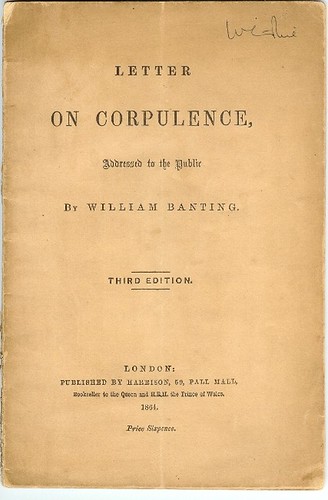 Click on the image above to access your FREE copy of this classic book Click on the image above to access your FREE copy of this classic bookWhenever low-carb diets are discussed in the United States and around the world these days, generally one name has been made synonymous with them--Atkins. However, most low-carbers will tell you that the idea of livin' la vida low-carb as a genuine dietary movement has been around for much longer than that as the always entertaining and informative Dr. Mike Eades shared in his outstanding blog this week. Dr. Eades discusses the significant role of a man named William Banting (someone who should be as well-known as Dr. Robert C. Atkins) whose life was forever changed when he began implementing the strategy of consuming less sugar and starch which was diametrically opposite to the low-calorie dietary recommendations of his day. Sound familiar anyone? Yep, here's a man who was espousing the very same low-carb dietary ideas that we do today regarding taking personal responsibility about your own health and rejecting the advice of the so-called "experts" who have chosen either willfully or through utter ignorance to reject the very principles of sound nutritional science. What's most amazing is he did it nearly 150 YEARS AGO!!! You may not have ever heard of William Banting and his famous low-carb diet classic "Letter On Corpulence" before, but all that's about to change thanks to the generosity of Dr. Eades who said in my interview with him last year that low-carb has endured because of Banting's discovery. Because of the importance of this low-carb masterpiece, Dr. Eades has undertaken the meticulous task of scanning this very short 45-page letter which was made into a small book and he put it online for us at NO CHARGE! WOW! Get your FREE COPY OF THIS BOOK and keep it handy when you hear people refer to the low-carb lifestyle as a "dangerous fad" diet that will ruin your health. Tell these people about Banting and the miraculous turnaround that livin' la vida low-carb produced in his life back in the 1800's. In the early 1970's, Dr. Atkins certainly took up where Banting left off, but Banting was the one who put low-carb on the map so to speak. You can read this letter in about 15-20 minutes and it is chock full of some amazing nuggets of truth and wisdom which Dr. Eades highlighted in this outstanding blog post. Plus, there will be a renewed interest in Banting himself when people start reading the new book from Gary Taubes coming out next month called Good Calories, Bad Calories (UNBELIEVABLE, by the way, and I've learned so much from it that even I wasn't aware of!) because the prologue highlights how Banting started it all! Go ahead and tell people about Banting's letter now and let's get the conversation started. Opportunities to receive quality low-carb resources like this one at no cost to you are extremely rare, so please take advantage of this by printing it out and putting it in a notebook for your low-carb library. Be sure to give a hearty THANKS to Dr. Mike Eades for scanning each page and then making it available to us as yet another tool in helping to educate others about the amazingly healthy low-carb lifestyle! Labels: Atkins, diet, Gary Taubes, Good Calories Bad Calories, health, Letter On Corpulence, low-carb, Mike Eades, William Banting
Groves: 'Population-Led Revolt' Needed For Low-Carb Diet Recognition
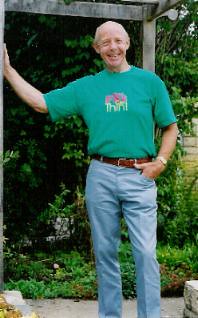 Dr. Barry Groves personally grew to appreciate the role of dietary fat Dr. Barry Groves personally grew to appreciate the role of dietary fatThere are so many truly remarkable and fascinating people who work behind-the-scenes to share what they have personally learned and studied about livin' la vida low-carb. I've been privileged enough to interview quite a few of these people over the past couple of years and I have another incredible interview to share with you today. Several of you e-mailed me to request I e-mail Dr. Barry Groves from Great Britain about the work he is doing on behalf of the low-carb lifestyle. The more I started reading http://www.second-opinions.co.uk, I couldn't believe I hadn't heard of him before! Well, let's just say I know who he is now and I'm honored to have had the opportunity to ask him a few questions about livin' la vida low-carb. This man has truly unique insights about how low-carb can become more mainstream, but it's not for the faint of heart and will take some drastic actions in the coming years to happen. I'm ready to see it become a reality in my lifetime. Prepare for a low-carb adventure today with the amazing Dr. Barry Groves! 1. I am so thrilled to be able to share with the readers of the "Livin' La Vida Low-Carb" blog one of the true nutritional giants of our day. His name is Dr. Barry Groves and he hails from a small village in the Oxfordshire Cotswolds in the UK with a doctorate in nutritional science. After personally struggling with obesity and attempting to lose weight on a low-calorie diet and exercise routine with no meaningful success, Dr. Groves discovered the low-carb diet in 1962 even before the late great Dr. Robert C. Atkins would later bring it to the forefront.
Tell us about how that journey in your life came about. Did you read up on William Banting's old writings or was it something else that drew you to the low-carb lifestyle? It all started when Monica and I were married in April 1957. I weighed 160 pounds and Monica weighed 140 pounds. These were quite normal weights as we were five feet nine inches and five feet six inches tall respectively. Monica was a good cook and was used to cooking for her parents and sister as well as herself. We didn't have much money at the time so Monica made her own bread; she also made cakes and biscuits. It wasn't long before we started to put on the weight. Over the next five years our weights yo-yoed as we tried low-calorie dieting, sweaty clothes, inert fillers and played tennis, badminton, started swimming, and walked everywhere we went. We lost weight, put it on again; lost weight, put it on again, and so on. I'm sure you know what I mean. Nothing worked in the long-term for. Monica weighed nearly 170 pounds at her peak and my weight went up to 190 pounds. In 1960 we started to cut down on the carbs. In those days it was the thing to do. But it only worked up to a point. Just cutting calories through cutting carbs didn't work--we got hungry! Replacing the carbs with protein was not only expensive, we didn’t feel right eating that way. It was as though something was missing, and we still struggled with our weight. In 1962, I was sent by the Royal Air Force to Singapore. We hadn't been there long when I discovered a doctor who guided me to the other half of the equation: When you cut down on carbs, you must replace them with fat, he said! He had to be joking, right? We knew that fat contained far more calories than carbs or protein. It seemed ridiculous to suggest we eat fat. But, having tried everything else, we decided to give it a go. Guess what, it worked! By 1963, Monica’s weight was down to 122 pounds--a loss of over 40 pounds--and mine was 160 pounds--the same level it had been when we were married. That started me thinking, "If what looked like a high-calorie diet was good for weight loss, then why were we told to eat a low-calorie diet?" I wanted to know. At the time, being in the RAF, I couldn't do much research. Monica and I ate our fried eggs and bacon breakfasts, fat meat followed by fruit and cream dinners--and our weights stayed down. In fact, the fatter cuts of meat were also cheaper because they weren’t so popular and that suited us just fine. But the best part was that we had no difficulty living this way at all, and our weights continued to stay down. Today, after 45 years of eating fried breakfasts, fat meat, extra-large eggs, full-fat cheese, and fruit and cream and so on, as well as salads and green vegetables, Monica and I are still around the weight we were in the mid-1960s. When we weighed ourselves today, Monica was 126 pounds and I was 157 pounds. In 1971, I started to give a talk about our experience entitled "The Fat of The Land" to clubs like the Women’s Institute, Young Farmers, and anyone else who would listen. By the late 1970s, however, we started to hear that the sort of diet we ate, which was high in animal fats, was bad for us. It caused heart disease, they said. With my previous experience, I wondered how much truth there was in this. So I determined to leave the RAF as soon as I could and research diet to find out. In 1982, I did just that and have been doing full-time research into nutrition and health in general ever since. It was during that time that I discovered William Banting’s booklet in Oxford University’s Bodleian Library. As I'm sure many of your readers have discovered, the difficult part of weight control isn't actually losing weight, but it’s keeping it off--for life. 2. You are so right about that! So you implemented your low-carb weight loss strategy and it worked remarkably well for you in the process. CONGRATULATIONS! Because of your own personal success with this way of eating, you began what would become a lifelong journey examining the role of various foods as it relates to the obesity epidemic.
Since this issue has exploded astronomically since the days you first lost your weight on low-carb, it is certainly all the more prescient in our modern-day culture for us to bring about real answers and solutions to this ever-growing problem. Why does there seem to be a real disconnect between the evidence that people like yourself are finding in your research studying the relationship between diet and health and the health agencies and authorities governing over policy and public dietary recommendations?That’s right: the diet we live on works and it’s easy to maintain because we can eat as much as we like and pretty much what we like. And it doesn’t seem to matter now if we "stray" as any weight gained is easily lost again. 3. This sounds like a trick question, but I'm curious to know what you think based on your studies and experiences. What's wrong with a low-calorie diet? Why do you believe the low-fat, low-calorie, portion-controlled diets have literally monopolized dietary recommendations for what is considered "healthy" for so many decades?No, it’s a good question. Low-calorie, low-fat diets have monopolized weight loss diets for the simple reason that the hypothesis that cutting down on energy intake or burning up more by exercising is plausible. But as Mark Twain once said, "For every problem there is a solution, neat plausible and wrong!" What is wrong with it is that it doesn't take into account how our bodies work. Starvation, which is what low-calorie dieting is, is unsustainable. It is bound to fail. 4. As a highly-respected and reliable source for information related to diet and nutrition, you've written many extensive columns and traveled all over the world talking about what you have discovered in your own empirical study of the scientific data about this subject. Do you see any meaningful progress happening anywhere that gives you hope that a major paradigm shift is about to happen? What's it going to take to wake up government and health leaders around the world to the low-carb answer to obesity and disease?When Robert Atkins’ second book was published in 1999, it took the dieting world by storm. Studies, some funded by Atkins, showed that low-carb dieting worked, and conventional nutritionists were looking at litigation from people whose health had been compromised by their "healthy" advice. Unfortunately, this sparked a massive backlash by the diet dictocrats and, backed by governments and the all-powerful "health industry," they seem to be winning the debate. At this point, I think it will take a strong population-led revolt to make a meaningful difference. 5. I think it's great that you personally give lectures in hospitals where the sick people are being treated because you get to speak with those who are on the frontlines of treating patients on a daily basis. Do you have any memorable stories to share about how the information you provided these doctors and medical workers helped to reshape their thinking?Not really. I find that older nurses and other medical staff who trained before "healthy eating" was introduced in the 1980s remember how diabetics were advised to eat then and can see the harm that the present dietary advice is doing. While many say that they have to go along with what the doctors say or lose their jobs, even though they can see that it is wrong, there are some who tell me that they can have an influence over their doctor bosses. 6. I am so impressed with the wealth of information you provide at your Second Opinions web site. You cover such a wide and diverse range of topics on there from diabetes to various kinds of cancers to PCOS. Obesity is indeed a major issue that is exacerbating the health of billions worldwide. What are in your opinion the top five preventable health calamities which could be improved simply by making changes in the diet?Practically all the chronic degenerative disease we suffer can be helped by a change of diet. I suppose the top five are cancer, diabetes (which is a precursor to many others), cardiovascular diseases, multiple sclerosis, and Alzheimer’s disease. 7. You have a rather strong opinion about vegetarians and vegans. I'm gonna play devil's advocate for a moment and ask you what's so wrong with eating fruits and vegetables as the primary source of calories in my diet? After all, isn't it cruel to eat dead animals with rotting flesh? (this is the terminology used by radical anti-meat activist groups like PETA and PCRM)The main reason is that we are a carnivorous species, not designed to use such materials as a primary source of calories. Also, of course, the sugars in such a diet increase the risk of the diseases I mentioned above. As cancers are wholly reliant on high levels of blood glucose to grow and survive, I think it would be impossible, for example, to get cancer by eating an all-meat diet. Vegan terminology is not scientific, it is emotive. It might be cruel to eat live animals, but how can it be cruel to eat dead animals? And, of course, many other animals eat "rotting flesh." 8. You have an incredible resource of information for people to learn more about livin' la vida low-carb and show it can improve their weight and health. But you are a part of a larger community of like-minded individuals who share the same philosophy as you regarding nutritional science. Who are some of the people you look up to and admire for their courage and strength in spreading the truth about healthy low-carb living and why?There are so many, so it is difficult to pick out a few without mentioning the rest. But I think I should mention two personal friends--doctors who proved and stuck to their principles. These are Wolfgang Lutz MD, PhD, now 94 years old, who has treated his patients with a low-carb diet in Austria for half a century, and Jan Kwasniewski, MD, PhD, who has been doing similar work in Poland for 30 years. My idols who are no longer with us are, Dr. John Yudkin, who was the professor of nutrition and dietetics at London University, and Professor Alan Kekwick of the Middlesex Hospital, London. It was work by Kekwick and his partner, Dr. Gaston Pawan, by the way, which inspired Robert Atkins to study low-carb diets. 9. Speaking of Dr. Atkins, as someone who has lost nearly 200 pounds on the Atkins diet and kept it off for nearly three years, I was a little surprised to see you describe this most famous of all the low-carb programs as "extreme and controversial" on your web site for "The Perfect Weight Plan." What's so "severe" about the Induction phase of the Atkins diet which limits carbohydrate to 20 grams for two weeks and how does "The Perfect Weight Plan" differ initially and with ongoing weight loss?We have a lot to thank Robert Atkins for. I don’t deny that. However, his methods did provide the diet dictocrats with a chance to criticize his diet. Basically, the Atkins diet is sound in most areas. All such diets, mine included, are based on the writings of William Banting in 1863 and the many studies conducted in the century following it. But Robert Atkins, I think, exploited it to some extent. Atkins was a businessman. He realized that women wanted to lose weight quickly and tailored his diet to that end. A drastic cut in carbs works. But it takes some time for the body to ditch its usual source of energy (glucose) and adapt to a new fuel (fat). Needing a complete change of enzymes, this all takes time. Cutting down on the carbs to 20g and below at the start was the cause of the nausea, headaches, fatigue, etc., that many people complained of. It was this aspect that allowed for the criticism. The second aspect is that such rapid weight loss almost always results in a stall at about three weeks in where weight stops going down and stabilizes. Many who have dieted all their lives then think "Oh no, another diet that doesn't work," and become disillusioned and depressed. Weight loss might not be quite so quick with a protocol like mine that allows 60g of carbs, but it is more sustainable and healthier. It is also easier as it allows the dieter to tailor what her or she eats now to the new regime. Atkins also sold meal replacements and supplements (this was where he made the most money) and so his books were really vehicles to advertise these products. These are not healthy. Health to a large extent relies on eating real food. Lastly, Atkins advocated soy, which is an extremely unhealthy food unless it is first fermented--which it rarely is in the form he and other food manufacturers use it. 10. THANK YOU for taking time to share your comments about the low-carb lifestyle with us today, Dr. Groves. I hope to have the opportunity to meet you someday in person to personally show my gratitude for the incredible work you are doing on behalf of this cause.
One final comment and question for you before we go--you have done a remarkable job of communicating the fact that all carbohydrates turn to sugar in the body which leads to insulin production and, thus, weight gain. What needs to be done to make this very elementary nutritional concept as universally accepted as the "eating fat makes you fat" lie has been for so long?I wish I knew so I could get back to gardening! The evidence is right there in spades. But, as the saying goes, there are none so blind as those who won't see. I think the diet police are so entrenched in their dogma that the only way to shake them out of it would be for a class action lawsuit in the courts. That could really make a difference. But it would need something that big to do it. For more from Dr. Barry Groves, check out his NEW BOOK Natural Health & Weight Loss today. 8-7-07 UPDATE: You had to know the pro-low-fat/low-calorie crowd was going to have a reaction to this interview with Dr. Barry Groves and our friends at Disease Proof didn't disappoint. My favorite quote in this rebuttal from Gerald Pugliese was this: "Honestly, at this point I hope no health-conscious person even remotely entertains the low-carb lies." Hmmm, I think I'll keep staying healthy with the "low-carb lies," thank you very much, Gerald! Labels: Atkins, Barry Groves, diet, fat, health, healthy, low-carb, obesity, Second Opinions, The Perfect Weight Plan, weight loss, William Banting
More Machine Gun Low-Carb Blogging
This has been quite the month for me to try to squeeze in everything I want to blog about, but there's just so much going on I have been having some leftover topics that I REALLY want to blog about still waiting to be blogged. As a result, I have been resorting to something I recently dubbed machine gun blogging to try to catch up. Get ready, get set, because the topics are gonna come at you fast and furious along with my regular commentary. So, without further delay, let's get started! Starting us off is this Rocky Mountain News column which had some very thought-provoking points about diet and health that you should check out for a few reasons. First, it features one of my favorite people in the whole widey widey world-- Nicki Anderson from Reality Fitness in Naperville, Illinois. If you have not heard of Nicki yet, then you need to get to know her better because she is putting out a positive message of hope for people dealing with living a healthy life (and she's FRIENDLY towards people who are livin' la vida low-carb! WOO HOO!). Visit her web site at RealityFitness.com and sign up for her "Happy Monday" newsletter in the lower left-hand corner of the page. An inspiring message arrives pronto in your e-mail inbox bright and early on Monday mornings and you WON'T be disappointed. Second, the story features the real founding father of the modern low-carb movement--William Banting. Most people erroneously believe that the late great Dr. Robert C. Atkins invented the low-carb diet, but actually it's been around for thousands of years. It was the ORIGINAL diet that most of our ancestors feasted on throughout the ages. Nevertheless, in the mid-1800s, Banting stumbled upon low-carb when his ENT doctor prescribed it for his hearing problems. He went on to lose 50 pounds by livin' la vida low-carb and wrote down the basic tenets of what many describe as the first diet book ever written entitled Letter on Corpulence. Today, Banting's principles still live on in the millions of people who are losing weight and improving their health with the low-carb lifestyle. Third, we learn that three of the top ten diets being used in America today according to an NPD Group/Dieting Monitor survey are low-carb. They are Atkins at #6, South Beach at #8, and Sugar-Free at #9. Of course, there may even be some low-carbers in the #1 diet on the list called "my own." But the fact that most people think they know how to lose weight without the use of any specified program may explain why the latest dieting craze is weight gain! One of my diabetic readers passed on this Diabetes In Control article about fooling your body into losing weight. Some of us have an overactive chemical imbalance in our brains that won't shut off even when we are not hungry. That's why you may get the sudden urge to nibble even after finishing your dinner. Of course, their ONLY answer to this "problem" is to prescribe a drug to control this from happening. I'm still not buying into that line of thinking because there is almost always a more natural way to lose and maintain your weight without such drastic interventions, IMHO! I'll give them some credit at the end of the column, though, when they try to provide practical tips for preventing this from happening similar to the ones Cornell University psychology professor Dr. Brian Wansink, author of Mindless Eating, outlined in his book. But still no mention of livin' la vida low-carb as a possible solution. :( Last night, I had the privilege of attending an auction for two young men from my church who will be going on a mission trip overseas for a couple of weeks in February. Members of the church choir (which both Christine and I are a part of) brought items to be sold during the auction to help raise the funds for them to go. You know me, I couldn't resist making up a "Livin' La Vida Low-Carb" basket full of all kinds of goodies, including an autographed copy of my Livin' La Vida Low-Carb book, Connie Bennett's fantastic new SUGAR SHOCK! book, all three of Jonny Bowden's motivational audiobook CD collection, and about 50 more items for this total package valued at around $500. I was hoping it would garner at least $100, but they started the bidding for it at $50 and NOBODY would bid on it. It seems livin' la vida low-carb was not all that interesting to the people there. For a minute there, I thought I may have to bid $50 just to keep them from lowering the price. But finally one of my fellow choir members who is a diabetic and has been asking me LOTS of questions about low-carb lately perked up and bid $50 on it. Of course, nobody outbid him, so he won the basket. I went up to him afterwards and thanked him for getting it because I know he'll LOVE it! He said he wanted to share some of the low-carb books with his daughter who is struggling with her weight. A seed is planted and I'm happy to help water it to blossom! :) Geting back to some articles in the media from this past week, I couldn't overlook this St. Paul, MN-based Pioneer Press story about a woman my age who was so fed up with her weight that she decided to go on Weight Watchers and their low-fat, low-calorie diet. GOOD FOR HER and I'm proud of her commitment to her new lifestyle change. But she said something about livin' la vida low-carb that I will not let slide without comment. Here's her quote: "I had been on the Atkins diet and lost weight. But that lifestyle just isn't maintainable. I had gained some weight back and was holding on."Actually, livin' la vida low-carb IS maintainable if you make it a PERMANENT lifestyle change rather than just a diet. This is something that people who follow programs like Weight Watchers always fail to acknowledge. Sure, they have their little meetings, but when do you stop, hmmmm? The answer is NEVER and the same goes with the Atkins diet. It's the lifestyle change many have been looking for their entire lives. While some may not stick with the plan and start gaining the weight back (DUH!), most people who didn't fail on low-carb saw amazing long-term sustainable and maintainable weight loss success by staying on the plan. As long as you remember there is no "after" with low-carb, then there's no reason you shouldn't lose weight and keep it off forever! Have you heard about the latest miracle weight loss food according to this United Press article? You're not going to believe this, but it's white rice. Yep, the same white rice that is absolutely a no-no when you are livin' la vida low-carb. The brilliant wonder-twins of The Serotonin Power Diet are Judith Wurtman and Nina Frusztajer Marquis. They foolishly assert that people need to eat lots and lots of carbohydrates to keep their serotonin levels high enough to control their appetite. Say what? If I nix the carbs and eat plenty of fat and protein, then something tells me I'm not gonna have to worry about hunger. This diet reminds me of another screwy high-carb diet I blogged about before called The Bread For Life Diet. When I read this BruneiDirect.com story about giving hope to people who are obese that weight loss and improved health can indeed happen for them, I was encouraged. But that quickly diminished when I came to this part of the article: Nora is also advising the public against resorting to the Atkins diet or the low carbohydrate eating plan to reduce weight. She said that the Atkins diet had been questioned due to its unconventional low carbohydrate but high protein diet. She noted that Dr. Robert Atkins, the pioneer of the diet, died from a heart attack.Are these people TRYING to keep people fat? Whether they know it or not, by discouraging people from even attempting to lose weight using programs like the Atkins diet, that EXACTLY what they are doing. They turn their nose up at livin' la vida low-carb as if it's worse than obesity itself! Come on, people, get serious about this! Low-carb not only works but it keeps on working for those of us who LIVE IT day in and day out. Stop the scare tactics and give people the truth. And don't get me started on this vicious and hateful lie about Dr. Atkins dying of a heart attack again. We're just not going to entertain such ridiculous and unfounded theories over and over again after they have been clearly debunked. Next subject! Here's another article from the Ozarks Newsstand that looked like a pretty good one on improving your body through diet and exercise...well, it was good until I got to this part: The Atkins Diet is built around no carbohydrates. The South Beach Diet stresses cutting sugar-rich carbs such as bread, potatoes and even fruit. But which one is the right one? According to Herman, none of them. Eating healthy boils down to one thing-moderation.
"A lot are full blown on Atkins," he said of the low-carb diet made popular by Dr. Robert C. Atkins. "It does have good ideas and good points. You shouldn't overdo it on carbs. But don't restrict yourself. If you hold back, you'll go overboard. Reward yourself, but do it within reason."Okay, I'm gonna say this LOUD AND CLEAR so nobody will misunderstand it. There is NO phase in the Atkins diet that requires you to eat NO carbohydrates. Not a single one. Even in the most restrictive phase of Induction during the first fourteen days of your low-carb plan, you still get to enjoy around 20g carbs daily. It only goes up from there eating lots of those low-glycemic foods mentioned with the South Beach diet. This idea of ZERO carbs may work for some people, the fact is most of us who are livin' la vida low-carb are STILL eating the right kind of carbs and gladly so. I like the fact that this expert admits there are good aspects to Atkins, but furthering the misinformation about this remarkable weight loss program is not cool at all. Don't they know Jimmy Moore will call their bluff by now? :D Finally, have you heard about the controversy happening in Tennessee over the popular weight loss method known as gastric bypass surgery? This Fox News story reveals that healthcare provider BlueCross BlueShield of Tennessee is now requiring (GET THIS!) an IQ TEST before overweight or obese people will be allowed to try this risky way to shed the pounds. Not surprisingly, people are up in arms about this claiming it's discrimination against fat people. But I disagree. Before we make it so easy for people to have a surgery like this one, why don't we have them tested not just for their intelligence (which is irrelevant if you ask me), but also do a complete psychological evaluation to get at the root cause of the weight problem to begin with. A lot of people who choose to have the gastric bypass surgery have not exhausted all the natural ways to lose weight first and feel it is simply a quick fix to their weight problem. Getting to the bottom of the REAL problem may prevent many people from having regrets about their decision to be cut open and radically altering their life forever. Besides, they're gonna be eating low-carb when the surgery is done anyway, so why not start livin' la vida low-carb to begin with? Okay, that's plenty of low-carb morsels for you to munch on for today (but there's plenty more to come!). Feel free to comment on any or all of these topics that may tickle your fancy or get your blood pressure cooking. Don't hold it in, share it with Dr. Jimmy and leave all your burdens behind you. Let's talk it over, shall we? Labels: Atkins, diet, exercise, gastric bypass surgery, health, Jimmy Moore, Letter On Corpulence, low-carb, Nicki Anderson, serotonin, South Beach, sugar-free, weight loss, Weight Watchers, William Banting
|


