|
PLEASE UPDATE YOUR BOOKMARKS TO LIVINLAVIDALOWCARB.COM/BLOG
No-Carb Runner Takes Exception To Georgia Nutritionist Pushing Carbs For Athletes
  Chris Rosenbloom, meet zero-carb runner Charles Washington! Chris Rosenbloom, meet zero-carb runner Charles Washington!We are surrounded by people who insist on repeating the same health mantras we've always heard over and over again until they're blue in the face. I'm sure they mean well with their conventional advice and had the right motives when they continued their education into the subject of diet and fitness. But somewhere along the line, many of these people who are placed on a pedestal and declared "experts" have lost their objectivity and ability to think logically about the advice they are sharing. Such is most definitely the case with those healthy journalists at major newspapers. Whether it's Sally Squires from The Washington Post, Heather McPherson from The Orlando Sentinel, Juliette Kellow from the UK Mirror, Bill Laitner from The Detroit Free Press, Bryant Stamford from The Louisville Courier-Journal...the list goes on and on...one thing always remains the same. These people need to be educated about what life is like in the REAL WORLD outside of their monopolistic world view that oftentimes does not match what is happening to real people. As you can tell from those links above, I LOVE challenging these darlings of the health media to do a better job of researching before they go off talking about something they obviously don't have a clue about. But today I wanted to bring in a special guest to respond to a rather ludicrous column that appeared in the Atlanta Journal-Constitution this week by Chris Rosenbloom, Ph.D., R.D. called "For runners: 'A low-carb approach...can spell disaster'." She asserts in not-so-uncertain terms that a runner absolutely NEEDS carbs for fuel during their workout and that a low-carb diet is NOT recommended for running. We already know the "body needs carbs" mantra is nonsense because of a fascinating metabolic process that is essential to livin' la vida low-carb called gluconeogeneis where the body makes its own carbs through the liver from the dietary protein you consume. You never hear any of these "experts" even mention this--EVER! This topic about carbohydrates being needed for running and training is something an Olympic athlete repeated to me in August 2007 reacting to a blog post I wrote about about a study showing more athletes are choosing low-carb diets to help them achieve maximum performance. Then you also have people like world-class marathon sprinter Roy Pirrung pushing a high-carb, low-fat diet for runners while my blogging friend and fellow Atkins diet weight loss success story Kent Altena talks about how you can burn fat for fuel when you are running in marathons. There's a great disparity between these two camps and very clearly this Rosenbloom lady is heavily espousing the high-carb theory. How about we hear from someone from the OTHER side who chooses to burn FAT for fuel during his running experiences? His name is Charles Washington and he is one of my moderators over at my "Livin' La Vida Low-Carb Discussion" forum. For those of you who have not heard about Charles, this man is simply amazing. He runs in half-marathons throughout the spring and summer and does it all eating a ZERO-CARB diet. That's right, he doesn't even eat veggie carbs. He's hardcore on what he describes as the "Zero Carb Path" and I'll be sharing an interview with Charles on my podcast show coming up in July. For now, I wanted to introduce you to Charles by allowing him to respond to Rosenbloom's idiotic column. As you will quickly see in this guest blog post from Charles, he is quite knowledgeable about what he writes about and has the personal experience from his own life to back up everything he says. I appreciate his willingness to share today and I hope you enjoy this very intelligent rebuttal to the claim that you need carbohydrates for athletic performance. ENJOY! Here's what Charles wrote in response to Chris Rosenbloom: Dr. Barry Groves observed that athletics is becoming increasingly competitive. More and more stress is being placed on how well we perform. To reach our highest potential, all of our body systems must be perfectly tuned. Nothing is more important to our well-being and ability to perform than good nutrition. Eating the right foods helps us to maintain desirable body weight, stay physically fit, and establish optimum nerve-muscle reflexes. Without the right foods, even physical conditioning and expert coaching aren't enough to push you to your best. Good nutrition must be a key part of your training program if you are to succeed. The problems arise when deciding the best nutrition for exercise and athletics. Chris Rosenbloom of The Atlanta Journal-Constitution recently posted an article describing the preparations of runners preparing to race in the world-renowned Peachtree Road Race in Atlanta. She quoted Lee Fidler, an area running coach since the early 1980’s: "Nutrition is an important part of preparing for a road race. I try to get a balance of fruits, vegetables, dairy products and some high-quality protein, but I also use sports drinks and energy bars to boost my calorie and fluid intake. I see too many runners try a low-carb approach, but that can spell disaster for a runner."That's very interesting because I am a runner and I have no carbohydrates or sports drinks as a part of my diet. Has it always been this way that carbohydrates were totally necessary for athletics? The late Gordon Pirie, an Olympic medalist from the 1952 games in Helsinki wrote a book called Running Fast and Injury Free. There he wrote: “Never eat white flour or its products, nor any sugars, nor any milk that has been homogenized. Scientists can tell you this, unless they are funded by one of the major food companies. Do not believe scientific 'facts' that have been purchased on the backs of food packages.”Nowadays, athletes regularly use sugar and sugar drinks as training aids. How did we get to this point and is this a healthy way to achieve the performance we all seek? Chris Rosenbloom quoted athletes as all agreeing that carbohydrates with some protein are crucial for training. Pasta and pizza were top choices, with potatoes, brown rice, whole grains, fish and chicken all making an appearance at their training tables. Some rely on energy bars and energy drinks, but most stick to real foods for their training. To this information, Rosenbloom assigns a letter grade of “A” because in her opinion, carbohydrates fuel runners. “Protein, while important, is not a good substitute for carb[ohydrate]s.” She would love for runners to have iron-rich foods as well to help carry oxygen to muscles. Unfortunately, advice like this is peddled about in most major athletics publications and most of us accept these so-called truths without qualification. However, upon closer inspection, we find that there is: No mention of the best fuel for the body: fat. In fact it says earlier that “Carbohydrates are crucial for training.” There was not even a mention of the essential fatty acids necessary to sustain life. Neither does the advice recommend that the fruit and vegetables be cooked. As we know any minerals and vitamins these may contain (and there are actually precious few to begin with) are not released from uncooked fruit and vegetables. It is also important to note her understanding of what constitutes a “low-carbohydrate” diet. The emphasis is on protein, not fat. We need to understand that low-carbohydrate diets are not high-protein diets. Rather, they are high-fat diets and they regularly only contain little more protein than that recommended by so-called balanced diets. Consuming a high-protein diet causes serious problems as the Inuit Eskimos sometimes learned in the springtime when only lean rabbits were available. They suffered a malaise that swept over the entire population. They called it rabbit starvation. In scientific terms, Dr. Groves explains: "Excess intake of nitrogen leads in a short space of time to hyperammonaemia, which is a build up of ammonia in the bloodstream. This is toxic to the brain. Many human cultures survive on a purely animal product diet, but only if it is high in fat. A lean meat diet, on the other hand cannot be tolerated; it leads to nausea in as little as three days, symptoms of starvation and ketosis in a week to ten days, severe debilitation in twelve days and possibly death in just a few weeks. A high-fat diet, however, is completely healthy for a lifetime."Therefore, one would not want to substitute protein for carbohydrates as Rosenbloom assumes. Those like her who recommend carbohydrates as the “best fuel for the body” don’t seem to realize two very important points: First, the body can't store carbohydrates in large quantities and most people already get more than enough carbohydrates to fuel their bodies' daily activities. All carbohydrates, whether they are bread, pasta, sugar or jam when you put them in your mouth, enter the bloodstream as glucose. And the bloodstream can only hold so much. The body, being a well-run power plant, puts the leftovers in storage to use in the future if it's needed. Some is stored as a type of starch called glycogen, but as it can't store much of this, the body turns most of the excess into fat and keeps it on deposit in the body's fat cells. We see it walking around the streets wherever we go, hanging off bodies in a most unattractive way. Put simply, carbo-loading cannot work simply because excess carbohydrates are not stored in a readily usable way. The second problem lies in how the body uses its various options for fuel. Each of our body's cells contains lots of very small power plants called mitochondria. It is they that produce the energy we need from the food that we consume. Glucose is usually called the body's 'preferred fuel' because, if it is available, our bodies have been conditioned from birth to use it first. But it is not the best fuel. That distinction belongs to fats--or fatty acids, to give them their scientific name. Before the mitochondria can use either glucose or fatty acid as a fuel, it has to be transported into the mitochondria. Fatty acids are transported into the mitochondria as completely intact molecules. Glucose, on the other hand, can be transported only after it has been broken down first into pyruvate by the process of glycolysis. This is then used anaerobically to produce energy with lactate as a by-product. The by-products of the energy-production process when fatty acids are used are carbon dioxide and water, both of which are easily excreted. But when glucose is used, the lactic acid produced in the conversion process can build up in muscle cells and make them ache. It is this that is the cause of the aching muscles or pain involved in strenuous exercise--'the wall' as athletes call it. This 'wall' severely limits an athlete's performance. So why would a person want to limit their performance by using carbohydrates for fuel? 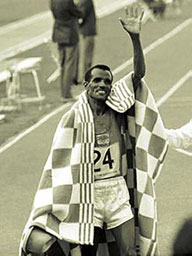 Ethiopian Olympic sprinter Mamo Wolde Ethiopian Olympic sprinter Mamo WoldeDon’t take my word for it, how about the 1968 Olympic Marathon Champion, Mamo Wolde? It was 1968 at the Mexico City Olympic Games. The spectators at the marathon went wild as a relatively unknown Ethiopian, Mamo Wolde, won the marathon. Not only was the thirty-five-year-old runner the oldest man ever to win this prestigious event, he did it in record time. He also was a silver medalist in the 10,000 meters at the same Olympics. Wolde grew up in an Ethiopian village. His life consisted of running after and hunting wild game on foot. His diet was high in animal meat and fat, with practically no carbohydrate. Subsequent tests showed that Wolde's body, under conditions of physical load, readily burned fat as its main energy source. Wolde had no concept of 'hitting the wall'. It never happened to him. While there is little or no scientific evidence that carbohydrates are a particularly good energy food, we know that fats are. Dr. Groves explains further why the best performance is only possible with the correct diet and this applies to humans and animals. With the correct diet, constant exercise and practice to maintain muscle suppleness, strength and stamina doesn't seem to be needed either. It is well known that carnivorous animals such as lions and tigers are fed their natural diet of fatty meat, even when confined in cages or small pens in zoos for long periods of time, without the opportunity to exercise, do not lose their vigor, strength and endurance. Such animals in circuses are even more confined but they are still able to make prodigious leaps when called upon to do so. Eskimo sled dogs are normally kept on leashes or in small kennels during the summer months and fed fat meat and fish. When, after some months of such inactivity, the winter arrives and they are required to pull sleds again, they have no need of a period of training or conditioning before they go about their arduous task. And they still manage to pull heavy sleds for up to twelve hours a day. The same applies to English hunting dogs. They do not lose their ability to run hard for long distances when correctly fed. The same is true of Man. The Eskimo spends most of the year in practical inactivity during the winter months. Confined to his snow-covered hut or igloo, eating meat, fish and fat, he rarely ventures outside for months at a time. But when spring arrives, he immediately begins a very strenuous life, traveling many miles to hunting grounds. He, too needs no period of conditioning after his long winter of inactivity. He also requires less sleep and is much more resistant to fatigue. In 1895 two Norwegians, Fridtjof Nansen and Frederik Johansen, landed on an island of the Franz Joseph group. They had 'conventional' provisions to last for several weeks but, as there was abundant game in the form of walrus and polar bear, they decided to live off the land and save their provisions until the following summer. From the end of August 1895 until the spring break up of the arctic ice they got no exercise, did not wash themselves or change their clothes, yet they remained in perfect health and were able to do a full day's sledging on their first day of travel. Rear Admiral Robert Peary also noted the ability of Arctic explorers to subsist for more than a year with no food other than pemmican twice a day. Men doing heavy work required two pounds of pemmican, which was the equivalent of six pounds of meat and a pound of fat per day. This ability to do fantastic feats of strength and endurance was not confined to the Arctic. Native porters in Australia, eating only kangaroo meat, carried heavy loads for up to twelve hours without rest or refreshment; and Aborigines in the desert, would lope for distances of up to twenty miles, with occasional bursts of speed to catch game, on a handful of worms, bugs and insects, and kangaroo meat. What all these people (and animals) have in common is their carbohydrate-free diet. Fat is the best fuel for an athlete, carbohydrates are the worst. It really is as simple as that. THANKS for that well-reasoned retort to the Atlanta Journal-Constitution column touting carbohydrate consumption for runners, Charles. You know from whence you speak and I look forward to sharing our interview with everyone in July. Let's e-mail Chris Rosenbloom at dietitian@ajc.com and let her know about how high-fat, low-carb living (or in Charles' case, NO carbs!) has positively impacted your athletic performance. Labels: athletes, Atlanta Journal-Constitution, carbohydrates, Charles Washington, Chris Rosenbloom, fat, journalist, low-carb, performance, runner, zero carbs
Mercury News Editor Admits She Tries To 'Live La Vida Low Carb' For Her Health
 Mercury News editor Pamela Moreland loves low-carb living! Mercury News editor Pamela Moreland loves low-carb living!One of the reasons I decided to start blogging about my experiences livin' la vida low-carb back in 2005 after losing 180 pounds on the Atkins diet in 2004 is because of the perception that there was such a pervasive negative portrayal of the healthy low-carb lifestyle in the media. For the most part, this is true and it sometimes gets downright nasty with the continued misconceptions about this way of eating. You can see several examples of this for yourself by clicking here, here, here, here, here, and here. It's vicious sometimes the absolute hatred that is shown towards low-carb. That's what makes stories like this one in the San Jose Mercury News so refreshing to read. It's from the assistant managing editor named Pamela Moreland and I just about leaped for joy when I read the first line of her column entitled "One Great Dish: Pesto makes the meatloaf." Here's what she wrote: "Most folks may have said adios to the Atkins plan, but I still try to live la vida low carb. It just seems like the right thing to do."YES YES YES!!! WOO HOO, Pamela, THANK YOU! I'm so proud of you for standing up for this way of eating in your own life because obviously it works for YOU. Despite the "craze" that has happened with the Atkins diet, you're still livin' la vida low-carb and that is AWESOME! She says she is no longer on the 20-grams-a-day worth of carbohydrates, but enjoys the low-carb recipes from Dr. Atkins' New Diet Revolution book like this turkey meatloaf with pesto and spinach. YUMMY! Check out what Pamela had to say about this low-carb recipe she LOVES to cook up for her low-carb lifestyle: "It's easy to make. It's delicious. It's lighter than traditional meatloaf, and the pesto adds creaminess. The spinach contributes color, but its flavor almost disappears, so you get some leafy greens without even trying."That's what makes a recipe so good...you get all the healthiness of the ingredients while enjoying the taste of the foods you love and savor. The only thing I would slightly chide Pamela over is her use of low-fat milk instead of cream in the recipe, but she's making it her own and that's good. Whatever works for her, she should do. Along with the meatloaf, Pamela cooks up some roasted cauliflower (MMMM!) and uses the leftovers (if there are any!) for a great lunch at work the next day. Sounds like a wonderful recipe and I'm happy to know that there are a few people working in the media who are wholeheartedly in love with livin' la vida low-carb. So today I salute Pamela Moreland from the San Jose Mercury News for daring to be different and standing up in favor of the low-carb way of life. YOU GO GIRL and keep up the great work you are doing. Keep those recipes flowing our way and we'll be watching. :D Send Pamela an e-mail of THANKS for her positive coverage of low-carb at pmoreland@mercurynews.com. Show your appreciation to her and encourage her to keep on livin' la vida low-carb and being proud of it within the pages of her newspaper column! Labels: diet, journalist, low-carb, meatloaf, Mercury News, Pamela Moreland, recipe
Columnist Claims No 'Intelligent Human Being' Would Begin 'Ghastly' Atkins Diet
One of the things I enjoy doing at my blog is helping educate misinformed newspaper columnists as it relates to livin' la vida low-carb. You know, I'm sure these people are well-meaning in their own sick, perverted way thrashing the Atkins diet, but I for one will not allow the ignorance to go unchallenged. It's the least I can do as a public service to society. :) I've seen columnists who are jealous of how well the Atkins diet works, a low-fat diet apologist, what I would describe as a low-carbophobe, and even a Jewish man who claims he did the Atkins diet (no, he didn't!). My favorite ones are those know-it-all college journalists who rant and rave about low-carb diets when they're still learning how to pull their britches up! Ah, these people never cease to amaze me with all the ways they try to bring down this healthy lifestyle change that millions of us have made our one and only way to eat for the rest of our lives. And yet they STILL do as I noticed in this East Hampton Star column from a woman named Laura Donnelly. She wrote about the subject of diet in her column this week and had to get in her digs on the Atkins low-carb diet. Let's take a look at what she wrote, shall we? Lamenting about the "conflicting information" about diet and health that exists in our society, Donnelly said she prefers to implore "basic, common-sense guidelines" in her recommendations for a healthy way to eat and live. First on her list is "eat in moderation." HA! What a freakin' joke, Ms. Donnelly! This whole "eat in moderation" mumbo jumbo is silly because it is so subjective that it means nothing to the average person. It kinda like telling people to eat a "healthy diet"--but even that isn't so clear to most people as you admitted at the beginning of your column. My low-carb lifestyle gives me all the "balance" in my diet that I need to eat the most nutrient-dense meals I possibly can. That's why livin' la vida low-carb has become the permanent weight loss solution for so many people, myself included. But then Ms. Donnelly turns her attention to our cherished and beloved Atkins diet and didn't hold back her angst and fury over this healthy alternative to the low-fat diets. Here's what she wrote: "Look at the success of the ghastly Atkins diet: How any intelligent human being could think that a diet recommending crumbled fried pork rinds as a substitute for bread crumbs is logical is beyond me, but this diet did appeal to lots of menfolk. And everyone I know who tried this diet has gained the weight back. Again, let me preach: Everything in moderation."I decided this was just a wee bit over the top for my blood, so I wrote a letter to the editor to the East Hampton Star responding to that one paragraph alone in Ms. Donnelly's article. This was my response exactly as I submitted it to them: Dear Editor,
I was disappointed by your columnist Laura Donnelly in her recent column entitled "The East Hampton Diet" where she describes the Atkins low-carb diet as "ghastly" and shares her utter ignorance of what this way of eating is all about in her rant about "everything in moderation."
The most absurd statement she made was the following: "And everyone I know who tried this diet has gained the weight back." Well, guess what, Ms. Donnelly? Now you DO know someone who has lost weight on the Atkins diet and then KEPT it
off over the long-term. That would be me.
In 2004, I lost 180 pounds after reading "Dr. Atkins New Diet Revolution" and today I am, as I like to describe it in my book, blog, and podcast show, Livin' La Vida Low-Carb!
This truly is the most remarkable nutritional approach I've ever seen in my entire life because it transformed me from an extremely unhealthy morbidly obese 410-pound man on a one-way ticket to an early grave into a physically fit 220-something man with more energy, vitality, and love of life than he ever thought possible!
People who have never read any of the books about low-carb (as is clearly the case with Ms. Donnelly and her obvious ignorance of what low-carb is all about) have not walked a mile in my shoes to know what it is like to live life as a fat person in America. If the Atkins low-carb diet is helping people like me get their life and health back, then why discourage others from trying it, too?
My philosophy is for people to find what works for them, follow that plan exactly as presribed by the author of the plan, and then keep doing it for the rest of your life. Whether that's low-fat, low-carb, or yes, even low-carb, let people decide what's best for them and stop your scaremongering already. That's a lesson that would serve you well, Ms. Donnelly.
Sincerely,
Jimmy MooreI have no idea if they will publish my letter or not, but I encourage you to submit a letter about your low-carb success as well to inform Laura Donnelly that people really do lose weight and keep it off on a low-carb diet. Send your letters to letters@easthamptonstar.com. She goes on to push exercise so you can "earn your strawberry shortcake" as a reward. UGH! Will these people EVER learn? I guess we'll have to keep setting them straight when they get it wrong. And they WILL keep getting it wrong as long as they continue to NOT educate themselves about the low-carb lifestyle. Don't worry, though, I'll keep an eye on them. :D Labels: Atkins, balance, column, criticism, diet, journalist, low-carb, moderation, weight loss
Atkins Hater Says He's Sorta Sorry...Er, Maybe
 Columnist Robert St. John says he enjoys tormenting Atkins dieters Columnist Robert St. John says he enjoys tormenting Atkins dietersOne of the things I like to do here at my "Livin' La Vida Low-Carb" blog is to point out columnists who write articles in the media that I find are either outright lies or a gross display of ignorance about livin' la vida low-carb. I suppose since I have been so successful on a low-carb diet losing nearly 200 pounds on it that I feel like it is one of my duties to defend it and gladly so. I've done it many times over the past two years that this blog has been around and I'll keep doing it every chance I can get because people deserve to know the truth rather than the almost-always jaded opinions of these so-called journalists. If these people would simply take a few hours and just read a low-carb book for once in their life, then I don't think we would see all the constant negativity that pops up in the media so much. Don't hold your breath, though. You might recall a syndicated food columnist by the name of Robert St. John who I featured not once, but twice in blog posts last month after he proved to the entire world what a complete numbskull he is about the Atkins diet. In this blog post, I noted how St. John described Atkins as a "sadistic slow torture method of carbohydrate deprivation." Here's what I wrote about St. John's column at the time: "The only 'sadistic slow torture method' that I've ever been on is when I went on a low-fat diet in 1999. The FAT 'deprivation' I experienced during those ten months that I willed myself into losing 170 pounds was just too much to take and I gained every bit of that weight back within five months! But with livin' la vida low-carb, this has literally been the easiest way to eat and lose weight for good in my entire life. St. John doesn't know what he's missing!"Not to be outdone by himself, St. John again tried to be cute seeing himself write about his version of low-carb living in this blog post where I featured him slamming the Atkins diet yet again: "I once tried Dr. Atkins' torturous method of carbohydrate deprivation, and three weeks into the diet wrote this paragraph in my journal: 'Everyday I get an afternoon craving for a Milky Way bar. 'Just eat some pork rinds or beef jerky,' they say. I tried that. Pork rinds are smelly and greasy, and it takes approximately 37 hours to chew one single piece of beef jerky. Note to future Atkins dieters: 50 pounds of dried beef or fried pig skins can't come close to one tiny bite of a chocolaty, silky, heavenly, wonderfully delicious Milky Way bar - Pure joy in a brown wrapper."Pure unadulterated idiocy is all this was and I called him on it! Take every myth you've ever heard about low-carb and hyperbolize it. That's precisely what this dolt St. John apparently enjoys doing in his columns with no concept of discovering what the facts really are. What he doesn't realize is just how retarded that makes him look to people educated about livin' la vida low-carb when he pretends to know what this way of eating is all about when in reality he hasn't got the first clue! But in his latest column this week, we catch a glimpse of what appears to be an apology of sorts while he reveals that supporters of the Atkins diet (translation: READERS OF MY LIVIN' LA VIDA LOW-CARB BLOG!) often call his bluff and contact him directly when he criticizes our healthy lifestyle change. Talking about the "hate mail" he gets from various groups when he has "stirred up controversy," St. John did have something pretty funny to say about the mail he gets from those radical vegetarian members of PETA. "PETA sends e-mail frequently. It is an easy target, especially in this part of the country that hosts more hunters per capita than any other region. I never have been intentionally cruel to a domesticated animal, but my love for foie gras and veal has filled my inbox with some of the more hilarious hate mail a columnist could ever receive. Vegetarians send e-mail quite frequently. But what they don't understand is: I like vegetables, too. I just prefer that they taste more like meat."HA! Now that's just TOO funny! Not a bad wit for someone who doesn't understand what the Atkins diet is all about. Speaking of that, here's what St. John had to say about those of us who support low-carb. "The Atkins Diet people must remain on alert 24 hours a day scanning the Internet for journalists who dare contradict or make fun of the late doctor's tortuous carbohydrate deprivation methods. They fill their e-mails with a lot of medical mumbo-jumbo and technical jargon. On the occasions that I do reply, I go into great detail extolling the joy and beauty of bread, rice and potatoes."Hardy-har-har...yuck yuck yuck! I'm sure St. John just gets one big ole belly laugh out of doing that. Yippee freakin' skippy! You bet I scan the Internet looking for lamebrained idiocy like yours, Mr. St. John, because you are the exact epitome of what's wrong with our society these days. While you are off typing away thinking you are being smart and funny about all these negative stereotypes of low-carb, the obesity and diabetes twin epidemics just keep getting worse and worse and we scratch our heads wondering why. I mean DUH! If honest journalists (not pretenders like this St. John fool!) would simply crack open a copy of Dr. Atkins New Diet Revolution for themselves and actually read it, absorb the REAL message, and share what they have learned with their readers, then perhaps we could curtail the downward spiral that has happened with the rising weight and declining health of tens of millions of Americans. No thanks to the Robert St. Johns of this world, that ain't gonna happen anytime soon! Where's your journalistic responsibility to your readers, Mr. St. John, hmm? Grow some kahunas and try exhibiting a little bit of testicular fortitude for once rather than simply repeating what you heard about the Atkins diet from a friend of a cousin's friend who went on it and hated it. Perhaps you should actually read some of that "medical mumbo-jumbo and technical jargon" that my readers have sent you about livin' la vida low-carb. You might actually learn something for a change! Keep on eating all that bread, rice and potatoes, too! When you get sick and obese from overloading your body with garbage carbs, then don't come crying to us that you didn't know any better. You've been exposed to what is right and now you are just choosing to foolishly ignore it. That's certainly your choice, but the truth is out there for everyone to see. It's no secret anymore because the positive and uplifting low-carb message is getting out there whether you like it or not. While St. John said e-mails from people responding to his anti-Atkins columns "don't bother me in the least," I think we should all give him a nice resounding shower of e-mail contact today thanking him for at least attempting to apologize and say he is sorry...er, maybe. E-mail Robert St. John anytime 24 hours a day while you are on watch for negative columns about low-carb at Robert@robertstjohn.com. I know his sadistic and self-absorbed self would just LOVE to hear from you today. Let's give him feedback today that he'll NEVER forget! Labels: Atkins, criticism, diet, healthy, Jimmy Moore, journalist, low-carb, media, Robert C. Atkins, Robert St. John, truth
Facing The Low-Carb Bullies One-By-One
It was almost as predictable as the sun rising in the morning. You knew they were lurking around waiting for the right time and the beginning of the new year last week was the perfect opportunity for them. They've got your full attention right now and have set their plan into motion. Of course, I'm referring to the anti-low-carb zealots out there in the media. Not everyone in the press is opposed to low-carb (like this recent Galveston (TX) Daily News column). You've seen the negativity about low-carb in just this past week, haven't you? A jab here, an insult there at the Atkins diet and the smirky irreverent remarks many of these journalists trying to be cute have made about our beloved low-carb way of eating. Just in case you missed these somehow, here are a few that I saw: 1. The St. Petersburg Times[Charles] Platkin said in an online interview this summer that when he was just 10, he was so conscious of being overweight that he got his parents to buy him the first Dr. Atkins diet book.
It did not help him keep weight off, nor did a succession of what he termed "futile quick-weight-loss diets."
These, he said, reduce calories by severely limiting the variety of foods people can eat. But such restrictions are "impossible to maintain over the long-term."Platkin is known as "The Diet Detective" and has written negative things about the Atkins nutritional approach in his syndicated column. I first challenged him for his viewpoints in this blog post which then precipitated a stern response from the author and fitness instructor. He has repeated this idea that low-carb is not for the long-term before and even said in an interview with me last year that livin' la vida low-carb is as detrimental as obesity on the health of Americans. Pretty wild stuff! Despite my obvious vehement disagreement with his point of views as espoused in this column about his new book The Diet Detective's Count Down: 7500 of Your Favorite Food Counts with Their Exercise Equivalents for Walking, Running, Biking, Swimming, Yoga, and Dance (which I will be reviewing VERY soon!), Platkin recently added me to his list of writers at his DietDetective.com web site to blog about low-carb. You can access my columns by clicking here. I have explained to Platkin that I disagree with his comments about low-carb not working over the long haul and that my food choices have not been severely limited as he claims. My willingness to articulate these viewpoints is why he wanted me to write for his web site. He's still wrong about low-carb and I will continue to hold his feet to fire about it! 2. The St. Petersburg Times (AGAIN!) The Atkins diet does, indeed, work. You cut the carbohydrates, increase the fat and the weight can melt off.
This is because a very low carbohydrate diet makes the blood acidic, a process referred to as ketosis. This, in turn, suppresses appetite. Virtually no one can stay on this diet indefinitely, and once carbohydrates are reintroduced, ketosis disappears and weight returns rapidly.
At the height of the Atkins craze, Americans everywhere jumped at the opportunity to order burgers without the buns and cholesterol-filled plates of steak and eggs. All of that excess, and you still lost weight!
But, as the diet became increasingly extreme, many in the medical community began to question its health benefits. Today, we know that any extreme diet is not healthy:
- A diet containing too great a percentage of calories from carbohydrates leads to weight gain, insulin resistance and a higher risk of diabetes, heart attacks, strokes and perhaps high blood pressure.
- A diet containing too much saturated or polyunsaturated fat can also lead to weight gain and an increased risk of heart attacks, strokes and cancer.This guest column written by Dr. David Lipschitz from DrDavidHealth.com is in response to the great news about low-carb that was revealed in November 2006 regarding a long-term study on the effects of low-carb diets on heart health. That research concluded there was no connection to an increased risk of heart disease from consuming a low-carb diet and that the fears of those who oppose this way of eating are unfounded. But that doesn't stop them from STILL railing against it as "extreme" and unable to stay on it for more than a short amount of time. Well, I've been livin' la vida low-carb for over three years now and my weight and health are better than ever! Of course, if I ever were to get off of the plan and exponentially add carbohydrates back into my diet, then why wouldn't I expect to GAIN weight?! That's why this is a permanent lifestyle change, not just some fad diet. As for this notion that fat makes you fat, Dr. Lipschitz you really need to to reading up on the latest research my friend. Check out this excerpt from my interview with University Of Connecticut researcher Dr. Jeff Volek about this subject matter: "Eating fat does not make you fat, storing fat makes you fat. And carbohydrates play a major role in storing fat. So the level of dietary carbohydrate is really the most important factor to control because it dictates what happens to fat. Carbs are dominant and fat is passive. When carbohydrates are low, fat tends to be burned, and when carbohydrates are high dietary fat tends to be stored. The same holds true for the atherogenic effects of saturated fat. The body handles saturated fat better when carbohydrates are low."So, the only time fat becomes an issue is when you combine it with the consumption of a large amount of carbohydrates. Cut the carbs down and the supposedly negative effects of eating fat, even saturated fat, are negated. And that's a fact, Jack! 3. The Chicago TribuneFoulds began developing the product while the low-fiber Atkins diet was all the rage, out of the company's conviction that pasta, as a slow-burning complex carbohydrate, had a place in healthy diets.
"With all the focus on the Atkins diet, we saw the mass of confused consumers," Bradley said.
What dieters wanted most, he was convinced, was to eat better and lose weight.
"We thought long and hard about the landscape, and we came to the decision that we didn't believe in low carb," he said. Instead of jumping on the bandwagon, the company took the opposite tack.In this column about a pasta company surviving the low-carb craze, they describe the Atkins diet as "low-fiber." Hmmm, that's strange because Dr. Atkins himself always advocated eating plenty of fiber for satiety and to stay regular. It's an issue I addressed in my blog post "Allow Your Bowel To Shake, Rattle, & Roll." If you want to eat pasta while on a low-carb diet, then there are two excellent versions from companies that do not make fun of the low-carb lifestyle like the creators of Fould's Fiber Wise Pasta have. They are the deliciously healthy low-carb Dreamfields pasta which is about as close to traditional pasta as you will find anywhere (and is LOADED with fiber, too, by the way!) and the new kid on the block from Japan called shirataki noodles. These low-carb alternatives are MUCH healthier for you to eat than regular pasta any day of the week. Deriding low-carb makes Fould's look foolish. 4. The New York Daily NewsFor the last time - it's the calories! "If the Atkins diet does work for an individual, it is entirely because they have achieved a calorie deficit by eliminating such a vast category of foods," says Mount Sinai Medical Center senior clinical dietitian Rebecca Blake. "Weight loss is 100% contingent upon achieving a calorie deficit." Besides, your body relies on carbs to complete basic functions. Bluntly put, "The laws of physics govern weight loss and weight gain," says nutritionist Carla Wolper at St. Luke's New York Obesity Research Center. "And physics looks at energy, which is equal to calories. Physics has not heard of the Atkins diet." That said: Eat only enough carbs; an excess can lead to health problems.If I hear one more dietitian tell me that your body NEEDS carbs then I think I'm gonna pull all my hair out! UGH! Haven't these supposedly educated people ever heard of gluconeogenesis? And why is it that dietitians seem to be the most outspoken critics against livin' la vida low-carb? What are they REALLY so afraid of about this miraculous way of eating? That biting comment from the nutritionist quoted in the story that "physics has not heard of the Atkins diet" is just more bitterness from these people who are supposed to have people's health in mind. But they'd rather trash the Atkins diet than to read up on the latest research out of The University of Arkansas that states the "calories in, calories out" message may not always apply in weight loss. The study participants ate 2,400 calories per day without ANY exercise and STILL lost weight. Oh, but how could they if it's all about the calories? Read the study people because the evidence is there! Are all you dietitians listening? 5. The Montreal GazetteThe good diet news, says McGill University nutrition watchdog Joe Schwarcz, is that no new "miracle regime" has come along to take the place of the discredited Atkins diet, a high-fat, low-carbohydrate plan that promised quick weight loss.
"There doesn't seem to be any fresh stupidity," said Schwarcz, The Gazette's science columnist.What's "discredited" about the Atkins diet, Mr. Schwarcz? I still have nearly 100,000 pageviews at my low-carb blog each month from people who follow this way of eating cheerfully and willingly because it changed their lives forever. Why are so many columnists like Schwarcz so angry against a plan that is obviously working to help people lose LOTS of weight and improve their health? I just don't get the venemous animosity! The media is desperate to see an heir to the Atkins diet step forward. But the reason we haven't seen any successor to livin' la vida low-carb is because all the science has show this to be the most remarkably effective nutritional approach known to man because it is so nutrient-dense. Why eat any other way than the best? :) 6. The Bradenton HeraldOnce, because everyone else was doing it, Jones turned a deaf ear to her own advice and went on the Atkins diet, which gave her chest pains that sent her to the emergency room.
There, doctors told her she needed a hysterectomy, so she went back to her vegan diet (no meat and no dairy, things her body doesn't even want anymore), and her symptoms disappeared.In this column about preventing cancer with a vegan diet, the subject of the article claims that the Atkins diet gave her chest pains. Now how does she blame the Atkins diet for doing that? Perhaps she's kin to opportunist Jody Gorran whose lawsuit against Atkins Nutritionals, Inc. for giving him heart disease was recently dismissed by a rational federal court judge. Now this woman is back on the brainless vegan diet (that's not my opinion, it was proven in a recent study) and joins the ranks of these people. Sigh. Well, if she's happy eating that way, then who am I to stand in her way? Just get your facts straight about the Atkins diet before blaming it for causing chest pains. ARGH! 7. The Northeast Mississippi Daily JournalIn the past I have counted calories, eliminated fat, used Sugar Busters, and spent a few months with Dr. Atkins' and his sadistic slow torture method of carbohydrate deprivation.Last but not least we have a chef named Robert St. John who is wanting to lose weight in the new year. As he contemplates which plan he wants to do, St. John describes the Atkins diet as "a sadistic slow torture method of carbohydrate deprivation." You know, I honestly believe that these anti-Atkins people lie awake at night trying to come up with another way to slam low-carb. Unreal! The only "sadistic slow torture method" that I've ever been on is when I went on a low-fat diet in 1999. The FAT "deprivation" I experienced during those ten months that I willed myself into losing 170 pounds was just too much to take and I gained every bit of that weight back within five months! But with livin' la vida low-carb, this has literally been the easiest way to eat and lose weight for good in my entire life. St. John doesn't know what he's missing! So, there you have it! There were PLENTY more examples I could have shared with you from the opponents of low-carb in the media and from health "experts," but I think you get the picture. They're out there...waiting...lurking...ready to pounce at any moment. And I'll be here ready to squash them like the bugs they are! Feel free to share any of these kind of articles with me by posting them using the Submit Headline page at LowCarbNewsline.com. I'm happy to respond if it is warranted. They have been warned now, haven't they? ;-) Labels: Atkins, criticism, diet, journalist, low-carb, media
Low-Carb Antagonist Describes Atkins Blogger As 'Loser,' Admits Ignorance
 Vee Jefferson took offense to my response to her anti-low carb column Vee Jefferson took offense to my response to her anti-low carb columnRemember that Vee Jefferson blog post I wrote about a month ago? She's the registered nurse who wrote a column in the Augusta Free Press entitled "Low-carb diets - some dangerous truths uncovered" with some of the most outrageous and ignorant rants against livin' la vida low-carb that I've ever seen since I started blogging in 2005. To refresh your memory, here are a few of her remarks about low-carb: "These are the diets that can kill if the dieter is not familiar with the dangers."
"Without eating carbohydrates from plant sources like fruits, vegetables, whole grains and beans - foods limited or banned on low carbohydrate diet plans - it is difficult to get the daily recommended amount of fiber."
"As you progress on the [low-carb] diet, you will lose some fat, but you will also lose some muscle mass. And let's not forget that the heart is a muscle, too."
"If ketosis continues for long periods of time, serious damage to the liver and kidneys may occur. Liver failure means absolute death, because doctors can do nothing to fix this. Kidney failure means dialysis, and may eventually lead to death as well."
"When a person stays on a low-carb diet over a long period of time, one day they may notice that they are unusually weak. They may feel an overwhelming urge to lie down and may even feel dizzy and lightheaded. It's very important that you are aware of what is going on so that you will be able to treat yourself fast. You need sugar FAST! Any sugar is good. Drink a soda or some juice, eat some candy or anything you have that has a good bit of sugar in it. Then eat something starchy, like a sandwich or a potato, to maintain your blood sugar and lay off the diet now."
"What's the seriousness of very low blood sugar? You will eventually pass out, stop breathing, and die. If you're home alone, that means no one will be able to save you. If you're driving, it means you may have an accident and possibly hurt or kill someone else in the process."
"Diets low in carbohydrates may also be low in potassium. Low potassium, also medically known as hypokalemia, is potentially fatal. There may be no symptoms at all, but the condition is still just as deadly."
"One thing I really want the person considering doing a low-carb diet to understand is how dangerous a muscle cramp can be. No pain, no gain, right? Wrong! Your heart is a muscle! And what do you think happens if your heart starts to cramp?"
"If you do insist on starting on a low-carb diet, make sure you take a break from it at least every two weeks, by resuming a normal, healthy carbohydrate intake."Okay, remember Vee Jefferson now? With such ridiculous statements as those, it's certainly hard to forget. While I held off on responding to her column for about a week after it came out, the overwhelming feedback from so many of you prompted me to write my response. Well, guess who must have heard from so many of you and read my blog post--it was Vee Jefferson herself! She penned a response to me today entitled "On Blast by Jimmy Moore - the biggest loser ever!" where she accuses me of "blasting" her and "saying really nasty things about" her as well. No, Ms. Jefferson, that is not what I did. All I did was simply point out the error in your opinions about livin' la vida low-carb because the information you were providing in your column was not grounded in any truth whatsoever. It was as if you never even opened up a book about low-carb and just shot from the hip. If you took personal offense to my response, then perhaps you could have done a little more research ahead of time before writing your insanely inaccurate column. In fact, she even admits her ignorance about the low-carb lifestyle. "My article was criticized because of it's lack of case studies and reference materials," Jefferson wrote. "And while it is true that case studies and references can add more legitimacy to any written work, the truth in this case is that I wrote this article from pure experience, both personal and professional."So she's basing her entire column on her own experience, eh? How many people has she counseled who have been on a by-the-book low-carb diet plan, hmmm? I would venture to say that would be NONE. And yet she pretends to have some insider information about low-carb that she must tell the world before it's too late. Puh-leez! Calling me the "poster child for low carb diets" and even congratulating me on my weight loss success (THANK YOU!), Jefferson said I have marketed myself as the "biggest loser" and that my web site is nothing more than marketing myself. I've never called myself the "biggest loser" on my site, just "Livin' La Vida Low-Carb Man." And I don't apologize for offering products and services on my blog that can help people who want to lose weight. As someone who has been morbidly obese and was able to overcome it after years of frustration, it is my duty and mission in life now to share with others that there is hope for a better day. If pointing them to some excellent, high-quality products that I believe in is part of that, then so be it. But what about the marketing and commerce that Vee Jefferson is engaged in? While she claims to be only about "health education and promotion of disease prevention, not participation in juvenile marketing strategies and name-calling to belittle another" (which I didn't do), the truth is she IS about marketing her book and publishing company along with some Google ads on her blog. Even I don't use Google ads! She links to her Jowaje Publishing web site on her profile page where as the owner/CEO of the Augusta, GA-based company she peddles her soon-to-be released book called "The Truth About Healthcare - Uncensored."Quoting directly from her web site, here's why she created the company: "Jowaje Publishing is an independent publishing company, created solely to publish the literary works of the author, Vee Jefferson, RN...the focus is on the author's first book, "The Truth About HealthCare - Uncensored!"...Tell us if you'd buy a book like this...get out your check books and credit cards! The "book" will be available for sale very soon! After much consideration, we've decided to offer the book as an ebook, which means instant gratification. You may still purchase a hard copy when available."For someone who acted all pompous and arrogant about my motives for marketing at my blog, Ms. Jefferson certainly takes the cake for marketing herself and her company as well. Guess what, Vee? That's America, my dear. People have a right to come and go as they please and spend or not spend money when given the opportunity. Nobody is forcing them to come to my blog or anywhere else for that matter. They CHOOSE to do it because they find value in what is being presented whether they buy anything or not. Many of them do as a show of gratitude for what I do. Pretending you are only about education is dishonest. I make no bones about what I do at my blog: providing quality DAILY information to help people who want and need to lose weight by researching current news, products and services that will serve them well in their journey. Sure I make a little bit of money doing what I am doing, but I've invested literally thousands of hours to earn those dollars. My regular readers will be the first to tell you they would pay me to write even more if it was possible. The few pennies I make here and there certainly aren't making me rich by any stretch of the imagination. But even if I was being compensated well enough for my work at the blog, again I must ask, "what is wrong with that?" This is a place that people want to come to for information and I should be able to gain from the time investment I have put in. Jefferson then attempts to discredit me and my blog as unworthy to be a part of the health debate when she writes, "I have the credentials and experience to write about health related topics." Oh yeah, that's right, Ms. Jefferson. Putting that R.N. after your name makes you such the expert, huh? Okay, fine. But have you ever lost 200 pounds, Ms. Jefferson? How about even 100 pounds? Hello? Oh, was that a "no" I heard from you? Just checking. So, can I infer that since you don't have any direct personal experience whatsoever with losing a large amount of weight that you don't have a right to talk about weight loss issues? Of course I wouldn't. But at the same time you shouldn't dismiss the writings of someone who HAS lost a lot of weight and kept it off long-term. I plan on livin' la vida low-carb for many years to come, so you might as well get used to hearing the name Jimmy Moore defending this way of eating. It has worked, is working and will continue to work until the good Lord decides to take me home. The scientific evidence continues to mount in favor of this amazing lifestyle change. "Jimmy...dude...really, I've written only one article on this subject. I'm not the queen of anti-low carb dieting. I'm not the 2006 anti-fad diet guru either. But I will gladly accept my new title of anti-low carb pinhead of the year (given to me by Jimmy himself), if I save just one life. So now Jimmy, you really should take a Vee break and get on with your life already.Actually, don't flatter yourself, Vee. You're just the latest low-carb antagonist PINHEAD that I have exposed at this blog. There are many more where you came from who have used some of the same erroneous arguments against low-carb and I've called them out as well. If you are going to write on a subject like low-carb, then at least do some homework first so you sound at least halfway intelligent in your column. That piece you wrote was so idiotic it was hard to know where to start. "I never take for granted that the world is ignorant. I never take for granted that my readers are ignorant. But I do believe in educating people about the things that I have learned about, and I would never write an article about anything that I haven't researched or learned through experience. And in this day of computer savvy surfers, anyone with access to the Internet can do the same."That's the difference between me and you, Ms. Jefferson. I don't insult my readers by calling them "ignorant." I happen to think the readers at my blog are among the most wise and savvy people on the planet because they are actually obtaining the latest news and information about health from non-traditional sources so they can obtain a broader experience in their education. No more settling for the status quo for them. It's time for a change. The low-fat/low-calorie/portion-control diets that have dominated our society for decades are clearly not working, so people are curiously perusing any web site they can find that will FINALLY tell them the truth. That's what "Livin' La Vida Low-Carb" is all about. Sure, there are tens of thousands of anti-Atkins, hate-filled sites about low-carb on the Internet about the so-called "dangers of low carb dieting" that are bought and paid for by anti-meat, radical vegan groups. But sites like mine and many others are sharing the unbridled TRUTH about livin' la vida low-carb to those willing to listen and absorb it. It takes guts to do low-carb because you are bucking the trend, but millions of us are doing it with GREAT results in our weight and health. At the end of her post about me, Vee Jefferson again takes the "just Google it" approach to educating yourself about low-carb. "If you want more information on the subject, just type 'the dangers of low carb diets' in your favorite search engine and hit enter."Is that how a registered nurse learns about matters of health? God help us! Here's a quick word of advice for you, Ms. Jefferson. Try reading Atkins New Diet Revolution for yourself. You can get a handy-dandy copy of it in your local pharmacy or bookstore and it has all the facts about how this amazingly healthy diet really works. If you are truly about educating people, then it would be in your best interest to stop spreading innuendo and sensationalism about low-carb living and start learning what it's really all about. Feel free to share your comments with Vee Jefferson by e-mailing her at Customersupport@jowajepublishing.com. 11-29-06 UPDATE: My fellow low-carb podcaster Brian Z from the "Atkins All The Way Weekly WrapUp" decided to write Vee Jefferson a personal note about why he has a problem with her viewpoints about livin' la vida low-carb. Ms. Jefferson,
I posted a comment (which is currently in moderation) to your blog post "Put on blast by Jimmy Moore - The Biggest Loser." I wanted to also send you an email because I think you have unfortunately written an article with so many untruths of yours that you could call it fiction. I hate to be so crude to a fellow writer, but it's obvious to me that you investigated only one side of the argument and posted your profession to gain credibilty.
I did a podcast a few weeks ago, called "Taking the Vee out of Vegetable" I listed you as the con view and a survey of hundreds of Atkins dieters across the country as the pro view. You can read that study by looking at the URL in my shownotes. I called your scare tactics and "research" out on the podcast and debunked all of your myths as well.
Don't feel bad about that, it's my job to inform the public. Fortunately I am not bullied by nurses and doctors that are ignorant to the benefits of Atkins. I've gone to 4 doctors in my area due to insurance coverage changes and each one has given me kudos for lowering my blood pressure, raising my HDL, lowering my LDL, and losing over 100 pounds, when I tell them that I've been on Atkins since October 2003, they have all congratulated me.
Actually, that's not necessarily true, one took issue, but when I told him what I eat in a week, he said, word for word, "Wow, that sounds great, I didn't know you could eat pork, chicken, and vegetables on Atkins. I'll have to check it out better."
Now, I want to try and tell you the difference between ketosis and ketoacidosis. Don't worry, many in your field of work don't understand this and think the two terms are the same, or AKAs of each other, until it's pointed out to them, then that specific day of class in college comes back to them. :) There are even tons of sites out there that confuse the two, so don't feel bad. As we all know, if it's on the Internet, it must be true.:
(Taken from the New England Journal of Medicine- 1998)
Ketosis: aka (Benign Dietary Ketosis) The process of Lipolysis/Ketosis during which fat is burned for energy. First the fat is broken down into its constituents, Glycerol and free fatty acids, which are further broken down into ketone bodies. These are smaller fragments made of carbon that can be metabolized for fuel when there is little glucose (from carbohydrates) available. As the name implies, BDK is safe and allows the breakdown of body fat for fuel, resulting in weight loss. Most people can achieve BDK by consuming fewer than 40 grams of carbohydrates daily.
Ketoacidosis: A state in which there is an abnormal accumulation of ketones, which changes the body's PH to acidic. This usually occurs in diabetics whose blood sugar is out of control, alcoholics and people in a state of starvation. Ketoacidosis is not to be confused with ketosis, which is a perfectly normal function of burning fat for energy.
There are so many issues I have with your article as far as your scare tactic of, "Do the Diet and You'll DIE!!!!!" It's so silly that it seems to be satire. Unfortunately, there are so many rumor mills and media outlets that are ignorant about what Atkins is all about and they publish this information as gospel. Everybody has a brother-in-law or a cousin who did Atkins wrong and told people how to do it wrong and so on. If people would only read the book!
Like in my comment on your blog, I ask you to send me an email with your honest to God food diary and exercise plan for one week. I guarantee that a physician, with no ties to you or I, will consider mine a healthier lifestyle. Will you take the challenge, or do you just throw emails like this away?
Here's what Atkins doesn't allow:
1. Sugar
2. Trans-Fats
3. Heavy Starches
Here's what I also do on my diet (which is what Atkins vehemently suggests in his book, for all those who read it):
1. Eat more vegetables than I ever have in my life
2. Work out for an hour a day at the YMCA 6 days a week. (I can even swim 8 laps without stopping now)
3. Feel more energized and ready to go than I have in 15 years.
I trust that you'll find the diet as healthy as, if not healthier than, yours unless you are a workout fiend. (I gather not, since you are a nurse and probably work way too much).
I'm with you that there needs to be accountability for the "Steak and Eggs, all you can eat" diet--that diet is severely unhealthy. That is what Jimmy and I and tons of other people are trying to do, educate people so that these rumors stop. What you are doing is stopping people from becoming healthy by scaring them. The main issue is that many feel these two diets are the same and you should have put in your article some mention about the dangers of doing Atkins wrong. Not the dangers of doing Atkins.
I realize that an email from me is probably not going to change your mind as I never went to medical school nor am I a registered nurse. I'm just a huge fan of a man who did, and was a vitamin and nutritional expert. I also have a soon to be brother-in-law who has been a doctor for over 20 years and without knowing it, has been giving people nutritional advice that is similar to low-carb to achieve a more healthier way of eating.
We actually had another discussion on Thanksgiving and he had, at that point, read the Atkins book like I asked him to and our conversation went very well. He was also surprised by so many misconceptions of others like yourself. You have to understand that neither I nor Jimmy or any other low-carb supporter can allow your article to go unchecked because to do so would be a travesty to the millions of people that low-carb living, specifically the Atkins lifestyle, has changed forever.
Thanks for your time,
Brian ZEXCELLENT letter, Brian! Feel free to share YOUR comments with Vee Jefferson in a comment at her blog or in an e-mail. 11-29-06 UPDATE: Well, I guess the heat got too hot for Vee Jefferson from so many of you who wrote to her about her blog post about my response to her low-carb rant because she has since pulled it from her blog. Here's the short, but sweet message she has posted in place of the diatribe that was there on Tuesday: Done
Happy Holidays,
VeeActually, Vee, it's MERRY CHRISTMAS! Glad to see you now agree with me and my readers that your comments were foolish. Labels: Atkins, criticism, diet, health, healthy, Jimmy Moore, journalist, low-carb, Vee Jefferson
Georgia Student On Low-Carb For Two Days
You gotta love these student journalists who write cutesy little op-ed pieces about livin' la vida low-carb for their college newspapers. "Look mom, I'm a real writer now and I'm using that power to spread the most bizarre ideas about what the low-carb lifestyle is so I can show just how ignorant I really am!"Ahhhhh, the joys of being so young and yet so clueless. We've seen it a few times before at universities across America: - Arizona State- Ohio University- University of Wisconsin- Illinois State UniversityBut there have been a couple of intelligent students praising low-carb: - University of North Carolina-Greensboro- University of BuffaloToday another college student steps up to the plate to talk about low-carb and gives a rather mixed bag in his column "Low carb separates men from boys. It was written by University of Georgia columnist Daniel Hanna for The Red And Black independent student newspaper. Hanna states in his column that he started livin' la vida low-carb earlier this week, but it only "lasted two days." LOL! Two WHOLE days! Hee hee! Daniel, my friend, you hardly got started on your low-carb diet, dude. Anyone who has ever started on low-carb KNOWS it takes a MINIMUM of two weeks to get your body into ketosis during the Induction phase, so two days eating this way does not a diet make. "My entire eating routine had been slashed, replaced by a monotonous array of milk, eggs and cold cuts."Milk? On the low-carb lifestyle? That's not low-carb, Daniel boy. Sure, eggs and cold cuts are, but that's not all you get to eat. Where are your vegetables, nuts, steaks, cheese, etc.? There's so much more to this lifestyle change if you simply pick up a book and read about it rather than mindlessly criticize it sight unseen. Hanna then moves to the subject of eggs and turkey. "After Day One, I was tired of eggs, which gave me a solid 10-minute window of fullness. Not to mention the cholesterol (I mean, you have to watch your cholesterol). Meanwhile, the stacks of plain turkey breast failed to satisfy my hunger, while the no-carb protein shakes left a milky film on my tongue."If you are only feeling full from eggs for ten minutes after eating them, Daniel, then you are not eating enough eggs. If you microwave several eggs in the morning for breakfast and put a little cheese on top, then you will find you will not get hungry for hours. Studies have shown that eggs fill you up and you actually consume less calories the rest of the day which leads to weight loss. And good grief, stop worrying about cholesterol consumption because that does not make your cholesterol go up! Read this amazing book my friend and you'll learn all about it. If you are eating turkey breast and you're still hungry, then you need to eat a little more until you are. And for goodness sake, don't get the lean or "fat-free" turkey breast slices, go for the full-fat version to get the fat your body needs to remain satisfied. Research just this week has shown eating more protein can actually lead to the production of a hormone in your body to suppress your appetite. So EAT, Daniel, EAT! If you are keeping your portions and calories too low, OF COURSE you're gonna be hungry! Oh, and that "milky film" on your tongue. It has nothing to do with those protein shakes you are drinking (and they are not "no-carb" by the way!). That's the excess ketones that are released when you begin to reduce your carbohydrate intake and go on a ketogenic diet, which means your carbs are below 50g daily. Not surprisingly, our friend Daniel gave up on his "low-carb diet" (again, two days is hardly being on the low-carb lifestyle), but an article in FLEX magazine at least gets him to acknowledge that this way of eating may not be as bad for people as he portrayed it.  Hanna said the article he read in FLEX magazine revealed that a low-carb diet can help provide the protein your body needs to bulk up and grow muscle mass while reducing body fat. And it's true! This study from Dr. Donald Layman found that a low-carb/high-protein diet not only helps you lose fat, but also gain muscle. That's why so many athletes are eating this way nowadays to get the best performance out of their bodies. That's one of the reasons independent researcher Anthony Colpo started his Low-Carb Muscle Forum recently. While Hanna said this news about low-carb and high-protein diets is intriguing, there is still concern over the "negative effects of carbohydrate depletion on the body’s muscle mass." But he again points to the FLEX magazine column that said that is bogus information. And actually, this study demonstrated that common theory is invalid. Hanna said the FLEX magazine article said livin' la vida low-carb is mainly for bodybuilders and not necessarily for people involved in cardiovascular physical activities such as running and sports. Oh really! Try telling that to this low-carber who runs marathons. My own daily workouts are NEVER fueled by carbohydrates, but rather by the fat and protein I consume both before and after the workout. I wouldn't think of eating any other way for my exercise. Towards the end of his column, Hanna explained that there are so many different version of low-carb out there for people to try that there is bound to be one that will work for you. Unfortunately, though, he chose to highlight one of the worst low-carb diets on the market today-- "The Carbohydrate Addict's Diet!"Here's how Hanna enthusiastically described this plan: "One example is the 'carb-cycling' program, a stepsister of the low-carb diet that allows you to have your carbohydrate fix while simultaneously shredding away fat. Specifically, a carb-cycling program may call for two days of no-carb dieting followed by one day of carb-loading. The three-day sequence keeps your metabolism guessing, which equates to more fat burned. Moreover, the carb-loading day will satisfy any lingering pasta cravings, preparing you for the 48-hour stretch ahead."Do I need to tell you why this is a bad idea? Your body needs to get out of the rollercoaster ride that eating too many carbohydrates puts your blood sugar on. DON'T DO IT! My recommendations for a legitimate low-carb plan include the Atkins diet, Protein Power, South Beach, and The Zone, just to name a few of the better ones. Finally, at the end of his column, Hanna makes an excellent point: "Pick the diet that works for you, and complement it with the right kind of exercise. As the Austrian Oak once wrote, the 'basic principles of nutrition are as valuable to a bodybuilder as the basic principles of training.' Bodybuilder or not, exercise and nutrition are complements, and powerful tools. If you can use them correctly."Okay Daniel, you redeemed yourself with that last paragraph, my friend. Perhaps there is hope for you yet. But the next time you decide to go on a low-carb diet, try reading about it first, committing to it for at least 30 days, doing it with all your might, and refusing to give up just because it hurts. Sure it does at first. We've all been there before. But, for me, it was well worth it to lose 180 pounds in one year! NOW THAT'S RESULTS, don't ya think, Daniel? Send your feedback to Daniel Hanna regarding his op-ed piece by e-mailing his editor. 9-9-06 UPDATE: Daniel Hanna responds to my blog post. "Mr. Moore, I respect your wealth of knowledge on the subject of the low-carb diet, but I believe you misunderstood my article. I admit, if my intention was to portray the intricacies of 'livin' la vida low-carb,' the article was a miserable failure.
However, that was not my intention; my purpose was to right a column that would serve as an abstract of sorts on a low-carb article written by a nutritionist expert (Dr. Tabatha Elliott). The introduction, which depicts my tried-but-failed approach to the low-carb diet, was intended to be 'cutesy' and in no-way taken seriously.
In fact, I hoped the anecdote would reach out to students who shared a similar story--who may have tried an on-the-spot low-carb plan and failed out of frustration (and lack of information). Hopefully, those students would be inspired to research the truths about 'livin' la vida low carb,' and formulate a nutrition plan which meets their own needs.
Thank you for the feedback. Stay healthy, and best of luck. Sincerely, Daniel Hanna "THANKS for writing, Daniel, and I appreciate the explanation. But if you go back to the top of this blog post and click on any of the other college links I provided to the student journalists who portray low-carb as this awful way to eat, then you will know why I had to respond to you. Even if you were just trying to relate to your fellow college students, that was not the way to do it. Wanna be bold, Daniel? How about sharing with your classmates there at the University of Georgia about what livin' la vida low-carb REALLY is?! From start to finish in a column, no holds barred, THE TRUTH about low-carb living. I'd be happy to help you with this as well as the tens of thousands of visitors to my blog. Are you up to it, Daniel? It's your move now. 9-10-06 UPDATE: On a whim, I decided to give my feedback to the editor of The Red And Black. They decided to post my response at the bottom of the column. Here's what I wrote: Why is it that student journalists almost always seem to portray the low-carb lifestyle as an awful way to eat? Sure, if you read most media accounts of what low-carb is, then I suppose you would come to the conclusion that eating "meat, eggs, and cheese" is decidedly unhealthy.
But take it from someone who has lost over 180 pounds on low-carb and kept it off for two years, it's so much more than that.
Daniel Hanna very likely meant no harm with his article sharing his experience on a low-carb diet, but he has done a disservice to all of us who did it the right way.
Wanna be a bold and daring student journalist, Daniel? Then how about sharing with your classmates there at the University of Georgia about what livin' la vida low-carb is REALLY all about?!
From start to finish in a column, no holds barred, sharing THE TRUTH and nothing but the truth about low-carb living.
I'd be happy to help you with this as well as the tens of thousands of visitors I receive at my blog.
Are you up to it, Daniel? Do you dare share the wisdom and knowledge of others who have gone before and been success on low-carb?
It's your move now.
Jimmy Moore, author of "Livin' La Vida Low-Carb"
livinlowcarbman@charter.net
LivinLaVidaLowCarb.com
Spartanburg, SCYou can share your feedback on this column, too, by clicking here. Labels: bodybuilders, carbohydrates, college, diet, hungry, journalist, low-carb, protein, student
Ohio University Students Need An Education On Low-Carb
Just when you think the education system in this country couldn't get any worse than it already had, along comes a story like this that'll have you pulling your hair out about just how uninformed even college students are about the healthiness of doing a low-carb lifestyle. This story appears in an independent Ohio University student-run daily newspaper called The Post Online and was written by the "Stuff Writer" (that's the title used beneath the author's name) named Kallie Hinton. While I am sure Hinton meant well with her article, it just goes to show you how inadequately educated both she and her fellow students at Ohio University are regarding healthy living. It's not entirely their fault because the prevailing lesson they've heard their entire lives regarding weight loss and improving health has been limited to eating a low-fat diet. But it's time they discover there is a much better way to permanent weight loss and improved health by livin' la vida low-carb. One student in the story is quoted as saying: "I think it is important to read up on nutrition and learn how your body works to maintain a healthy lifestyle."Now you're talking. That's exactly what I encourage people to do regarding the low-carb lifestyle. Study after study has found that eating low-carb is a safe and delicious way to "maintain a healthy lifestyle." But the student told Hinton that most of her classmates believe livin' la vida low-carb is just another one of those "fad diets" that is too "unrealistic and unhealthy." Who says? Dr. Robert Atkins as well as many others have written extensively on the low-carb approach to healthy eating. If people who make such incredibly misinformed statements like this regarding low-carb would read about it for themselves, then we wouldn't keep hearing these same insane comments over and over again. That's the kind of education you can take with you into the real world! Mary Frances Astrom, the staff nutritionist at Ohio University, warns that "dieting is not the correct solution to weight loss." "If you are thinking about dieting, that is a problem."That is sound advice that I give people all the time. I often get asked if I am "off my diet" now that I've lost 180 pounds. Since I never considered myself on a "diet" to begin with, it is very hard to answer that question. I usually tell them that I am continuing on with my change in eating habits as a lifestyle. The nutritionist acknowledges that changes in how you eat and exercise are essential to losing and maintaining weight. These are the same principles that so many on low-carb programs have applied to their own lives as well. Noting the big business that the weight loss industry has become, Hinton noted that Americans spend 50 times more money on weight loss products than the United Nations spends on hunger relief around the world. While that may be true, I don't get the connection. There are many more organizations that provide hunger relief than the United Nations. Regardless, you can't blame Americans for wanting to do something about their own problems first (i.e. weight loss) before providing for the needs of others. If something isn't done about the obesity problem in the United States very soon, then we will be losing a lot of potential donors to the world hunger drive because they will experience failing health or even death. I don't care how you do it, but you must lose weight if you are overweight or obese. I believe the low-carb lifestyle is the best approach, but at least do SOMETHING before it's too late! The students interviewed by Hinton added that "low carbohydrate diets were effective for the short term but could be detrimental to one's health because a nutrient that is needed by the body is cut out of the diet." Which nutrient is that? Are they referring to carbs? If so, then NEWSFLASH! You still get to eat carbs on a low-carb lifestyle. Note it's called LOW-carb and not NO-carb. This is yet another myth often spread about this lifestyle choice that frustates me as I talk with people. You still eat carbs (and good ones, too!) and some people can have as many as 100 grams a day! Gee, imagine that! One student attempts to explain why she thinks low-carb is "a temporary solution" for weight loss. "I really disagree with the Atkins diet. I know there are hormones in your body connected to carbohydrates that affect your emotions and physical state. I had a friend who went on the Atkins diet and for the first couple of weeks all she did was sleep, and she was a total bitch. I just don't think it is a good idea to take something away from your body that it needs."I will give the student some benefit of the doubt because she is so young and naive, but frankly she hasn't got a clue about what she is talking about. Just about everybody I know who has done a low-carb lifestyle (myself included) has experienced a dramatic change during those first two weeks on the Induction phase. As I stated in an earlier post, that's your body ridding itself of years and years of bad eating habits and purging what it no longer needs. It's not a comfortable experience and it shouldn't be! You know you've made bad decisions regarding food and now you have to pay the consequences for those actions. But the good news is once your body is finished with this amazing process, the weight begins to pour off like never before and you feel absolutely fantastic for the remainder of your weight loss. It's a very difficult process, but so worth it in the end if you can endure through a temporary condition. I'm a living, breathing example that the healthy alternative that low-carb living offers can and will work if you allow it to be a part of your life. "I think they are difficult for people to live on long term; whether they are safe or not, I still think that's up in the air," the student added.Oh, yeah. Well try telling that to me and the millions of others just like me who have not only found livin' la vida to be easy to follow over the long haul, but incredibly effective for maintaining excellent health after the weight loss. Every major health indicator has improved for me since starting low-carb, including an enormous drop in my bad cholesterol and a rise in my good cholesterol, lowering my blood pressure, slowing my heart rate, and much much more! I could not have asked for a more simple, effective plan for restoring my overall health than low-carb. Hinton uses an oft-repeated lie that we've heard our entire lives about weight loss at the end of her story: "Although many programs are advertised to help lose weight, the only proven long-term and safe method is to burn more calories than you consume, according to the National Institutes of Health."Yikes! The miseducation continues. With phrases like "only proven" and "safe method" used to promote the low-fat/low-calorie diets, Hinton infers that any other way to lose weight is unproven and unsafe. So many of us low-carbers have tried that failed approach to weight loss and applaud anyone who can do it like that. But we can't because it's not effective for us. Our decision to switch to a low-carb lifestyle was made because we found low-carb to be more compatible for us. There's nothing wrong with offering people another choice. But people who are on low-fat/low-calorie diets are always hungry and jealous of the foods we can eat on low-carb. I just don't understand the hatred that comes from those who oppose low-carb! Aren't we all trying to reach the same goals of permanent weight loss? Who cares how you do it, just do it! The article ends with a student offering her own advice for people wanting to lose weight: "Exercise, eating right and getting plenty of sleep should help you lose weight or maintain it."I couldn't agree more. Exercise is an essential element combined with limiting your carb intake to the amount your body is allowed while remaining in ketosis and giving your body the rest it needs. This is an equation for healthy living that even a college student at Ohio University can understand! 05/18/2005 UPDATE: The author of the article sent me an e-mail with a surprising response of her own regarding her personal experience with low-carb: Hi Jimmy,
It was interesting to read your response. Actually I, myself, went on the South Beach diet and it did help me lose about 25 pounds and which I haven't gained back, but as the author of the story, I could not include this information. Thanks for the response, I think if the low carb diets are done with low carbs, not no carbs, they are in fact very healthy.
Kallie Hinton
Women's Issues Writer
The Post Ohio UniversityGee, I wonder why as the author of a story about low-carb she couldn't include her own anectodal evidence that would show the effectiveness of this lifestyle? It makes you wonder how much of this same mentality exists across the media all for the sake of pushing the low-fat/low-calorie agenda down our throats. I'm glad Kallie is one of us, but I wish she could write a follow-up story telling people the truth about low-carb. How about it, Kallie? If you think she should do this, then send her an e-mail encouraging her to tell her story of success through livin' la vida low-carb. Labels: carbs, college, criticism, diet, health, journalist, low-carb, student, weight loss
Arizona State Student Shows Ignorance Of Low-Carb
Arizona State University Web Devil satirical columnist Katie Kelberlau posted this article about her experience on Atkins and, as is typical in most media circles these days, she exposes her ignorance of what livin' la vida low-carb is all about. Describing her experiment doing the Atkins lifestyle as "meat week," Kelberlau was doomed to fail from the start because she had a perverted concept of what all it entails because she obviously did not read the book. Despite popular belief, Atkins is not a meat-only diet. While meats are certainly acceptable on low-carb, most of us low-carbers enjoy a lot bigger variety of foods than just meat. While Kelberlau admits a lot of Americans are doing "the low-carb thing" and many restaurants are offering "low-carb renditions of their classic meals," she claims she could never succeed on Atkins because she loves pasta, bagels, potatoes and ice cream too much to give them up. Uh, hello. Have you been hiding under a rock over the past few years as low-carb versions of these foods have hit the supermarket shelves? Some are good, some are not so good, but there are choices that are readily available to people who need them. Again showing her ignorance about what low-carb is, Kelberlau proudly proclaims with her tongue firmly implanted in her cheek, "any diet in which a brick of cheese is in the 'good' category sounds like it just might be doable." Gimme a break. Her not-so-veiled insinuation that eating cheese is unhealthy because it of the amount of fat contained therein is just what I would expect from someone who has not educated herself fully about what low-carb is all about. Will we ever overcome the fat phobia mania that pervades this country?! And what are they teaching the students at Arizona State University?! Kelberlau details in her "meat week" diary what she ate during her attempt at doing Atkins: Day One
Starting my day with an un-sweetened iced coffee, I am not really hungry enough to miss my ritual morning gooey pastry and Frappuccino.
But by lunchtime, however, I am beginning to realize that it is nearly impossible to buy quick, cheap, easy food that is both edible and Atkins-friendly. A Burger King burger sans bun does not really appeal to the senses, so I decide on a Chicken Caeser salad at Einstein's, minus the croutons.
It's a big, filling salad, but merely an hour and a half later, in class, my stomach starts rumbling again. Obviously, big meals with a lot of protein are filling, but there is no place on campus that sells grilled salmon with steamed broccoli.
And if there were, I'm not so sure I would trust it.I understand she's trying to be funny, but people like this just don't understand Atkins. There are plenty of options for low-carb if you get creative with your food selection. If your mentality is for low-carb to not succeed even before you start, then you are destined for failure. Day Two
I thought better of going without breakfast again, instead starting my morning with carton of plain yogurt and a sugar-free vanilla latte.
I have made it through four meals without cheating. But today I have a cold and I can't justify it to myself to abstain from orange juice. So, after a short ethical debate, I spend what seems like my life savings on a carton of Naked juice, chug it quickly so no one will see my transgression and throw it away.
For dinner tonight, my boyfriend and I go to The Melting Pot, a meal we had planned for weeks. The Melting Pot is a fondue restaurant with four-course meals. The first course is cheese fondue with vegetables -- cheat free!
The second is a salad - no croutons, so I am still good. The third is a variety of meats and fish, dipped in a boiling pot of red wine, garlic and green onions. Up to this point, the whole thing is surprisingly Atkins-friendly.
But then comes the dessert course -- a big pot of melted dark chocolate with a platter of berries, pineapple, bananas and various pieces of pastry.
My incredibly limited self-control flounders as I stick my fork in for a chocolate-covered strawberry."Actually, having a cold is no excuse for getting off Atkins. You can drink a low-carb juice and get the same benefits. As for the eating out, if she had those strawberries in sugar-free chocolate, then it would have been a great low-carb meal. Day Three
Today, I swear to myself I will not cheat. Not once. I have to be able to make it through a day without munching a piece of bread or popping a piece of candy.
So, to resist temptation, I go home for lunch. Searching my fridge, I decide to heat up some frozen peas and toss them with butter and parmesan cheese, and pair them with a Morningstar black bean burger minus the bun. It was surprisingly tasty, filling and satisfying.
For dinner, I eat shrimp cocktail and broccoli, with frozen berries for dessert. Yes, I know berries are not exactly part of the Atkins plan, but at least it's not chocolate cake.Okay, if you're already talking about cheating on day three, then you definitely aren't cut out for the Atkins lifestyle. But Kelberlau has obviously NOT read the Atkins book since she ate high-carb foods such as peas and beans, thus preventing her body to reach ketosis so her stored fat can be burned. And although she laments eating berries because they are allegedly "not exactly part of the Atkins plan," these delightful fruits are indeed acceptable on an Atkins lifestyle. Day Four
I follow the guidelines during breakfast and lunch, but by dinner, I am pretty much over it. That cinnamon raisin bread in my cabinet looks mighty appealing, so I toast up a couple pieces. Figuring this means I am pretty much done with the diet attempt, I heat up some leftover spaghetti and plop down on the couch.Okay, this entire article was a lame passive aggressive attempt at expressing anger towards the low-carb lifestyle. Kelberlau proclaims it is a "doable" way of eating, but believes it is too hard to come up with a "quick, easy meal" she can eat and carry with her to school. My only response to that is she's not thinking hard enough as there are a plethora of quick option for low-carbers if they so choose. Examples abound on many low-carb web sites, so I won't repeat them here. But there are many. "Like so many other diets or, excuse me, 'lifestyle plans,' cutting carbs means putting out more effort to get those lost nutrients elsewhere," she concludes. "Pardon me if I simply stick with pastries and Frappuccinos."Go ahead Kelberlau and keep eating all that sugar and caffeine. You may not have to worry about carrying around extra weight now while you are young and thin (as evidenced by your picture), but there will come a day when you will clamor to find the secret to weight loss. When you reach that point in your life (maybe after having a couple of kids and in your early 30's) you will find livin' la vida low-carb is the way to go. Until then, you've got a lot to learn! Labels: Atkins, criticism, diet, food, journalist, low-carb, student
|


