|
PLEASE UPDATE YOUR BOOKMARKS TO LIVINLAVIDALOWCARB.COM/BLOG
Columnist Claims No 'Intelligent Human Being' Would Begin 'Ghastly' Atkins Diet
One of the things I enjoy doing at my blog is helping educate misinformed newspaper columnists as it relates to livin' la vida low-carb. You know, I'm sure these people are well-meaning in their own sick, perverted way thrashing the Atkins diet, but I for one will not allow the ignorance to go unchallenged. It's the least I can do as a public service to society. :) I've seen columnists who are jealous of how well the Atkins diet works, a low-fat diet apologist, what I would describe as a low-carbophobe, and even a Jewish man who claims he did the Atkins diet (no, he didn't!). My favorite ones are those know-it-all college journalists who rant and rave about low-carb diets when they're still learning how to pull their britches up! Ah, these people never cease to amaze me with all the ways they try to bring down this healthy lifestyle change that millions of us have made our one and only way to eat for the rest of our lives. And yet they STILL do as I noticed in this East Hampton Star column from a woman named Laura Donnelly. She wrote about the subject of diet in her column this week and had to get in her digs on the Atkins low-carb diet. Let's take a look at what she wrote, shall we? Lamenting about the "conflicting information" about diet and health that exists in our society, Donnelly said she prefers to implore "basic, common-sense guidelines" in her recommendations for a healthy way to eat and live. First on her list is "eat in moderation." HA! What a freakin' joke, Ms. Donnelly! This whole "eat in moderation" mumbo jumbo is silly because it is so subjective that it means nothing to the average person. It kinda like telling people to eat a "healthy diet"--but even that isn't so clear to most people as you admitted at the beginning of your column. My low-carb lifestyle gives me all the "balance" in my diet that I need to eat the most nutrient-dense meals I possibly can. That's why livin' la vida low-carb has become the permanent weight loss solution for so many people, myself included. But then Ms. Donnelly turns her attention to our cherished and beloved Atkins diet and didn't hold back her angst and fury over this healthy alternative to the low-fat diets. Here's what she wrote: "Look at the success of the ghastly Atkins diet: How any intelligent human being could think that a diet recommending crumbled fried pork rinds as a substitute for bread crumbs is logical is beyond me, but this diet did appeal to lots of menfolk. And everyone I know who tried this diet has gained the weight back. Again, let me preach: Everything in moderation."I decided this was just a wee bit over the top for my blood, so I wrote a letter to the editor to the East Hampton Star responding to that one paragraph alone in Ms. Donnelly's article. This was my response exactly as I submitted it to them: Dear Editor,
I was disappointed by your columnist Laura Donnelly in her recent column entitled "The East Hampton Diet" where she describes the Atkins low-carb diet as "ghastly" and shares her utter ignorance of what this way of eating is all about in her rant about "everything in moderation."
The most absurd statement she made was the following: "And everyone I know who tried this diet has gained the weight back." Well, guess what, Ms. Donnelly? Now you DO know someone who has lost weight on the Atkins diet and then KEPT it
off over the long-term. That would be me.
In 2004, I lost 180 pounds after reading "Dr. Atkins New Diet Revolution" and today I am, as I like to describe it in my book, blog, and podcast show, Livin' La Vida Low-Carb!
This truly is the most remarkable nutritional approach I've ever seen in my entire life because it transformed me from an extremely unhealthy morbidly obese 410-pound man on a one-way ticket to an early grave into a physically fit 220-something man with more energy, vitality, and love of life than he ever thought possible!
People who have never read any of the books about low-carb (as is clearly the case with Ms. Donnelly and her obvious ignorance of what low-carb is all about) have not walked a mile in my shoes to know what it is like to live life as a fat person in America. If the Atkins low-carb diet is helping people like me get their life and health back, then why discourage others from trying it, too?
My philosophy is for people to find what works for them, follow that plan exactly as presribed by the author of the plan, and then keep doing it for the rest of your life. Whether that's low-fat, low-carb, or yes, even low-carb, let people decide what's best for them and stop your scaremongering already. That's a lesson that would serve you well, Ms. Donnelly.
Sincerely,
Jimmy MooreI have no idea if they will publish my letter or not, but I encourage you to submit a letter about your low-carb success as well to inform Laura Donnelly that people really do lose weight and keep it off on a low-carb diet. Send your letters to letters@easthamptonstar.com. She goes on to push exercise so you can "earn your strawberry shortcake" as a reward. UGH! Will these people EVER learn? I guess we'll have to keep setting them straight when they get it wrong. And they WILL keep getting it wrong as long as they continue to NOT educate themselves about the low-carb lifestyle. Don't worry, though, I'll keep an eye on them. :D Labels: Atkins, balance, column, criticism, diet, journalist, low-carb, moderation, weight loss
'Livin' La Vida Low-Carb Show' Episode 16: 'Eat In Moderation' Is Bad Weight Loss Advice
LISTEN NOW to Episode 16 of "The Livin' La Vida Low-Carb Show with Jimmy Moore" by clicking on any of the following links:  "The Livin' La Vida Low-Carb Show with Jimmy Moore" Episode 16 [13:06m]: Play in Popup | DownloadWe have a special BONUS episode of "The Livin' La Vida Low-Carb Show with Jimmy Moore" for you this week with this Thursday edition of the podcast. We will continue to provide two new shows on Mondays and Thursdays in the month of January, so don't miss an episode! In Episode 16 I discuss the falacies of the "eat in moderation" diet advice. While this may SOUND like a good way to lose weight, the fact is limiting portions and calories for most people just doesn't work. See what I have to say to people who say otherwise...YOU'RE GONNA LOVE IT! Please share your comments about this show in the show notes section of today's episode and share your feedback with us. PLUS, you can call the listener comment line at (206) 203-4192 and we may use what you say in a future episode of "The Livin' La Vida Low-Carb Show." Listen to the podcast (without an iPod!) in any of these ways: 1. Listening at the official web site2. Going to iTunes3. Calling (818) 688-2763 to listen via Podlinez4. Subscribing to the RSS feedI appreciate your faithful listenership to my podcast show and welcome any feedback you have for Episode 16 of "The Livin' La Vida Low-Carb Show with Jimmy Moore". Do you agree with my opinions about the "eat in moderation" advice? Disagree? Why? Make this show interactive by making your voice heard, okay? :) Come back again on Monday for another thrill-packed episode of "The Livin' La Vida Low-Carb Show with Jimmy Moore." Labels: diet, Jimmy Moore, low-carb, moderation, podcast, The Livin' La Vida Low-Carb Show
Ornish: Burden Of Proof On Low-Carb Advocates To Show Supporting Studies
(This is a continuation of my interview with Dr. Dean Ornish with Part 1 and Part 2 in a four-part series already published this week. Part 3 today highlights the surprising comments Dr. Ornish has about the low-fat and fat-free food industry, the volume of scientific evidence that is coming out in favor of the low-carb lifestyle, what he thinks of "moderation" and a "balanced" diet, and how he thinks people can transform their lives for the better.)JIMMY MOORE: What about all these low-fat and fat-free food products that dominate the food market, but are loaded with tons of excess sugar and refined carbs that you loathe so much? Do you support these products?DEAN ORNISH: People are going out and eating the Snackwell cookies and the fat-free desserts and cakes that may be very low in fat, but very high in sugar--I've never recommended that which is why I've been more explicit in clarifying that.
At the same time, a lot of the Atkins people have become convinced that eating butter and pork rinds with their bacon and sausage is a particularly healthy way to eat and it's not. I mean the fruits and vegetables and whole grains are now being recommended by many of the Atkins advocates as well.
There's so many things to fight about in this country, I think it's really more important that we can try to find the areas that we do agree on so that it doesn't look like people can't make up their minds about anything because that just leaves the American public totally confused. Let's take the good science to try sort out where we don't agree and see what the evidence shows.JIMMY MOORE: Well, I agree with that, Dr. Ornish, and I think where my concern and a lot of people who support low-carb are concerned is that there is a volume of science coming out in favor of the low-carb nutritional approach. I just did an interview with Dr. Jeff Volek from the University of Connecticut and he states that saturated fat is really becoming a non-issue when you lower the carbohydrate consumption. He's going to release the details of that study in 2007. What do you say to that?DEAN ORNISH: What is he measuring?JIMMY MOORE: Like I said, this is a very preliminary study. He's looking at the saturated fat and its effect on heart disease and how when you lower carbohydrates in combination with the saturated fat that it lessens that risk for heart disease.DEAN ORNISH: Well is he measuring heart disease or is he measuring risk for heart disease? See that's the key distinction that I want to keep coming back to. In our studies, we've actually measured heart disease and we've found a direct correlation between the amount of saturated fat people eat and the amount of change in their coronary arteries. We're not just looking at risk factors, we're looking at the actual disease.
Now if you've found a study where he looked at the actual disease and this is what we found, I'd love to see it.JIMMY MOORE: I think you're gonna see a lot of that kind of science come out in the next few years...DEAN ORNISH: You know, if that's what it says then I'll be the first to change my mind, but at this time there's a wide body of evidence from animal studies and randomized controlled trials in humans not only from our work but from others that show if you actually look at underlying disease, this is what happens.
The only study that I'm aware of that actually looked at what happens to heart disease when people go on the Atkins diet was done by Dr. Richard Fleming from Omaha, Nebraska who looked at blood flow of people who went on the Atkins diet and he claimed that the blood flow actually worsened. The study was not a randomized trial and wasn't particularly well done, but it's the only data that we have that shows what happens to actual disease when people go on a low-carb diet.
The burden of proof when you are saying something that is counterintuitive as we did when we started 30 years ago when I started discussing that heart disease was reversible. The burden of proof was on us to show that it really could be and over the past 30 years we've produced some really hard studies to show it is true and we did it.
To me, I'm a scientist and I'm open to any new information that comes from well-designed studies. But the burden of proof to me before making those claims by low-carb advocates is to say, "Yeah, we've done the studies and here's the studies that show that the actual heart disease gets better" and not just looking at HDL levels or triglycerides.JIMMY MOORE: I sincerely hope that we do see that in the next few years and that certainly we can come to a consensus on that. Let's shift gears a little bit and talk about the idea of "healthy living" as it relates to "moderation" and "balance" and maintaining control of what you eat, how much you exercise. Tell me what you think a "balanced" diet is and share how you would implement "moderation" into your life. How does that give you back control of your health?DEAN ORNISH: Again, it's about a spectrum of choices, so you have to decide where on the spectrum you need to be. You can categorize foods from the least healthful to the most healthful. If you are trying to reverse heart disease or cancer, then you need to spend most of your time on the healthy end of the spectrum. For some that may sound extreme or not moderate at all. But my approach is not to say what needs to be, but what's true.
The data shows that if you are trying to reverse disease, that's what it takes. If you're simply trying to stay healthy and prevent disease, then you have a much broader spectrum of choices. I love chocolate, for example. So if I eat chocolate I try to get the best quality, highest fat chocolate that I can find. But I'll just have a little bit of it.
Moderation is not only what we eat, but also how we eat. If you eat with awareness and eat while you're paying attention, then it can become a form of meditation. You can eat small amounts of really rich foods and enjoy them without having a negative impact on your health as opposed to what often happens in our society where people eat while watching TV or talking with someone or reading a newspaper and you look down at the plate that's empty and you eat a whole meal and didn't even taste it. You get all of the calories and none of the pleasure.JIMMY MOORE: Are there any foods that people shouldn't eat at all?DEAN ORNISH: We need to get away from the idea of good foods and bad foods and more into area that some foods are more healthful than others. The whole language of behavioral change is that we tend to have this moralistic quality that we're eating bad foods, I cheated on my diet, I'm eating bad foods, so I must be a bad person. This only creates eating disorders that become self-fulfilling in a negative way or the fascist quality of manipulating people into changing their diet and lifestyle.
My attitude is to say, "Look, food is just food." Clearly some foods are more healthful for you than others, but that doesn't mean you should never indulge yourself. It just means being aware and if you're trying to reverse disease then you don't want to indulge very often. But if you're not, then you can indulge yourself one day and try to eat healthier the next day. Then it gets away from the idea of being on a diet or off a diet. Instead, this is just a way of eating and living that I can sustain because it's moving me generally in a healthier direction.JIMMY MOORE: So basically a lifestyle change.DEAN ORNISH: My work is not so much about lifestyle change, it's about transformation because we're all going to die it's just a question of when. To me the more important question is not in how long we live, but also how well we live. And so what we try to do in our work is try to help people use the experience or illness or suffering as a catalyst or a doorway to transforming their lives that go beyond just unclogging their arteries or bringing their blood pressure and cholesterol down.
While those are desirable goals, the real ailment of our culture isn't just heart disease or obesity, it's depression. More prescriptions are written for antidepressants than any other drugs right now. In our work, we're not just focused on behaviors like what you eat, what you're doing and whether you're smoking, we also focus on the deeper issue that underlies those behaviors.
My study patients tell me these poor behaviors are very adaptive because they help us get through the day. For many people just getting through the day is more important than worrying about living a few months longer or even a few years longer. So our program is much more comprehensive.
It tends to get reduced to the low-fat diet, but frankly diet to me is not nearly as interesting to as these other issues because they really deal with the profoundly human questions of values, meaning and rediscovering inner sources of peace and joy and well-being. It's helping people understand that ancient spiritual values of altruism, compassion, love and respect have a real health basis as well as providing a sense of meaning to people as they go through their daily lives.
It's much more than just a low-fat diet.Don't forget to go back and read Part 1 and Part 2 of this interview and come back tomorrow to read the fourth and final segment of my interview with Dr. Dean Ornish. Labels: balanced, Dean Ornish, diet, fat-free, health, heart disease, interview, Jeff Volek, low-carb, low-fat, moderation, research, saturated fat, science
Psychiatrist: Drinking Coca-Cola Is Healthy
 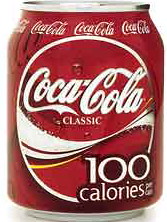 Dr. Foreyt says Coke adds 'balance and variety and moderation' to diet As the 10th International Congress on Obesity commences this week in Sydney, Australia, the nearly 3,000 health experts participating are trying to figure out why obesity rates have gotten completely out of control worldwide. This meeting of the minds, which happens every four years, is supposed to help bring about changes that would start to bring obesity rates down (ironically, though, since the first meeting in 1970, obesity has exploded to astronomical rates in virtually every country in the world with no sign of slowing down anytime soon). One of the people attending this year's obesity conference is Dr. John Foreyt, professor of psychiatry and behavioral sciences at the Houston, TX-based Baylor College of Medicine, whose role there is to convince attendees that sugary soft drinks such as Coca-Cola are not responsible for making people get fat. That's right, the Coca-Cola company has actually paid Dr. Foreyt to attend this event on their behalf to plead the case that soft drinks are not the reason for obesity. In a radio segment on ABC Australia's "The World Today", Dr. Foreyt explained why he believes the criticisms of products like Coke are unwarranted and that sugary soft drinks have become an unfair target and scapegoat in the obesity debate. "I think the answer to really looking at a healthy lifestyle is balance and variety and moderation, and any time you pick out a single culprit you're going to really be in trouble, because, you know, obesity and health risks are all associated with multiple factors," Dr. Foreyt told ABC.While I agree that there are many different reasons for obesity, that doesn't give companies like Coca-Cola a free pass on their distinct role in making the problem even worse with their products. Dr. Foreyt is making the argument that drinking sugary Coke is indeed a part of a healthy diet when he states that it is all about "balance and variety and moderation." But the reality is there is no room for the excessive amounts of sugar, in the form of the absolute worst food ingredient ever invented-- high-fructose corn syrup (HFCS), that they put in Coca-Cola to be consumed by most people. The idea that drinking Coke to "balance" your diet and then expecting people to eat in "moderation" (can you say calorie-restricted portion control diets that may be unhealthy and ineffective for many?) is just more of the same old garbage and meaningless dietary advice we've always heard. When is somebody going to muster up the guts to say sugar is NOT a part of a healthy lifestyle because your body doesn't need it?! When I weighed over 400 pounds before I started livin' la vida low-carb in 2004, I was drinking Coke like it was going out of style. In fact, it got to the point that I was mindlessly drinking about 16 Coca-Colas A DAY! EEEEK! I know, I know, that was pretty stupid on my part. But my story is probably not all that uncommon among the obese. For people like Dr. Foreyt whose job is to analyze human behavior, I wonder if he can adequately explain why people guzzle so much Coke that it makes them fat. Oh, but wait, he's got an answer that explains why you can't point the finger at the Coke for people consuming too many calories. "Well, calories are calories are calories, so you want to look at balance, and if people are getting their calories from one source, too many calories, people can get in trouble, but that caloric source can be anything," he exclaimed to ABC. "So you really have to look at your overall diet. I think that's still the bottom line."Oh, now this is getting good. So, Dr. Foreyt is saying that as long as you are counting the calories consumed in those cans of Coke and keep the number low enough to induce weight loss or weight maintenance, then you should be okay in terms of controlling your weight. Does he think we're a bunch of morons or what? The calories consumed in a can of Coca-Cola have no nutritional value whatsoever, Dr. Foreyt. Even in these ridiculous 100-calorie foods that are on store shelves today (like the Coke can at the top of this blog post), the idea that people have the ability to control themselves enough to only drink one or two of these pint-sized overpriced sodas is irrational. If the overweight and obese had the innate ability to control their calorie intake, then they wouldn't be dealing with a weight problem in the first place, would they? Furthermore, if "calories are calories are calories" is so true, then why don't we hear the same kind of message regarding eating high amounts of fruits, vegetables, juice, rice, pasta, bread and other high-carb foods which can pack a lot of calories, too? If it's truly all about calories, then what makes these food widgets any different from the calories in Coca-Cola? Hmmm? When I started the Atkins diet in January 2004, I did not suddenly begin counting calories. Nearly three years later, I still haven't and yet my weight has remained stable. How could this be? Well, for one thing, I stopped drinking those 16 sugary Cokes I used to drink per day and replaced them with tons of water and diet soda. Permanently distancing myself from the devastating effects of sugar on my body has been undoubtedly one of the best things I could have done not only for my weight, but also my overall health. This is a cold hard fact that is completely lost on these "experts" like Dr. Foreyt who are too closely tied to companies like Coca-Cola and the big bucks they flash to anyone gullible enough to become an apologist for their sugar-loaded products. Sugar IS responsible for obesity in a lot of people and that extends well beyond soft drinks. Candy makers, doughnut shops, bakeries--the list goes on and on--all bear some responsibility along with soda companies to warn people about the negative impact overconsumption of their products will have on their weight and health. But there are just too many interest groups involved for that to ever be allowed to happen. When Dr. Foreyt was asked about how his links to Coca-Cola might be skewing his conclusions about the high-sugar products he is endorsing as part of a healthy lifestyle, he responded with incredulous laughter. "Oh, absolutely not," he retorted to ABC. "No, No. I think the bottom line for most people, they're very reasonable, they have good judgment and common sense, which means balance and variety and moderation in all things, including diet and physical activity."Nobody else is laughing, Dr. Foreyt. We're not buying anything you are saying about this because it doesn't make any sense whatsoever. While I am not one of the fanatics calling for warning labels to be put on soda cans, I don't think anyone with any semblance of credibility can say with a straight face that drinking Coca-Cola or any other soft drink with upwards of 50g of sugar per 8-ounce serving can be a part of a healthy lifestyle. IT IS NOT and saying otherwise is the most ludicrous and damaging thing you could do to a world dealing with an obesity epidemic. Shame on you, Dr. Foreyt! SHAME ON YOU! You can e-mail Dr. John Foreyt your thoughts about his support for Coke consumption as part of a healthy lifestyle at jforeyt@bcm.edu. 9-4-06 UPDATE: Fellow health advocate and weight loss success Julia Havey writes about this subject in an article at LowCarbNewsline.com today. Labels: Coca-Cola, diet, moderation, obesity, soda, soft drinks, sugar
|


