|
PLEASE UPDATE YOUR BOOKMARKS TO LIVINLAVIDALOWCARB.COM/BLOG
Attention Low-Carbers: USDA Now Taking Nominations For 2010 Dietary Guidelines Advisory Committee
There are some very exciting things happening behind-the-scenes in Washington, DC right now as it relates to the next USDA-recommended Food Pyramid and Dietary Guidelines set to be released in 2010. As I blogged about in December 2007, President George W. Bush named Cornell University psychologist Dr. Brian Wansink (author of the bestselling 2007 book Mindless Eating) to head up the U.S. Department of Agriculture's Center for Nutrition Policy & Promotion. I was greatly encouraged by this appointment of Dr. Wansink because he has been very open to the low-carb message being heard for people like me out there who need to "lose a lot of weight on a serious diet." In that blog post I wrote about his new leadership position over the 2010 nutritional recommendations, I was very hopeful and expectant that Dr. Wansink would continue to have those open lines of communication with the experts in the low-carb community to give their input about what should be included in the next updated Food Pyramid. "It should be thrilling to know that there will now be someone within the USDA who isn't antagonistic against livin' la vida low-carb," I wrote in that December 2007 post. "Hopefully this open line of communication between Dr. Wansink and the low-carb message will remain that way while discussing the 2010 dietary guidelines."So, imagine my delight when I saw this notice from the USDA (Note: this links to a PDF file download) requesting nominations for the new Dietary Guidelines Advisory Committee. Yes, that's right! They're taking nominations for who we think should be on that committee. This is open to any citizen of the United States to submit their choice(s) for who would be best qualified to serve in this capacity. Dr. Wansink's appointment is through January 20, 2009, so there is little time to waste. That's why the nominations will only be considered through May 24, 2008. In other words, time is of the essence here. If you care about seeing the low-carb nutritional approach represented on this dietary recommendations panel (and you undoubtedly do if you read my blog!), then the time for action on this is RIGHT NOW! And we need to spread the word to everyone we know to do the same. These new dietary guidelines are reviewed every five years and are supposed to reflect the latest research studies regarding diet and health to better inform the public about how to eat for managing their weight and health. The previous Food Pyramid in 2005 was an improvement upon the past ones, but was still sorely lacking any concept about the negative role of carbohydrate and the increasingly passive role of dietary fat, including saturated fat, in the American diet. We NEED people who understand this connection to be seated on this committee for the sake of the future health of the American people. The low-fat lie has dominated the official government dietary guidelines since its inception in 1980 and we need to make some crucial changes in this policy if we're gonna get serious about this issue before it is too late. Haven't we suffered with the high-carb, low-fat message long enough? Will we continue to put up with such blatant disregard for the overwhelming evidence and real-life changes that are happening thanks to the healthy low-carb lifestyle? I'M NOT! What is this committee actually gonna be doing? They will first look at the 2005 dietary guidelines and determine if any changes are necessary based on "a thorough evaluation of the most current scientific literature." If sufficient evidence is found to make changes, then new guidelines will begin being discussed by the Dietary Guidelines Advisory Committee in the Fall of 2008 through a series of two- or three-day meetings over a period of time. These meetings are open to the public as required by federal law. The Secretaries of Agriculture ( Ed Shafer) and Health and Human Services ( Mike Leavitt) will oversee the reports from this advisory committee which will be led by Dr. Wansink. So, naturally, he will want to surround himself with the best possible candidates for this vital public health policy position. But who qualifies? They are looking for people who are "knowledgeable of current scientific research in human nutrition and be respected and published experts in their fields." Additionally, according to the notice from the USDA, candidates for the advisory committee also need to be "familiar with the purpose, communication, and application of the Dietary Guidelines and have demonstrated interest in the public's health and well-being through their research and/or educational endeavors." Here are the specific areas of expertise they want to be represented on the panel: - Chronic Diseases such as obesity, Type 2 diabetes, and cancer - Energy Balance issues involving exercise - Epidemiology - Food Safety and Technology - General Medicine - Gerontology - Nutrient Bioavailability - Nutrition Biochemistry and Physiology - Nutrition Education - Pediatrics - Public Health - Evidence Review Methodology I can think of quite a few qualified people who meet and surpass this criteria required by the USDA to appear on the Dietary Guidelines Advisory Committee. I'm officially offering the following five names up for consideration to be nominated for this all-important position at the U.S. Department of Agriculture's Center for Nutrition Policy & Promotion: 1. Eric C. Westman, M.D., M.H.S from Duke University 2. Mary C. Vernon, M.D. from The University of Kansas 3. Richard D. Feinman, Ph.D. from SUNY Downstate 4. Stephen Phinney, M.D. from The University of California-Davis 5. Jeff S. Volek, Ph.D. from The University of Connecticut There are many more who fit the description of what the USDA is wanting for this distinguished panel, but any or all of these five individuals are more than qualified to offer all the evidence the committee wants about the low-carbohydrate nutritional approach and its impact on health. At the very least, we need a minimum of one of these low-carb experts to be placed on the Dietary Guidelines Advisory Committee. Here's what you need to do to nominate someone: - Write a letter of nomination stating the name and affiliation of the nominee, why that person deserves to be nominated for this position, and a statement that the nominee would indeed be willing to serve (I have spoken with each of these five individuals I am nominating and they are all willing to serve if selected) - Provide your name, address, and daytime telephone number along with the name, address, telephone number and e-mail address of the nominee (much of this information can be found at the links provided above--if you provide their name and the school they are located at, then that should be enough information for them to contact the nominee) - Share a copy of the nominee's curriculum vitae or resume (again, this information can be found at the links I provided above for each nominee) When you gather all of this information, simply e-mail it to DG2010Nominations@cnpp.usda.gov no later than Saturday, May 24, 2008. You can also submit nominations via snail mail to Carole Davis, Nutrition Promotion Staff Director, Co-Executive Secretary Guidelines Advisory Committee, Center for Nutrition Policy and Promotion, U.S. Department of Agriculture, 3101 Park Center Drive, Room 1034, Alexandria, VA 22302. Or you can also fax your nomination to (703) 305-3300. If you have any questions about this process, simply call (703) 305-7600. If you need any additional information about these candidates after you nominate them, then please don't hesitate to e-mail me and I'll be happy to get what you need. We all need to do this for the sake of our nation's future health policy. Don't put it off thinking there will be others nominating--MAKE YOUR VOICE HEARD LOUD AND CLEAR! We NEED to get a low-carb expert on this panel, so our unified voice behind these nominees will go a long way! By the way, I am attempting to arrange a podcast interview with Dr. Brian Wansink and he has been in contact with me about this. Hopefully I will be able to conduct this interview soon and put a bug in his ear about having a low-carb researcher/practitioner serve on the Dietary Guidelines Advisory Committee. You just don't know how HUGE it would be to have a Westman, Vernon, Feinman, Phinney, or Volek on this committee--these are the people in the low-carb research world who are making the rest of the scientific community stand up and pay attention to the high-fat, low-carb diet again. Won't you do your part to nominate them TODAY? THANK YOU!!! Labels: Brian Wansink, Center For Nutrition Policy and Promotion, dietary guidelines, Eric Westman, Food Pyramid, Jeff Volek, low-carb, Mary Vernon, research, Richard Feinman, Stephen Phinney, USDA
'Mindless Eating' Author Appointed USDA's New Director Of Nutrition Policy And Promotion
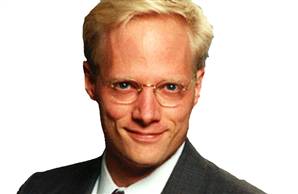 Dr. Brian Wansink will set the new U.S. dietary guidelines for 2010 Dr. Brian Wansink will set the new U.S. dietary guidelines for 2010It's not too often I am able to share with you some GOOD NEWS as it relates to something happening behind-the-scenes in the world of diet and health. Most of the time, we must lament that yet again all those so-called "experts" continue to bamboozle the public with their same old low-fat mantra over and over again. But this bit of encouraging news should be welcomed and cheered today because it could very well be an awesome thing for those of us who are in favor of livin' la vida low-carb. The United States Department of Agriculture (USDA), the government arm in charge of setting nationalized dietary recommendations through MyPyramid.gov among other things, has decided to name Cornell University psychology professor and Mindless Eating author Brian Wansink, PhD the new executive director of the Center For Nutrition Policy and Promotion (CNPP) through January 20, 2009 when the Bush administration is set to leave office. This is quite a prestigious nomination for Wansink with potentially long-term ramifications as it relates to the future of diet and health in America. This is one of the most important public policy positions related to health in Washington, DC because it is responsible for creating, planning, developing and reviewing the upcoming new dietary guidelines to be promoted by the government in 2010. MyPyramid.gov was introduced in 2005 to replace the old Food Pyramid and it wasn't much better than its low-fat loving predecessor (and neither was the kid's version of MyPyramid either). So Wansink wields a lot of power over the next couple of years to speak with various voices within the realm of nutrition about what is best for sharing with the general public about a healthy diet. Agriculture Undersecretary for Food, Nutrition and Consumer Services Nancy Johner said the chance to bring Wansink on board at the USDA is a golden opportunity. "We feel quite fortunate in having Dr. Wansink join our team here at the USDA, and look forward to working with him," she said. "Dr. Wansink is nationally recognized in his field of nutrition research which focuses on how to encourage consumers to eat more nutritiously and better control how much they eat."So what should people who support a controlled-carbohydrate dietary approach think about Dr. Brian Wansink? Well, although I was initially critical of his research into the psychology of eating he studied during his tenure at Cornell University, I was impressed overall by his book and what all that research has led him to believe about why people overeat. In my interview with Dr. Wansink last year, he seemed quite open to the low-carb lifestyle for people who need to "lose a lot of weight a serious diet" which he says can be "very useful for a disciplined person." It should be thrilling to know that there will now be someone within the USDA who isn't antagonistic against livin' la vida low-carb. Hopefully this open line of communication between Dr. Wansink and the low-carb message will remain that way while discussing the 2010 dietary guidelines. As major government health-related news goes, this is BIG NEWS! Their purpose is to take the existing scientific research and apply it to the nutritional needs of the American people. Now that we have amazing studies like this one showing a genetic connection between diet and obesity where low-carb works for some and low-fat works for others, it's time to see that reflected in dietary recommendations by offering a variety of options for people to choose from. Or, as I have been pushing for, why not recommend them BOTH? Can Dr. Wansink make that happen at the USDA? I don't know, but I'm optimistic. I'm very hopeful that he will do everything he can to stay updated on the latest information that will help him make the best decisions about what those 2010 dietary recommendations will look like. It would be incredible if he continued to communicate with people like me and others within the low-carb community to get our input about how to word those guidelines for people who would do well on a low-carb approach. Cross your fingers on that one! Other areas that Dr. Wansink will have a watchful eye over include the Healthy Eating Index (on which the 2005 MyPyramid updates were based), the USDA Food Plans, the Nutrient Content of the U.S. Food Supply and the cost of raising a child. And he is excited to get started making a difference in this new and extremely important role at the USDA. "The Center is involved in many crucial projects that have an immense potential to help the American public particularly in combating overweight and obesity," Dr. Wansink stated. "I look forward to leading these endeavors to the best of my abilities."The thing I like best about Dr. Wansink is he's such a real person. I was privileged enough to speak with him by telephone about a year ago prior to my blog interview and he's as down to Earth as anyone you'd ever meet. His accessibility even after the enormous success of his bestselling Mindless Eating book (now available in paperback, by the way) has remained the same and I respect that in anyone who purports to be an expert at anything. I have every confidence this same trend will remain. Dr. Wansink will continue to conduct his own research in the Food Psychology department at Cornell University while serving in this government capacity. You can e-mail Dr. Brian Wansink to congratulate and encourage him in this new position by writing to foodandbrandlab@cornell.edu. Labels: Brian Wansink, Center For Nutrition Policy and Promotion, Cornell University, diet, dietary guidelines, Food Pyramid, George W. Bush, health, Mindless Eating, MyPyramid, USDA
Would You Eat A Reduced-Sugar, Low-Carb Watermelon?
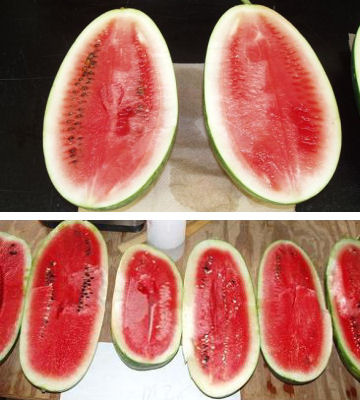 These watermelons may look normal, but they have about half the sugar These watermelons may look normal, but they have about half the sugarLeave it to modern-day technology in research labs to come up with some creative ways to make the foods we eat even healthier. We saw an attempt earlier this year at this concept when scientists figured out a way to produce natural low-fat milk straight from the cow (although that wasn't very healthy, IMHO!). But now there's something low-carbers and diabetics alike should cheer: a low-sugar watermelon (my low-carb blogging friend Robin from "Limenade And Watermelon" will be thrilled)! Yep, have you heard about this yet? This Science News story details what researchers have come up with as the perfect replacement for this higher-sugar member of the melon family. You'll recall I addressed this in Episode 2 of my "Livin' La Vida Low-Carb on YouTube" video when my wife asked if watermelon was appropriate for someone on low-carb. While it's not too terribly high in carbs, watermelon is a little higher than you would prefer for those in the early stages of the Atkins low-carb diet where you restrict your intake to around 20g daily. At about 11g net carbs for a cup of watermelon, that usually makes this fruit off limits for people trying to lose weight the low-carb way. But now a research geneticist named Angela R. Davis from the USDA's Lane, Oklahoma-based Agricultural Research Service gives hope that this plump, juicy summertime favorite can be back on the menu again for those of us leading a lower-sugar, low-carb lifestyle! They have been working on this for years and wanted it to be perfect before releasing the technology to seed companies to replicate the results for consumer production. Early experiments resulted in white and even yellow flesh for the watermelon--not exactly the most appetizing way to eat watermelon (kinda like the green ketchup from Heinz was for me a few years back--EWWWW!). "The project took a lot longer than we expected," Davis remarked. "Because there's a correlation between color and sugar content."Finally they found a way to make the flesh turn pink while virtually cutting the sugar in half! So, instead of 11g net carbs for a cup of watermelon, how about 5g instead? WOO HOO! The lighter the red in the watermelon, the lower the sugar content. And thus is born a low-carb, reduced-sugar watermelon thanks to science. Details about these new genetically altered low-sugar watermelons will be published in the journal HortScience before the end of the year. I bet you're wondering how they taste (yeah, me too!). Well, Davis says that will be the primary issue for people who switch from regular watermelon to this one. But for those of us who already eschew sugar in our diet to manage our weight and/or diabetes, it'll probably taste pretty good. I liken it to switching from regular soda to diet soda. The transition takes some getting used to, but it happens. Just as the soda companies use artificial sweeteners to replace the sugar in their products, so too will those sweeteners come in handy for people choosing to eat this lower-sugar watermelon. I, of course, would recommend either Splenda or stevia if you feel like you need to use a sweetener at all. Davis said they ran taste tests among teenagers and adults with diabetes and the low-sugar, artificially-sweetened (with Splenda!) watermelons actually BEAT the regular watermelon among those surveyed. WOW! There may be hope for us yet with those kind of results! "Overall, there was a significant preference for the artificially sweetened watermelons compared with the conventional watermelons," the researchers concluded.What's so healthy about eating watermelon, you ask? In a word--LYCOPENE! Yes, you can find this awesome nutrient in tomatoes (which gives it that rich, red color!) and it is a powerful antioxidant responsible for destroying free radicals which can wreak havoc on your health. You'll be pleased to know that these reduced-sugar watermelons retain their high lycopene content! "A low-sugar watermelon is a palatable fruit choice to individuals who must restrict sugar or total carbohydrate intake--with the added benefits of lycopene," the researchers added.These new reduced-sugar watermelons will look like a typical 10-12 pound watermelon when they do become available in stores--no specific date as of yet. We'll let you know when they're available and will try to blog about how they taste when we get our hands on them. I would think an ice-cold low-sugar watermelon should be ready for consumption by the time the dog days of summer hit in 2008. I can't wait! You can e-mail Angela Davis to thank her for her research into making watermelons lower in sugar for those of us on carb-restricted diets for weight and diabetes control at adavis-usda@lane-ag.org. Labels: Agricultural Research Service, Angela Davis, artificial sweeteners, carbs, diabetic, diet, fruit, low-carb, reduced-sugar, research, sugar, USDA, watermelon
Report: Obesity Rise Not Tied To Government Welfare Programs
 Kennedy says welfare programs are not increasing obesity Kennedy says welfare programs are not increasing obesityThis Medical News Today column looks at a new report debunking a popular myth that poverty is actually leading to an increase in the rates of obesity in the United States. I addressed this issue somewhat back in September 2006 in this blog post which may be worth revisiting in light of this new report. The lead author of the report is Eileen T. Kennedy, dean of the Friedman School of Nutrition Science at the Boston, MA-based Tufts University, who looked at data regarding the participants in such government-funded programs as Food Stamps and the Special Supplemental Nutrition Program for Women, Infants and Children (aka WIC) which come directly from the U.S. Department of Agriculture (USDA). With doubling obesity rates resulting in a tripling in the costs of Medicare, this is a poignant topic for serious discussion. It's interesting to note that Kennedy worked at the USDA for seven years prior to her tenure at Tufts University which may give her a more optimistic view of the work they are doing there since she was a part of it for so long. Nevertheless, she says the government has made great progress at helping underprivileged families get adequate nutrition to feed their families well enough despite their lack of income. We've discussed the issue of affordability of healthy food for the poor before and whether obesity should be confronted as a society or if it is the personal responsiblity of the individual. The bottom line on obesity-fighting efforts is that they be reasonably realistic to actually work, especially among the poor. But the lingering school of thought that still exists out there about low-income families has been that the nutritionally poor food options that are available to them on such programs is actually leading participants to gain weight. That was the purpose of creating the report entitled "Creating Healthy States: Building Healthier Nutrition Programs" ( download the PDF file) which was presented with input from both Democrats and Republicans through the National Governors Association Center for Best Practices. In that report, Kennedy and her co-authors proposed specific public policy changes in the Food Stamp and WIC programs to zero in on the underlying issues that are impacting the health and weight of the participants. But she was quick to point out you cannot lay the onus for obesity at the feet of the people receiving government assistance. "The population as a whole is struggling with overweight and obesity, not just those who are enrolled in federally-funded nutrition programs," she said.Her research into this specific issue bears out that assertion because both programs improved the nutritional value of the foods the participants ate prior to going on welfare. In fact, the only group of WIC partipants who ate more calories than before were ones who were pregnant, which is desirable for the sake of the weight and health of the newborn babies. The authors of the study note an interesting statistic over a 25+ year period regarding people getting Food Stamps. "Data indicate that from 1976 to 2002, the probability of a woman being overweight grew the least among food stamp recipients," the report explained.Recognizing that improvements in the diet of those people who are benefitting from Food Stamps and WIC are still sorely needed, Kennedy knows there is very inadequate education about healthy living that is simply perpetuating the problem even further. "Many low-income households face what is known as the 'double burden of disease' meaning that those who are food-insecure are often overweight or obese," Kennedy remarked. "This creates an opportunity for federally-funded nutrition programs to restructure goals to address obesity, which is now a more prevalent problem for low-income households than under-nutrition."But there is a problem that comes into play when you start talking about conducting "federally-funded nutrition programs." Guess who the federal government is? No, it's not those politicians in Washington on Capitol Hill pretending they have these big stacks of free money to spend at will and it's not even the President of the United States of America. It's YOU and ME! WE pay the bill for any such programs, so shouldn't WE have a say in what makes up those progams? Try as they may (and they do try), the government will not find an answer to obesity. We can turn the tide of obesity when we stop doing the same failed approach to weight loss over and over again (isn't that the definition of INSANITY?!) and start taking a serious look at other nutritional approaches that REALLY work--like livin' la vida low-carb, maybe? :) Then we'll start making progress in the obesity debate. So, what does the USDA need to do to bring this problem under control according to Kennedy and her fellow nutrition experts? They propose the federal government empower the leaders of each state with both funding and education to promote healthy living principles to their citizens and to coordinate these efforts for a consistent message about diet, nutrition, fitness, and health in an organized manner. If low-carb is taught alongside low-fat, then I have no problem with that. Additionally, Kennedy and her team want the USDA to convert to a multi-year renewal from an annual plan for approving Food Stamps to provide more sustainability of benefits rather than the constant disruptions. At the same time, a greater role should be played in providing these assistance participants not just with monetary, but also educational support about what foods are the best options for them in their area. I'm not a big fan of government handout programs, but there could be some benefit if the information provided is not monopolized by the low-fat dogma. It's a sad fact that many poor families receiving this assistance don't have easy access to grocery stores in their area where healthy foods are as readily available to them. Kennedy believes states should offer supermarket chains tax breaks and special financing to attract these businesses to the low-income neighborhoods. This is an EXCELLENT idea that is already used by states to attract businesses to build new facilities, so why not in poor areas? They also suggest in the report that states need to offer assistance to farmers' markets to sell their products at a reduced price to low-income families with the government footing the bill for the remainder of the costs. Plus, any unsold produce that would usually be discarded as waste at the local farmers' market should be donated to the poor, Kennedy stated. Food stamps are usually wasted on high-carb garbage junk food, so why not allow them to shop at the farmers' market and get a discount, too? This one makes so much sense. Calling for more accountability with the taxpayer dollars being spent on Food Stamps and WIC, the authors of the report note that we should be "increasing the purchasing power of WIC and food stamp dollars that are spent on fruits and vegetables or whole-grain items, while decreasing the purchasing power of dollars spent on less-healthy options." I agree healthy foods should be the focus, although the definition of such should be made explicit. Potatoes are NOT health foods. Sugary fruits and starchy veggies are better than candy and potato chips, but not by much. These foods should be limited as well. Above everything, Kennedy concluded, is the need to educate the participants in these government programs about the importance of looking for nutrient-dense foods that provide the healthiest ingredients with the lowest number of calories. "Choosing nutrient-dense foods is challenging for everyone, but it can be especially difficult for families on a budget," she admitted. "However, despite the fact that many people believe that healthful diets cost more money, research has shown that there can be great variability among the price of foods with similar nutrient density."That's why education is the key because it will enable the government to "to influence their food choices [which] could result in a more nutritious diet for less money." By the way, the most nutrient-dense nutritional approach available today is low-carb living. :) Kennedy believes forward-thinking is needed among nutrition leaders to help ward off the continuing rise in obesity rates among the participants in the Food Stamp and WIC programs. She is confident that "these programs can play an integral role in preventing obesity." "There are some exciting activities taking place in many states across the nation," Kennedy exclaimed. "We need to build on these existing initiatives and determine how we can leverage the existing Food Stamp and WIC programs to promote healthier lifestyles."I can certainly appreciate the efforts that individual states are making to take on this issue of obesity, especially among the poor. But we must come to grips with the reality that low-fat doesn't work for everyone and that low-carb is a viable and healthy option for people to use for weight loss as well. This is something my home state of South Carolina have ignored. They are not alone, though. Can we simply provide all the information to people and just let them make an educated choice about what is best for them? Am I being unreasonable with my request? If not, then when can we expect to move forward with my proposal to teach low-carb alongside low-fat, hmmm? Now there's a proposal that can make a REAL difference, Ms. Kennedy. You can e-mail Eileen Kennedy about her report at eileen.kennedy@tufts.edu. Labels: diet, Eileen Kennedy, Food Stamps, government, health, nutrition, obesity, Tufts, USDA, weight, WIC
Do People Really Know What They Are Eating?
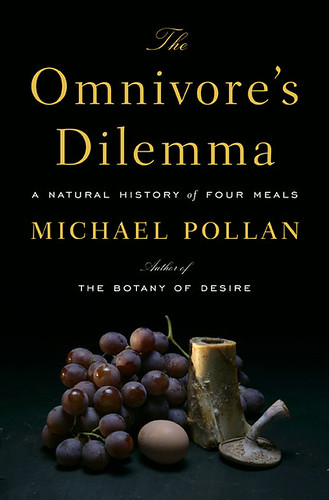  This could very well be the signature book on nutrition in our lifetime This could very well be the signature book on nutrition in our lifetimeWe Americans are a strange lot. While we are anal about micromanaging so many of the minute details in our lives--from our finances to our family vacations and even our work-your-fingers-to-the-bone jobs--that peculiar sense of sensibility is thrown completely out the window when it comes to our diet and health. How many of us hurriedly zoom into the popular fast food chains to grab a quick bite to eat and oftentimes make that car seat and steering wheel our breakfast, lunch or dinner table? It's almost become a prerequisite for juggling your life in modern times with balancing your job, your family, and everything that happens in between. It also is likely the underlying component in the current obesity crisis we are faced with in the United States of America today. But let's get back to our diet and health for a moment. Do people really know what they are eating from the foods they buy at the grocery store, in a fast food restaurant, and even from supposedly "healthy" organic food stores? Why are we so trusting as a society that the dinner we have prepared for our family is even remotely good for us? What's in that boxed, canned or bagged food anyway? These are just a few of the root questions that UC Berkeley-based investigative journalist and bestselling author Michael Pollan explores in his trailblazing book which took five years to write called The Omnivore's Dilemma: A Natural History of Four Meals. I've had this book for several months and it has taken me this long to absorb the deeply profound message it has to offer. Reading this book will change you and hopefully shake you back into reality about what you choose to put inside of you. Let me warn you ahead of time, if you aren't prepared to hear the unbridled truth about what you are stuffing your face with on a daily basis, then don't read this eye-opening 320-page book. It'll freak you out so much you may not eat something bought in a store for days, weeks...maybe ever again! But with knowledge comes power--the power to make better choices for yourself so you can not only survive, but be healthy and free from disease and weight problems for many years to come. Pollan takes readers on a whimsical adventure surrounding four meals: 1. A typical trip to the McDonalds drive-thru 2. An "industrial organic" meal from Whole Foods 3. A small-farm organic meal 4. A wild boar feast that he hunted himself (aka "The Perfect Meal") More than anything else, Pollan wants people to realize the downward spiral that has happened in the agriculture industry in recent years. Farming has become big business for some while that dying breed of independent farmers are saddened by the trend to hurry along the process of doing it the right way. These local farmers are heroes who should be rewarded with the business of the people they grow food for in their local communities. Do you even know where to buy from local farmers? We also learn from this book how our government and food industry leaders, specifically those who work closely with the government agency the U.S. Department of Agriculture, have become corrupted by the special interests they are trying to protect. The light is shined brightly on these people forcing them to give an account for their actions. This is why so many of us no longer trust the USDA or the FDA to look out for our best health interests anymore. One prominent example of the corruption revealed in The Omnivore's Dilemma is the corn industry. Pollan says corn is showing up in just about every food we eat nowadays and it's almost impossible to avoid. From extensive use in fattening cows, producing corn oil for frying, the ever-present existence of high fructose corn syrup (HFCS) in too places you wouldn't ever expect to find it (toothpaste!), and so much more. If people read this book and keep eating the way they always have, then they're either blind or one fry short of a Happy Meal (don't ask about how much corn is in that)! Did you know the average meal people consume has to travel about 1,500 miles before it reaches your mouth? Where does it all come from and are these places open to the public? Or do we really want to know what we are eating and what it goes through before it hits our dinner table? Food isn't just food anymore. Pollan calls it "industrial food"--food that has been so overly processed, refined, and infused with God knows what that it would be completely unrecognizable to our great-great-great grandparents if they were still around today. That's scary to think we are only a few generations away from the diet we were intended to eat. Now the standard fare is, "Would you like fries with that?" Another big subject in The Omnivore's Dilemma is oil. Pollan says the overuse of fossil fuels to produce the foods we eat is taking its toll on our environment. Did you know 20 percent of our fossil fuels go into making the foods we eat? Sooner or later, this is going to catch up to us. The thing I enjoyed the most about Pollan's account of the food we eat is that he just makes so much sense. In a culture dominated and monopolized by the low-fat, high-carb diet propaganda that has basically been free to roam freely as the gospel truth in terms of diet and health for decades, he simply puts the facts out there for people to evaluate for themselves. From shunning margarine in favor of the healthier butter to reading food labels carefully enough to avoid the presence of HFCS, the truth is there to be embraced and to change us from our addiction to "cheap food" loaded with too much sugar and excess carbs that is marketed to us as convenient. This subject of so-called "convenience" is a sore spot with Pollan, too. Why do we need to avoid being inconvenienced and save time as the television commercials from the food companies are constantly barraging us with? There's plenty of time to make a healthy, delicious and nutritious meal for our families without the stereotypical stress that people seem to associate with cooking. Make the process of creating a meal an experience that is as much a part of the enjoyment as eating it is and your perspective about cooking food will change. We need to get more people back in the kitchen again rather than settling for Mickey D's or the pizza delivery guy to serve us dinner! Unfortunately, the delayed-reaction price we must now pay for all that high-carb junk food convenience we have become accustomed to is coming due as obesity-related illnesses are mounting and Americans continue to get fatter and fatter. Pollan encourages us all to get back to eating healthy whole foods again and to stop trying to make our eating habits all about convenience. Instead, how about paying a visit to your local farmer's market and taste what real food is supposed to be like, especially when it is in season. You'll not only taste the difference, but you'll feel better knowling exactly what you are eating. And that's a very good way to overcome The Omnivore's Dilemma! Labels: carbs, cooking, corn, diet, fast food, food, health, healthy, HFCS, junk food, Michael Pollan, obesity, organic, The Omnivore's Dilemma, USDA
|


