|
PLEASE UPDATE YOUR BOOKMARKS TO LIVINLAVIDALOWCARB.COM/BLOG
Low-Carb Stuff That's Caught My Eye Lately
Sometimes there's just so much "stuff" out there about livin' la vida low-carb that I want to tell you about, it's hard to get it all into individual blog posts. That's why on occasion I will compile all these little tidbits of information for you together in one big blog post because they're all worthy of being mentioned since I haven't had time to get to them yet. WELL NOW I'M MAKING TIME! :D So, here goes on the low-carb stuff that's caught my eye lately: GROCERY STUDY SHOWS HIGH-CARB FOOD SALES SHRINKINGOne of my readers who works at a trade association that serves the supermarket industry shared a very interesting tidbit of information with me from a September 2007 Grocery SuperStudy from Willard Bishop. And it's quite interesting news for those of us who have dedicated ourselves to low-carb living: while "low-carb" (as a marketing label) is for all intents and purposes dead within the mainstream food industry right now (not surprising since most of the crap they put out a few years back as "low-carb" was anything but), there's another new victim that nobody is talking about--the "center store" foods. You know what that is--high-carb, packaged, processed foods that appear in the center aisles. In other words, everywhere that people who are livin' la vida low-carb DON'T shop! HA! How about that?! According to this survey, this area of supermarkets is shrinking rapidly which makes the hottest new trend in grocery markets for 2008 the up-and-coming Tesco's Fresh & Easy Neighborhood Market stores which don't have hardly anything in their center store. Although they are based mainly in the Southwest, they have created the template for the next wave in grocery shopping for healthy living. Here's an interesting quote from the Willard Bishop analysis: "Center store generates 72% of total store sales and all of the true profit contribution (because the perimeter nets out at a loss). But, 29% of the center store categories lose money today (retailer activity-based costs are greater than gross profits collected including trade spending). And, 58% of the SKUs in the center store generate 95% of the sales.
This means that the final 5% of sales comes from 42% of the 60,000-plus SKUs. More than 40% of center store SKUs sell fewer than three units per store per week. Even though food retailers are challenged to earn a positive true profit contribution on the perimeter, it's an area of the store that they'll continue to focus on to differentiate and elevate their overall value proposition."Did you get all that? The take-home message is that the vast majority of that stuff you see in the center aisles AIN'T SELLING more than 3 units a week. So if there are 48 packages of some favorite high-carb junk food sitting there the next time you go grocery shopping, keep in mind it may take FOUR MONTHS for that to sell through. Now you know why the food manufacturers load all that stuff up with preservatives. EWWW! FEDERAL LAWMAKERS WANT TO BAN JUNK FOOD IN SCHOOLSWhat we see in this New York Times column where members of the United States Senate are proposing a national ban on selling candy, sugary soda and other junk foods in schools is nothing new. Last year I blogged about former President Bill Clinton and the American Heart Association suggesting schools voluntarily implement such bans and this study show that sugar-free schools can actually reduce obesity rates. But why am I opposed to such measures that would make school lunches "healthier?" Two things. First, what is gonna be the definition of the word "healthy?" If by healthy they mean they're gonna cut out the excess sugar, starchy carbohydrates and other such junk foods and replace them with fresh low-glycemic fruits and green leafy vegetables instead, then I'm all for it. But likely these meals will be low in fat and sodium while still including lots of sugar (which is fat-free!) and other such carbs which for all intents and purposes will defeat the purpose of banning the junk food. Second, what business is it of the federal government to dictate to local school districts what they should be serving children for lunches? While too often national lawmakers just like to throw our money at a problem and hope it goes away, the real solutions are never even considered. If the school lunches at a local school are horrendous, then the parents of the kids attending that school should complain to the school and/or school board to demand better choices. And the worst case scenario, parents should pack their children a healthy lunch if the school refuses to offer better choices. This is not an area where the federal government has any busy sticking its nose into. However, I do see it as rather hypocritical of these lawmakers to still allow the sale of Girl Scout cookies in schools even if this ban were to go into effect. And we wonder why our kids keep getting fatter and fatter while getting confused about what is good for them? Sheeeez! FRED THOMPSON: GOVERNMENT IS NOT YOUR NUTRITIONISTSpeaking of government, I couldn't help but notice this CNN.com article about something one of the presidential candidates said while he was here in my hometown of Spartanburg, South Carolina recently. Although I still don't have ANY idea whatsoever about who I am going to vote for in next month's primary election, it was quite refreshing to hear that former Sen. Fred Thompson wants good nutrition and healthy living to happen within the family unit and not from the government. Here's what he said: "We shouldn’t be looking at the federal government in Washington first and working our way down, it ought to be just the other way around. With that, or whether you're talking about education, there's some things the federal government can't do."Amen to that, brother! With our government telling us through the USDA and FDA over the past few decades that fat and cholesterol is gonna kill us while we should eat a diet consisting primarily of carbohydrates to be healthy, it's about time somebody on the national level is saying enough is enough. It is each the responsibility of each of us to take care of our own families and to get the government out of our refrigerators! DR. JOHN BRIFFA CALLS OUT RESEARCHERS ON CHOLESTEROLThree months ago, I had the privilege of interviewing a bona fide health expert from the UK named Dr. John Briffa. As an unapologetic supporter of solid nutritional science, Dr. Briffa has been disappointed by the obvious omission of data supporting livin' la vida low-carb over the past few years by researchers. And he let them know it in this blog post about the very latest studies showing the cholesterol hypothesis is a load of crap! There's so much common sense in what Dr. Briffa wrote in this piece that I urge you to read it for yourself. He makes some excellent points about statin drugs, why cholesterol-lowering drug treatments work to possibly produce a lowered risk of a cardiac event, who the researchers are conducting these so-called studies, and what role the pharmaceutical industry plays in disease treatment. DON'T MISS THIS COLUMN! EATING SATURATED FAT WILL GIVE YOU DIABETES?One of the more preposterous statements I have seen in the nearly three years I have been blogging about diet and health has got to be what I read in this Diet Detective column by my fellow contributing writer Dr. Judith Wurtman, PhD, author of The Serotonin Power Diet (which I will be reviewing here soon). She claims that a study published in the October 2007 issue of Nature Medicine found that eating too much fat causes it to store in the liver which then creates a chemical that causes insulin resistance--a precursor to diabetes. I looked for this study Dr. Wurtman cited and couldn't find it, so I wrote to her asking for the link. She responded back that she would locate it for me, but I never heard from her again. The whole concept that the consumption of saturated fat could even remotely lead to insulin resistance and then diabetes doesn't even make sense to me. Excessive carbohydrate consumption is documented to be most responsible for the development of insulin resistance, not saturated fat. Since I had my doubts and wanted to see what some medical professionals had to say about this theory put forth by Dr. Wurtman, I sent a link of this column to several of my low-carb research friends for assistance. All of them were perplexed by what she had written and had never heard of any such research supporting this. But Dr. Mary C. Vernon summarized what she thought about this in her typical fashion: This is actually a fairly widespread misunderstanding, that is, many people believe the data says that fat causes insulin resistance. Three thoughts come to mind:
1) This mis-interpretation occurs, I think, because the research is misleading in that carbohydrate is rarely analyzed or decreased enough.
2) Because the close relationship between available fuel sources (fats, carbohydrate and amino acids) makes it difficult to define a starting point. In modern-day vernacular--which came first, the chicken or the egg?
3) Clearly, each individual is born with a certain level of "insulin resistance." Some of this may actually be influenced by the intrauterine environment as well as by the gene set. I think one can actually see this, in a simplistic way, as the amount of insuln secretion generated by a carbohydrate load.
Add the long-term outcome of high insulin spikes to fat accumulation and "bulked up" fat cells, and insulin resistance increases. The dietary carbohydrate pushes the insulin levels up, but the fat cells' semipermeable membrane now has increased intracellular fat content and "leaks." (Dr. Sam Kline says fat cells don't like to be bigger than one micron).
Now the fat stores have entered the metabolic conversation and the blood sugar swings (pre and post prandially) get wider and wider. With high insulin levels chronically, fat transports into the mitochondria is damped down (via malonyl CoA's feedback on CPT) and fat burning decreases. All of this is interpreted clinically as "increasing insulin resistance."
IF YOU DON"T DROP THE INSULIN LEVELS LOW ENOUGH BY HOLDING DIETARY CARBOHYDRATE DOWN, THEN YOU WILL NEVER SEE THE PROCESS STOP. Even though this is a logarithmic relationship, it behaves in patients as if it were an off-on switch. Even as few as 5 grams of carbohydrate can change some individuals with vigorous insulin response from fat-burning to fat storing.As always, Dr. Vernon delivers wisdom that puts things back into the proper perspective. I'm sure Dr. Wurtman means well with her conclusions, but it seems there's a lot of assuming it is the saturated fat that is the culprit and not the carbohydrates. This is a DAILY battle within the realm of low-carb and science. JONNY BOWDEN LETS THE BEVERAGE ASSOCIATION HAVE ITLeave it to Dr. Jonny Bowden to cut right to the heart of the matter in a letter to the American Beverage Association who had responded to a column he wrote about sodas and obesity. You'll see a brilliant response on his blog to the claims made by the Senior Vice-President of Science Policy for that group named Maureen L. Storey, PhD. Dr. Storey states there is no link between soda consumption and heart disease and that sugar substitutes like aspartame are completely safe and acceptable for human consumption. Dr. Bowden took great pleasure in answering each of the points made by Dr. Storey by exposing the error in her analysis of the points she made. There were four major points he made backed up by evidence to prove each one, but I absolutely loved the way Dr. Bowden ended his letter to Dr. Storey: "I understand your need to put a favorable spin on this, just as the sugar industry puts a favorable spin on sugar. But might I remind you of the words of Upton Sinclair: 'It is difficult to get a man to understand something, if his salary depends upon him not understanding it.'"OUCH! That quote could certainly zing a lot of people involved in the diet and health industry, wouldn't it? :D MICHIGAN MAN FOLLOWS ATKINS, DOESN'T COUNT CALORIESI just about flipped when I saw this Grand Rapids Press story about a man named Steve Cormier. It seems 52-year old man was able to lose weight and get healthy by livin' la vida low-carb. And he's STILL doing it to this day by paying attention to his carbohydrate intake and being ever mindful of what he's putting in his mouth. My favorite quote was this: "I don't care about calories at all."Now THAT is the sign of someone who is on the Atkins diet by the book. If you are working the plan as the late great Dr. Robert C. Atkins outlined in Dr. Atkins' New Diet Revolution, then you don't have to count calories. I'm coming up on four years of eating this way and I have yet to count the first calorie I put in my mouth. Instead, I keep my carbs reduced to the level I need to keep my weight in check and the calories manage themselves. WAY TO GO, Steve! Keep it up, my friend! A QUICK & EASY LOW-CARB CHEESECAKE RECIPEYou know how much I enjoy recipes, so I couldn't resist sharing this one from Quad-Cities Online with you. Submitted by Laura Carson from Moline, Illinois, this is a rather simple-to-make low-carb cheesecake that could be an awesome addition to your holiday festivities. Here are the ingredients you will need to make this recipe: 3 packages (8 ounces each) cream cheese
1 cup sour cream
2/3 cup Splenda
1 teaspoon vanilla
3 eggs
Non-stick cooking spray (Pam) CLICK HERE for the instructions about how to make this cheesecake--livin' la vida low-carb styled, baby! YOUTUBE VIEWER THINKING TOO MUCH ABOUT WEIGHT LOSSI've really enjoyed expanding the horizons of the "Livin' La Vida Low-Carb" brand to other places on the Internet, not the least of which is YouTube. The "Livin' La Vida Low-Carb On YouTube" segments I do with my wife Christine are a load of fun and it is something we look forward to doing each and every week. One neat thing is it has attracted a new audience of people looking for answers to their dieting questions. Here's an example of one I recently received: I know you probably get thousands of messages daily. I always said that I was going to write you asking you some questions that I'm curious about.
The first question is, knowing that fat is equivalent to 9 calories per gram, many of the low carb foods are loaded with calories. That said, I am 6'3" 340lbs (Was 385), and with approximately 30 minutes of working out on a cardio machine, I lose 462 calories. How much of that is 'fat' being burned?
I know that with certain heart rate percentages, you burn fat/carbs, but I'm assuming I'm burning 100% fat, since I probably have very little to no carbs at all.
So if I'm losing 462 calories and 1 gram of fat is 9 calories and 1 pound of fat is 453 grams it would take (9*453 calories) to burn 1 pound of fat. This seems impossible to do. Assuming my BMR is around 4500 calories a day...I probably eat less than that...but still...it just doesn't seem right...Can I get some input?
Hopefully you understand this.Is your head spinning too? Mine sure did after I read this e-mail about ten times in a row. Finally, I just stepped back, took several deep breaths, and realized EXACTLY what this person needed to hear. This was my response: Hey there and thanks so much for writing. I'd be delighted to answer your questions:
Just so you know, I don't count calories. Never have since I started livin' la vida low-carb. You don't have to worry about fat having more calories than carbs and protein because it's not about the calories. Your body functions differently when you reduce the carbohydrate in your diet because you are using dietary fat as well as stored fat as fuel for your body.
So, when you workout for 30 minutes and burn 462 calories, it depends on whether you are burning carbs (a low-fat diet) or fat (a low-carb diet) for fuel. It takes about 20 minutes of exercise to burn off all the excess carb stores when you are eating a high-carb, low-fat diet, but you start shedding STORED FAT right away on a high-fat, low-carb diet. WOO HOO! Isn't that cool?
There are obvious benefits to the amount of intensity of your workouts, so having small spurts of all-out, give-it-everything-you-got effort to burn even more calories and, thus, stored fat.
Don't obsess over the calories you put IN your mouth when you are eating low-carb. When I started at 410 pounds, I was eating about 3,000-4,000 calories a day while keeping my carbs down to around 20-30g carbs during my ongoing weight loss. Today, I STILL eat about 2,500-3,000 calories and maintain my weight just fine.
It's unproductive to think about this too much...just eat your fat for fuel, keep carbs to a minimum, ENJOY the foods you get to eat, and simply live your life confident you will shed the pounds and get healthier than you ever have before. It's NOT impossible because I did it. And so can you!Sometimes we can think so much about all of this that it can frustrate you into overeating carbs to reduce the stress! UGH! I don't waste any brain cells on needless over-analyzing my diet like that. NEVERMORE! Have you seen something about low-carb in the news that you feel is worthy of my attention? Feel free to e-mail me a link to the story anytime at livinlowcarbman@charter.net. I do a lot of research, but that doesn't mean I see everything. THANKS for your support for the work I do here and keep on livin' la vida low-carb! Labels: diabetes, diet, Fred Thompson, government, health, John Briffa, Jonny Bowden, Judith Wurtman, junk food, low-carb, saturated fat, schools, study, Willard Bishop
New Banana-Creme Twinkie A 'Bit Healthier'?
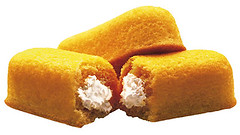 I didn't know Twinkies could get any worse, but they have I didn't know Twinkies could get any worse, but they haveThe makers of one of the top-selling junk food products of all time must be getting desperate now because they know they are teetering on the brink of economic collapse as people are finally realizing they don't need to eat as much of these products anymore. Interstate Bakeries Corp., parent company for Hostess who makes the famous half-billion selling spongy, creme-filled snack cake Twinkies, has now introduced a brand new flavor--well, sorta. This Houston Chronicle article gushes over the new Banana-Creme Twinkies which will now become a permanent part of their product offerings. Actually, this is the original flavor that Twinkies had back in the 1930's and early 1940's until there was a banana shortage during World War II when Hostess switched to the familiar vanilla creme. But after several limited reintroductions to the marketplace over the past few years, most notably during a 4-week stint in 2006 where sales increased by 20 percent, Hostess decided it was time to bring it back for good starting last week. It's on grocery store shelves now for parents and kids alike to stock up on this high-carb, sugary garbage! According to Calorie King, just one Twinkie has 27g carbohydrates with 19g of that being sugar. As bad as that is, the reality about the serving size most people consume is worse. Since Twinkies are usually packaged as twins, those TWO Twinkies have a whopping 54g carbohydrates and 38g sugar! EEEEEK! Plus, you gotta read Steve Ettlinger's Twinkie Deconstructed to see what's actually in a Twinkie (can you believe there are ROCKS and PETROLEUM in 'em! Yuck!). Now that half of Americans are lowering their carb intake, foods like Twinkies are on the brink of obscurity. Even still selling a half BILLION annually is quite formidable and we'll continue to have Twinkies as a cultural mainstay. What's most frightening about the introduction of this new Banana-Creme Twinkie is the way the 20-something woman in the story reacted to it. "You can still taste the original Twinkie flavor underneath it," she said. "It almost makes it seem like it's a little bit healthier than a regular Twinkie."Oh my gosh, are people REALLY this stupid?! Sadly, I'm afraid there are. If you are livin' la vida low-carb, then obviously these new Twinkies are NOT "a little bit healthier" for you. Can you say, "Well DUH!" Labels: Banana-Creme, Hostess, Interstate Bakeries, junk food, Twinkie Deconstructed, Twinkies
What's In A Twinkie? You Don't Wanna Know!
 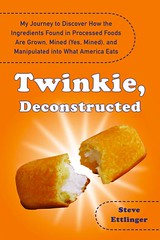  Ever wonder what they put in a Twinkie? Just ask Steve Ettlinger!1. What a sweet low-carb treat we have for the readers of the "Livin' La Vida Low-Carb" blog today--it's Steve Ettlinger! Who? Steve is the author of a provocative new Hudson Street Press book that I think you're gonna love entitled Twinkie, Deconstructed: My Journey to Discover How the Ingredients Found in Processed Foods Are Grown, Mined (Yes, Mined), and Manipulated Into What America Eats--yes, we're talking about high-carb junk food like Twinkies, but it's not what you think. Steve, tell us a little bit about yourself and how and why you got into writing books on the subject of food and nutrition. Ever wonder what they put in a Twinkie? Just ask Steve Ettlinger!1. What a sweet low-carb treat we have for the readers of the "Livin' La Vida Low-Carb" blog today--it's Steve Ettlinger! Who? Steve is the author of a provocative new Hudson Street Press book that I think you're gonna love entitled Twinkie, Deconstructed: My Journey to Discover How the Ingredients Found in Processed Foods Are Grown, Mined (Yes, Mined), and Manipulated Into What America Eats--yes, we're talking about high-carb junk food like Twinkies, but it's not what you think. Steve, tell us a little bit about yourself and how and why you got into writing books on the subject of food and nutrition. I've had a hand in forty books and written six, but three of my favorites concern food. I love ating, have worked as an assistant chef, and while living in France, came to appreciate good, fresh, well-prepared food like never before. Since I began writing or producing books in 1988, I have always concentrated on the popular reference angle. I wondered for years why no one covered things like polysorbate 60 the same way we cover wine or cheese, and thought about doing something for a few years. Finally, my kids asked me, "Daddy, where does polysorbate 60 come from?" and I knew I had to get moving on this book. Choosing the Twinkie as an example was great, because the Twinkie ingredient list, which is the table of contents of Twinkie, Deconstructed, is just the right length for a book and covers a wide range of ingredients. 2. I have to tell you, Steve, the title and cover art of your book certainly captures your attention right away which you hope will get people hooked just long enough to hear the message you have to share. I did the same with my book and blog calling them "Livin' La Vida Low-Carb." Have you heard about anyone who accidentally "found" you looking for Twinkies and became convinced they'd never eat one again?No. Most people who eat them expect Twinkies to be processed food. I think many are surprised at how much of our food comes from petroleum or rocks, though. 3. Can you believe the ingredients people are stuffing their faces with nowadays without a care in the world what most of those words they can't even pronounce really are?! It's really a sad state of affairs we find ourselves in nutritionally when much of what is consumed by the average American is not just garbage, but a bad nightmare food science project where the public serves as the guinea pigs for this junk! When did our culture move away from eating real whole foods and start relying on these highly-processed concoctions made in a food lab somewhere filled with God knows what as the main source of nourishment?I tell people who are aghast at what's in processed food that if they want healthy food, they should eat their fruits and vegetables. I have tended toward the Mediterranean diet for years, and I stay basically low-fat and low-carb. I do enjoy many welcome digressions to eat sauces, desserts, and beer. I try to eat fresh oranges for breakfast instead of orange juice, etc. But living in New York City, I can eat all kinds of neat, healthy food--sushi for snacks, fruit from street vendors--nearly any time and any place I want. And Twinkies are sold by most corner grocery stores, too, just in case I need one--for research purposes only, of course! A lot of people think that I must be coming out with some diatribe against Twinkies, and in fact, they are not what you would want to be eating if you are seriously dieting. However, because they are so clearly a dessert treat I just don't bother with getting up on my soapbox and yelling anything bad about them. That would fall kind of flat, considering that no one ever claimed that Twinkies are good for you. My angle is that this is truly amazing stuff they use, and all processed foods use. I just think it is fascinating to realize and to think about. And then I go eat my fruits and vegetables! 4. It's bad enough having weight and health-damaging ingredients like trans fats, white flour, sugar, high fructose corn syrup, and the like showing up in just about everything these days, but there are other substances and chemicals finding their way into a good number of popular food items like Twinkies, too. Tell us about a few of the biggest culprits and why they are detrimental to our weight and health.I can see by your question that you need to read my book in order to see that I am not a nutritionist or weight loss advisor, so I'll just answer the ones that I know about and let you deal with the rest. 5. I am planning on reading your book very soon because it reminds me of several others that have come out in recent years. For example, Eric Schlosser's amazing book about the fast food industry called Fast Food Nation. It seems you did what Schlosser did in his book by examining the food line all the way to the source of the actual ingredients that make up processed foods made in the United States. What was the most shocking discovery you unearthed in your investigation and have you personally altered your eating habits as a result of what you learned from writing this book?I was totally shocked that we eat five kinds of rocks just about any time we eat anything baked! The simple product found on kitchen shelves everywhere, baking powder, is made from three. I was able to actually visit the mines where two of the rocks come from -- phosphate and trona, which is almost pure sodium carbonate. The other one is limestone. Two other rocks are common--salt, of course, and calcium sulfate, which is essentially food-grade plaster and has been used in bread and tofu making for thousands of years. None of these are dangerous to us but they sure are surprising. I was also amazed to learn that enrichment vitamins are mostly from China. 6. There are some rather repulsive methods used when food companies start processing foods and what you describe as ingredients that are "closely linked to rocks and petroleumthan any of the four food groups" to get the proper consistency for making popular junk foods like Twinkies look like we know them to be. Would you mind sharing some of the major steps that go into the processing of these innocent-looking snack cakes?Much of this process if discussed at length in my book. But I will say this--that we crack natural gas into methane and ethane in order to make sorbic acid, one of the safest food additives around, still totally blows me away. Sorbic acid is actually a food, a close cousin of olive oil. 7. I'm curious, what does Hostess, the company that manufactures Twinkies, think about Steve Ettlinger exposing their dirty little secret about their cherished American icon? Have they threatened to sue you or do even they realize you are merely sharing the truth? I seriously doubt they consider this a "dirty little secret," in that their ingredients are listed on every package they sell! I also doubt that typical Twinkie consumers care about this kind of thing. As far as any threats go, please read the foreword in the book. All I'm doing is writing about ingredients used by most processed foods and many pharmaceuticals. 8. Your book is similar to one I reviewed at my blog recently by Michael Pollan entitled The Omnivore's Dilemma. Were you inspired by Pollan's outstanding investigative journalism?While I have long admired and enjoyed Michael Pollan's work, his book came out after I finished mine (major publishing houses like Penguin have very long lead times in order to sell the book and distribute it to bookstores around the world), The Omnivore's Dilemma did not play a role in my book. 9. How did you seek to distinguish your work from Pollan's? Because my book was written before his came out, I did not have to "seek to distinguish" my work from his. This said, we overlap quite a bit: check out his page 17, where he pretty much asks someone to try to figure out where Twinkies' ingredients come from! Surely readers who liked his book will be interested in mine, but his writing is much better. :) 10. THANK YOU, Steve Ettlinger, for joining me for an eye-opening look at the current state of affairs we find ourselves in bowing to the mad scientists in the food industry. So where do we go from here? Based on your newfound "expert" status with the release of your new book, how can Americans like myself and my readers who are deeply concerned about the issue of weight and health take what you have shared and help bring about the necessary changes that absolutely need to happen if issues like obesity, diabetes, heart disease, and metabolic syndrome are ever going to be adequately addressed? Do you think we will see those changes happen anytime soon? Why or why not?My newfound "expert" position allows me to entertain people with stories about where these ingredients are from and how they are made. Every person I spoke with--engineers, scientists, etc.--does their best to make things that we can eat or chemicals that we can use to make things that we eat. None of the people I spoke with would be proper spokespeople for what is good nutrition. You can learn more about Steve Ettlinger's Twinkie, Deconstructed by visiting TwinkieDeconstructed.com. Labels: book, dessert, diet, health, ingredients, interview, junk food, processed foods, Steve Ettlinger, Twinkie Deconstructed
Connor's Conundrum: Should A Child Be Removed From His Family For Being Fat?
 8-year old Connor McCreaddie is pushing 200 pounds 8-year old Connor McCreaddie is pushing 200 poundsHave you heard the story about the 196-pound third-grader in the UK? Yep, you heard me right! This kid is almost TWO-HUNDRED POUNDS right now! Jeepers creepers! His name is Connor McCreaddie and this 8-year old little boy ain't so little anymore--he already weighs as much as many full-grown adult men do. And now child protective services has issued a warning to his mother for Connor to lose weight or else they will take him away from her on grounds of neglect. Nicola McKeown, Connor's mother who lives in Wallsend, North Tyneside in Great Britain, says she realizes Connor is four times the weight he should be for his age. To her credit, she has tried to help him lose weight through an unknown diet program since December when he weighed in at a whopping 218 pounds (that's almost what I weigh!). Despite losing 21 pounds over the past couple of months, though, McKeown recently got an official letter representing child protective services, Connor's school principal, and the local health agency requesting her to appear before them to determine whether she is really doing enough to help Connor lose weight or not. If not, then they have already threatened to remove Connor from her care to give him the help he needs. Let me just interject my comments about this here for a moment. While I agree Connor didn't balloon up to 200+ pounds instantly and overnight, I definitely wouldn't describe what McKeown has done as neglect. Maybe you can call it bad parenting or if you wanted to get extreme with it--child abuse--but definitely NOT neglect. If anything, it sounds like Connor has been getting TOO MUCH attention. Actually, it sounds like he runs the household. Although his mother has to help him get dressed and take him to the doctor a lot because of obesity-related health complications (has her pediatrician NEVER said a word to her about Connor's weight?!), she says Connor refuses to eat any fruits or vegetables and will only eat processed junk foods. Plus, she said Connor cries for food virtually every hour on the hour until he gets what he wants. See, that right there is the crux of the problem. In her attempt to show love to her son, McKeown has actually been an enabler in Connor's weight problem by refusing to be the parent. A mother most of the time has to go against the will of her child to do what is best for him whether he understands that it's for his own good or not. If Connor refuses to eat fruits and vegetables, then McKeown should refuse to serve anything but those foods. No, that's not being cruel to him, but rather it is showing him there is a right and wrong way to eat. Clearly, the junk food is not helping him at all, so removing those foods from his diet altogether will begin to m make a big difference. At some point he'll get hungry enough to even eat these foods McKeown thinks he'll never eat. Unfortunately, I'm afraid that's not what McKeown will do for her son. Instead, she'd rather let him sit for hours upon hours in front of a computer screen playing games (why isn't he outside running around like most other 8-year olds?!) with an endless supply of all the garbage food his mother provides him, including curries, sausage sandwiches, biscuits, burgers, potato chips, and French fries. EWWWW! Wanna guess what most of those foods have in common? Can you say carbs, carbs, and more carbs?! UGH! When a child like Connor is coddled too the extent that he is, then it can lead him to believe that he really is in charge and calls all the shots. From a nutritional standpoint, that is devastating because most kids don't have a clue what is good for them. All they want is food that tastes good no matter what it's made of because there are no consequences for doing so. Usually the food most kids prefer is highly processed, carb-loaded, sugary junk foods--something his mother apparently is providing in great abundance. Caring parents who want their child to develop into strong, healthy, and fit adults will do whatever they can to provide the best nutritional options by setting the right example for them early enough in life so that child will make good choices for themselves in the future. Wanna know what McKeown's excuse is for letting Connor's weight to get as high as it has? She believes she has not received enough help to know how to raise her kid properly. Ya know, that sorta begs the question--why did you have a child back in 1999 if you couldn't take care of him in the first place? Gasp! Nobody is supposed to ask that question, but I just did! Needless to say, we can't turn back the clock now, but Connor does need some serious help. He is at risk at this moment for major health problems beginning at a much younger age than he should, not the least of which is the onset of diabetes, heart disease, and morbid obesity by the time he reaches his 20's which could end his life before he turns 30. That's some heavy stuff to think about, but it is Connor's reality right now. Nobody is gonna argue that Connor should be left to continue down this path that his mother has chosen for him which for all intents and purposes is destroying his life if left unchanged. But what concerns me about this story is the not-so-veiled threat she has been given to make Connor lose weight or else they'll take himaway from her. What's up with that kind of intimidation and on what authority can they issue such a warning to McKeown? The government, school, and anyone outside of McKeown's family doesn't have any business telling her what she needs to do about Connor's weight. This is a personal issue that needs to be hashed out by the family. From all accounts, Connor is not being physically (other than allowing his weight to explode) or emotionally (except by the teasing of his classmates in school) abused, so such a drastic measure as removing him from her care is irrational. What are they gonna do with him once he does lose the weight in the custody of the government, hmmm? Foster care? Adoption? This is one of those unintended consequences of promoting the same old low-fat, low-calorie, portion control dietary recommendations that we've been forced to endure for generations by our government and health leaders. How many parents have tried to put their overweight or obese child on one of these diets only to have their child reject it because it wasn't the right diet for them? Too many to count, I'm sure! You know, Connor would do very well if he started livin' la vida low-carb and I would venture to say he would not balk at the delicious choice of foods he could eat while bringing his weight back down into a healthier range. Scrumptuous and yummy cuts of meat, cheeses, low-glycemic fruits, non-starchy vegetables, eggs...the list goes on and on. McKeown could start feeding him that way immediately and see real results. Unfortunately, she will likely never hear a word about the amazing low-carb way of eating from these people threatening to take Connor away from her. But it sounds like exactly what he needs to do to lose weight as soon as possible. I don't know what McKeown is doing to help Connor shed the pounds since before Christmas, but she should consider putting him on a program like Atkins, South Beach, or Protein Power. What do you think about Connor's conundrum? Do you think the UK authorities have the right to threaten McKeown and take Connor away to a "fat farm" somewhere to get him back into shape again? Or do you agree with me that this is a personal matter that needs to be handled within Connor's family and it's nobody else's business to tell McKeown how to raise her child? There should be lots of varying opinions about this, so don't be bashful! Let me know what you think! 3-1-07 UPDATE: Now here is a unique take on why Connor may be as obese as he is: My daughter is a caretaker of several retarded adults and she works for an adult day service that provides daycare for adults in need. When I first read about little Connior McCreaddie, I immediately thought of the adults in her care who suffer from a syndrome called Prader-Willi. Patients with PWS cannot stop eating, her clients eat vast amounts of vegetables to satisfy this insatiable need and this is the only way to somewhat control their weight. Their entire focus daily is obtaining food and these patients need to be closely monitored.
Here is a press release about Connor that I found on the Prader-Willi web site. It seems others have had the same thought that I have! I do so hope they complete the hormone studies before they disrupt this family! Nonetheless, I KNOW that low-carb is the ONLY way to save this little boy in the meantime as these studies are being made.
By the way, I really enjoy your "Livin' La Vida Low-Carb" blog! THANKS for sharing about Prader-Willi. I hadn't heard of it before, but it could be what Connor is dealing with. Labels: child, child abuse, Connor McCreaddie, diet, junk food, low-carb, morbidly obese, Nicola McKeown, obesity, UK, weight loss
Do People Really Know What They Are Eating?
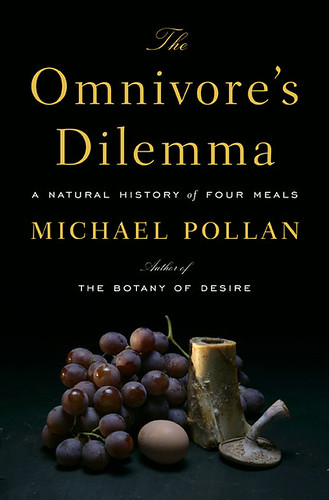 This could very well be the signature book on nutrition in our lifetime This could very well be the signature book on nutrition in our lifetimeWe Americans are a strange lot. While we are anal about micromanaging so many of the minute details in our lives--from our finances to our family vacations and even our work-your-fingers-to-the-bone jobs--that peculiar sense of sensibility is thrown completely out the window when it comes to our diet and health. How many of us hurriedly zoom into the popular fast food chains to grab a quick bite to eat and oftentimes make that car seat and steering wheel our breakfast, lunch or dinner table? It's almost become a prerequisite for juggling your life in modern times with balancing your job, your family, and everything that happens in between. It also is likely the underlying component in the current obesity crisis we are faced with in the United States of America today. But let's get back to our diet and health for a moment. Do people really know what they are eating from the foods they buy at the grocery store, in a fast food restaurant, and even from supposedly "healthy" organic food stores? Why are we so trusting as a society that the dinner we have prepared for our family is even remotely good for us? What's in that boxed, canned or bagged food anyway? These are just a few of the root questions that UC Berkeley-based investigative journalist and bestselling author Michael Pollan explores in his trailblazing book which took five years to write called The Omnivore's Dilemma: A Natural History of Four Meals. I've had this book for several months and it has taken me this long to absorb the deeply profound message it has to offer. Reading this book will change you and hopefully shake you back into reality about what you choose to put inside of you. Let me warn you ahead of time, if you aren't prepared to hear the unbridled truth about what you are stuffing your face with on a daily basis, then don't read this eye-opening 320-page book. It'll freak you out so much you may not eat something bought in a store for days, weeks...maybe ever again! But with knowledge comes power--the power to make better choices for yourself so you can not only survive, but be healthy and free from disease and weight problems for many years to come. Pollan takes readers on a whimsical adventure surrounding four meals: 1. A typical trip to the McDonalds drive-thru 2. An "industrial organic" meal from Whole Foods 3. A small-farm organic meal 4. A wild boar feast that he hunted himself (aka "The Perfect Meal") More than anything else, Pollan wants people to realize the downward spiral that has happened in the agriculture industry in recent years. Farming has become big business for some while that dying breed of independent farmers are saddened by the trend to hurry along the process of doing it the right way. These local farmers are heroes who should be rewarded with the business of the people they grow food for in their local communities. Do you even know where to buy from local farmers? We also learn from this book how our government and food industry leaders, specifically those who work closely with the government agency the U.S. Department of Agriculture, have become corrupted by the special interests they are trying to protect. The light is shined brightly on these people forcing them to give an account for their actions. This is why so many of us no longer trust the USDA or the FDA to look out for our best health interests anymore. One prominent example of the corruption revealed in The Omnivore's Dilemma is the corn industry. Pollan says corn is showing up in just about every food we eat nowadays and it's almost impossible to avoid. From extensive use in fattening cows, producing corn oil for frying, the ever-present existence of high fructose corn syrup (HFCS) in too places you wouldn't ever expect to find it (toothpaste!), and so much more. If people read this book and keep eating the way they always have, then they're either blind or one fry short of a Happy Meal (don't ask about how much corn is in that)! Did you know the average meal people consume has to travel about 1,500 miles before it reaches your mouth? Where does it all come from and are these places open to the public? Or do we really want to know what we are eating and what it goes through before it hits our dinner table? Food isn't just food anymore. Pollan calls it "industrial food"--food that has been so overly processed, refined, and infused with God knows what that it would be completely unrecognizable to our great-great-great grandparents if they were still around today. That's scary to think we are only a few generations away from the diet we were intended to eat. Now the standard fare is, "Would you like fries with that?" Another big subject in The Omnivore's Dilemma is oil. Pollan says the overuse of fossil fuels to produce the foods we eat is taking its toll on our environment. Did you know 20 percent of our fossil fuels go into making the foods we eat? Sooner or later, this is going to catch up to us. The thing I enjoyed the most about Pollan's account of the food we eat is that he just makes so much sense. In a culture dominated and monopolized by the low-fat, high-carb diet propaganda that has basically been free to roam freely as the gospel truth in terms of diet and health for decades, he simply puts the facts out there for people to evaluate for themselves. From shunning margarine in favor of the healthier butter to reading food labels carefully enough to avoid the presence of HFCS, the truth is there to be embraced and to change us from our addiction to "cheap food" loaded with too much sugar and excess carbs that is marketed to us as convenient. This subject of so-called "convenience" is a sore spot with Pollan, too. Why do we need to avoid being inconvenienced and save time as the television commercials from the food companies are constantly barraging us with? There's plenty of time to make a healthy, delicious and nutritious meal for our families without the stereotypical stress that people seem to associate with cooking. Make the process of creating a meal an experience that is as much a part of the enjoyment as eating it is and your perspective about cooking food will change. We need to get more people back in the kitchen again rather than settling for Mickey D's or the pizza delivery guy to serve us dinner! Unfortunately, the delayed-reaction price we must now pay for all that high-carb junk food convenience we have become accustomed to is coming due as obesity-related illnesses are mounting and Americans continue to get fatter and fatter. Pollan encourages us all to get back to eating healthy whole foods again and to stop trying to make our eating habits all about convenience. Instead, how about paying a visit to your local farmer's market and taste what real food is supposed to be like, especially when it is in season. You'll not only taste the difference, but you'll feel better knowling exactly what you are eating. And that's a very good way to overcome The Omnivore's Dilemma! Labels: carbs, cooking, corn, diet, fast food, food, health, healthy, HFCS, junk food, Michael Pollan, obesity, organic, The Omnivore's Dilemma, USDA
British CEO Says Pushing Salads Over Burgers At McDonald's 'Alienating Customers'
  Easterbrook says "healthier" options at McDonald's hurting business Easterbrook says "healthier" options at McDonald's hurting businessOne of the most recognized name brands is the #1 fast food company in the world: McDonald's. It's hard to imagine anyone on this planet who has never heard of the famous golden arches, Ronald McDonald, or what they have become most well-known for--Quarter Pounders, Big Macs, French fries and milkshakes. And last week the company announced business was extremely good over the summer with third quarter sales growth of 5.8 percent throughout the chain worldwide which caused sales of McDonald's stock to hit their highest point since 2000 on Wall Street. Corporate executives quickly rolled out their PR swagger on this positive financial news for their company by stating the upcoming release of nutritional info on their packaging as well their healthier menu items (which Dr. Dean Ornish helped encourage McDonald's to add to their menu) such as carrot sticks, apple dippers with caramel sauce, all-white meat chicken nuggets, fruit bags, deli sandwiches and walnut salads were the reason for the resurgence in sales as well as the outstanding performance of the UK chain of McDonald's restaurants. Makes you wanna go on a McDiet, doesn't it? But somebody forgot to send the memo to the CEO of the 1,125 McDonalds restaurants in Great Britain, Steve Easterbrook. Despite the improved sales numbers and the public perception that McDonald's really does care about offering better food choices for their customers, Easterbrook said all the focus on these "healthy" menu items that have been added in recent years such as salads are actually bad for business. "In the past we have seemed somewhat apologetic about who and what we are, but you have to believe in the brand," Easterbrook remarked. "Our menu has evolved, and we now have a much broader range of salads and sandwiches. But we were alienating customers by pushing our salads."Easterbrook notes that 25 McDonald's units in Great Britain were forced to shut their doors due to poor performance which he blames in part on the artificial image that the food served at McDonald's is healthy. Well, well, well, a little honesty from a top executive within the McDonald's empire certainly sheds some light on an issue that I have long had my concerns about. While it is understandable why McDonald's would so heavily promote their healthier menu options (although even that point is debatable considering all the sugar in these items) because of the negative publicity they have received in recent years regarding their role in the obesity epidemic, here we have the British CEO basically admitting the changes made to the menu are nothing more than window dressing. But nothing has REALLY changed now, has it McDonald's? The reality is that these "healthy" options at McDonald's are merely a fraction of their total sales figures. To illustrate this point, one internal report by the company found that for every salad sold at McDonald's, an incredible EIGHT double cheeseburgers are sold. Of course, putting the double cheeseburger on the "99 cent value menu" certainly doesn't hurt sales. Add to that the fact that a "super-sized" Big Mac was recently added to the menu at the McDonald's restaurants in the UK and what you see is a company that is basically thumbing its nose at those of us who support having healthier choices available to us. Portion sizes have gone down a slippery slope at McDonald's and other fast food restaurants, although I am not in favor of forcing these restaurants to cut their portions or calories if the market doesn't want that to happen. There is nothing wrong with wanting to focus on your core bestselling products as a business model, but this shell game McDonald's is playing with the consumer using their healthier menu as a bargaining chip is not impressing me one bit. If you wanna sell burgers and make that the product you earn a buck off of, then do it. But don't act like offering salads and apple dippers with sugary caramel sauce is endearing you to the health-conscious customers because it is not. I don't agree with Julia Havey wanting to sue your butt, but I think it's time to get off the fence on this issue, McDonald's. Believe it or not, I am forced to go to McDonald's about once a week to get my wife Christine her favorite meal--a double cheeseburger with a large order of fries. Aside from the extremely slow, nonchalant, and very poor service that I almost always receive when I visit the restaurant, the disgusting stench that comes out of that place when I pull up to the window to pay for the "food" is enough to make me sick. I mean LITERALLY sick. But, I usually hold my breath long enough to get home with the high-carb processed junk food that makes my wife happy. She's lovin' it! UGH! When McDonald's donated $2 million to childhood obesity research last month for the first time in the history of their company, I was cynical about their motive for making the gift. With such forthright comments from Easterbrook, my skepticism about why they did it is all but confirmed. Keep that in mind the next time you think you're eating "healthy" at McDonald's. If I can ever get my wife over her addiction to their French fries and burgers, then I'll never darken the doors of their restaurants again for as long as I live. Labels: childhood obesity, Dean Ornish, fast food, food, healthy, junk food, mcdonald's, menu, restaurants, Steve Easterbrook
Bill Clinton, AHA Should Stop Their Childhood Obesity Masquerade
 Bill Clinton is the consummate politician taking credit for simply trying Bill Clinton is the consummate politician taking credit for simply tryingLike I have said many times before, I really don't like talking about politics at my health and weight loss blog. Most of the issues that are dealt with in this forum are political only in the diet and nutrition world, but not generally in the realm of governmental politics. But sometimes these two worlds inevitably collide and that's exactly what this Washington Post story about a new deal to limit junk foods sold in school vending machines does with a vengeance. It seems five of the top junk food vending machine companies--PepsiCo, Mars Inc., Kraft Foods Inc., Campbell Soup Co. and Dannon Co.--have vowed to take their high-carb, high-fat products out of the schools in favor of "healthier products" (we'll get into what that means in a moment). The voluntary agreement was made possible by the ever-present elder statesman himself, former President Bill Clinton, along with the American Heart Association (AHA). They wanted to help make the nutritional choices for kids better while they are in school because many blame these foods on the rise in childhood obesity rates (I do not blame the junk food companies, but rather the parents for making poor nutritional choices and for not educating their own children to discern between what is good for them and what is not). Isn't this agreement quite an ironic twist considering the man involved? Here we have the former leader of the free world who was infamous for eating cheeseburgers and French fries while he was President telling junk food manufacturers what they can and cannot sell in schools to children. Furthermore, he will now go around taking credit for bringing an end to childhood obesity in America because he cared enough to "work hard to TRY" to do something about it. What a freakin' joke! This is nothing more than political posturing by Clinton to shift attention away from his little temper tantrum with Chris Wallace a couple of weeks ago. The negative publicity that he received from that infamous fiasco undoubtedly led him to go into damage control mode, so a trumped-up positive story like this one where he is seen as helping the children is just what the doctor ordered. PUH-LEEZE! What is going to happen as a result of this need I remind you VOLUNTARY agreement Clinton helped bring about? It's VOLUNTARY which means any of the parties involved can most certainly back out at any time and Clinton still can say, "Well, at least I TRIED to tell them this would be good for the American children, but they wouldn't listen to me." Either way, he comes away looking spic-n-span squeaky clean in all of this even if NOTHING changes at all. That's not leadership, that's politics as usual! Unfortunately, that's politics for you. It's all about who can take credit for non-action that looks like action today. But if Clinton or any other politician is sincerely interested in helping protect kids from the junk food that entices them, then why not get Congress to pass a law to make it mandatory to ban these from schools, hmmm? If they really want these junk foods out of schools, then make it a requirement with a law. That would certainly add more teeth to the argument that you care about improving the health of children if you think the presence of junk food is the culprit. Gary Ruskin from the non-profit childhood obesity education group Commercial Alert had a rather terse response for Clinton questioning the "healthy alternatives" that will be allegedly offered as well as what's in this deal for the former president. "Who is Bill Clinton kidding? Baked potato chips and sweetened bars are not substitutes for apples and carrots, beans and greens," Ruskin exclaimed. "Has the Clinton Foundation received any contributions from any of the companies that are a party to this agreement? How about the American Heart Association?"You can't blame people like Ruskin for having questions like this based on Clinton's past behavior. But it does make you wonder if anything really will change or if this little media fanfare around what Clinton TRIED to do is all that will come of this. Awww, wasn't he so great for trying to help the fat little kiddies get healthy? Awww, he just cares so much for the little ones. Can I BARF now?! It's sentiments like this that make some want to throw more money at childhood obesity, but that is clearly not the answer. This isn't the first time Clinton and the AHA have come together in a similar arrangement regarding junk food in schools. Earlier this year, they got Coca-Cola Co., Pepsi and Cadbury Schweppes PLC to stop selling non-diet soft drinks in schools since so many kids were chug-a-lugging on sugary sodas during the daytime. Now they will be guzzling sugary pseudo-fruit juices and energy drinks instead. Like I said, where are the MEANINGFUL changes? Hello? I remember those snack food machines and the vendors during lunch when I was in high school in the late 1980s and never gave a seond thought about the nutritional value of what I was eating. If it tasted good and I wanted it, then I bought it. Of course, that may explain how I got to be so fat, too. :) While I like the idea of giving kids a choice of better food options while at school, this agreement does NOT stop kids from going by their local corner convenience store on the way to or on the way home from school. It's like banning the sale of drugs on school grounds. That's all well and good until the students step off of school property and on the streets. At that point, all bets are off and the net result is the same as it was before. An agreement like this one from Clinton and the AHA is like having a nonsmoking section in a restaurant that allows smokers to puff away without the use of a smoke vent. You can ban smoking all you want in the nonsmoking section, but you and I both know that doesn't keep the smoke from traveling into that section, thus rendering the distinction between the two sections completely irrelevant. The same goes for what Clinton and the AHA have brokered. This deal won't stop childhood obesity. Not by a long shot! Okay, let's just pretend for a moment that these changes WILL make a difference. What are they asking these companies to alter about their products to make them "healthier?" Here are the new criteria for allowable foods sold at schools under the agreement: 1. Calories from fat limited to 35 percent 2. Calories from saturated fat limited to 10 percent 3. Sugar by weight is limited to 10 percent 4. Sodium is limited to 480mg, except for soup Again we see the continuing ramifications of how scared people are of fat and even saturated fat. While it is noble they are limiting sugar to 10 percent by weight, that's still not doing anything about the excessive carbohydrates that many of these products contain which then turn into sugar when it is absorbed by the body. Are we so ignorant as a society that we think sugar is the only thing that makes your blood sugar rise? Finally, salt is a non-issue except for those who are salt-sensitive. Even low-fat diet advocate Dr. Dean Ornish said in my recent interview with him that he doesn't like the influx of low-fat and fat-free snack food products because they are still not healthy choices for people to consume. "People are going out and eating the Snackwell cookies and the fat-free desserts and cakes that may be very low in fat, but very high in sugar--I've never recommended that which is why I've been more explicit in clarifying that," Ornish said during the interview.Despite all of this, data will begin being collected by the AHA and the Clinton Foundation to measure the impact of these changes ever other year over the next four years. Again, any changes will be minimal at best until we get a better handle on what is causing obesity--namely the excessive consumption of carbohydrates, including those found in low-fat products like baked potato chips, pretzels, 10% fruit juices, and so much more. Selling these as "healthy" foods is a farce! Now the junk food companies involved in this agreement are going to begin "taking steps to make snacks more nutritious." Oh joy, what do we have to look forward to? Hmmm, how about low-fat, whole wheat Twinkies sweetened with aspartame and/or maltitol? Yummy. Or perhaps we'll see, as one of my readers shared with me, vendor sandwiches made with Wonder Bread, anti-bacterial-sprayed bologna slices, and eggless Miracle Whip? Oh, the kiddies will be clamoring for them! Who are we kidding people? Kids won't go for this stuff unless they are educated better about why they shouldn't eat the junk food. Our education system is eager to tell children about sex and sharing with them information about that, but there's nary a mention of how fat, protein and carbohydrates work to fuel the body and make it work. Now THERE is something meaningful to start teaching kids in schools. We're stuck in a nutritional abyss nowadays and there doesn't seem to be an easy way out of it. Childhood obesity can be prevented, but that won't happen until some major barriers are torn down for good--namely that eating fat is bad for you, eating excessive carbohydrates is good for you, and that there are no consequences to eating junk food. All of these so-called axioms in our society are WRONG as wrong can be. We must continue to strive to share with others the truth. 10-8-06 UPDATE: You really should check out some of the comments I'm getting to this post over at LowCarbNewsline.com. Many of them think my points are invalid. What say you? 10-8-06 UPDATE: The response to this post continues with the following e-mail I received about it today. I go to your web site because I am very interested in keeping up my low-carb lifestyle. When I want GOP political BS I can go to FOX news. By the way, you lost 180 pounds and good for you but you did not cure cancer! Maybe you should lose another 180 pounds of ego and your self-importance. OUCH! LOL! Sigh, I miss stirring up political debate like I did long before I ever thought about livin' la vida low-carb. But, alas, I don't do that on a regular basis anymore. As I said at the very beginning, I don't like to bring up politics in this forum unless it is pertinent to what I discuss here on a regular basis. Today, it was. By the way, I have a parting question for this person who raked me over the coals--Did Bill Clinton cure cancer? Labels: AHA, Bill Clinton, calories, carbohydrates, childhood obesity, children, education, fat, government, healthy, junk food, low-carb, low-fat, politics, salt, saturated fat, schools, sugar
McDonald's Fighting Childhood Obesity And Diabetes? Ha! Now That's A Good One!
  McDonald's President Alvarez says they are committed to making healthy kids McDonald's President Alvarez says they are committed to making healthy kidsYou'll know we are in the last days on Earth when: - The Chicago Cubs win the World Series - Rosie O'Donnell gets married to Tom Cruise - Hillary Clinton becomes President of the United States - McDonald's donates $2 million to obesity research Oh, wait a minute, that last one is actually TRUE! REALLY! This Reuters story provides all the details about how McDonald's Corp. has agreed to make the large donation to fund childhood obesity and diabetes research. I'm not kidding, they really are donating money to look into why kids are getting chubby. Obviously feeling the public pressue regarding their high-carb, junk food offerings, McDonald's decided it was time to partner up with biomedical scientists at the California-based Scripps Institute for the first time in their company's history to look into ways to curb childhood obesity rates. McDonald's President and Chief Operating Officer Ralph Alvarez said it is the goal of McDonald's to "make a difference in the lives of children." "The collaboration with Scripps Research is an extension of McDonald's long-standing commitment to the well-being of children around the world," he said. "Everything that we keep on seeing is the whole issue of childhood obesity and the early onset of Type 2 diabetes has grown exponentially. We felt we needed to get greater education in this area."Am I the only one who sees the incredible irony in this? Here we have the head of the #1 fast food company in the entire world talking about how much his company cares about the health of kids while at the same time they are marketing products directly to children that are arguably one of the root causes of childhood obesity. The fact that they threw a few pennies of their hundreds of billions of dollars in sales annually at obesity research does not get them off the hook from their culpability in the debate over rising childhood obesity. They hope it does, but it does not. Fried junk food consumption has doubled among kids and a recent study showed that eating fast food makes you one-third fatter. Anyone who denies the contributing role of fast food in the current childhood obesity epidemic is either ignorant to the clear facts staring them in the face or they are simply protecting the financial interests of an industry that has a lot of explaining to do. Meanwhile, McDonald's is working overtime trying to come across as a caring company when it comes to healthy living by doing such meaningless gestures as removing the "Super Size" from the menu and showing Ronald McDonald playing sports in television ad. Whoopdee freakin' doo! You're gonna have to do better than that if you're gonna convince people like me you are REALLY serious about improving the health and weight of the children you claim to care so much about. Ever since Morgan Spurlock released his movie and book about McDonald's, the golden arches have been on a mission to convince the public that their food can be a part of a healthy diet. They even had people like this woman go on a McDiet to show you can lose weight eating at Mickey D's, too. While I don't think fast food is the only industry to blame for rising obesity, their unique part in this cannot be overlooked. If that's being too hard on McDonald's, then that's their problem. IT'S THE TRUTH! So what does Alvarez think about the irony of McDonald's supporting scientific research into childhood obesity when most people universally agree that they are part of the problem? "Ironic or not we're going to make a difference," he told Reuters. "You won't see those benefits short-term, in one to three years, because habits change over time. But as a major restaurant company, we need to be on the cutting edge of what's happening."Okay, so you give a little money to this research--NOW WHAT?! What is going to change at the restaurant level, Mr. Alvarez? Anything? Sure, you come up with these high-sugar apple dippers that are about as unhealthy as everything else on your menu. But don't you market them as one of your healthy new products? Where's the integrity in that? Is that really all McDonald's can do is push some high-carb, low-fat products and think they're helping improve the health of children? McDonald's certainly has the right to sell whatever they deem necessary to turn a profit, but what are the logical consequences of continually feeding that market with junk and more junk and more junk year after year? Obesity rates will just keep going through the roof with no end in sight. But McDonald's can proudly say they donated $2 million to childhood obesity and diabetes research, can't they? HA! Now that's a good one! What good does that do when people are still getting obese? As I stated in a blog post earlier this week, childhood obesity doesn't need more money from companies like McDonald's to be solved. What we need is better education for children about what is causing them and their parents to get so fat. WAKE UP, AMERICA! We don't need to be eating fast food as part of our healthy lifestyle changes. We are partially to blame, too, because we keep subsidizing this garbage that companies like McDonald's is serving daily. It's not the fat in the foods we are eating, but the excessive amounts of refined carbohydrates, starchy vegetables, white flour, and most of all SUGAR! Ironically, all of these things are VERY prevalent in the food at McDonald's. How does someone like Alvarez keep a clear conscious about what his company is doing to children and adults while spouting off the company line that McDonald's cares about the kids? That's the biggest load of corporate crap and he knows it, too! The ultimate responsibility about what children are eating still falls on the parents and they need to practice restraint even when their children beg and plead to go to McDonald's. Trust me, when they get older and have a healthy body because of your wise decision to avoid McDonald's, they will thank you for it. Maybe if my mom had skipped taking us to McDonald's so much as a kid, we wouldn't have all ballooned into the morbidly obese adults that we all became. Thankfully I was able to overcome my obesity problem, but it still haunts my brother Kevin and, to a lesser degree, my sister Beverly. These are the unintended consequences of the existence of companies like McDonald's. Whether they give $2 million, $20 million, or $200 million to childhood obesity research, nothing is going to change the fact that they are one of the primary reasons obesity is as bad as it is today. Call me whatever you want for saying that, but I challenge anyone to tell me it isn't true. Labels: childhood obesity, children, diabetes, fat, junk food, mcdonald's, research
Childhood Obesity Doesn't Need More Money, But Better Education
 Dr. Koplan lobbies for more funds to reverse childhood obesity rates Dr. Koplan lobbies for more funds to reverse childhood obesity ratesThe barrage of bad news regarding childhood obesity continues with this Associated Press story about a new report released this week by the Institute of Medicine (IOM) detailing a gloomy forecast for America's youngsters and their ever-increasing weight problem. In the report from IOM's Committee on Progress in Preventing Childhood Obesity entitled "Progress in Preventing Childhood Obesity: How Do We Measure Up?," the panel looked at childhood obesity to see if any progress had been made over the past two years regarding turning the tide towards further weight increases by children as the trend has been. What they found is that the problem is getting worse despite attempts on the federal government level to implement pro-active ways to combat it. One of the key findings of the IOM panel was that one out of every five children in the United States will likely become obese by the year 2010, just three years from now. Because of this, the experts at IOM who participated in this report lament the seeming lack of funding for programs that have been implemented to help combat childhood obesity. Lead panelist Dr. Jeffrey P. Koplan, former U.S. Centers for Disease Control (CDC) director, chairman of the IOM Committee on Progress in Preventing Childhood Obesity and the current vice president of Academic Health Affairs at Woodruff Health Sciences Center at the Atlanta-based Emory University, said he is encouraged by the number of initiatives that have been sprouting up in pockets across the country to help reduce childhood obesity, but admits they still don't know which programs are working the best to help kids lose weight and get healthy. Dr. Koplan added that a task force needs to be created to determine the best methods for bringing about the necessary changes that need to happen and that national health leaders need to step up to the plate to help with this "major health problem." "Is this as important as stockpiling antibiotics or buying vaccines? I think it is," Dr. Koplan exclaimed. "It's of a different nature than acute infectious threats, but it needs to be taken just as seriously."Absolutely, Dr. Koplan! But why do we expect childhood obesity rates to change when the same old recommendations that have been used for the past three decades have remained unchanged? There are many reasons why childhood obesity has not gotten any better, not the least of which is our government's lack of acknowledging that we have a problem in the first place. However, even if they do fess up to the fact that our kids are getting fatter and fatter, all we get from our government is another gimmicky answer like the Kid's Food Pyramid that doesn't translate into sound nutritional advice for children to adhere to. Kids these days are bombarded with junk food ads but it is the parents who need to take ownership for this problem and responsibility for their children's eating and fitness routine. Dr. Koplan is right to be concerned about the issue of childhood obesity because he knows the problems that lie ahead for those children who cannot manage their weight heading into adulthood. A recent Harvard study revealed the startling news that children who are obese at the age of 18 were much more likely to die prematurely as early as in their 30's! EEEK! This is EXTREMELY serious and real changes need to be implemented as soon as possible. And, no, giving our kids weighted toys is NOT the answer! But neither is throwing more money at the problem. I disagree with Dr. Koplan on this point because pumping more tax dollars into programs that are dubious at best will do nothing but waste the funds that are supposed to be helping educate kids about proper nutrition and fitness. Pointing fingers at budget cuts certainly does not address the root cause of the problem. This issue reminds me of the subject of education spending. People get in such a tizzy when you talk about cutting funding for schools and education. BUT YOU CAN'T DO THAT, IT'S FOR OUR CHILDREN! Um, yes, it is for the children which is important, but there are ways to better maximize the use of those funds in a manner that will produce better results with less burden on the taxpayers. And the same goes for childhood obesity. Increasing the budget for programs like VERB, a $59 million government marketing campaign in 2005 to make exercise look "cool" to tweens, is unrealistic to sustain over the long-term without a measureable difference in childhood obesity rates. Nevertheless, the IOM panel said the withdrawal of funding for VERB shows the lack of "commitment to obesity prevention within government." Oh please, no it doesn't. It simply means the government is wanting to get more bang for the buck with the tax dollars spent on such programs and they didn't see that happening. If childhood obesity was cut in half because of VERB, you better believe they'd be lined up with the funding quicker than you could say "Skinny Jimmy!" But Dr. Koplan contends that the VERB program was working well enough and that the funding was pulled from it prematurely. Now, the CDC is urging state and local governments to take the lesson learned from VERB to apply in every area of the country to see if childhood obesity rates can come down any at all. The story also cites a school snack program pushing more fruits and vegetables that has been implemented in 14 states, but again whines that there just isn't enough money to get the word out. WAH WAH WAH! If the people who truly cared about childhood obesity would simply stop their bellyaching just long enough to realize how ignorant they sound asking for more money to address a problem they themselves even admit they don't know the answer to, then perhaps they would start to see there are viable and effective solutions to help curb childhood obesity that exist right under their noses. Here are just a few of my suggestions: First, parents need to stop turning a blind eye to their child's obesity problem. This is an issue that needs to be addressed by the mother and father of that obese child, even if it means they need to do something about their own weight problem. Second, we need to stop fooling kids into thinking they have to eat a low-fat diet to be healthy. With the negative effect of sugar and refined carbohydrates on our bodies, it's certainly not a bad idea to get children used to eating a controlled-carb diet with nutritious meals loaded with essential nutrients their growing bodies need without the excessive amounts of sugar, high fructose corn syrup and just plain junk food that they are stuffing in their mouths these days. Third, while many believe a 100 percent obesity rate is inevitable in America, it doesn't have to be if each individual family unit does what it has to do to bring about lifestyle changes that need to happen within themselves. Why wait on a government education program to tell your kid how to eat and exercise right when YOU CAN DO IT RIGHT NOW?! This most certainly isn't the end of this discussion about childhood obesity, but rather a starting point that government and health leaders in the United States should be focusing their attention on rather than the next great "cool" ad campaign. Please stop bemoaing about how things aren't changing quickly enough and start looking at why the advice we've been spoon-fed for generations has been such a miserable bust! Therein lies the coveted answer to the childhood obesity crisis that could be reversed in very short order if we would enact meaningful changes like the ones I have suggested. I remain hopeful, but realize the chances of this are slim to none. You can e-mail Dr. Jeffrey Koplan at tthorst@emory.edu. Labels: childhood obesity, children, government, health, junk food, low-carb, obesity, weight
|


