Do People Really Know What They Are Eating?

This could very well be the signature book on nutrition in our lifetime
We Americans are a strange lot. While we are anal about micromanaging so many of the minute details in our lives--from our finances to our family vacations and even our work-your-fingers-to-the-bone jobs--that peculiar sense of sensibility is thrown completely out the window when it comes to our diet and health.
How many of us hurriedly zoom into the popular fast food chains to grab a quick bite to eat and oftentimes make that car seat and steering wheel our breakfast, lunch or dinner table? It's almost become a prerequisite for juggling your life in modern times with balancing your job, your family, and everything that happens in between. It also is likely the underlying component in the current obesity crisis we are faced with in the United States of America today.
But let's get back to our diet and health for a moment. Do people really know what they are eating from the foods they buy at the grocery store, in a fast food restaurant, and even from supposedly "healthy" organic food stores? Why are we so trusting as a society that the dinner we have prepared for our family is even remotely good for us? What's in that boxed, canned or bagged food anyway?
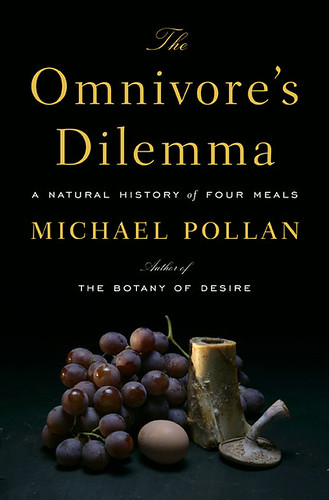
These are just a few of the root questions that UC Berkeley-based investigative journalist and bestselling author Michael Pollan explores in his trailblazing book which took five years to write called The Omnivore's Dilemma: A Natural History of Four Meals
. I've had this book for several months and it has taken me this long to absorb the deeply profound message it has to offer. Reading this book will change you and hopefully shake you back into reality about what you choose to put inside of you.Let me warn you ahead of time, if you aren't prepared to hear the unbridled truth about what you are stuffing your face with on a daily basis, then don't read this eye-opening 320-page book. It'll freak you out so much you may not eat something bought in a store for days, weeks...maybe ever again! But with knowledge comes power--the power to make better choices for yourself so you can not only survive, but be healthy and free from disease and weight problems for many years to come.
Pollan takes readers on a whimsical adventure surrounding four meals:
1. A typical trip to the McDonalds drive-thru
2. An "industrial organic" meal from Whole Foods
3. A small-farm organic meal
4. A wild boar feast that he hunted himself (aka "The Perfect Meal")
More than anything else, Pollan wants people to realize the downward spiral that has happened in the agriculture industry in recent years. Farming has become big business for some while that dying breed of independent farmers are saddened by the trend to hurry along the process of doing it the right way. These local farmers are heroes who should be rewarded with the business of the people they grow food for in their local communities. Do you even know where to buy from local farmers?
We also learn from this book how our government and food industry leaders, specifically those who work closely with the government agency the U.S. Department of Agriculture, have become corrupted by the special interests they are trying to protect. The light is shined brightly on these people forcing them to give an account for their actions. This is why so many of us no longer trust the USDA or the FDA to look out for our best health interests anymore.
One prominent example of the corruption revealed in The Omnivore's Dilemma
is the corn industry. Pollan says corn is showing up in just about every food we eat nowadays and it's almost impossible to avoid. From extensive use in fattening cows, producing corn oil for frying, the ever-present existence of high fructose corn syrup (HFCS) in too places you wouldn't ever expect to find it (toothpaste!), and so much more. If people read this book and keep eating the way they always have, then they're either blind or one fry short of a Happy Meal (don't ask about how much corn is in that)!Did you know the average meal people consume has to travel about 1,500 miles before it reaches your mouth? Where does it all come from and are these places open to the public? Or do we really want to know what we are eating and what it goes through before it hits our dinner table?
Food isn't just food anymore. Pollan calls it "industrial food"--food that has been so overly processed, refined, and infused with God knows what that it would be completely unrecognizable to our great-great-great grandparents if they were still around today. That's scary to think we are only a few generations away from the diet we were intended to eat. Now the standard fare is, "Would you like fries with that?"
Another big subject in The Omnivore's Dilemma
is oil. Pollan says the overuse of fossil fuels to produce the foods we eat is taking its toll on our environment. Did you know 20 percent of our fossil fuels go into making the foods we eat? Sooner or later, this is going to catch up to us.The thing I enjoyed the most about Pollan's account of the food we eat is that he just makes so much sense. In a culture dominated and monopolized by the low-fat, high-carb diet propaganda that has basically been free to roam freely as the gospel truth in terms of diet and health for decades, he simply puts the facts out there for people to evaluate for themselves. From shunning margarine in favor of the healthier butter to reading food labels carefully enough to avoid the presence of HFCS, the truth is there to be embraced and to change us from our addiction to "cheap food" loaded with too much sugar and excess carbs that is marketed to us as convenient.
This subject of so-called "convenience" is a sore spot with Pollan, too. Why do we need to avoid being inconvenienced and save time as the television commercials from the food companies are constantly barraging us with? There's plenty of time to make a healthy, delicious and nutritious meal for our families without the stereotypical stress that people seem to associate with cooking. Make the process of creating a meal an experience that is as much a part of the enjoyment as eating it is and your perspective about cooking food will change. We need to get more people back in the kitchen again rather than settling for Mickey D's or the pizza delivery guy to serve us dinner!
Unfortunately, the delayed-reaction price we must now pay for all that high-carb junk food convenience we have become accustomed to is coming due as obesity-related illnesses are mounting and Americans continue to get fatter and fatter. Pollan encourages us all to get back to eating healthy whole foods again and to stop trying to make our eating habits all about convenience.
Instead, how about paying a visit to your local farmer's market and taste what real food is supposed to be like, especially when it is in season. You'll not only taste the difference, but you'll feel better knowling exactly what you are eating. And that's a very good way to overcome The Omnivore's Dilemma
!Labels: carbs, cooking, corn, diet, fast food, food, health, healthy, HFCS, junk food, Michael Pollan, obesity, organic, The Omnivore's Dilemma, USDA
posted by Jimmy Moore at
11/16/2006 05:33:00 AM
7 Comments


