The creation of the "Bad Fat Brothers" shows the AHA hitting a new low
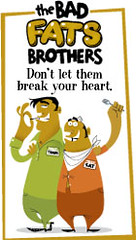
The low-fat apologists have never been shy or coy about espousing their beliefs about healthy nutrition on the public. They speak boldly and proudly about the alleged "dangers" of consuming fat, especially saturated fat and trans fat. But now the American Heart Association (AHA) has gone too far with their latest propaganda campaign centered around two cartoon characters named "Sat" and "Trans"--aka the "Bad Fat Brothers."
In Episode 93 of "The Livin' La Vida Low-Carb Show with Jimmy Moore," we shine a light on this new public awareness campaign endorsed and paid for by the AHA that is trying to bamboozle people into thinking consuming saturated fat and trans fat is unhealthy. I could not disagree more and explain why citing evidence to the contrary in this podcast.
Click on the "LISTEN NOW" link below or download it to your iPod:
"The Livin' La Vida Low-Carb Show with Jimmy Moore" Episode 93 [12:18m]: LISTEN NOW | Download
Have you heard "Sat" and "Trans" on the radio talking about all the foods they like people to consume so they can "break your heart?" Those spots are already running nationwide with this web site advertised at the end of the radio ad. And there's even a video on YouTube with these two goofball characters spreading their lies about fat consumption. Watch it for yourself and try not to gag too much:
NOTE: Leave a comment at YouTube about this video by clicking here!
Get full on some guaranteed low-carb podcasting when you want it by:
Do you agree with me that this latest campaign from the AHA is a bit of desperation on their part to try to malign saturated fat at a time when the evidence out of the scientific community is actually praising it? How effective do you think the "Bad Fat Brothers" will be at convincing people to stop eating the foods that contain saturated and trans fat in them? You know you have an opinion, so share it so we can all talk about it together!
"Sat" and "Trans" make up the heart-breaking "Bad Fat Brothers"
The impetuosity of the American Heart Association (AHA) regarding the dietary information they provide the general public has now reached a new low with the introduction of the cute, jovial, and innocent-looking, but very sinister, spurious, and smug cartoon characters named "Sat" and "Trans"--aka "The Bad Fat Brothers."
Have you seen this new perverted propaganda piece from the anti-fat adversaries at the AHA attempting to hoodwink the general public about how allegedly "unhealthy" consuming fat--specifically saturated fat and trans fat--is in your diet? You are never gonna believe this until you see if for yourself. It sorta reminds me of the Spuddy character that the potato industry created to try to endear people to their unhealthy carb-loaded products.
As the names imply, "Sat" is short for saturated fat and "Trans" is for (you guessed it!) trans fat. These two can't-help-but-love-them chaps go blabbering all about what they love to eat as you navigate around the BadFatsBrothers.com web site. The purpose of this dynamic duo is to attempt to warn the public about how dangerous it is for them to be consuming all that saturated fat and trans fat lest they "break your heart."
Get a load of this and this to see how disgusting the malicious lies from the AHA have become. How can they get away with flaunting such unfounded statements like these without any recourse?
Standing in front of a diner on a street scene, "Sat" and "Trans" are yucking it up with one another bragging about all the foods they just absolutely love. I couldn't help but notice much of the foods they brag and boast about the most are extremely high in carbohydrate--pot pie, sugary desserts, French fries, doughnuts, biscuits, pancakes, croissants, loaded potatoes, fast food, cookies, double scoop ice cream sundae, and more.
Of course, "Sat"--who describes himself as "the original 'bad' fat"--couldn't help but also talk about having a "big, fat juicy steak with loads of butter and don't forget the sausages." He also lists beef, bacon, and all kinds of other meats as his favorites--as if these foods are supposed to be harmful to your health. The same goes for the "cheese platter...oooh, Swiss and cheddar and Monterey Jack!" Yeah and what's so wrong with eating all of that?
While I certainly do not disagree that trans fat is bad news for your health (although I'm not in favor of the current trend to ban trans fats in cities across America), saturated fat is another issue entirely and has gotten a very bad rap by health policy groups like the AHA, American Diabetes Association (ADA), the Food & Drug Administration (FDA), and the United States Department of Agriculture (USDA).
It is a sad day in America when every kind of fat there is gets lumped together under the guise that it is bad for you. But that message has unfortunately been so hammered down our throats for most of our lives that most people have bought into the lie that eating fat makes your fat (when the research has not shown this to be true!).
And, no, saturated fat does NOT "clog your arteries" as this "Sat" character contends. Actually, just the opposite is true and consuming fat--even SATURATED FAT--is extremely healthy for you (read a thorough explanation why in this blog post).
Keep in mind the wise words of noted low-carb reseracher Dr. Jeff Volek who said that as long as you keep your carbohydrate intake low, fat will be burned and not stored. Even more importantly, though, is what Dr. Volek had to say about this nonsense that saturated fat will "clog your arteries." Not if you are livin' la vida low-carb!
"The same holds true for the atherogenic effects of saturated fat," Dr. Volek said in my interview with him last year. "The body handles saturated fat better when carbohydrates are low."
Let me translate that for you in case you missed it, AHA! If you are consuming a low-carb diet--like butter, cheese, and steak--then the risk to your heart is a non-factor. It's time to face the reality of the nutritional science rather than repeating the same old failed dietary information we've had to put up with for decades. Get with the times already!
Of course, that would mean the AHA would have to swallow some major humble pie to admit they were wrong, so instead they are pushing more of the same with their "Face The Fats" link where the misinformation campaign continues about fat. Sigh. And these are supposed to be semi-intelligent people educating the public about health.
Too bad they couldn't be more wrong if they tried! The AHA's boorish "Bad Fats Brothers" brainwashing is one of the most despicable acts of desperation I've seen in a while from these low-fatties. Do you think they have finally realized the low-fat lie is now on its last leg and they're pulling out all the stops to slow the momentum of the healthy alternative that livin' la vida low-carb has become thanks to the preponderance of the evidence from the mountains of research?
It certainly appears that way to me! How about you? :)
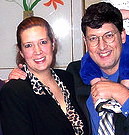
Dr. Gil Wilshire and his wife Regina are strong low-carb leaders
It's been a long time coming, but I was able to interview two very special people in the low-carb community for my blog today--Dr. Gil Wilshire and his wife Regina Wilshire. These are two names that you will most definitely want to get to know a lot better if you haven't already heard about them yet.
In the battle for the hearts and minds of people nutritionally, both Gil and Regina have put themselves on the frontlines of the dietary debate explaining in clear, understandable language why people should be eating a more "nutrient dense" diet than they are right now.
Prepare to be encouraged if you are already a supporter of livin' la vida low-carb. And if you are skeptical about this way of eating and want to hear from two bona fide experts who really know their stuff, then you will benefit from the wisdom these two have to share with us today. ENJOY!
1. It is my great pleasure to welcome Dr. Gil Wilshire and his wife Regina Wilshire from the "Weight Of The Evidence" blog with us today. I had the pleasure of meeting this amazing couple in January 2006 and spent some time getting to know them a little better. Tell my readers a little bit about who you are and what got you so interested in the subject of nutritional science as it relates to controlled-carbohydrate diets.
GIL: In the late 1990s, I let my weight slowly creep up to over 350 pounds! In the process of my investigations into the plethora of weight loss options, I discovered the Atkins diet and gave it a try. As my weight melted off, I continued to delve deeper and deeper into the current state-of-the-art with regard to nutrition and metabolism. I became increasingly horrified at the total lack of true science that purportedly supports the current low-fat dogma that pervades both government policy and "big name" medical circles.
Regina and I are both peas in a pod with regard to our motivation to make advances in this field. Nutrient-dense diets (as we now prefer to call them) have vastly improved the quality of our lives, and we feel it is our duty to share our experiences and ongoing insights with the community at-large.
REGINA: First let me thank you for the opportunity to share our success with your readers. When I failed to lose the weight I needed to following a popular plan--Weight Watchers--I decided to give the Atkins diet a try and, to my surprise, it worked.
What I didn't understand was why it worked and with all the publicity about low-carb diets came many warnings of dire consequences--I realized if I was going to continue with controlled-carb, I needed to know it was not only a plan I could follow for the long-term, but a safe and healthy way to eat too.
So, I took those studies as a starting point to learn more about nutrition and metabolism to try to understand why a low-carb diet was more effective for me than the traditional calorie restricted or low-fat diets and to see if it might be harmful to me in the long-term. What I learned was that the diet was far superior to the current recommendations and that's why I've continued to eat this way since 2001--it's simply a better dietary approach for health.
2. In 2003, you created the Carbohydrate Awareness Council in response to the growing need to educate the public, doctors, and researchers about the positive role of carbohydrate restriction on health. What progress do you see has been made in bringing about change?
GIL: We're just plugging ahead, doing our part to advocate truly evidence-based nutritional policies. Although I cannot point out one particular success, I can say with confidence that we have shaped the framework and terminology that has been bantered about ever since we became visible in the national arena.
One contribution we have made (particularly from Regina's efforts) is from our promotion of the concept of "nutrient density." Nutrient-dense foodstuffs give the most bang-for-the-buck--that is, they supply the most amount of nutrition per calorie. They also give the most nutrition with the highest level of satiety. This allows fat loss without hunger...what a concept!!!
Carbohydrate-laden foods are all, generally, very nutrient deficient (yes, even whole grains), hence the concept of high-density creates a diet that is naturally low carb; the term "low carb" never has to be mentioned when one creates a nutrient-dense menu.
REGINA: Since January 2004 there have been four major conferences we've either hosted or sponsored as an organization along with a number of conferences where either I've presented or Gil has presented information to attendees. We've seen the greatest progress in education and understanding from within the medical and scientific communities.
Whether you're for or against low-carb diets, it's hard to miss that there has been a slow, but steady adoption of many key concepts that form the heart of carbohydrate restriction--nutrient density, more non-starchy vegetables in the diet, reducing refined grains, starches and sugars, less reliance on convenience foods and the importance of protein and healthy fats/oils.
3. Dr. Wilshire, in response to the low-fat/low-calorie diets that have long been held as the standard for a healthy lifestyle, you issued a very public challenge to the American Heart Association last summer to place a moratorium on all dietary recommendations until enough level 1 evidence could be produced to support such recommendations. What was the response to that challenge and do you foresee anything changing about nutritional advice coming from the AHA or our government in the future?
GIL: As I mentioned earlier, the major organizations now pretend that their advice IS based on Level 1 evidence. Unfortunately, most people (including the important science and health reporters) almost never read the full-text of these studies. Some might read just an abstract, but even then, biased researchers frequently draw illogical conclusions from their own data. It takes determination and a fairly good grasp of experimental design and statistics to really challenge these papers and committee opinions head-on.
Until recently, only Gary Taubes has had the chutzpah and intelligence to even attempt to mount a public challenge against the status quo in a public forum from a legitimate platform (as an investigative reporter at the New York Times). Late last year, Adam Campbell took on the ADA and their dietary recommendations in his Men's Health magazine column.
4. Regina, you certainly caused quite a stir last summer as well with your ambitious $1,000 challenge to anyone who could come up with a one-day menu that met all of the nutritional requirements set forth in the dietary recommendations of the AHA. How did that go?
REGINA: I kept my money; none of the menus, and I received hundreds of them, met the AHA guidelines within the challenge rules. The fact the American Heart Association didn't immediately issue sample menus to show their recommendations were easy to follow and met all micronutrient requirements, well, I think that speaks volumes--with all the professional resources they have on staff, even they could not complete a single day menu that met all micronutrient requirements within the lifestyle guidelines they issued.
On the other hand, I can whip out a carbohydrate restricted menu that meets or exceeds micronutrient requirements in less than 15 minutes. You cannot do that if you're following the AHA recommendations for "healthy eating." And if you try to follow their advice, you're likely to be deficient in essential nutrients.
5. The science behind livin' la vida low-carb is quite literally exploding behind the scenes, including this recent one confirming there are no long-term heart health issues when you eat low-carb. Over the next few years, we will be seeing some more spectacular evidence confirming what so many of us low-carbers already know--that this lifestyle change is a safe and effective way to lose weight and bring about vast improvements in various health ailments. What can supporters of low-carb do to help people within their spheres of influence better understand the ramifications of this research?
GIL: I am optimistic that continued grassroots efforts will eventually filter up. However, it may take an entire generation for the effects to become fully manifested. When the decision makers do not see the concept as strange or foreign, that's when we will see it adopted. This has happened all throughout human history. Just look at concepts like hand washing, sterile technique...even quantum physics. These were originally met with heavy resistance and even hostility. People hold on to failed concepts until they die. This is, unfortunately, human nature.
REGINA: Continue to report on studies and analyze the data from a perspective the average Jane or Joe can understand. Most studies are published to the audience expected to read it--other scientists. So many people either don't have the time or inclination to pick through the data to get to the truth. That's where we and others come in--we take the hard stuff and try to make it easier to digest by writing or talking about it in a way that anyone can understand.
6. Will we ever see the day in our lifetime when the low-carb approach will appear alongside the low-fat diet as a recommended way to shed the pounds and get healthy? Is it possible?
GIL: I think this will happen within 20-30 years. I believe textbooks in 2040 will refer to the low-fat craze of the late 20th century with some amusement. It will also be used as a classic example of the bad things that can happen when evidence-based medicine is not used to generate public policy.
REGINA: I personally don't see an either/or option in the future partly because of our fear of dietary fats--that will take generations to reverse the accepted conventional wisdom.
However, what I do see is a continued, gradual modification of the current guidelines toward carbohydrate restriction without acknowledging it as such with emphasis on acceptable terminology. It's already happening--the DASH diet is now offered with the option of less total carbohydrate, significantly less refined carbohydrate and more monounsaturated fats; the acceptance that protein in the diet offers powerful satiety and has a greater thermogenic effect in the metabolism; and the slow modification of language used to present the concepts of carbohydrate restriction as a valid approach such as found in the last issue of JAMA where we find the term "modified macronutrient diets" rather than low-fat or low-carb as the discussion point.
7. What are the biggest obstacles standing in the way of the public embracing the low-carb lifestyle? Even if we call it something besides "low-carb," what is hindering people from trying what very well could be the answer they have been looking for to treat their obesity and metabolic syndrome?
GIL: I think the biggest impediment is the continued support of the (expletive deleted) Food Pyramid by the government. The way that special interests influence public policy in this country is a shameful embarrassment.
REGINA: Scare tactics went a long way, as did the perpetuation of myths. As the evidence continues to mount, we now see a change of tactics against this nutritional approach. Now it's "well, no one wants to eat that way" or "who can do that long-term?" opinions steeped with deep disdain that ignores the evidence that shows significant risk factor improvements and weight loss with carbohydrate restriction.
8. Regina, you recently stumbled upon a new version of low-carb that incorporates a better ratio of omega-3s and omega-6s. Several people who have tried this Omega Diet have experienced great success, including myself. Do you have any more information to report about this plan, including additional weight loss success stories or confirmations about why it works so well?
REGINA: Well, it's not my version really--it's from the wealth of information from various researchers who've been talking about the effect of omega-3 fatty acids for years. In January 2006, I had the opportunity to actually spend enough time and ask way too many questions of [The Zone Diet author] Dr. Barry Sears, who graciously explained things in terms I understood.
With that information I set out to see how well I was doing with my diet and learned that even though I was eating controlled-carb, my ratio of omega-3 to omega-6 was still higher than the data shows is better for us. So I tweaked and tweaked and played around with the numbers until I was satisfied I'd be eating in a way that was still nutrient-dense and also had a better balance of omega-3 to omega-6.
9. I am just a layman when it comes to discussing the subject of low-carb living after my personal weight loss experience using this miraculous way of eating. Most of what I have learned about livin' la vida low-carb has been self-taught. How did you become so knowledgeable about low-carb? Do you think some people are too intimidated by the scientific jargon that they sometimes miss the message you are trying to convey?
GIL: It has been a long but interesting road to travel! We stand on the shoulders of giants. Drs. Mary Enig and Robert Atkins boosted us all up. We are taking the baton and moving ahead with the best evidence as it is being created. This field is always evolving, and we must always be keeping our collective eyes open for new articles and findings that continue to shed light on the dark edges of our current understanding.
REGINA: Gosh, it's now been five years since I started reading, learning, researching and asking questions of some of the brightest minds in science and medicine--and I still have more questions!
I don't think any one person can know it all--it really takes the collective effort of many to bring all the pieces together and then everyone helps each other from their base of knowledge and expertise while learning from those who know better than they along the way.
That's how I've learned as much as I have in the short time I have--I ask a lot of questions, seek out the experts for answers to those questions, confirm data or things I'm told. And when I understand something, I also have to be willing to share what I know with someone else who is asking a question and point them in the right direction to confirm what I'm saying.
10. THANKS again Dr. Wilshire and Regina for agreeing to be interviewed. I'm sure we will be hearing a lot more out of you in the coming years as low-carb makes a comeback in a big way. Do you have any parting comments that you would like to share with my readers about low-carb?
GIL: You are doing a GREAT JOB in your own way, Jimmy. Bless you and yours!
REGINA: Just keep doing what you're doing - our readers deserve to know what the latest evidence tells us and share what our experience teaches us.
You can learn more about this amazing couple and what they are doing to promote low-carb by visiting CarbAware.org or Regina's outstanding blog "Weight Of The Evidence."
Did you see the heart "attacked" in a Super Bowl commercial?
The biggest television event of the year annually is the Super Bowl and 2007 was no different. After the Indianapolis Colts triumphantly defeated the Chicago Bears by the score of 29-17 in the 41st edition of the National Football League championship game on Sunday night, the ratings were absolutely astonishing as always: 42.0 RATING/63 SHARE for CBS.
But it's not just the football game that attracts those tens of millions of people to tune in. There's also the pomp and circumstance of a over-hyped event (that's exactly what the Super Bowl is), the high-profile entertainment (well, Billy Joel and Prince haven't gotten this much publicity in nearly two decades), and, of course, the Super Bowl commercials!
That's right, admit it! Most of us watch the Super Bowl for the advertisements, not necessarily the football game (although last night's was a pretty good one despite the many turnovers that happened because of the pouring down rain throughout the game).
For the most part, the ads stunk to high heaven with only a few exceptions--the David Letterman/Oprah Winfrey one cracked me up. But I had to explain to my wife Christine who the woman was sitting next to Letterman. "It's OPRAH?," she asked. Yep, that was her! ROTFL!
I also liked the Blockbuster video ad with the little mouse that was...well, you can watch it for yourself...
TOO CUTE! In a sea of truly terrible commercials, though, there was another one that stuck out like a sore thumb in light of what I do here at my blog daily. It was the man bebopping around wearing a costume of a "HEART" who is stalked by various men wearing signs on their back such as "HIGH BLOOD PRESSURE," "OVERWEIGHT," "DIABETES," and "HIGH CHOLESTEROL." I kept waiting to see what exactly they were promoting because no product was ever mentioned during the ad.
At the end when the "HEART" has been thoroughly beat up and thrown against a brick wall, you are finally directed to go to BeatYourRisk.com to find out more information about how to keep your heart from being beat up like the one in the commercial did. In teeny tiny little print that you could only see in the last second of the commercial, you notice this convenient little "public service annoucement" about taking care of your heart is compliments of--WHAT ELSE!--a pharmaceutical company!
More specifically, it's from King Pharmaceuticals which has their Super Bowl ad proudly posted at their web site for all the world to see. In case you missed it or if you simply want to refamiliarize yourself with it, then watch it again RIGHT NOW...
Okay, interesting visual for people to take away from a thirty second spot, wouldn't you say? Here's the message: your heart is at risk of getting "beat up" by a series of criminal-like health villains which you need protection from. Is that about right? But it begs the question, what do you need to do to counter these attacks against your heart, hmmm?
So, I go there to check out the site for myself knowing full well it was funded by King Pharmaceuticals who must have some vested interest in a new drug they hope will help them to rake in tons of money on the perceived threat to your heart from having high blood pressure, high cholesterol, or diabetes (even if there are ways to protect your heart naturally that doesn't involved expensive and risky prescription medications).
You also couldn't help but notice the other sponsors of the BeatYourRisk.com site: Omron, makers of blood pressure and other health indicator equipment (makes sense!), Coricidin HBC, an over-the-counter cold medicine without decongestants which is dangerous for people with hypertension because it can raise blood pressure (again, makes TOTAL sense!), and the BIGGEST BOY of them all among the sponsors--The American Heart Association (AHA)!
Yes, that's the same AHA that has been wishy-washy on dietary recommendations especially regarding fat intake as well as pretending they want to do something about childhood obesity by pushing for removing junk food from public schools. Hmmm, I wonder what they are going to recommend people need to do to improve the health of their heart?
Well, let's just see for ourselves.
When you click on the "LEARN YOUR RISK" button at BeatYourRisk.com, you get taken to a separate screen that assesses your risk factors based on the blood pressure information you provide them about your gender, age, height, weight, and BMI. They give you a preliminary diagnosis about your specific health risks tied to your blood pressure.
Then, in the next section you are asked to input certain lifestyle changes you would be willing to make to try to lower your blood pressure and, thus, any associated heart health risks. They include weight loss, increased physical activity, and then there's this one--"Eating a 'healthy' diet."
Do you know what they mean by that? Here's a direct quote:
"A 'healthy' diet is rich in fruits, vegetables, whole grains and low-fat dairy products. It is low in total fat, saturated fat, trans fat and cholesterol."
ARGH! The neverending fixation on reducing and eliminating total and saturated fat intake as part of a "healthy" diet is why I have described it as subjectively senile! There are so many health benefits to consuming fat that I have blogged about so often, I won't bother repeating them all again now. If you want to learn more about it, then go Google it!
Obviously, trans fats should be avoided, but dietary cholesterol is not necessary to avoid since it has not been found to raise cholesterol levels. That is another one of those commonly-held beliefs that people have been suckered into believing. It's just not true as has been explained many times before by many of the leading voices in the low-carb community.
Additionally, there were two other "lifestyle changes" to allegedly lower your blood pressure--limit alcohol use to no more than 2 alcoholic drinks per day for men and 1 alcoholic drink per day for women and eating a "lower-salt diet."
Here's what they had to say about reducing salt intake:
"A lower-salt diet means eating less than 2,300 mg of sodium per day, including sodium in prepared foods. That is the same amount of sodium as found in 1 teaspoon (6 grams) of table salt."
Sigh. Unless you are salt-sensitive (and it just so happens that I am!), there is no reason why you should watch your salt intake. An overwhelming majority have no reason to cut down on their salt intake. NONE! The fact that a minority of the population has sensitivity to salt should not make this a universal recommendation.
And yet it is.
If you included information that you would not lower your salt intake or change to their idea of a "healthy" diet, then the recommendation is for you to consider taking a prescription medicine (Ah ha, now we see the King Pharmaceuticals connection!). When you click on the link provided for suggested drugs to consider taking to lower your blood pressure, then you will be taken to the homepage for ALTACE®, an ACE inhibitor designed to lower blood pressure in senior citizens who have diabetes and another risk factor, heart disease, a previous heart attack, a previous stroke, or peripheral vascular disease.
What are the known side effects to this drug ALTACE®?
- swelling of the mouth, tongue, or throat, which could cause extremely serious risk and requires immediate medical care - low blood sugar in patients taking it with diabetes medicines for diabetes - persistent dry cough, dizziness, and light-headedness due to low blood pressure
EEEK! So, your speech will be slurred from the swollen tongue, you'll pass out from the self-induced hypoglycemia this drug causes, and stay dizzy from lowering your blood pressure too much. UGH! Somebody help me understand why you would want to do this to yourself?
Guess who makes this latest wonder drug? It's King Pharmaceuticals--gee, what a surprise! So why didn't they just come out in their Super Bowl ad and tell the public they were peddling ALTACE® rather than this cutesy little fake PSA for heart health? They aren't all that interested in educating people about improving their risks for heart disease as much as they are in selling another drug.
They absolutely have a right to market their drugs however they see fit and I'm sure the drug can help some people who have extraordinarily high blood pressure that will not come down through natural means. But how many people will be prescribed this medicine who don't really need it? That's what drives me bonkers about any new drug introduced to the market--everybody and their momma can take it!
To me, this is yet another pitiful attempt to bamboozle the public under the guise of showing people how to "beat your risk." Perhaps companies like King Pharmaceuticals should start with telling the truth about what they are doing in something as prominent as a Super Bowl ad and then people may be more apt to trust the information you are trying to communicate! Hiding who and what you are does not help with your credibility one bit.
Stop whatever you are doing right now and go read this Men's Health column written by Adam Campbell. Whether you or someone you know has diabetes and believes they are stuck taking insulin shots for the rest of their life, this article will absolutely change everything you ever thought you knew about diabetes upside down on its head!
In his brilliant column entitled "The Cure For Diabetes," Campbell looks at the medical practice of Dr. Mary C. Vernon, a renowned medical doctor who is going against all the recommendations that her fellow physicians are giving their patients and simply curing hers with the use of the low-carb lifestyle.
With the evidence mounting that low-carb diets are the most effective way to naturally manage diabetes without the use of drugs or insulin, Campbell does an excellent job of weaving this fact with quotes from the best and brightest scientific experts on the low-carb nutritional approach as Dr. Richard Feinman, Dr. William Yancy, and Dr. Jeff Volek.
Oh, you'll get the scripted answer from the ADA as well, but they're not buying the low-carb solution. Too fatty, too risky, takes away from them making money off of people with the disease. Oops, did I just say that out loud? Yep, I did, and it's as true blue as a cow goes moo! They also think people are too stupid to do the right thing with diet and exercise, so they push their diabetes pills like they're candy. What are these people thinking?!
Be prepared to get angry, frustrated and then relieved to know we have the answer for diabetics staring us right in the face: it's the low-carb lifestyle whether the ADA will ever admit to it or not.
By the way, Dr. Mary Vernon regularly answers questions about the low-carb lifestyle with her "Ask Dr. Vernon" blog and is delighted to offer her expert opinion to your questions in language that anyone can understand. She is on the frontlines of the low-carb battle as a treatment option for diabetes and obesity.
People who support the low-carb lifestyle owe this woman a great deal of support for being willing to stick her neck out for what she believes in. If it works and people are getting healthy, then why wouldn't the ADA want to have more Mary Vernons out there in the world, hmmm? It makes you really wonder what their priorities are, doesn't it?
THANKS again to Adam Campbell for this remarkable blow-by-blow piece that shows why now more than ever proponents of livin' la vida low-carb should be emboldened and proud of this nutritional approach that is quite literally saving the lives of those who have the guts to do it. Several studies have been made public confirming the low-carb diabetes treatment approach, including this, this, and this. And we already have carb-counting diabetes seminars beginning to take place in hospitals across the country.
Are you a diabetic who feels you are stuck sticking yourself with insulin shots for the rest of your life? Then perhaps trying the low-carb lifestyle could be the first step in bringing your blood sugar under control and quite possibly reducing or eliminating your need for insulin ever again. If you would like more information about how to do this, then pick up a copy of the book Atkins Diabetes Revolution, co-written by Dr. Mary Vernon. It could very well change your life forever!
Print out this article and post a copy of it on your refrigerator and freely distribute copies of it to every diabetic you know who needs to read the cold hard truth. The days of just settling are over. It's time for taking action that will make you better and low-carb may be just what the doctor ordered.
12-3-06 UPDATE: It shouldn't shock you that the ADA didn't take too kindly to Adam Campbell's column on low-carb diets and diabetes control. CLICK HERE to read their objections and Adam's succinct response to each of their charges. The ADA has been caught with their pants down and now they're trying to deflect attention away from the very real issues that Adam exposed in his column.
Bill Clinton is the consummate politician taking credit for simply trying
Like I have said many times before, I really don't like talking about politics at my health and weight loss blog. Most of the issues that are dealt with in this forum are political only in the diet and nutrition world, but not generally in the realm of governmental politics.
But sometimes these two worlds inevitably collide and that's exactly what this Washington Post story about a new deal to limit junk foods sold in school vending machines does with a vengeance.
It seems five of the top junk food vending machine companies--PepsiCo, Mars Inc., Kraft Foods Inc., Campbell Soup Co. and Dannon Co.--have vowed to take their high-carb, high-fat products out of the schools in favor of "healthier products" (we'll get into what that means in a moment).
The voluntary agreement was made possible by the ever-present elder statesman himself, former President Bill Clinton, along with the American Heart Association (AHA). They wanted to help make the nutritional choices for kids better while they are in school because many blame these foods on the rise in childhood obesity rates (I do not blame the junk food companies, but rather the parents for making poor nutritional choices and for not educating their own children to discern between what is good for them and what is not).
Isn't this agreement quite an ironic twist considering the man involved? Here we have the former leader of the free world who was infamous for eating cheeseburgers and French fries while he was President telling junk food manufacturers what they can and cannot sell in schools to children. Furthermore, he will now go around taking credit for bringing an end to childhood obesity in America because he cared enough to "work hard to TRY" to do something about it. What a freakin' joke!
This is nothing more than political posturing by Clinton to shift attention away from his little temper tantrum with Chris Wallace a couple of weeks ago. The negative publicity that he received from that infamous fiasco undoubtedly led him to go into damage control mode, so a trumped-up positive story like this one where he is seen as helping the children is just what the doctor ordered.
PUH-LEEZE!
What is going to happen as a result of this need I remind you VOLUNTARY agreement Clinton helped bring about? It's VOLUNTARY which means any of the parties involved can most certainly back out at any time and Clinton still can say, "Well, at least I TRIED to tell them this would be good for the American children, but they wouldn't listen to me." Either way, he comes away looking spic-n-span squeaky clean in all of this even if NOTHING changes at all. That's not leadership, that's politics as usual!
Unfortunately, that's politics for you. It's all about who can take credit for non-action that looks like action today. But if Clinton or any other politician is sincerely interested in helping protect kids from the junk food that entices them, then why not get Congress to pass a law to make it mandatory to ban these from schools, hmmm? If they really want these junk foods out of schools, then make it a requirement with a law. That would certainly add more teeth to the argument that you care about improving the health of children if you think the presence of junk food is the culprit.
Gary Ruskin from the non-profit childhood obesity education group Commercial Alert had a rather terse response for Clinton questioning the "healthy alternatives" that will be allegedly offered as well as what's in this deal for the former president.
"Who is Bill Clinton kidding? Baked potato chips and sweetened bars are not substitutes for apples and carrots, beans and greens," Ruskin exclaimed. "Has the Clinton Foundation received any contributions from any of the companies that are a party to this agreement? How about the American Heart Association?"
You can't blame people like Ruskin for having questions like this based on Clinton's past behavior. But it does make you wonder if anything really will change or if this little media fanfare around what Clinton TRIED to do is all that will come of this. Awww, wasn't he so great for trying to help the fat little kiddies get healthy? Awww, he just cares so much for the little ones. Can I BARF now?! It's sentiments like this that make some want to throw more money at childhood obesity, but that is clearly not the answer.
This isn't the first time Clinton and the AHA have come together in a similar arrangement regarding junk food in schools. Earlier this year, they got Coca-Cola Co., Pepsi and Cadbury Schweppes PLC to stop selling non-diet soft drinks in schools since so many kids were chug-a-lugging on sugary sodas during the daytime. Now they will be guzzling sugary pseudo-fruit juices and energy drinks instead. Like I said, where are the MEANINGFUL changes? Hello?
I remember those snack food machines and the vendors during lunch when I was in high school in the late 1980s and never gave a seond thought about the nutritional value of what I was eating. If it tasted good and I wanted it, then I bought it. Of course, that may explain how I got to be so fat, too. :)
While I like the idea of giving kids a choice of better food options while at school, this agreement does NOT stop kids from going by their local corner convenience store on the way to or on the way home from school. It's like banning the sale of drugs on school grounds. That's all well and good until the students step off of school property and on the streets. At that point, all bets are off and the net result is the same as it was before.
An agreement like this one from Clinton and the AHA is like having a nonsmoking section in a restaurant that allows smokers to puff away without the use of a smoke vent. You can ban smoking all you want in the nonsmoking section, but you and I both know that doesn't keep the smoke from traveling into that section, thus rendering the distinction between the two sections completely irrelevant. The same goes for what Clinton and the AHA have brokered. This deal won't stop childhood obesity. Not by a long shot!
Okay, let's just pretend for a moment that these changes WILL make a difference. What are they asking these companies to alter about their products to make them "healthier?" Here are the new criteria for allowable foods sold at schools under the agreement:
1. Calories from fat limited to 35 percent 2. Calories from saturated fat limited to 10 percent 3. Sugar by weight is limited to 10 percent 4. Sodium is limited to 480mg, except for soup
Again we see the continuing ramifications of how scared people are of fat and even saturated fat. While it is noble they are limiting sugar to 10 percent by weight, that's still not doing anything about the excessive carbohydrates that many of these products contain which then turn into sugar when it is absorbed by the body. Are we so ignorant as a society that we think sugar is the only thing that makes your blood sugar rise? Finally, salt is a non-issue except for those who are salt-sensitive.
Even low-fat diet advocate Dr. Dean Ornish said in my recent interview with him that he doesn't like the influx of low-fat and fat-free snack food products because they are still not healthy choices for people to consume.
"People are going out and eating the Snackwell cookies and the fat-free desserts and cakes that may be very low in fat, but very high in sugar--I've never recommended that which is why I've been more explicit in clarifying that," Ornish said during the interview.
Despite all of this, data will begin being collected by the AHA and the Clinton Foundation to measure the impact of these changes ever other year over the next four years. Again, any changes will be minimal at best until we get a better handle on what is causing obesity--namely the excessive consumption of carbohydrates, including those found in low-fat products like baked potato chips, pretzels, 10% fruit juices, and so much more. Selling these as "healthy" foods is a farce!
Now the junk food companies involved in this agreement are going to begin "taking steps to make snacks more nutritious."
Oh joy, what do we have to look forward to? Hmmm, how about low-fat, whole wheat Twinkies sweetened with aspartame and/or maltitol? Yummy. Or perhaps we'll see, as one of my readers shared with me, vendor sandwiches made with Wonder Bread, anti-bacterial-sprayed bologna slices, and eggless Miracle Whip? Oh, the kiddies will be clamoring for them!
Who are we kidding people? Kids won't go for this stuff unless they are educated better about why they shouldn't eat the junk food. Our education system is eager to tell children about sex and sharing with them information about that, but there's nary a mention of how fat, protein and carbohydrates work to fuel the body and make it work. Now THERE is something meaningful to start teaching kids in schools.
We're stuck in a nutritional abyss nowadays and there doesn't seem to be an easy way out of it. Childhood obesity can be prevented, but that won't happen until some major barriers are torn down for good--namely that eating fat is bad for you, eating excessive carbohydrates is good for you, and that there are no consequences to eating junk food. All of these so-called axioms in our society are WRONG as wrong can be. We must continue to strive to share with others the truth.
10-8-06 UPDATE: You really should check out some of the comments I'm getting to this post over at LowCarbNewsline.com. Many of them think my points are invalid. What say you?
10-8-06 UPDATE: The response to this post continues with the following e-mail I received about it today.
I go to your web site because I am very interested in keeping up my low-carb lifestyle. When I want GOP political BS I can go to FOX news. By the way, you lost 180 pounds and good for you but you did not cure cancer! Maybe you should lose another 180 pounds of ego and your self-importance.
OUCH! LOL! Sigh, I miss stirring up political debate like I did long before I ever thought about livin' la vida low-carb. But, alas, I don't do that on a regular basis anymore. As I said at the very beginning, I don't like to bring up politics in this forum unless it is pertinent to what I discuss here on a regular basis. Today, it was.
By the way, I have a parting question for this person who raked me over the coals--Did Bill Clinton cure cancer?