MOVED TO LIVINLAVIDALOWCARB.COM/BLOG

PLEASE UPDATE YOUR BOOKMARKS TO LIVINLAVIDALOWCARB.COM/BLOG

Friday, August 01, 2008

Blogger Locks Another Low-Carb Blog As 'Spam': Let's Help Get It Unlocked


Now look at the low-carber who's been blocked as "spam"

I am livid right now with the hosting site of my blogs right now and it has forced me to make a decision I really hoped I wouldn't have to make. But Blogger has really forced the issue now and I don't feel like I have much of a choice in the matter all things considered. More about that in a moment.

As you know, my "Livin' La Vida Low-Carb" blog was first identified by Blogger's robots as a "spam blog" back in April this year and it took nearly a week to get it back again. When your blog is locked by one of these computer robots automatically, you have to go through a rigorous waiting period until a real live human being can look at your blog and realize it is not "spam," but actually legitimate. Visitors coming to the blog wouldn't know that it's locked, but the owner is unable to make any new posts or changes until a Blogger representative bothers to take a look.

Adding insult to injury about my particular case is the fact that it was locked for a second time in less than a month AGAIN, although this time I got it to come back MUCH quicker because I had a Blogger employee name that I urged so many of you to write to. Thanks to the efforts of my faithful and dedicated supporters at my blog and on my other web sites, my "Livin' La Vida Low-Carb" blog was restored in just two days.

Now we have yet another low-carb blogger who has been locked out of her popular blog. It's Regina Wilshire at the "Weight of the Evidence" blog who informed me today that she has been identified by Blogger as a "spam" blog. This would be hilarious if it wasn't dead serious because Regina's blog has been a longtime source for quality low-carb research information well before Jimmy Moore was even on the scene. It's such a travesty that genuinely good bloggers are forced to endure this kind of aggravation.

To make matters worse, my "30-in-30" Low-Carb Weight Loss Challenge blog was also locked today, so it looks like Blogger is on the rampage again with the trigger-happy robots. This is utterly stupid if you ask me and I would like to ask for your help yet again. As of the writing of this blog post, it's late on Friday afternoon. So nothing may come of this until Monday. But it's worth a shot for Regina's sake.

The last time I asked for your help with unlocking my blog, I gave you the name and e-mail address of the Blogger employee who was the first one to unlock my blog. His name is Mishka and his direct e-mail address is mishkablogger@yahoo.com. In your e-mail, kindly request that the URLs WeightOfTheEvidence.blogspot.com and 30-in-30.blogspot.com be unlocked since they are not "spam" blogs. Thank him for his prompt attention to this and express your personal experiences reading these sites. If all goes well, then Regina should be back up and running by Monday. And the same with my "30-in-30" blog.

THANK YOU again for your help everyone! You are the best!

So what am I contemplating doing? Right now I'm moving all of my posts from Blogger over the WordPress and will make a decision soon about making my new permanent blog home over there. You never hear about any issues like this over there, so it's looking more and more appealing by the moment. I'll let you know if and when that will happen, so don't worry. THANKS again for your support!

8-2-08 UPDATE: Well, YOU DID IT!!! Both my "30-in-30" blog and Regina's blog are now back...but neither of us is happy with Blogger right now. That's why we're moving to WordPress and you'll be hearing more about that soon. In the meantime, check out Regina's new address at WeightOfTheEvidence.com.

Labels: , , , , ,

Friday, January 18, 2008

Long-Term Weight Loss Success: Does It Take Willpower Or Something Else?


People assume you've got "willpower" if you lose weight

A fiery conversation has ensued over at Regina Wilshire's "Weight Of The Evidence" blog over a topic dealing with a very important aspect of livin' la vida low-carb that I think warrants your attention. Her blog post entitled "What if Willpower Matters Little in the Long-Term for Weight?" has the comments coming in by the droves and I highly encourage you to leave yours as well.

The main point of the discussion is not over how to best bring about weight loss success, but rather how do you KEEP that weight off once it's gone. The subject of willpower that individuals possess within themselves has been theorized as a reason for those few who are able to keep the weight off. But my opinion is it has nothing to do with willpower at all. More about that in a moment.

Regina says too often we focus on weight loss while practically ignoring the more important aspect of maintaining weight loss.

"Weight loss isn't the problem - keeping the weight off afterward is the really critical issue that we continue to fail to address in a meaningful way to actually see long-term results."

Absolutely, this is the critical aspect of a weight management program that most people who are overweight or obese NEVER think about. Unless you are prepared to know how you will live AFTER the weight loss has subsided, then you cannot possibly be ready when the times comes to start maintaining. So choosing a plan that will not just work for weight loss, but also one that has proven to keep the weight off is ESSENTIAL to this diet debate.

This is why you will often hear me talk about finding a proven healthy plan that will work for you, follow that plan exactly as prescribed by the author, and then KEEP doing that plan for the rest of your life. This kind of perserverance pays BIG dividends over the long-term and explains how I've been able to maintain my 180-pound weight loss over the LONG-TERM! And we'll be doing it for many more years to come by sticking with livin' la vida low-carb for life!

Here was my comment at Regina's blog about her post:

Outstanding topic, Regina! As someone who has lost 170 pounds and gained it back in four months and several years later lost 180 pounds and kept it off for three years plus, I'm happy to weigh in on this issue. And I certainly agree that weight loss is NOT the problem with obesity in the United States. Instead, it's weight maintenance and how to help people better manage their weight once it comes off that should be the focus.

For me, the process of figuring out this thing for myself began back in 1999 when I lost 170 pounds on a low-fat (nearly ZERO fat), high-carb diet. Sure, I lost a ton of weight in about 9 months and looked fabulous. There was only one problem--I was HUNGRY, IRRITABLE and DOWNRIGHT NASTY to be around. It should have come as no surprise to anyone that I rebelled against feeling that way and started eating like gangbusters again--and the weight poured back on.

So when I was ready to give weight loss another try in 2004, I knew ahead of time that I needed to implore a different strategy for dealing with my morbid obesity which had me at 410 pounds. If I was going to successfully lose weight, then I needed to find a plan that would work for me once the weight loss ended. Low-fat diets had already proven they were not sustainable long-term for me, so those were off the table right away. After searching and searching for what to do, I decided to read Dr. Atkins' New Diet Revolution.

Reading the book from cover to cover, I embarked on what I would hope to be a permanent and healthy lifestyle change beginning on January 1, 2004. It was scary at first since the nutritional advice shared by Dr. Atkins went against everything I ever knew about diet and health, but I trusted this cardiologist knew what he was talking about.

It didn't take long for me to experience phenomenal results--30 pounds lost in month one, 40 more in month two, and 100 pounds lost in the first ten weeks! WOW! Screw what anyone says about this diet--IT WORKS and VERY VERY WELL!

And the rest is history...I went on to lose 180 pounds that year, dropped over 20 inches from my waist, went from 5XL shirts to XL, and came completely off my prescriptions for high cholesterol, high blood pressure, and breathing problems. I was thin and healthy for the first time in my life, but I knew the REAL test had only just begun. Could I KEEP the weight off now by continuing to eat this way?

Well, here it is 2008--four years since I began this journey to better health and the weight has STAYED OFF! WOO HOO! People always automatically assume that I have some great willpower or something and I just have to laugh at this. My mantra back to them is this--weight loss doesn't take willpower, but a steadfast resolve to make better choices.

That's the bottom line for me when it comes to long-term success. If you had enough willpower to resist food during your weight loss, then how the heck did you get to become overweight or obese to begin with? Where was your willpower then, hmmm? No, it doesn't take willpower to resist temptation, but rather a constant, conscious effort to always try to choose wisely for the sake of your health. Doing that will put you in a better position to maintain weight loss for many years to come. Or at least it has for me.

I recently did an entire podcast show on this topic about why diets fail most people and what can be done to make you more likely to be successful than not. I think this is a topic well worth pursuing further and I'm happy to see the great Regina Wilshire being the one to bring it up. FANTASTIC WORK as always, Regina! KEEP IT UP!!!


Please leave your comments at Regina's blog post too and get in on a very active discussion. Share your thoughts about what it takes to bring about long-term weight loss success. Does diet have ANYTHING to do with it or is it simply behavioral and about some inner strength called willpower? Of the people you know who have lost weight and kept it off, what's their secret? This is a topic that low-fat, low-carb, vegetarians, and everyone else purporting to be about resolving obesity should be interested in discussing.

Labels: , , , , , , , , , ,

Saturday, May 26, 2007

Try The $21 Low-Carb Diet Experiment

Low-carb is just too expensive for me. Eating this way is not reasonable for the average person on a budget, so I don't think it's a very feasible solution to my weight problem. Eating healthy will hit you in your wallet!

Have you ever felt this way? I know a few of you have because I've read your e-mails and comments at my blog about it. It's quite logical to believe that being poor can promote pudginess since most of the cheapest foods available in supermarkets today are high-carb, process junk products that don't belong in anyone's mouth. And yet they do.

Somebody recently told me that they have learned how to keep their weight and health under control by doing one thing: when they grocery shop, DON'T BUY WHAT FAT PEOPLE PUT IN THEIR CART! While that's funny, it's also a fact.

But obesity is not necessarily something that just impacts poor people--there are plenty of overweight rich people as well. In fact, the sign of a successful businessman in the past was a big belly.

The connection between weight and wealth is something that continues to interest the media as my fellow low-carb blogger Regina Wilshire points out in her latest post at her "Weight Of The Evidence" blog.

In the column she cited from the Los Angeles Times, the reporter cites a statistic where one million Americans have at their disposal a mere $21 per person for an entire week's worth of groceries. TWENTY-ONE BUCKS! That's it!

Of course, the journalist whined about how impossible it was for her to eat her vegetarian diet on just three dollars a day--the pro-rated daily percentage of the $155/month food stamps per person for somebody on welfare--unless she compromised and ate something she really shouldn't.

A few member of Congress joined in this effort, but Regina wanted to invite people who are livin' la vida low-carb to give it a try, too. Are you willing to try the $21 low-carb diet experiment with you and your family?

"What would be more important - satiety or nutrient-density; could I manage both?" Regina asked on her blog.

Making herself and her family a self-appointed guinea pig with this, Regina has decided to undertake this task of eating on just $3 a day for the next week to see how well she can feed herself, her husband, and that adorable little boy of hers.

"What compromises would I make in my diet to assure his diet was healthy?" she inquired.

Excited about the challenge, Regina has already bought her $63 worth of groceries--that's $21 per person in her family--and is rationing it all out this week to see if she can maintain her low-carb lifestyle on this super-skimpy budget. Remember, this is EXACTLY the amount of money one million Americans have at their disposal for food day in and day out.

Committing to do this for one week, Regina said she is going through this experience "to learn even more about nutrition and provide my readers with insights about how possible it is to maintain a controlled-carb diet while on a tight budget."

Do you think YOU are up to the challenge? If so, then Regina wants to hear from you. E-mail her with any photos or descriptions of how you plan to do this $21 low-carb diet experiment and she will include your struggles and victories in her blog post next week. You can also leave your comments in the post about this challenge throughout the week.

Unfortunately, my wife Christine (who recently started livin' la vida low-carb and is doing FANTASTIC!) and I will not be able to participate in this unique opportunity this week because we are going on vacation in the Smoky Mountains beginning on Tuesday through Saturday with prior plans for meals. However, we have both committed to eating on $42 worth of groceries for the week we get back...hoo boy, we can't wait! :D

If you dare try this, here are Regina's 7 simple rules:

1. The budget for food, all food, is limited to just $3.00 per person in our households each day ($21 per week, per person), so if you're single, you have $21....a couple has $42....each child adds $21. One major caveat - we cannot use anything during the week we already have in the house unless we deduct the cost of it from our budget - so if you're using chopped garlic in a jar already in your refrigerator, deduct the price from your budget for the week! Same goes for spices, cooking oils, and such since it's unlikely we'd have a stocked pantry if we were living life routinely on $21 a week per person!

2. We can shop for, prepare and cook whatever we want to eat, but cannot eat free food at business functions, meetings, work, or other places; but we can sample from tasting stations in grocery stores, and eat at parties we attend, hosted by friends or family (but not business functions!)

3. If you have a child in school, buying school lunch, the cost of the lunch is part of your budget....or you can pack their lunch for the week to buy more groceries. Or you can opt not to include your child in the budget and only do this yourself (and/or with your spouse).

4. We can eat out, but any cost to eat out must come from our $21 a week per person, so if we plan to eat out, we need to plan the cost and keep it within that amount when we do eat out. Friends and family cannot pay for us to eat out during the week, nor can the business expense account pick up the meal.

5. The budget does not include paper products, cleaning products, or non-food items available at grocery stores (lightbulbs, batteries, etc.); the budget does include alcohol, so shop wisely if you want a drink with dinner or use wine in cooking!

6. The budget does include condiments, spices, supplements, and anything you'd consume as part of your "diet," but does not include over-the-counter medications or prescription medications.

7. The challenge includes preparing and eating what you are able to purchase throughout the coming week, and any meals eaten out, since it's one thing to have to shop with a limited budget and another to live with it for a week.

So how about it? Anyone gonna do this? I'm anxious to see how it works for Regina and others who are brave enough to hop on the bandwagon and give it a go. When I return, you can bet I'll post the food I bought for $42 betwen the two of us along with meticulous details of how it went. Can it be done? A $21 low-carb diet?

We shall see, won't we?

Labels: , , , , , , , , , , , , ,

Monday, February 05, 2007

Wilshires: Low-Carb Will Be An Accepted Nutritional Approach By 2040


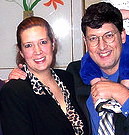
Dr. Gil Wilshire and his wife Regina are strong low-carb leaders

It's been a long time coming, but I was able to interview two very special people in the low-carb community for my blog today--Dr. Gil Wilshire and his wife Regina Wilshire. These are two names that you will most definitely want to get to know a lot better if you haven't already heard about them yet.

In the battle for the hearts and minds of people nutritionally, both Gil and Regina have put themselves on the frontlines of the dietary debate explaining in clear, understandable language why people should be eating a more "nutrient dense" diet than they are right now.

Prepare to be encouraged if you are already a supporter of livin' la vida low-carb. And if you are skeptical about this way of eating and want to hear from two bona fide experts who really know their stuff, then you will benefit from the wisdom these two have to share with us today. ENJOY!

1. It is my great pleasure to welcome Dr. Gil Wilshire and his wife Regina Wilshire from the "Weight Of The Evidence" blog with us today. I had the pleasure of meeting this amazing couple in January 2006 and spent some time getting to know them a little better. Tell my readers a little bit about who you are and what got you so interested in the subject of nutritional science as it relates to controlled-carbohydrate diets.

GIL: In the late 1990s, I let my weight slowly creep up to over 350 pounds! In the process of my investigations into the plethora of weight loss options, I discovered the Atkins diet and gave it a try. As my weight melted off, I continued to delve deeper and deeper into the current state-of-the-art with regard to nutrition and metabolism. I became increasingly horrified at the total lack of true science that purportedly supports the current low-fat dogma that pervades both government policy and "big name" medical circles.

Regina and I are both peas in a pod with regard to our motivation to make advances in this field. Nutrient-dense diets (as we now prefer to call them) have vastly improved the quality of our lives, and we feel it is our duty to share our experiences and ongoing insights with the community at-large.

REGINA: First let me thank you for the opportunity to share our success with your readers. When I failed to lose the weight I needed to following a popular plan--Weight Watchers--I decided to give the Atkins diet a try and, to my surprise, it worked.

What I didn't understand was why it worked and with all the publicity about low-carb diets came many warnings of dire consequences--I realized if I was going to continue with controlled-carb, I needed to know it was not only a plan I could follow for the long-term, but a safe and healthy way to eat too.

So, I took those studies as a starting point to learn more about nutrition and metabolism to try to understand why a low-carb diet was more effective for me than the traditional calorie restricted or low-fat diets and to see if it might be harmful to me in the long-term. What I learned was that the diet was far superior to the current recommendations and that's why I've continued to eat this way since 2001--it's simply a better dietary approach for health.

2. In 2003, you created the Carbohydrate Awareness Council in response to the growing need to educate the public, doctors, and researchers about the positive role of carbohydrate restriction on health. What progress do you see has been made in bringing about change?

GIL: We're just plugging ahead, doing our part to advocate truly evidence-based nutritional policies. Although I cannot point out one particular success, I can say with confidence that we have shaped the framework and terminology that has been bantered about ever since we became visible in the national arena.

One contribution we have made (particularly from Regina's efforts) is from our promotion of the concept of "nutrient density." Nutrient-dense foodstuffs give the most bang-for-the-buck--that is, they supply the most amount of nutrition per calorie. They also give the most nutrition with the highest level of satiety. This allows fat loss without hunger...what a concept!!!

Carbohydrate-laden foods are all, generally, very nutrient deficient (yes, even whole grains), hence the concept of high-density creates a diet that is naturally low carb; the term "low carb" never has to be mentioned when one creates a nutrient-dense menu.

REGINA: Since January 2004 there have been four major conferences we've either hosted or sponsored as an organization along with a number of conferences where either I've presented or Gil has presented information to attendees. We've seen the greatest progress in education and understanding from within the medical and scientific communities.

Whether you're for or against low-carb diets, it's hard to miss that there has been a slow, but steady adoption of many key concepts that form the heart of carbohydrate restriction--nutrient density, more non-starchy vegetables in the diet, reducing refined grains, starches and sugars, less reliance on convenience foods and the importance of protein and healthy fats/oils.

3. Dr. Wilshire, in response to the low-fat/low-calorie diets that have long been held as the standard for a healthy lifestyle, you issued a very public challenge to the American Heart Association last summer to place a moratorium on all dietary recommendations until enough level 1 evidence could be produced to support such recommendations. What was the response to that challenge and do you foresee anything changing about nutritional advice coming from the AHA or our government in the future?

GIL: As I mentioned earlier, the major organizations now pretend that their advice IS based on Level 1 evidence. Unfortunately, most people (including the important science and health reporters) almost never read the full-text of these studies. Some might read just an abstract, but even then, biased researchers frequently draw illogical conclusions from their own data. It takes determination and a fairly good grasp of experimental design and statistics to really challenge these papers and committee opinions head-on.

Until recently, only Gary Taubes has had the chutzpah and intelligence to even attempt to mount a public challenge against the status quo in a public forum from a legitimate platform (as an investigative reporter at the New York Times). Late last year, Adam Campbell took on the ADA and their dietary recommendations in his Men's Health magazine column.

4. Regina, you certainly caused quite a stir last summer as well with your ambitious $1,000 challenge to anyone who could come up with a one-day menu that met all of the nutritional requirements set forth in the dietary recommendations of the AHA. How did that go?

REGINA: I kept my money; none of the menus, and I received hundreds of them, met the AHA guidelines within the challenge rules. The fact the American Heart Association didn't immediately issue sample menus to show their recommendations were easy to follow and met all micronutrient requirements, well, I think that speaks volumes--with all the professional resources they have on staff, even they could not complete a single day menu that met all micronutrient requirements within the lifestyle guidelines they issued.

On the other hand, I can whip out a carbohydrate restricted menu that meets or exceeds micronutrient requirements in less than 15 minutes. You cannot do that if you're following the AHA recommendations for "healthy eating." And if you try to follow their advice, you're likely to be deficient in essential nutrients.

5. The science behind livin' la vida low-carb is quite literally exploding behind the scenes, including this recent one confirming there are no long-term heart health issues when you eat low-carb. Over the next few years, we will be seeing some more spectacular evidence confirming what so many of us low-carbers already know--that this lifestyle change is a safe and effective way to lose weight and bring about vast improvements in various health ailments. What can supporters of low-carb do to help people within their spheres of influence better understand the ramifications of this research?

GIL: I am optimistic that continued grassroots efforts will eventually filter up. However, it may take an entire generation for the effects to become fully manifested. When the decision makers do not see the concept as strange or foreign, that's when we will see it adopted. This has happened all throughout human history. Just look at concepts like hand washing, sterile technique...even quantum physics. These were originally met with heavy resistance and even hostility. People hold on to failed concepts until they die. This is, unfortunately, human nature.

REGINA: Continue to report on studies and analyze the data from a perspective the average Jane or Joe can understand. Most studies are published to the audience expected to read it--other scientists. So many people either don't have the time or inclination to pick through the data to get to the truth. That's where we and others come in--we take the hard stuff and try to make it easier to digest by writing or talking about it in a way that anyone can understand.

6. Will we ever see the day in our lifetime when the low-carb approach will appear alongside the low-fat diet as a recommended way to shed the pounds and get healthy? Is it possible?

GIL: I think this will happen within 20-30 years. I believe textbooks in 2040 will refer to the low-fat craze of the late 20th century with some amusement. It will also be used as a classic example of the bad things that can happen when evidence-based medicine is not used to generate public policy.

REGINA: I personally don't see an either/or option in the future partly because of our fear of dietary fats--that will take generations to reverse the accepted conventional wisdom.

However, what I do see is a continued, gradual modification of the current guidelines toward carbohydrate restriction without acknowledging it as such with emphasis on acceptable terminology. It's already happening--the DASH diet is now offered with the option of less total carbohydrate, significantly less refined carbohydrate and more monounsaturated fats; the acceptance that protein in the diet offers powerful satiety and has a greater thermogenic effect in the metabolism; and the slow modification of language used to present the concepts of carbohydrate restriction as a valid approach such as found in the last issue of JAMA where we find the term "modified macronutrient diets" rather than low-fat or low-carb as the discussion point.

7. What are the biggest obstacles standing in the way of the public embracing the low-carb lifestyle? Even if we call it something besides "low-carb," what is hindering people from trying what very well could be the answer they have been looking for to treat their obesity and metabolic syndrome?

GIL: I think the biggest impediment is the continued support of the (expletive deleted) Food Pyramid by the government. The way that special interests influence public policy in this country is a shameful embarrassment.

REGINA: Scare tactics went a long way, as did the perpetuation of myths. As the evidence continues to mount, we now see a change of tactics against this nutritional approach. Now it's "well, no one wants to eat that way" or "who can do that long-term?" opinions steeped with deep disdain that ignores the evidence that shows significant risk factor improvements and weight loss with carbohydrate restriction.

8. Regina, you recently stumbled upon a new version of low-carb that incorporates a better ratio of omega-3s and omega-6s. Several people who have tried this Omega Diet have experienced great success, including myself. Do you have any more information to report about this plan, including additional weight loss success stories or confirmations about why it works so well?

REGINA: Well, it's not my version really--it's from the wealth of information from various researchers who've been talking about the effect of omega-3 fatty acids for years. In January 2006, I had the opportunity to actually spend enough time and ask way too many questions of [The Zone Diet author] Dr. Barry Sears, who graciously explained things in terms I understood.

With that information I set out to see how well I was doing with my diet and learned that even though I was eating controlled-carb, my ratio of omega-3 to omega-6 was still higher than the data shows is better for us. So I tweaked and tweaked and played around with the numbers until I was satisfied I'd be eating in a way that was still nutrient-dense and also had a better balance of omega-3 to omega-6.

9. I am just a layman when it comes to discussing the subject of low-carb living after my personal weight loss experience using this miraculous way of eating. Most of what I have learned about livin' la vida low-carb has been self-taught. How did you become so knowledgeable about low-carb? Do you think some people are too intimidated by the scientific jargon that they sometimes miss the message you are trying to convey?

GIL: It has been a long but interesting road to travel! We stand on the shoulders of giants. Drs. Mary Enig and Robert Atkins boosted us all up. We are taking the baton and moving ahead with the best evidence as it is being created. This field is always evolving, and we must always be keeping our collective eyes open for new articles and findings that continue to shed light on the dark edges of our current understanding.

REGINA: Gosh, it's now been five years since I started reading, learning, researching and asking questions of some of the brightest minds in science and medicine--and I still have more questions!

I don't think any one person can know it all--it really takes the collective effort of many to bring all the pieces together and then everyone helps each other from their base of knowledge and expertise while learning from those who know better than they along the way.

That's how I've learned as much as I have in the short time I have--I ask a lot of questions, seek out the experts for answers to those questions, confirm data or things I'm told. And when I understand something, I also have to be willing to share what I know with someone else who is asking a question and point them in the right direction to confirm what I'm saying.

10. THANKS again Dr. Wilshire and Regina for agreeing to be interviewed. I'm sure we will be hearing a lot more out of you in the coming years as low-carb makes a comeback in a big way. Do you have any parting comments that you would like to share with my readers about low-carb?

GIL: You are doing a GREAT JOB in your own way, Jimmy. Bless you and yours!

REGINA: Just keep doing what you're doing - our readers deserve to know what the latest evidence tells us and share what our experience teaches us.

You can learn more about this amazing couple and what they are doing to promote low-carb by visiting CarbAware.org or Regina's outstanding blog "Weight Of The Evidence."

Labels: , , , , , , , , , , , ,