|
PLEASE UPDATE YOUR BOOKMARKS TO LIVINLAVIDALOWCARB.COM/BLOG
'Livin' La Vida Low-Carb Show' Episode 136: Feinman Encourages Low-Carb Diabetics To Contact The ADA, Congress
 The brilliant Dr. Richard Feinman with his assistant Lauri Cagnassola The brilliant Dr. Richard Feinman with his assistant Lauri CagnassolaPicking up where we left off in Part 1 of my interview with Dr. Richard Feinman in my series from the American Society of Bariatric Physicians and Nutrition & Metabolism Society conference in Phoenix, Arizona last month, we've got so much more to share with you today from one of the most ardent supporters of the science behind livin' la vida low-carb today. In Episode 136 of "The Livin' La Vida Low-Carb Show with Jimmy Moore," Dr. Feinman discusses his favorite subject as it relates to carbohydrate restriction--diabetes. You'll hear the fervor in his voice as he speaks about patients sharing their low-carb success stories with the American Diabetes Association and their Congressmen, who he believes should begin immediate hearings on the subject of diabetes care in the United States. Some may think Dr. Feinman is radical for suggesting such a thing, but he may be on to something that you and I can actually help make happen. Click on the "LISTEN NOW" link below or download it to your iPod to hear Episode 136:  "The Livin' La Vida Low-Carb Show with Jimmy Moore" Episode 136 [26:01m]: LISTEN NOW | Download (all fixed now with the links--sorry about that!) If you support what Dr. Feinman is trying to do educating doctors and future doctors about a controlled-carbohydrate diet, then why not join the Nutrition & Metabolism Society today? It costs consumers $25 to sign up and would be a nominal investment in this fight to give low-carb the legitimacy it deserves. CLICK HERE if you are interested in taking livin' la vida low-carb to the next level so that others will have the knowledge to be able to benefit from the low-carb lifestyle in the future without ridicule or scorn. Stay plugged in to experts like Dr. Richard Feinman anytime by: 1. Listening at the official web site2. Calling (818) 688-2763 to listen via Podlinez3. Subscribing to the RSS feed 4. Going to iTunes-- Click here to subscribe! Now that my interview with Dr. Richard Feinman has concluded, are you inspired anew in your low-carb lifestyle and sharing it with as many people as you can? And for those of you who are diabetic, do you now see even clearer what YOU can do to make a difference on the way your disease is treated? Share your thoughts about it in the show notes section of Episode 136. I especially want to thank Dr. Feinman for the generosity of his time for this outstanding interview. But I'm far from through with my interview series. Next week, we'll be hearing from Mary Bissell, the producer of the hit Canadian documentary My Big Fat Diet (which I have blogged about before) on Monday and then an incredibly amazing weight loss blogger named Jennette Fulda from the "Half Of Me" blog talking about her irreverently-titled, but oh-so-inspiring new book entitled Half-Assed: A Weight-Loss Memoir on Thursday. DON'T MISS IT!!! Labels: ADA, Congress, diabetes, Jimmy Moore, low-carb, Nutrition And Metabolism Society, podcast, Richard Feinman, The Livin' La Vida Low-Carb Show
Tell The American Diabetes Association YOUR Low-Carb Diabetes Success Story
Not a day goes by that I don't hear from people wondering what they can do to help turn the tide of negativity about livin' la vida low-carb in our culture because of the tremendous changes that have happened in their lives as a result of making this healthy lifestyle change for themselves. When something this good happens to you, then you just can't help but go out and tell everyone you know about the amazing experience you have been able to enjoy thanks to low-carb living. And yet, there's still this major barrier in the way of celebrating the victory that is deservedly ours--the opposition to low-carb diets that continues to dominate in the media from government groups such as the Food & Drug Administration and the United States Department of Agriculture, and health organizations like the American Medical Association, American Heart Association, and the American Diabetes Association. The daily hammering of the high-carb, low-fat message gets to be a bit nauseating after a while and it tends to wear a lot of the enthusiasm down even from people who are very enthusiastic about the low-carb way of life. I'll admit it even happens to me from time to time. But when that happens, I try to remind myself of an important truth that often gets lost in the shuffle of this whole diet and health debate: ONE GOOD WITNESS CAN SET THE RECORD STRAIGHT! Think about it for a moment. Our culture is bombarded with the message that eating too much fat, especially saturated fat, will make you fat and unhealthy. They also tell us that your body needs carbohydrate in order to give you energy for your day. We're told to be sure to eat our fruits, veggies, and whole grains because we all KNOW how good all those things are for you. Reality check--not all of those things are necessarily true for everyone. My experience has been that eating a high-fat diet that is low in total carbohydrate is extremely effective in shedding stored fat and greatly improving my health. Only when you combine high-fat intake with high-carb is it harmful. And my body most certainly does not NEED carbs in order to sustain enough energy to get through my day (thank you gluconeogenesis!). Finally, the most heralded and beloved one of them all is for people to eat more fruits and vegetables, but to me that's one big copout when you don't clarify what you are talking about. And as much as the whole grain craze is trying to catch on, the reality is even those whole grains are raising blood sugar levels, pumping insulin into the body, and wreaking havoc in our bodies. That's my low-carb story and I am merely one witness in a pool of many more who have a story to tell. So what I think we should do is to begin telling our story to the people who need to hear it. And the logical first place to begin this process is with an organization who only recently started lending credence to the low-carb lifestyle in their recommendations and that's the American Diabetes Association (ADA). They've heard about all the great stories of diabetics who have been able to stop taking their diabetes medications and reduce or eliminate their need for insulin. But now they need to see a name and a face with those stories and that's where YOU come in to make a real difference. If you are serious about trying to influence the world with the positive message of livin' la vida low-carb, then here are a few things you can do: 1. Send YOUR story to the ADA!They are certainly in the most receptive place ever after altering their recommendations for diabetics to consider low-carb if low-fat didn't work for them. It's a golden opportunity for you to talk about how your diabetes condition has improved following a low-carb diet and I strongly urge you to do this. Tell Dr. Sue Kirkman in an e-mail who you are, when you were diagnosed with diabetes, your pre-low-carb numbers, and your post-low-carb numbers and improvements. You can e-mail that information directly to her at skirkman@diabetes.org. 2. Ask the ADA for low-carb representation!One of the reasons it took the ADA so long to recognize the benefits of livin' la vida low-carb for diabetics is because they do not have any low-carb representation among their board members. Why is that? With carbohydrate restriction so vitally important to the future health of people afflicted with this terrible disease, why wouldn't they want someone like Dr. Mary C. Vernon, Dr. Eric Westman, or any number of other qualified candidates to serve in this capacity as a consultant for the ADA, hmmm? Why don't we suggest that they do just that? E-mail the ADA and request low-carb representation on their nutritional guideline panel at AskADA@diabetes.org. 3. Contact your Congressman and call for hearings!We really have to put the onus of blame for this dietary mess we are in now squarely on the shoulders of the United States government. They have the power to bring about changes in dietary recommendations based on the latest research and to date they have not incorporated any of the meaningful research that has been coming out about low-carb. It's high time that they do something to show the American people they truly care about the future of health in this nation. Urge them to begin hearings on nutrition and diabetes by contacting your Congressmen. 4. Join the Nutrition & Metabolism SocietyThere's a group working very hard behind-the-scenes to provide a voice of legitimacy for livin' la vida low-carb that you may or may not be aware of. It's the Nutrition & Metabolism Society led by some of the best and brightest researchers and advocates of the science behind low-carb today, including Dr. Richard Feinman, Dr. Eric Westman, Dr. Jeff Volek, Dr. Gil Wilshire, and others. These leaders need the help of literally thousands upon thousands of people who support getting the word out about the low-carb lifestyle and that's just about everyone who reads my blog! A consumer membership is just $25 a year and those dollars go directly into giving low-carb the prominent place it deserves in our culture. Click here to become a member of the Nutrition & Metabolism Society TODAY! While it can sometimes seem overwhelming about what one person can do to tell the whole world about the positive influence the low-carb lifestyle has made on your life, hopefully I have given you some ideas to step up your commitment to seeing livin' la vida low-carb brought back to the forefront of the diet and health discussion. Tens of millions of lives are literally depending on us to stand up for what we know to be true and if we all do our part there is no reason our voice will not be heard. If you're ready to take this challenge seriously, then do something RIGHT NOW! Feel free to share the action you have taken on behalf of low-carb in the comments section below. Labels: action, ADA, Congress, diabetes, FDA, health, low-carb, Nutrition And Metabolism Society
Low-Carb Champions Vernon, Bernstein Finalists For Diabetes Educator Of The Year
 Two of the five finalists support livin' la vida low-carb Two of the five finalists support livin' la vida low-carbWell, you did it and in a BIG way! In October 2007, I shared with you an opportunity to nominate a strong advocate of the low-carb lifestyle to be named "Diabetes Educator of the Year" for 2007. Her name is Dr. Mary C. Vernon from Lawrence, Kansas and anyone who has met her will tell you just how incredibly passionate about this way of eating she is for both her overweight as well as her diabetic patients. Livin' la vida low-carb is well-represented by the work Dr. Vernon is doing and I am pleased to tell you that she has been named among the five finalists for this prestigious award. At the same time, another powerhouse low-carb proponent was also nominated for this award: Dr. Richard Bernstein. You gotta admire Dr. Bernstein for hanging tough in the midst of some rather vocal voices of dissent over the years, but now the tide seems to be turning in his direction. I'm proud of him for being named among the finalists for this award and congratulate him on being rightfully recognized as one of America's best and brightest diabetes doctors. Isn't it amazing that 40 percent of the finalists for "Diabetes Educator of the Year" sponsored by American Diabetes Wholesale are unabashed supporters of the low-carbohydrate nutritional approach? Who would have ever guessed that would happen in a million years? But that's EXACTLY what has happened and it should give us all hope that perhaps the message is finally breaking through and people are getting it now. It is interesting this is happening at the same time the American Diabetes Association (ADA) finally gives credence to low-carb diets for diabetics. Progress is happening, albeit ever-so-slowly, but it IS happening! So, with two low-carbers among the top five finalists for "Diabetes Educator of the Year," what is the low-carb community to do? If we are not unified behind one candidate, then the low-carb vote will be split and one of the other three finalists will win. Since we'd like to see a low-carb champion crowned with the title of "Diabetes Educator of the Year," I would encourage everyone to rally behind Dr. Mary C. Vernon to win this award. Taking nothing away from Dr. Bernstein, I think Dr. Vernon has established herself among the medical mainstream while still holding true to the low-carb philosophy when she was named the President of the American Society of Bariatric Physicians (ASBP) last year following her win as Bariatric Physician of the Year in 2005. She co-wrote a fantastic book explaining how the Atkins diet can help control Type 2 diabetes in Atkins Diabetes Revolution and her continued published research into this subject area reveals her genuineness about presenting factual data for informing her patients. If you have never heard or been exposed to the work of Dr. Mary C. Vernon, then please read my blog interview with her and then listen to my my podcast interview to see for yourself why she is such a worthy candidate for this title. Also, be sure to check out her "Ask Dr. Vernon" blog where she directly addresses how low-carb living is positively changing lives for the better in the diabetics willing to give it a chance. Let's not forget that Dr. Vernon was featured in Men's Health magazine in November 2006 for the work she is doing on behalf of thousands of diabetic patients. That media attention gave Dr. Vernon quite a platform for speaking out on television and in various other news mediums talking about livin' la vida low-carb all year long. She is certainly a worthy recipient of the title "Diabetes Educator of the Year" for 2007. To vote for Dr. Vernon, go to the finalists web site and click on "Cast Your Vote Here" at the bottom of the page. Then mark "Dr. Mary C. Vernon" and vote. The panel of judges includes a representative from the South Florida division of the American Diabetes Association, Dr. Kimberly Mistiszyn of the Rand Eye Institute, and Chris Maguire from the sponsor of this award American Diabetes Wholesale. You only have until February 15, 2008 to cast your ballot, so DON'T DELAY and do this TODAY! The winner will be announced on March 1, 2008 and recognized in a special ceremony in Boca Raton, Florida. Let's make sure that's Dr. Vernon they're applauding for her fabulous work with diabetes patients. THANK YOU for rallying behind her nomination and putting her over the top for this award. We'll let you know what happens! Please leave a comment below after you vote for Dr. Vernon so we can keep track of her support. It's high time low-carb is given credence within the diabetic community and catapulting an ardent advocate like Dr. Mary C. Vernon to the heap for "Diabetes Educator of the Year" will certainly help. 2-14-08 UPDATE: They have decided to extend the voting for "Diabetes Educator of the Year" one additional week through February 22, 2008, so be sure to VOTE NOW if you haven't done so yet! Labels: ADA, American Diabetes Wholesale, award, diabetes, Diabetes Educator Of The Year, finalist, low-carb, Mary Vernon, Richard Bernstein
A Collection Of Low-Carb News To Kick Off 2008
 It's the dawn of a new year, but low-carb hasn't slowed a bit! It's the dawn of a new year, but low-carb hasn't slowed a bit!Waving goodbye to the end of another year simply means it's time to say hello to a new beginning as the calendar year turns over yet again. While 2007 was indeed a year to remember, I'm so looking forward to 2008 and all that awaits people who are contemplating, in the midst of, or head over heels about the amazingly healthy low-carb lifestyle. Good things are happening all the time and it is always a pleasure to share with you the very latest in the wonderful world of livin' la vida low-carb. My commitment to you is to keep doing this in the new year so you'll always stay ahead of the game. In fact, I'm happy to share with you a collection of positive low-carb news right now to help kick off your 2008 the right way. HAPPY NEW YEAR EVERYONE!!! BREAST CANCER MADE WORSE BY HIGH INSULIN LEVELSI've shared with you many times over the past few years how researchers are beginning to see an unmistakable connection between the prevalence and growth of cancer tied to the existence of high levels of insulin in the body. Most notably was this Time magazine article on German researchers using a high-fat, low-carb diet to combat cancer in the most dire of patients with astounding results. Now researchers out of Yale University have found that women with high levels of insulin in their body are likely to develop breast cancer. Although the lead researcher Dr. Melinda Irwin recommends "exercise and eating a diet rich in fruits and vegetables and low in fat," what they need more than anything is a sugar-free, low-carb diet rich in healthy amounts of fat, including saturated fat, to combat and prevent this disease. The problem I have always had with generalized recommendations from people like Dr. Irwin who say we should "eat a diet rich in fruits and vegetables with a low-fat diet" is that it is not backed up by the latest published research and in my opinion is simply a copout for providing guidance about which foods are better. Not all vegetables are good for you (potatoes and other starchy ones especially) and neither are all fruits (bananas alone have 29g carbohydrate in them!). It's nice to see the research is finally showing the detrimental role that insulin is doing to our health brought on by a high-carb diet, but it's high time we start matching up our dietary recommendations to adequately take on these health challenges properly. Share your comments and concerns with Dr. Melinda Irwin about her study by e-mailing her at melinda.irwin@yale.edu. IS THERE REALLY ANOTHER NEW ATKINS DIET BOOK?You may have already heard about this new book, but in case you haven't it is not a misprint. There's a brand new Atkins diet book called The All-New Atkins Advantage: The 12-Week Low-Carb Program to Lose Weight, Achieve Peak Fitness and Health, and Maximize Your Willpower to Reach Life Goals that released on December 26, 2007 and is being marketed as an updated version of the low-carb diet made popular by the late great Dr. Robert C. Atkins. 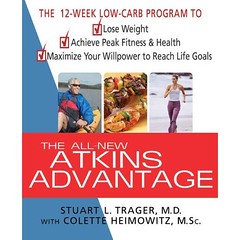 This Atkins book co-written by Dr. Stuart Trager and Collette Heimowitz This Atkins book co-written by Dr. Stuart Trager and Collette HeimowitzI've been reading through this "new" Atkins diet book and the overriding message that I am seeing is that there are different levels of carbohydrate tolerance for each individual and this book will help guide you regardless of the amount of carbs your body will permit you to eat. There are menus for varying levels of carbohydrate intake from 20g a day to 80g a day, so you never have to guess about what to eat. Dr. Trager is a fitness expert who uses his experiences in Ironman competitions and implementing a low-carbohydrate nutritional approach to help others reach their weight loss goals. I've blogged about him previously in this blog post and he devotes a major portion of the book on specific exercises you can do to go along with your Atkins diet. As for Collette Heimowitz, I've interviewed her at my blog before talking about the continuing role of Atkins Nutritionals, Inc. in the realm of diet, health, and nutrition. She has been a long-time supporter of livin' la vida low-carb sharing with others all the research and data supporting low-carb living. I will likely be sharing a book review of The All-New Atkins Advantage as well as some possible giveaways real soon, so keep reading the blog for those updates! This looks to be a good book for anyone needing a little bit of extra hand-holding as you begin the low-carb lifestyle. CAL-CARB CLICKER TO BE FEATURED ON QVCA few weeks ago, my wife Christine and I shared with you some great low-carb gift ideas to share with people who are livin' la vida low-carb on special occasions like birthdays, Christmas, and other such events involving presents. One of those products I told you about was something called the Cal-Carb Clicker which allows you to keep track of your calories, carbohydrates, and water intake all in one device that's super-easy to use. Well, this little gadget is gonna hit the big time on New Year's Eve as the clock strikes midnight to head into 2008 because it will be featured for the first time ever on the QVC television shopping network. If you are up late watching the ball drop in Times Square, then be sure to switch over to QVC to watch Sandy Martucci, one of the two sisters who invented this gizmo, talk about it sometime between midnight and 2 a.m. This thing is expected to blow the doors off of QVC and it's exciting that one of the things it measures is carbohydrate intake. AMAZING!!! If the Cal-Carb Clicker does as well as QVC expects selling at around $12, then they will keep offering it as part of their regular programming. This is excellent news because more and more people are discovering the importance of carb control and this tool will help them keep better track of it. And that's a VERY good thing! :) ARIZONA STATE RESEARCHERS RIP LOW-CARB DIETSAs much as all the evidence keeps pointing to low-carb as being one of the healthiest ways you could possibly eat, I have come to the conclusion that there will ALWAYS be somebody out there who thinks the sky is green. When it comes to the alleged healthiness of a high-carb diet, this guys takes the cake (both figuratively AND literally!). Joining in on the lunacy are researchers from Arizona State University who put out this damning press release against low-carb diets recently that claims (among many things) ketosis from a low-carb ketogenic diet will kill you, your bones will dry up and crumble like a cookie, and your LDL cholesterol will go up so high your arteries will explode! Okay, maybe it wasn't filled with that much hyperbole, but it might as well have since all of those flimsy excuses are the same ones we've heard over and over again for years. What do they recommend instead? Eating a more "moderate" level of around 120g of carbohydrates daily as a STARTING POINT and much more than that if you even dare try to exercise a little. They say your body needs carbs but we know better don't we? It's called gluconeogenesis and is a very natural part of human physiology and metabolism. These pompous, self-proclaimed researchers-- Carol Johnston and Pamela Swan--need to get off their high horse every once in a while to start living in the real world like the rest of us rather than the fantasy land of higher academia! I'm sure they'd LOVE to hear from YOU, so feel free to e-mail them at carol.johnston@asu.edu and PSwan@asu.edu. NUTRITION DATA GIVES LOW-CARB DISCERNMENT ADVICEIf you haven't been to the "Nutrition Data" blog yet, then you are doing yourself a huge disservice because they offer some really fantastic information about diet, health, and nutrition. And they also are quite the fans of livin' la vida low-carb, too. In this recent post about dietary dogma against low-carb diets, an excellent response was provided by Monica Reinagel for people confused about how to discern the good information from the bad as it relates to low-carb studies that seem to contradict themselves (as will frequently happen when the zealots release their biased research while genuine studies show the truth). I especially liked Monica's four tips about what to do for living healthy: 1. Do what works...If a low-carb diet is the only way for you to do it, then the possible risks are probably justified.
2. Consider your health history. If you are diabetic or have metabolic syndrome and have weight to lose, a lower-carb diet may be a better choice.
3. Monitor your risk factors. Regardless of which dietary dogma you ascribe to, have your cholesterol, triglycerides, and inflammation markers (CRP) tested on an annual or bi-annual basis.
4. Don't over-simplify...A diet rich in low-glycemic carbs like vegetables and legumes is not going to have the same negative effects as a diet high in high-glycemic carbs like rice cakes and white bread.See what I mean...don't you LOVE it when you find someone of like mind? In 2008, make it a point to visit The ND Blog early and often! And let Monica hear from you about what you think of her site by e-mailing her at feedback@nutritiondata.com. Speaking of this fabulous web site, I just had to share with you about a recent poll conducted by NutritionData.com that simply asked the question, "What motivates you to eat healthier?" Wanna know what the surprising results were depending on what part of the United States you live in? Check this out: One-third of Americans want to look good (33.3%) and just under a third want to feel better. But the results of the poll showed that Americans have different motivations for eating healthier based on where they live. - Americans living in the Heartland States want to change their diets to lower their risk of diseases like heart disease, diabetes and cancer - People living on the East Coast of the U.S. eat healthier in the hopes that they will live longer - People in the South and on the West Coast try to eat better in order to lose weight and/or look good - Americans on the West Coast change their diets for the better so that they will have more energy What do you think about this? Is it true based on where YOU live? This should be a lively discussion in the comments section. :D A USER-FRIENDLY WEB SITE EXPLAINING LOW-CARB DIETSHave you been looking for a page on the Internet that would accurately describe what the low-carb lifestyle is REALLY all about, explain in simple terms what makes this way of eating so effective, and put it in language we can all understand? Well, look no further than "Why Low-Carb Diets Work" by author Adam Khan. He did a yeoman's job of breaking it down in digestible chunks for virtually anyone to grasp the basic concepts of livin' la vida low-carb. Whether you are a low-carb expert or a novice, this one's WELL worth the read! NEW STUDY CONFIRMS LOW-CARB FOR EPILEPSY TREATMENTI've blogged about the use of a very low-carb ketogenic diet for seizure control in people with epilepsy and other neurological diseases before. In fact, I highlighted a web site called "Atkins For Seizures" that is a grassroots attempt to educate people who suffer from epilepsy about this potential dietary cure for their disease Now there's a study scientifically backing up this treatment method. Lead researcher Dr. Kelvin Yamada, professor of Neurology at the St. Louis, MO-based Washington University School of Medicine, and his team of researchers found that the key to helping people with epilepsy the release of leptin brought about as a result of a ketogenic low-carb diet. The science is a bit complicated to follow, but the bottom line is livin' la vida low-carb was shown to help reduce the occurrence of seizures in laboratory rats. This study was published in the December 20, 2007 issue of Journal of Clinical Investigation. You can e-mail Dr. Kelvin Yamada about his study at yamadak@wustl.edu. LAURA DOLSON HELPS WITH "BABY STEPS" TOWARDS LOW-CARBOne of the greatest low-carb resources on the Internet is the About.com Low-Carb Diets page from Laura Dolson. She works tirelessly to provide accurate, informative, and professional information regarding anything and everything that has to do with the low-carb lifestyle. I wanna be like Laura when I grow up! :) Recently, Laura shared a post entitled "Seven Steps to Greater Carb Control" that is essential reading for anyone who thinks livin' la vida low-carb is an impossibility for them. It's amazing how making some very minor changes in your current habits can reap huge rewards in both your weight and health management. I know from talking to Laura that health is a HUGE part of everything she does, so take some advice from someone who has been there and cares. DIABETES HEALTH MAGAZINE PUBLISHES LOW-CARB SUCCESSNow that the American Diabetes Association (ADA) has given the green light to low-carb for diabetics, it will be very interesting to see how many amazing stories of blood sugar control that start happening for people who will try this for perhaps the first time as a means for treating their diabetes. While the ADA is focused on the weight loss aspect of livin' la vida low-carb, it's what will happen as insulin production slows for Type 2 diabetics that will be the really fun thing to watch for. But even before that has happened, there's a fantastic column in Diabetes Health magazine written by Riva Greenberg from the "Diabetes Stories" blog. She simply shared from her experiences following Dr. Richard Bernstein's plan for controlling her Type 1 diabetes. Here's a quick excerpt, but be sure to read the whole column: "I essentially eliminated refined carbs, such as white bread, white potatoes, rice, pasta, sweets, muffins, and starchy veggies. The result? My sugars indeed dropped. They were consistently lower, and my insulin doses dropped. Maybe best of all, I was no longer chasing high blood sugars - you know, the ones that come from refined carbs, where you just can't seem to knock them down all day. My Lantus dose went from 20 to 12.5 units, and my pre-meal Humalog was all but cut in half. The results were so dramatic and made my life so much easier that I never went back to my old ways."Riva's story is merely the first in a long line of successes that are to come now the the ADA has given recognition and credence to the healthy low-carb lifestyle. If you have an amazing story you'd like to share about how low-carb has helped you control your diabetes, then please feel free to send it to me anytime at livinlowcarbman@charter.net. It's important for the ADA and other health entities like them to know that real people are getting healthy eating this way. THANKS for sharing! DR. RICHARD FEINMAN'S SATURATED FAT COLUMN AT DLIFEI had the privilege of interviewing one of the most brilliant low-carb researchers in the world today in June 2006-- Dr. Richard Feinman from the Brooklyn, NY-based SUNY Downstate. He told me in that interview that he believed the ADA was close to coming out in support of livin' la vida low-carb and 18 months later he was right! As a strong advocate of the metabolic science behind low-carb living, we have seen Dr. Feinman challenge the status quo and now he's at it again on the popular diabetes and health web site called dLife. In a guest column called "What if Saturated Fat is Not the Problem?" he shares about some of the latest research behind saturated fat to reveal it's not the public health menace we've all been led to believe. He notes this study from University of Connecticut researcher Dr. Jeff Volek that found a diet low in saturated fat actually increases saturated fat in the blood compared to a diet high in saturated fat. Counterintuitive? You betcha, but that's what the data shows. Here's a taste of classic Feinman at his best: "Carbohydrate, through its effect on insulin, is the key player. Insulin not only sweeps up glucose from the blood but it also plays air traffic controller, making the call as to whether that glucose is turned into fat or is used for energy. Most importantly, insulin determines what happens to dietary fat — whether it gets stored or oxidized for fuel. In fact, insulin has so much control over how dietary fat is metabolized that when levels of fat are measured in the blood, they are not strongly associated with a person's diet. In other words, one person who has a high intake of saturated fat may turn out to have a similar ratio of saturated to unsaturated fat in the blood as someone who consumes very little saturated fat."There's plenty more nuggets of truth to chew on in Dr. Feinman's column, so read the entire thing, print it out, and give it to your doctor and anyone else whose health you care about. This is a subject that we've only just begun to scratch the surface on and will be at the center of debate in the months and years to come. 3800 CALORIES A DAY FOR A MONTH AND NO WEIGHT GAIN?We often hear from all those so-called "experts" who tell us we need to create a calorie deficit in order to manage our weight. But those of us who consume a high-fat, low-carb diet with no regard for calories have always believed that theory was bogus--but we didn't really have any way to back it up other than our own personal experiences. Allow me to introduce you to a Wisconsin man named Jeff. Over the course of 30 days during the entire month of December, he has conducted an experiment on his own body a la what Morgan Spurlock did in his Super Size Me movie. Jeff attempted to eat as many calories as he possibly could on his 169-pound frame to prove you can maintain your weight as long as you keep your carbohydrates reduced. Check out his daily log of calories consumed and a list of the foods he ate to average a whopping 3822 calories for thirty days in a row! His high day was on Day 5 when he hit 4620 calories and his low day was on Day 30 when he only got to 2998--three-fourths of which was FAT! WOW! You go Jeff!!! Conventional wisdom regarding calories would say that Jeff should have gained close to 14 pounds on this diet of his. But guess what? He didn't gain 14 pounds. He didn't even gain 10 pounds or even 5 pounds. The shocking result--HE MAINTAINED HIS WEIGHT!!! Incredible! I'd love to interview Jeff about his little experiment if someone who knows him will have him e-mail me. THANKS! DR. WALTER WILLETT ACKNOWLEDGES LOW-CARB DIETSA friend of mine pointed me to a rather fascinating interview with Dr. Walter Willett, a nutrition expert from the Harvard School of Public Health. While I've both praised and been critical of Dr. Willett at my blog, I'm pleased to share this interview conducted by PBS and their "Frontline" program with you because it has some good information from this leading American health expert on a variety of subjects. Yes, he still subscribes to the Ancel Keys theory regarding fat causing obesity among other things, there are moments during the interview that Dr. Willett comes to the defense of fat consumption and livin' la vida low-carb. Here are some of my favorite parts: "The reality is that during this campaign for fat-free and reduced-fat products, actual fat consumption did go down, but Americans got much fatter during this period of time. Now of course lots of things were going on at the same period in time, but I think it's highly likely this focus only on fat calories to the neglect of carbohydrate calories has contributed to this epidemic of obesity."
**********
"The evidence that we accrued really suggested not only that the type of advice that people were getting was not useful, but it actually could be dangerous, because some people were eliminating the very healthy types of fat that actually reduce heart disease rates."
**********
"The thinking in nutrition about carbohydrates really had broken them down into two classes: sugars and so-called complex carbohydrates, which are mostly starches. The idea has been pushed that all forms of so-called complex carbohydrates are really the poster child of nutrients, and we should be eating them in large amounts. That's what the pyramid tells us to do. But in fact, these kinds of starches -- white bread, white rice, potatoes -- are starches that are very rapidly converted to glucose, really pure sugar, and almost instantly absorbed into the bloodstream. And these are the kinds of carbohydrates that we really should be minimizing in our diets."
**********
"Actually, careful studies have shown, demonstrated that you get a bigger rise in blood sugar after eating potatoes, a baked potato, say, than you do from eating pure table sugar. Really."
**********
"First of all, when the blood sugar goes skyrocketing up, the body wants to bring it back down. So our pancreas pumps out a big blast of insulin, and as a result, the blood sugar comes crashing down rapidly. In fact, in many people, after three and four hours, it overshoots and actually become a little hypoglycemic, and that rapid crashing down of blood glucose and insulin stimulates hunger. That would be no problem, except that it's often all too easy to go in the refrigerator or find a snack, and if we do that frequently throughout the day, that can add up to too many calories over weeks and months and years, and contribute to obesity.
Second, these high rises in blood glucose and insulin have a bad metabolic effect on the blood cholesterol fractions. Specifically the HDL, the good cholesterol, is driven down, and triglycerides, another type of fat in the blood that leads to heart attacks, goes up.
Third, after many years of demand for high amounts of insulin, the pancreas tends to give out. And at that point in time, we've got type 2 diabetes."
**********
"Interestingly, in traditional Asian societies, people were very lean, very active, and therefore had low insulin resistance. They could eat large amounts of rice, even white rice, in the diet and have low heart attack rates and have low rates of type 2 diabetes. But if you take that same person, and they [now] may be living in Beijing and driving a car and watching a television, and they put on a few pounds, they're going to have much more insulin resistance. So if you take that same diet, high in carbohydrate and white rice, they will have a much worse metabolic response and much higher rates of type 2 diabetes."
**********
"If you're overweight and living in the United States, and you go to a hospital and see a dietician, almost for sure, you're going to be put on a low-fat, high-carbohydrate diet."
**********
"Dr. Atkins was saying as much as 30 years ago, that if we reduce our carbohydrate intake to quite low levels, that will make it easier to control our caloric intake and thus promote weight loss. As it turns out, there is a strong element of truth in that. A number of studies in the last year have looked in a very careful way, comparing low-fat, high-carbohydrate diets with reduced-carbohydrate diets, and in general people have done better on the reduced-carbohydrate diets in terms of their weight."This was one incredible interview and I hope you take the time to read it all for yourself! While Dr. Willett is certainly no low-carb champion, he at least understands the mechanism behind why it works for those of us who choose it to manage our weight and health. This is something more health experts should get in the habit of doing. Got some low-carb news you wanna share with me? I'm always happy to hear from my readers, so don't hesitate to e-mail me anytime at livinlowcarbman@charter.net. Labels: 2008, ADA, Atkins, breast cancer, Cal-Carb Clicker, calories, diabetes, Diabetes Health, dLife, epilepsy, insulin, low-carb, new year, news, research, Richard Feinman, study, Walter Willett
Low-Carb Living Roared On Strong In 2007
 The great low-carb news certainly didn't stop in 2007 The great low-carb news certainly didn't stop in 2007The end of another year is upon us and there's so much that happened in 2007 for people who support the healthy and effective low-carb lifestyle. I'm privileged to be on the front row witnessing a rebirth in the popularity of livin' la vida low-carb and it is my belief that things will only get brighter and better in 2008. When I blogged just one year ago that 2007 would be the "comeback year" for low-carb, little did I realize just how prophetic that statement of the revival of the controlled-carbohydrate nutritional approach would be. Despite the continued ignorance by much of the mainstream media and the so-called health "experts" who claim to know it all regarding diet, health, and nutrition, people are discovering there's more to this low-carb thing than they ever realized before. This awakening to the truth will continue to take place as people take control and responsibility for their own health perhaps for the first time ever. The two things that I'll remember the most about 2007 happened just in the past few months--the release of Gary Taubes' instant classic Good Calories, Bad Calories that got people talking about cutting carbohydrates for weight and health management again and the American Diabetes Association (ADA) embracing low-carb diets for diabetics in their new recommendations for doctors to use in 2008 that has now set the wheels in motion for other health organizations like the American Medical Association (AMA), American Heart Association (AHA), the Food & Drug Administration (FDA) and the United States Department of Agriculture (USDA) to follow suit. It's gonna happen a whole lot sooner than later--just you wait and see! You can't really talk about the year that was 2007 without mentioning a few other notable events that took place to help shape and restore the positive image of low-carb living in our culture, including these 25 top headlines: - Dr. Jonny Bowden's bestselling 150 Healthiest Foods On Earth- Veronica Atkins carrying on the low-carb torch her husband ignited- Judy Barnes Baker releases CARB WARS low-carb cookbook- Dr. Richard Bernstein still promoting low-carb for diabetics- Filmmaker CJ Hunt begins documentary on "the perfect human diet"- Stanford study published in JAMA says Atkins diet is best- Study shows low-carb a "reasonable alternative" to low-fat- "Biggest Loser" consultant says low-carb "wrongfully dismissed"- Research shows high-carb, low-fat bad for hyperinsulinemia- Lora Ruffner ceases publication of Low-Carb Luxury- Cracker Barrel keeps low-carb options on their menu- Connie Bennett's SUGAR SHOCK! featured on national TV- Dr. Eric Westman from Duke leading low-carb research- "World's Heaviest Man" Manuel Uribe loses 400 pounds on low-carb- Kimkins diet revealed to be a scam orchestrated by Heidi Diaz- Low-carb blogs begin to dominate the blogosphere- The rediscovery of the original low-carber, William Banting- Atkins diet cruise set to return in 2008- Dr. Mary C. Vernon espousing low-carb for diabetics- Health guru Dr. Andrew Weil shows support for low-carb- The 10 most influential low-carbers of 2007- Anti-Super Size Me film to share the truth about fat and carbs- Study finds low-carb lowers, low-fat raises saturated fat levels- New reality television show to focus on sugar addiction- USDA makes low-carb friendly appointee to make 2010 food pyramidWhile 2007 was indeed a fabulous year, I am confident the best days for low-carb advocates are still ahead of us in 2008 and beyond. Our job is to just keep enjoying our way of eating, sharing with our doctors about our health improvements, telling friends and family how you've been able to lose weight through this proven nutritional approach, and being the shining examples of how low-carb has changed your life forever! As long as we remain confident that what we have discovered for ourselves is healthy and effective, then there's no reason why the resurgence and rebirth of livin' la vida low-carb will end in 2007. This party's only just begun, baby! I'm looking forward to yet another great year in 2008 and sharing it with you here on a daily basis as we keep educating, encouraging and inspiring others to start making lifestyle changes that will work for them. YOU CAN DO IT!!! If you ever need to contact me for any reason, then I'm always happy to hear from you and respond appropriately. E-mail me at livinlowcarbman@charter.net. Let's keep working together to change lives, make 'em better than they've ever been before, and then spread the word to everyone we come into contact with. The world can't help but hear us roar if we do that! Labels: 2007, ADA, diet, Good Calories Bad Calories, headlines, health, low-carb, news
New 2008 ADA Recommendations Partially Acknowledge Low-Carb Diets
  Has the American Diabetes Association endorsed the Atkins diet? Has the American Diabetes Association endorsed the Atkins diet?We've heard a growing undercurrent of rumblings over the past month or so that the all-powerful American Diabetes Association (ADA) is FINALLY beginning to consider giving credence to low-carb diets as a means for diabetics to control their health. Much anticipation has been steadily building among supporters of livin' la vida low-carb that perhaps maybe, just maybe, a major breakthrough could be happening within one of the most influential health institutions in the United States upon the release of their new dietary recommendations scheduled for Friday, December 28, 2007. Well, the answer is a sorta yes and a little bit of no, too, as we learn in this Atlanta Journal-Constitution column. As Veronica Atkins, widow of the late great Dr. Robert C. Atkins, told me in my interview with her this year, the ADA still "has their head in the sand" about low-carb living! First to the good news. After years of failing to even acknowledge that low-carb diets like Atkins were an option for people with diabetes to consider, the ADA released their 2008 Clinical Practice Recommendations used by diabetes health providers in helping their patients adequately treat their disease and stated that low-carb diets are now indeed a strategic method for producing weight loss. This comes after years of pushing a monopolistic high-carb, low-fat diet as the ONLY nutritional approach for diabetics to follow in order to control their weight and health despite the fact that carbohydrates have been known to raise blood sugar levels and spike insulin production--two things you try to avoid when treating diabetes. Now, as I suggested earlier this year, low-carb diets will be promoted alongside low-fat ones to give people a choice about which one will work best for them. The one-size-fits-all mode of thinking within the ADA is now history and now diabetics who have not yet been exposed to the joy of the low-carb lifestyle could very well find this way of eating suits them perfectly. This is pretty huge news not just for diabetics, but for anyone who needed to know that low-carb is not the dangerous "fad" diet that it has been made out to be! While the preponderance of the evidence from the research community has continued to pour in over the past few years in support of controlled-carbohydrate diets (we'll examine some of it in just a moment), it's a major announcement that a group like the ADA would step outside the conventional wisdom of the day and make these kinds of changes within the language of their recommendations--much to the chagrin of the other self-appointed dietary gods telling us how to eat for our health. Don't you know the powers that be over at the American Medical Association (AMA), American Heart Association (AHA), Food & Drug Administration (FDA), and the U.S. Department of Agriculture (USDA) have got to be beside themselves today because the ADA has basically chopped off the legs on their crumbling low-fat diet scheme that has lasted untouched for the past three decades? If a health organization like the ADA gives ANY credence to livin' la vida low-carb, then it forces the hand of those other groups to follow suit in like manner. If the AMA, AHA, FDA, and USDA do not fall into line with these same recommendations themselves, then the American people will begin to question exactly who is lying to them. As long as they were all on the same page touting the same old low-fat mantra, then everything was hunky dory and the bamboozle could continue. But obesity has gotten worse, Type 2 diabetes is way out of control, and preventable disease is all around us despite the heavy promotion of the great and mighty low-fat diet. I want to publicly applaud the ADA for being the first to break ranks with the establishment and realizing that the health of diabetics is much more important than preserving a failing dietary philosophy that has been a decisive abomination for the vast majority of people who have tried it. The time is ripe as we enter a new year for another alternative to be given an opportunity and low-carb fits the bill perfectly. But... As much as I'd like to be overjoyed by the ADA's decision to add low-carb diets to their recommendations for diabetics, I cannot. Why? Because rather than looking at all the studies that have come out, especially in the past year or so, showing the vast improvements in insulin control, A1c levels, blood sugar stabilization, lipid profile, and other key health indicators with a low-carb diet, the ADA has made this change based solely on weight loss over the short term. They have taken the very small handful of studies showing low-carb is as effective as low-fat for shedding pounds over a one-year span like this one published in JAMA out of Stanford University in March 2007. And because some people can stick with a low-carb diet better than they can a low-fat one (AMEN!), the ADA says diabetics should pick the one that suits them best to bring about the same weight loss result. Sounds logical, right? Not exactly because they still don't acknowledge an important part of livin' la vida low-carb--the health improvements that happen exclusive of weight loss. Wanna see some of these studies for yourself? Check them out: - Atkins produces weight loss and improves glucose tolerance- Low-carb controls Type 2 diabetes without weight loss or insulin- Ketogenic diet produced significant improvements in HgbA1c levels- Low-carb stabilizes blood sugars and reduces medications- Lower insulin levels from low-carb reduces acneThis doesn't even count all the research that shows how unhealthy eating the traditional high-carb, low-fat diet can be for your health. Here are just a few examples of this: - High-carb, low-fat diet ineffective against high insulin levels- High-carb diet raises insulin levels, blood pressure- High-carb diet leads to age-related macular degeneration- High-carb diet lowers HDL, increases triglycerides- High-carb diet leads to the development of Type 2 diabetes- High-carb, low-fat diet produces negligible weight lossThere's plenty more research I could present in favor of low-carb diets for improving health as well as how high-carb, low-fat diets can be detrimental to your health. But it's out there for anyone willing to open their eyes and see it. Livin' la vida low-carb is about so much more than just weight loss. It is indeed the healthiest way to eat which is my primary reason for supporting it today. Yes, I lost 180 pounds on the Atkins diet and it has done a wonderful job of helping me maintain that triple-digit weight loss for the past four years. But more than that, my health did a complete turnaround and I shudder to think what it would look like today had I not started on the low-carb lifestyle. Heart attack, stroke, Type 2 diabetes, or even death was probably in the cards for me and low-carb REVERSED that trend completely. I'm healthy and that's all that matters! And for people who already have diabetes, livin' la vida low-carb gives them a chance to not only shed a few pounds but to find a diet that would allow them to control their blood sugars and insulin levels naturally with little to no use of diabetes drugs or insulin. Why would you want to continue taking drugs and insulin when you could quite possibly eliminate them from your life by eating a low-carb diet? Why indeed!  Albright supports low-carb for weight loss, not health Albright supports low-carb for weight loss, not healthDr. Ann Albright, president of Health Care & Education at the ADA and a Type 1 diabetic herself, said they now realize that people need "realistic ways to lose weight" and livin' la vida low-carb is certainly part of that equation. "The evidence is clear that both low-carbohydrate and low-fat calorie restricted diets result in similar weight loss at one year. We’re not endorsing either of these weight-loss plans over any other method of losing weight," she said in a statement. "What we want health care providers to know is that it’s important for patients to choose a plan that works for them, and that the health care team support their patients’ weight loss efforts and provide appropriate monitoring of patients’ health."All I can say is WELL IT'S ABOUT TIME! This is precisely the message I've been sharing with people for nearly three years since I've been blogging and I'm glad the ADA understands that individualization of a diet program that works is what low-carb supporters want. We're not trying to eradicate the low-fat diet if that way of eating is helping someone bring their weight and health under control. On the contrary, we've been supportive of people finding what works for them and then doing it. If that means a low-carb diet, then so be it. There shouldn't be any judgment placed on those of us who choose to eat this way. Irresponsible comments about low-carb describing it as a "dangerous" diet that can "kill you" needs to stop because that is simply hyperbolized conjecture in a civilized discussion of proper nutrition. This open dialog begun by the ADA today needs to trickle down not just to the health care providers, but also to government officials in charge of health policy, journalists who wield influence through the use of their public platform, and all the so-called health "experts" who have been railing against livin' la vida low-carb for years. Of course, Dr. Albright continues the scaremongering hyperbole that has run rampant about low-carb living by warning any diabetics who use a low-carb diet about their cholesterol going up. Um, hello, I'd be willing to bet that people who follow an organized low-carb plan like the Atkins diet will see their triglycerides fall below 100 and their HDL "good" cholesterol rise to above 50. It's the tell-tale sign that someone is on a low-carb diet and studies have shown these are better markers for cardiovascular health than LDL and total cholesterol. She also adds that since "high protein diets may also worsen kidney problems," anyone with kidney disease should talk to their doctor about watching their protein intake. Again, what's this all about? How many people actually have a kidney issue, Dr. Albright, hmmmm? Obviously anyone making ANY dietary changes should talk to their doctor first to make sure there are underlying problems they need to be aware of. And that includes going on a low-fat diet. Are we worried about people who produce high levels of insulin going on a high-carb, low-fat diet in the same manner that we show concern over people with kidney issues going on a low-carb diet? Not hardly. And yet I would argue there's more concern over the former than there is the latter, so let's keep our priorities straight, shall we? Additionally, a low-carb diet need not be high in protein as is often claimed by those who oppose this way of eating. In fact, my own diet is very heavy in fat, even saturated fat, with nearly 65-70 percent of my calorie consumption coming from this macronutrient. Protein has been around 20-25 percent up until the past few weeks when I began resistance training and upped it to around 30-35 percent. Carbs are kept to a minimum around single digits. Like clockwork, Dr. Albright also cautions about weight loss being sustainable by stating that "what is most important for health is keeping the weight off long-term." ABSOLUTELY, Dr. Albright, I couldn't agree with you more which is why I have chosen to continue with my low-carb diet for the past four years and counting to improve my health. It's the best thing I could have ever done for my weight and health and I'll never regret it! Stuck in the sound bytes that seem to pervade most health leaders these days, Dr. Albright makes sure we don't forsake the need for getting proper exercise while eating a low-calorie diet. "We also want to continue to emphasize the importance of regular physical activity, both to aid weight loss from calorie-restricted diets, and also for the positive health gains associated with exercise that are independent of weight loss," she exclaimed.True enough, exercise is important, but there should be more specific instructions provided for what this means. What kind of physical activity, how vigorous should the workouts be, how often should you do it, how long does it need to be in order to produce results, and what ratio of cardio/resistance training is necessary? None of these are addressed by the ADA or most other health organizations when they put out these recommendations. They just assume people inherently KNOW what to do. It's like the silly notion that we always hear from the "experts" to just eat a healthy diet and exercise. WHAT THE HECK DOES THAT MEAN?! People need to be educated with specifics about what constitutes a healthy diet and what kind of exercise is beneficial for various aspects of weight and health management. Obviously anything is better than nothing, but people need to be guided about what to do. To see the ADA's 2008 Clinical Practice Recommendations for yourself, it will be published on the Diabetes.org web site in January 2008 (or you can pay to see them right now at Diabetes Care). You can also request a copy by e-mailing the ADA at AskADA@diabetes.org or by calling 1-800-DIABETES (1-800-342-2383). Regardless, let them hear from you about what you think of their new recommendations for diabetics. And feel free to share your reaction to their focus on weight loss rather than health with livin' la vida low-carb. Are they still missing the boat? Leave it to low-carb diabetes expert Dr. Mary C. Vernon to put this news from the ADA in the proper perspective at her blog today for people who are advocates of low-carb. "Carbohydrate restriction and the resulting control of insulin secretion is much more than weight loss," she wrote. "It’s not the weight-it’s the metabolic state your body is in, that generates disease or well-being. I suppose we'll have to wait another 5-10 years before the ADA catches up with the rest of the science."Maybe not, Dr. Vernon, if enough of us voice our sincere concerns and opinions to the ADA, our representatives at both the state and federal level, our doctors, and in letters to the editor at our local newspapers. We have a unified voice with a message backed up by the data, but the question remains whether we will choose to use it or not. Our silence has long been interpreted that we accept what we've been told is true. Is that the message you want to be making? Labels: ADA, Ann Albright, Atkins, blood sugar, diabetes, diet, dietary guidelines, insulin, low-carb, recommendations, weight loss
Diabetes Health Leaders Finally Realizing Low-Carb Diet Has Merit
When I asked Dr. Richard D. Feinman, professor of biochemistry at SUNY Downstate Medical Center in Brooklyn, New York and renowned low-carb researcher, about when he thought diabetes health leaders--including the American Diabetes Association (ADA)--would start realizing livin' la vida low-carb has merit during my interview with him in June 2006, his answer was hopeful. "With diabetes, carbohydrate restriction has been a traditional treatment and because the underlying physiology is obvious and accepted. Since low carbohydrates stabilize glucose and insulin excursions, we can expect progress pretty soon. Even the ADA is probably trying to back into carbohydrate restriction with a minimum of losing face."Well, it's about to happen and none too soon. According to my friend and fellow low-carb blogger Laura Dolson from the About Low-Carb Diets web site, there are "potential changes in ADA recommendations" to be announced in January 2008. It seems they are FINALLY listened to those of us who advocate carbohydrate restriction and are are going to abandon their high-carb recommendations. So much for people like Hope Warshaw dictating what diabetes policy looks like in the United States and it's about time. Coming in January 2008, the ADA is expected to publish new dietary guidelines for people suffering with diabetes where livin' la vida low-carb will be acknowledged and promoted as one way to improve the symptoms of this awful disease. A talking head from the ADA states "there is growing recognition that a variety of diets including low carbohydrate diets, can achieve weight loss [and] improve postprandial blood glucose." We'll definitely be looking forward to the new ADA dietary guidelines coming in the January 2008 issue of Diabetes Care and report to you any positive changes they are expected to make. Stay tuned! In the meantime, the paradigm shift is also happening in the grassroots among those who are passionate about helping people with diabetes. Take Jackie Eberstein, co-author of Atkins Diabetes Revolution and who worked directly with the late great Dr. Robert C. Atkins for three decades, for example. In celebration of National Diabetes Month in November, she wrote an outstanding positive message on carb control for diabetics. Her overall message is one of prevention--knowing the warning signs BEFORE you are diagnosed with diabetes, changing your lifestyle to put yourself in a better position to avoid it, and take the subject of diabetes health as serious as your heart health. Essentially, diabetes has become a rampant disease of modern society because of our poor dietary habits and over 1 in 5 have no idea they have it (a dangerous place to be in considering carbohydrates--poison for diabetics--are the primary macronutrient in most American households). Untreated diabetes leaves a haunting trail of obvious symptoms: "Once the disease has progressed common symptoms such as extreme thirst, extreme hunger, frequent urination, unexplained weight loss, unusual fatigue, blurred vision and the slow healing of cuts and bruises makes the diagnosis easier," Eberstein explained. "But by the time these symptoms are apparent, blood sugar levels have been elevated for a long time causing silent damage to every cell in the body."These are merely precursors to the even worse damage that can happen to your body, including cancer and Alzheimer's disease--something neurologist Dr. Larry McCleary describes in his book The Brain Trust Program as "Type 3 diabetes." Eberstein expresses her concern that the ADA has traditionally recommended a low-fat, low-calorie diet that includes too many carbohydrates for a diabetic causing them to rely on upwards of 3-6 medications to keep their disease moderately controlled. She is deeply disturbed by the potential and known side effects of these drugs while the ADA has turned a blind eye to the negative impact extra sugars and refined flour have had on this. I know she will be anxious to see the new changes in the ADA recommendations come January. Be sure to check out all the diabetes risk factors that Eberstein notes for people with Type 2 diabetes in her column. It very well could save your life or the life of your loved one. Another exciting development regarding the embracing of the low-carb message for diabetics comes from the top diabetes blogger online today--Amy Tenderich from Diabetes Mine. Although I was less than impressed by her lack of even a single acknowledgment of livin' la vida low-carb for people with diabetes in her 2007 book release Know Your Numbers, Outlive Your Diabetes, I was blown away to see Tenderich was willing to at least hear what actual low-carbers have to say about what they eat to control their diabetes with the low-carb lifestyle when she requested recipes from the members of my new "Livin' La Vida Low-Carb Discussion" forum. She was so moved by my readers that she reprinted the column "Low-Carb Favorites, from the Devotees" at MyDiabetesCentral.com. THANKS Amy and I'm happy to see your openness to new ideas that go against everything you've ever known to be true in the past. That takes courage and strength beyond the scope of modern journalism to do and I applaud you for it. But Tenderich didn't stop there. Check out her recent guest post at Diet-Blog where she lists "10 Ways to Treat Diabetes With Diet." She particularly points out that diabetics need to watch their carbs to control their A1c levels, be aware of the carb content in the foods they eat, avoid "carb-heavy choices," watch out for corn syrup on nutritional labels, not equate sugar-free with carb-free, and the best one of them all--CURB THE CARBS (go straight to #7 for this one!). Sure, she still sticks with the low-fat mantra that has been what she's known for years, but at least Tenderich is moving in the right direction. Her conclusion regarding past ADA recommendations is spot on: "There’s a lot of controversy over the ADA's food pyramid for people with diabetes, because they recommend more breads, grains, and starches (carb-heavy foods) than anything else," Tenderich stated. "We have to side with the patients-in-the-know: keep the carbs low for better control of blood sugar."And that, my low-carb friends, is what I call progress in this effort to bring legitimacy and practicality to the world of diabetes health. This is merely the beginning of a major change in health policy that could very well cascade into the general dietary recommendations at some point in the future. First things first, though. Let's get diabetics eating this way and vastly improving their health and then the turnaround will speak for itself. Labels: ADA, Amy Tenderich, blood sugar, diabetes, Diabetes Mine, dietary guidelines, health, Jackie Eberstein, Laura Dolson, recommendations, Richard Feinman
I Hereby Nominate Dr. Mary C. Vernon For 'Diabetes Educator Of The Year'
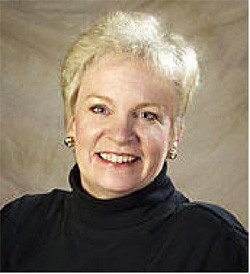 Dr. Mary C. Vernon is worthy of the title "Diabetes Educator Of 2007" Dr. Mary C. Vernon is worthy of the title "Diabetes Educator Of 2007"Of all the health issues we currently face in the world today, there is one that rises to the top of the list to rival even obesity as an out-of-control epidemic. That would be the mostly preventable but now all-too-common occurrence of Type 2 diabetes. It is estimated that there are currently 73 million Americans who are either diabetic or pre-diabetic with healthcare costs associated with this disease adding up to $132 BILLION in 2002 alone. The prognosis is grim, but the good news is there are people who are standing up to be counted and they're not giving up without a fight. While organizations like the American Diabetes Association (ADA) are giving diabetics a free license to consume foods that will knowingly impact their blood sugar levels negatively as long as they obediently "take their medicine," it's good to know there are REAL leaders who understand the need for some sanity in a world that's looking more and more insane each and every day. One such leader in the diabetic world exists-- DR. MARY C. VERNON. Dr. Vernon is an unsung hero in my book. She is a board certified bariatric physician with a private practice located in Lawrence, Kansas. In 2004, she collaborated with Jacqueline Eberstein on the bestselling Atkins Diabetes Revolution book from Harper-Collins. Her current leadership position as the President of the American Society of Bariatric Physicians (ASBP) has earned her the respect and admiration of her peers, including a nod as Bariatric Physician of the Year in 2005. Her research into diabetes has been published and appeared in some of the most prestigious medical journals in the world, including the American Journal of Medicine as well as Metabolic Syndrome and Related Disorders. Her zeal and enthusiasm for livin' la vida low-carb as a means for weight and health management make her a true pioneer for alternative methods for treating patients. I have been truly honored to have had the opportunity to interview and meet Dr. Vernon not just once, but twice--first at my blog and most recently on my podcast show. Her "Ask Dr. Vernon" blog provides unprecedented public access to one of the nation's most foremost diabetes experts as she answers reader-submitted questions about a controlled-carbohydrate nutritional approach for managing diabetes. Dr. Vernon has appeared on television supporting low-carb as a treatment option for diabetes and was instrumental is the release of some especially eye-opening research out of Duke University that showed the Atkins low-carb diet can lower A1C numbers and stabilize blood sugars sometimes without the use of drugs or insulin in Type 2 diabetics. And in November 2006, Dr. Vernon was propelled into the national spotlight when she was featured in an article about diabetes control in Men's Health magazine. In other words, Dr. Vernon is the real deal. She doesn't just talk a good game (although she is quite articulate about how low-carb living can help improve obesity and diabetes), but she sees results in the thousands of patients who come through her Kansas clinic. If anyone deserves recognition and the honorable distinction of "Diabetes Educator Of The Year," then I can think of no one better suited for that title than Dr. Mary C. Vernon. That's why I hereby nominate her for that prestigious distinction among her peers and I want to encourage the faithful readers of the "Livin' La Vida Low-Carb" blog to join me in voting for Dr. Vernon for this honor. The winner will be featured in an upcoming feature story for Diabetes Health magazine which is read by many of the ADA-indoctrinated. Let's show them there is a better way by highlighting the success that Dr. Vernon is having with low-carb. To submit your nomination for Dr. Mary C. Vernon, go to the "Diabetes Educator Of The Year" nomination form and fill out the form. Keep in mind you only need to fill in the blanks with a yellow star next to them, so don't worry about filling in any of the other blanks. Feel free to share up to 250 words in the box provided explaining your nomination. But just share from your heart why she deserves this distinction. Wanna see what Jimmy Moore wrote about Dr. Vernon? :) In the sometimes contentious field of diabetes care, there is one person who has risen to the top of giving diabetics an extremely effective alternative from the usual methods for treating this terrible disease. Her name is Dr. Mary C. Vernon from Lawrence, Kansas.
Although the typical advice recommended by the ADA and most diabetes health providers is a high-carb, low-fat diet, Dr. Vernon is among a minority of voices who believes this advice is absolutely absurd. And she knows firsthand the positive impact that a controlled-carbohydrate nutritional approach is having on the A1C levels of her patients.
Many of those patients are able to either greatly reduce or eliminate their need for blood sugar-controlling medications and even insulin for Type 2 sufferers. This is indeed a miracle for many diabetics who have tried to find a natural way to control their disease. The low-carb lifestyle is changing people's lives for the better!
Dr. Vernon was featured in a major "Men's Health" magazine column in November 2006 for the work she is doing on behalf of diabetics and is a worthy nominee for Diabetes Educator Of The Year.Short, sweet, and to the point--that's all you need to do. It's so super easy and I finished my nomination for Dr. Vernon in only three minutes. Please take just a moment RIGHT NOW to do this because it WILL make a real difference for the cause of livin' la vida low-carb in the realm of diabetes care to have someone like Dr. Mary C. Vernon recognized for the tireless work she has invested into spreading the positive message with her patients. Be sure to cut and paste your nomination text in the comments section of this post so we can see the impact we are making on this nomination. With literally thousands of visitors each and every day, we can stand together in unity behind Dr. Vernon and give her the big push into the spotlight she deserves to be a beacon of truth for diabetes sufferers the world over. THANK YOU in advance for helping with this effort and I'll let you know if she ends up winning this award or not (cross your fingers). You have until November 30, 2007 to submit your entry, but don't delay. Let's flood them with praise and admiration for Dr. Vernon so they will have no other choice but to give her the title of "Diabetes Educator Of The Year." Wouldn't that be AWESOME? It could happen with YOUR help. So do your part TODAY and don't forget to share your entry with everyone in the comments section. Labels: ADA, ASBP, Ask Dr. Vernon, diabetes, Diabetes Educator Of The Year, Diabetes Health, Mary Vernon, nomination, Type 2
A Good Old-Fashioned Low-Carb Roundup
What a week for conglomerated low-carb blogging with this and this post wrapping up some of the latest news and headlines in the world of low-carb living. Well, I'm still in busy mode and have so much to share with you, I barely know where to begin. So let's just have ourselves a good old-fashioned low-carb roundup! YEE HAW! INSPIRED BY DIABETES WANTS YOUR CREATIVE SUBMISSIONSThere's a really neat contest sponsored by the diabetes awareness web site located at InspiredbyDiabetes.com. What they are looking for are submissions by people who have been touched by diabetes that shares their story through some form of artistic talent, including essays, poems, photographs, drawings, and musical composition. It's called the Creative Expression Competition and they are awarding a Grand Prize of a $5,000 contribution to the diabetes-related charity "Life of a Child" and a trip to the Inspired by Diabetes art exhibition. The deadline for entering is January 31, 2008, but don't delay in sharing YOUR diabetes story in this most unique way! You could even share how livin' la vida low-carb is keeping your disease in check--that'll wake 'em up, don't ya think? :D Winners will be announced in the Spring 2008. DANA CARPENDER DISCUSSES EXERCISE WHILE ON A LOW-CARB DIET If you exercise, then you need to eat your carbs right? Well, not so fast says low-carb expert Dana Carpender in her latest nationally syndicated column entitled "Keeping up your stamina while lowering your carbs". The bottom line is unless you are training for athletic competition (like this Olympic athlete who recently e-mailed me), then you DON'T need to "carb up" prior to exercise. Read what Dana has to say about people who are wanting to get in a little physical activity while on their low-carb lifestyle. IS WONDER BREAD GOING OUT OF BUSINESS BECAUSE OF LOW-CARB DIETS?Interstate Bakeries, the maker of such high-carb foods like Wonder Bread and Twinkies, is in trouble again after deciding to close up shop in Southern California because of "the low-carb diet craze" (YOU GOTTA LOVE IT!). I've blogged about how livin' la vida low-carb is making Interstate bite the dust (confirmed by this market analysis of their bankruptcy last year) just as it has for Krispy Kreme doughnuts in recent years, too! It's just another sign that the late great Dr. Robert C. Atkins has left an indelible mark on our culture that will continue to be felt for generations to come. THE MIGRAINEUR RAILS AGAINST THE ADA'S POOR ADVICE FOR DIABETICSI think I've found a new favorite blog for you to check out: The Migraineur. I only recently discovered this AMAZING blog because of an awesome post chastising the American Diabetes Association (ADA) for being "no friend of the diabetic." WHOA! Why have I never heard of this blogger before?! WOW!!! I think the following quote from the blog post says it all: "If you wanted to deliberately devise a diet that would cause a diabetic to die a slow, painful death, you couldn’t do better than the diet currently recommended by the ADA. The organization’s insistence on a high-carbohydrate diet, in the face of mounting evidence that diabetes is better managed by limiting carbohydrate consumption, would be laughable if it was not endangering the health and the very lives of the people it claims to advocate for."This is something I've recently blogged about and even highlighted comments made by low-carb researcher Dr. Richard Feinman along the same lines. The Migraineur blogger says it was that New York Times article by Gary Taubes that led him to start livin' la vida low-carb! Yet ANOTHER reason to Celebrate Gary Taubes Week! IS THE FDA FORCING CHOCOLATE MAKERS TO USE VEGETABLE OIL, NOT COCOA BUTTER?In one of the most bizarre food stories I've seen in a while, it appears the geniuses at the Food & Drug Administration (FDA) have put out a call to the major chocolate companies letting them know they need to replace the cocoa butter in their chocolate with vegetable oil. Have you heard about this? It's in response to some industry groups who are afraid of the saturated fat content in cocoa butter causing health problems as well as making it cheaper for the consumer. But THANK GOD at least ONE company has told the FDA where they can shove it: Mars, makers of Snickers and M&M's. This isn't about making better products, it's about reducing quality just to make things cheaper. That doesn't make it better and they had better not mess with my favorite sugar-free, low-carb chocolate bar made with cocoa butter! 900-POUND MAN NEEDS FORKLIFT, FIREFIGHTERS TO BE RESCUED FROM HOMEHave you seen the opening scene of the Adam Sandler movie I Now Pronounce You Chuck & Larry? There's a burning building and a frantic woman cries for someone to help save her baby who's still trapped in the apartment. When they reach the kid, it turns out this "baby" is a morbidly obese 700-pound man who is bedridden. The scene is pretty hilarious with the firefighters, played by Sandler and Kevin James, getting crushed under the weight of the man while trying to save him. That scene flashed across my mind as I read this story about a group of firefighters in Lansing, Michigan who had to chop a hole in the side of a 900-pound man's house to rescue him after a nurse said he needed medical help as soon as possible. They even had to implore the use of a forklift to get the 33-year old man out. It turns out he has a rare condition called Prader-Willi Syndrome like the infamous obese 8-year old named Connor McCreadie does. This story reminded me of the 500-pound truck driver who also had difficulty getting rescued by emergency workers because of his weight in July. It's so sad to hear the helplessness of people like this and it makes you wonder if these traumatic experiences make ANYTHING click inside their mind to finally get their weight and health under control. You have to wonder. BARILLA PASTA COMPANY NO FRIEND OF THE LOW-CARB LIFESTYLESome people in the low-carb community have hailed the Barilla brand of whole wheat pasta as an excellent alternative to regular pasta for people on a low-carb diet. But have you seen this diatribe on the dangers of low-carb dieting posted right there on their web site? It's obvious to anyone with half a brain that their "concerns" are nothing more than the same old tired excuses that have been proven to be myths time and time again. For that reason alone, I would say AVOID Barilla and just stick with the good stuff-- DREAMFIELDS! Well, that's about it for now, but I still have lots more to share with you as I continue catching up to so much stuff to blog about this week. THANK YOU for your devoted readership of my "Livin' La Vida Low-Carb" blog and I look forward to your feedback on these stories. Come talk about them at my forum, too! Labels: ADA, Barilla, chocolate, cocoa butter, Dana Carpender, diabetes, Dreamfields, exercise, Gary Taubes, Interstate Bakeries, low-carb, morbid obesity, pasta, The Migraineur, vegetable oil, Wonder Bread
|


