|
PLEASE UPDATE YOUR BOOKMARKS TO LIVINLAVIDALOWCARB.COM/BLOG
Attention Low-Carbers: USDA Now Taking Nominations For 2010 Dietary Guidelines Advisory Committee
There are some very exciting things happening behind-the-scenes in Washington, DC right now as it relates to the next USDA-recommended Food Pyramid and Dietary Guidelines set to be released in 2010. As I blogged about in December 2007, President George W. Bush named Cornell University psychologist Dr. Brian Wansink (author of the bestselling 2007 book Mindless Eating) to head up the U.S. Department of Agriculture's Center for Nutrition Policy & Promotion. I was greatly encouraged by this appointment of Dr. Wansink because he has been very open to the low-carb message being heard for people like me out there who need to "lose a lot of weight on a serious diet." In that blog post I wrote about his new leadership position over the 2010 nutritional recommendations, I was very hopeful and expectant that Dr. Wansink would continue to have those open lines of communication with the experts in the low-carb community to give their input about what should be included in the next updated Food Pyramid. "It should be thrilling to know that there will now be someone within the USDA who isn't antagonistic against livin' la vida low-carb," I wrote in that December 2007 post. "Hopefully this open line of communication between Dr. Wansink and the low-carb message will remain that way while discussing the 2010 dietary guidelines."So, imagine my delight when I saw this notice from the USDA (Note: this links to a PDF file download) requesting nominations for the new Dietary Guidelines Advisory Committee. Yes, that's right! They're taking nominations for who we think should be on that committee. This is open to any citizen of the United States to submit their choice(s) for who would be best qualified to serve in this capacity. Dr. Wansink's appointment is through January 20, 2009, so there is little time to waste. That's why the nominations will only be considered through May 24, 2008. In other words, time is of the essence here. If you care about seeing the low-carb nutritional approach represented on this dietary recommendations panel (and you undoubtedly do if you read my blog!), then the time for action on this is RIGHT NOW! And we need to spread the word to everyone we know to do the same. These new dietary guidelines are reviewed every five years and are supposed to reflect the latest research studies regarding diet and health to better inform the public about how to eat for managing their weight and health. The previous Food Pyramid in 2005 was an improvement upon the past ones, but was still sorely lacking any concept about the negative role of carbohydrate and the increasingly passive role of dietary fat, including saturated fat, in the American diet. We NEED people who understand this connection to be seated on this committee for the sake of the future health of the American people. The low-fat lie has dominated the official government dietary guidelines since its inception in 1980 and we need to make some crucial changes in this policy if we're gonna get serious about this issue before it is too late. Haven't we suffered with the high-carb, low-fat message long enough? Will we continue to put up with such blatant disregard for the overwhelming evidence and real-life changes that are happening thanks to the healthy low-carb lifestyle? I'M NOT! What is this committee actually gonna be doing? They will first look at the 2005 dietary guidelines and determine if any changes are necessary based on "a thorough evaluation of the most current scientific literature." If sufficient evidence is found to make changes, then new guidelines will begin being discussed by the Dietary Guidelines Advisory Committee in the Fall of 2008 through a series of two- or three-day meetings over a period of time. These meetings are open to the public as required by federal law. The Secretaries of Agriculture ( Ed Shafer) and Health and Human Services ( Mike Leavitt) will oversee the reports from this advisory committee which will be led by Dr. Wansink. So, naturally, he will want to surround himself with the best possible candidates for this vital public health policy position. But who qualifies? They are looking for people who are "knowledgeable of current scientific research in human nutrition and be respected and published experts in their fields." Additionally, according to the notice from the USDA, candidates for the advisory committee also need to be "familiar with the purpose, communication, and application of the Dietary Guidelines and have demonstrated interest in the public's health and well-being through their research and/or educational endeavors." Here are the specific areas of expertise they want to be represented on the panel: - Chronic Diseases such as obesity, Type 2 diabetes, and cancer - Energy Balance issues involving exercise - Epidemiology - Food Safety and Technology - General Medicine - Gerontology - Nutrient Bioavailability - Nutrition Biochemistry and Physiology - Nutrition Education - Pediatrics - Public Health - Evidence Review Methodology I can think of quite a few qualified people who meet and surpass this criteria required by the USDA to appear on the Dietary Guidelines Advisory Committee. I'm officially offering the following five names up for consideration to be nominated for this all-important position at the U.S. Department of Agriculture's Center for Nutrition Policy & Promotion: 1. Eric C. Westman, M.D., M.H.S from Duke University 2. Mary C. Vernon, M.D. from The University of Kansas 3. Richard D. Feinman, Ph.D. from SUNY Downstate 4. Stephen Phinney, M.D. from The University of California-Davis 5. Jeff S. Volek, Ph.D. from The University of Connecticut There are many more who fit the description of what the USDA is wanting for this distinguished panel, but any or all of these five individuals are more than qualified to offer all the evidence the committee wants about the low-carbohydrate nutritional approach and its impact on health. At the very least, we need a minimum of one of these low-carb experts to be placed on the Dietary Guidelines Advisory Committee. Here's what you need to do to nominate someone: - Write a letter of nomination stating the name and affiliation of the nominee, why that person deserves to be nominated for this position, and a statement that the nominee would indeed be willing to serve (I have spoken with each of these five individuals I am nominating and they are all willing to serve if selected) - Provide your name, address, and daytime telephone number along with the name, address, telephone number and e-mail address of the nominee (much of this information can be found at the links provided above--if you provide their name and the school they are located at, then that should be enough information for them to contact the nominee) - Share a copy of the nominee's curriculum vitae or resume (again, this information can be found at the links I provided above for each nominee) When you gather all of this information, simply e-mail it to DG2010Nominations@cnpp.usda.gov no later than Saturday, May 24, 2008. You can also submit nominations via snail mail to Carole Davis, Nutrition Promotion Staff Director, Co-Executive Secretary Guidelines Advisory Committee, Center for Nutrition Policy and Promotion, U.S. Department of Agriculture, 3101 Park Center Drive, Room 1034, Alexandria, VA 22302. Or you can also fax your nomination to (703) 305-3300. If you have any questions about this process, simply call (703) 305-7600. If you need any additional information about these candidates after you nominate them, then please don't hesitate to e-mail me and I'll be happy to get what you need. We all need to do this for the sake of our nation's future health policy. Don't put it off thinking there will be others nominating--MAKE YOUR VOICE HEARD LOUD AND CLEAR! We NEED to get a low-carb expert on this panel, so our unified voice behind these nominees will go a long way! By the way, I am attempting to arrange a podcast interview with Dr. Brian Wansink and he has been in contact with me about this. Hopefully I will be able to conduct this interview soon and put a bug in his ear about having a low-carb researcher/practitioner serve on the Dietary Guidelines Advisory Committee. You just don't know how HUGE it would be to have a Westman, Vernon, Feinman, Phinney, or Volek on this committee--these are the people in the low-carb research world who are making the rest of the scientific community stand up and pay attention to the high-fat, low-carb diet again. Won't you do your part to nominate them TODAY? THANK YOU!!! Labels: Brian Wansink, Center For Nutrition Policy and Promotion, dietary guidelines, Eric Westman, Food Pyramid, Jeff Volek, low-carb, Mary Vernon, research, Richard Feinman, Stephen Phinney, USDA
'Livin' La Vida Low-Carb Show' Episode 136: Feinman Encourages Low-Carb Diabetics To Contact The ADA, Congress
 The brilliant Dr. Richard Feinman with his assistant Lauri Cagnassola The brilliant Dr. Richard Feinman with his assistant Lauri CagnassolaPicking up where we left off in Part 1 of my interview with Dr. Richard Feinman in my series from the American Society of Bariatric Physicians and Nutrition & Metabolism Society conference in Phoenix, Arizona last month, we've got so much more to share with you today from one of the most ardent supporters of the science behind livin' la vida low-carb today. In Episode 136 of "The Livin' La Vida Low-Carb Show with Jimmy Moore," Dr. Feinman discusses his favorite subject as it relates to carbohydrate restriction--diabetes. You'll hear the fervor in his voice as he speaks about patients sharing their low-carb success stories with the American Diabetes Association and their Congressmen, who he believes should begin immediate hearings on the subject of diabetes care in the United States. Some may think Dr. Feinman is radical for suggesting such a thing, but he may be on to something that you and I can actually help make happen. Click on the "LISTEN NOW" link below or download it to your iPod to hear Episode 136:  "The Livin' La Vida Low-Carb Show with Jimmy Moore" Episode 136 [26:01m]: LISTEN NOW | Download (all fixed now with the links--sorry about that!) If you support what Dr. Feinman is trying to do educating doctors and future doctors about a controlled-carbohydrate diet, then why not join the Nutrition & Metabolism Society today? It costs consumers $25 to sign up and would be a nominal investment in this fight to give low-carb the legitimacy it deserves. CLICK HERE if you are interested in taking livin' la vida low-carb to the next level so that others will have the knowledge to be able to benefit from the low-carb lifestyle in the future without ridicule or scorn. Stay plugged in to experts like Dr. Richard Feinman anytime by: 1. Listening at the official web site2. Calling (818) 688-2763 to listen via Podlinez3. Subscribing to the RSS feed 4. Going to iTunes-- Click here to subscribe! Now that my interview with Dr. Richard Feinman has concluded, are you inspired anew in your low-carb lifestyle and sharing it with as many people as you can? And for those of you who are diabetic, do you now see even clearer what YOU can do to make a difference on the way your disease is treated? Share your thoughts about it in the show notes section of Episode 136. I especially want to thank Dr. Feinman for the generosity of his time for this outstanding interview. But I'm far from through with my interview series. Next week, we'll be hearing from Mary Bissell, the producer of the hit Canadian documentary My Big Fat Diet (which I have blogged about before) on Monday and then an incredibly amazing weight loss blogger named Jennette Fulda from the "Half Of Me" blog talking about her irreverently-titled, but oh-so-inspiring new book entitled Half-Assed: A Weight-Loss Memoir on Thursday. DON'T MISS IT!!! Labels: ADA, Congress, diabetes, Jimmy Moore, low-carb, Nutrition And Metabolism Society, podcast, Richard Feinman, The Livin' La Vida Low-Carb Show
'Livin' La Vida Low-Carb Show' Episode 135: Interviewing The Incredible Dr. Richard Feinman (Part 1)
 I was privileged to meet and interview Dr. Richard Feinman I was privileged to meet and interview Dr. Richard FeinmanContinuing my interview series from the American Society of Bariatric Physicians and Nutrition & Metabolism Society conference in Phoenix, Arizona last month, I'm happy to share another fabulous one with one of the true giants in the world of low-carb research-- Dr. Richard Feinman. Brilliant, impassioned, and focused all aptly describe this truly amazing man. In Episode 135 of "The Livin' La Vida Low-Carb Show with Jimmy Moore," listen to Dr. Feinman share about the nutritional aspects of biochemistry to his medical school students at SUNY Downstate in Brooklyn, New York. Pay close attention not just to what he says, but also the intensity in his voice about how low-carbohydrate diets deserve to be given a chance to become more mainstream for the sake of improving people's health. Click on the "LISTEN NOW" link below or download it to your iPod to hear Episode 135: "The Livin' La Vida Low-Carb Show with Jimmy Moore" Episode 135 [25:12m]: LISTEN NOW | DownloadRichard Feinman is actively trying to drum up support for livin' la vida low-carb both on the scientific level as well as the professional level. Scientifically, he is the co-editor-in-chief of the Nutrition & Metabolism journal where much of the most cutting-edge low-carb research is shared. Bookmark that page and visit often for some truly fascinating data. Professionally, Dr. Feinman is president of the Nutrition & Metabolism Society where they give a voice to the benefits of the low-carbohydrate nutritional approach for fighting obesity and disease. You should consider purchasing a consumer membership for just $25 a year if you support the mission of this great organization. Hear the Dr. Feinmans of the world anytime by: 1. Listening at the official web site2. Calling (818) 688-2763 to listen via Podlinez3. Subscribing to the RSS feed 4. Going to iTunes-- Click here to subscribe! What are your impressions of Dr. Richard Feinman so far? Isn't he an amazing ambassador for livin' la vida low-carb? Talk about it in the show notes section of Episode 135. Come back on Thursday for Part 2 of this exciting interview with a low-carb giant. Labels: interview, low-carb, podcast, Richard Feinman, The Livin' La Vida Low-Carb Show
Does Ketosis Cause An Internal Rise In Body Temperature?
 Low-carb burns fat, but can it lead to extra body heat?Ooh, ooh, ooh, Low-carb burns fat, but can it lead to extra body heat?Ooh, ooh, ooh,
I feel my temperature rising
Help me, I'm flaming
I must be a hundred and nine
Burning, burning, burning
And nothing can cool me
I just might turn into smoke
But I feel fine--Elvis Presley singing "Burning Love"Somebody's turned up the heat up in here and it's gotta be that low-carb diet I'm on, right? That's what everybody does with livin' la vida low-carb when something new happens to them after starting this way of eating--they blame it on low-carb! I mocked this notion in this blog post about an earache a couple of years ago, but what if there is merit to some rather strange side effects of following a controlled-carbohydrate nutritional approach? Hmmmmmm. There are several things we KNOW will happen to most people when they begin the low-carb lifestyle: their HDL "good" cholesterol goes up, there is a marked improvement in mental health, for women it helps with reproductive health, blood sugar levels are stabilized, they end up having less acne, triglycerides plummet (a VERY good thing!), and so much more I could spend hours sharing with you about. But there are some things that can vary from person to person as one of my readers shared with me in a recent e-mail. This 43-year old man starting cutting his carbohydrate intake beginning in January 2008 and has lost over 25 pounds so far. WOO HOO! He has really enjoyed this new low-carb lifestyle change, but was curious about an unexpected side effect that has been plaguing him with no apparent cause. Here's what he wrote: Hey Jimmy,
After lots of searches, I'm having trouble finding out if anyone experiences a sensation of a rise in body temperature while in ketosis. There are some days I feel like I am literally burning up (but I don't have a fever or anything). Coincidentally, usually the next day after this happens, I am down another pound. It's like the hotter I feel, the faster I lose weight.
Is this a side effect of my body burning stored fat and an increase in my metabolism? I'm having a hard time finding an answer in any literature I've read. Thanks for your time!What an awesome question! Before I started livin' la vida low-carb weighing in at over 400 pounds, I was ALWAYS hot. HOT HOT HOT with sweaty palms and underarms all the time. I felt like I was on fire all the time. But when I went on the Atkins diet on January 1, 2004, I noticed very quickly a cooling effect happening within the first few months. At first, it was kinda weird when I wouldn't sweat anymore. I REALLY liked that because it was so incessant for most of my life. But then when I'd shake someone's hand, I could tell my hands were much colder than everyone else. It was as if someone turned the thermostat inside my body down to extreme cold when I started livin' la vida low-carb and it still happens to me to this day especially when I drink a lot of water. And the funny thing is the water doesn't even have to be cold for this to happen. Strange, I know, but that's my experience. So when I read this e-mail asking about getting HOTTER because of the fat-burning effects of ketosis on a low-carb diet, I didn't know what he was talking about since that wasn't anything close to what I dealt with. I had my suspicions about what may be causing it and shared those with my reader: GREAT QUESTION! I suspect the ketosis is causing the rise in your body temperature because of the fat-burning that ensues in this state.But rather than guessing and assuming at what the reason for this is, I decided to throw this question to a handful of my low-carb expert friends to see if they had any insights or practical experiences to share with us about this phenomenon. We'll hear from Jackie Eberstein, Dr. Jonny Bowden, and Dr. Richard Feinman with their responses. JACKIE EBERSTEINJimmy,
I'm at a loss. I've never heard of nor have I experienced this one. As far as I know, there is no mention in research either that I recall. Sorry I can't be more helpful.That's okay, Jackie! Although having worked with Dr. Robert C. Atkins for three decades treating all kinds of patients with a low-carb dietary regimen, I'm surprised something like this hasn't come up at least a few times. Interesting. Let's see what Jonny Bowden has to say. DR. JONNY BOWDENHi Jimmy,
I have never actually heard of that happening, but it absolutely passes the "smell test" to me. In fact, when you stop and think about it, this makes total sense on both an intuitive and a biological level.
I suspect what's happening is that thermogenesis is raised in the body, meaning the furnace temperature is up, fat-burning is accelerated, and that is why your reader is experiencing a temporary rise in body temperature. My guess is you are absolutely right about why this is happening.It certainly makes sense despite my own personal experience. If you are burning fat, then that could cause an increase in heat which leads to an elevated temperature. Finally, let's talk to a biochemist who really knows his stuff--Dr. Richard Feinman from SUNY Downstate Medical Center in Brooklyn, NY and the co-editor of the Nutrition & Metabolism journal. DR. RICHARD FEINMANThere are reports in the literature of this kind of observation by subjects in trials of high-fat diets. Little is known, however, of what controls perception of heat and the relation to food consumption.
The phenomenon of diet-induced thermogenesis or thermic effect of feeding (the old name for this was "specific dynamic action"), however, is well known and it is generally agreed that, at least under experimental conditions, consumption of 20% of protein calories, 5% of carbohydrate calories, and 3% of fat calories is "wasted" in increased heat production.
See, for example this 1984 study:
Karst H, Steiniger J, Noack R, Steglich HD: Diet-induced thermogenesis in man: thermic effects of single proteins, carbohydrates and fats depending on their energy amount. Ann Nutr Metab 1984, 28(4):245-252.
Abstract: The diet-induced thermogenesis of 12 healthy males of normal body weight was measured by means of indirect calorimetry over 6 h after test meals of 1, 2 or 4 MJ protein (white egg, gelatin, casein), carbohydrate (starch, hydrolyzed starch) or fat (sunflower oil, butter). The effect of 1 MJ protein was at least three times as large as that of an isocaloric carbohydrate supply.
In mixed meals there is little agreement because of the small number of studies and the fact that it is so complicated with other factors. For example, drinking cold water will increase heat expenditure. We certainly have the idea, supported by both experimental studies and anecdotal observations, that low-carb diets are less efficient at fat storage and that the missing energy may appear as heat. There is also the idea that the underlying mechanism can be related to ketone bodies but it would be impossible to say whether or not this is the cause in the case described by your reader.So, the jury is still out on the question of whether ketosis brought on by a low-carb diet leads to an increase in body temperature. Has anyone else experienced this on your low-carb lifestyle? Or were you like me and started freezing when you decided to go low-carb? Share your comments about what you've experienced. Are you hot or are you not? :) Labels: body temperature, diet, heat, hot, Jackie Eberstein, Jonny Bowden, ketosis, low-carb, Richard Feinman
Still On Cloud Nine After ASBP/Nutrition & Metabolism Low-Carb Conference
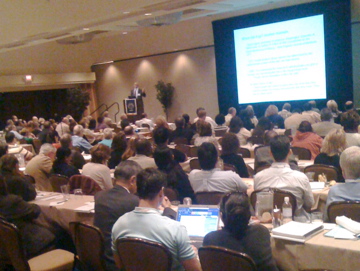 The 2008 ASBP scientific meeting in Phoenix, AZ was amazing! The 2008 ASBP scientific meeting in Phoenix, AZ was amazing!Sitting in a room full of bariatric physicians with lecturers who sometimes sound like they're speaking a foreign language with all the science and medical jargon they spout off isn't exactly the most ideal way to spend a few days away from home. But when all of the top low-carb researchers and practitioners from North America gather in one place to share their latest findings in the world of livin' la vida low-carb, you can't help but get super-excited about what is to come in the future of diet and health as the evidence in favor of low-carb diets continues to mount. What a weekend it was! 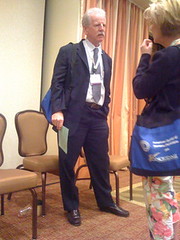 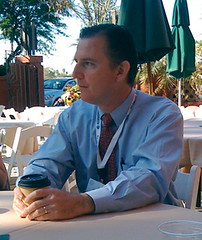 Sponsored by the American Society of Bariatric Physicians, the 2008 Nutrition & Metabolism Society Seminar held in Phoenix, Arizona presented the science supporting the low-carb lifestyle from the biggest names in the world of low-carb research--Phinney, Westman, Vernon, Volek, Feinman, Wortman, Tarino, and German. This year's conference included two half-day sessions on Saturday afternoon and Sunday morning that was in my opinion even better than the one in Nashville, TN last year. 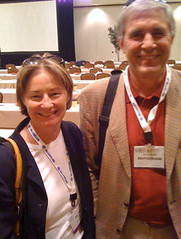 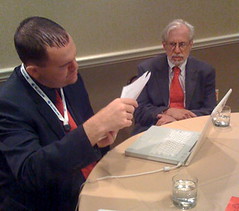 My only regret is that I didn't have a chance to interview more people at the conference than I did. However, I did get in a few outstanding ones in my limited time--Dr. Richard Feinman, director of The Nutrition & Metabolism Society and co-Editor-In-Chief of the Open Access online journal Nutrition & Metabolism, Drs. Mike and Mary Dan Eades from Protein Power (see Dr. Mike's blog post about the conference by clicking here), the producer of the hit CBC-Newsworld documentary film My Big Fat Diet (which we were able to watch on Sunday morning) about a group of First Nations people who returned to their native high-fat, low-carb diet named Mary Bissell, and a 45-minute chat with the author of Good Calories, Bad Calories Gary Taubes. These and MANY more interviews for my podcast show will be coming in the next few months from various people who attended the conference, so get ready. 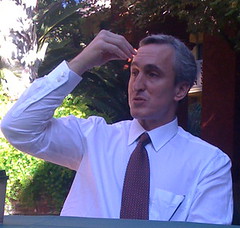 Speaking of Gary Taubes, it was such a pleasure meeting him in person. He's taller than I thought (he said the same thing about me) and could literally talk for hours about this unique role of carbohydrate in the obesity epidemic. You could really sense all the years he has invested in this subject has shaped his thinking about this so acutely that he is now a man on a mission. And he said it on several occasions throughout the weekend that he plans on pursuing this for as long as he has the energy and desire to do it. We need people like Gary Taubes who are unwilling to back down just because the message goes against conventional wisdom. He is certainly on the forefront of a revolution that could very well see a breaking point very soon. I was happy to see many of my fellow low-carb friends and champions of this cause at the 2008 ASBP/Nutrition & Metabolism conference in Phoenix: 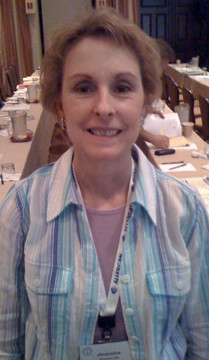 JACKIE EBERSTEIN JACKIE EBERSTEIN, who worked with Dr. Atkins for three decades and is one of the most knowledgeable Atkins diet experts in the world today. 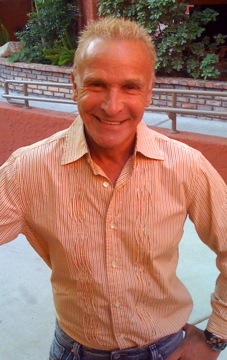 DR. JONNY BOWDEN DR. JONNY BOWDEN, author of Living The Low-Carb Life and various other books on nutritional health. It was a genuine surprise to see him there and he didn't even recognize me at first when I was speaking with Dr. Jeff Volek. Jonny greeted Jeff and started to walk away when I said, "Hey Jonny, it's Jimmy Moore!" The look back on his face was priceless! :) THANKS Jonny!  CASSANDRA FORSYTHE CASSANDRA FORSYTHE, who described herself as "Jeff Volek's slave" (she works with him at the University of Connecticut) was there as well and we got a few minutes to chat about the future of low-carb (read her blog post about the weekend by clicking here). She is certainly one of the rising stars in low-carb research and a name you will be hearing a lot more from in the coming years long after the old-timers have since passed on. She was a lot shorter than I expected, but I'm sure she could still kick my butt! :P 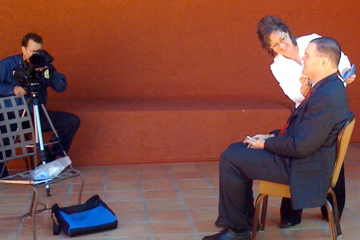 It was a real pleasure meeting Melanie Vogan from Atlanta Teleproductions, Inc. who was filming various interviews with people behind the scenes in the world of low-carb and I was honored to be a part of that. Melanie and her husband snagged a whole bunch of footage from everyone to piece together a documentary about the healthy low-carb lifestyle. I'm excited about this chance to share low-carb living in such a positive manner and Melanie is just the person to do it. She's fully committed to using her talents in the video broadcasting realm to make it happen. We'll be hearing more from her in the future and I'll let you know when the documentary will be available.  The days went kinda like this: wake up, go to breakfast (they weren't the best in the world considering this was an OBESITY conference), listen to a few lectures, take a break, listen to a few lectures, a time for questions and answers, go to lunch (which weren't any better than the breakfast!), listen to a few lectures, take a break, listen to a few more lectures, ask more questions from the speakers, and then go on your own for supper where most of us hung out at the Lantana restaurant each night just to chit-chat about whatever (the supper menus were the best--check out what I ate during this trip at my menus blog). Sounds riveting, doesn't it? Actually, YES IT WAS!!! When you get to come face-to-face with all these people you blog about, this is a VERY big deal. I liken it to being at the Super Bowl (which ironically was in Phoenix this year!) for fans of livin' la vida low-carb.  It was kinda cool sitting across from Dr. Eric Westman and Dr. Mary Vernon while sitting next to Drs. Mike and Mary Dan Eades for supper (in fact, Dr. Mary Dan couldn't finish her steak, so I happily obliged!). Rubbing elbows and listening in to the conversations that went on was absolutely priceless. I can't wait to share some of the findings that were presented at this conference as well as my interviews because it was a fabulous time for Christine and I to get away despite the hacker who brought down my forum just before I left.  Although I didn't get to hang out with her as much, I was happy to see my friend and fellow blogger Laura Dolson from the About.com Low-Carb Diets site (you can read her comments about the Phoenix event by clicking here). We had a chance to talk briefly on Saturday night, but I would have loved to been able to talk some more. There just wasn't enough time in the weekend to fit it all in! The weather was certainly a shock to my system going from a cool, humid climate here in South Carolina to the hot, dry climate in Arizona. On day two when I was planning on several interviews with people, I totally lost my voice. My nasal passages were like the Sahara desert and my groggy voice was only soothed after several hot lemon tea sips and constant water helped lubricate the voice box again. Whew, I hated that feeling and would never make it living in Phoenix, Arizona. But it was a fun place to visit and meet several of my readers who live there. 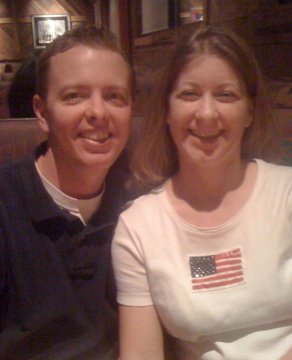 Dave and Kelly Damron (author of the book Tiny Toes and the blog Twin Peas) were very kind to pick us up from the airport and take us back on Sunday. I've had my nightmare experiences with cabs in New York City, so Kelly helped prevent that from happening in Phoenix. We enjoyed meeting up with them for dinner on Saturday night and talking about our failed IVF cycle experience in December. This is what Kelly dedicates herself to like I do low-carb, so it was kinda cool having someone who has been through it and survived despite great odds. Dave and Kelly both commented how well Christine and I have handled our situation and I told them it has only made us stronger as a couple. THANK YOU Kelly for all you are doing and I wish you and Dave all the best raising those little twin female munchkins. :) Hope to see you again someday.  One of my longtime blog readers Jeri Sessler met with us on Friday and we had a blast just chatting it up over lunch. Jeri is such a sweetheart and I'm glad we got to meet her and spend a few minutes enjoying each other's company. What a delightful lady! We also met a relatively new fan of the livin' la vida low-carb concept who makes her own YouTube video series called the Monkaboo Project. Monyka is a real trip! I appreciate her engaging personality and it really shines through in person just like it does in her videos. We agreed to do a little segment for her latest video that I think you'll enjoy. That was a lot of fun! ;) All in all, it was a superb few days in Phoenix and I'd like to personally thank The American Society of Bariatric Physicians for extending an invitation to me and Christine to attend. We appreciate the privilege of coming to events like this despite having no background in medicine or nutrition. Anyone who is interested in the subject of weight loss, diet, and health needs to know about the fabulous work of ASBP as well as the Nutrition & Metabolism Society. Dr. Vernon was commenting about how the Nutrition & Metabolism portion of the week tripled from what it was in Nashville last year. This is real progress and I expect the numbers will continue to rise each year as the evidence keeps building and building in favor of low-carb dieting for weight and health management (and diabetes was a HUGE focus of many of the researchers as they see this as the primary front for legitimizing low-carb once again to the general public). Here's my take-home message from this conference--get involved, take the passion you have for what you believe in, and make a real difference in the world. I'll be blogging more about some specific things you can do to put some grassroots feet to spread the word. Let's just say it's time to turn up the heat on Congressmen in Washington, the American Diabetes Association, the American Heart Association, and anyone else who needs to listen to the low-carb message in a clear, unbiased manner. I have been inspired to begin working on a major project to help facilitate this. Stay tuned for many amazing things to come on this front! Now it's time to get caught up on e-mails, bringing my forum back online again, and, oh yeah, SLEEP! :) Labels: Cassandra Forsythe, conference, Eric Westman, health, Jonny Bowden, Kelly Damron, low-carb, Mary Vernon, Nutrition And Metabolism, Phoenix, research, Richard Feinman, science
Can You Actually Get Fatter On A Low-Carb Diet?
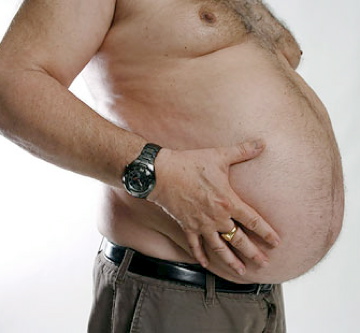 We all know low-carb is great for weight loss, but can you gain? We all know low-carb is great for weight loss, but can you gain?When people first start livin' la vida low-carb and come to me with all their wide-eyed inquisitive questions about this and that regarding this truly amazing lifestyle change, I am always happy to share from my own experiences eating this way for the past four years as well as asking some of my low-carb expert friends who are studying, researching, and working daily within the scientific community into why and how the low-carb diet works so well to help people lose weight and improve their health. One question I received from a reader in the Netherlands has been partially addressed before in a previous blog post. Longtime readers may recall in December 2006 I wrote a blog post entitled "Can Low-Carb Evolve Into Making You Fat?" It was about a ridiculous study done on caterpillars fed a high-protein/low-carb diet that claimed that their metabolism actually changed over time to begin storing the few carbohydrates they did eat into fat. Preposterous to say the least and many of my low-carb expert friends agreed. But what if it was possible that livin' la vida low-carb could actually make you fatter somehow? It this even within the realm of possibility? That's what my reader wanted to know when he sent me the following e-mail: Hi Jimmy,
I've been reading all the low-carb/high-fat diet books including Good Calories, Bad Calories by Gary Taubes and I'm following all the major low-carb blogs, too. Of course, I am applying what I've learned and started with The TNT diet from Dr. Jeff Volek and Adam Campbell ever since late October 2007. So far, I have lost 9 kilograms in 3 months and 10 centimeters from my waist. However, ever since I hit that weight of 87 kg, I have been stuck there. So, I have a question for you:
Is it possible for you to actually get fatter on a very low carb diet?
I am like you--I really can't tolerate more than 50 grams of carbs a day. So I only eat avocados for my fruit and I eat the right kind of vegetables. For the rest I eat all kinds of fatty fish (herring, salmon, sardines) as well as beef and pork. I also like sugar-free whipped cream and sometimes I eat mixed natural nuts. I think that's 50-60% fat and the rest is protein with the vegetables. I also take a good multivitamin, fish oil, and potassium.
So I'll ask it again: Is it possible to store fat with such a diet? I measure myself every now and then and my waist size can fluctuate from 84 cm to 89 cm. That's happened a lot lately. I travel a lot visiting clients and I only eat nuts with some cranberries. But that has resulted in the extra centimeters.
Can you eat too many calories on low-carb? As far as I can tell, I never eat much more than 2500 calories (most of the time it's more like 2100) and I am 6'2" and weigh 87 kilograms. For exercise, I run three times a week for an hour.
As I understand it, Gary Taubes says being overweight is NOT caused by eating too many calories, but is caused by too much insulin released in the body from eating too many carbs. So why am I getting fatter?WOW, what a loaded question and one that is certainly worth taking up as an important topic again here at my blog. I've addressed this sensitive subject of weight gain while on low-carb before and I even talked this week about how my weight has gone up by about 30 pounds ever since I started weight lifting in December 2007 (thanks to everyone who has offered their various opinions about this, by the way! I really appreciate it!). But can you REALLY get fatter on a low-carb diet? Is it metabolically possible to gain weight while eating this way? To answer this question, I asked one of the most knowledgeable and highly-respected low-carb scientists of our day Dr. Richard Feinman from SUNY Downstate in Brooklyn, New York and Co-Editor-In-Chief of Nutrition & Metabolism to answer my reader's question. Here's what Dr. Feinman wrote: Gary Taubes' position is an exaggeration. The way we describe it to medical students is that insulin (via carbohydrate) is like the handle on a faucet. The handle regulates the flow from dietary fat into stored fat. If you turn down the handle, the flow is drastically reduced but if you supply enough fluid pressure from the reservoir, you will increase the rate through the faucet--it's not a perfect analogy but you get the idea.
Remember that there is always insulin--whereas insulin turns off production of glucagon (the hormone that signals low glucose). And glucagon turns on insulin production. For many people--my guess is probably half the male population--keeping carbs low makes it very hard to overpower the inhibition in the fat storage mechanism but for some people the level of total calories that is required to continue to lose weight may be very low indeed.
The impact of the ideas behind Livin' La Vida Low-Carb is that fat plays a passive role and that its disposition (storage or oxidation) is controlled by insulin and other hormones which are control elements--it does not mean, however, that fat is not important. You can overpower a low carb diet and, depending on your age, 2500 calories may be a limit on weight loss.
On the other hand, from a practical standpoint, the real advantage of Livin' La Vida Low-Carb is that you don't have to think about food all the time and maintaining your weight is actually a real accomplishment. There are some tricks that may help--I have observed anecdotally and Dr. Mike Eades (from Protein Power) saw this regularly in his clinic that the three things that look okay on a low carb diet but may actually be trouble are cheese, nuts, and peanut butter. But if you are living in the Netherlands, giving up gerijpte Gouda (is that the right term?) might be a major sacrifice.
Hope this helps,
Richard D. FeinmanTHANK YOU Dr. Feinman for that explanation. I appreciate the fact that you acknowledge for about half of us, watching calories may be necessary while restricting carbs may be necessary to lose and/or maintain weight loss. I've never personally counted calories while on the Atkins diet, but I know many of my readers who have to if they want to see success on their low-carb lifestyle. It's also important that you stated that "fat plays a passive role" in your diet and that eat too much of it can pile on the calories for those who need to be mindful of their total caloric intake. Outstanding information! At the same time, your belief that eating low-carb makes it so you don't have to think about food is dead on the money. Listing those three culprit carb foods--cheese, nuts, and peanut butter--is gonna help so many people (myself included!) improve their low-carb weight maintenance plan immensely. Although I don't eat peanut butter (not the ones that are loaded with sugar, though), I have consumed my fair share of cheese and nuts. Perhaps it's time for me to cut back on these things. :) The response provided by Dr. Feinman was very much appreciated by my reader who answered back with his gratitude about his inquisitive question: Thanks Dr. Feinman,
In my case, I guess it's nuts and cheese (I don't eat peanut butter) because I observed that especially when I ate many nuts and also in the case of a lot of cheese I immediately stored fat around my waist. But I thought all the time: "This can't be true, because fat doesn't trigger insulin, so why am I getting fatter anyway and I read in many low-carb books that the amount of calories don't matter."
At the beginning of my low-carb lifestyle in the first few months, I really could eat all the fat I wanted. But ever since January 2008, I suddenly noticed a big difference: I was gaining fat/weight with exactly the same diet as the three months before and in those months I had lost weight!? So that was the riddle: how can one first lose fat/weight and after 3 months start gaining fat/weight with the same diet?
I love to eat and a lot of it and again that was no problem the first 3 months of Livin' La Vida Low-Carb (what a sensation: eating a lot and losing fat!). But what a disappointment that suddenly I had to watch the amount of calories and now I am convinced it's the nuts and cheese. So that's how one can be blinded by an idea. And although I saw the difference, I just couldn't believe it, because all the books say you can eat all what you want as long it is fat and some protein and vegetables.
So thanks a lot, and yes some cheese we call "gerijpt" but that's a bit old. I prefer the younger cheese, because it's fattier. Thanks Jimmy, I appreciate your help with this a lot. You once wrote in your blog that you reply to all e-mails and indeed you do!It's my pleasure, my friend. THANK YOU for your question and I hope Dr. Feinman's advice helps you tweak your diet so you start losing again. Remember, even if you aren't losing weight while livin' la vida low-carb, the improvements you are making to your health are just as if not more important in the grand scheme of things. DON'T GIVE UP HOPE! You're doing fantastic and are well on your way to some awesome accomplishments in your life. I'm proud of you! Do you have a question about the low-carb lifestyle that's been bugging you? Never hesitate to e-mail me directly at livinlowcarbman@charter.net. If I don't know the answer, I've got a lot of people who support the work I do here who are more than happy to help. By the way, I'll be meeting Dr. Feinman at that obesity conference in Phoenix, Arizona next weekend, so I hope to interview him for my podcast show. He's one truly remarkable man with a depth of knowledge as deep as anyone else when it comes to the subject of low-carb diets. Labels: cheese, diet, fat, low-carb, Netherlands, nuts, peanut butter, Richard Feinman, weight gain, weight loss
Is Ketosis Necessary On A Low-Carb Diet? Let's Ask The Experts!
One of the most asked about aspects of livin' la vida low-carb has got to the issue of ketosis. There is so much misinformation about there about this very natural state that the body goes through when you are on a low-carb diet (primarily confusing it with a serious condition that diabetics must be careful of called ketoacidosis--NOT the same as ketosis). As such, there may be confusion that lingers out there among my readers who are just learning about this way of eating. In this recent blog post where I provided some "quickie one-liner" responses to some e-mails, I made the following statement: Being in ketosis is like being pregnant--you either are or you're not; regardless of what the Ketosticks show you, if you are eating less than 30g carbohydrates a day, then you ARE in ketosis.One of my readers named Charles Fred decided to respond to my statement which he disagreed with and it gets to the very heart of this issue about ketosis. Here's what he wrote: Your statement reflects today's informed opinion, but my article in work, Unified Physiology of the Metabolic Syndrome, has given me an unusual perspective which for the sake of brevity I'll state dogmatically.
Ketosis need not and should not be part of low-carb eating. Low-carb diets should never be labeled as ketogenic diets. Ketosis appears to be an Induction phase of low-carb eating, but in fact it is a last ditch response to inadequate glucose. As such it is either temporary or avoidable.
Low-carb eating is the evolution-derived diet of humans (unlike other primates). Humans are carnivores, hunters, because human evolution happened pre-fire and pre-agriculture when very few carbs were edible. For carnivores, gluconeogenesis in the liver supplies all necessary glucose.
But if someone abruptly switches from high carbs to very low carbs, gluconeogenesis will be inadequate to supply enough glucose - causing weakness, dizziness and ketosis.
Well if gluconeogenesis is supposed to be adequate, why does it fail? When you eat carbs they are stored as glucose (glycogen) in your glucose fuel tank - your liver. When you manufacture glucose from protein via gluconeogenesis it is stored in that same fuel tank, intermingled with those dietary carbs.
Enzymes, including gluconeogenic enzymes, are expressed only as needed. If your glucose storage is kept full by dietary carbs, expression of gluconeogenic enzymes is reduced. Eventually your gluconeogenic machinery becomes atrophied, inadequate to supply 100% of your glucose requirements.
So, contrary to usual practice, the proper way of switching from high-carb to low-carb is to gradually reduce dietary carbs over the course of about a month, inciting gradual rebuilding of gluconeogenic machinery. Then all those Induction woes which convince many that low-carb is not for them are avoided - as is ketosis. Did you get all that? You'll recall I've explained gluconeogenesis before and it's a beautiful metabolic process that allows your body to make its own carbs (glucose) for the body's needs from the protein you consume through the liver. So, therefore, there isn't a real need for dietary carbohydrate at all. But Mr. Fred believes eating too few carbohydrates to the point that your body is in a state of ketosis is harmful to your body and that a more gradual progression to lower and lower levels of carbohydrate is needed to keep the body from going through the "shock" of what many describe as the Induction flu. As someone who has gone through this experience and appreciated the benefits of making that "sudden" change, I could not disagree with him more. What do the low-carb experts have to say, though? I decided to pose this theory put forth by Mr. Fred to several of America's most respected low-carb diet authorities and have them respond: JACQUELINE EBERSTEIN, RNNot everyone who suddenly moves from a high-carb intake to Induction will get symptoms. Many make the transition very easily. My educated guess is that at least 50% make the transition easily. Others have only mild symptoms. A few have more severe symptoms that can be managed. I think the transition would be easier for more people if they read the book completely so they know what to expect and how to deal with symptoms.
After years in clinical practice I have only had a few patients that required a slow transition because of such severe symptoms. The Induction phase is important especially to those with a severe carb addiction. It is the fastest way to stabilize the blood sugar, control hunger and cravings and improve many diet related symptoms quickly. It is amazing how many people feel better once they are in ketosis by the 4th or 5th day.
Secondly, the mindset of the dieter is they want progress ASAP to stay motivated especially when having to give up some of their favorite foods. Induction provides that. By slowly lowering carbs many will give up too soon and miss the opportunity to find out how effective low-carb can be.
For people with severe health risks, rebalancing the body with a very low-carb intake can lead to rapid improvements in blood sugar, blood pressure, triglycerides and high insulin levels. Until insulin levels improve some of the other benefits of low-carb can't happen. I have seen many severely disordered insulin and blood sugar results that would take far too long to improve with even 60 or 70 grams of carbs.
Just as one diet does not fit all, one level of carb restriction does not fit all. We are all different. The level of carb intake needs to be the level that works for each person based on what we know about them. Dr. Atkins didn't always start in the Induction phase--some people didn't need it, yet many did and would not have been as successful without it.
Unfortunately, many are still stuck in the mindset that having ketones from fat burning is abnormal and undesirable. We know it is not. Dr. Veech, an NIH researcher, agrees that the negatives about dietary ketosis are misunderstood. REGINA WILSHIREHumans are omnivores--able to survive as carnivore, but thrives as omnivore.
Gluconeogenesis isn't solely a metabolic process induced by carbohydrate restriction; it is a normal homeostatic process to maintain blood glucose, so even those consuming a high carbohydrate diet will utilize it as needed (usually when engaged in high levels of activity or during the period of sleep).
The idea that if you don't use it, you lose it, is an incomplete view--yes the enzymes will be made in lesser amounts if one doesn't rely on gluconeogenesis to fully supply glucose, but to claim "atrophy" sets in is a bit over the top.
Some people do find this approach to be a gentler way to restrict carbohydrate--slowly lowering their intake over a period of time; others do better just going "cold turkey" and reducing carbohydrate below 40g. Both reach the same endpoint--persistent state ketosis and utilization of gluconeogenesis. The idea that one will not induce ketosis (burning fat) doing the former is physiologically not possible--if your carbohydrate is below a particular threshold, you're going to make ketone bodies.
The result of reducing carbohydrate slowly isn't a lack of ketone bodies being produced, but less of them wasted, thus the less likelihood a person will register ketosis on Ketostix. Those who restrict carbohydrate below 40g initially make more ketone bodies than necessary, so they "spill" the excess in urine, saliva and sweat. But someone reducing carbohydrate slowly is also making ketones--just less likely to be spilling excess ketones.
With time the person who reduced carbohydrate below 40g and stays there will also begin to not see any measurable ketones on the Ketostix as they get more efficient at making ketones for energy. There is less wasted ketones, thus less to see on the sticks, as time passes. But, if one is keeping carbohydrate below 40g, they're burning fat for their primary energy source, which means they are making ketones whether they register on the sticks or not.DR. ERIC WESTMANIn most medical terminology, "osis" implies "the abnormal condition of"--like onychomycosis means "abnormal nail fungus," halitosis means "bad breath." Perhaps this is one reason why people unfamiliar with low carb approaches jump to the conclusion that "ketosis" is harmful. If you have no insulin in your body, as in Type 1 diabetes, a potentially life-threatening condition called diabetic "ketoacidosis" can occur. My Duke colleague Will Yancy published a paper looking at the pH in the blood of people on two diets (low-carb vs. low-fat) and did not find low blood pH ("acidosis"), but because the blood bicarbonate was lowered below the normal range we called it a "compensated metabolic acidosis." Another published study by Brehm showed the average level of blood ketones goes down over time.
In our clinic, some people always have ketones in the urine, others never do, other fluctuate back and forth. Dr. Atkins used the phrase "benign dietary ketosis" in his books. I have wondered if it would be better to say: "ketosis without acidosis" or "ketonuria" instead of "ketosis." "Ketonemia", which means "ketones in the blood"
"ketonuria", which means "ketones in the urine."
I don't agree with Charles Fred's point of view. You can see why there might be confusion. If you said "if you are eating less than 20g of carb per day then you are burning fat, or in the fat burning zone, or the 'ketone zone'--apologies to Barry Sears and the Zone Diet--rather than "in ketosis," then this might be technically more correct.DR. JEFF VOLEK This does not make a lot of sense to me. Ketone production and utilization and
ultimately blood and urine levels vary along a continuum. So to suggest it is an
absolute yes or no is not accurate. There is also a diurnal variation and many
other factors that influence their metabolism other than diet (e.g., exercise).
There is also a lot of individual variation in regards to the level of
carbohydrate restriction required to see significant accumulation of ketones. So
I don't see it as black and white.
Gluconeogenesis is more than adequate to supply obligatory glucose needs. How
else would you explain the aboriginal hunting and fishing cultures (e.g., Inuit
of the Arctic and First Nations groups in Canada) who survived for millennia
with little if any identifiable dietary carbohydrate intake? I guess I'm not quite understanding the point of it all.DR. RICHARD FEINMANThere is a continuum of ketosis. In fact, one of the features of ketone bodies is that, unlike other fuels, glucose and fatty acids, they can be present in plasma over a wide range of concentrations. What is true is that Ketostix measure ketonuria which may or may not give you an accurate view of plasma ketone bodies. If ketone bodies are used as fast as they are made, you may never see ketosis. Also, I personally think there may be more aspecs of normal ketone body metabolism than we know about now. There is the idea, for example that glial cells may supply ketones as fuel for neurons:
Guzman M, Blazquez C. Ketone body synthesis in the brain: possible neuroprotective effects. Prostaglandins Leukot Essent Fatty Acids 2004;70(3):287-92.
Ketone bodies make an important contribution to brain energy production and biosynthetic processes when glucose becomes scarce. Although it is generally assumed that the liver supplies the brain with ketone bodies, recent evidence shows that cultured astrocytes are also ketogenic cells. These findings support the notion that ketone bodies produced by astrocytes may be used in situ as substrates for neuronal metabolism, and raise the possibility that astrocyte ketogenesis is a neuroprotective pathway.
This theory from Mr. Fred seems to assume that ketosis is somehow foreign or not part of normal metabolism. It is true that it may take some time to adapt to it but there is no reason to assume that it is inherently undesirable. Human evolution probably had a lot of starvation. The function of ketone bodies is to keep gluconeogenesis from having to supply all necessary glucose because it can be a drain on body protein.
I don't think gluconeogenesis fails. There is just some period of adaptation. If there is evidence for Mr. Fred's theory, then I would be interested. Practically, it may feel better to adapt to low-carb slowly--I think it depends on how much carbs you start out with--but the idea you can be on very low-carb and not be in ketosis has to be tested. I personally doubt it but I don't know.
Ketone body production is under the control of many factors: glucose, insulin, fatty acids, level of oxidative metabolism, etc. I think there is also a time factor. Many people eat one meal a day, are quite happy with it and they may be in ketosis at some point during the day. So, it may be useful for some people to get into low-carb slowly but I don't react well when somebody tells me didactically the proper way to eat. "Proper" usually means the way they do it. CASSANDRA FORSYTHE I don't agree with this man at all. Your body still produces ketones from all the extra dietary fat, and it gets better at doing that and using the ketones as time goes on. In our work at the University of Connecticut, with three months of following a weight loss ketogenic diet all subjects had a decline in urinary ketones over time even though they were eating the same foods and had the same caloric restriction.
What's happening is that the body is getting better at taking up the ketones--maybe ketone receptor unregulation. Also, they all still had ketones in their blood after three months and this was higher than baseline and much higher than those following a low-fat diet. Your body does not have enough metabolic machinery to produce enough of it's own glucose to support all organs (i.e. your heart).
Yes, it's true gluconeogenesis goes up, but most organs don't use it anyway. That's why blood glucose tends to drift up over time.Now that the experts have weighed in on Charles Fred's hypothesis, why not share YOUR thoughts based on your own experience following a low-carb diet. Did you ease into livin' la vida low-carb and have excellent results doing it that way? Or did you do like most of us did, myself included, and go from a high-carb to a low-carb diet overnight? Did you see measurable results doing it that way despite having some temporary unpleasantness? Share your thoughts in the comments section below. Special thanks to all the experts I quoted in this post for sharing their knowledge about this subject of ketosis. On behalf of me and my readers, THANKS SO MUCH! :) Labels: Cassandra Forsythe, Charles Fred, Eric Westman, gluconeogenesis, Induction, Jackie Eberstein, Jeff Volek, ketoacidosis, ketones, ketosis, regina wilshire, Richard Feinman
A Collection Of Low-Carb News To Kick Off 2008
 It's the dawn of a new year, but low-carb hasn't slowed a bit! It's the dawn of a new year, but low-carb hasn't slowed a bit!Waving goodbye to the end of another year simply means it's time to say hello to a new beginning as the calendar year turns over yet again. While 2007 was indeed a year to remember, I'm so looking forward to 2008 and all that awaits people who are contemplating, in the midst of, or head over heels about the amazingly healthy low-carb lifestyle. Good things are happening all the time and it is always a pleasure to share with you the very latest in the wonderful world of livin' la vida low-carb. My commitment to you is to keep doing this in the new year so you'll always stay ahead of the game. In fact, I'm happy to share with you a collection of positive low-carb news right now to help kick off your 2008 the right way. HAPPY NEW YEAR EVERYONE!!! BREAST CANCER MADE WORSE BY HIGH INSULIN LEVELSI've shared with you many times over the past few years how researchers are beginning to see an unmistakable connection between the prevalence and growth of cancer tied to the existence of high levels of insulin in the body. Most notably was this Time magazine article on German researchers using a high-fat, low-carb diet to combat cancer in the most dire of patients with astounding results. Now researchers out of Yale University have found that women with high levels of insulin in their body are likely to develop breast cancer. Although the lead researcher Dr. Melinda Irwin recommends "exercise and eating a diet rich in fruits and vegetables and low in fat," what they need more than anything is a sugar-free, low-carb diet rich in healthy amounts of fat, including saturated fat, to combat and prevent this disease. The problem I have always had with generalized recommendations from people like Dr. Irwin who say we should "eat a diet rich in fruits and vegetables with a low-fat diet" is that it is not backed up by the latest published research and in my opinion is simply a copout for providing guidance about which foods are better. Not all vegetables are good for you (potatoes and other starchy ones especially) and neither are all fruits (bananas alone have 29g carbohydrate in them!). It's nice to see the research is finally showing the detrimental role that insulin is doing to our health brought on by a high-carb diet, but it's high time we start matching up our dietary recommendations to adequately take on these health challenges properly. Share your comments and concerns with Dr. Melinda Irwin about her study by e-mailing her at melinda.irwin@yale.edu. IS THERE REALLY ANOTHER NEW ATKINS DIET BOOK?You may have already heard about this new book, but in case you haven't it is not a misprint. There's a brand new Atkins diet book called The All-New Atkins Advantage: The 12-Week Low-Carb Program to Lose Weight, Achieve Peak Fitness and Health, and Maximize Your Willpower to Reach Life Goals that released on December 26, 2007 and is being marketed as an updated version of the low-carb diet made popular by the late great Dr. Robert C. Atkins. 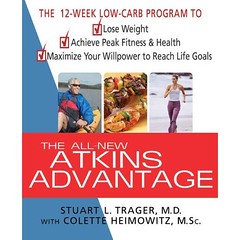 This Atkins book co-written by Dr. Stuart Trager and Collette Heimowitz This Atkins book co-written by Dr. Stuart Trager and Collette HeimowitzI've been reading through this "new" Atkins diet book and the overriding message that I am seeing is that there are different levels of carbohydrate tolerance for each individual and this book will help guide you regardless of the amount of carbs your body will permit you to eat. There are menus for varying levels of carbohydrate intake from 20g a day to 80g a day, so you never have to guess about what to eat. Dr. Trager is a fitness expert who uses his experiences in Ironman competitions and implementing a low-carbohydrate nutritional approach to help others reach their weight loss goals. I've blogged about him previously in this blog post and he devotes a major portion of the book on specific exercises you can do to go along with your Atkins diet. As for Collette Heimowitz, I've interviewed her at my blog before talking about the continuing role of Atkins Nutritionals, Inc. in the realm of diet, health, and nutrition. She has been a long-time supporter of livin' la vida low-carb sharing with others all the research and data supporting low-carb living. I will likely be sharing a book review of The All-New Atkins Advantage as well as some possible giveaways real soon, so keep reading the blog for those updates! This looks to be a good book for anyone needing a little bit of extra hand-holding as you begin the low-carb lifestyle. CAL-CARB CLICKER TO BE FEATURED ON QVCA few weeks ago, my wife Christine and I shared with you some great low-carb gift ideas to share with people who are livin' la vida low-carb on special occasions like birthdays, Christmas, and other such events involving presents. One of those products I told you about was something called the Cal-Carb Clicker which allows you to keep track of your calories, carbohydrates, and water intake all in one device that's super-easy to use. Well, this little gadget is gonna hit the big time on New Year's Eve as the clock strikes midnight to head into 2008 because it will be featured for the first time ever on the QVC television shopping network. If you are up late watching the ball drop in Times Square, then be sure to switch over to QVC to watch Sandy Martucci, one of the two sisters who invented this gizmo, talk about it sometime between midnight and 2 a.m. This thing is expected to blow the doors off of QVC and it's exciting that one of the things it measures is carbohydrate intake. AMAZING!!! If the Cal-Carb Clicker does as well as QVC expects selling at around $12, then they will keep offering it as part of their regular programming. This is excellent news because more and more people are discovering the importance of carb control and this tool will help them keep better track of it. And that's a VERY good thing! :) ARIZONA STATE RESEARCHERS RIP LOW-CARB DIETSAs much as all the evidence keeps pointing to low-carb as being one of the healthiest ways you could possibly eat, I have come to the conclusion that there will ALWAYS be somebody out there who thinks the sky is green. When it comes to the alleged healthiness of a high-carb diet, this guys takes the cake (both figuratively AND literally!). Joining in on the lunacy are researchers from Arizona State University who put out this damning press release against low-carb diets recently that claims (among many things) ketosis from a low-carb ketogenic diet will kill you, your bones will dry up and crumble like a cookie, and your LDL cholesterol will go up so high your arteries will explode! Okay, maybe it wasn't filled with that much hyperbole, but it might as well have since all of those flimsy excuses are the same ones we've heard over and over again for years. What do they recommend instead? Eating a more "moderate" level of around 120g of carbohydrates daily as a STARTING POINT and much more than that if you even dare try to exercise a little. They say your body needs carbs but we know better don't we? It's called gluconeogenesis and is a very natural part of human physiology and metabolism. These pompous, self-proclaimed researchers-- Carol Johnston and Pamela Swan--need to get off their high horse every once in a while to start living in the real world like the rest of us rather than the fantasy land of higher academia! I'm sure they'd LOVE to hear from YOU, so feel free to e-mail them at carol.johnston@asu.edu and PSwan@asu.edu. NUTRITION DATA GIVES LOW-CARB DISCERNMENT ADVICEIf you haven't been to the "Nutrition Data" blog yet, then you are doing yourself a huge disservice because they offer some really fantastic information about diet, health, and nutrition. And they also are quite the fans of livin' la vida low-carb, too. In this recent post about dietary dogma against low-carb diets, an excellent response was provided by Monica Reinagel for people confused about how to discern the good information from the bad as it relates to low-carb studies that seem to contradict themselves (as will frequently happen when the zealots release their biased research while genuine studies show the truth). I especially liked Monica's four tips about what to do for living healthy: 1. Do what works...If a low-carb diet is the only way for you to do it, then the possible risks are probably justified.
2. Consider your health history. If you are diabetic or have metabolic syndrome and have weight to lose, a lower-carb diet may be a better choice.
3. Monitor your risk factors. Regardless of which dietary dogma you ascribe to, have your cholesterol, triglycerides, and inflammation markers (CRP) tested on an annual or bi-annual basis.
4. Don't over-simplify...A diet rich in low-glycemic carbs like vegetables and legumes is not going to have the same negative effects as a diet high in high-glycemic carbs like rice cakes and white bread.See what I mean...don't you LOVE it when you find someone of like mind? In 2008, make it a point to visit The ND Blog early and often! And let Monica hear from you about what you think of her site by e-mailing her at feedback@nutritiondata.com. Speaking of this fabulous web site, I just had to share with you about a recent poll conducted by NutritionData.com that simply asked the question, "What motivates you to eat healthier?" Wanna know what the surprising results were depending on what part of the United States you live in? Check this out: One-third of Americans want to look good (33.3%) and just under a third want to feel better. But the results of the poll showed that Americans have different motivations for eating healthier based on where they live. - Americans living in the Heartland States want to change their diets to lower their risk of diseases like heart disease, diabetes and cancer - People living on the East Coast of the U.S. eat healthier in the hopes that they will live longer - People in the South and on the West Coast try to eat better in order to lose weight and/or look good - Americans on the West Coast change their diets for the better so that they will have more energy What do you think about this? Is it true based on where YOU live? This should be a lively discussion in the comments section. :D A USER-FRIENDLY WEB SITE EXPLAINING LOW-CARB DIETSHave you been looking for a page on the Internet that would accurately describe what the low-carb lifestyle is REALLY all about, explain in simple terms what makes this way of eating so effective, and put it in language we can all understand? Well, look no further than "Why Low-Carb Diets Work" by author Adam Khan. He did a yeoman's job of breaking it down in digestible chunks for virtually anyone to grasp the basic concepts of livin' la vida low-carb. Whether you are a low-carb expert or a novice, this one's WELL worth the read! NEW STUDY CONFIRMS LOW-CARB FOR EPILEPSY TREATMENTI've blogged about the use of a very low-carb ketogenic diet for seizure control in people with epilepsy and other neurological diseases before. In fact, I highlighted a web site called "Atkins For Seizures" that is a grassroots attempt to educate people who suffer from epilepsy about this potential dietary cure for their disease Now there's a study scientifically backing up this treatment method. Lead researcher Dr. Kelvin Yamada, professor of Neurology at the St. Louis, MO-based Washington University School of Medicine, and his team of researchers found that the key to helping people with epilepsy the release of leptin brought about as a result of a ketogenic low-carb diet. The science is a bit complicated to follow, but the bottom line is livin' la vida low-carb was shown to help reduce the occurrence of seizures in laboratory rats. This study was published in the December 20, 2007 issue of Journal of Clinical Investigation. You can e-mail Dr. Kelvin Yamada about his study at yamadak@wustl.edu. LAURA DOLSON HELPS WITH "BABY STEPS" TOWARDS LOW-CARBOne of the greatest low-carb resources on the Internet is the About.com Low-Carb Diets page from Laura Dolson. She works tirelessly to provide accurate, informative, and professional information regarding anything and everything that has to do with the low-carb lifestyle. I wanna be like Laura when I grow up! :) Recently, Laura shared a post entitled "Seven Steps to Greater Carb Control" that is essential reading for anyone who thinks livin' la vida low-carb is an impossibility for them. It's amazing how making some very minor changes in your current habits can reap huge rewards in both your weight and health management. I know from talking to Laura that health is a HUGE part of everything she does, so take some advice from someone who has been there and cares. DIABETES HEALTH MAGAZINE PUBLISHES LOW-CARB SUCCESSNow that the American Diabetes Association (ADA) has given the green light to low-carb for diabetics, it will be very interesting to see how many amazing stories of blood sugar control that start happening for people who will try this for perhaps the first time as a means for treating their diabetes. While the ADA is focused on the weight loss aspect of livin' la vida low-carb, it's what will happen as insulin production slows for Type 2 diabetics that will be the really fun thing to watch for. But even before that has happened, there's a fantastic column in Diabetes Health magazine written by Riva Greenberg from the "Diabetes Stories" blog. She simply shared from her experiences following Dr. Richard Bernstein's plan for controlling her Type 1 diabetes. Here's a quick excerpt, but be sure to read the whole column: "I essentially eliminated refined carbs, such as white bread, white potatoes, rice, pasta, sweets, muffins, and starchy veggies. The result? My sugars indeed dropped. They were consistently lower, and my insulin doses dropped. Maybe best of all, I was no longer chasing high blood sugars - you know, the ones that come from refined carbs, where you just can't seem to knock them down all day. My Lantus dose went from 20 to 12.5 units, and my pre-meal Humalog was all but cut in half. The results were so dramatic and made my life so much easier that I never went back to my old ways."Riva's story is merely the first in a long line of successes that are to come now the the ADA has given recognition and credence to the healthy low-carb lifestyle. If you have an amazing story you'd like to share about how low-carb has helped you control your diabetes, then please feel free to send it to me anytime at livinlowcarbman@charter.net. It's important for the ADA and other health entities like them to know that real people are getting healthy eating this way. THANKS for sharing! DR. RICHARD FEINMAN'S SATURATED FAT COLUMN AT DLIFEI had the privilege of interviewing one of the most brilliant low-carb researchers in the world today in June 2006-- Dr. Richard Feinman from the Brooklyn, NY-based SUNY Downstate. He told me in that interview that he believed the ADA was close to coming out in support of livin' la vida low-carb and 18 months later he was right! As a strong advocate of the metabolic science behind low-carb living, we have seen Dr. Feinman challenge the status quo and now he's at it again on the popular diabetes and health web site called dLife. In a guest column called "What if Saturated Fat is Not the Problem?" he shares about some of the latest research behind saturated fat to reveal it's not the public health menace we've all been led to believe. He notes this study from University of Connecticut researcher Dr. Jeff Volek that found a diet low in saturated fat actually increases saturated fat in the blood compared to a diet high in saturated fat. Counterintuitive? You betcha, but that's what the data shows. Here's a taste of classic Feinman at his best: "Carbohydrate, through its effect on insulin, is the key player. Insulin not only sweeps up glucose from the blood but it also plays air traffic controller, making the call as to whether that glucose is turned into fat or is used for energy. Most importantly, insulin determines what happens to dietary fat — whether it gets stored or oxidized for fuel. In fact, insulin has so much control over how dietary fat is metabolized that when levels of fat are measured in the blood, they are not strongly associated with a person's diet. In other words, one person who has a high intake of saturated fat may turn out to have a similar ratio of saturated to unsaturated fat in the blood as someone who consumes very little saturated fat."There's plenty more nuggets of truth to chew on in Dr. Feinman's column, so read the entire thing, print it out, and give it to your doctor and anyone else whose health you care about. This is a subject that we've only just begun to scratch the surface on and will be at the center of debate in the months and years to come. 3800 CALORIES A DAY FOR A MONTH AND NO WEIGHT GAIN?We often hear from all those so-called "experts" who tell us we need to create a calorie deficit in order to manage our weight. But those of us who consume a high-fat, low-carb diet with no regard for calories have always believed that theory was bogus--but we didn't really have any way to back it up other than our own personal experiences. Allow me to introduce you to a Wisconsin man named Jeff. Over the course of 30 days during the entire month of December, he has conducted an experiment on his own body a la what Morgan Spurlock did in his Super Size Me movie. Jeff attempted to eat as many calories as he possibly could on his 169-pound frame to prove you can maintain your weight as long as you keep your carbohydrates reduced. Check out his daily log of calories consumed and a list of the foods he ate to average a whopping 3822 calories for thirty days in a row! His high day was on Day 5 when he hit 4620 calories and his low day was on Day 30 when he only got to 2998--three-fourths of which was FAT! WOW! You go Jeff!!! Conventional wisdom regarding calories would say that Jeff should have gained close to 14 pounds on this diet of his. But guess what? He didn't gain 14 pounds. He didn't even gain 10 pounds or even 5 pounds. The shocking result--HE MAINTAINED HIS WEIGHT!!! Incredible! I'd love to interview Jeff about his little experiment if someone who knows him will have him e-mail me. THANKS! DR. WALTER WILLETT ACKNOWLEDGES LOW-CARB DIETSA friend of mine pointed me to a rather fascinating interview with Dr. Walter Willett, a nutrition expert from the Harvard School of Public Health. While I've both praised and been critical of Dr. Willett at my blog, I'm pleased to share this interview conducted by PBS and their "Frontline" program with you because it has some good information from this leading American health expert on a variety of subjects. Yes, he still subscribes to the Ancel Keys theory regarding fat causing obesity among other things, there are moments during the interview that Dr. Willett comes to the defense of fat consumption and livin' la vida low-carb. Here are some of my favorite parts: "The reality is that during this campaign for fat-free and reduced-fat products, actual fat consumption did go down, but Americans got much fatter during this period of time. Now of course lots of things were going on at the same period in time, but I think it's highly likely this focus only on fat calories to the neglect of carbohydrate calories has contributed to this epidemic of obesity."
**********
"The evidence that we accrued really suggested not only that the type of advice that people were getting was not useful, but it actually could be dangerous, because some people were eliminating the very healthy types of fat that actually reduce heart disease rates."
**********
"The thinking in nutrition about carbohydrates really had broken them down into two classes: sugars and so-called complex carbohydrates, which are mostly starches. The idea has been pushed that all forms of so-called complex carbohydrates are really the poster child of nutrients, and we should be eating them in large amounts. That's what the pyramid tells us to do. But in fact, these kinds of starches -- white bread, white rice, potatoes -- are starches that are very rapidly converted to glucose, really pure sugar, and almost instantly absorbed into the bloodstream. And these are the kinds of carbohydrates that we really should be minimizing in our diets."
**********
"Actually, careful studies have shown, demonstrated that you get a bigger rise in blood sugar after eating potatoes, a baked potato, say, than you do from eating pure table sugar. Really."
**********
"First of all, when the blood sugar goes skyrocketing up, the body wants to bring it back down. So our pancreas pumps out a big blast of insulin, and as a result, the blood sugar comes crashing down rapidly. In fact, in many people, after three and four hours, it overshoots and actually become a little hypoglycemic, and that rapid crashing down of blood glucose and insulin stimulates hunger. That would be no problem, except that it's often all too easy to go in the refrigerator or find a snack, and if we do that frequently throughout the day, that can add up to too many calories over weeks and months and years, and contribute to obesity.
Second, these high rises in blood glucose and insulin have a bad metabolic effect on the blood cholesterol fractions. Specifically the HDL, the good cholesterol, is driven down, and triglycerides, another type of fat in the blood that leads to heart attacks, goes up.
Third, after many years of demand for high amounts of insulin, the pancreas tends to give out. And at that point in time, we've got type 2 diabetes."
**********
"Interestingly, in traditional Asian societies, people were very lean, very active, and therefore had low insulin resistance. They could eat large amounts of rice, even white rice, in the diet and have low heart attack rates and have low rates of type 2 diabetes. But if you take that same person, and they [now] may be living in Beijing and driving a car and watching a television, and they put on a few pounds, they're going to have much more insulin resistance. So if you take that same diet, high in carbohydrate and white rice, they will have a much worse metabolic response and much higher rates of type 2 diabetes."
**********
"If you're overweight and living in the United States, and you go to a hospital and see a dietician, almost for sure, you're going to be put on a low-fat, high-carbohydrate diet."
**********
"Dr. Atkins was saying as much as 30 years ago, that if we reduce our carbohydrate intake to quite low levels, that will make it easier to control our caloric intake and thus promote weight loss. As it turns out, there is a strong element of truth in that. A number of studies in the last year have looked in a very careful way, comparing low-fat, high-carbohydrate diets with reduced-carbohydrate diets, and in general people have done better on the reduced-carbohydrate diets in terms of their weight."This was one incredible interview and I hope you take the time to read it all for yourself! While Dr. Willett is certainly no low-carb champion, he at least understands the mechanism behind why it works for those of us who choose it to manage our weight and health. This is something more health experts should get in the habit of doing. Got some low-carb news you wanna share with me? I'm always happy to hear from my readers, so don't hesitate to e-mail me anytime at livinlowcarbman@charter.net. Labels: 2008, ADA, Atkins, breast cancer, Cal-Carb Clicker, calories, diabetes, Diabetes Health, dLife, epilepsy, insulin, low-carb, new year, news, research, Richard Feinman, study, Walter Willett
Study: Low-Carb Lowers, Low-Fat Diet Increases Inflammation, Saturated Fat In The Blood
 Dr. Jeff Volek says controlling insulin is vital to blood lipids Dr. Jeff Volek says controlling insulin is vital to blood lipidsA little over two years ago, I shared with you this study on the connection between metabolic syndrome and livin' la vida low-carb. The researchers were Dr. Jeff Volek from the University of Connecticut and Dr. Richard Feinman from SUNY Downstate Medical Center in Brooklyn, NY and they were absolutely fascinated by the rather obvious intertwining of a natural dietary approach like low-carb improving virtually every single area of metabolic syndrome (a precursor to diabetes, heart disease and stroke), including obesity, high triglycerides, low HDL "good" cholesterol, high blood sugar, hypertension and insulin resistance. Now there is brand new research from these same two researchers with something quite startling regarding a comparison between a low-fat and a low-carb diet as it relates to inflammation and saturated fat in the bloodstream. Lead researcher Dr. Jeff S. Volek, PhD, RD from the Department of Kinesiology at the University of Connecticut and his team of outstanding researchers (including Dr. Feinman, Dr. Stephen Phinney, and the soon-to-be Dr. Cassandra Forsythe, among others) tested the various components of metabolic syndrome comparing a carbohydrate-restricted diet with a low-fat diet in overweight men and women over a 12-week period. The study participants were split into one of two groups: VLCKD (very low-carb ketogenic diet)--1504 calories Fat/Protein/Carbohydrate ratio of 59/28/12 OR LFD (low-fat diet)--1478 calories Fat/Protein/Carbohydrate ration of 24/20/56 What did Dr. Volek and his team of researchers find? Total saturated fatty acids in the blood actually DECREASED in the VLCKD group while the anti-inflammatory markers also "significantly decreased." Meanwhile, the LFD group, which consumed two-thirds less saturated fat than the VLCKD group, saw an INCREASE in total saturated fat in the bloodstream despite reducing fat intake. This was totally unexpected as the conventional wisdom regarding saturated fat consumption is that it causes an increase in inflammation which leads to a worsening of the metabolic syndrome conditions and overall health. But that's not what happened. "A very low carbohydrate diet resulted in profound alterations in fatty acid composition and reduced inflammation compared to a low fat diet," the researchers concluded.This study was published in the November 29, 2007 issue of the scientific journal Lipids. So what are we to make of this research in light of all we've ever been told about saturated fat? Doctors and nutritionists have long told their patients with metabolic syndrome symptoms to eat a low-fat diet and now science like this one is showing the shortsightedness of this unproven recommendation. Livin' la vida low-carb is making great strides behind-the-scenes because it is an excellent way to reduce triglycerides and other essential health markers related to inflammation. Dr. Volek says this new study shows how a controlled-carbohydrate nutritional approach is "adding to the evolving picture of improvement in general health beyond simple weight loss in keeping blood glucose and insulin under control." And he believes this hyperinsulinemia is the root cause behind obesity, diabetes, and a whole host of other preventable diseases that all improve with the use of a low-carb diet. Interestingly, the Volek study in Lipids is only a small portion of a much larger study currently under peer review. The full study shows even more improvements in blood lipids (cholesterol) with the stunning conclusion that "lowering total and saturated fat only had a small effect on circulating inflammatory markers whereas reducing carbohydrate led to considerably greater reductions in a number of pro-inflammatory" markers. Dr. Volek says this puts the onus of health risks back on the consumption of carbohydrates. "These data implicate dietary carbohydrate rather than fat as a more significant nutritional factor contributing to inflammatory processes," he stated.Meanwhile, Richard Feinman, PhD from the biochemistry department at SUNY Downstate Medical Center says this new research demonstrably shows why carb-restricted diets work so remarkably well. "The real importance of diets that lower carbohydrate content is that they are grounded in mechanism: carbohydrates stimulate insulin secretion which biases fat metabolism towards storage rather than oxidation," Dr. Feinman explained. "The inflammation results open a new aspect of the problem. From a practical standpoint, continued demonstrations that carbohydrate restriction is more beneficial than low fat could be good news to those wishing to forestall or manage the diseases associated with metabolic syndrome."Most damning against the low-fat diet hypothesis is the fact that although there was a three-fold higher saturated fat consumption by the VLCKD group, it was the LFD group that experienced higher saturated fat in the blood. Counterintuitive? You betcha! "This clearly shows the limitations of the idea that ‘you are what you eat,'" Dr. Volek explained. "Metabolism plays a big role. You are what your body does with what you eat."I like that--YOU ARE WHAT YOUR BODY DOES WITH WHAT YOU EAT! And that's why I'm livin' la vida low-carb because I have all the confidence in the world with what my body will do with the low-carb foods I consume. Controlled blood sugar and insulin levels, reduced triglycerides, lower blood pressure, increased HDL "good" cholesterol, and so much more than I could have ever expected from a high-fat, low-carb diet. It's hard not to appreciate something like this when your life has been so radically changed for the better. Now the research is showing us why. Dr. Feinman succinctly repeated and summarized what I blogged about in this previous post regarding saturated fat consumption on the low-carb lifestyle in the following statement about this new study. "I think even if you allow for tremendous error, it says that if carbs are low, saturated fat doesn't have much effect on the plasma composition," he remarked.And that is why I don't worry about how much saturated fat I consume as long as my carbs are reduced. Now we have the science to back us up! You can share your appreciation to Dr. Jeff Volek for his fantastic research by e-mailing him at jeff.volek@uconn.edu as well as Dr. Richard Feinman at rfeinman@downstate.edu. Labels: Cassandra Forsythe, inflammation, insulin, Jeff Volek, lipids, low-carb, low-fat, metabolic syndrome, research, Richard Feinman, saturated fat, study
|


