|
PLEASE UPDATE YOUR BOOKMARKS TO LIVINLAVIDALOWCARB.COM/BLOG
'Livin' La Vida Low-Carb Show' Episode 63: Diet Doc Needs To Heed Her Own Advice
 Bariatric physician Dr. Caroline Cederquist not very kind to low-carb It has been my pleasure to present a series of captivating interviews with bariatric physicians on Thursdays over the past couple of months. Most of them have been at the very least respectful of the low-carb lifestyle as a healthy option for weight loss. But in Episode 63 of "The Livin' La Vida Low-Carb Show with Jimmy Moore," I introduce you to a well-known bariatric physician named Dr. Caroline Cederquist who describes the Atkins diet in this column as "dangerously unhealthy." Oh really?! We'll see about that. LISTEN NOW:  "The Livin' La Vida Low-Carb Show with Jimmy Moore" Episode 63 [15:29m]: Play in Popup | DownloadIt's funny how these self-proclaimed health experts like Dr. Cederquist like to talk the talk, but never walk the walk of their own advice. She and others CLAIM they are in favor of helping people "individualize" their diet to their specific needs, but then they discourage people from even trying low-carb living which is being proven more and more by research like this to be a healthy lifestyle change for the obese. I guess she is all for custom diets as long as they are of the high-carb, low-fat, low-calorie, portion-controlled variety. Get your low-carb groove on with this podcast show by: 1. Listening at the official web site2. Going to iTunes3. Calling (818) 688-2763 to listen via Podlinez4. Subscribing to the RSS feedIs it just me or does this Dr. Cederquist smack of just a tinge of hypocrisy promoting the idea of finding what works for you, but then needlessly frightening people about healthy low-carb plans like the Atkins diet? If livin' la vida low-carb is an equally effective plan of action as low-fat for weight loss and improved health, then why all the drama and scaremongering? Talk about it at the podcast site and share your theories about why the Dr. Cederquists of the world feel so compelled to do this sort of thing. Coming up on Thursday is my 8th and final interview from the American Society of Bariatric Physicians obesity conference I attended in Nashville, TN last month. You'll get to hear from Dr. Scott Rigden discuss his idea of a "caveman diet" for treating people who are obese. I'm sure you will enjoy it! Labels: Atkins, bariatrics, Caroline Cederquist, diet, Jimmy Moore, low-calorie, low-carb, low-fat, obesity, podcast, portion control, The Livin' La Vida Low-Carb Show, weight loss
Low-Carb A 'Reasonable Alternative' To Low-Fat, Portion Control Diet, Study Finds
After blogging about the preliminary findings of a study comparing low-carb weight loss with a low-fat, portion-controlled diet in October 2005, I am pleased to share with you the full findings of this study as reported by Reuters recently. Lead researcher Dr. Kevin C. Maki, investigator at the Chicago, IL-based Radiant Research, wanted to see if lowering the glycemic load and increasing the protein content of the study participants' diet would provide any advantages when it comes to weight loss (a theory already substantiated by previous research). Also, the researchers were looking at body fat composition and cardiovascular risk among the overweight and obese adults participating. Observing the 86 study participants over an initial 12-week period and then for an additional 24 weeks thereafter, Dr. Maki split them into one of two dietary groups: A reduced-glycemic load (RGL) diet group and a traditional low-fat, portion-controlled diet group (LFPC). The RGL group was specifically told to eat until they were satisfied, maintain a low-carb dietary intake for the first two weeks (simulating the Induction phase of the Atkins diet), and then to start adding low-glycemic-index carbohydrate afterwards. They were not required to count a single calorie (something I've never done on my low-carb plan) and were permitted to eat as much as they wanted during the study. The LFPC group was the control in the study and were told to lower their fat intake and portion sizes aiming for an energy deficit of 500-800 calories/day. The total calories would vary by individual based on their activity level and food intake. But it was basically a low-fat, low-calorie, portion control diet. At the end of 12 weeks, the RGL group had lost nearly twice as much weight (10.8 pounds) as the LFPC group (5.5 pounds). Additionally, the RGL group lost MORE THAN DOUBLE the amount of fat (4.2 pounds) as the LFPC group (2 pounds). As signficant as these three-month comparison totals were, they became statistically less important at the end of 36 weeks. Weight loss as well as body fat composition after the six-month study concluded remained virtually the same as it was at the end of week 12. However, the researchers did note that the positive change in HDL cholesterol (which was recently found in this study to be more a better health marker for cardiovascular risk than LDL cholesterol) among the RGL group was TWICE that of the LFPC group. Dr. Maki concluded that the low-carb RGL diet is "a reasonable alternative to a low-fat, portion-controlled eating plan for weight management." The results of this study were published in the March 2007 issue of the American Journal of Clinical Nutrition. At this point, Dr. Maki would like to continue to research why the low-carb RGL diet works so well for short-term weight loss and to figure out ways continue those losses over the long-term so they can "obtain greater insight into strategies that would improve long-term weight-loss maintenance." That's exactly what livin' la vida low-carb is all about. Lost in the debate between low-fat and low-carb is the fact that both have been found to be at least equally effective at weight loss. That's why I have been pushing for them to be recommended alongside each other by our government and health leaders now that the research has shown them to be no different. Or, as Dr. Maki states in his research, low-carb is now a "reasonable alternative." As more and more research like this one from Dr. Maki and the Stanford JAMA study keep coming out showing livin' la vida low-carb is a viable option for people to try instead of the failed low-fat, low-calorie, portion control diets, it's gonna get a whole lot more difficult for them to keep ignoring it. They'll do their best to turn a blind eye, but at some point it will become so obvious they'll be left with no choice but acceptance. That day can't come fast enough if we are going to beat obesity! Labels: body fat, diet, glycemic load, Kevin Maki, low-calorie, low-carb, low-fat, obesity, portion control, Radiant Research, research, study
'Mindless Eating' Tip For Low-Carbers: Double The Carb Counts Of Low-Carb Foods
 Relax and have a drink with author Dr. Brian Wansink today From the first time I was introduced to Dr. Brian Wansink back in July following his famous ice cream study, I knew this was a man I wanted to interview at my blog. So when he released his book from Random House Publishers entitled Mindless Eating, a door of opportunity was opened and I had the privilege of meeting this man who believes our eating and drinking habits are much more than meets the eye--LITERALLY! Although many researchers like Dr. Wansink can seem to be a bit stuffy and dry, what I found with him is just the opposite. This is a man who not only enjoys the work he is doing, but he LOVES life and the people who live in it. He told me that he sincerely hopes people who have struggled with losing weight will be encouraged and enlightened by his book to hopefully shed some light on why they have been stuck being overweight or obese all their lives. He thinks he's found the answer. Let's explore what those answers are in my interview with Dr. Wansink.   Have you read the hottest new diet book of 2006 yet?1. I am pleased to welcome to the "Livin' La Vida Low-Carb" blog today Dr. Brian Wansink, behavioral researcher from Cornell University and author of the bestselling new book release entitled Mindless Eating: Why We Eat More Than We Think. This man's 20-year scientific career has been built around the concept of subconscious eating and how it makes even educated people tend to eat more than they really should. How did you first get interested in this subject and are you ever surprised by the results of your experiments even after all these years?I grew up in the middle of the food-farm belt--Iowa-–and I love to eat. Yet as time has gone by, I’ve found food to be both a source of pleasure for people as much as it is a huge source of concern. Even very insightful, very articulate people seem vexed and almost speechless when it comes to why they ate what they ate or ate too much. I realized that if I could start shedding light on some of these choices, I might be able to make people eat less, eat better, and enjoy it more.
What I find most surprising is that across the hundreds of studies we’ve done across thousands of people, almost nobody is willing to believe that they are influenced by their environment. We all want to believe we are too smart to be influenced by the lighting in a room, or what the person across the table is doing. That’s why these cues are so dangerous to our diet. 2. The crux of your research is primarily about portion sizes and the extra calories that are consumed on a whim by people depending on the specific circumstances. How much can you extrapolate about actual human behavior regarding portions within the confines of a laboratory? In other words, what is the real-life application of your work and does it always match up with the results of your studies?A good part of my research is about the quantity of food we eat in excess of what we intend or what we would be satisfied with. For almost all of our studies are tested both in the Lab and then in a “real life” settting. If a study shows something “works” in the lab, we next test it in “real” world settings like grocery stores, movie theatres, summer camps, PTA meetings, sorority houses, or church potlucks. We have gone to Chicago movie theatres, New Hampshire restaurants, Massachusetts summer camps, Iowa grocery stores, Philadelphia bars, Michigan diners, San Francisco homes, U.S. Army bases, and to restaurants around the country. We are looking to see if the same factors that work in the lab also influence everyday people in everyday situations. 3. In your famous ice cream bowl experiment, you provided study participants with 34-ounce bowls or 17-ounce ones and found that the people with the larger bowls ate nearly one-third more ice cream than the people with the smaller bowls. While this is indeed fascinating information, Dr. Wansink, I think it misses the point regarding human behavior towards food because it did not allow for the very likely variable that the people using the smaller bowls would go back for seconds. Have you conducted any experiments that allowed for such normal behavior such as this to take place or would you consider doing such experiments that would much more closely mimic the actual real-life actions that people make for a more accurate experiment?In the case of the ice cream social study, the people were given either 17-ounce or 32-ounce bowls. Those with the smaller 17-ounce bowls never came close to filling them up to begin with. If we had given people really small bowls, the refill issue would have been particularly relevant, but we pretested this to make sure the 17-ounce bowl wouldn’t give such an artificial constraint.
We have done a lot of studies where people are allowed the opportunity to refill their smaller bowls and plates. Across all of these studies, there’s a little bit of compensation, but the difference drops very little--usually from a difference of around 30% down to around 25%.4. Along these same lines, you speak very highly of the 100-calorie snacks in your book as a way to help people limit their caloric intake to predetermined levels. But, again, let's talk reality here. I used to weigh 410 pounds and there's no way I would have limited my portion size to just one bag of 100-calorie Cheese-Its, Oreos, or any other of these so-called convenience foods. While this is certainly a brilliant consumer marketing strategy for these companies bolstered by the very research you have done, the reality is people will eat a lot more than one bag of these products. Are we sending the weight loss consumer the wrong message by encouraging these supposedly healthy junk food products?That’s very true with some people in some occasions. We’ve found, on average, people end up eating about 70% as much as they do when they “free feed.” That is, some people eat 2 packages, but this is still a bit less than they otherwise might. The danger is with people who want, let’s say, a little more than 2 bags, but less than 3. Once they open that third bag, it’s gone.5. The main theme of your research is centered around the proper portion proportion--are the portion sizes we are accustomed to the appropriate amount of food we should be eating for long-term weight maintenance? Doesn't this actually vary widely from person to person and depend heavily on the kind of food that is consumed (i.e. fat, protein, carbohydrates)?The first 3 chapters of Mindless Eating is about portions, but Chapters 4 and 5 deal with the frequency of eating, 6 and 7 the enjoyment of food, and 8 and 9 how we can be smarter parents and consumers.
With regard to portions, this does vary widely from person to person and by the type of food. When I work with some people, they find it useful when I give them the rule of thumb “Think 20% more or less.” That is, think or eating 20% more of the healthy foods and 20% less of the less healthy foods. Another way to look at this is to think one scoop less or one scoop more.6. If calories are just calories, then why should people be eating fruits and vegetables instead of the same equivalent calories for chocolate cake? Are they truly equal or is there something better about eating healthier foods like berries and leafy greens instead of sugary cakes?I’ve always found the psychology of food more engaging than the biochemistry of food. In trying to recall the biochemistry, I think I won’t be shedding any new light on this other than the healthier foods depending on what they are such as having more nutrients, including extra fiber, and being less processed.7. You said in an e-mail to me recently that "if a person wants to lose a lot of weight a serious diet, a low-carb approach like the one you recommend can be very useful for a disciplined person." However, you mention several criticisms of the low-carb nutritional approach in the back of your book when highlighting several popular low-carb programs. Why do you believe the low-carb lifestyle takes "a disciplined person" to lose weight and what are your main concerns about the diet that cause you to have some reservations about it for the majority of overweight and obese people? Isn't the "Mindless Eating" diet just another in a long line of low-calorie/portion control diets that have failed to produce any measurable results in people?For a disciplined, serious person, a low-carb program appears to be the fastest way to lose a lot of weight. I’ve been able to publish some articles with Governor Mike Huckabee from Arkansas who lost 100 pounds plus in a year on the program.
From some of our work, we’ve found that the majority of fair-weather dieters don’t want or need to lose 100 pounds, but 80% say they would be pleased to simply lose an average of around 15. For these people a drastic diet may not be worth the pain and discipline it would take. Making a small adjustment, such as correcting a mindless 200-calorie per day overconsumption, would lead them to lose 20 pounds in a year--without dieting. The theme of Mindless Eating is “The best diet is the one you don’t know you’re on.”8. One of your experiments found that people eat 14 percent more of foods that are labeled with "low-fat" than their full-fat counterparts. This is a problem that very likely exists with those foods marked "low-carb" as well. What are some pro-active tips for people to stop being duped by such manipulative psychological marketing strategies like these that companies use to sell their products?Absolutely. This is the health halo. One rule of thumb we recommend consumers do is to “Eat a ‘low carb’ food as if it had DOUBLE the carbs you think it does.” This helps keep some people in check.9. Why is eating something like a large order of high-carb French fries from McDonald's acceptable to you as long as someone commits to exercising that same day? Is this really an equitable trade-off that is helpful to people, especially those wanting to lose weight, in the long run in your opinion? Aren't you just rewarding good behavior (exercising) with an extremely bad food choice (French fries) that will send the person's blood sugar levels into a rollercoaster ride? What's wrong with encouraging healthy rewards in response to good choices regarding health?One risk of exercise is that some people subsequently overeat, thinking they are compensating for the calories they burned. They almost always overeat. The key to Mindless Eating isn’t in necessarily giving up all the foods a person loves. It’s being more naturally mindful (not obsessively mindful) as to some of the tradeoffs required.
In one study we’ve done, we found that listing the number of miles a person would have to walk if they consumed a 300 calorie bag of granola lead them to eat less than if we just had the calorie count in it. For many people, it’s not necessary that they eliminate all "bad” food, just that they trim it down.
The key to Mindless Eating, is that you can set up some of your own rules and trade-offs so nothing is off-limits as long as you see the bigger picture. 10. THANKS for sharing your comments with us today in this interview, Dr. Wansink. The work you are doing is extremely important in the context of understanding the always complex issues of diet and health. One last question for you: Do any of your experiments deal with the ever-growing problem of "emotional eating?" Have you or would you consider purposely put study participants through an upsetting situation and then offering them food to see how they will respond? This would be trickier to conduct, but would be quite interesting I am sure. Are there other ways to account for this missing piece of the overeating puzzle?First of all, thank you for the work you have done with your website and in sharing your story to others. I’ve followed it for some time and it does a great service in offering important encouragement to others.
Emotional eating is something I address in Chapter 8 entitled “In the Mood for Comfort Foods.” One curious finding is that we are at risk of overeating whenever we experience strong emotions--both negative ones and positive ones. We use foods to improve (short-term) negative moods and maintain the positive ones. We’ve also found that a person can eat a smaller amount of food in both cases, and still feel satisfied.
We haven’t been able to come up with an exact percentage of how much you have to eat to be equally satisfied because this varies across people, foods, and moods. For some, eating only 15% of what they otherwise would is enough to satisfy them.This is not the last we have heard from Dr. Brian Wansink and I appreciate his willingness to share his experiences with us today. I have a special surprise coming up for readers of my blog very soon with the "Mindless Eating" book, so stay tuned for that in the coming weeks. Labels: book, Brian Wansink, interview, low-carb, Mindless Eating, obesity, portion control, Random House
Survey: Majority Of Low-Carb Dieters Shift To Salad Greens From Starch And Sugars
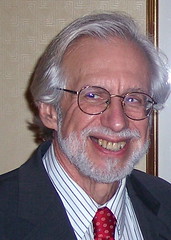 Dr. Feinman saw incredible behavioral changes of actual low-carbers The results of a survey of 3,000 members of a popular low-carb forum were published today and the results of the survey showed some very surprising results about the dietary habits of people who are livin' la vida low-carb. Lead researcher Dr. Richard D. Feinman, along with Dr. Mary C. Vernon and Dr. Eric C. Westman, wanted to see what kinds of changes that real-life low-carb dieters make when they begin counting carbohydrates for weight loss and improved health. According to the survey of members of the Active Low-Carber's Forum, low-carb dieters aren't gorging themselves on tons of fatty foods as the popular media and opponents of the low-carb lifestyle suggest. Instead, they are actually replacing the old starchy and sugary foods that were previously consumed with lots of green leafy vegetables and salads. You may recall that I previously referenced the preliminary results of this survey last year when I blogged about how people who go on a low-carb diet tend to double their vegetable consumption. In fact, 54 percent of the survey participants increased their salad greens with 34 percent reporting "double their usual consumption" of green vegetables to replace the starch and sugars they had been eating. Additionally, a small percentage of respondents said they had drastically increased consumption of such high-fat foods as beef, bacon, and butter--foods that most people believe are the staples of a low-carb diet. But what the researchers found was that half of those people who lost 30 or more pounds on low-carb and kept it off for a year had not significantly increased their consumption of those foods. One exception was the lower-fat chicken. Thirty-four percent of low-carb dieters had doubled their chicken consumption. In regards to the reaction from family doctors, Dr. Feinman said he was surprised by the change in attitude about low-carb living in the medical community. Half of the survey participants said they consulted with their doctor about going on low-carb before and during their experience and 55 percent of them said their doctor supported them in their effort along with another 30 percent who said their doctor displayed no opinion or support until weight loss happened. Dr. Feinman said this is an important shift in thinking that is happening. "Physicians can prescribe a diet for people who want to do low-carb that involves replacing starch and sugar with green vegetables and salads, a diet that few could object to on conventional health- or nutrition-related grounds," Dr. Feinman explained.Oh, they'll still find a way to object to it, Dr. Feinman. But the clear message of this survey is that all the stereotypical biases against livin' la vida low-carb are dead in the water WRONG! This survey clearly shows that is true. But the survey turned up another bug-a-boo surprise about portion control. Most of the survey participants did not actively engage in watching their portions beyond the natural responses to restricting carbs, but over half said they felt like they are eating less food now than they did before starting low-carb. Dr. Feinman said this should serve "as a model" for doctors interested in helping their patients lose weight. "Most people were happy with the diet and a section of narrative comments produced consistent responses of 'have more energy,'" Dr. Feinman added.Indeed we do, Dr. Feinman. The answers to this 27-item questionnaire were quite revealing about the actual behaviors of people following a low-carb regimen. The demographics of the average respondent show that they were mostly women and mostly significantly overweight with a significant number intending to and, in many cases, succeeding at losing more than 100 pounds. Most of them follow the Atkins or an Atkins-like diet. One notable statistic from the survey was the fact that most of the respondents did not turn to the government or health agencies for information about their diet and health. HA! I wonder why with all the low-fat, low-calorie, portion-control propaganda they relentlessly push on the American people day in and day out! Good for these survey respondents for bucking the trend and learning about other ways to lose weight and get healthy. The results of Dr. Feinman's survey were published today in the Nutrition Journal. 10-3-06 UPDATE: The always entertaining and ever-witty Dr. Mike Eades blogged about this survey today at his popular blog. Check it out! Labels: Atkins, diet, doctors, Eric Westman, government, low-carb, Mary Vernon, portion control, research, Richard Feinman, survey, vegetables, weight loss
Dietician: Atkins Diet 'Never Helped People Maintain' After Weight Loss
I just love it when another one of these so-called "expert" dieticians start badmouthing the Atkins/low-carb nutritional approach because it gives me an opportunity yet again to expose them for just how ignorant they really are about diet and health. In fact, just in case you've missed any of my previous blog posts about dieticians, here's a list of them for you: - Dietitians Diet Dead Wrong About Low-Carb- Low-Carb Is Not As Dead As They Said- Dietician Detests Low-Carb, But Promotes Its Principles- Christian Dietitian Entertaining, But Not Giving Good Advice- Malaysian Nutritionist Can Take His Low-Fat, High-Carb Diet Advice And Shove It- Doctor, Dietitian "Alarmed" By Atkins Diet Column- Fiery Low-Carber Confronts Advice From Sports Nutritionist- Purdue Nutritionist Likens Low-Carb Weight Loss To Taking Laxatives- Low-Carb Weight Loss Is 'Water Weight,' Health Instructor Contends- Nutritionist Says Low-Carb Provides 'Unhealthy Weight Loss'As you can see, I like to have fun with these dieticians because they are generally very adamant in their opposition to livin' la vida low-carb. And this Independent Online story is no different. Featuring commentary from a registered dietitian named Nancy Kazakis who was helping out some dieters walking through the grocery store wondering what to buy for their healthy weight loss plan. Unfortunately for them, though, the tips she was providing them were horrible for anyone trying to improve their weight and health. Here's what I mean: According to the story, Kazakis avoids any foods where over a third of the calories come from the most hated of all macronutrients--FAT! And God forbid you eat any saturated fat from animals "which raises cholesterol" or trans-fats. “If more than half of what I’m eating is calories from fat, then I’ll put that right back on the shelf,” she said.Are we EVER going to get past this saturated fat thing already? Saturated fat can be very good for you despite the claims by the media that this study proves otherwise. Baloney! Regarding trans-fats, most people are very aware of this worst of all fats because it has been villified (rightfully so!) as dangerous to your health. But Kazakis like so many of her fellow dietitians throws ALL fats in with the bad which is highly irresponsible for someone providing nutritional information to the public. After she finished with her fat tirade, Kazakis then turned her attention to the Atkins diet which she erroneously defines as a way of eating that "advocates zero carbohydrates and plenty of protein." Other than people like my friend Rob on the Zero Carb Path, I don't know anyone who is livin' la vida low-carb and going completely without carbs in their diet. NONE! The fact is the Atkins diet is at the VERY MINIMUM during the first two weeks 20g carbohydrates and then most people move up to 30-50g during their weight loss. Kazakis then made the boneheaded comment that while the "dissolving" Atkins diet "worked for many," it has "never helped people maintain their weight once they took it off." Oh really, Ms. Kazakis. NOBODY! Then I guess I'm a "nobody" because I lost 180 pounds on it in 2004 and have kept it off for a couple of years now. You might want to also meet Kent Altena, Karen Kimball, Colleen Awalt, and John Smith, ALL of whom lost over 100 pounds and have kept it off ever since! Where do these people come up with such idiotic claims about low-carb?! Of course, like every dietitian I know, Kazakis then goes into a lecture about how the body needs carbs that you can only get from cereals and bread to help YADDA YADDA YADDA! Like a broken record that keeps playing that bad song with a skip on it, that's what these nutrition experts keep sounding like in all of these columns. Oh, then you MUST see this list of 7 grocery tips Kazakis offered the dieters (poor people!) and what she recommends they should eat during their weight loss: 1. Consume 3-4 eggs per WEEK HA! I eat AT LEAST that many per DAY! It is a great source of protein and delicious, too! In fact, a study showed people who eat eggs actually consume less calories during the day. That's reason enough for me to eat eggs ALL the time! 2. Eating low-fat cheeseUh, no. How about if I eat DOUBLE fat cheese because it'll taste better. Kazakis recommends eating string cheese because it is made with low-fat milk. Nah! Eat it because it's low-carb, but don't worry about the fat. 3. Choose vegetable oil-based margarineYikes! I haven't put margarine in my mouth knowingly for close to three years now. Butter is SO much better for you and should be used in any food you eat that needs a flavorful burst of a healthy fat. And the real stuff tastes so much better, too! 4. Use only vegetable oils for heart healthNOT! Actually, other than extra virgin olive oil, you should probably not reach for canola (soy-based) oil because there are serious concerns about how healthy it is for your body. Instead, try macadamia nut oil or even the healthy avocado oil. 5. Purchase lean deli meatsOther than the FDA allowing spray-on viruses to be put on deli meats, I cannot disagree that deli meats should be a part of your grocery shopping list. However, forget about the low-fat versions because they tend to have more sugar and salt in them than you really need. Keep the fat in and enjoy some good ham, turkey, roast beef and more! 6. Substitute ground turkey for ground beefWhy would I want to do that?! There's nothing wrong with eating beef and it tastes so good, too. The supposed benefits to eating ground turkey (less fat) are not worth the sacrifice in taste when there is nothing wrong with eating a good hamburger. Don't forget the cheese, baby! 7. Eat lots of high-fiber, low-calorie veggies Okay, I'm all for vegetable consumption which actually doubles when you start livin' la vida low-carb. But you must be discerning about what KIND of vegetables you eat because many of the ones that are starchy or contain high amounts of sugar in them are NOT good for you. Green beans, cauliflower, and salad greens are just a few of the many EXCELLENT choices for you to eat on your low-carb lifestyle. Stay away from potatoes, arguably the most unhealthy vegetable ever! At the end of the story featuring these comments from Kazakis, she raves about how awesome the 100-calorie snack craze is because "it’s all about control.” "It’s a smaller portion, but isn’t that the whole idea of our diet plan?” Kazakis exclaimed.No, it's not. I don't want or need any sugar in my diet, no matter how small the portions allegedly are, Ms. Kazakis. While I agree that portion sizes have gotten out of control, the answer is not in pre-packaged servings that contain 100 calories. Low-calorie diets aren't necessarily healthy and making better overall food choices helps people more than anything control their weight and get healthy. At the end of the day, Kazakis is just another robotic dietician attempting to influence the people she counsels with archaic dietary advice that will keep them unhappy and unhealthy for many years to come. Hey Ms. Kazakis! How about joining the 21st century and telling people about how livin' la vida low-carb will radically change their life for the better? Oh, I forgot, you can't do that because YOU ARE A DIETICIAN!!! ARGH! Labels: Atkins, criticism, diet, dietitian, fat, health, low-calorie, low-carb, low-fat, portion control
'The 3-Hour Diet' Is Nothing New Under The Sun
 Is THIS really the next weight loss fad to sweep America?Contra Costa Times published a reprint of a New York Times article detailing the alleged latest and greatest diet book to hit bookstore shelves this year and one that is expected to be, according to the publisher, the bestselling diet book in 2005. Oh really. I can't wait to hear why. It's entitled "The 3-Hour Diet" (now with a title like that, it sounds like this diet is just another "fad" waiting to happen!) by a San Diego-based fitness freak named Jorge Cruise. His "8 Minutes In The Morning" workout books have been moderately successful and allowed him to appear in the media many times over the past few years. Interestingly, the subtitle of Cruise's book caught my attention much more than the title -- "How Low-Carb Diets Make You Fat and Timing Makes You Thin." Okay, so Cruise is yet another anti-Atkins mouthpiece, but he's come up with some kind of eating plan regarding "timing" that makes people lose weight. I was somewhat intrigued to see where he was going with this, so I decided to look into this "diet" he was recommending that was supposedly so much better than livin' la vida low-carb. Basically, Cruise says people can still eat carbs, fat and sugar and lose weight on his diet. The so-called secret to the diet is protecting the body against starvation by eating a light to moderate amount of food every three hours. Sound familiar? You got it, that's exactly what Dr. Atkins recommended people who follow his plan to do. In fact, eating often is encouraged strongly as part of a low-carb lifestyle. It keeps your body satisfied and you never get hungry. If you allow your body to go several hours without eating anything, then it will start storing up body fat to protect itself from starvation. Cruise's answer to this is for people to eat every three hours. Yet, he also recommends they eat less than 1500 calories a day in multiple small-portioned meals of various ingredients and proclaims this way of eating will help them lose 2 pounds per week. No doubt. He even offers his readers a journal in his book to keep track of their calories while doing his diet. Does this new "hot diet" sound like something you may have tried before? Do we REALLY need ANOTHER low-calorie/low-fat diet book telling us we are doomed to eat nasty rabbit food or limited portions of our favorite foods just to lose and maintain weight loss? This concept is NOTHING new under the sun and looks strikingly like the portion-controlled concept Weight Watchers has used for many years. At a whopping $25.00, "The 3-Hour Diet" book is a huge ripoff for people looking for a lasting way to weight loss and improved health. Cruise has not really come up with anything that most of us haven't heard before many times while dieting. His publisher and he are hoping the hype and buzz about the book will make it fly off the shelves. And it probably will. But here is what a New York nutritionist named Mindy Hermann said about Cruise's diet and how it's no different that what's been out there for years. "In the end, it's all about calorie control for all diets; it's just the path that the person can take to get to calorie control that varies," she said. "There's always a promise, always a hook or a gimmick. There's got to be some way to lure some person in."She makes a good point that most diet books out there make "a promise ... hook or a gimmick" to get people to buy them. However, I strongly disagree with Hermann's assumption that less calories automatically equates into weight loss. I probably ate MORE calories than I ever have as I was losing 180 pounds on Atkins. While calorie control is absolutely necessary for every other diet out there because they are mostly based on portion-size and calorie intake, Atkins did not have these restrictions on calories, fat or portions. Eventually, though, as your body begins to get smaller and smaller, you find that you don't need as much food as you used to eat. The body automatically adjusts to your smaller size and your food intake follows suit. That's why a low-carb lifestyle works and all of these other methods failed for me in the past. If this is the next big thing in weight loss, then I would HIGHLY recommend you go back to what is considered the Bible of real lasting weight loss -- "Atkins New Diet Revolution." Don't be fooled by the slick marketing campaign being given to Cruise's book just because he's a nice-looking, tanned spokesman for a low-calorie/low-fat lifestyle. Neither he nor his publisher have your good health in mind with this book. They only hope to line their own pockets with gobs and gobs of money by joining the "anything but low-carb" line of attack that is so prevalent in the media today. One final thought. Isn't it interesting that of all the weight loss plans out there, Cruise chose to mention "low-carb" by name in the title of his book? Hmmmm. Me thinks he knows it works and is trying to lure obese and overweight people away from the success they would have on low-carb. It won't happen if you don't fall for it! Labels: 3-Hour Diet, Atkins, book, criticism, diet, Jorge Cruise, low-carb, portion control, review, weight loss
|


