Davis: Wanna Cut Plaque In Your Arteries? Slash Your Carbohydrates!
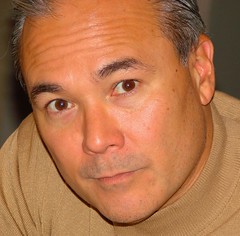
Dr. William Davis says modern-day heart care "tragically off track"
Heart health in the United States and around the world is that much more pronounced nowadays in light of the fact that obesity rates and and so-called "high" cholesterol have risen to the level of being labeled diseases that require a pharmaceutical response. But there's at least one cardiologist in America who believes all the current treatments being used against coronary heart disease risks fall well short of the mark in actually doing anything about artery blockages that lead to a heart attack or stroke.
His name is Dr. William Davis and this heart doctor from Milwaukee, Wisconsin believes heart health is nothing more than a money-making venture for hospitals while patients experience no actual improvements in their risks of having a cardiovascular event while following the recommended high-carb, low-fat diet and popping expensive and dangerous statin drugs. Those are just a few of the topics he and I discussed in my interview with him which I will share with you today.
Fans of livin' la vida low-carb are gonna LOVE Dr. Davis! ENJOY!
1. Today we have with us Dr. William Davis, an unconventional cardiologist who also serves as the medical director of Milwaukee Heart Scan in Milwaukee, Wisconsin. Dr. Davis is an outspoken opponent of the traditional methods and treatments espoused by the medical and pharmaceutical industries for dealing with heart disease. Before we get into the details of what you believe about that, Dr. Davis, tell us a little bit about why you got interested in the subject of heart disease in the first place. Does heart disease run in your own family?
I came to the world of heart disease by the usual misguided route: When I was young, I found it exciting because of the opportunity for procedures to “fix” this disease.
After about 10 years of a cardiology practice heavily focused on angioplasty, stents, and the like, I began to recognize that this was a treadmill of futility.
I was just toying with these notions when my real epiphany came—-my mother died of a heart attack at age 62. Here I was, an interventional cardiologist employing all the newest techniques and my own mother dies of the disease I thought I understood.
That was the moment when it struck me: The world of conventional heart care was terribly and tragically off track.
2. Much of what we have been taught about heart disease focuses on dietary fat consumption, excess body fat, LDL/total cholesterol, and too much stress. But most of these “scams” as you describe them are not based on the science behind heart disease. How did such dogmatic axioms become so ingrained in our culture as undeniable truths?
The limited understanding of issues like cholesterol in the 1960s and 1970s has become deeply ingrained into the practicing cardiologist of this century. Unfortunately, it means that your practicing family practitioner, internist, or cardiologist is still performing a test that was outdated over a decade ago—-the cholesterol panel.
Today, there are more insightful and sophisticated tests that uncover the causes of heart disease far more effectively than cholesterol testing.
There’s also an economically perverse equation at work: If your heart disease is prevented, there’s virtually no profit in it. But if you are allowed to have a heart attack, there’s a bonanza of thousands of dollars of procedures that follow. This is a situation aided and abetted by hospitals, cardiologists, and the vast infrastructure of corporations that support the procedural cardiovascular care system. It is a system that generates tens of billions of dollars each and every year and sports a growth rate that is the envy of Wall Street.
3. You wrote two books about this subject--Track Your Plaque
 (2004) and What Does My Heart Scan Show? (2007)--to help dispel many of these so-called truths about heart disease and to help better prepare people about how they can detect and even prevent the risk of developing heart disease. And yet 9 out of every 10 cases of heart disease go undetected until a heart attack occurs. That’s why you developed a simple 3-step program has helped many patients see how much plaque is built up, find out why it is happening, and to give them complete control over the problem. Discuss how you came up with this novel concept for treating heart disease when most other cardiologists and physicians look at LDL cholesterol. Why is that such a poor way to gauge heart disease risk?
It's no secret: LDL cholesterol has proven a miserable failure as a detector of coronary heart disease.
Abundant clinical trial experience has borne this fact out: LDL cholesterol of the average American: 132 mg/dl; average LDL cholesterol of someone suffering a heart attack: 134 mg/dl—they’re virtually indistinguishable.
So, if your LDL cholesterol is, say, 141, will you die tomorrow? Will you require a heart bypass operation to restore flow to your blocked coronary arteries 2 years from now? Or, will you be dancing on the graves of all your friends and neighbors 50 years from now, never having experienced a stitch of heart disease? Cholesterol won’t tell you.
Cholesterol is a predictor on a statistical basis, but fails miserably when applied to a specific individual. This led me to search for better tools to identify the person with heart disease risk.
The best test for heart disease is a test that measures the disease itself, not some risk for the disease. That’s how I stumbled on heart scans as a method of detecting early coronary heart disease. Heart scans are measure of the disease itself-—atherosclerotic plaque-—not some risk factor that might predict its development.
4. I recently highlighted a rather humorous post you wrote on “The Heart Scan Blog” about your experience on a low-fat diet as prescribed by Dr. Dean Ornish for “reversing heart disease.” What’s wrong with the low-fat , low-salt, low-cholesterol (DASH) diet recommendation that Dr. Ornish and virtually every other medical professional prescribes to people who are developing or already have heart disease?
The misguided advice offered to most people is that a low-fat diet reduces cholesterol and heart disease. This is simply untrue for the majority of people.
In fact, the opposite is true: a low-fat, high-carbohydrate diet filled with wheat products like whole grain bread, wheat crackers, pretzels, fiber breakfast cereals, and wheat pasta raise cholesterol. Corn starch-containing products, white rice, potatoes, and processed carbohydrates are similarly to blame.
They raise small LDL cholesterol particles, the worst form of cholesterol of all. While large cholesterol particles are rather harmless, the small cholesterol particles are the ones behind heart disease in over 70% of cases. And it's small LDL cholesterol that is hugely magnified by high-fiber, high-carbohydrate diets.
5. One of my readers sent me an e-mail with concerns about the diet you recommend in “Track Your Plaque” because it is basically a lower-fat approach (albeit, not as low-fat as Dr. Ornish recommends). Your diet calls for 24 percent fat coming from unsaturated fat sources in conjunction with a high-fiber (35g daily) intake. What are your thoughts about a higher fat diet and more specifically one that includes saturated fat?
The Track Your Plaque book was written in 2003 before its publication in 2004. Much has happened in the few short years since its release.
Among the changes to the somewhat low-fat approach articulated in the book is diet that has proven more effective in correcting the causes of heart disease: a diet higher and richer in healthy fats like those from fish, raw nuts, olive oil, canola oil, flaxseed and grapeseed oils, and wild game. These changes, along with a reduction in carbohydrate content, suggest that a diet that is at least 30% fat (calorie percent) is probably more towards the ideal.
However, I do believe that saturated fat remains an issue. Saturated fat really became an issue when humans began to fry their foods and add animal fats like butter and shortening. It became an even bigger issue when the “factory farm” phenomenon seized control of American farming away from the traditional family farm, introducing economies of scale like corn feeding of livestock that transformed beef, pork, and chicken into high saturated fat foods.
The trend to reject saturated fat is really a trend towards rejecting the factory farm movement driven by enormous multi-national corporations intent on supporting the fast food and processed food industries.
6. I lost nearly 200 pounds on the Atkins diet back in 2004 and have been able to maintain that weight loss ever since by continuing to implement the principles I learned from the late great Dr. Robert C. Atkins. And yet you do not recommend this particular way of eating over the long-term as a way to improve health. What specifically is unhealthy about eating an Atkins-styled diet beyond weight loss and is there a better way of eating that you believe is both heart healthy and bring about weight control?
Interestingly, before Dr. Atkins died, he articulated a diet that was more balanced in monounsaturated fats, less rich in saturated fats, included more vegetables, fruits, nuts, and other healthy foods.
We need to remember that the “Induction phase” of the Atkins’ diet that permitted indiscriminate and unlimited intake of meat, cheese, and other saturated fat-rich foods was simply that—-the induction into the world that allowed you to be divorced from the addictive property of refined carbohydrates.
In we were to follow the Induction phase of the Atkins’ diet indefinitely, we would experience increased bladder infections, kidney stones, rashes, osteoporosis, cancer (liver, colon, prostate, breast), diverticulosis, and other chronic conditions. The induction phase is a useful tool to make the break from carbohydrate-addicted physiology, but not a recipe for long-term health.
7. For people interested in having their plaque measured by a heart specialist like yourself, the Heart Scan Resource Center at TrackYourPlaque.com is an excellent resource for finding a recommended center where this can be conducted. Walk us through what that process is like. What exactly happens when a patient comes into your office for this test? How soon will they know the results of their scan and can begin working on correcting any abnormalities?
Actually, heart scans are performed at heart scan centers. I do not own a heart scan device. Thus, I have no vested interest in having people undergo heart scans.
Heart scans are, nonetheless, a valuable tool for detection and quantification of coronary atherosclerotic plaque, the material that constitutes coronary artery disease and the stuff that causes heart attacks.
Heart scans are ridiculously easy tests. Some EKG leads are applied, hold your breath—-you’re done. No IV, no poking or prodding, no pain. The paperwork truly takes more time than the scan itself.
You walk away from the scan center with a score, a calcium score that reflects the total amount of atherosclerotic plaque in your heart’s arteries. Because calcium occupies 20% of the volume of atherosclerotic plaque in your arteries, measuring calcium is a useful and practical method of indirectly measuring the total amount of plaque in your heart arteries.
Once you have a heart scan score—a precise measure of atherosclerotic plaque in your coronary arteries—you have a starting place to seize control and stop the increase in your score, perhaps even reduce it.
8. Just so we're perfectly clear about what you are saying, am I right in assuming you believe people should people stop worrying about their cholesterol numbers because they really don’t have a bearing on heart disease? How about those who are taking cholesterol-lowering statin medications like Lipitor, Zocor, and Crestor, among many others to lower their “high” cholesterol? Is there a reason for them to remain on those drugs in light of what we now know about heart disease?
The cholesterol reducing drugs do have role—-unfortunately, the majority of people are put on these drugs for the wrong reasons.
Let me explain. Someone will come in because of a reportedly high cholesterol. We do more testing and discover that the majority, say, 90%, of the cholesterol particles are small. This pattern is very likely to contribute to formation of plaque in the arteries. It also responds exceedingly well to a reduced carbohydrate diet. Many, many times, a person with this pattern will follow a diet that slashes carbohydrate content and cholesterol levels drop like a stone. In this instance, statin cholesterol drugs may be entirely unnecessary.
Another exception: A person with a high cholesterol that is not truly high. When you are provided an LDL cholesterol from your doctor’s office, it has not been measured, it has been estimated. The crude estimation is based on a calculation called the “Friedwald equation,” an equation derived in the 1960s when new technology for testing was not yet available.
It sounds ridiculously simple, but simply measuring cholesterol can provide insights that can often suggest that a statin cholesterol drug is not necessary. The more sophisticated testing is called “lipoprotein testing.”
9. Cardiac care is “big business” with nearly $60 BILLION dollars annually spent by Americans on heart health-related expenses. In fact, half of the profits generated from most hospitals comes from cardiac care alone--a staggering number which should be a real wake-up call to people who are concerned about health insurance and healthcare costs. Who or what do you believe is driving this heart disease “business” and are they intentionally trying to make people sick to continue the big payday?
Performing heart procedures pays big money. Prevention of heart disease does not.
That simple perversion of the healthcare equation explains a lot. Physicians and hospitals are not in business to provide health. They operate businesses that are meant to profit from treatment of disease. Wiping out a disease is not part of the picture.
Put in a stent and reap about $2000 to the cardiologist, $25000 or more to the hospital. Perform a heart bypass operation, and the physician gets at least $5000, the hospital $70-100 thousand.
Prevent a heart attack and you get paid . . . maybe a couple of hundred dollars for several hours work. Which do you think most physicians choose? Which do you think hospitals promote in endless TV commercials and billboards? What about the stent industry, manufacturers of implantable defibrillators, operating room equipment, and on and on.
Heart disease is big business. In fact, it is the biggest business every conceived in health. Why try to change it?
I try to change it because there is a far better way, a way not built on profit, but on returning control of health and life back to the individual. I see what I do as self-empowerment of the individual, taking control over health and away from hospitals and physicians and back to the human being whose life is at stake.
10. THANK YOU again, Dr. Davis, for joining us here today at the “Livin' La Vida Low-Carb” blog to talk about one of the most important health issues of our lifetime. I’m anxious to have one of these screenings myself in the near future and encourage my readers to do the same. Do you have any words of encouragement and hope to share before we end this interview today?
We are just beginning to enter an age of taking back control of health from hospitals and physicians and returning it to the individual. The biggest chunk of this phenomenon is heart disease.
I believe that the tools necessary to seize control of coronary heart disease are already available to the vast majority of people. It involves heart scans, testing that effectively uncovers the underlying causes of heart disease (including the rejection of the cholesterol testing scam), and following a program that truly corrects the causes.
I endorse web sites like Livin' La Vida Low-Carb because they shed light on the enormous sea of misinformation being fed the American public. Your 200-pound weight loss itself speaks volumes about the useless detour the American diet has followed. There are far better answers than the ones being provided by organizations like the American Heart Association, the USDA, the Surgeon General’s office, and other official organizations. We need to turn to the real world wisdom provided by the national experiment in health and diet provided by people like Jimmy Moore.
In fact, I tell my patients that if they want heart disease, they should follow the American Heart Association diet. On the other hand, if they want to substantially reduce, perhaps eliminate, risk of heart disease in their lifetimes, they need to follow a diet that eliminates the distortions of convention habits and wisdom.
Be sure to visit "The Heart Scan Blog" often for more from Dr. William Davis. And you can e-mail him to thank him for the work he is doing on behalf of heart health at heartprotection@aol.com.
Labels: arteries, cardiovascular disease, cholesterol, doctors, fat, heart attack, heart disease, Heart Scan Blog, interview, low-carb, plaque, saturated fat, statins, Track Your Plaque, William Davis
posted by Jimmy Moore at
8/29/2007 06:17:00 PM
10 Comments


