|
PLEASE UPDATE YOUR BOOKMARKS TO LIVINLAVIDALOWCARB.COM/BLOG
Petition: Tell NIH Lowering Blood Sugar In Diabetics Does NOT Increase Death Risk
 If you care about diabetes health, then sign this petition! If you care about diabetes health, then sign this petition!We all know how incompetent many of the government and leading health organizations are in the United States as it relates to providing information to the public about taking care of themselves to protect against disease and death. We've seen it with the failed low-fat, low-calorie diets they've been pushing on the American people for decades with no positive impact whatsoever and yet they continue to promote it as the only way to control obesity and health. If the definition of insanity is doing the same thing over and over again expecting a different result, then I do believe we can officially describe those in charge of health policy in America as INSANE! But that adjective doesn't even begin to describe something so utterly despicable that the National Institutes of Health (NIH) has done in response to the results of the ACCORD study published in the June 12, 2008 issue of New England Journal of Medicine. Have you seen this so-called "study" that concludes there is a HIGHER death risk among those diabetics who attempt to control their blood sugar levels? This is NOT a joke--that's exactly what they're saying and this just goes beyond the pale. Check out this ridiculous statement from the abstract of the ACCORD study: "As compared with standard therapy, the use of intensive therapy to target normal glycated hemoglobin levels for 3.5 years increased mortality and did not significantly reduce major cardiovascular events," the authors conclude. "These findings identify a previously unrecognized harm of intensive glucose lowering in high-risk patients with type 2 diabetes."Okay, let's think about this logically for a moment. A diabetic who is attempting to control their disease through an "intensive therapy" (we'll assume this doesn't mean carbohydrate restriction, although it should) of controlling their blood sugars over a 3 1/2 year period of time had an INCREASED risk of death and NO REDUCTION in the risk of a heart attack? Is that what they're saying? So are we to believe through deductive reasoning that a diabetic who allows their blood sugar to stay out of whack indefinitely without any treatment is better off than those who do try to normalize glucose levels? Am I missing something here? There is absolutely NO rationality in this conclusion by the NIH and this borderlines on criminal behavior on their part by perpetuating this notion that controlling blood sugars is somehow bringing harm to diabetes patients. This kind of fear tactics serves no good purpose and spreads misinformation to scared diabetics who become confused and dazed by what they hear from an official government health source. That's why I am urging everyone who reads this to SIGN THIS PETITION telling the NIH to acknowledge the existing science behind why controlling blood sugar levels in diabetics is ESSENTIAL. This isn't something to be played around with--there are bigger health consequences involved with uncontrolled blood glucose levels in diabetics than with those who are controlling them. It doesn't appear that the NIH cares about these facts because they are instead seeking to put out their own twist on this ACCORD study to baffle Type 2 diabetics. Oh, but they're saying otherwise on their Q&A web site about the ACCORD study. Check out message to Type 2 diabetics about how they shouldn't be worried at all about what they are saying. "Patients with type 2 diabetes should not be alarmed by these findings of the ACCORD trial...This goal of less than 6 percent A1C is very hard to reach for most patients who have had diabetes for several years, often requiring multiple medications. Even the achieved level of A1C of about 6.4% is often difficult to achieve in such patients."All I can say is WHAT?! First you tell diabetics that they "should not be alarmed," but then you follow that right up with the pessimistic view that getting A1C levels down below 6 percent is "very hard" and can only be accomplished through "multiple medications." It is too "difficult" to make this happen in patients, the NIH claims, so just throw your hands up in the air and give up. Is that what you're telling diabetic patients, NIH?! Plus, keep in mind the definition of "intensive therapy" as noted in this study is never described, so we have NO IDEA what they're talking about. From that answer above, we can assume it includes lots of prescription drugs which may have been the culprit in the increased death risk rather than the "intensive therapy" as they stated. Instead of trying to figure out WHAT the cause was, they just ASSUMED (and you know what that means!) that lowering A1c levels were what created the jump in mortality rates. This is like stating a firefighter has an increased mortality rate because he breathes oxygen since that's what he was doing when he died. It's not that he puts his life at risk trying to douse a raging ball of fire, oh that can't be it! It's must be that oxygen he's sucking in, so that's our story and we're sticking to it. Sound absurd? Well, it is! And so is this conclusion by the NIH. They should really be ashamed of themselves. Their argument is not based on any kind of rational scientific reasoning or thought process at all. But who's gonna call the NIH's bluff? Doctors and medical researchers don't want to stick their neck out against this powerful government group in the fear that some much-needed research dollars are withheld from their future studies. It's a sickening place to be in at the mercy of such a group that can make or break your career. But I and the thousands more who come to my blog each day are NOT tied to the NIH in any way. We are public citizens who care about the issue of diabetes and helping our mom, dad, sister, brother, uncle, aunt, cousin, son, daughter, and friend with this terrible condition find the hope they need to beat this disease once and for all. And most of us realize that it is livin' la vida low-carb that has helped to bring the ill effects of diabetes under control, especially for those with Type 2 diabetes. This ACCORD study gave absolutely ZERO consideration for carbohydrate restriction which has been shown time and time again to be the most safe and effective method of improving glycemic control. Why is the NIH so silent about low-carb diets for diabetics? That's what this petition is all about and I hope you and your entire family will SIGN THIS PETITION to share what the healthy low-carb lifestyle has done for you. Notable signatures appearing on this petition so far include Dr. Richard Feinman, Regina Wilshire, Dr. Richard Bernstein, Jackie Eberstein, Dr. Keith Berkowitz, Uffe Ravnskov, Fred Hahn, and many others! Christine and I have done our part to SIGN THIS PETITION and we invite you to do the same for the sake of providing accurate information for diabetics dealing with this terrible disease. Let's not make the problem worse by discouraging the goal of normalizing blood sugars. I love what Dr. Bernstein, the most famous Type 1 diabetic in the world who has been using a low-carb dietary approach to control his disease since 1946, had to say in the comments beneath his signature on this petition. "I've had type 1 diabetes for 64 years and have an HgbA1c of 4.6% thanks to a low carb diet. I have a coronary artery calcium score of '1' at age 74. My patients with similar A1c's enjoy similar cardiac health."You tell 'em, Dr. Bernstein! The low-carb diet is indeed an effective "intensive therapy" that is helping CONTROL blood sugar levels without the use of the risky drug therapies. How about the NIH taking a closer look at the REAL studies that have come out in favor of using something like the Atkins diet to benefit diabetics? There PLENTY of evidence out there and I'm all too happy to share it anytime. Make your voice heard and SIGN THIS PETITION! Labels: ACCORD, death, diabetes, government, health, heart attack, low-carb, New England Journal Of Medicine, NIH, petition, Richard Bernstein, study, Type 2
Tim Russert's Fatal Heart Attack Was Preventable, He Followed Antiquated Advice
In this supercharged and oftentimes volatile political election year, something tragic and sudden struck this country and has everyone buzzing in Washington and across the United States. No, it wasn't some sex scandal, drug bust, or any of the other usual news that has become almost too commonplace these days. This was something much more serious and has greater implications than even the extensive coverage the mainstream media is giving to it. Last Friday afternoon, hard-hitting political interviewer and long-time host of NBC-TV's Sunday morning news talk show "Meet the Press" Tim Russert experienced his first heart attack and it almost instantly killed him. I cannot imagine how his family is responding to this news and my sympathies and prayers go out to them during this very difficult time. Tim was in the midst of doing what he loved--preparing for his television show--when the heart attack took his life and took him away from all of us. So, how did a 58-year old man die from a heart attack when he was doing all of the things his doctor said he should to prevent it? Should we be concerned about what doctors are telling us about how to ward off cardiovascular disease so that we don't become the next victim of what befell Tim Russert? These are the questions people are asking in the wake of this tragedy and was the subject of what one of my readers wanted to know in an e-mail I received. Here's what she wrote: Hi Jimmy, I have been an avid reader of your blog for a long time. I am so scared since Tim Russert died suddenly of a heart attack at only age 58 (my husband is 57 and I'm 54) that I'd really like to get some clarification on the statin drugs and cholesterol issue. Seems like Tim Russert's doctors did all the usual things and he died anyway. I trust what Dr. Jonny Bowden has to say as he has an advanced degree in nutrition and he seems to think for himself instead of just following the status quo. Can you see if he would help reassure me with this? Thanks for your assistance, and keep up the fantastic work!While I am no Dr. Jonny Bowden, I do have some things to say about Tim Russert's death that need to be said. I can understand your concerns and I am delighted to forward your questions to Dr. Jonny Bowden. He's one of the brightest, most articulate people on nutrition in the entire world, so you are in good hands with the information he provides to you. But if you would allow me to comment on this subject, I have some thoughts about it. Isn't it interesting that Tim Russert did everything exactly as his doctor wanted him to and yet his very first heart attack was a fatal one? I don't think that's a coincidence either and it happens every single day without a blink of an eye from anyone. Watch this video interview with Russert's doctor to see how dejected he is about Russert's "unexpected" death despite his best treatment strategies. It's amazing to hear his doctor basically say that Tim did everything he was "supposed" to do and yet it wasn't enough to save his life. Wanna know what the scariest part of this story is? Check out Tim Russert's lipid profile: LDL--68 HDL--37 (up from the lower 20's) Total Cholesterol--105 Did you see that? Most doctors would look at those numbers and say, "See how healthy this person is because we lowered his cholesterol." And they would pound their chest with pride at putting someone like Tim Russert on a statin drug to artificially make this happen. But what good did it do him in the end? He's gone now because of that advice and there's no outrage about it. Worry, concern, perplexity, yes--but nobody is angry that this preventable death was made WORSE by the use of all the traditional means for improving heart health. According to Russert's doctor, he didn't have Type 2 diabetes nor did he have any blood sugar issues at all. His A1c was in the normal range and as I noted previously his cholesterol was considered VERY healthy. For all intents and purposes according to the modern day medical conventional wisdom, he was the epitome of perfect health. And yet he tragically died before his time. We now know posthumously that Russert had coronary heart disease that he was being treated for, but his doctor apparently didn't know how severe it was. But even if he did know it was extremely serious, what else would he have recommended to Tim? Higher doses of his statin drug? Even less fat in his diet? More exercise? In the end, all of these seemingly good strategies from the conventional wisdom point of view would have very likely done NOTHING to prevent this from happening. His doctor put him on blood pressure lowering medication as well as a cholesterol-lowering statin drug to see if that would help. And Russert even rode an exercise bike to try to lose weight, although it didn't work. There's no doubt the plaque buildup around his heart was getting bigger and bigger over the years until his heart couldn't take it any longer. We know that too low LDL can lead to depression, suicide and death. We also know that HDL "good" cholesterol (Russert's was very low--NOT good) and triglycerides (something Russert dealt with having too high over the past few years) are better indicators of heart health than LDL and total cholesterol. And it's a high-carb, low-fat diet that leads to lower HDL and higher triglycerides. No doubt this is precisely the kind of diet Russert's doctor had him on. As you know from reading my blog, my most recent total cholesterol reading was 326 with an LDL of 246, HDL of 65, and triglycerides at 77. I am confident I don't need to go on a statin drug now or ever and I am as healthy as I have ever been in my entire life. On face value, any typical physician in America would say to me, "Oh my God, you need to be on Lipitor, Crestor, or Zetia to lower your LDL and total cholesterol." Of course, they would be 100% wrong because my LDL particle size is the protective large, fluffy kind that your body wants and needs. Dr. Eric Westman from Duke University Medical Center in Durham, North Carolina, who is the physician who ran this test on my behalf, said almost all of my LDL is this protective kind and the percentage of small, dense LDL (which was the likely culprit in Russert's fatal heart attack) is virtually nil. And that's a GREAT thing! High LDL can be good, but low HDL is most certainly ALWAYS a bad thing to have. When you are livin' la vida low-carb correctly, then your HDL will be well above 50 and for women well above 70. At the same time, your triglycerides will drop below 100 for an HDL/triglyceride ratio of around 1. That's what you want. Of course, you will need to get the particle size of your cholesterol subsets measured using a VAP or Berkeley test, but you can almost be guaranteed that if your HDL is up over 50 and your triglycerides are down below 100 that your LDL particle size will be the large, fluffy protective kind. This cholesterol issue is one I am quite passionate about because the modern means for dealing with it is simply exacerbating the problem. The medical community has the blinders on and they refuse to take them off long enough to see the harm they are doing to patient after patient they put on these risky prescription drugs for a purpose that is futile and fatal in the end like it was for Tim Russert. Here are quite a few posts I have penned about the subject of cholesterol that I think you should read when you get a chance to help you understand this issue even better: "Doctor Claims Blood Sugar, Not Cholesterol Linked To Heart Disease""Low-Carb Can Raise HDL Levels Without Cholesterol Medication" "Cholesterol Numbers Drop But At What Cost" "Cholesterol Drugs Are About Money Not Health" "Cholesterol Conundrum: Do I Statin Or Not?""Doctor Gives Me Four Months To Get LDL Down" "Consensus On Cholesterol Is Avoid Statins" It's time to break all those years of cholesterol indoctrination. There will be confusion and concerns in your mind at times, but that's okay. My pithy response to anyone who challenges me on cholesterol is PROVE IT'S UNHEALTHY! They can't because there isn't one iota of truth to the cholesterol con. There's much more to this cholesterol issue and the connection to Tim Russert's death than most people even realize. I encourage you to read a few more commentaries from people in the health community who I respect and trust about this: JACKIE EBERSTEIN from Controlled Carbohydrate Nutrition"What We Can Learn From Tim Russert's Death"DR. WILLIAM DAVIS from Heart Scan Blog"Another failure of conventional cardiac care""Tim Russert's heart scan score 210...in 1998" Hopefully my answer will make you feel better about this and that consuming a diet lower in carbs, higher in fat, and with moderate protein at every meal is what is going to work best for improving your heart health over the course of your life. If only Tim Russert had been given this information instead of the antiquated traditional advice he received, then his fatal heart attack may have been averted. Perhaps this event will begin a serious discussion of heart health treatment in this country so that others can benefit from the healthy low-carb lifestyle, too. We can only hope. Anyone interested in learning more about the alternative cholesterol hypothesis I've written about today must check out the following books: The Great Cholesterol Con by Dr. Malcolm Kendrick The Great Cholesterol Con by Anthony Colpo Hidden Truth about Cholesterol-Lowering Drugs by Shane Ellison Malignant Medical Myths by Dr. Joel Kauffman The Cholesterol Myths by Dr. Uffe Ravnskov Good Calories, Bad Calories by Gary Taubes 6-24-08 UPDATE: In response to an anonymous comment left about this blog post regarding the kind of diet Tim Russert ate OBVIOUSLY being a low-carb one, here's my comment: Actually, anonymous, livin' la vida low-carb is arguably the easiest diet you can possibly go on and do for the rest of your life. I tried livin' la vida low-fat in 1999 and THAT was not sustainable in the least. No, it doesn't take some willpower to lose weight, but rather a steadfast resolve to make better choices for your health. For me and many here at my blog, that was a low-carb diet. As for Tim Russert, he most certainly was NOT on a low-carb diet because his triglycerides were very high and his HDL was very low...these are signs of a HIGH-carb, low-fat diet that his cardiologist no doubt put him on. Here's an excerpt from the New York Times about Russert's health: Mr. Russert had low HDL, the protective cholesterol, and high triglycerides. He was quite overweight; a waist more than 40 inches in men increases heart risk. A CT scan of his coronary arteries in 1998 gave a calcium score of 210, indicating artery disease — healthy arteries do not have calcium deposits — and a moderate to high risk of a heart attack.None of this happens on a low-carb diet and the studies show your HDL goes above 50 and your triglycerides fall below 100 when you are low-carbing correctly. And this is PROTECTIVE against a cardiovascular event. The studies also show that a diet low in fat and high in carbs (generally recommended as "healthy" by most of the so-called experts) is what leads to lower HDL and higher triglycerides like Tim Russert had. This is the diet that ultimately killed him, not a low-carb diet. Labels: cholesterol, conventional wisdom, coronary heart disease, death, drugs, HDL, health, heart attack, heart health, LDL, Meet The Press, NBC, statins, Tim Russert
31-Year Old Heart Attack Victim Wants To Know If He Should Continue With Low-Carb
 Reader Josh Westbrook had a heart attack on February 10, 2008 Reader Josh Westbrook had a heart attack on February 10, 2008When you meet literally thousands upon thousands of people a week through a weight loss blog like I do, it's difficult to fathom that each and every one of those people is a real person with a real life going through some very real circumstances that got them to be obese and unhealthy in the first place. I receive so many e-mails from the people who read here and I'm grateful to play even a small role in your life although I've never even met you face-to-face. One such person is a man named Josh Westbrook. Josh wrote to me a while back telling me about how livin' la vida low-carb has helped him improve his life. He's lost about 30 pounds, starting feeling better than he ever had, and was well on his way to living a healthy lifestyle for many years to come. But then it happened on February 10, 2008--Josh had a heart attack! As he shared at my "Livin' La Vida Low-Carb Discussion" forum today, Josh is only 31 years old and weighs in at 226 pounds. It's not like he was so morbidly obese that his heart couldn't take it anymore. "Not a perfectly fit person but not obese," he wrote.Now his cardiologist wants Josh to cut back on the fat in his diet and he's at a crossroads about what to do. The doctor was very explicit that it wasn't his low-carb diet that caused the heart attack, but rather stress-induced. Josh acknowledges he has been under an intense amount of pressure for a while. "And he is right," Josh admitted. "I went through the hardest year and a half of my life."Even still, Josh says he is "very confused" about what to do with his low-carb lifestyle now. Some well-meaning, but ignorant naysayers are blaming the Atkins diet on the heart attack, but Josh knows better. And yet the doctors are giving strict orders for him to cut back on the fat completely. According to Josh, he is eating a lower-carb diet that is more than 100 grams a day mostly from berries, whole grain bread, and low-fat staples. "I am allowed to eat pasta but so far have refused," Josh explained. "I miss steak. I miss dark meat chicken (my favorite). I miss butter when I am cooking."It sounded like Josh would do fairly well with the lower-carb South Beach Diet by Dr. Arthur Agatston. That plan allows for higher amounts of carbohydrates and less fat. I told Josh to ask his doctor about whether that plan would be suitable for him to follow. But there's a nagging concern that is bugging him right now that he hasn't been able to find an answer to. "What if because my family has a history of 'heart disease,' higher fat is actually dangerous for me?"Josh is looking for any experiential advice from my readers and/or doctors who have been through this before. It's a scary situation for a young man like him, but one that really needs to be addressed. Share your feedback for Josh in the comments section below so he can find some direction about what to do next. Obviously, he needs to get a handle on how he reacts to stress in his life. People just don't realize the damage they are doing to their bodies when they let all the pent-up frustrations, pressures from your job and family, and other daily stresses weigh us down and cause real damage to our health. It's why I step away from the computer, engage in elliptical workouts, spend time with my wife watching television, sleep when I'm tired, and take vacations like I'm gonna do next week. We've got to unwind and recharge our batteries so that our health remains intact. I'm so happy that Josh is still with us today. Hearing his story reminded me of my brother Kevin who had three heart attacks in one week back in 1999 that nearly killed him. He was only 32 years old and his was induced by both stress and his weight. By the grace of God he is still with us today, but has to take a big handful of pills every single day for the rest of his life. My prayer is that Josh avoids this fate in his own life. So how about it everyone? Do you have any experience with how to eat healthy following a heart attack? Is a high-fat, low-carb diet like Atkins (which was created by a cardiologist by the way!) conducive for someone who has been through a traumatic cardiovascular event like this? Josh has an appointment for rehabilitation on March 10, 2008 where he will ostensibly be given his low-fat dietary instructions. What say YOU? Labels: Atkins, diet, health, healthy, heart attack, Josh Westbrook, Kevin, low-carb
Davis: Wanna Cut Plaque In Your Arteries? Slash Your Carbohydrates!
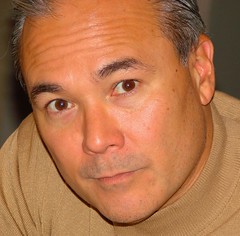 Dr. William Davis says modern-day heart care "tragically off track" Dr. William Davis says modern-day heart care "tragically off track"Heart health in the United States and around the world is that much more pronounced nowadays in light of the fact that obesity rates and and so-called "high" cholesterol have risen to the level of being labeled diseases that require a pharmaceutical response. But there's at least one cardiologist in America who believes all the current treatments being used against coronary heart disease risks fall well short of the mark in actually doing anything about artery blockages that lead to a heart attack or stroke. His name is Dr. William Davis and this heart doctor from Milwaukee, Wisconsin believes heart health is nothing more than a money-making venture for hospitals while patients experience no actual improvements in their risks of having a cardiovascular event while following the recommended high-carb, low-fat diet and popping expensive and dangerous statin drugs. Those are just a few of the topics he and I discussed in my interview with him which I will share with you today. Fans of livin' la vida low-carb are gonna LOVE Dr. Davis! ENJOY! 1. Today we have with us Dr. William Davis, an unconventional cardiologist who also serves as the medical director of Milwaukee Heart Scan in Milwaukee, Wisconsin. Dr. Davis is an outspoken opponent of the traditional methods and treatments espoused by the medical and pharmaceutical industries for dealing with heart disease. Before we get into the details of what you believe about that, Dr. Davis, tell us a little bit about why you got interested in the subject of heart disease in the first place. Does heart disease run in your own family?I came to the world of heart disease by the usual misguided route: When I was young, I found it exciting because of the opportunity for procedures to “fix” this disease. After about 10 years of a cardiology practice heavily focused on angioplasty, stents, and the like, I began to recognize that this was a treadmill of futility. I was just toying with these notions when my real epiphany came—-my mother died of a heart attack at age 62. Here I was, an interventional cardiologist employing all the newest techniques and my own mother dies of the disease I thought I understood. That was the moment when it struck me: The world of conventional heart care was terribly and tragically off track. 2. Much of what we have been taught about heart disease focuses on dietary fat consumption, excess body fat, LDL/total cholesterol, and too much stress. But most of these “scams” as you describe them are not based on the science behind heart disease. How did such dogmatic axioms become so ingrained in our culture as undeniable truths?The limited understanding of issues like cholesterol in the 1960s and 1970s has become deeply ingrained into the practicing cardiologist of this century. Unfortunately, it means that your practicing family practitioner, internist, or cardiologist is still performing a test that was outdated over a decade ago—-the cholesterol panel. Today, there are more insightful and sophisticated tests that uncover the causes of heart disease far more effectively than cholesterol testing. There’s also an economically perverse equation at work: If your heart disease is prevented, there’s virtually no profit in it. But if you are allowed to have a heart attack, there’s a bonanza of thousands of dollars of procedures that follow. This is a situation aided and abetted by hospitals, cardiologists, and the vast infrastructure of corporations that support the procedural cardiovascular care system. It is a system that generates tens of billions of dollars each and every year and sports a growth rate that is the envy of Wall Street. 3. You wrote two books about this subject--Track Your Plaque (2004) and What Does My Heart Scan Show? (2007)--to help dispel many of these so-called truths about heart disease and to help better prepare people about how they can detect and even prevent the risk of developing heart disease. And yet 9 out of every 10 cases of heart disease go undetected until a heart attack occurs. That’s why you developed a simple 3-step program has helped many patients see how much plaque is built up, find out why it is happening, and to give them complete control over the problem. Discuss how you came up with this novel concept for treating heart disease when most other cardiologists and physicians look at LDL cholesterol. Why is that such a poor way to gauge heart disease risk? (2004) and What Does My Heart Scan Show? (2007)--to help dispel many of these so-called truths about heart disease and to help better prepare people about how they can detect and even prevent the risk of developing heart disease. And yet 9 out of every 10 cases of heart disease go undetected until a heart attack occurs. That’s why you developed a simple 3-step program has helped many patients see how much plaque is built up, find out why it is happening, and to give them complete control over the problem. Discuss how you came up with this novel concept for treating heart disease when most other cardiologists and physicians look at LDL cholesterol. Why is that such a poor way to gauge heart disease risk?It's no secret: LDL cholesterol has proven a miserable failure as a detector of coronary heart disease. Abundant clinical trial experience has borne this fact out: LDL cholesterol of the average American: 132 mg/dl; average LDL cholesterol of someone suffering a heart attack: 134 mg/dl—they’re virtually indistinguishable. So, if your LDL cholesterol is, say, 141, will you die tomorrow? Will you require a heart bypass operation to restore flow to your blocked coronary arteries 2 years from now? Or, will you be dancing on the graves of all your friends and neighbors 50 years from now, never having experienced a stitch of heart disease? Cholesterol won’t tell you. Cholesterol is a predictor on a statistical basis, but fails miserably when applied to a specific individual. This led me to search for better tools to identify the person with heart disease risk. The best test for heart disease is a test that measures the disease itself, not some risk for the disease. That’s how I stumbled on heart scans as a method of detecting early coronary heart disease. Heart scans are measure of the disease itself-—atherosclerotic plaque-—not some risk factor that might predict its development. 4. I recently highlighted a rather humorous post you wrote on “The Heart Scan Blog” about your experience on a low-fat diet as prescribed by Dr. Dean Ornish for “reversing heart disease.” What’s wrong with the low-fat , low-salt, low-cholesterol (DASH) diet recommendation that Dr. Ornish and virtually every other medical professional prescribes to people who are developing or already have heart disease?The misguided advice offered to most people is that a low-fat diet reduces cholesterol and heart disease. This is simply untrue for the majority of people. In fact, the opposite is true: a low-fat, high-carbohydrate diet filled with wheat products like whole grain bread, wheat crackers, pretzels, fiber breakfast cereals, and wheat pasta raise cholesterol. Corn starch-containing products, white rice, potatoes, and processed carbohydrates are similarly to blame. They raise small LDL cholesterol particles, the worst form of cholesterol of all. While large cholesterol particles are rather harmless, the small cholesterol particles are the ones behind heart disease in over 70% of cases. And it's small LDL cholesterol that is hugely magnified by high-fiber, high-carbohydrate diets. 5. One of my readers sent me an e-mail with concerns about the diet you recommend in “Track Your Plaque” because it is basically a lower-fat approach (albeit, not as low-fat as Dr. Ornish recommends). Your diet calls for 24 percent fat coming from unsaturated fat sources in conjunction with a high-fiber (35g daily) intake. What are your thoughts about a higher fat diet and more specifically one that includes saturated fat?The Track Your Plaque book was written in 2003 before its publication in 2004. Much has happened in the few short years since its release. Among the changes to the somewhat low-fat approach articulated in the book is diet that has proven more effective in correcting the causes of heart disease: a diet higher and richer in healthy fats like those from fish, raw nuts, olive oil, canola oil, flaxseed and grapeseed oils, and wild game. These changes, along with a reduction in carbohydrate content, suggest that a diet that is at least 30% fat (calorie percent) is probably more towards the ideal. However, I do believe that saturated fat remains an issue. Saturated fat really became an issue when humans began to fry their foods and add animal fats like butter and shortening. It became an even bigger issue when the “factory farm” phenomenon seized control of American farming away from the traditional family farm, introducing economies of scale like corn feeding of livestock that transformed beef, pork, and chicken into high saturated fat foods. The trend to reject saturated fat is really a trend towards rejecting the factory farm movement driven by enormous multi-national corporations intent on supporting the fast food and processed food industries. 6. I lost nearly 200 pounds on the Atkins diet back in 2004 and have been able to maintain that weight loss ever since by continuing to implement the principles I learned from the late great Dr. Robert C. Atkins. And yet you do not recommend this particular way of eating over the long-term as a way to improve health. What specifically is unhealthy about eating an Atkins-styled diet beyond weight loss and is there a better way of eating that you believe is both heart healthy and bring about weight control?Interestingly, before Dr. Atkins died, he articulated a diet that was more balanced in monounsaturated fats, less rich in saturated fats, included more vegetables, fruits, nuts, and other healthy foods. We need to remember that the “Induction phase” of the Atkins’ diet that permitted indiscriminate and unlimited intake of meat, cheese, and other saturated fat-rich foods was simply that—-the induction into the world that allowed you to be divorced from the addictive property of refined carbohydrates. In we were to follow the Induction phase of the Atkins’ diet indefinitely, we would experience increased bladder infections, kidney stones, rashes, osteoporosis, cancer (liver, colon, prostate, breast), diverticulosis, and other chronic conditions. The induction phase is a useful tool to make the break from carbohydrate-addicted physiology, but not a recipe for long-term health. 7. For people interested in having their plaque measured by a heart specialist like yourself, the Heart Scan Resource Center at TrackYourPlaque.com is an excellent resource for finding a recommended center where this can be conducted. Walk us through what that process is like. What exactly happens when a patient comes into your office for this test? How soon will they know the results of their scan and can begin working on correcting any abnormalities?Actually, heart scans are performed at heart scan centers. I do not own a heart scan device. Thus, I have no vested interest in having people undergo heart scans. Heart scans are, nonetheless, a valuable tool for detection and quantification of coronary atherosclerotic plaque, the material that constitutes coronary artery disease and the stuff that causes heart attacks. Heart scans are ridiculously easy tests. Some EKG leads are applied, hold your breath—-you’re done. No IV, no poking or prodding, no pain. The paperwork truly takes more time than the scan itself. You walk away from the scan center with a score, a calcium score that reflects the total amount of atherosclerotic plaque in your heart’s arteries. Because calcium occupies 20% of the volume of atherosclerotic plaque in your arteries, measuring calcium is a useful and practical method of indirectly measuring the total amount of plaque in your heart arteries. Once you have a heart scan score—a precise measure of atherosclerotic plaque in your coronary arteries—you have a starting place to seize control and stop the increase in your score, perhaps even reduce it. 8. Just so we're perfectly clear about what you are saying, am I right in assuming you believe people should people stop worrying about their cholesterol numbers because they really don’t have a bearing on heart disease? How about those who are taking cholesterol-lowering statin medications like Lipitor, Zocor, and Crestor, among many others to lower their “high” cholesterol? Is there a reason for them to remain on those drugs in light of what we now know about heart disease?The cholesterol reducing drugs do have role—-unfortunately, the majority of people are put on these drugs for the wrong reasons. Let me explain. Someone will come in because of a reportedly high cholesterol. We do more testing and discover that the majority, say, 90%, of the cholesterol particles are small. This pattern is very likely to contribute to formation of plaque in the arteries. It also responds exceedingly well to a reduced carbohydrate diet. Many, many times, a person with this pattern will follow a diet that slashes carbohydrate content and cholesterol levels drop like a stone. In this instance, statin cholesterol drugs may be entirely unnecessary. Another exception: A person with a high cholesterol that is not truly high. When you are provided an LDL cholesterol from your doctor’s office, it has not been measured, it has been estimated. The crude estimation is based on a calculation called the “Friedwald equation,” an equation derived in the 1960s when new technology for testing was not yet available. It sounds ridiculously simple, but simply measuring cholesterol can provide insights that can often suggest that a statin cholesterol drug is not necessary. The more sophisticated testing is called “lipoprotein testing.” 9. Cardiac care is “big business” with nearly $60 BILLION dollars annually spent by Americans on heart health-related expenses. In fact, half of the profits generated from most hospitals comes from cardiac care alone--a staggering number which should be a real wake-up call to people who are concerned about health insurance and healthcare costs. Who or what do you believe is driving this heart disease “business” and are they intentionally trying to make people sick to continue the big payday?Performing heart procedures pays big money. Prevention of heart disease does not. That simple perversion of the healthcare equation explains a lot. Physicians and hospitals are not in business to provide health. They operate businesses that are meant to profit from treatment of disease. Wiping out a disease is not part of the picture. Put in a stent and reap about $2000 to the cardiologist, $25000 or more to the hospital. Perform a heart bypass operation, and the physician gets at least $5000, the hospital $70-100 thousand. Prevent a heart attack and you get paid . . . maybe a couple of hundred dollars for several hours work. Which do you think most physicians choose? Which do you think hospitals promote in endless TV commercials and billboards? What about the stent industry, manufacturers of implantable defibrillators, operating room equipment, and on and on. Heart disease is big business. In fact, it is the biggest business every conceived in health. Why try to change it? I try to change it because there is a far better way, a way not built on profit, but on returning control of health and life back to the individual. I see what I do as self-empowerment of the individual, taking control over health and away from hospitals and physicians and back to the human being whose life is at stake. 10. THANK YOU again, Dr. Davis, for joining us here today at the “Livin' La Vida Low-Carb” blog to talk about one of the most important health issues of our lifetime. I’m anxious to have one of these screenings myself in the near future and encourage my readers to do the same. Do you have any words of encouragement and hope to share before we end this interview today?We are just beginning to enter an age of taking back control of health from hospitals and physicians and returning it to the individual. The biggest chunk of this phenomenon is heart disease. I believe that the tools necessary to seize control of coronary heart disease are already available to the vast majority of people. It involves heart scans, testing that effectively uncovers the underlying causes of heart disease (including the rejection of the cholesterol testing scam), and following a program that truly corrects the causes. I endorse web sites like Livin' La Vida Low-Carb because they shed light on the enormous sea of misinformation being fed the American public. Your 200-pound weight loss itself speaks volumes about the useless detour the American diet has followed. There are far better answers than the ones being provided by organizations like the American Heart Association, the USDA, the Surgeon General’s office, and other official organizations. We need to turn to the real world wisdom provided by the national experiment in health and diet provided by people like Jimmy Moore. In fact, I tell my patients that if they want heart disease, they should follow the American Heart Association diet. On the other hand, if they want to substantially reduce, perhaps eliminate, risk of heart disease in their lifetimes, they need to follow a diet that eliminates the distortions of convention habits and wisdom. Be sure to visit "The Heart Scan Blog" often for more from Dr. William Davis. And you can e-mail him to thank him for the work he is doing on behalf of heart health at heartprotection@aol.com. Labels: arteries, cardiovascular disease, cholesterol, doctors, fat, heart attack, heart disease, Heart Scan Blog, interview, low-carb, plaque, saturated fat, statins, Track Your Plaque, William Davis
Study: Low Cholesterol Levels Could Lead To Depression, Suicide, And Even Death
 Dr. Yin-Xiong Li warns your cholesterol can get too LOW Dr. Yin-Xiong Li warns your cholesterol can get too LOWWith every other commercial on your television screen these days pushing another prescription drug that is supposed to help you medicate your high-cholesterol problem to allegedly improve your health, I couldn't help but share this TheHeart.org article about an eye-opening new study showing just how dangerous it is to have cholesterol levels that are too low. Yep, you heard me right--TOO LOW! Lead researcher Dr. Yin-Xiong Li, Assistant Professor of Pediatrics and Cell Biology at the Duke University Medical Center in Durham, North Carolina, conducted a basic-science study on zebra fish embryos and cholesterol supplementation to prevent fetal alcohol defects that was published in the January 22, 2007 issue of Laboratory Investigation. Dr. Li was able to extrapolate some important information that raises questions about cholesterol levels that may prove important in light of the current cholesterol-lowering madness that we are going through in 2007. His question: Is there such a thing as too LOW cholesterol? Just asking that question has no doubt gotten Dr. Li hate mail from every pill-pushing pharmaceutical company with a cholesterol drug on the market today. Whether it is Liptor, Crestor, Zetia, or any of the other medicines designed to artificially drop cholesterol levels, you can't avoid seeing or hearing about this suddenly trumped up issue of cholesterol. They have sounded the alarm on the supposed dangers of having high-cholesterol for so long that people are actually buying into it. But Dr. Li says the presence of the right amount and kinds of cholesterol in the body is too important for people to unnecessarily reduce to an arbitrary number like the current recommendation to get it below 200. That's not necessarily a good idea for everyone because there are health risks for lowering cholesterol too much, Dr. Li added. Interestingly, Dr. Li is very concerned about the overuse of statins by doctors these days. He admitted that they are indeed helping to reduce the risk of a heart attack or stroke. But the fact is these drugs put people at a higher risk of death if they are taking one of these drugs and have a heart attack or stroke with low levels of cholesterol. EEEEK! "If you cut the cholesterol too low, the risk is that when you have an [heart attack] or stroke, the event may be much worse and the death rate could be higher, because adult stem cells do not function well under extremely low levels of cholesterol," Dr. Li explained.Many people are beginning to realize statin drugs are bad news for people who think they have a cholesterol problem when they really don't (these drugs are definitely about making money, not improving health). Especially if you are livin' la vida low-carb, cholesterol levels are not measured the same way as someone who is eating higher amounts of carbohydrates. That explains why traditional cholesterol tests that measure LDL and total cholesterol alone as the indicators of heart health risks for people on a low-carb diet are virtually irrelevant. As we saw just last week in this study, HDL and triglycerides are a better marker for heart disease risk than the way we've been doing it our entire lives. And Dr. Li knows this, but it's not just about heart health. There are other costs to our health associated with lowering cholesterol levels too much. The existence of cholesterol helps the body produce stem cells to repair tissues and organs that have been damaged. "If you cut the cholesterol too low, instead of stem cells you will get fibrous cells repairing organs, which in turn are replaced by scar tissue," Dr. Li stated.According to Dr. Li, this is why death will occur more often in people with who have too low cholesterol because their blood vessels are much stiffer and will very likely break. Additionally, the adverse mental side effects of low cholesterol levels can be quite traumatic (nevermind the fact that statins has been found to cause vivid and scary nightmares!). "If your cholesterol is too low, you are likely to be extremely unhappy, with a higher likelihood of suicidal behavior," Dr. Li contended. "We also know that drugs against depression increase cholesterol."His conclusion is that we need to have a balance between what is considered high-cholesterol and low-cholesterol to protect people from suffering a cardiovascular even, have proper levels of stem cells, and ward off depression. But what is that number? Doctors put the overall cholesterol maximum at 200, but is this the right level for everyone across the board. Nothing irks me more than to see people who have total cholesterol of 210 being put on a statin drug just to push their number below the magic line that has been drawn by doctors. One expert in the column said if LDL cholesterol goes below 50 mmol/L, then he would decide to "pull back a bit" on the level of statin drugs used. Another expert said he would let it get below 40 mmol/L before he would let it stop. Are you kidding me? Why would you allow LDL to get down to that LOW a level when clearly there are health benefits to be gained from high LDL levels, especially for the elderly among us? If you are interested in learning more about cholesterol, including why higher levels of HDL and total cholesterol aren't the massive crisis they have been made out to be, then you really should read Anthony Colpo's bombshell book The Great Cholesterol Con. It will open your eyes to some amazing facts and research behind the current cholesterol-lowering phenomena! If we really want to do something about cholesterol, then more doctors need to start putting their patients on a low-carb diet and exercise program to lower total cholesterol and even raise HDL cholesterol levels without the use of any drugs. We need to get out of the Stone Age of medicine and start showing people how they can take better care of their own health naturally and effectively. Livin' la vida low-carb can help us get there sooner rather than later. You can contact Dr. Yin-Xiong Li about his research by e-mailing him at yinxiong.li@duke.edu. 2-5-07 UPDATE: Dr. Yin-Xiong Li sent me an e-mail today regarding my focus on his cholesterol research and confirmed many of my suspicions about how he is being villified by the mainstream medical research establishment. Dear Jimmy,
Thank you for writing to introduce our work. I am currently in the craziness of applying for an NIH grant. This grant is the fourth time it has been submitted to them. As you see from the study you highlighted at your blog, our research has been conducted without government grant support for three years and it was fully supported by my own starting package from Duke.
Anyway, since the paper was published last month, I received lots of attention worldwide from intersted individuals and basic research scientists. While most of them agree with me and appreciate what I am doing by telling the truth, some doctors and drug makers are marking me and my work as ridiculous. You know from what you are doing at your blog the kind pressure that I am facing now.
I am working on my grant at this moment to help further our research. The published work I wrote about is specifically about how important cholesterol is in supporting stem cell growth in embryo development. What I said about heart disease is a reasonable speculation that needs more investigation to test.
Yin-Xiong Li, MD., Ph.D.
Assistant Professor, Department of Medicine
Pediatrics and Cell Biology
Duke University Medical CenterTHANK YOU for sharing your comments with me and my readers, Dr. Li! When you present work that goes against what many have established as irrefutable truths, then you truly are a marked man. But a real scientist (LIKE YOU!) realizes that nothing is absolutely certain without the research to back it up. Keep doing what you are doing, Dr. Li, and make us proud. Labels: cholesterol, death, drugs, Great Cholesterol Con, heart attack, LDL, research, statins, stroke, study, Yin-Xiong Li, zebra fish embryos
Botched Aspirin Study Divulges Unexpected Heart Health Benefits Of Dark Chocolate
  An aspirin study by Drs. Becker and Faraday turned to dark chocolate An aspirin study by Drs. Becker and Faraday turned to dark chocolateThis UK Guardian story should bring a great big smile to the face of virtually any research scientist who has worked with a group of study participants unwilling to follow the dictates of their experiment exactly as they were supposed to. But sometimes that's okay when the unexpected results end up making an important point regarding heart health. Lead researchers Dr. Diane Becker and Dr. Nauder Faraday from the Johns Hopkins University School of Medicine were in the midst of a 19-month study (June 2004-November 2005) on aspirin and its effect on counteracting the clotting of blood platelets called the Genetic Study of Aspirin Responsiveness (GeneSTAR) among 1,200 American adults (500 men and 700 women). The researchers gave the study participants strict orders to NOT eat any chocolate during the study. But, human nature and the attractiveness of doing the opposite of what you are told led 139 of those in the study to eat chocolate anyway. When the dirty little secret was revealed, the researchers decided to make lemon out of lemonade with the botched portion of their aspirin study by looking at the results of those study participants anyway. Perhaps there was something to be gained by zeroing in on the chocolate lovers. And there was. After comparing the blood of those who continued eating chocolate with those who refrained from eating chocolate, Dr. Becker and Dr. Faraday found that blood took longer to clot among the chocolate eaters (130 seconds when taken out) versus the non-chocolate eaters (123 seconds). "What these chocolate 'offenders' taught us is that the chemical in cocoa beans has a biochemical effect similar to aspirin in reducing platelet clumping, which can be fatal if a clot forms and blocks a blood vessel, causing a heart attack," Dr. Becker noted.The researchers concluded that eating dark chocolate could reduce the risk of blood clotting in the heart by as much as 50 percent compared with those who did not eat chocolate. Doing whatever you can to stop the clumping of blood platelets is vital to preventing a blood vessel blockage which can lead to a heart attack. Consuming as little as two tablespoons of dark chocolate or a chocolate drink daily (minus the sugar, of course) could be enough to protect your heart against these dangerous blood clots. The results of this study were presented at the American Heart Association's annual conference in Chicago, Illinois on November 14, 2006. We've already seen research on the benefits of eating dark chocolate on blood pressure, insulin sensitivity and blood vessel functions as well as mortality rates. Yet the supposedly healthy versions of dark chocolate coming from the large manufacturers, like the highly-touted garbage Cocoavia, are too packed with sugar and other ingredients your body doesn't need as part of your healthy lifestyle. Don't fall for the gimmick that these kinds of chocolates are good for you because they clearly are not. That is why I support companies like Low-Carb Specialties who make the uberdelicious ChocoPerfection bars that give you dark chocolate without the sugar and are packed with fiber. These are HIGHLY recommended by people like me for weight and health management. There's just no denying the evidence that dark chocolate is a healthy superfood that everyone should be eating on a daily basis. I'm more and more convinced of this as the days go by. When you are livin' la vida low-carb, chocolate is the perfect indulgence to not only give you all of the aboveforementioned health benefits, but to also cause you to feel good on the inside because it releases endorphines in the body to give you a sense of comfort and relaxation. We could all use a little bit of that, couldn't we? Sure! You can e-mail Dr. Diane Becker about her study on chocolate at dbecker@jhmi.edu. Labels: American Heart Association, blood clot, chocolate, dark chocolate, Diane Becker, heart attack, Johns Hopkins, Nauder Faraday, research, study
Kevin's Obesity Saga Hits Too Close To Home
 My brother Kevin has continuing health problems because of his obesity My brother Kevin has continuing health problems because of his obesitySome people ask me why I am so adamant about what I write about here at my "Livin' La Vida Low-Carb" blog. Others wonder if I should be using my time in other ways to do other things that I like to do. It's certainly a valid question and I appreciate the concern that people have shown for me and acknowledging the sacrifices I have made to do what I do. But what I am going to blog about today is exactly why I spend so many hours relentlessly typing away the message of livin' la vida low-carb and making your body as healthy as it can be. Well, it's not so much a what, but a WHO: a man by the name of Kevin Lee Moore. I've told you about Kevin before and he took a sudden turn for the worse this week. Back in November 2005, doctors gave him one year to live if he didn't lose weight as soon as possible. At the time Kevin weighed close to 600 pounds. Just as he has done on every previous time he attempted weight loss or anything in his life, Kevin was gung ho about it...for a while. As in a couple of months. But then it happened to him--he starts feeling a little bit better, thinks he's gonna be okay now, stops doing those things that are essential for improving himself, and goes into complete denial about his morbid obesity. Keep in mind, this is the same man who in 1999 at the age of 32 experienced three heart attacks in the span of a week that nearly killed him. And it's ONLY because of the complications brought on by his massive weight problem. Sure, he's had some difficult life experiences, including a horrific marriage to a woman who basically made his life a living Hell when he had his heart attacks and was no longer able to work. She mentally and even physically abused him in ways that probably reminded him of what our dad had done to us when we were children. Thankfully he got out of that relationship with a divorce a couple of years ago, but the lingering damage has been done. Like many people who are hurting and life seems in such turmoil, Kevin turns to food to comfort himself. And not just a little food. I mean an out-of-proportion gargantuan amount of grub that would make most people's eyes bug out. For example, he's go to McDonald's and get 5 Big Macs with 3 Large orders of French fries and 10 cookies. EEEEEK! Unreasonable to most, but reality for my brother. This is my own flesh and blood, mind you. A man that I grew up with calling my older brother. Yeah, he was my stupid, ugly butt hole older brother and enjoyed taunting me as every older brother does, but it was only because he was my brother. We shared a lot of happy memories wrestling on the ground or playing pool at the local game room (I always beat him at it and he hated that!). While we endured the divorces that both of our parents went through and lived as normal a life as we possibly could considering the hand life dealt us as kids. Fast forward a few years to 2004, I decided to take control of my weight and health for real and stop wallowing in the past with all the genuine hurt and pain that I had endured for my entire life. It was at that point there were no more excuses for the way I was living my life NOW and I did something about it. My old eating habits would have to be radically changed and exercise would need to become my friend rather than my foe. As you know, I did it--I lost 180 pounds in one year and avoided the obesity-related health decline that hit my brother like a 2X4 upside the back of the head. My brother was a contributing motivating factor for me to do it for real this time for a couple of reasons. First, I wanted desperately to NEVER have to go through what he has since his heart attacks. Second, and even more importantly, I thought my example to my only full-blooded brother would get him going. Unfortunately, I learned the hard lesson that you can't make ANYONE lose weight who is unwilling to do it for themselves. You just can't and Kevin is the prime example. He's read my book, he's seen me in person, I've given him advice about the changes he could make in his life if he truly wants to lose weight and restore his health. But he has ignored it all. Now it's October 2006 and that man in the picture at the top of this post is hanging on by a thread. He was hospitalized as he has been hundreds of times the past seven years, but this time is quite different. The stent they put in his heart valve before is completely blocked now. He has two other arteries that are 90 percent blocked as well. He was very weak and fatigued when I spoke with him on the telephone, but he was hopeful the doctors could do something for him as they have in the past. On Monday, the doctors he saw said they were too afraid to do open heart surgery on him because they feared he may not be strong enough to come back if they put him under. Then on Wednesday, they tried to run a test on him, but Kevin was way too big for the table which could not hold him. Yes, he's still around 600 pounds. My mom told me that Kevin is supposed to have a PT scan today on his heart to determine what they will do next. It is very likely he will be sent to a specialist hospital a few hours away and Christine and I will very likely be going to visit him there if that happens. I'll try to let you know when that happens so you can pray for him specifically about his surgery and for us as we travel. Do I even need to tell you how upsetting this is to me? It's something no parent or sibling should EVER have to go through because it is all preventable. But we all have choices to make in our life and Kevin has made his. He has simply accepted that he's fat and will always be fat for the rest of his life. That's what I used to think, too, but I instinctively knew better. Why do people fall into this self-imposed trap about their weight? Now you realize why I remain so vigilant and passionate about sharing what has happened to me through my weight loss experience because this subject hits too close to home. My mom's dealt with her obesity with gastric bypass surgery and my half-brother Nathan was able to take off the pounds with a low-carb-styled program and exercise. But this is something that has completely alluded Kevin and the price for that decision, conscious or otherwise, is having to be paid now. I'm sorry if this post is not the encouraging, put on a happy face, go get 'em article you have read from me over these past couple of years. But my mind has been uneasy since Monday when I got the news about Kevin. He's a special man that right now needs the earnest prayers of anyone who has felt the pain and agony of living with or being an obese person. I cherish those at this time for Kevin and my family and hope for the best to happen for my brother even if that means the good Lord will be taking him home soon. I will certainly keep you informed about Kevin's progress in the next few days and post updates here when I get them. If I have to go away for a few days, then I know you will understand if the blog comes to a standstill. The work I am doing here is important, but Kevin's situation is life and death. If he's in his very last days, then I need to be with him. God bless you all for your continuing faithful support for me and what I am doing. Now you know a little more about why I will NEVER give up telling people about the healthy benefits of livin' la vida low-carb. 10-5-06 UPDATE: My friend Richard Morris who knows a thing or two about what it feels like to be morbidly obese shared his thoughts with me about Kevin in an e-mail today. Hi Jimmy,
I just read your article about your brother. Wow. First of all, I didn't know you had a brother and I just assumed that everyone within range of your infectious enthusiasm would be just as gung-ho on healthy living as you are.
After a short bit of reflection though, I realized that the situation with your brother makes perfect sense. You see, I have an older sister who is morbidly obese as well. Like you, I've done everything to try to help her. She spent two months with my family a while back and had really started to change physically and mentally, but then she returned home out West and went back to her old lifestyle.
Like you, I've received numerous emails from people who have attended my workshops, read my book or visited the web site and have had their lives transformed, and yet when it comes to family, it seems that those closest to us are the hardest to reach. I've heard variations of this same story from other people who can't seem to get a brother, sister or parent to see the nutritional light and walk therein.
I just thought I'd share this perspective. I think sometimes people think there's something about them or the relationship they have with a loved one that prevents that person from taking charge and making change, but the fact is that your situation with your brother is fairly common.
I'm so sorry to hear that his condition has worsened. I'll keep him in my thoughts and prayers.
Peace,
RichardTHANKS, Richard, and to everyone else who has offered thoughts and prayers at this time. From the bottom of my heart, I am grateful to know that so many of you have shown me and my family genuine and loving concern at this time. God bless you! 10-5-06 UPDATE: I just got an update from my Mom about Kevin via e-mail. Just a note to let you know what I know about Kevin. Today they made him fast all day in anticipation of a test they wanted to run, but there was a problem because they wanted the hospital to discharge him, let them run the test and then readmit him. They fought about it all day and never ran the test. They finally let him have dinner tonight.
The doctor is trying to get him sent to a specialist and let them run the tests on him. I am taking off tomorrow to go up and hopefully talk to the doctor about this. When I know something more, I will let you know. Keep praying!!!!
Love,
Mama10-6-06 UPDATE: My mom talked to the doctors today and is very frustrated. The doctors are still indecisive about what they want to do. They will keep Kevin over the weekend, discharge him on Monday, readmit him to adminster an MRI and then determine when and whether to send him to the specialist three hours away. Sigh. My mom was spitting bullets about the adminstrative red tape she is going through with this. She is hoping they agree to send him to the specialist by this time next week. I'll let you know when I hear something definite. THANK YOU so much for your continued prayers, e-mails and support. God bless you all! Labels: brother, health, heart attack, Kevin, obese, obesity, weight, weight loss
A Miracle Happened Over The Weekend
Over the weekend, a real-life miracle happened that I wanted to share with you which underlines the importance of us continually telling people about the healthy low-carb lifestyle. A man from my church in his late 30's who has two beautiful little girls was attending one of their ballgames on Saturday morning when he started feeling some pain in his chest. He walked over to his father, who was also in attendance at the game, and asked him what a heart attack felt like. His family has had a history of heart problems, but he didn't think anything could happen to him since he was so young. But a few minutes later he turned to his wife and asked her to drive him home so he could relax because he wasn't feeling very well. His wife immediately knew something was wrong. On the way home from the ballfield, she decided she needed to stop at the local fire station to see if an EMT was there who could check out her husband's blood pressure and help him if necessary. Before she could get there, though, he suddenly had a massive heart attack and actually died right there in their vehicle. Frantically entering the fire station parking lot honking the horn and screaming for anyone to respond, this man's wife watched as an EMT came out to her vehicle and used the difibrulator machine to bring her husband back to life before having him transported to the emergency room soon thereafter. It was a harrowing experience for everyone involved, but thankfully this man who had been enjoying a sunny Saturday morning watching his girl play ball is now in stable condition and expected to fully recover. So what's the miracle in this story besides the fact that he was brought back to life after dying? You see, that particular fire station they stopped at only has an EMT on sight for one day out of the entire year for a demonstration and training session with the firefighters. Guess which day it was? Yep, it was Saturday! And doctors later revealed he had the heart attack because one of his arteries was completely blocked and had that EMT not administered medical assistance when he did, that completely healthy-looking young man on the outside with a family would not have survived. They were able to put a stint in him to clear up the blockage and allow the blood to flow to his heart normally again. It is truly a miracle from God who so graciously allowed this man to survive and for the rest of his life he will be thanking Him for sparing him from an early grave. He'll have some testimony to share about this experience for many years to come! You might be wondering why I shared this story on my low-carb blog. Well, this story really got me thinking about why I am so passionate about the low-carb lifestyle. Is this just a game of which way of eating is right and wrong or is it something that is really making a difference in people's lives? My contention is that the low-carb message is one we need to never stop spreading because it can help so many others not only lose weight, but vastly improve their overall health. The more I think about it, this story just goes to show you that no matter how healthy someone may look on the outside from a physical standpoint, you never really know what potential ailments may lie beneath the surface. I'm sure his doctor is going to recommend he take measures to lower his cholesterol and reduce his fat intake to prevent something like this from happening again. That's the same old recommendation that doctors have always told their patients who have had heart attacks. But what about choosing to do the low-carb lifestyle to get healthy? While all the focus regarding low-carb tends to gravitate towards weight loss (and it works very well for that purpose indeed), very little is ever mentioned about how much it can improve your cholesterol, triglycerides and heart health. While the media accentuates the supposed dangers of eating fat while on low-carb, people like me and you are living, breathing examples that this lifestyle is one that greatly improves your heart health. I don't know what this man from my church is going to do about his eating habits from now on. I suppose he will try to follow the low-fat diet his doctor will undoubtedly recommend. But I hope there will come a day when someone will be able to share with him the healthy alternative that livin' la vida low-carb can be for him so something like this is a lot less likely to ever happen again. Pray for him, his wife and his two daughters as they go through this difficult time. Labels: health, heart attack, lifestyle change, low-carb
|


