|
PLEASE UPDATE YOUR BOOKMARKS TO LIVINLAVIDALOWCARB.COM/BLOG
Study: High-Carb, Low-Fat Or Low-Carb, High Fat Diet Equally Lower Weight, Improve Mood And Memory
 Think a low-carb diet will destroy your brain? Think again! Think a low-carb diet will destroy your brain? Think again!It was a head-to-head match-up that ended in a tie. Just wait until you see the stunning results of a new study comparing the traditional high-carb, low-fat diet with the increasingly popular low-carb, high-fat diet as it relates not just to weight loss, but also brain function. Now this oughta be interesting! I recently interviewed one of the premier neurologists in the world named Dr. Larry McCleary who promotes carbohydrate-restriction as a means for improving brain health in his recently released book entitled The Brain Trust Program. He said something in that interview that should make anyone who advocates a high-carb diet for brain health to stop and think. "If you want to age your brain just eat the typical [high-carb] diet most Americans consume. That will lead to memory, attention and mood difficulties and will hasten the path to Alzheimer's."Yikes! That's pretty scary if you ask me and it goes against everything we've always been led to believe about diet and the way our brain reacts. Of course, the popular stereotype of someone who is livin' la vida low-carb is that you just walk around in a perpetual sense of depression and rage all the time like you're some kind of zombie or something! In fact, there's even a YouTube video that attempts to illustrate and perpetuate this myth about low-carb diets claiming people who eat this way are "damaging their brains." Yeah, whatever! But according to the study conducted by lead researcher Angela K. Halyburton, from the Commonwealth Scientific and Industrial Research Organization (CSIRO) in the Department of Human Nutrition in Adelaide, Australia, that myth is just that--an unproven and unreasonable conclusion that is not based on the evidence. That's because what she and her colleagues found was a surprising answer to the questions about diet and mood. Halyburton and her fellow researchers observed 93 overweight or obese study participants who were placed on one of two specific diets with an appropriate fat/protein/carbohydrate ratio: LCHF--an Atkins-like low-carb, high-fat diet-- 61/35/4 (NOTE: 20 percent of the fat intake was saturated) or HCLF--a traditional high-carb, low-fat diet-- 30/24/46Both groups were given the same number of calories and consumed their respective diets for a total of eight weeks on this randomized, clinical trial. Study participants were weighed every two weeks and given a psychological well-being test based on the Profile of Mood States, Beck Depression Inventory, and Spielberger State Anxiety Inventory instruments. The researchers measured cognitive function, memory, and speed of brain processing at the beginning and end of the study. Not surprisingly, the LCHF group participants were already in ketosis by the end of the first two weeks of carbohydrate-restriction and remained there for the duration of the study. As a result, they lost "significantly" more weight than their HCLF diet counterparts. Gee, imagine that! But the real surprise was the fact that improvements in the mood of the participants in BOTH groups improved. That's right! Despite all the stereotypes about low-carb, the psychological improvements in attitude and memory function were IDENTICAL with both the high-carb, low-fat diet group and the low-carb, high-fat diet group. It didn't matter. WOW!!! This is HUGE! The only area where there was a difference regarding brain function was with the speed of processing information. According to the study, the LCHF group responded slower than the HCLF diet group. But the overall conclusion of the researchers was that these two diets which have often been compared for weight loss alone also show no difference as it relates to cognitive and psychological function. You can find the results of this study published in the September 2007 issue of the American Journal of Clinical Nutrition. I have a few comments about this study to make. Isn't it interesting the researchers forced the low-carb dieters to keep their calories at the same level as their high-carb counterparts? You know what that means, don't you? They probably had to artificially lower their fat intake to keep the calories reduced to similar levels. Can you imagine how much BETTER brain function would have been if the LCHF group was able to eat even MORE fat using their natural metabolic response rather than being forced to cut their calories? I would predict an even GREATER weight loss and a MUCH better impact on mood and cognitive ability. Wanna study that one researchers? Now it sounds counterproductive to eat more fat when you are attempting to measure brain function, cognitive ability, and mood. But this study shows eating fat improves your mental health and I can personally attest to this in my own life. The more fat I eat, the better and happier I feel because I know I am consuming a healthy diet that will not only keep me slim but also very healthy for many years to come. And it just feels amazing to ENJOY your diet rather than dreading it. When I was eating a high-carb, low-fat diet in 1999, I was ALWAYS grouchy! Just ask Christine and she'll tell you I was one miserable chap to be around. Sure, I lost 170 pounds in about 10 months, but I was in agony. Why? Besides being hungry ALL THE TIME, I just didn't feel good eating this way. I later realized it was all the sugar that had me bouncing off the walls. I subsequently gained back ALL the weight I lost in about four months! Never again! Starting on the Atkins diet in 2004 was the best thing I could have ever done to improve my attitude and mood. Sure, those first few days and weeks were rough as I went through a typical case of the "Induction flu," but it has been smooth sailing ever since in my low-carb lifestyle. So many people like this college student get caught up into thinking those first few days are typical of a low-carb diet ALL THE TIME, but it's just not true. Get past that temporary discomfort and you'll gladly be livin' la vida low-carb forever. I was pleased that this research from CSIRO, where researcher Dr. Manny Noakes is doing some fabulous work into ketogenic diets and she was a part of this study, put forth the conclusions that it did because it very well could be the beginning of the end for yet another false stereotype of livin' la vida low-carb. "Short-term consumption of a moderately energy-reduced LCHF diet has an effect on the psychological well-being of overweight and obese persons similar to that of consumption of an isocaloric conventional HCLF diet," the researchers proclaimed.And that my friends is a beautiful thing! Spread the word! Labels: Angela Halyburton, brain, CSIRO, diet, health, high-carb, high-fat, low-carb, low-fat, mood, research, study, weight loss
McCleary: Ketone Bodies Produced By A Low-Carb Diet Are High-Octane Brain Food
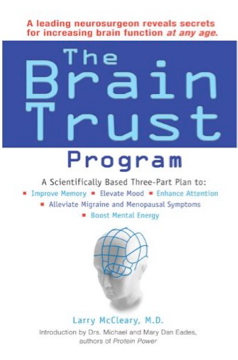 Dr. Larry McCleary says sharpen your brain by livin' la vida low-carb Dr. Larry McCleary says sharpen your brain by livin' la vida low-carbIt doesn't take a brain surgeon to figure out that the low-carb lifestyle is one of the healthiest nutritional plans out there to battle obesity, heart disease, diabetes, and so many other health ailments that plague modern society. But what about that actual gray matter between our ears? Can a low-carb diet do anything to improve brain function, memory, and even diseases like Alzheimer's? One of America's top neurosurgeons says YES! His name is Dr. Larry McCleary and his brand new book about this subject entitled The Brain Trust Program: A Scientifically Based Three-Part Plan to Improve Memory, Elevate Mood, Enhance Attention, Alleviate Migraine and Menopausal Symptoms, and Boost Mental Energy released today. I'm happy to share an exclusive interview I conducted with Dr. McCleary with you today so we can all learn from one of the brightest minds in the field of cognitive health. You'll be pleased to hear that Drs. Mike & Mary Dan Eades not only endorse this book, but they actually wrote the foreword to it. And I was also asked by Dr. McCleary to preview the book and provide a blurb quote included on the jacket of the book. COOL! Here's my quote about The Brain Trust Program: "It isn't difficult to find people who are suffering from a wide range of debilitating neurological conditions such as migraine headaches, Alzheimer's disease, brain cancer, and worse these days. But leave it to a brain surgeon to figure out many of these can actually be treated and even reversed metabolically through some rather simple changes in the diet. Dr. Larry McCleary has figured out that controlling the amount of insulin production by consuming a healthy low-carb diet is indeed the most 'brain-friendly' way you could possibly eat. The Brain Trust Program he has developed from his many years of experience challenges people to think about the long-term impact of the high-carb foods they are eating not just on their waistline, but also on that gray matter between their ears! This book is guaranteed to shake up the status quo and quite literally turn traditional brain treatment on its head!"You must get your hands on a copy of Dr. McCleary's book because it is absolutely stunning information that neurosurgeons and patients alike need to be aware of to protect the health of their brains (this book will make a very nice complement to your low-carb library along with the upcoming Gary Taubes' masterpiece Good Calories, Bad Calories). Are you ready to hear from Dr. Larry McCleary himself? Here he is! 1. Today we have a bona fide expert in the field of brain function and the surprising metabolic connection. He is Dr. Larry McCleary, a brain surgeon currently serving as the Director of Research for the Advanced Metabolic Research Group as well as the former acting Chief of Pediatric Neurosurgery and former Director of the Neuroscience Research Program at the famous Children’s Hospital in Denver, Colorado. A world-renowned speaker who has been published extensively in some of the most prestigious medical journals dedicated to brain health, Dr. McCleary is THE go-to man for all things related to the brain.
It's an honor to have you with us today, Dr. McCleary, and we look forward to gleaning from your knowledge and experience in this interview. What first got you interested in brain health and is it everything you expected it to be? What has been most surprising to you about this particular field of medicine that you never would have expected going into it?Hi Jimmy. It's great to be with you today. As a pediatric neurosurgeon I took care of thousands of very sick brains. They were suffering from blood clots, infections, birth problems, tumors and traumatic insults. I was always searching for things that could help these sick brains recover and stay healthy. Early in my career, I had the pleasure of working with a neuroscientist who was investigating the therapeutic potential for certain nutrients to improve brain function. Hollywood types were always stopping by to hear about the latest brain health tips from Dr. Harry Demopoulis. I had the opportunity of experiencing the dramatic impact of some of these brain-healthy compounds first hand. So when I moved to Denver Children's Hospital I continued the research. Working hand-in-hand with the Neuro-Rehab Division at the hospital, we provided the children under our care with a mix of essential fats, medium chain triglycerides, amino acids and other nutrients. We were convinced that these sped up brain recovery and enhanced mental function. The take-home message for me was if they could help the sickest of brains they could certainly help our brains as we aged. 2. Brain health entails more than most people even realize as you so brilliantly share in your brand new book entitled The Brain Trust Program. It is an outstanding resource that I was privileged to review and in it you share a three-part method for actually improving brain function through the use of diet, supplementation, and brain exercises. How does your novel new approach differ from the most common ways to correct brain abnormalities and conditions? Jimmy, I think we have all heard that the brain burns glucose, or sugar. So if that's the case, then giving it lots of sugar must make it work better. Although that might seem logical, the science doesn't back it up. Just the opposite, there is a groundswell of medical evidence that documents how too much sugar can make the brain shrink, wither, atrophy and just plain work badly. If you want to age your brain just eat the typical diet most Americans consume. That will lead to memory, attention and mood difficulties and will hasten the path to Alzheimer's. The Brain Trust Program builds upon this concept and provides the science behind the recommendations. 3. Many eyebrows will certainly be raised when people find out what a “brain-healthy diet” actually looks like. Foods like fish, berries, green leafy vegetables, eggs, avocados, nuts, seeds, and coffee—conspicuously all low-sugar and low-carb, by the way—are highly recommended by you for maximized brain function. It falls right in line with the latest research for neurological diseases.
Essentially, you are stating that the health of the brain is directly tied to blood sugar levels in the body—something that medical literature confirms. I’m sure some of your colleagues will no doubt scoff at your contention that a simple nutritional approach is what is needed to preserve this most vital of our organs.
What led you to go down this path for treating your patients? Have you seen similar or better improvements in brain health compared with prescription drugs and other treatment options? As you well know, prescription drugs usually act on a single metabolic, or cellular, pathway. By increasing or decreasing a specific functions, drugs might be able to treat something like an under-active thyroid. However, all of the diseases associated with aging such as heart disease, arthritis, thinning of bones, memory loss and stroke are hardly changed by drug therapy. The key question is why. As we have seen, drugs act on a single highly specialized pathway. The diseases that cause most concern today involve disruption to multiple cellular pathways. That is why the pharmaceutical industry has failed us. We need a solution that improves MANY cellular functions. This is the very act of eating well. It is also closely tied to our DNA and evolutionary history. Simply stated, that is why nutrition is so important and so beneficial. 4. There’s a lot of controversy right now being discussed over the role of artificial sweeteners in a healthy diet. In terms of their impact on the brain, what do you think about the most popular sugar substitutes being used these days, including Nutrasweet (aspartame), Sweet ‘N Low (saccharin), and Splenda (sucralose)? What about the claim that these substances are merely excitotoxins that fool the brain into thinking they are sugar and, thus, the body responds in the same manner as sugar?
How about the plant-based stevia which is set to be approved as a sweetener by the FDA soon? Is it safer? Or is it just better to eat pure cane sugar, honey, and other natural sources of sugar in moderation as some studies have suggested for good brain health rather than risking any adverse side effects from these alternatives? Most of the artificial sweeteners share a dark chemical side with the drugs that are prescribed like water in this country. Both share the fact that they are chemicals to which the body has never been exposed. For this reason they may be patented. When this occurs only one manufacturer may produce them and the profit margin is high. That is what is driving both industries. Since the body has never seen them before, they may cause problems in certain people. This has been documented abundantly in the drug and artificial sweetener arena. For these reasons I would stick to fruits (which contain natural sweeteners) and spices (which are akin to stevia). I think we all must realize that sweetness is an acquired taste and just as we have been conditioned by the food manufacturing industry to crave sweets, we can de-condition ourselves be choosing natural foods. In time we will lose the urge to eat foods containing such additives. 5. Nutritional supplementation has become a multi-billion dollar industry these days with people taking every vitamin they can get their hands on in an effort to improve their health and ward off disease. Drugstore shelves are full of everything from A to Z, but who knows what to take? And are there better quality supplements people need which are not easily found in stores?
What are the absolutely essential supplements that everyone should be taking to give their brain the best potential for maximum function? Are there any supplements or gimmick “brain health” products out there that should be avoided like the plague? I think this is a very important question. We are a society looking for a "quick fix" or magic bullet. I think we all know that those don't exist. That is why proper nutrition is so important and remains the cornerstone of a healthy lifestyle. Once a good diet is in hand, there are a few nutritional supplements that can aid the aging brain. I discuss these in the Brain Trust Program. Basically they reinforce the effects of a healthy diet but add nutrients that are specific for the insults associated with aging. There are a number of products that make egregious brain health claims. That alone should be a tipoff. Be careful to choose manufacturers who use quality ingredients, avoid sources that incorporate heavy metals and make sure they deliver what the label says. 6. A large part of your book includes some simple, but effective exercises for the brain. Why is this oft-neglected part of brain health so important and what are the benefits to setting aside time each day to do this? Can't people just read or do a crossword puzzle and work their brains enough? What happens to those people who fail to exercise their brain beyond their regular, day-to-day activities? The brain goes through "phases" if you will as it develops. When we are children, we soak up information like sponges. Learning is effortless. Difficult things like picking up language skills come easily. As we age the brain "solidifies" and becomes less flexible. This is not bad because by this time we know what we need to do to function in society to be successful. The down side is that we can get "fixed in our ways" and lose the ability to look at things in novel ways. That is why a mentally challenging outlook on life is vital. It keeps the cobwebs away and stimulates ALL the important areas of our brain. That is what keeps us mentally young. For this reason we need to continually be stimulating our brains in novel ways. This means reading books, solving problems, social interactions, doing puzzles, and even exercising. Aerobic activities, weight training and balance and coordination drills such as ping-pong, jump rope and trampoline activity activate different brain regions and keep us mentally young. 7. Diabetes has become the health crisis of our time with millions of new cases popping up every year while its twin epidemic obesity continues to get worse and worse. We all know about Type 1 and Type 2 diabetes, but what about this new version some researchers are calling “Type 3 diabetes” which is the new way of referring to Alzheimer’s Disease because of the impact sugar has on this condition?
I've highlighted several published studies here at my blog showing various versions of a low-carb diet can effectively reverse the symptoms of this condition, including one study by Dr. Thomas Seyfried from Boston College in February 2007 using a high-fat, low-carb diet to actually shrink brain cancer tumors. What has been your experience with treating brain diseases like these through innovative dietary improvements compared with the recommended Standard American Diet? Type 3 diabetes as you have referred to, was a phrase coined by researchers at Brown University. It suggests that the brain is unable to effectively use glucose as a fuel, much the same as the body of a diabetic can no longer use glucose as a fuel. The ability to deliver a low, stable and continuous supply of glucose to the brain is what makes it most happy. The dramatic spikes, surges, or continuous excessive supply delivered by today's diet is toxic for the brain. It is now well-known that insulin resistance, glucose intolerance, or the worst form of sugar problem--diabetes, ages the brain and doubles the risk for all types of memory problems and even Alzheimers disease. As you have suggested, the types of fats and carbohydrates in our diets are key in accomplishing this goal. We need to include more of the brain-friendly omega 3 fats and veggies and fruits (especially berries), and less of the refined carbohydrates such as cakes, cookies, and breads and trans fats in items like margarine. 8. Many of my readers who deal with less severe brain conditions like migraine headaches, menopause, hot flashes, dimming of the senses, brain fog, and memory loss will be pleased to learn that you actually recommend a specific “cocktail” for each of these in your book. Fascinating! Each of these contains all-natural and healthy ingredients that will supercharge your brain and make it better and stronger than ever.
Give us an example of your most prescribed “cocktail” for a common brain ailment. How quickly can people expect to find relief for their condition using these treatment options and will they need to keep up these regimens for the rest of their lives? Many common conditions of the brain are directly related to its inability to produce the energy it needs to get through the day. Our brains are being asked to do more today than ever before. They consume energy 10x faster than the rest of the body. Our dietary and lifestyle choices impair the brain's ability to meet these energy needs which depend upon glucose. The suggestions I make in The Brain Trust Program depend on an alternative energy source the body developed millions of years ago for times when the brain couldn't depend upon glucose. This alternative fuel is ketone bodies which are merely partially burned fats. They are burned differently than sugars and the brain loves them. They have been shown to help a multitude of brain afflictions from memory loss to migraine headaches to hot flashes. They are generated in the body from a nutritional supplement called pure MCT (medium chain triglyceride) oil that is available from high end vitamin stores or on the internet. When consumed the results and response can be surprising and may be measured in days! Another easy way to produce ketone bodies is simply by restricting carbohydrate intake. 9. You are a big believer in the body’s use of the ketone bodies that form in a carb-restricted state for optimal brain health. What has your research on ketones shown you to make you so confident that they are an excellent replacement for glucose as fuel for the brain? What is your professional response to those who oppose a low-carb nutritional approach as an unhealthy, dangerous, fad diet that is potentially harmful and deadly over the long-term? Fad diets come and go. The diet we cut our evolutionary teeth on is essentially a low-carb diet that generates high levels of ketone bodies. You need look no further than the brains of children with intractable seizures to see how miraculous ketones are for brain health and function. They work where all drugs fail by increasing the energy available for the nerve cells and keeping them from becoming over-excited which is after all what causes seizures to develop in the first place. 10. THANK YOU for sharing a few moments of your time with us today here at the “Livin’ La Vida Low-Carb” blog, Dr. McCleary. You truly are one of the leading voices in the health debate over the veracity of low-carb diets for health and the information you have provided about brain health and function in your new book and in this interview today is absolutely incredible. What is the ultimate take-home message that you hope people will remember (no pun intended!) about The Brain Trust Program? We all age and our brains age--but at different rates. As this occurs, there is a period when the brain cells weaken, but before they die. This is when we have symptoms, but also when we can make a difference. If we change our diets, lifestyles and level of brain stimulation we can "nurse" a sick brain cell back to health. But the sooner you start, the better the outcome! So don't wait...jump start your brain now before it is too late! Labels: Alzheimer's Disease, book, brain, Brain Trust Program, diabetes, diet, health, insulin, interview, Larry McCleary, low-carb, neurological, sugar
Study: Brain Cancer Tumors 'Significantly Smaller' On High-Fat, Low-Carb Diet
 Dr. Thomas Seyfried says low-carb starves cancerous tumor cells Dr. Thomas Seyfried says low-carb starves cancerous tumor cellsThis Medical News Today story shares yet another positive health benefit to livin' la vida low-carb as a way to fight cancer cells that are causing life-threatening tumors which up until now has meant painful chemotherapy and radiation treatments. But we've already seen a series of research studies provided over the past year confirming the low-carb treatment option for other areas of the body that cancer inflicts, including the pancreas, the esophagus, and the kidneys. This latest study confirms the use of a high-fat, low-carb diet on brain cancer, too! Research supervisor Dr. Thomas Seyfried, professor of biology at Boston College, overlooked this study featuring a product called KetoCal. Looking at their web site, the nutritional label for each 100g serving of this powder drink product shows it contains 90 percent fat (72g), 15g protein, and just 3g carbohydrates. It is also heavily fortified with all the essential vitamins and minerals for a nutrient-dense diet. Although this product has been primarily marketed to children with epilepsy, another health ailment that has been found to improve on a low-carb diet (with all these improvements in health just by switching to livin' la vida low-carb, why aren't we hearing more recommendations by our health leaders to have people switch to this way of eating, hmmm?), now Dr. Seyfried and his team of researchers wanted to test to see if KetoCal could improve the condition of people suffering from brain cancer. While KetoCal was used in the study, they did not pay for this study except to donate the products that the mice involved in the study consumed. But the results of this study were not so much about any particular product as much as it was about the remarkable findings of how health improves dramatically on a high-fat, low-carb diet. The researchers implanted into the brains of male laboratory mice two kinds of malignant tumors and then divided them into three distinctive dietary groups: GROUP 1--Low-fat, high-carb mouse chow GROUP 2--Unlimited amounts of the high-fat, low-carb KetoCal GROUP 3--Restricted amounts of the high fat, low-carb KetoCal What were the results of the study? GROUP 1 and GROUP 2 did not see improvements in the brain cancer. However, GROUP 3 saw a 35-65 percent reduction in the growth of the brain tumors and extended their life survival rates longer than the control groups. Moreover, the overall health of the high-fat, low-carb GROUP 3 mice was enhanced compared with the low-fat, high-carb GROUP 1. The results of this study were published in the February 21, 2007 issue of the scientific journal Nutrition & Metabolism. Describing the high-fat, low-carb diet as a "novel alternative therapy for malignant brain cancer," Dr. Seyfried believes the results his team found should lend credence to finding a more natural, just as effective, and economical way to fight this devastating condition. "While the tumors did not vanish in the mice who received the strict KetoCal diet, they got significantly smaller and the animals lived significantly longer. And compared to radiation, chemotherapy and surgery, KetoCal is a relatively inexpensive treatment option," he said.Since brain cancer is a leading killer among the cancers in both adults and children, researchers have been looking for less invasive ways to provide long-term management that will reduce the size of tumors by using the knowledge we already have about what feeds the cells of this cancer. What the high-fat, low-carb diet does is basically starve tumors from getting any glucose (sugar), something we have learned from other research actually feeds cancer cells. Yikes! So, despite the low-fat diet that GROUP 1 ate, it was the high-carb content that prevented their brain tumors from seeing improvements. Interestingly, although opponents of livin' la vida low-carb have made a mockery of ketosis and the ketone bodies that are produced on a low-carb diet, the truth of the matter is tumor cells cannot effectively metabolize them and, thus, cannot grow. Do you think you're gonna hear that on the 6 o'clock news anytime soon?! Yeah right! What's most revealing about this study is the fact that it shows a positive step in the right direction with health as a result of going on a low-carb diet. We always hear the naysayers talking about how unsafe and ineffective this "dangerous fad" diet is for people to go on. But clearly the evidence from the research that is coming out is showing just the opposite is true. There will come a day sometime in the future when livin' la vida low-carb will be the preferred and quite possibly recommended dietary approach to treating obesity and disease in the United States of America. It won't happen soon, but I honestly believe that day is coming. I only hope to stick around on this Earth long enough to see it happen in my lifetime. It could happen in the next 50 years. Wait and see! You can e-mail Dr. Thomas Seyfried about his outstanding research at thomas.seyfried.1@bc.edu. 2-27-07 UPDATE: I heard from Dr. Thomas Seyfried in an e-mail today regarding my blog post. Dear Mr. Moore,
Thank you for your interest in our brain cancer research. While the impact of the calorically restricted diet on brain cancer is significant, there is still much we don't know on the molecular mechanisms of action. Providing this kind of information will eventually hasten the adaption of the diet for general clinical use.
It is also important to mention that the anti-tumor benefits of the diet are observed only when given in restricted amounts to lower total caloric intake. Our previous studies showed that we could get similar results using a calorically restricted high carbohydrate/low fat diet. The phenomenon basically involves a complex series of metabolic transitions following reductions glucose and elevations in ketones. Ketogenic diets simply provide somewhat more circulating ketone bodies than restricted high carb diets, which is healthy for normal brain cells.
Sincerely,
Professor SeyfriedWell, I certainly appreciate the correspondence Dr. Seyfried. I'd be interested in seeing the side-by-side comparison of a calorie-restricted low-carb diet with a calorie-restricted low-fat diet to see what the difference would be on cancer and other health markers. That would be a fascinating subject to study. THANKS again for your e-mail! Labels: Boston University, brain, cancer, diet, high-fat, KetoCal, ketones, ketosis, low-carb, research, study, Thomas Seyfried
|


