MOVED TO LIVINLAVIDALOWCARB.COM/BLOG

PLEASE UPDATE YOUR BOOKMARKS TO LIVINLAVIDALOWCARB.COM/BLOG

Saturday, March 15, 2008

What Is The Effect Of Hormone Therapy On Low-Carb Weight Loss?

I received an excellent e-mail recently from a reader who was interested in knowing what impact her hormone therapy would have on your low-carb weight loss. She was getting quite frustrated by the lack of success at losing the pounds and keeping them off despite being in ketosis from a very low-carb ketogenic (VLCK) diet.

Here's what she wrote:

Mr. Moore,

I read your book, which I really enjoyed, and I have a question:

I am eating fewer that 20 grams of carbs a day, turning the Ketostix dark purple, but am not losing at all. In fact, I keep regaining and losing the same two pounds. I am on Aygestin. Why do the hormones affect low-carb dieting so much?

I have looked online, and I can't find a specific answer. I know that you are very busy. If you have time to answer, it would be most appreciated. If not, I'll keep Googling. ;-)


As I noted in this recent blog post, the ketones that show up on the Ketostix may or may not give you the entire picture as it relates to what is happening in your body. Since she is obviously eating a low enough amount of carbohydrate in her diet (trusting that this information is accurate), I decided to contact my friend and expert in the Atkins diet having worked with Dr. Robert C. Atkins for three decades--Jackie Eberstein, R.N. She has dealt with virtually every circumstance over the years and offered this advice:

Hormones have numerous effects on the body that make weight loss more difficult. You also need to consider the reason why hormones were prescribed--many hormone imbalances by themselves make losing problematic. This can happen on any weight loss plan--not just low carb.

But remember that at least you're not gaining. You need to have more patience than in the past when losing because of the drug effect. Hormones can cause edema, insulin resistance and weight gain and even have negative effects on blood sugar. There can also be subtle thyroid effects.

It's a plus that you have ketones. Many women can't get into ketosis when their hormones are changing. One example is just before the menses; ketones can disappear and return in a few days without any change in diet.

Take measurements every 2 weeks rather than watch the scale. The up and down fluctuation is simply water balance changing each day. It is possible to lose fat (inch loss) while the scale is stuck. Do be sure to follow the plan carefully. When on hormones even slight deviations need to be avoided. Don't eat beyond satiety or skip meals.

Exercise is important because it decreases insulin resistance and over the long run is helpful. My personal experience is that I don't lose unless I exercise.

This is what comes to mind with the info given. Hope it helps.

Jacqueline Eberstein, R.N.
Controlled Carbohydrate Nutrition, LLC


So, if you are taking hormones and find yourself in a similar frustrating position with your weight loss routine, don't lose hope. Just keep doing what you're doing and measure your success in ways other than the scale. YOU CAN DO IT!!!

I'll be seeing Jackie Eberstein at an obesity conference taking place in Phoenix, Arizona in April. I hope to have the chance to sit down and interview her for my podcast show to talk about some of these kinds of issues. If there is anything you'd like for me to ask her for that interview, then please feel free to send your questions to me at livinlowcarbman@charter.net and I'll add them to my list. She's arguably the most knowledgeable Atkins diet expert in the world today.

Labels: , , , , , , , , , ,

Tuesday, October 23, 2007

Complicated French Study Explains How A Low-Carb Diet Can Prevent Seizures

I'll be the first to admit to you that sometimes the medical jargon that accompanies some of these low-carb studies that come out absolutely baffle the heck out of me. Sure, many of them are straightforward enough for me to get the gist of them so I can blog about what you need to know about them. But sometimes...

One such case of me looking at a study and going "HUH?" is this one out of France entitled "Ketogenic diet and astrocyte/neuron metabolic interactions." Okay, I know what a ketogenic diet is (one that is low enough in carbohydrates to induce ketosis) and neuron metabolic interactions sounds like something to do with the brain. I didn't have a clue what an astrocyte was until I looked it up on Wikipedia. Like I said, my knowledge of these things is limited to my own deductive reasoning and simple logic--neither of which helps with terminology I've never heard of.

The good news is I have LOTS of friends in high places of learning and experience who are much more adept at understanding the lingo enough to make it palatable to us common folk. So, for this one, I looked no further than the author of The Brain Trust Program himself, neurosurgeon Dr. Larry McCleary, for his assistance with translating what this study means. As expected, Dr. McCleary did not disappoint.

Let me warn you that this can be a bit difficult to follow despite the fact it is written in as simplistic language as possible. But Dr. McCleary even admitted to me that "the chemistry is a bit complicated." Even still, I think you'll enjoy reading his wrap-up about this French study from lead researcher Joseph Vamecq1 and his fellow researchers. I've included links to Wikipedia for terms you may not be familiar with.

Here's how Dr. McCleary summarized the study:

This is an article that talks about the interactions between astrocytes and neurons in the context of seizure control and prevention as modulated by conversion of the "normal" high-carb diet to a ketogenic (high fat, low-carb) diet. They focus on several metabolic shuttles between neurons and astrocytes as the sites of this dietary impact.

Normal high carb diet

The brain uses glucose as follows. Astrocytes take up glucose, metabolize it to lactate and then transfer it to neurons where it is further oxidized to acetyl CoA which enters the Krebs Cycle where it is further metabolized and NADH, CO2 and H2O are produced.

Ketogenic diet

On a ketogenic diet there are higher concentrations of fatty acids and ketone bodies in the bloodstream with lower levels of glucose. In addition, astrocytes have the ability to act like liver cells in the sense that they too can partially oxidize fatty acids into ketones. The ketones are then transferred to the neurons where they are burned as a source of fuel.

Hence on a ketogenic diet two things happen in neurons:

1. More ketones are burned.
2. Less glucose is burned.

This induces several specific changes. The first is that with the change from glucose (in the form of lactate) to ketones as the fuel source, more oxaloacetate is consumed. Oxaloacetate is a metabolic intermediary in the Krebs Cycle. When this happens more glutamate is produced in neurons which is subsequently consumed by its metabolism into the inhibitory neurotransmitter GABA (gamma amino butyric acid).

Glutamate is an excitatory neurotransmitter. The ratio of glutamate/GABA is important for seizure control. High ratios favor seizure production. Low ratios favor seizure inhibition.

The ketogenic diet produces lower levels of glutamate and higher levels of GABA. This lowers the ratio and acts to prevent seizures.

Globally speaking, the ketogenic diet, by limiting brain glycolysis (metabolism of glucose) and increasing its dependence on fat (ketone bodies), produces a beneficial change in the ratio of glutamate/GABA that favors less excitation and hence better seizure protection.


Is your head spinning as much as mine? Be glad this is the EASY version of the original study! A BIG "Livin' La Vida Low-Carb" blog THANKS to Dr. Larry McCleary for explaining this study confirming low-carb diets are an excellent way to decrease or even eliminate the occurrence of seizures. There's no way I could have ever figured out what this study meant without you, Dr. McCleary! :)

You can e-mail Joseph Vamecq about his study (although I'm not sure he could explain his study any clearer than Dr. McCleary did) at vamecq@lille.inserm.fr.

Labels: , , , , , , , , , , ,

Tuesday, September 18, 2007

German Wurzburg Cancer Trial Showing Real Promise With Ketogenic Diet


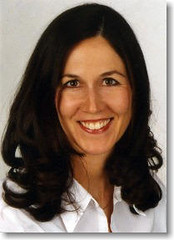
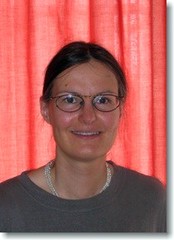
Schmidt and Kammerer using a high-fat, low-carb diet plan to treat cancer

How appropriate was it that I wrote a blog post a few months back entitled "A Dietary Defense For Defeating Cancer". With brain cancer, pancreatic cancer, esophageal cancer, kidney cancer, breast cancer, and prostate cancer all intricately linked to a high-carb diet, why hasn't the idea of livin' la vida low-carb as a treatment option for cancer patients even been considered within mainstream medical circles?

Well, now it has and with truly stunning results!

This Time Magazine article (which was e-mailed to me by about a hundred people--AFTER I had already seen it! THANKS everyone!) details the use of a high-fat, ketogenic (very low-carb) diet on cancer victims to see what impact it would have on their condition. The findings of the researchers has the entire world buzzing about the health BENEFITS of the low-carb lifestyle yet again--and it's about time!

In the article entitled "Can A High-Fat Diet Beat Cancer?" (although I'm not sure what that big double cheeseburger at the top of this story has ANYTHING at all to do with a high-fat, low-carb diet--that bad boy is MUCH higher in carbs from that big ole bun!), researchers Dr. Melanie Schmidt and Ulrike Kammerer, both from the University of Wurzburg in Germany, have been implementing the use of a high-fat, low-carb ketogenic diet on the most dire of cancer patients who have run out of treatment options since the beginning of the year. Without the use of any medications, they simply require the participants to slash their carbs and eat more fat.

By getting rid of virtually all the carbs in their diet, especially sugar which feeds cancer cells, the researchers replace that energy with healthy fat sources including hempseed and linseed oils, soy-based proteins, and animal fats and proteins. It's a supercharged version of the Atkins diet and more closely resembles the original low-carb diet plan from the late great Dr. Robert C. Atkins released back in 1972.

But, according to the story, this high-fat, low-carb treatment goes back much further than Dr. Atkins to 1924 when a German Nobel Prize winning scientist named Otto Warburg put forth what would be known as the "Warburg hypothesis" which concluded in the words of Warburg that "the prime cause of cancer is the replacement of the respiration of oxygen in normal body cells by a fermentation of sugar."

Did you catch that? Warburg said EIGHTY YEARS AGO that cancer THRIVES where sugar resides. So, the thinking goes like this: remove the sugar (and the carbohydrates that turn to sugar in the body) and replace it with fat, then the cancer cells will die. It was a BRILLIANT hypothesis that was lauded among the scientists and health advocates of his day, but somehow it has been forgotten by many in our modern culture who would rather sweep such forward-thinking methods for cancer treatment like this under the rug.

Not for Dr. Schmidt and Kammerer, though.

They've taken Warburg's lifetime of work and run with it in 2007. By removing sugar from the diet of cancer patients, can they stop the spread of cancer before it is too late? The whole world is watching with hopeful anticipation that this could be exactly what is needed to bring cancer under control.

Modern-day advocates of a high-fat, low-carb diet such as Dr. Larry McCleary, Gary Taubes, Dr. Barry Groves, Dr. Jay Wortman, Dr. Jonny Bowden, and Anthony Colpo, among many others have all laid the basic groundwork for furthering the theory that this method of eating is not just some "fad" diet for mere weight loss, but rather the optimal nutritional approach for living as healthy as you possibly can. And the concerns that people have about a high-fat diet are unfounded as long as you combine that high-fat diet with a low-carb one as these German researchers are doing with the ketogenic diet being used on the cancer patients.

This experiment has been dubbed "The Wurzburg trial" and is underwritten by a German food company named Tavartis which seems to stock a line-up of high-protein, low-carb products. So begins this journey to cancer-free living for some who have lost all hope when chemotherapy and other treatments failed them. It's not a certainty, but it is another option that many are not even told about.

Painful and arduous cancer treatments such as surgery, radiation, hyperthermia and autohemotherapy are so aggressive and potentially life-threatening that a more natural and quite possibly MUCH MORE EFFECTIVE treatment like a ketogenic diet could be a welcoming prospect for those who are dealing with this most dreaded of diseases to afflict the human body.

Sadly, Schmidt said a few of the cancer patients who attempted to eat a sugar-free diet couldn't handle not being able to drink sodas and eat chocolate. Um, hello? Have you never heard of DIET soda and sugar-free, low-carb chocolates like ChocoPerfection bars? You don't have to give these things up, you simply replace the sugary ones with a healthier version instead. And for a chance to live much longer than you expected, isn't it worth making a small sacrifice like giving up sugar to make that happen? This goes beyond my ability to comprehend.

By the end of the three-month study, the researchers were able to see five patients survive the high-fat, low-carb cancer treatment with INCREDIBLE RESULTS!

Here's what happened to them:

- They all remained alive and the cancer did not overtake them
- Their illness remained stable or even improved
- The tumors in their body grew slower, stopped, or even shrunk

AMAZING! And these improvements didn't go without fanfare within the lab where this was happening either. Kammerer said it was nothing but "positive reactions and an increased interest" in how this high-fat, low-carb diet was doing what it was doing. She is cautiously optimistic, though, since it was not a resounding success with all the patients. But it is an excellent first step in figuring out what methodology for treating cancer should be considered in the future.

Be sure to read about the other studies that have been conducted on cancer patients placed on a ketogenic diet in the Time Magazine story, including comments from Dr. Thomas Seyfried who is a champion of the high-fat, low-carb approach to treating cancer. He states in the story that the reason more clinical studies like this haven't been conducted is because of the close ties that the medical establishment has to the pharmaceutical industry which would lose BILLIONS annually if an all-natural cancer treatment were promoted. Shhhhhhhh! They don't want anyone to know that! OOOPS!

The Wurzburg trial is only the first of many studies that are coming down the pipeline. There's one happening in The Netherlands right now and another one in Germany slated to begin next month. While expectations are high, they are all being careful about proclaiming this ketogenic treatment option as the be-all, end-all for treating cancer.

Just like with weight loss, a high-fat, low-carb diet isn't for everyone. It's all a matter of how the individual will respond to such a diet and at the stage of cancer that they have. If a ketogenic strategy can be implemented early enough, then perhaps there is greater hope for those individuals. Rather than waiting to start livin' la vida low-carb until a LAST resort when nothing else has worked, why not try making it your FIRST option for getting the cancer under control before it can spread? That certainly seems to make sense to me.

And let's not forget all the health complications of eating a high-carb diet, including high blood pressure, insulin resistance, lower HDL cholesterol and high triglycerides, the onset of Alzheimer's disease, diabetes, and negligible weight loss. Why would you want to go through all of THAT whether you have cancer or not? How about avoiding these by going ahead and implementing a delicious and healthy low-carb lifestyle TODAY so you'll arm yourself for whatever ailments may come your way? Makes a whole lotta sense to me!

You can e-mail Ulrike Kammerer about her remarkable study at u.kaemmerer@mail.uni-wuerzburg.de. Be sure to THANK her for sharing this research with the world and encourage her to continue looking at ketogenic diets in the treatment of cancer.

Labels: , , , , , , , , , , , , , ,