MOVED TO LIVINLAVIDALOWCARB.COM/BLOG

PLEASE UPDATE YOUR BOOKMARKS TO LIVINLAVIDALOWCARB.COM/BLOG

Tuesday, April 03, 2007

Is Hypoglycemia A Hidden Low-Carb Side Effect?

One of the things I enjoy doing at my blog is providing information that people can apply to their daily lives that will help them solve an issue they are having while livin' la vida low-carb. Whether it's about weight loss, health, fitness, or whatever, I think you the reader can be best served with practical and scientifically-sound ways to live this lifestyle over the long-term as so many of us are.

Today I have a very special guest editorial from Dr. Keith Berkowitz, who is the medical director for The Center For Balanced Health. I was talking to him on the telephone recently about his fantastic new high-fiber NexGen muffins when the subject of blood sugar came up.

He said that the issue of hyperglycemia, or high blood sugar which is a precursor to diabetes, has been given almost a monopoly of attention from the medical community while an even more dangerous condition has gotten completely overlooked and ignored. It's the condition known as hypoglycemia.

Dr. Berkowitz went on to explain some of the symptoms of hypoglycemia, or low blood sugar, and how it could be the reason why your weight loss suddenly stops while livin' la vida low-carb. Also, if your energy is sapped and you begin feeling tired for no apparent reason at all, it's time to get a glucose tolerance test to see what your A1C levels are, he said.

I was so spellbound by the discussion of this issue that I asked Dr. Berkowitz to write a column for my blog so that all of us can be better informed of the warning signs that we may be suffering from hypoglycemia and how to treat it. Special THANKS to Dr. Berkowitz for sharing his wisdom on this issue with us today and I welcome your feedback to what he has to share. ENJOY!

The Forgotten Blood Sugar Disorder: Hypoglycemia
by Dr. Keith Berkowitz, M.D.
Medical Director for The Center For Balanced Health

According to the American Diabetes Association, 21 million Americans have diabetes and another 54 million American are at risk with pre-diabetes or elevated blood glucose.

Because of this, our attention has been concentrated on treating high blood glucose while largely ignoring other blood sugar disorders. Poor eating habits, the addition of unhealthy ingredients, increased stress and poor sleeping habits has led to the increased incidence of this underappreciated blood sugar disorder: hypoglycemia.

Hypoglycemia has been traditionally defined as a low blood glucose level (serum levels less than 70 mg/dl either taken fasting, randomly or after a glucose challenge). Unfortunately, most individuals I see in my practice do not present with these results but instead present with normal blood glucose levels, the ability to lose some weight but not the last 10 to 20 pounds or unexplained low energy levels.

One reason for this is that most individuals only have fasting blood glucose or an HgbA1c taken by their health professional. An HgbA1c level represents the average amount of glucose in the blood over a three month period. A level of 4.0% is equal to an average blood glucose level of 60 mg/dl while a level of 5.0% is equal to a blood glucose level of 90 mg/dl. HgbA1c levels between 4.8% and 5.9% are considered normal. Levels below 4.8% are usually consistent with hypoglycemia.

Individuals with hypoglycemia can often have symptoms that include: headaches, increased irritability, difficulty concentrating, palpitations, light-headedness, fatigue, anxiety, excessive sweating or urination, leg cramps, dizziness and clamminess. Other symptoms can be related to eating. Patients I see with this diagnosis often feel more tired after meals, feel “sick” when they either miss a meal or if a meal is delayed.

So, if you have significantly reduced calories or carbohydrates, are you still unable to lose weight? Are you unable to lose that last 20 pounds no matter what you try? Eating a low carbohydrate diet but still hungry and/or tired after meals? I just may have a solution for you.

Traditionally treatment for hypoglycemia has been to give sugar. Unfortunately, this treatment only provides temporary relief and in very sensitive individuals causes an even greater reaction thirty minutes to two hours later. Although, a strict low carbohydrate diet is helpful, it does not always solve the problem by itself.

In my practice, Center for Balanced Health, I see individuals with such pronounced hypoglycemia that their blood sugar drops almost immediately after a glucose challenge. It’s the equivalent of filling an automobile with gas only to find that the gas tank has a very large leak.

At the Center for Balanced Health, we help patients manage their hypoglycemia by telling them to:

- Eat five to six small meals a day about every three hours. Think of yourself as a fuel-efficient automobile. You want constant flow of energy (glucose) throughout the day.

- Avoid meals that are too small or too large especially at night. Meals that are too small will not provide enough energy to get you through the day. Meals that are too large place a larger burden on your metabolic system to process these nutrients and thus can trigger a hypoglycemic reaction.

- DON'T skip meals especially breakfast. Breakfast is the most important meal of the day because it sets the tone.

- Balanced eating. Always have some protein and fat at each meal or snack. Avoid and limit foods high in sugar or other refined carbohydrates especially on a empty stomach. Still utilize a controlled carbohydrate approach and get your carbohydrates from foods high in fiber (dark green leafy vegetables, non starchy vegetables, avocado, high fiber low carbohydrate crackers as examples)

- Get a good night’s sleep. Good sleep helps replenish your system so that your body works more efficiently.

- Use of a fiber supplement (make sure you take with enough water) or eating a high fiber food (without refined carbohydrates or sugar) before meals or snacks can help slow the absorption of carbohydrates and thus prevent rapid declines in blood sugar.

- Exercise regularly. Strength training can improve glucose metabolism

- Avoid alcohol, caffeine, tobacco use

- Avoid the use of stimulants

If you suspect hypoglycemia, the best diagnostic test is a glucose tolerance test with insulin levels and an HgbA1c. I usually do this test in my office because a glucose challenge can sometimes precipitate symptoms of low blood sugar.

Labels: , , , , , , ,

Monday, April 02, 2007

Bernstein: No Other Diet Works To Control Blood Sugars In Diabetics As Well As Low-Carb


Dr. Richard K. Bernstein has beaten his diabetes with a low-carb diet

I've interviewed a lot of people here at my blog, but there has been one interview I have been wanting to do for a very long time--Dr. Richard Bernstein, M.D., F.A.C.E., F.A.C.N., C.W.S., FACCWS (did I leave out any letters in the alphabet? *wink*). You've seen him on dLife on CNBC debating the so-called experts who say to just eat a low-fat diet and take your diabetes medications and insulin while Dr. Bernstein just keeps on smiling and living his life just as normal as a non-diabetic for the past 61 years and counting.

In fact, I so highly regard the work Dr. Bernstein is doing on behalf of diabetics that I named him one of my Top 10 Movers & Shakers of 2006 and he deserves the accolodes as much as anyone else in the low-carb community. I recently highlighted the fantastic work he is continuing to do in pursuit of giving people living with diabetes hope for a better future in this blog post and was absolutely thrilled when he agreed to be interviewed by me for my blog.

Whether you have diabetes or not, we could all learn a lot from this man. Absorb what he has to say, let it permeate your thoughts, percolate a while, and then share the good news with a diabetic loved one in your life to let them know that livin' la vida low-carb could very well be their answer to a long and healthy life with diabetes. Let Dr. Bernstein encourage you today.

1. What an honor and a privilege to welcome the one and only Dr. Richard K. Bernstein to the "Livin' La Vida Low-Carb" blog today.  Dr. Bernstein is THE authority on the positive impact of low-carb diets on diabetes today and is living proof this way of eating works since he uses it to control his Type 1 diabetes.  Thank you for joining me for this interview today since many of my readers are big fans of the work you are doing on behalf of diabetics.

You once described yourself as "an ordinary diabetic" before you found the low-carb solution to your diabetes.  What changed about your life when you went from the recommended diabetic diet to your current low-carb dietary approach?


When I was on the ADA high-carb diet, it was impossible to approach normal blood sugars on a steady basis, no matter how I juggled multiple insulin doses. Once I cut my carb intake to the minimum necessary for consuming a reasonable amount of vegetables, my blood sugars leveled off.

2. Normalized blood sugar levels is the ultimate goal of everyone who has been afflicted with Type 1 or Type 2 diabetes.  How were you as a diabetic able to control this disease that threatened to take your life at an early age for so many years and do you believe there is a better all-natural way to stabilize blood sugar than a proper diet plan like low-carb?

I don't know what you mean by an "all natural way" to stabilize blood sugar. A low-carb diet works. I know of no other approach that can remotely work. I have seen naturopathic physicians who were diabetics. I've seen diabetics on vegetarian and vegan diets and none of these people were able to remotely control their blood sugars until they abandoned their prior practices and embarked upon a low carbohydrate diet. I have seen some vegans and vegetarians who refused to consider a low carb diet and of course, they never attained anything approaching normal blood sugars.

3. Your discovery of the answer to the diabetes dilemma over three decades ago and your inability to convince the medical community of what you stumbled upon led you to go to medical school at the age of 45 to become a doctor.  What barriers did you encounter when you were just a "layperson" and how were those barriers overcome once you became a part of the health establishment?

Becoming "part of the health establishment" only permitted me to get published. It did not change the minds of most of the physicians who were uninterested in normalizing blood sugars. To this day, professional diabetes associations are advocating elevated blood sugars for diabetics. Even many drug manufacturers and makers of devices are focused on profit rather than the well being of the patient.

I can say that I accomplished one thing, however. After battling the ADA from 1969 until the early 1980's on behalf of blood sugar self-monitoring, they finally caved in to a variety of outside pressures and approved self‑monitoring for those diabetics who use insulin. It is still, however, impossible to get Medicare to pay for enough blood sugar test strips for type 2 diabetics who do not routinely inject insulin.

4. Today you practice medicine in the state of New York helping literally hundreds of patients annually find the low-carb solution to their diabetes and obesity.  Dr. Mary C. Vernon in Kansas is another prominent medical doctor treating diabetes patients with a low-carb diet, but you don't hear about many others.  How many Dr. Bernsteins and Dr. Vernons are there using this treatment option for their diabetic patients across the country and do you see this field of medicine expanding in the coming years to accomodate the rising rates of diabetes?

The intensive treatment of diabetes is not a profit-making venture. It is, therefore, very unlikely that many physicians will pursue the intensive training and meal planning that I do with my patients. It should be possible, however, for large group practices and insurance based medical practices such as Kaiser Permanente, to train patients in groups and to have meal planning and medication planning put in the hands of paramedical personnel such as nurse educators.

This would be far more financially practical than the kind of medicine that I perform. I have, from time time, encountered physicians that actually did use my book as a guide and are achieving good results. For the most part, they have large practices and supervise non-physician personnel in the administration of the methods that I disclose in my books.


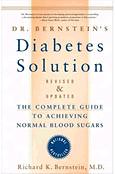
Dr. Bernstein recently revised and updated his classic diabetes book

5. Your book Dr. Bernstein's Diabetes Solution: The Complete Guide to Achieving Normal Blood Sugars became an instant bestseller in the late 1990's and has become like a virtual health Bible for people living with diabetes.  How has the release of that book as well as The Diabetes Diet book made and impact on our culture?
 
If you look at the reader reviews on Amazon.com and Amazon.co.uk, you will see the effects that these books have had on many of the readers who have put them into practice. Over the years I have read several thousand such reviews on both of these sites. I, therefore, have a rough idea of the effects that these books have upon diabetic patients and their families. I have no way of gauging "the impact on our culture".

Since the grand total sales of my books over the years is less than 400,000 copies, I haven't even touched 3% of the diabetic population in the U.S.A. alone. One thing that has occurred, however, is the formation of the Nutrition and Metabolism Society which now has a web site that publishes studies of low carbohydrate vs. low fat diets. Furthermore, the number of such studies have burgeoned in the past few years. Has my work had an increase in such studies? I have no idea but it would be nice if I could get a little bit of the credit.

6. I'm sure many would be happy to give you that credit you deserve, Dr. Bernstein. You recently released a revised and updated version of your Diabetes Solution book commemorating one decade since it first came out.  What changes did you make to the original book and is there any specific new information about diabetes that may have come out even since the publication of this update?

The third edition of my book that came out in March 2007 was probably up‑to-the minute in terms of new developments as of February 2007. To my knowledge, there have been no significant discoveries in diabetes care since publication. Probably the single most important thing that I discuss in the book is the use of Symlin to treat overeating in diabetics and the use of Byetta to treat overeating in non-diabetics.

There are, of course, hundreds of changes in the book and discussion of many, many new products, new medications and so on. The basic approach to normalizing blood sugar, however, is essentially the same as before with a smattering of more advanced methodology.

7. Why does the American Diabetes Association (ADA) continually ignore the low-carb solution to diabetes?  Dr. Richard Feinman from SUNY Downstate in Brooklyn, New York told me last year in an interview that he believes they are "backing into supporting low-carb," but it certainly doesn't look imminent.  What are your thoughts about this?

Although there have been one or two papers presented at ADA meetings demonstrating the value of low carbohydrate vs. low fat diets, I see no evidence that the ADA has any intention of backing off on their guidelines. There is, however, a lot of pressure from other professional organizations to lower Alc targets.

The ADA tends to follow the mob very slowly so when other organizations lower their Alc target by 1%, the ADA might lower theirs by 1%. I'm sure, however, that they realize that anything approaching normal blood sugars is utterly impossible with their dietary recommendations. I, therefore, expect they will never recommend normal blood sugars during my lifetime (Hgb Alc = 4.2 - 4.6%).

8. You assert that popular low-carb programs such as Atkins and South Beach are great only for short-term weight loss, but fail to provide people following these plans with a permanent way to keep the weight off for good.  I went on the Atkins diet in 2004 and lost 180 pounds in one year.  Since then, I have been able to keep the weight off by following the basic principles of the Maintenance phase of the diet.  How does your program provide long-term support for improvements in both weight and health and where do you see those other plans falling short?

I read the Atkins' diet and found that it usually works initially, but when he backs off and permits the re-institution of high carbohydrate foods, such as bread, he is just reigniting the addiction to carbohydrates that has spawned the epidemic of obesity and diabetes. In my experience, any diet that permits carbohydrates other than vegetables and perhaps a few bran products is doomed to failure.

9. You have an outstanding online resource for diabetics (Diabetes-Book.com) looking for more information about the low-carb lifestyle and how it can help them with their disease.  The posted testimonials are quite encouraging and compelling.  Are there any specific testimonials that stick out in your mind over the years since you started helping diabetics that you will never forget?

I have seen so many testimonials that they've become a blur in my mind. I was, however, greatly impressed by the testimonials on Amazon.co.uk. It appears that the people in the United Kingdom are either better educated and therefore, more capable of writing impassioned prose or are just more capable of expressing their feelings. One could probably write a book based upon the stories that some of the readers posted on this site.

10. Again, I cannot thank you enough for coming on my blog today and sharing your wealth of wisdom with me and my readers.  I remember seeing you at the Nutritional & Metabolic Aspects of Carbohydrate Restriction conference in Brooklyn, New York in January 2006 and most of the researchers there were confounded by not just your knowledge about low-carb living as it relates to diabetes, but also your experience living with this disease with relative ease for many years.  Do you have any words of wisdom and encouragement to pass along to the diabetics who are reading this right now?

Jimmy, I could sum it up with one expression that strongly contradicts conventional medical wisdom: "Diabetics are entitled to the same blood sugars as non-diabetics." Thanks for inviting me to your blog.

As always, YOUR comments are welcome! What did you think of my interview with the great Dr. Bernstein? Do you have any pesonal stories to tell about how his work has helped you manage YOUR diabetes? Please share by clicking on the comment link below.

Labels: , , , , , , , ,

Tuesday, March 20, 2007

'Almost' All You Need To Know About Diabetes


Dr. Richard Jackson and Amy Tenderich give diabetics a useful tool

Lose 30 pounds. Get your blood pressure down. Lower your LDL cholesterol and triglycerides and get that HDL cholesterol up. Keep an eye on your blood sugar and have it checked often.

Does any of this sound familiar? Sure it does and you may have even heard it from your own doctor regarding your flailing health because of you are overweight or obese. It's the dreaded lecture that comes from physicians when they see certain health indicators come back as irregular.

But what if what you are dealing with is something even more life-threatening than just a bout with obesity, hypertension, or a poor lipid profile? What if it’s one of the most dreaded of all diseases that makes you feel like your world has come to an official end? That’s exactly what happens to some people when they are told they have been diagnosed with diabetes.

What did I do to cause this? How can something like this happen to me? Will I ever live a "normal“ life again or am I destined for a life of painful insulin injections, expensive prescription medications, and endless doctor visits for the rest of my life?

These thoughts are not only very real to people who are told they have diabetes, but it can paralyze them even when they otherwise have their life under complete control. Diabetes has quite literally turned the life of millions of people upside down and leaves them with very little hope or help. Where can people turn when they are faced with such despair about this complex disease they have?

Whether you are Type 1 or Type 2 diabetic, then you have undoubtedly been given some all-too-familiar generic advice about handling your diabetes (like I illustrated at the beginning of this review) which is all meant to help you I am sure. Unfortunately, though, this kind of one-size-fits-all approach to diabetes is not only shortsighted, but incredibly ineffective.

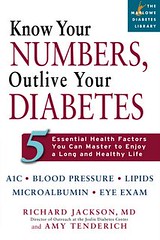
That’s where the mostly informative new book from Harvard medical professor and Joslin Diabetes Center investigator Dr. Richard Jackson as well as saucy and always on point professional journalist, blogger, and diabetes sufferer Amy Tenderich comes into play. It’s called Know Your Numbers, Outlive Your Diabetes: 5 Essential Health Factors You Can Master To Enjoy A Long And Healthy Life (Marlowe Diabetes Library) and will quickly become your handy reference resource guide for almost everything you ever wanted to know about diabetes.

I say "almost“ for a reason which I will explain in a moment.

First, the good parts of this book. It is very well put together in an enjoyable format mixing a healthy dose of diabetes facts alongside some hands-on practical advice about how to best implement the proper lifestyle changes that need to take place for optimal diabetes management. While this can be a rather drab and boring topic to discuss, Dr. Jackson and Tenderich do a yeoman’s job of keeping it fun and engaging.

And I really like the fact that the authors strongly urge people living with diabetes to implement permanent lifestyle changes. At the same time, they push the positive message that diabetics don’t necessarily need to attempt to make multiple changes all at once, but instead slowly begin to work them into their individual routine incrementally. I agree with this bit-by-bit strategy because it is the best way to make the changes take hold and become a permanent habit whether it is with weight loss, diabetes, or anything else. Breaking out of those old habits takes time.

Know Your Numbers, Outlive Your Diabetes hits the ground running right away in the first six chapters explaining why you need to be concerned about your health when you have diabetes and points to the five tests that every single diabetic absolutely must have checked regularly if they are going to lick this disease by learning to manage it well.

What are these five tests? Very simply put, it’s the following:

1. Your A1C
2. Your blood pressure
3. Your lipid profile (cholesterol)
4. Your microalbumin (What?! Don’t worry, they explain!)
5. Your eye exam

While Dr. Jackson and Tenderich do not explicitly recommend people who are not diabetic to have these tests conducted, I think it is an extremely good idea considering there are tens of millions more pre-diabetics walking around and have no idea they are either already or becoming insulin resistant. Taking preventative action now would likely slow down the expected diabetes boom coming over the next few decades.

You can certainly appreciate the "been there, done that“ feel of this book which does a fabulous job of removing the mystery and awe out of diabetes for good. Whether you have just been diagnosed with diabetes or even if you are a decades-long veteran living with the disease, there is plenty of useful statistics and data to keep you occupied for hours as you learn all the ins and outs of diabetes.

But I have one pretty major concern about the book that makes me say it is "almost“ a comprehensive look at the subject of diabetes. While there is plenty of discussion about carbohydrates and how controlling your intake of them whether they are in the form of sugar, pasta, rice, potatoes, or otherwise in Know Your Numbers, Outlive Your Diabetes, the lack of a real sense of urgency about trying to keep them limited as a means for managing diabetes is not emphasized heavily enough and given the significance it deserves. All the latest research indicates that reducing carb intake can bring about permanent control of diabetes and you just don't hear this message stated explicitly in this book.

For a book like this about diabetes releasing in the year 2007, how can you totally ignore the many years of clinical studies (like this one) that have been conducted by valient researchers like Dr. Eric Westman from Duke University and Dr. Mary C. Vernon from the University of Kansas and the co-author of Atkins Diabetes Revolution? What about Dr. Steve Phinney or Dr. Jay Wortman? And let's not forget Dr. Mary Gannon and Dr. Frank Nuttall, too! I could easily continue on with many more names, but these are enough to get you started.

Not only have these amazing researchers shown the vital statistics for their diabetic patients become normalized, but many of them were able to come completely off of all their prescription medicines for good. GASP! How can this be? You'd never know this was possible if you only read this book because there was no mention of ending diabetes drug use in Know Your Numbers, Outlive Your Diabetes--NONE! Just the strong "now take your medicines regularly along with a low-fat diet" message that diabetics have had to suffer through long enough.

Where was the promotion of this major "cure“ for diabetes which was highlighted nationally by Adam Campbell in Men’s Health magazine in November 2006 found within the pages of this diabetes book, hmmm? The glaring absence of this cutting edge information about diabetes is like talking to someone about how to drive a car that doesn't have a steering wheel. Sure, you may get somewhere, but not necessarily where you want to go.

Furthermore, there was nary a single mention of the most famous diabetes expert who has implored a low-carb solution to his Type 1 diabetes for decades—the amazing Dr. Richard Bernstein! This man has done more to add quality of life and even saved the lives of millions of diabetics through his bestselling books and personal practice. However, if you read Know Your Numbers, Outlive Your Diabetes it’s as if Dr. Bernstein and his common sense strategies for tackling diabetes don't even exist. Shame on them for this grave omission!

To be honest, it was quite scary reading over and over again in this supposedly all-encompassing book on the topic of diabetes that people with this disease need to consume as much as 60 percent carbohydrates daily, including regular servings of sugar if they want it "in moderation!" Say what?! ARGH!

Are they trying to make these people get sicker and sicker?! What kind of irresponsible advice like this is being given to diabetics?! Yikeseroo! How about just giving them a little arsenic "in moderation" while you're at it, too? Sheeez!

Yet, at the same time, the authors emphasize the critical nature of carbohydrate reduction in the management of diabetes. So which is it? I understand we are all different with a variety of factors that will work for the individual person, but come on! I’m a big believer in people finding what works for them in weight loss and health management at my blog, but I see no downside for diabetics who want to control their disease naturally through diet by livin‘ la vida low-carb.

What will happen if diabetics decide to take the low-carb pathway to reversing the effects of their disease is they will get better than they’ve ever been before, seeing their A1C drop into "normal“ range and staying there, lower their blood pressure, significantly drop their triglycerides, raise their HDL cholesterol levels, and ward off many of the inevitable future health issues due to their diabetes. Not a bad deal if you ask me!

Of course, the lack of any information about the low-carb nutritional approach to combat diabetes in Know Your Numbers, Outlive Your Diabetes may have more to do with the American Diabetes Association and their ill-advised recommendations than anything else. It is quite clear that Dr. Jackson and Tenderich relied heavily on their skewed advice for diabetics.

You see the unmistakable fingerprints of their needless warnings about lowering LDL cholesterol (with even MORE medications such as statins—EEEK!), avoiding saturated fat, lowering salt intake, and controlling fat, calories, and portion sizes in page after page of this book. It really was more than a little nauseating to read all of this information while "low-carb" was nowhere to be found. I can't tell you how incredibly disappointing this was to me because diabetics who read this book will be left in the dark about what very well could be the solution to their disease.

While I certainly can appreciate what Dr. Richard Jackson and Amy Tenderich have done with their book Know Your Numbers, Outlive Your Diabetes to help educate people with this disease get the basic information they may be looking for, it is the blatant omission of critical information about low-carb as a viable treatment option for diabetes that has me gravely concerned.

And if you are diabetic, you deserve to be armed with all the facts so you really can "outlive your diabetes."

3-21-07 UPDATE: Amy Tenderich read my review and had this to say about it.

Hi Jimmy,

I wasn't aware that you had diabetes, or that you where one of the True Believers that low-carb diets can make your diabetes "go away" (which is misleading).

Please understand that an extreme low-carb diet is not the answer for MOST people; in fact, it only serves to frustrate them and lend to a continuous sense of failure. Good for you if you have managed to follow Dr. Bernstein's plan, but again, it really isn't the answer for most people.

In addition, my book was geared at helping people gain a framework for their long-term, all-around health with diabetes. We do state that limiting carbs helps glucose control, but we had no intention of giving people specific diet advice, since everyone is different.

Best of luck to you,

Amy Tenderich


Isn't it funny how she described low-carb as an "extreme" answer to diabetes? Ahhh, well I decided to write Amy back and share where I was coming from.

THANKS, Amy. I don't have diabetes personally, but I keep up with the latest research that comes out about it. While I entirely agree with you that a low-carb diet is NOT the answer for every diabetic, it's not even provided in your book as an option for people who have the disease.

If no specific diet advice is promoted, then why all the talk about limiting saturated and total fat and consuming as much as 60 percent of carbohydrates per day? The fact is a high-carb, low-fat diet raises blood glucose levels which is why you have to take medication and even insulin along with it to control blood sugars.

But why not give your body the opportunity to come off of diabetes meds and insulin by consuming a protein-rich, low-carb diet? That's exactly where all the latest research is pointing and the ADA is slowly moving towards this fact.

I'm sorry you are disappointed with my review, but none of what I wrote is surprising to anyone who has read my blog for any length of time. This is too important a subject to simply let things slide because that is doing a grave disservice to diabetics everywhere.

With that said, I like the basic information that you provide people with diabetes in the book as I stated in the first part of my review. For someone that knows nothing about this subject, your book is an excellent resource. I certainly hope that message comes through loud and clear as well because you and Dr. Jackson have done fantastic work in that realm.

THANK YOU again for allowing me the opportunity to review your book. Take care, Amy!

Jimmy Moore


She is attempting to set up an interview for me with Dr. Jackson to directly address the issues I brought up in my review and the absence of low-carb options in his book. Stay tuned for that coming up soon. Share your comments about how Amy Tenderich responded to my review below. I'd love to know what you think!

3-22-07 UPDATE: Amy did at least acknowledge in this column at her Diabetes Mine blog today that including at least a mention of the low-carb solution to diabetes should be included in future editions of her book.

"We do talk a lot about limiting carbohydrates, but steer clear of recommending the kind of severe eating restrictions that tend to pit a person against their own willpower--which for so many people ends ends in binging, or creates a roller coaster cycle of eating. That said, we probably could have done a better job of at least introducing Dr. Bernstein's approach. Second edition, anyone?"

Well, at least that's a good start, Amy, and I'm happy to see you acknowledge this. THANK YOU!

Labels: , , , , , , , , , , , ,