MOVED TO LIVINLAVIDALOWCARB.COM/BLOG

PLEASE UPDATE YOUR BOOKMARKS TO LIVINLAVIDALOWCARB.COM/BLOG

Friday, October 26, 2007

The Atkins Diet Is So Much More Than Meat!

You know what they say about a picture being worth a thousand words. Well, I came across a couple of pictures that speak volumes about what livin' la vida low-carb is all about. The common argument people, including educated ones, use against low-carb plans like the Atkins diet is that it relies too much on meat consumption.

In fact, you'll recall noted health expert Dr. Andrew Weil appeared on CNN's "Larry King Live" last week to talk about the new Gary Taubes book Good Calories, Bad Calories and his primary criticism of the low-carb lifestyle was the description of it as a diet that is "mostly meat and no carbohydrate." Dr. Weil, you should know better than that! You know good and well that neither the late great Dr. Robert C. Atkins or any of the other low-carb diet authors ever call for what you have described.

So, to dispel the myth that the Atkins low-carb diet is just meat, meat, and more meat, here are those pictures I promised.

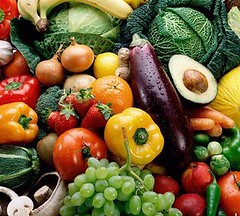
This first one is a rather creative photograph that Dr. Atkins had made with his smiling face posing with all the wonderfully delicious foods you can eat on the Atkins diet. Hmmmm, what do you see more of in that picture than anything else? Is it meat? Nope! It's veggies, baby, and that's just the way Dr. Atkins liked it:


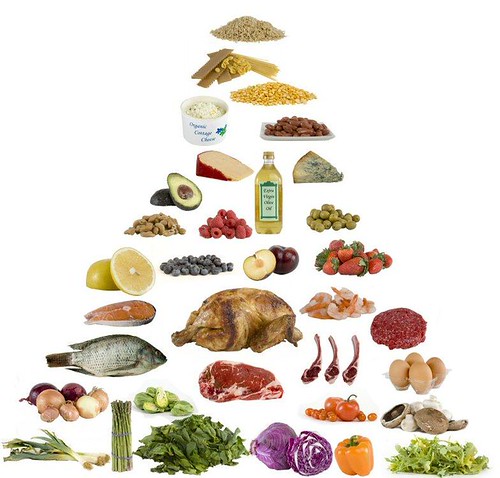
The second image I have to share with you is a food pyramid for people who are livin' la vida low-carb. No, this is not the USDA-indoctrinated Food Pyramid that tells you to eat carbs, carbs, and more carbs with very little fat. Instead, you'll notice the foods on the lower end of the pyramid are non-starchy, green leafy vegetables and delicious selections of fish, beef, and poultry. Above that is low-glycemic fruits and cheese followed in very small quantities by beans and whole grains as well as teeny tiny amounts of sugar at the very top. It's quite illustrative of this way of eating:


Finally, I'd like to show you a picture of the food my wife Christine and I chose to eat on a recent trip to one of our favorite restaurants--Denny's. You'll notice my plate on the left has delicious portions of meat with their outstanding mixed vegetables side dish. I also had a side salad not shown in the photo. But look what my lovely darling, who recently hit her goal weight of 122 on the Atkins diet, decided to have for her meal. A fried chicken sandwich with seasoned fries! Say it ain't so! Here's the proof:

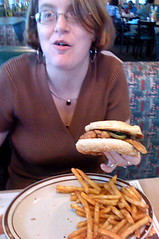

Christine was right in the middle of saying "Oh no you didn't" as I was taking her picture stuffing her face with this high-carb food bonanza! LOL! Yes, she can get away with eat more carbohydrates than I can and she likes to rub it in my face sometimes. She probably lost another pound after eating that meal, too. Makes you sick, doesn't it?

So the next time somebody tells you that livin' la vida low-carb means you eat a no carb diet, remind them that the Atkins diet is so much more than meat. And now you have the visual proof to show them, too. :)

Labels: , , , , , , , , , ,

Wednesday, July 18, 2007

High-Carb, Low-Fat Fruit And Veggie Diet Fruitless Against Breast Cancer


Dr. Pierce says fruits and veggies may not prevent breast cancer deaths

Dean Ornish, Joel Fuhrman, and other low-fatties, eat your heart out!

That's because your cherished high-carb, low-fat fruits and vegetables diet took a major blow this week in the largest study of its kind that found women who showed early signs of breast cancer who ate this way did NOT have a lower risk of breast cancer recurrence compared to women who followed a diet consisting of five servings a day of fruits and vegetables as reported in this Yahoo News story.

Well, well, well, what do we have here? It seems the many layers of the low-fat lie onion just keep getting peeled away one-by-one as new research builds the case that this dietary approach is the fraud we know it to be. Ever since this historic 8-year study was released in February 2006 showing a high-carb, low-fat diet does NOT improve the risk of cancer or heart disease as had been claimed previously, it's all been downhill from there.

This new study published in the July 18, 2007 issue of the Journal of the American Medical Association substantiates it even more.

Lead researcher Dr. John P. Pierce, professor at the University of California San Diego Cancer Center in the Family & Preventive Medicine Cancer Prevention & Control Program, and his fellow researchers observed 3,088 American women (between the ages of 18-70) who were previously diagnosed with the early stages of breast cancer and split them into two groups:

INTERVENTION GROUP--1537 of the study participants were randomly assigned to receive a telephone counseling program supplemented with cooking classes and newsletters that promoted daily targets of 5 vegetable servings plus 16 oz of vegetable juice; 3 fruit servings; 30 g of fiber; and 15% to 20% of energy intake from fat.

OR

COMPARISON GROUP--1551 of the study participants followed a written form of the "5-A-Day" dietary guidelines.

The INTERVENTION GROUP ate TWICE as many fruits and vegetables as the COMPARISON GROUP over the course of the study that took place in seven different cities. Each of the women were observed from 6-11 years.

What did the researchers find?

The INTERVENTION GROUP increased their servings of vegetables by 65 percent, fruits by 25 percent, fiber by 30 percent, while LOWERING their fat intake by 13 percent. These changes were confirmed by blood tests among those in that group.

There were a total of 518 recurrences of breast cancer over the average 7.3 years of follow-up among both groups. But the difference between the two groups was insignificant:

INTERVENTION GROUP--256 women (16.7 percent)
COMPARISON GROUP--262 women (16.9 percent)

Similarly, there were 315 deaths with eight out of ten of them due directly to the breast cancer, but there was little statistical difference between the two groups:

INTERVENTION GROUP--155 women (10.1 percent)
COMPARISON GROUP--160 women (10.3 percent)

The researchers admit that there is plenty of room for discussion about what nutritional approach is best to ward off various types of cancer rather than simply accepting the "all-you-can-eat fruits and veggies" diet that has become the tried and true advice given out by doctors and medical professionals.

Dr. Marcia Stefanick, one of the researchers on this study from Stanford University, told Reuters that she was "surprised and disappointed" by the results of this study.

"I think we believed that by eating real food and nutrient-dense food, we were going to come up with a different outcome, but we didn't," she explained.

Perhaps rather than being upset, Dr. Stefanick, why not learn from the empirical knowledge you have gleaned from this experience to realize perhaps the old adage of eat LOTS of fruits and vegetables was just plain bad advice. It's okay to admit that even if it goes against everything you ever believed about a healthy diet.

Dr. Pierce was a bit more pragmatic in his response to the results explaining there is a "threshold effect" when it comes to your intake of fruits and veggies.

"I look at it the other way," he stated. "We're telling women they don't have to go overboard here. They can have a good quality of life without worrying about their dietary pattern all the time."

Well hallelujah! A voice of reason in the scientific community at last! This obsession with having people eats unlimited amounts of fruits and vegetables as if it is the great cure-all has been annoying at best. I've always contended that kind of dietary advice is a copout, mainly because what people consider their veggie intake is mostly potatoes and more specifically, FRIED potatoes.

The researchers said the recommended vegetables are the nutrient-dense, non-starchy dark leafy greens, sweet potatoes and carrots and NOT the popular nutritionally bankrupt ones like iceberg lettuce and the extremely high-carb white potatoes.

One area of study that may be pursued further is whether consuming a low-diet high fruits and vegetables as a young person results in lower breast cancer risk.

An overwhelming preponderance of evidence is building that a high-carb, low-fat diet may even be responsible for such cancers as brain cancer, pancreatic cancer, esophageal cancer, kidney cancer, breast cancer, and prostate cancer among others. It's prudent and desirable to arm yourself nutritionally to keep this terrible disease at bay.

You can e-mail Dr. John P. Pierce about his study at jppierce@ucsd.edu.

Labels: , , , , , , , , , , , ,

Thursday, May 10, 2007

Don't Give Me The Fruit And Vegetable Copout


What's so glorious about encouraging fruit and vegetable intake?

When you finally come to the place where you realize how much everything you ever knew about diet and health was wrong when you started livin' la vida low-carb, it probably made you wonder what else you've always believed was true that might not be exactly as you have always thought.

Have you ever given serious thought about some things that are commonly believed to be "healthy?" Take, for example, eating fruits and vegetables. GASP! You can't start talking about NOT eating fruits and vegetables, Jimmy. Everyone KNOWS how healthy those are to your diet and removing them from your list of foods is just too extreme.

Sigh.

Nobody is thinking of completely removing ALL fruits and vegetables from your diet. Although there are some people who believe there is no benefit whatsoever to eating these foods on a low-carb diet, I am not one of them. Selective fruits and vegetables have their place for people who are livin' la vida low-carb, but it's not a free-for-all which I'll explain in this post.

Dealing with those who fall for supposedly common sense dietary ideas like eating more fruits and vegetables (borne out of a lack of adequate nutritional education) is something I've come to realize is a fact of life that will not go away easily (but I'm trying my darndest to change that with my blog).

I don't blame people who suffer from what I describe as "educated ignorance," but it is indeed holding us back from progressing forward as an enlightened society. If only people knew how harmful certain fruits and vegetables were to their body, they wouldn't be so quick to embrace them indiscriminately.

It's not so much that eating fruits and vegetables is an unhealthy thing for your body, per se, but you really need to qualify what you mean by "fruits and vegetables." Painting that category of foods in such a broad brush is not a very wise thing to do. Let me explain by showing you some jaw-dropping numbers from one of the leading health organizations in America.

When I was attending the Nutrition & Metabolism Society meeting in Nashville, Tennessee as part of the American Society of Bariatric Physicians (ASBP) obesity conference last weekend, a representative from the American Diabetes Association (ADA) shared a startling statistic about the proportion of vegetable consumption in the United States.

According to the report entitled "2006 ADA Nutrition Recommendations: Context of Dietary Trends" from 1999-2000, the following is the breakdown of the actual vegetables consumed by adults 20 years and over:

Others-35%
Fried potatoes-22%
Other potatoes-13%
Tomatoes-11%
Dark green/orange-11%
Legumes/beans-8%

EEEEK! Over one-third of the vegetable consumption by adults is the high-carb potatoes, most of which is made up of French fries ostensibly from fast food restaurants like McDonald's. As much as you want to argue that a potato is a healthy vegetable, I would beg to differ. Not even if you chill it to lower the glycemic load can you convince me these spuds are something I need in my body. NEVER again!

There have been studies showing potatoes lead to higher incidence of diabetes which is why the potato industry has to create a cutesy cartoon character named Spuddy to make their unhealthy food seem more appealing, especially to children.

Speaking of children, check out the vegetable servings from that same ADA dietary trends report for children ages 2-19 years (don't pass out when you see this!):

Fried potatoes-46%
Others-22%
Other potatoes-10%
Tomatoes-9%
Dark green/orange-7%
Legumes/beans-6%

Yes, you read that right! Almost two-thirds of the "healthy" vegetable consumption by the future of our society is made up of potatoes. SAY WHAT?! These extremely starchy, carb-loaded vegetables are as harmful to your child's weight and health as eating table sugar by the spoonful! Carbs, carbs, and more carbs. Oh yummy...NOT!

Can you see how the McDonald's culture has so gripped our nation's youth that nearly half of their vegetable intake is from French fries? Yikeseroo! And this is what I'm talking about when I say it's a copout to generically say "eat fruits and vegetables." Without a qualifying statement to explain what you mean, then that is not necessarily a good thing.

In fact, I think it should be criminal to make the claim that a potato is a vegetable. Here's the truth about potatoes--It's poison for your blood sugar! You don't need it, you'll never need it, and you won't miss having it. Trust me on this, you won't.

Instead, there are some VERY good vegetables that should be consumed as part of a healthy diet because they are non-starchy and provide some excellent nutrients for your body. These are the kind of veggies that contribute to the doubling of vegetable consumption on low-carb. They include, but aren't limited to:

Green leafy veggies like kale, spinach, and lettuce, broccoli, cauliflower, green beans, asparagus, celery, and cabbage

Even vegetables like carrots, tomatoes, and onions are probably not a good idea when you are trying to lose weight on a low-carb nutritional approach. Add them back in limited quantities once you reach your goal weight, but avoid them to help keep your carb counts low enough to keep on losing weight and avoiding stalls. You'll be glad you did!

Okay, that's great for veggies, but what about fruits? Are there any a low-carber can eat? This is an interesting question that one of my readers asked me about in an e-mail this week. Here's what she wrote:

"Can you tell me if its okay to eat an apple each day on the low-carb diet along with some vegetables like salad? I eat lots of fish and meat. Or is the apple too sweet? I still need to lose weight and want to do what's best for me.

Am I better to skip the fruit for a while to lose weight? I love fruit but can manage without it as long as I have my veggies. Thanks for your help."


Very good question and I'm happy to answer it. As long as you stick to the non-starchy veggies I listed above, then you'll be okay. But the apple is probably not a good idea when you are losing weight. One apple has about 20g carbs consisting mostly of sugar. The worst fruit of all is a banana with close to 30g carbs, again LOADED with sugar. Not far behind are sugary raisins--are you seeing the trend here?

We all think that it's fruit, so it must be good for us. But these are clearly NOT healthy for you no matter how you slice it when you are livin' la vida low-carb. This is a wake-up call for a lot of people who THINK they're eating healthy.

If you just remember that sugar is not your friend on low-carb, regardless of the source, then you'll avoid the heartache of disappointment when your weight loss plan does not help you shed the pounds.

Another big no-no that a lot of people pretend is healthy for them and consider part of their fruit intake is orange juice. Did you know there is almost as much sugar in a glass of OJ as there is in a 12-ounce can of Coca-Cola?

Then you've got juice products like Sunny Delight and Juicy Juice which have tons of added sugars in them and it's a potent potion for sending your blood sugar on a tricky rollercoaster ride. Is that REALLY healthy for you? I don't think so.

Your body doesn't care if the sugar you take in comes from a supposedly "healthy" fruit or a candy bar, your blood sugar spikes in reaction to it the same way. Focusing on the low-glycemic (or low-sugar) fruits is key or even skip them altogether until you reach your weight loss goal.

The following list of fruits are encouraged and acceptable on the low-carb lifestyle:

Blueberries, blackberries, raspberries, strawberries, cantaloupe, and honeydew

Making the right choices as it relates to fruits and vegetables is an important distinction that is never made by the so-called health "experts" who advise to eat fruits and vegetables in unlimited quantities since they're so good for you. If most Americans are eating potatoes and bananas as well as drinking orange juice and grape juice, then is it any wonder why our nation is so fat and getting fatter by the moment? Chew on that one for a while.

So the next time you hear someone give you the "fruit and vegetable" copout excuse claiming they are eating healthy and you are eating unhealthy because you don't eat as much of those foods as they do, then you tell them that you're eating the RIGHT kind of fruits and vegetables for your healthy low-carb lifestyle. Then just stare at their face because it will be priceless! :)

Labels: , , , , , , , ,