|
PLEASE UPDATE YOUR BOOKMARKS TO LIVINLAVIDALOWCARB.COM/BLOG
Buzz Around 'Enviga' Energy Drink From Coke, Nestle Omits High Sugar Content
 Coke says drinking their new Enviga is as healthy as "taking the stairs""This is the biggest thing to hit the health market in a decade!" Coke says drinking their new Enviga is as healthy as "taking the stairs""This is the biggest thing to hit the health market in a decade!"
"Nothing is as unique as this new product!"
"A healthy revolution has begun with the release of this product!"Just when you think you've heard every marketing and sales pitch possible, along comes buzz about some new product that has everyone talking. This time, it's a new joint venture from two of the big boys--Coca-Cola Company and Nestle--and the product is called Enviga, a carbonated green tea beverage that purports to burn as many as 100 calories a day just from drinking three 12-ounce cans. Expected to hit the U.S. market in Jauary 2007 with a ton of marketing dollars behind it, Enviga is the latest in an ever-growing line of new beverage products that are on store shelves today. With high hopes from both Coke and Nestle (who has already dipped their toes in the diet and health market by purchasing Jenny Craig for $600 million this year), corporate executives at both companies are very interested in tapping into the market's apparent need for drinks loaded with green tea and caffeine--widely known as an "energy drink." The negative calorie effect, often referred to as thermogenesis, of Enviga happens when the green tea extract called epigallocatechin gallate speeds up the metabolism and increases energy expenditure when combined with caffeine. Coke scientist Dr. Rhona Applebaum said this new creation is the "perfect partnership of science and nature." "Enviga contains the optimum blend of green tea extracts (EGCG), caffeine and naturally active plant micronutrients designed to work with your body to increase calorie burning, thus creating a negative calorie effect," Dr. Applebaum explained. "It makes this product stand out as unique. Enviga brings the benefits of green tea to the forefront in a convenient and accessible, great tasting beverage."Researchers at Nestle say EGCG is a naturally occurring antioxidant in green tea and this new product provides 90 mg of EGCG in each serving. Guzzling down just three cans of Enviga sets off a chain reaction inside the body of "healthy subjects in the lean to normal weight range" that results in 60-100 calories burned. So what about overweight and obese people? What kind of calories can they be expected to burn drinking this so-called healthy energy drink, Dr. Applebaum? Is Enviga truly "healthy" for people who are trying to lose weight and get healthy or is it meant to consumed only by those who are already in the healthy range? These are important questions that need to be asked before you go start spending your money on this product. Coke does say they believe Enviga should be promoted to those who are following a physically active and nutritionally healthy lifestyle, according to Coca-Cola senior vice-president of marketing John Hackett. "We've seen a shift in consumers' attitudes toward diet and health and wellness, with more consumers seeking product choices that support active lifestyles, rather than just eliminating things from their diet," he exclaimed. "Enviga is a great tasting beverage that invigorates your metabolism to gently burn calories, and it's a positive step people can take as part of a balanced lifestyle--like taking the stairs."Oh please, Mr. Hackett! Drinking Enviga is as good for you as "taking the stairs?!" Not hardly, my friend, but nice hyperbole to get your point across. Again, I am concerned that people will erroneously think this new health beverage will be good for them because of the aggressive marketing that will be used to convince them of that. As someone who has struggled with being morbidly obese weighing in at over 400 pounds in my life, it saddens me to think that millions of people will be fooled into believing the hype about Enviga and shell out their hard-earned money to try it. This new Nestea energy drink from Coke will come in green tea, berry and peach flavors and sold in tall skinny 12-ounce cans at around $1.50 a piece. Enviga isn't the first beverage product to lay claim to the calorie-burning effects of mixing EGCG with caffeine. Jana Skinny Water was released to the active lifestyle market as well. But there is a clear difference between the Jana product and this new Enviga--Jana is WATER and Enviga is NOT! There is absolutely no claims by Coke or Nestle that their much-balleyhooed new product will help with weight loss since it is so packed with sugar and or high-fructose corn syrup (HFCS), both of which are detrimental to any healthy lifestyle like livin' la vida low-carb. So what's the point in drinking something like this, hmmmm? If you wanted to drink sugar, then just have a Coke. Are they really thinking people are too stupid to know that all that sugar they will get in Enviga is not good for them? I guess they are! Here's a thought: why not just brew up your own fresh green tea yourself? It's a whole lot cheaper and you get the same benefits that you would out of this Johnny-come-lately product from Coca-Cola and Nestle. Just a little something for you to think about when you start seeing the advertisements about Enviga in 2007. While it will be pushed as the next great product for your healthy lifestyle, you'll know better now, won't you?! 10-15-06 UPDATE: Blogging friend and sugar foe Connie Bennett also discusses this subject of Enviga at her popular SUGAR SHOCK! blog today. Labels: beverage, caffeine, calories, Coca-Cola, energy drink, Enviga, green tea, healthy, Nestle, products, sugar, weight loss
What's The Real Deal On 'Calorie Burner' Enviga?
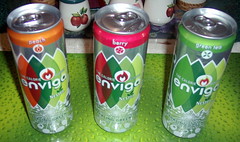 Coca-Cola wanted me to be one of the first to try Enviga Coca-Cola wanted me to be one of the first to try EnvigaEarlier this month, I blogged about the very peculiar secrecy about the new energy drink called Enviga. This brand new beverage expected to be released nationwide in January 2007 as a joint venture between Nestle and The Coca-Cola Company has generated quite a bit of speculation about what the real contents of this product they are nicknaming "The Calorie Burner." Because of the confusion about the product just two months from being released in the United States, a marketing representative from Coke contacted me last week to see if I would like to sample Enviga for myself. I agreed, but was cautious about the contents of what they were sending to me. What would be in this energy soda? Would it have the sugar I was concerned about? If not, what would it be sweetened with? These were just a few of the questions going through my head as I waited on the arrival of the package. When it arrived this week in a bubbly, bright-green box, I was greeted by those three tall skinny cans you see in that picture at the top of this post. My wife Christine said they looked like beer cans, but I explained to her that shape of the 12-ounce can is typical for the "energy" drinks these days. "Oh," she said. Before I dared to try one of these Enviga drinks, I read the label like a hawk and went immediately to the nutritional information. Guess what I looked for first? Yep, it was sugar. How much sugar does Enviga have? Would you believe there was ZERO sugar? As in zilch, zippo, not a bit! WOO HOO! I'm likin' the sound of that! So then I went to the ingredients list to see what kind of artificial sweeteners that were used--once you get past all the healthy ingredients they put in this stuff (which I'll talk about in a moment), you see what they use to sweeten it. Aspartame is the third from the last ingredient and acesulfame potassium (ACE-K) is the very last ingredient. While most people who are livin' la vida low-carb don't care much for aspartame (at least I don't!), it doesn't look like they use a large amount of it in this product. I still wish they could have sweetened it with Splenda, but we already know about Coke's position on using that sugar substitute. But that's another story. What about those "healthy" ingredients that supposedly help burn calories in this zero carb, 5-calorie per can drink? They include the following for each can of Enviga: 90mg of epigallocatechin gallate (EGCG) from concentrated natural green tea extracts. EGCG is a powerful antioxidant that combines well with caffeine to work wonders with your metabolism.100mg of caffeine, the same amount found in a cup of coffee, to further enhance the calorie-burning process.200mg of calcium to help people meet their daily need for strong, healthy bones.According to the verbage on the can, not everyone will benefit from drinking Enviga. "Three cans per day of Enviga have been shown to increase calorie burning by 60-100 calories in HEALTHY NORMAL WEIGHT 18-35 YEAR OLDS. Individual results may vary. Drinking more than three cans per day will not have an additional effect." (bold and capitalized are MY emphasis) So, basically children, middle-aged and older adults, overweight and obese as well as people with any health problem don't need to drink Enviga to experience the "calorie burning" phenomena because it won't work in them. That's what Coke is saying right there on their packaging! They may not say it that explicitly, but it can certainly be inferred from that strange disclaimer on the can. And don't even think about trying to drink MORE than three cans in a day to burn more calories. It doesn't work that way, according to Coke. Okeydokey! Coke says the ingredients in Enviga are recognized as "safe" by the FDA. What are those ingredients? I'm glad you asked. In the order from top to bottom on the can, they are: Carbonated Water, Calcium Lactate, Concentrated Green Tea From Tea Leaves, Citric Acid, Natural Flavors, Phosphoric Acid, Potassium Sorbate and Potassium Benzoate (to protect taste), Aspartame, Caffeine, and Acesulfame PotassiumI like the heavy emphasis on the calcium and green tea and less on the sweeteners and caffeine. That is better than most of the energy drinks out on the market today which are loaded with caffeine and sugar that are decidedly unhealthy for you. You probably want to know the answer to the $100,000 question--HOW DOES IT TASTE? They were kind enough to send me one of each of the flavors, including Berry, Peach and Green Tea. I drank all three of them for myself over several hours to give you my honest evaluation of each one. So I took a big swig of the GREEN TEA flavor... 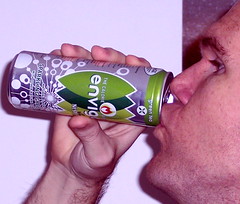 I really didn't know what to expect, so I was bracing myself. After an intial reaction to the less-than-sweet taste of the product (which is a good thing since most diet drinks these days are WAY too sweet), I liked it. The more I drank it, the better it tasted. I could feel a slight build-up of something on my tongue while drinking it, but the taste was pleasant enough to drink to the bottom of the can. The same could be said about the PEACH flavor, although I am not a fan. Not bad, though, but my wife turned her nose up after one sip. She wasn't impressed, but she's used to drinking sugary sodas anyway. Then I saved what I thought would be the best one for last, the BERRY flavor. Little did I know...  Puck-a-roo, what is that bittersweet wang in this flavor that made my eyeballs feel like popping out of their sockets?! It plumb made my face turn into Popeye the Sailor Man! Yuck-yuck-yuck! I think putting some spinach in this can would have made it taste better than this. But I will admit, it slowly (VERY SLOWLY!) got more tolerable as I drank it to the very bottom of the can. But watch out for that first swallow, it's a doozy! 8-O When Coke rolls this product out in full force in January 2007, look for the distinctive sleek cans in individual, 6-packs and 12-packs. Each can of Enviga will have a suggested retail price of $1.29-1.49. Obviously, there are very high hopes for Enviga and it should sell well thanks to the marketing muscle that both The Coca-Cola Company and Nestle will provide for it. If people don't expect too much out of the product and the alleged "calorie burning" hype that has surrounded it so far, then it may have a shot at reaching that target audience of people desiring a drink for their healthy lifestyle. People wanting to lose weight shouldn't put their hope in this drink. I certainly don't see anything wrong with people on a healthy low-carb lifestyle drinking this product as part of their ongoing health and exercise plan since we all need to be consuming more green tea in our diets. This unique product may be exactly what you need to get more EGCG in your body to do the incredible thermogenesis process to invigorate your metabolism. And that would be a GREAT thing, don't ya think?! A special THANK YOU to Coca-Cola for allowing me to try their Enviga product before it hits the shelves and share what the real deal is on this new product. I think most people will appreciate their attempts to provide a healthier alternative to the HFCS-laden garbage that has become the staple of the soft drink industry. Creating Enviga is a step in the right direction and I applaud Coke and Nestle for their efforts. For more information on Enviga, visit Enviga.com. Labels: ACE-K, aspartame, caffeine, calcium, calories, Coca-Cola, EGCG, energy drink, Enviga, green tea, Nestle
Pepsi Takes Diet Energy Drinks To The 'MAX'
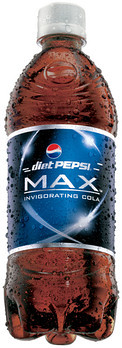 The "invigorating" Diet Pepsi MAX drink arrives June 2007 The "invigorating" Diet Pepsi MAX drink arrives June 2007In what is an obvious response to The Coca-Cola Company's hip and hot new low-carb energy drink product called Enviga, Pepsi-Cola North America today announced the creation of a brand new low-carb energy drink of their own called Diet Pepsi MAX. There is very limited information available about this new Pepsi product releasing nationwide in June, but we do know it has zero calories and is fortified with extra caffeine and a little bit of ginseng to help "adults to get through the day." Pepsi has high hopes that this product will compete directly with Enviga and other similar energy drinks that have dominated the beverage market in recent years. Nicknamed the "invigorating cola," Diet Pepsi MAX, which has done very well in test marketing with real consumers, is a product aimed at the 25-34 year-old demographic as well as anyone who is transitioning from sugary soda to diet soda. Even before I saw what it was sweetened with, I already knew Pepsi would be using a version of the ACE-K blends that have become popular with their current product line, including Pepsi One (made with Splenda) and the brand new Diet Pepsi Jazz (which has aspartame in it). Rather than continue expanding their Splenda product line, Pepsi has stuck with their tried and true aspartame/ACE-K blend that has become the mainstay of products like the overhyped Coke Zero (which recently expanded their line to include Cherry Coke Zero as well). This is too bad since many low-carbers would prefer a Splenda/ACE-K blend instead, but the soda companies just haven't gotten that message clearly enough yet. Will they ever realize we don't like aspartame?! Ever since I ended my recent diet soda embargo, I have been looking for more variety in my choices and Diet Pepsi MAX may provide that. But the jury is still out on it right now. I contacted the corporate office for Pepsi today and left a message with someone there about conducting a taste test and blogging about it. I'll blog about it if I get the opportunity to try this product before June. Otherwise, I'll do a review as soon as it comes out in June. One of the reasons Pepsi decided to make this new product at this time (aside from the heavy marketing presence of Coke's Enviga everywhere) is in direct response to a survey they conducted that found 8 in 10 people say they have trouble maintaining their energy during the day and 6 in 10 feel they can't get everything done that they need to get done in their daily activities. Diet Pepsi MAX is being set up to meet the demands of that market of consumers with a delicious, calorie-free diet soda. Pepsi marketing spokesperson Cie Nicholson believes this is the right product at the right time for busy Americans. "Adults have told us that they're constantly looking for the right balance to get them through their day and Diet Pepsi MAX is uniquely formulated to give the mind and body a boost," Nicholson contended.You will see Diet Pepsi MAX coming in 20-ounce bottles, two-liter bottles and 12-packs of 12-ounce cans. This is a widespread product release that Pepsi is banking on being a viable product as will be evidenced by some pretty heavy-duty marketing and advertising when it comes out. Diet Pepsi MAX becomes the 13th cola product under the Pepsi name. Stay tuned soon hopefully for my review of Diet Pepsi MAX if I hear back from them about the taste test. What do you think about the concept of a higher caffeine, ginseng-infused diet soda? Labels: aspartame, caffeine, Coke Zero, Diet Pepsi Jazz, Diet Pepsi MAX, diet soda, ginseng, low-carb, Pepsi, PepsiCo, Splenda
Will You Try Vitamin-Infused Diet Coke Plus?
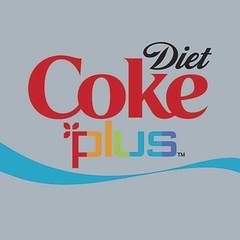 Get ready for the brand new Diet Coke Plus coming in April 2007 Get ready for the brand new Diet Coke Plus coming in April 2007The "healthy diet soda" wars continue on with the upcoming release of the brand new Diet Coke Plus™ coming to a store shelf near you in April. With nationwide distribution set for next month, The Coca-Cola Company is excited to provide their very first calorie-free, carbohydrate-free soda product that has been infused with vitamins and minerals. According to the nutritional label, Diet Coke Plus includes 25% of the recommended daily allowance of niacin (vitamin B3), vitamin B6, and vitamin B12 as well as 15% of the RDA for magnesium and zinc in each 12-ounce serving. It is sweetened with an aspartame/ACE-K blend that has become the industry norm for just about every diet drink nowadays. Attempting to get a leg up on their primary competition--Pepsi-Cola North America--as that company is set to release their own diet "energy" drink called Diet Pepsi MAX in June 2007, Coca-Cola North America is seeking to provide their loyal consumer base with a diet soda product that will serve as a supplement to their healthy diet, according to Coke's senior VP Katie Bayne. “Consumers, including Diet Coke drinkers, are increasingly looking for more beverage options, and we wanted to offer them the convenience of a calorie-free beverage that is a good source of several essential vitamins and minerals, and one that delivers on the great taste that they have come to expect from us,” she said.This is the second such "energy" drink that will be released in 2007 by the #1 beverage company in the world. In January 2007, the Coca-Cola Company in conjunction with Nestle launched Enviga, aka "The Calorie Burner," under a cloud of controversy from some who believe the product is misleading to consumers. But many people have been curious about the product likely BECAUSE of the criticism which is why Enviga spokesman Ray Crockett reports in this news story that it is "doing very well." I was lucky enough to be one of the first people to try the new Diet Coke Plus today when the media press kit arrived at my door this morning. The packaging for this product is top-notch as we have come to expect from the folks at Coke. It's includes the famliar Diet Coke logo along with a multi-colored "Plus" with the wording "Diet Coke with vitamins & minerals" listed on the product. Here's the packaging for the 20-ounce bottle, 12-ounce can, and 12-pack: 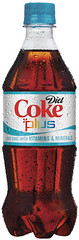 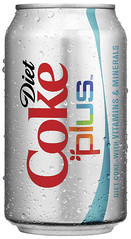 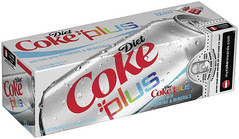 I really didn't know what to expect when I went to taste this new Diet Coke Plus. I just assumed it would taste like all the other new aspartame/ACE-K drinks that have come out over the past year or so including Diet Pepsi Jazz and Coke Zero. Boy was I wrong! When I took my first swig from the 20-ounce bottle, I noticed a somewhat recognizable (but not in a good way!) taste I hadn't had in my mouth in a while--REGULAR Diet Coke! EWWWW! I'm so used to drinking my FAVORITE Diet Coke product--that would be Diet Coke with Splenda--that this Diet Coke Plus was not nearly as sweet as I have grown accustomed to. Nevertheless, after that initial shock to my tastebuds, I put it back in the fridge for a few hours and tried it again to discover that although it wasn't nearly as sweet as say Coke Zero or Diet Coke with Splenda, it is certainly a little bit sweeter than a regular Diet Coke. I'd have to say that the creators of this new drink have hit a pretty happy medium between the aspartame-only and the aspartame/ACE-K blend versions that fans of both should enjoy Diet Coke Plus. Even still, whenever a new version of Diet Coke comes out the diehard lovers of the original version worry that their beloved drink is changing formulas. Not to worry, loyal fans of regular Diet Coke who do not want the ACE-K! The Coca-Cola Company learned their lesson about messing with a formulation (remember New Coke from the 1980s?), so you can rest assured your favorite diet soda is not gonna change one bit. “The millions of current Diet Coke devotees across America shouldn’t be concerned – America’s #1 diet sparkling beverage is staying just as it is,” Bayne added.Diet Coke Plus is the next in an ever-growing line of Diet Coke products on the market today, including original Diet Coke, Caffeine Free Diet Coke, Diet Coke with Lime, Diet Cherry Coke, and Diet Coke with Splenda (which I'll explain in a moment why it is still hanging around despite the fact it was supposed to be discontinued in 2006). You will begin seeing advertising for Diet Coke Plus in the near future with the slogan "Great Taste Has Its Benefits." They want to push the fact that this Diet Coke product has several essential vitamins and minerals while giving people the familiar taste of Diet Coke they have grown accustomed to. It's an intriguing concept that will certainly capture the attention of a public looking to live healthier. We'll have to wait and see if that can translate into positive sales numbers. Personally, I like the idea of having a vitamin-infused diet soda. Heck, if you're gonna drink diet soda (and I AM!), then why wouldn't you want to add some vitamins and minerals to the mix to make it even better? Drinking just four 12-ounce cans of Diet Coke Plus daily will provide you with 100% of the RDA of vitamin B in your diet. Now that's just cool! I had the opportunity to speak briefly with Coca-Cola North America spokeswoman Susan McDermott today about a few concerns from the low-carb community regarding her company. On the issue of aspartame use, she said they have conducted field marketing tests and the aspartame/ACE-K blend has been preferred by consumers as well as universally accepted across the industry as the blend for sweetening diet drinks. Fair enough. When I stated that many of my readers would prefer a Splenda/ACE-K blend instead, McDermott insisted that aspartame is the most tested artificial sweetener in history and has been found to be completely safe by the Food & Drug Administration. While I acknowledged her point, I did express that my readers would like to have some more Splenda-sweetened options available as well. She said there are no new Diet Coke products in the works for the rest of 2007, but to not give up hope for the products you desire in the future. I guess we'll just have to be patient for now. :) Speaking of Splenda, I asked McDermott specifically about Diet Coke with Splenda and what the availability of this product was like in 2007 since it was set to be discontinued last year. She said the product tends to sell great in certain regions and not at all in others, but it is still available for purchase. With so many different Coke products available today, local stores will only stock what they think they can sell. So if you want it and it isn't available in your area, then let the manager of your favorite grocery or retail store know. I was assured it IS available! I'm so glad they took the feedback from so many of my readers last year after all and decided to keep Diet Coke with Splenda around for a little while longer just for us. Awww, wasn't that just so nice of them? :) Now if we can only get them to make Diet Cherry Coke with Splenda (and maybe caffeine-free), I'll be one happy camper! Feel free to send your comments and feedback to The Coca-Cola Company regarding what you think about their product line by clicking here. Labels: ACE-K, aspartame, Coca-Cola, Diet Coke, Diet Coke Plus, diet soda, Splenda, vitamins
Study Hopes To Prove Iron Deficiency Cured By Having A Coke And A Smile
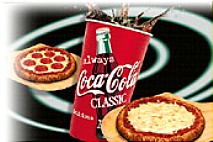 Is it possible that drinking a Coke with pizza cures anemia? Is it possible that drinking a Coke with pizza cures anemia?The lines between good, meaningful nutritional research and propaganda financed by certain economic and business interests keeps getting muddied by so-called scientific studies like this one that hope to prove Coca-Cola can serve as a healthy dietary supplement for people who have iron deficiency. This is NOT a joke! Lead researcher Sue Fairweather-Tait, professor in the School of Medicine, Health Policy & Practice at the Norwich, England-based University of East Anglia (UEA), is recruiting 16 female volunteers to consume a pizza and a Coca-Cola so they can analyze what impact that will have on their iron levels. Iron deficiency leads to anemia when the red blood cells are lacking this key mineral. When the Coca-Cola company caught wind of this proposed study, predictably they quickly ponied up the money to fund it. Well I wonder what THEIR interest could be in this study? Can you say marketing? Drink Coke for your health, they'll say. Oh brother! More about this in a moment. Fairweather-Tait wanted to see if drinking a Coke helps the body to absorb more of the iron from the foods consumed. Since pizza is a popular food item, especially among the young women involved in the study, the researchers will have them eat a cheese and tomato pizza (no meat since that is metabolized differently) and wash it down with either a regular Coca-Cola, Diet Coke, or mineral water to see which beverage will be most effective in helping the body take in the iron from the food. The idea for this suspicious study didn't just come out of thin air, though. It turns out Fairweather-Tait met with a former Coke CEO who put a bug in he ear about it. Oh really?! Just talking small talk about the weather, politics, and oh, by the way, did you hear drinking Coke helps with iron deficiency...PUHLEEZ!!! Preliminary tests found that iron absorption was "pretty high" when a meal is complemented with a regular Coca-Cola. The researchers are excited to see if the same results bear out in their study. "The volunteers come in and eat the pizza and have one of the drinks, then do the same the next day and we measure the iron level in the blood to see what affect the drink has," Fairweather-Tait explained. "Then we send them away and they come back a couple of weeks later and do it again."What is the goal of the study from The Coca-Cola Company's perspective? If the findings hold true, then they can promote the heck out of their product being an inexpensive way to treat anemia brought on by iron deficiency--potentially a "huge boost" for the company at a time when they are under fire for contributing to the obesity epidemic. Interestingly, Fairweather-Tait and Coca-Cola claim the results of the study, which should be released sometime near March 2008, will be published regardless of the results. How noble of them since it's probably already a foregone conclusion what they will find! Ridiculous propagandist research for the sake of the Almighty Dollar! While I appreciate what Coke is doing trying to get stevia approved by the FDA as a sweetener, it is pure madness for them to pretend that their regular high fructose corn syrup-infested soft drinks are healthy for people to consume, iron deficiency or not. They've tried to make similar kinds of health claims before and nobody bought into it before. The Coca-Cola Company has been bending over backwards over this past year trying to position themselves as a maker of products that are a part of a healthy lifestyle. We've seen it with their Enviga energy drink and most recently with Diet Coke Plus. While those are noble attempts to offer consumers better options, this new study they are funding is grasping at straws in a fit of desperation to lift the cloud of scorn that has been hanging over them because of the extremely high sugar content of their regular sodas. Regardless of what this study finds, the stigma is still gonna stick! Perhaps Coke should keep looking at ways to REDUCE or ELIMINATE the HFCS altogether from their product if they truly care about the health of their customers. Something to think about! You can e-mail Sue Fairweather-Tait about her study at s.fairweather-tait@uea.ac.uk. Labels: anemia, Coca-Cola, Coke, deficiency, healthy, HFCS, iron, pizza, research, study, Sue Fairweather-Tait, UEA
Next Big Diet Trend In Beverages Is Protein And Fiber Fortification
Want proof that livin' la vida low-carb is still having an impact on our culture in the year 2007? Well, look no further than this Natural Products Insider column to see what research & development marketing guru Dr. Karen Grenus says is the next big diet trend in beverages. Although it has been mocked and scorned by the so-called health "experts" and their willing accomplices in the media, protein is the first of two new "it" ingredients that every beverage manufacturer is clamoring to put into new products to show consumers they care about helping them get healthy and lose weight. Many credit low-carb diets like Atkins, Protein Power, and South Beach for launching this new trend which will begin to manifest itself in the very near future. All I can say is that it's about time (although we've already had lots of protein in the delicious Atkins Nutritionals shakes for years)! Low-carb researcher Dr. Donald Layman from the University of Illinois at Urbana-Champaign shared in my interview with him last year that a higher-protein diet combined with moderate exercise results in greater weight loss and effective fat-burning while preserving lean muscle mass. Protein is indeed power food for weight loss as all the latest studies are showing because of the magical effect of satiety. In fact, there is a specific study that shows consuming protein-packed eggs actually causes you to eat LESS calories than if you ate a bagel with cream cheese for breakfast! Additionally, we have proof from still more studies that confirm high-protein diets are good for bone health and eating this way gives you a metabolic advantage--something you want when you are attempting weight loss. The evidence is very strong and the marketing machines at the largest beverage companies in the world are already salivating at the sales potential they will muster up from this new trend. We've already seen signs of it with the release of new diet beverages this year such as Diet Coke Plus, Diet Pepsi MAX, Enviga, and even FUZE. Look for these efforts to be stepped up even more. Dr. Grenus says the allure of using a beverage as a meal replacement is about convenience and controlling the nutrients that go inside your body with precision. "Today, consumers know about macronutrients and are more likely to purchase products after looking at carbohydrates, net carbohydrates, protein, fat and fiber," she wrote.She added that consumers demand the product "must taste good enough for consumption and be palatable; cause fullness during consumption, or satiation; cause a continued sense of fullness until the next meal, or satiety; and remain palatable over the course of the diet." This is where protein comes into play. Manufacturers are realizing that adding enough protein to their product can help their beverage meet all these requests by the customer. People realize protein satisfies, so they're looking for it to squelch their hunger. Interestingly, Dr. Grenus explained that protein also adds "viscosity, emulsification, opacity and flavor." Hmmm, I did not know that. Additionally, there are several different blends of proteins used to find the perfect match for the beverage that ends up on store shelves. Here is a listing of the various proteins used in beverages: 1. CaseinThis milk protein is generally combined with calcium, sodium, or both. Sodium Caseinate is best used in shakes and drinks that contain fat while calcium caseinate works better in water-based drinks for protein potency. 2. Whey Another milk protein which packs a punch with concentrated amino acids that help protect lean muscle mass, suppresses appetite, and nutrient-dense. 3. SoyA plant-based protein that is low-fat and low-cholesterol. In fact, soy protein isolates contain nearly ZERO carbs while adding dietary fiber to the mix. Speaking of fiber, that is the other "it" beverage additive that manufacturers are looking to add to their products. Although not everyone agrees that fiber is necessary in a healthy diet, I believe it can play a vital role in your weight management plan. So does Dr. Grenus. "Soluble and insoluble fiber have been linked to the reduction of blood cholesterol and certain cancers, respectively," she explained. "There is no question that soluble and insoluble fibers should be a part of every healthy diet. In the event that fiber-rich grains, fruits and vegetables are replaced by weight-loss drinks, it’s essential that fiber be incorporated into the beverage."In fact, fiber is becoming so popular now that there are even diet books being written with fiber as the central ingredient. Beverage makers are keenly aware of this, too, and are working on ways to put it in their products. Just like proteins, there are several kinds of fibers, too: 1. Soy fiberMade from soybeans, this is a commonly used product in weight loss drinks because it has the health benefits of soluble fiber while working well in the digestive tract in the way insoluble fiber performs. 2. PolydextroseA fiber-based bulking agent added to artificial sweeteners to serve as a prebiotic which allows good bacteria to grow in the gut. This fiber is extremely low-calorie, low-glycemic, and studies have shown it to increase satiety. 3. InulinA soluble fiber with prebiotic properties which can pass right through the body without ever being metabolized. It is fermented by bacteria in the colon. 4. Fructooligosaccharides (FOS)In addition to providing soluble fiber, this also is used as a sweetening and bulking agent that does not raise blood sugars. Sweeter than inulin, this fiber allows for a "creamy mouthfeel" (if you've ever tried the delicious low-carb ChocoPerfection chocolate bars made with an FOS called oligofructose, then you know what I'm talking about). Additionally, this can actually be used as a replacement for fat and sugar. The most important thing to the consumer is to make sure the beverages they are drinking to help them lose weight taste good while maintaining nutritional integrity. That's the biggest trick, according to Dr. Grenus. "Products formulated for health instead of taste need the magic of flavor houses to make drinking them a memorable experience," she remarked. "Flavors can mask undesired characteristics from added ingredients, enhance existing flavors and create the signature taste of weight-loss beverages."If a product tastes funky, then it should come as no surprise that people won't keep buying it. That's exactly what happened when the "low-carb craze" hit. Too many of those products tasted DISGUSTING and thus did not sell. That doesn't mean low-carb itself failed (as has been the MO of those who oppose livin' la vida low-carb), but these manufacturers hurriedly pushing out products to supposedly meet the demand rather than taking their time to do it right. To me, the worst-tasting products that are out there right now have to be the ones that contain soy in them. I don't know if my taste buds are so acutely tuned in to it or not, but everything I eat with some measure of soy in it just tastes gross to me. It's got a nasty wang time and time again. I hate that, but it is what it is. The key to remember with these new protein and fiber fortified beverages is to READ THE LABELS and make sure they contain low enough sugar (ZERO or next to none is preferable) if you are livin' la vida low-carb. It does absolutely no good to drink a protein-based product for weight loss if you are simply gonna sabotage it with carbohydrates your body DOESN'T need! If this topic is interesting to you, then I encourage you to read the full report which appeared in Food Product Design. Dr. Grenus discusses the various sweeteners on the market (although she makes a faux pas when she states Pepsi One is sweetened with ACE-K and ASPARTAME--nope, it's ACE-K and Splenda!) and she even brings up stevia (which The Coca-Cola Company is trying to get FDA-approval for a new version of Diet Coke) as an up-and-coming sweetening agent in beverages. WELL WORTH THE READ! Labels: Atkins, beverage, casein, diet, drink, fiber, fructooligosaccharides, inulin, Karen Grenus, low-carb, oligofructose, polydextrose, protein, soy, weight loss, whey
Is Coca-Cola Putting Stevia On The Fast-Track To Approval As A Sweetener?
 Did you know Diet Coke in Japan is sweetened with the plant-based stevia? Did you know Diet Coke in Japan is sweetened with the plant-based stevia?About a year ago I blogged about the controversial all-natural sugar alternative called stevia. At the time, I lamented that stevia was not approved by the Food and Drug Adminstration (FDA) to even be called a sweetener...yet! But that may be about to change if a joint venture with The Coca-Cola Company and a major food additive business has anything to say about it (and you KNOW they will because money talks!). This USA Today story notes that Coke as well as Cargill Foods have decided to take a serious look at a sweetener they want to call rebiana (a shortened word used for Stevia Rebaudiana). Remember that name they have come up with because it's the term these companies are going to be using for stevia soon and it's been three years in the making. For people who are livin' la vida low-carb and choose to avoid the use of the chemical-based sweeteners that dominate the marketplace, such as saccharin (Sweet 'N Low), aspartame (Nutrasweet, Equal), and sucralose (Splenda), many of us have been using stevia instead because it contains ZERO calories and carbohydrates. That's certainly impressive nutritional info for a natural alternative to sugar. But it's gonna be a bit of an uphill battle to get stevia approved since the FDA has come down so strongly AGAINST approving it while this list of sugar alternatives get a free pass--all of which are made from chemicals. But there are still a lot of people who have concerns over the safety of these products (and I get e-mails from people ALL THE TIME about my support for Splenda--get over it already people. That stuff helped me overcome morbid obesity, so leave it be!). As a result, that's the allure of having commercial acceptance of stevia in a popular product like Diet Coke. With crazy new product concepts like the vitamin-infused Diet Coke Plus (made with aspartame), the "calorie-burning" Enviga (also sweetened with aspartame and a touch of ACE-K), and their marketing darling of the moment Coke Zero (yep, you guessed it, sweetened with aspartame and ACE-K), this idea of making a Diet Coke with Stevia is the best thing they've come up with since my favorite sugar-free soda Diet Coke with Splenda was released to the market (although they've never given it the proper marketing IMHO!). Interestingly, stevia IS already being used in Diet Coke--in Japan, where stevia boasts a robust 40% of the sweetener market, as well as in Brazil, China, and nine other industrialized countries. So what's taking America so long to get going with this in this country already? The FDA needs to get its head out of their backside and approve stevia as a sweetener. Are they afraid of the competition it will give that disgusting NASTY-tame? If so, then GOOD! They should be because it's high time people have other alternatives. I'm tired of seeing Nutrasweet in EVERYTHING sugar-free/low-carb I would want to purchase. Put Splenda or stevia in some of these products already! There's a bunch of us who don't like aspartame at all! Currently, the Coca-Cola Company has been seriously looking at this since 2004 and last week filed a total of 24 patents to begin removing the sweetest parts of stevia so they can come up with the perfect taste and blend of rebiana to be used in their future versions of Diet Coke. It's not yet known if this new sweetener will eventually be phased in to replaced aspartame or if it will be mixed with ACE-K or other sweeteners in totally different products altogether. But clearly Coke is ready to put stevia on the fast-track to FDA approval. As for Cargill Foods, they intend to use this stevia-based sweetener in foods like yogurt, cereal, ice cream, and other sugar-free sweet treats. This is expected to be a huge undertaking that could quite literally shake up the food and beverage industry unlike anything that has come along in the past few decades. This is long overdue in America and I can't wait to see it come. A Cargill representative said this was a "significant investment," so don't expect them to take no for an answer from self-serving interest groups who will oppose the use of stevia in this manner to cover their bedonkadonks with the artificial sweetener companies. That's why Cargill has already begun the process of petitioning the FDA to use stevia as a food additive. It's gonna be difficult, but I'm confident they'll get approval. Stay tuned! Although Coke is saying the stevia they have tested in several of their products has performed just as well as the aspartame and sucralose for sweetness, I'm not as convinced about it. Sure, stevia is an excellent product and I have used it myself in various forms, but the black licorice-like bitterness can be a real turn-off to some people. The blend will have to be perfect. I'm sure if stevia finally does make it into a Diet Coke product in the next few years that they'll make it taste as sweet as possible by very likely using an ACE-K blend. It'll probably resemble the aspartame/ACE-K blends that dominate the Coca-Cola line of sugar-free products today. This will be a HUGE step in the right direction for the world's #1 beverage maker (although I wouldn't mind having more Splenda-sweetened options, too--HINT HINT!). If rebiana becomes a household name thanks to Coke and Cargill Foods, then you can expect PepsiCo, Dannon, and other rivals in the sugar-free/low-carb market to develop their own versions of stevia-sweetened products--perhaps they'll be allowed to actually call it stevia. Actually, if they're smart, then they'll start working on this NOW! I've long held that having an "all-natural" sweetener like stevia is already on the cutting edge and it's only a matter of time before it is as widely used in the United States just as it is in Japan today. It's not a matter of if, but when. I can't wait to try a Rebiana Coke with a green stevia leaf on the can as a logo to distinguish it from the other versions. This will be the most unique diet soda product to ever release! Are you ready for a Diet Coke made with stevia? Labels: ACE-K, aspartame, Cargill Foods, Coca-Cola, Diet Coke, FDA, rebiana, Splenda, stevia, sugar substitutes, sweetener
|


